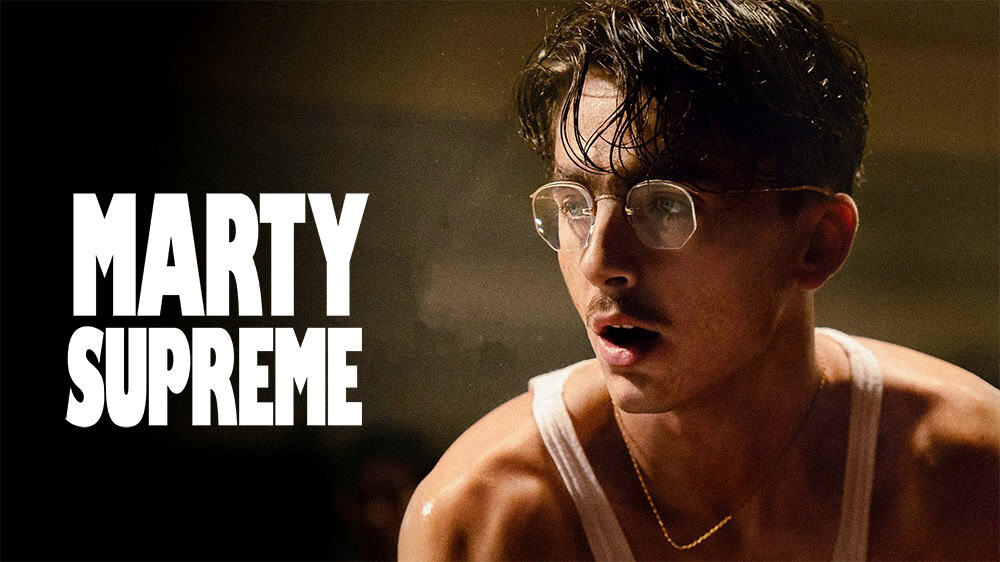

We were invited to a special screening of Marty Supreme by Benetone Films, who handle the film’s distribution in Thailand. I went in knowing the pedigree, Josh Safdie directing solo for the first time since The Pleasure of Being Robbed (2008), Darius Khondji behind the camera, A24 backing it with their biggest budget to date. The expectations were loaded. This Marty Supreme review is written from a filmmaker’s perspective, not a recap, not a fan letter. The craft here is worth examining closely.
Need a Director for Your Next Project?
From commercials to branded campaigns—Olivier brings creative vision and technical expertise.
→ View ProjectsMarty Supreme is set in 1952 New York. Timothée Chalamet plays Marty Mauser, a shoe salesman and table tennis obsessive loosely based on real-life champion Marty Reisman. He wants to compete in the British Open. Nobody respects that. The film is not really about table tennis, it’s a character study that uses the sport as a pressure cooker, a lens for examining what happens when a man builds his entire identity around a pursuit the world considers worthless. Safdie and co-writer Ronald Bronstein aren’t interested in redemption arcs. Marty doesn’t learn his lesson. The film ends somewhere uncomfortable. That’s exactly where it should end.
The Unforgettable Performance of Timothée Chalamet in Marty Supreme
Chalamet’s performance is the engine that makes this film work. He reportedly let his vision deteriorate for the role. That level of preparation shows in every frame, not as a party trick, but as a foundation for a character who genuinely seems to see the world differently from everyone around him.
The film’s central problem, and its biggest creative bet, is that Marty is an antihero you’re not supposed to like. Unlike Sandler in Uncut Gems, where the compulsion is viscerally relatable, or DiCaprio in The Wolf of Wall Street, where the greed is at least seductive, Marty’s obsession is table tennis in postwar America. Safdie knows exactly how absurd that sounds. So does Chalamet. He sells it anyway. That’s the trick, and it’s harder than it looks.
The magnetic personality he brings to Marty isn’t charm, it’s conviction. There’s a difference, and Chalamet understands it. Some critics read Gwyneth Paltrow’s character as pointless. I’d argue she’s intentionally hollow, the film is about a man incapable of fully seeing the people around him, so we don’t see them either. Kevin O’Leary was cast specifically because of his Shark Tank persona. Abel Ferrara and playwright David Mamet appear in supporting roles. Fran Drescher plays Marty’s mother. Safdie has always populated his films with non-actors, real figures, and found faces, it creates a behavioral texture that trained ensembles rarely replicate. The abrasive realism you feel throughout Marty Supreme is partly structural, built into the casting itself.
Thematic Depth and Narrative Resonance in Marty Supreme
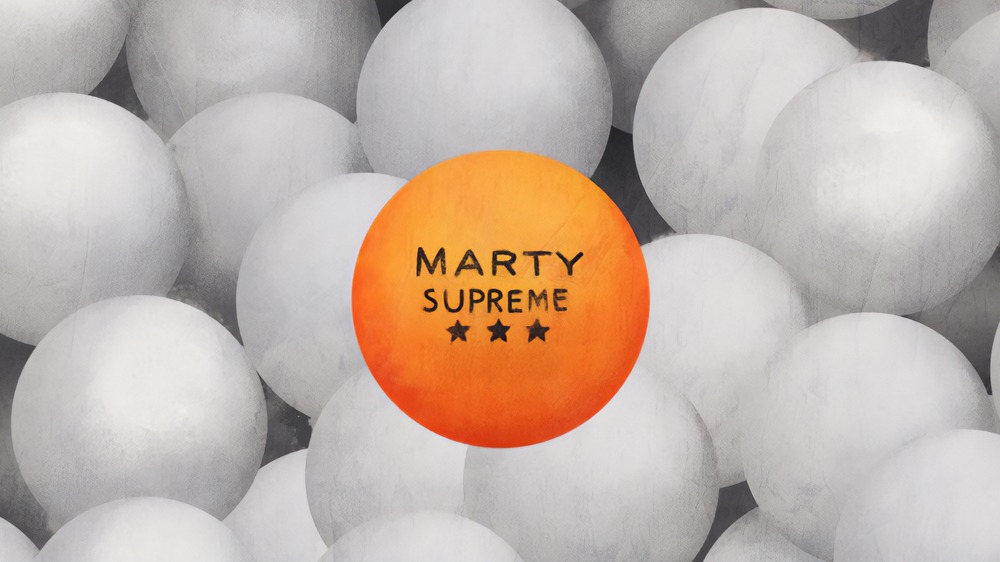
The screenplay, written by Safdie and Ronald Bronstein, who also co-edited, is structured around escalation without catharsis. That’s a deliberate refusal. The film keeps tightening the screw on Marty without offering the audience a release valve. Some called it an empty trip through ego and excess. That reading is understandable, and also misses the point. The emptiness is Marty’s, not the film’s.
What makes it work where a lesser version would collapse is tension management. Safdie, editing with Bronstein, weaponizes momentum, there’s a constant sense that the next bad decision is already in motion, that the ceiling can fall at any moment. Pacing in film is often described in terms of speed. This isn’t fast or slow, it’s pressurized. Every scene feels like it’s running slightly hotter than it should. That discomfort is the whole experience.
The film also takes a position on the narcissistic male ego that never becomes a lecture. Marty’s ambition is portrayed without apology and without endorsement. The audience is left to decide what they’re watching, a tragedy, a portrait, or both. That ambiguity is the film’s spine, and it holds.
Directorial Vision and Cinematic Craftsmanship
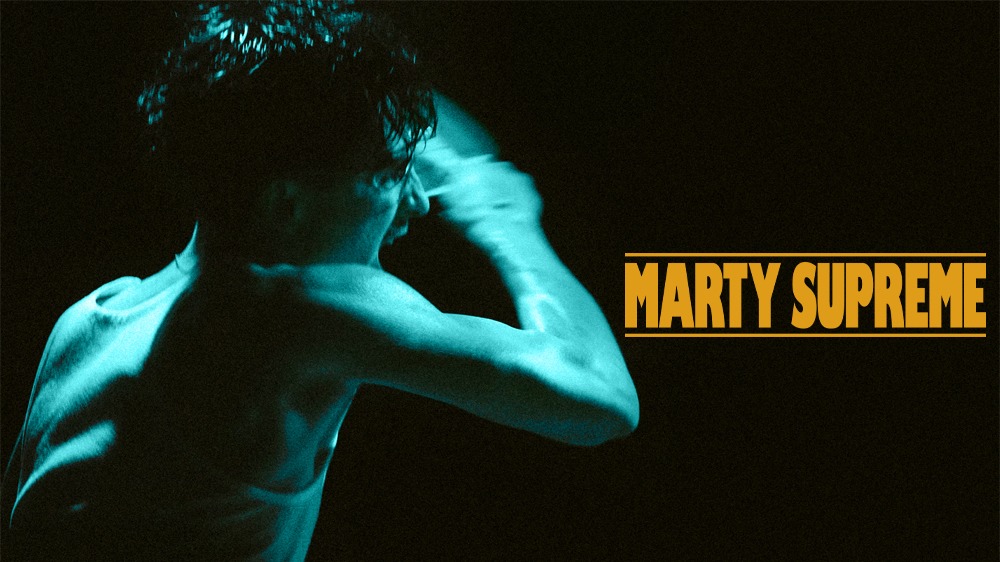
This is where the Marty Supreme review gets interesting for filmmakers.
Darius Khondji, who shot Uncut Gems for Safdie, returned as DP. The decision to shoot almost entirely on 35mm using Arriflex cameras with vintage Panavision C Series and B Series anamorphic lenses wasn’t aesthetic nostalgia. Those lenses at 65mm, 75mm, and 100mm focal lengths create a specific compression that places you uncomfortably close to the actor’s face. Khondji described wanting a “magnifier” effect, like binoculars trained on the characters. Combined with mostly two-camera setups running simultaneously, it produces the behavioral authenticity that single-camera precision often kills. You feel it throughout. The cinematography doesn’t illustrate the story, it encloses it.
Color grading was handled by Yvan Lucas at Company 3, with a 4K DCP developed alongside 70mm and 35mm prints. The visual texture shifts as Marty’s world shifts, gritty and tight early on, more expansive and almost surreal at the peak, but it never loses the period grain that keeps it honest.
Jack Fisk (production designer on There Will Be Blood, The Revenant, Killers of the Flower Moon) rebuilt 1952 Lower East Side from the ground up. Metal roll-up doors removed or masked with period-accurate awnings. Graffiti covered with period signage. Fisk grew up on the Lower East Side in the 60s, he wasn’t just researching a period, he was partially reconstructing something he half-remembered. That specificity is what separates production design from set decoration.
The score by Daniel Lopatin (Oneohtrix Point Never) was built around a Spotify playlist Safdie gave him, New Order, Tears for Fears, Fats Domino, Constance Demby. Anachronistic by design. The 80s synth textures underneath a 1952 story create a deliberate dislocation that some found distracting. For me it worked, it signals that this isn’t a period piece trying to recreate history, it’s a filmmaker using history as material.
The $60–70M budget made it A24’s most expensive production to date, surpassing Civil War. It went on to become their highest-grossing film at $179.3M worldwide. That math matters, it validates a certain kind of uncompromising cinema at scale. The film was produced by Central Pictures, IPR.VC, and A24. Safdie did not have final cut in his contract, but it was never an issue.
The Impact and Legacy of Marty Supreme
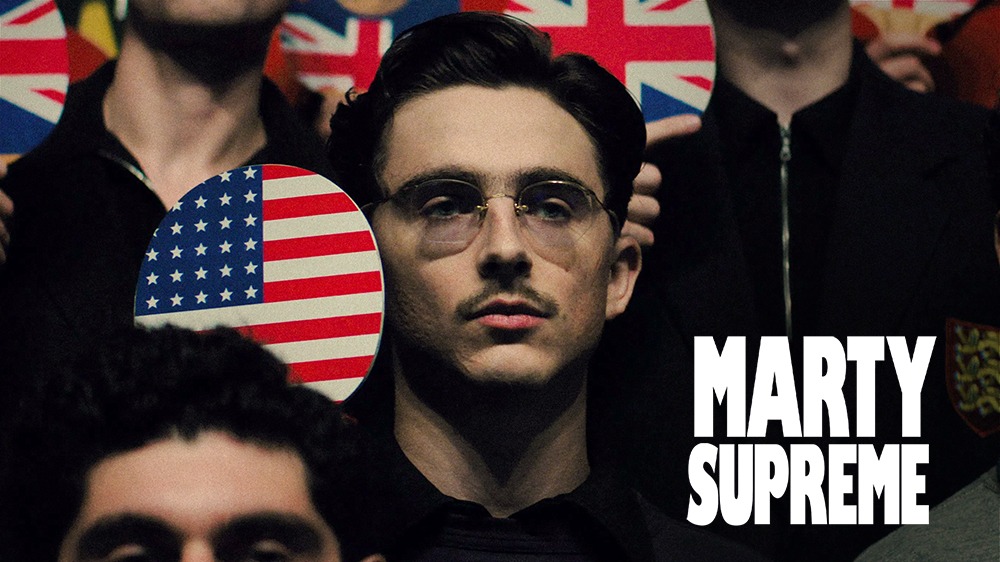
Nine Oscar nominations. Zero wins. The internet called it “the most Marty Supreme thing that could happen.” Fair. The film doesn’t need the statues. It’s already doing what good cinema does, generating real disagreement. The TrueFilm Reddit thread calling it largely mediocre is worth reading alongside the Roger Ebert review, the distance between those two responses tells you more about the film than either one does alone.
The Safdie brothers have spent their career building a filmography that prioritizes discomfort over resolution. With this solo effort, Josh Safdie proves that instinct isn’t dependent on his brother’s collaboration. Marty Supreme is fully formed, fully committed, and completely itself. Aspiring filmmakers should watch it twice, once for the story, once for the machinery underneath.
As filmmakers and cinephiles based in Southeast Asia, we’re fortunate that Benetone Films brought Marty Supreme to Thai screens. Films this specific about their vision don’t always travel this far from their festival premieres. This one did. That’s worth acknowledging, and worth supporting.
Currently available to rent on Prime Video and Apple TV for those outside Thailand. Full production details at the official Marty Supreme website.
Discover more from Olivier Hero Dressen Blog: Filmmaking & Creative Tech
Subscribe to get the latest posts sent to your email.

Work with Olivier
Director | CD | DP & Photographer
Specializing in commercials, music videos, AI-driven filmmaking, and cinematic storytelling for brands and production companies.
🌍 Shanghai · Paris · Los Angeles · Dubai
🎬 View Portfolio & Get in Touch