
Key Takeaways
- First insight, Mastering flux art style prompts involves a deep understanding of composition, lighting, and narrative to guide AI models effectively.
- Craft highlight, Each detailed prompt provided here is designed to elicit specific visual aesthetics, pushing the boundaries of AI-generated imagery beyond generic outputs.
- Industry context, As AI art evolves, tools like AI Render Pro become indispensable for artists seeking precise control over complex styles like flux art, ensuring creative vision translates accurately.
- Bottom line, The future of digital artistry lies in the nuanced interplay between human creative direction and AI’s generative power, with well-crafted prompts being the crucial bridge.
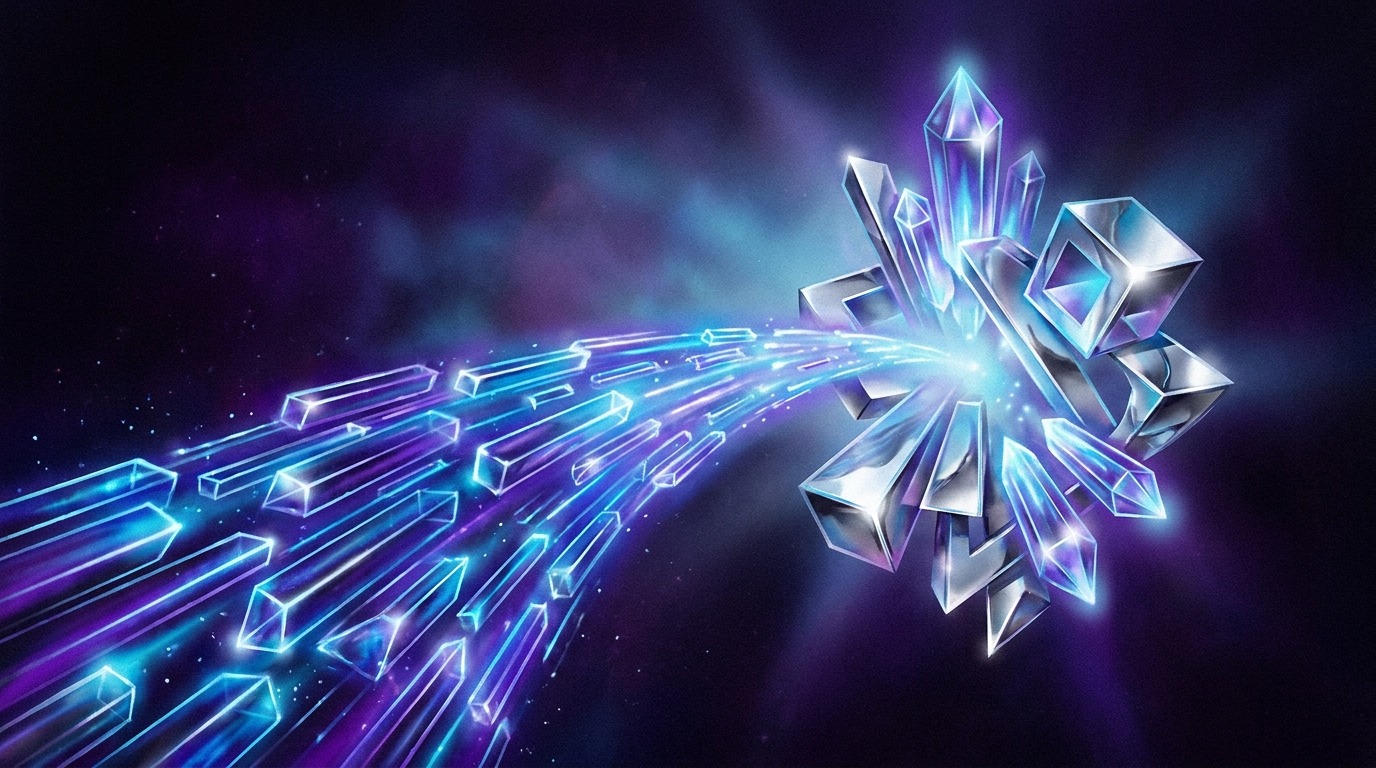
The realm of AI-generated imagery has exploded, and understanding how to craft effective flux art style prompts is paramount for artists seeking to produce truly stunning visuals. These prompts leverage advanced AI models to create dynamic, often abstract, and highly detailed images that blend fluidity with structured elements, offering a unique aesthetic that captivates and inspires.
Need a Director for Your Next Project?
From commercials to branded campaigns—Olivier brings creative vision and technical expertise.
→ View ProjectsBy focusing on specific artistic parameters, from lighting and composition to material textures and emotional resonance, we can direct the AI to manifest visions that are both technically impressive and deeply artistic. This guide provides ten meticulously designed prompts, ready for immediate use, to help you unlock the full potential of this captivating style.
The Essence of Flux Art: A Director’s Perspective
From my two decades in filmmaking, I’ve learned that the true magic lies in the details, the subtle interplay of light, the deliberate framing of a shot, the emotional resonance of a color palette. These principles translate directly into the burgeoning field of AI-generated art, especially when dealing with a style as dynamic as flux art. Flux art, at its core, is about movement, transition, and the delicate balance between order and chaos.
It’s a style that thrives on intricate portrayals and distinctive artistic choices, as highlighted by datasets like the improved-flux-prompts on Hugging Face, which emphasize composition and detail.
When I approach a visual concept, whether for a film or an AI prompt, I envision the final image with a director’s eye. I consider the mood, the narrative, and the specific visual language I want to employ. Flux art allows for an incredible range of expression, from photorealistic examples to abstract interpretations, making it a versatile tool for any creative. The key is to be precise in your instructions to the AI. Generic prompts yield generic results.
To achieve something truly unique, you must articulate the nuances of your vision. This means specifying textures, light sources, camera angles, and even the emotional tone.
The power of a good prompt lies in its ability to guide the AI, not dictate every pixel. It’s a collaboration. You provide the artistic direction, and the AI renders it. This is where tools like AI Render Pro, the prompting tool for filmmakers and creatives become invaluable. They allow for the structured input of complex parameters, transforming vague ideas into concrete visual outputs.
The goal isn’t just to generate an image, but to craft a piece of art that resonates with your initial creative spark. Understanding the underlying principles of visual storytelling and applying them to your prompts is what elevates a simple image into a compelling work of flux art.
Prompt 1: Ethereal Urban Flux
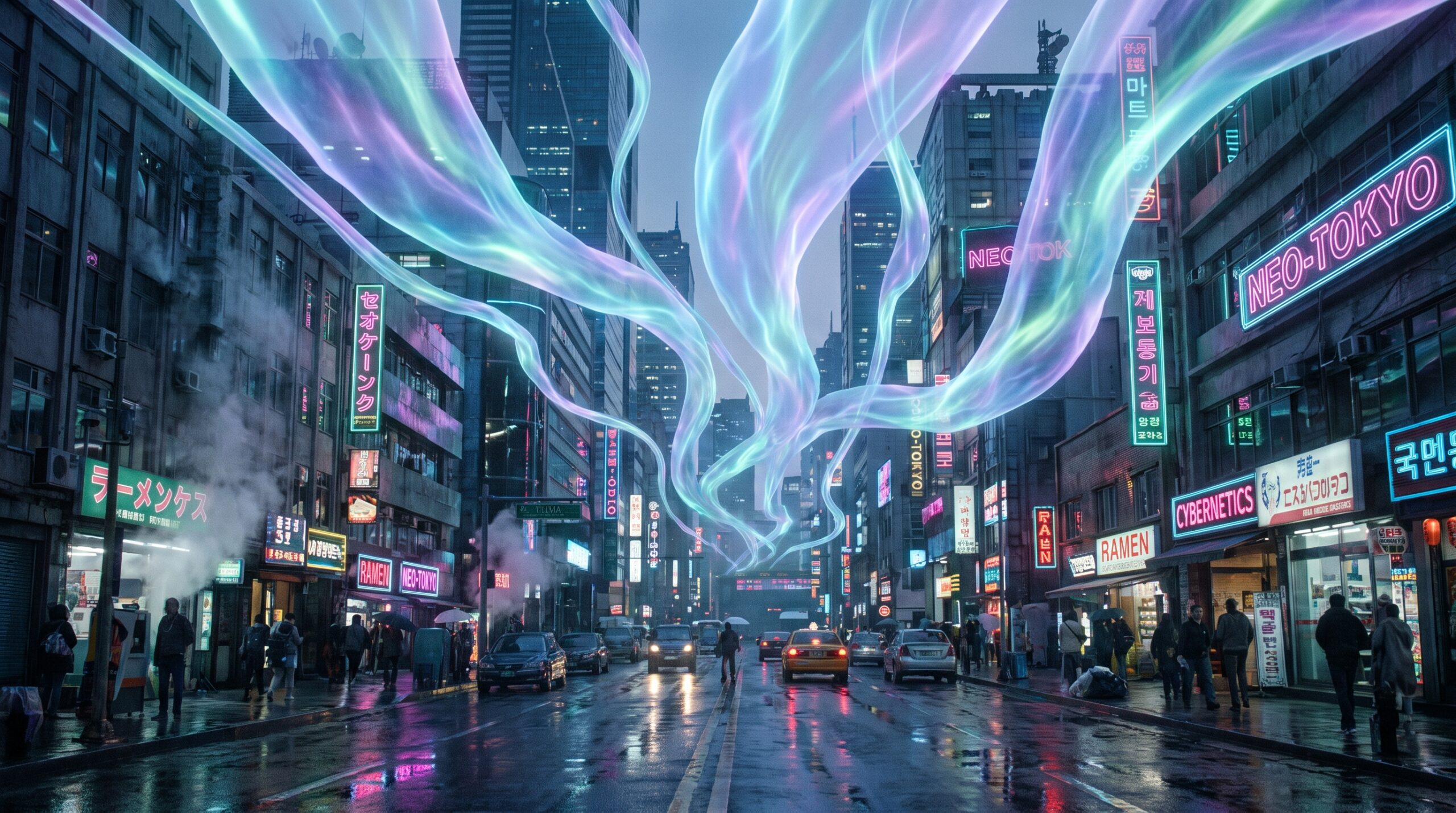
Our first prompt dives into the juxtaposition of organic fluidity with rigid urban structures, a common theme in contemporary digital art. The aim is to create a scene that feels both familiar and otherworldly, a hallmark of compelling flux art. We’re looking for a sense of movement and transformation within a static environment, suggesting the unseen forces at play in our daily lives.
This prompt is designed to produce an image where light acts as a sculptor, defining the ethereal elements that interact with the city. The choice of a wide-angle lens enhances the sense of scale and immersion, pulling the viewer into this dynamic urban landscape. It’s about creating a visual paradox: the solidity of the city melting into a vibrant, flowing energy.
1. Ethereal Urban Flux
Prompt:
An ultra-wide shot of a bustling cyberpunk city street at dusk, neon signs reflecting on wet asphalt. Above the street, massive, translucent, flowing tendrils of bioluminescent energy, reminiscent of aurora borealis, weave through skyscrapers, pulsing with soft blues, purples, and greens. The energy forms intricate patterns, subtly interacting with architectural elements without obscuring them. Volumetric lighting, soft cinematic glow, high contrast between dark city and vibrant flux. Shot on Arri Alexa Mini LF, 16mm wide-angle lens, f/2.8, ISO 800. Aspect ratio 16:9. No text.This prompt aims for a dramatic visual narrative, blending the futuristic grit of a cyberpunk city with the organic grace of flowing light. The “Arri Alexa Mini LF” and specific lens choice ground the image in a photorealistic, high-fidelity aesthetic, ensuring a cinematic quality.
For best results, focus on the interplay between the hard lines of the city and the soft curves of the energy. Experiment with different color palettes for the bioluminescent tendrils to alter the mood, warmer tones might evoke a different emotional response.
Sculpting Light and Shadow in Flux Art
Light is not merely illumination; it is a character in itself, shaping perception and mood. In flux art, the strategic use of light and shadow is paramount to conveying movement and depth. It’s about directing the eye, creating focal points, and building a sense of drama or serenity. As a director, I often think of light as a paintbrush, capable of highlighting textures, defining forms, and even suggesting narrative elements.
Consider how a single beam of light can transform an ordinary scene into something extraordinary, or how deep shadows can evoke mystery and introspection. When crafting prompts for flux art, specifying the type, direction, and intensity of light is crucial. Are we dealing with harsh, artificial neons, or the soft, diffused glow of a natural phenomenon? Each choice significantly impacts the final output.
The goal is to achieve a visual richness that transcends a flat, two-dimensional image. This involves thinking about volumetric lighting, specular highlights, and ambient occlusion, terms familiar to any cinematographer or 3D artist.
Furthermore, the interaction of light with various surfaces, be they metallic, organic, or ethereal, adds another layer of complexity and realism. A prompt that meticulously details these interactions will yield results far superior to one that leaves them to the AI’s default interpretation.
This meticulous approach to light sculpting is what elevates AI-generated visuals from mere renders to genuine works of art, particularly in the intricate and often abstract world of flux art. For advanced techniques in controlling AI art, exploring resources like the FLUX.1 Zero to Pro Prompt Guide can provide further insights.
Prompt 2: Organic Bioluminescent Flux
🎬 AI Render Pro Studio, the AI film production suite I built and use on my own productions. Script breakdown, storyboards, 30+ video models including Seedance 2.5 and Kling O3, image generation, retouch, 7K upscaling and audio, all in one browser workspace. $19/month flat, bring your own API keys and pay providers at cost, no credit packs, no markup. Try AI Render Pro Studio →
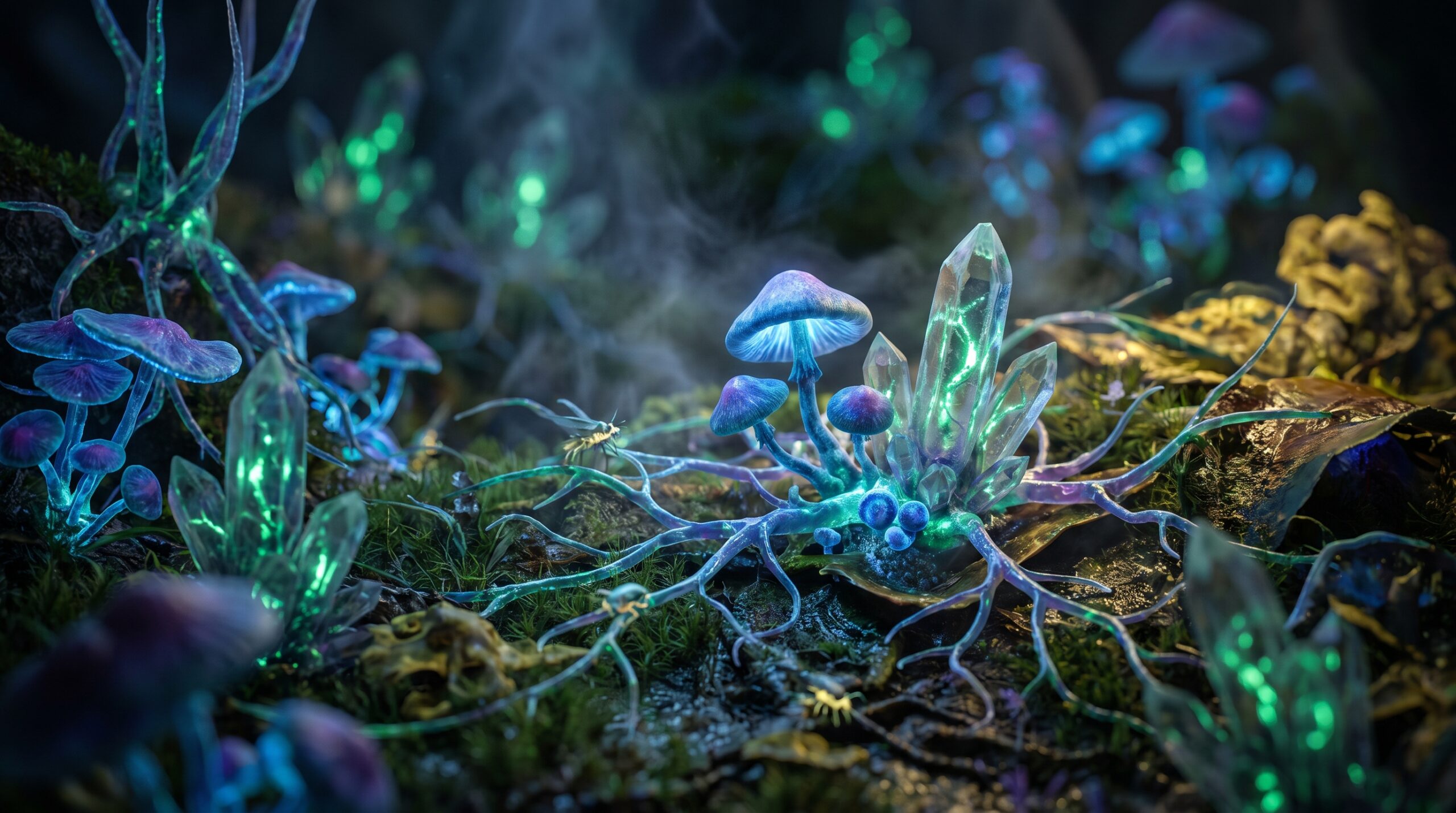
This prompt shifts our focus from urban environments to the natural world, exploring the beauty of organic forms intertwined with radiant energy. We aim for a scene that feels alive and breathing, where the flux elements are an intrinsic part of the ecosystem, not just an overlay. This type of flux art often evokes themes of growth, decay, and the interconnectedness of life.
The challenge here is to render intricate biological structures with a luminous quality that feels natural yet fantastical. The shallow depth of field helps to isolate the subject, drawing the viewer’s attention to the delicate details of the bioluminescent growth. This prompt is about creating a sense of wonder and exploring the hidden beauty within microscopic or otherworldly natural phenomena.
2. Organic Bioluminescent Flux
Prompt:
A macro shot of a dense, alien forest floor at night, teeming with bioluminescent flora and fauna. Intricate fungal growths and crystalline plant structures pulse with soft, internal light, creating a network of glowing veins and tendrils that flow across the damp earth. Mist gently rises, catching the light. Focus on the delicate textures and vibrant, otherworldly colors of the glowing organisms. Shot on Sony A7R IV, 100mm macro lens, f/4, ISO 1600. Shallow depth of field. Aspect ratio 16:9. No text.This prompt emphasizes intricate organic details and the magical quality of natural bioluminescence. The macro lens choice is crucial for capturing the fine textures and delicate structures, creating an immersive, close-up experience.
To enhance the effect, consider how the mist interacts with the light, adding atmospheric depth. Experiment with varying intensities of glow from different organisms to create visual hierarchy and interest within the scene.
The Narrative Power of Flux Art Composition
Composition is the silent storyteller in any visual medium. It’s how we arrange elements within the frame to guide the viewer’s eye, create balance or tension, and ultimately convey meaning. In the context of flux art, where dynamism and abstract forms often dominate, a strong compositional foundation is more critical than ever. Without it, even the most stunning visual effects can appear chaotic and unfocused.
Think about the rule of thirds, leading lines, negative space, and framing. How do these classic principles apply when your subject is a swirling vortex of energy or a flowing cascade of digital particles? The answer lies in applying these principles to the implied structure within the flux. Even in abstraction, there can be a focal point, a direction of movement, and a sense of depth that draws the viewer in.
A well-composed flux art piece doesn’t just look pretty; it tells a story, evokes an emotion, or presents a unique perspective.
For instance, using a wide-angle lens can create a sense of grandeur and immersion, while a telephoto lens might compress the scene, emphasizing density and texture. These are deliberate choices that affect the narrative. When you prompt an AI, you’re essentially setting up the camera and directing the scene. The more specific you are about compositional elements, the more likely the AI is to produce an image that aligns with your artistic intent.
This thoughtful approach to composition is what distinguishes truly impactful flux art from mere digital noise, transforming generative art into a powerful storytelling medium.
Prompt 3: Geometric Data Flux
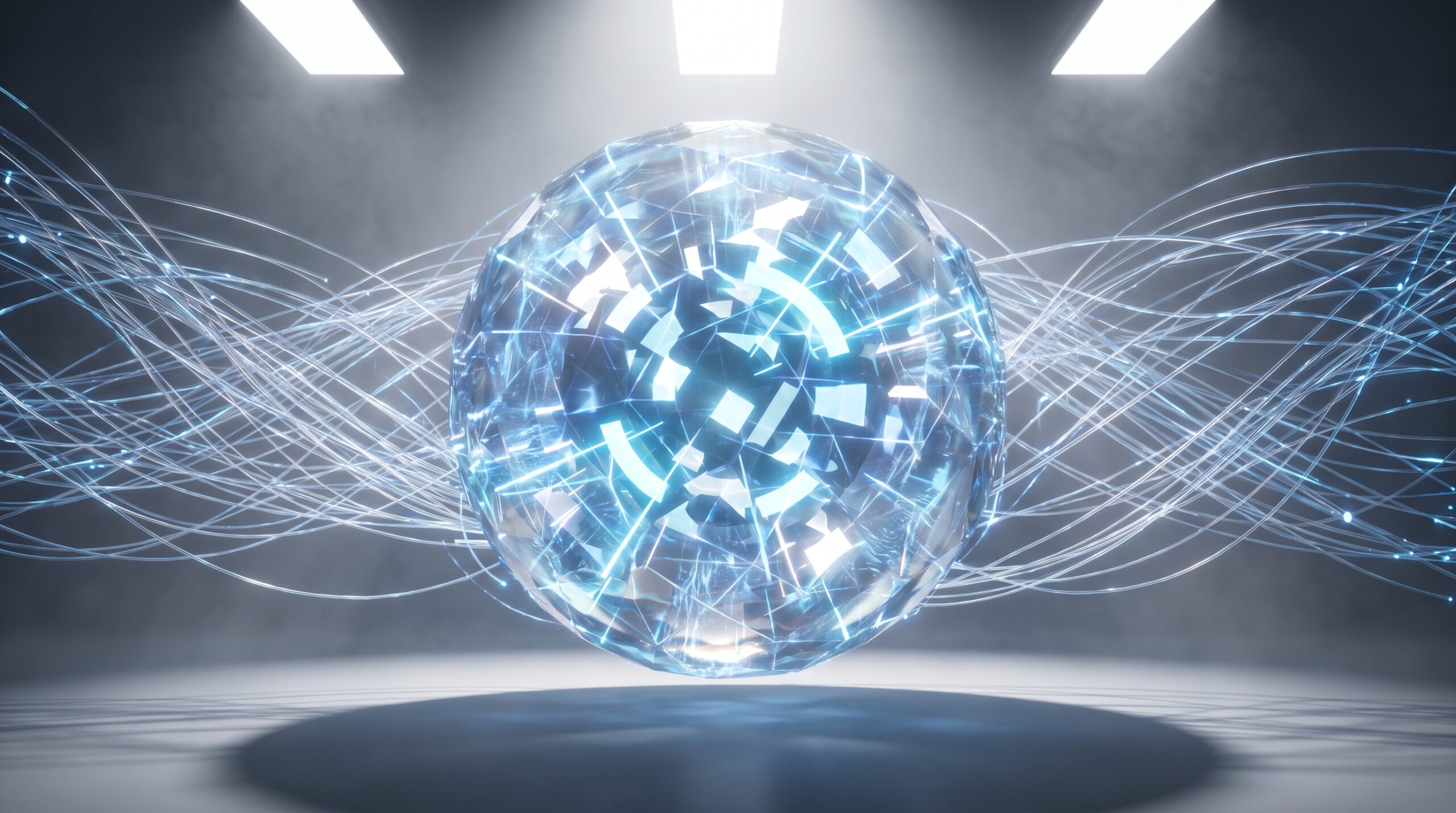
Our third prompt delves into the digital and abstract, envisioning flux art as an intricate dance of data and geometry. This style often explores themes of information, connectivity, and the underlying algorithms that govern our modern world. We’re looking to create an image that feels both highly structured and dynamically fluid, a visual representation of complex systems in motion.
This prompt aims for a clean, futuristic aesthetic, where precise geometric forms are softened and animated by flowing digital energy. The strong, directional lighting emphasizes the sharp edges and reflective surfaces, while the volumetric elements add depth and atmosphere. It’s about creating a sense of controlled chaos, where every element contributes to a larger, intricate design.
3. Geometric Data Flux
Prompt:
A minimalist, clean studio shot of a massive, glowing data core. Intricate geometric patterns of light and energy flow across its crystalline surfaces, constantly shifting and reconfiguring. The core is surrounded by an intricate web of translucent, fiber-optic tendrils, carrying streams of information that pulse with cool blue and white light. Sharp, directional studio lighting from above, creating strong shadows and highlights. Volumetric fog in the background. Shot on Hasselblad X2D 100C, 80mm prime lens, f/5.6, ISO 200. Aspect ratio 16:9. No text.This prompt emphasizes precision and a futuristic aesthetic, combining sharp geometric forms with dynamic, flowing energy. The “Hasselblad X2D 100C” and prime lens suggest a high-resolution, almost architectural quality to the image.
To refine the output, focus on the interplay of light and shadow on the geometric surfaces, ensuring the flux elements enhance rather than obscure the structure. Consider adding subtle motion blur to the flowing data streams for a greater sense of dynamism.
Pushing Boundaries with Complex Flux Art Prompts
As artists, our role is to continually push the boundaries of what’s possible, and AI provides an unprecedented canvas for this exploration. When it comes to flux art, moving beyond basic descriptions and into highly detailed, multi-layered prompts is where true innovation lies. This means thinking about the interplay of different styles, textures, and even historical periods within a single image.
Consider the concept of “photorealistic examples” as mentioned in resources like Quest Studio’s FLUX.2 Prompts guide. Achieving photorealism with flux elements requires a deep understanding of how light behaves on various materials, how atmospheric effects influence perception, and how organic or inorganic forms interact with dynamic energies. It’s about building a believable world, even if that world is entirely fantastical.
This involves specifying camera types, lens choices, and even film stock if you’re aiming for a vintage feel.
The real challenge, and the real reward, comes from combining seemingly disparate elements. What happens when ancient ruins meet futuristic energy flows? Or when a classical portrait is rendered with a dynamic, flowing aesthetic? These are the questions that lead to truly original works of flux art.
By embracing complexity and providing detailed instructions for every aspect of the scene, from foreground to background, from light source to material properties, we can guide the AI to generate visuals that are not just stunning, but also thought-provoking and artistically profound. This requires a director’s vision, an artist’s touch, and the right tools to translate that vision into reality.
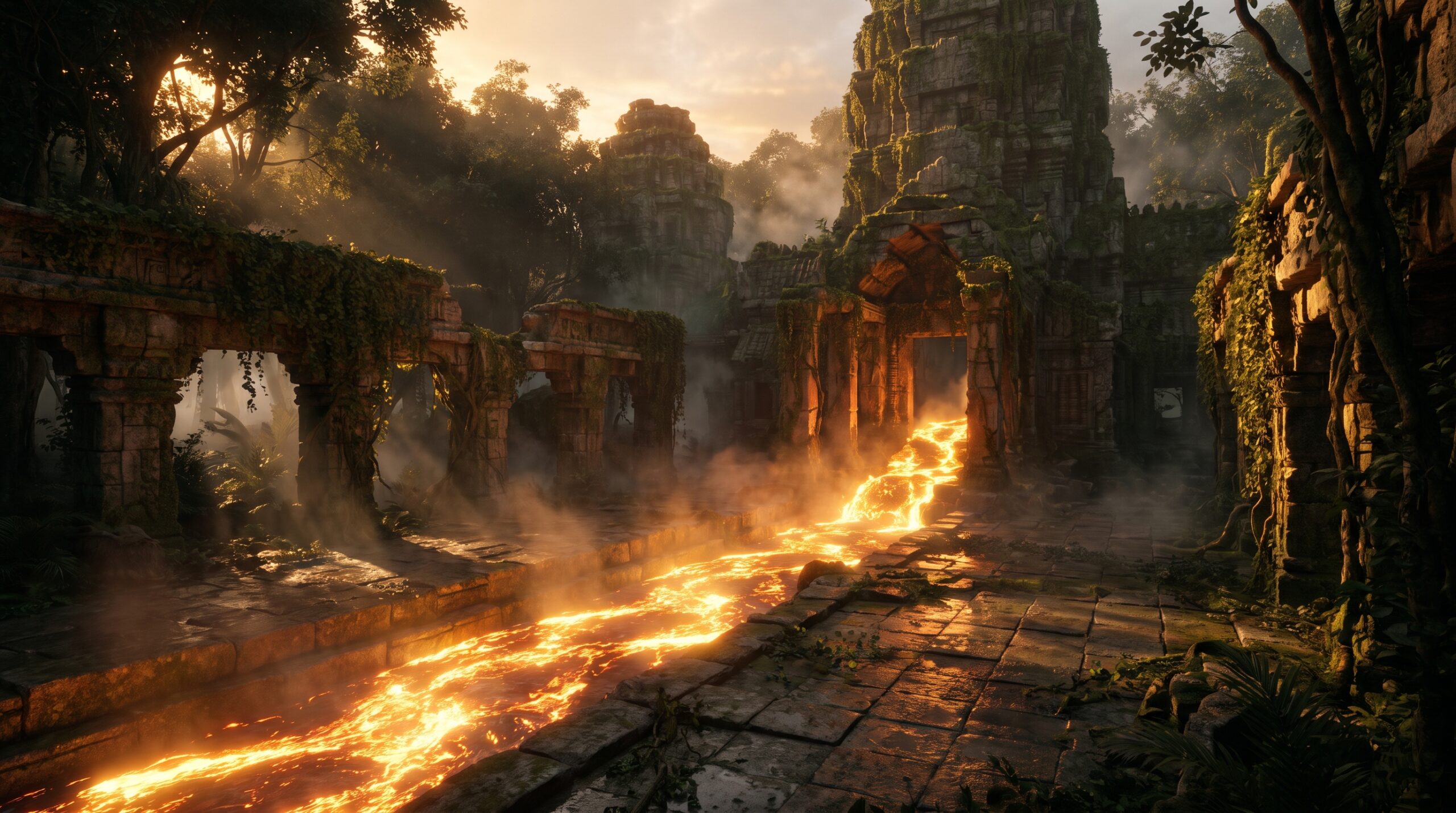
Prompt 4: Ancient Ruins Flux Fusion
This prompt blends the timeless grandeur of ancient architecture with the ephemeral beauty of dynamic energy, creating a powerful fusion. The goal is to evoke a sense of history and mystery, where the ancient world is being either consumed or revitalized by an otherworldly flux. This approach to flux art often carries symbolic weight, representing change, decay, or rebirth.
We’re aiming for a scene that feels epic and dramatic, with a clear narrative implied by the interaction of the flux with the ruins. The specific lighting conditions and atmospheric effects are crucial for conveying the mood and scale. The wide-angle perspective ensures the viewer grasps the vastness of the ruins and the monumental nature of the energy transforming them.
4. Ancient Ruins Flux Fusion
Prompt:
A dramatic wide shot of colossal, moss-covered ancient ruins, reminiscent of a lost Mayan city, partially submerged in a dense jungle. Through the crumbling stone structures, vibrant, molten-gold energy flows like a river, carving new paths and illuminating hidden chambers. The energy pulses with intense heat, casting dynamic shadows and highlights on the weathered stone. Heavy jungle mist intertwines with the glowing flux. Golden hour lighting, cinematic, epic scale. Shot on Red Komodo 6K, 24mm anamorphic lens, f/8, ISO 400. Aspect ratio 16:9. No text.This prompt combines historical grandeur with dynamic, fantastical elements, creating a scene rich in narrative potential. The anamorphic lens choice adds a cinematic widescreen feel, enhancing the epic scale.
To maximize impact, ensure the molten-gold energy interacts realistically with the stone, showing signs of erosion or absorption. Experiment with the intensity of the golden hour light to create varying degrees of warmth and drama.
The Future of Visuals and Flux Art
The landscape of visual creation is in constant flux, much like the art style itself. As AI models become more sophisticated, the distinction between human-created and AI-generated art continues to blur. This evolution demands that artists adapt, not by resisting the technology, but by mastering its tools and techniques. Flux art, with its inherent dynamism and versatility, is a prime example of a style that truly shines under the guidance of advanced AI prompting.
The ability to translate complex artistic concepts into precise, actionable prompts is becoming a core skill for visual creators. This isn’t just about generating images; it’s about art direction on a new frontier. The potential for narrative and conceptual depth in AI-generated visuals is immense, particularly when artists approach prompting with the same rigor and vision they would apply to a traditional film set or canvas.
For those interested in the broader scope of AI art, an article on 11 Essential AI Art Tools: Midjourney, DALL-E, Stable Diffusion Revealed offers a good overview of the landscape.
Looking ahead to 2026 and beyond, we can expect AI tools to offer even greater granularity of control, allowing for more nuanced expressions of styles like flux art. This means that the prompts we craft today will serve as foundational blueprints for even more complex and breathtaking creations tomorrow. The continuous development of AI models, coupled with an artist’s unwavering creative vision, promises a future where visual storytelling is limited only by imagination.
Embracing these tools and understanding the art of prompting is not just about staying relevant; it’s about leading the charge into the next era of visual innovation.
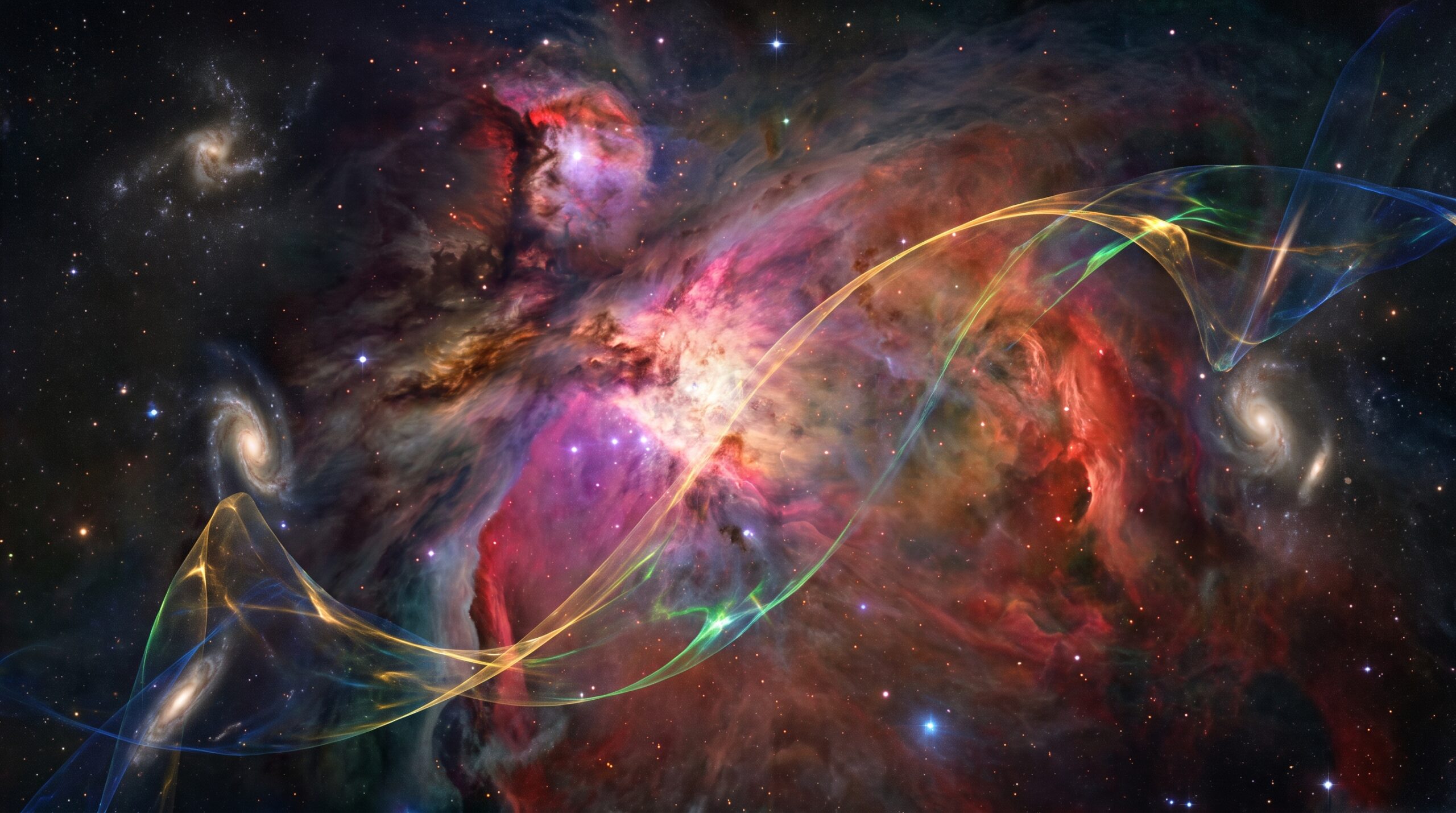
Prompt 5: Cosmic Nebula Flux
Our fifth prompt reaches beyond Earth, into the vastness of space, to explore flux art on a cosmic scale. This prompt aims to capture the awe-inspiring beauty of nebulae, but with an added layer of dynamic, flowing energy that suggests celestial processes and universal interconnectedness. It’s about creating an image that feels both scientifically plausible and deeply mystical.
This prompt seeks to convey immense scale and cosmic wonder, utilizing the inherent beauty of space phenomena. The deep field perspective and specific color palette are crucial for creating a sense of infinite depth and vibrant, ethereal beauty. The subtle interaction of the flux with the nebulae should suggest a living, breathing cosmos.
5. Cosmic Nebula Flux
Prompt:
An ultra-deep field astrophotography shot of a colossal, vibrant nebula, swirling with incandescent gases and cosmic dust. Through the nebula, intricate ribbons of pure, crystalline energy flow and intertwine, pulsing with brilliant golds, deep blues, and electric greens. Distant stars twinkle, and faint galaxies are visible in the background, subtly warped by the energy fields. Volumetric cosmic dust, ethereal glow. Shot on Hubble Space Telescope optics, long exposure, ultra-high resolution. Aspect ratio 16:9. No text.This prompt aims for a breathtaking cosmic scene, blending scientific accuracy with fantastical energy flows. The “Hubble Space Telescope optics” reference grounds the image in a high-fidelity, astronomical aesthetic, suggesting immense detail and scale.
To achieve the best results, focus on the subtle gradients of color within the nebula and how the energy ribbons interact with them without overpowering the natural forms. Ensure the distant galaxies and stars add depth rather than clutter.
Prompt 6: Liquid Chrome Fashion Flux
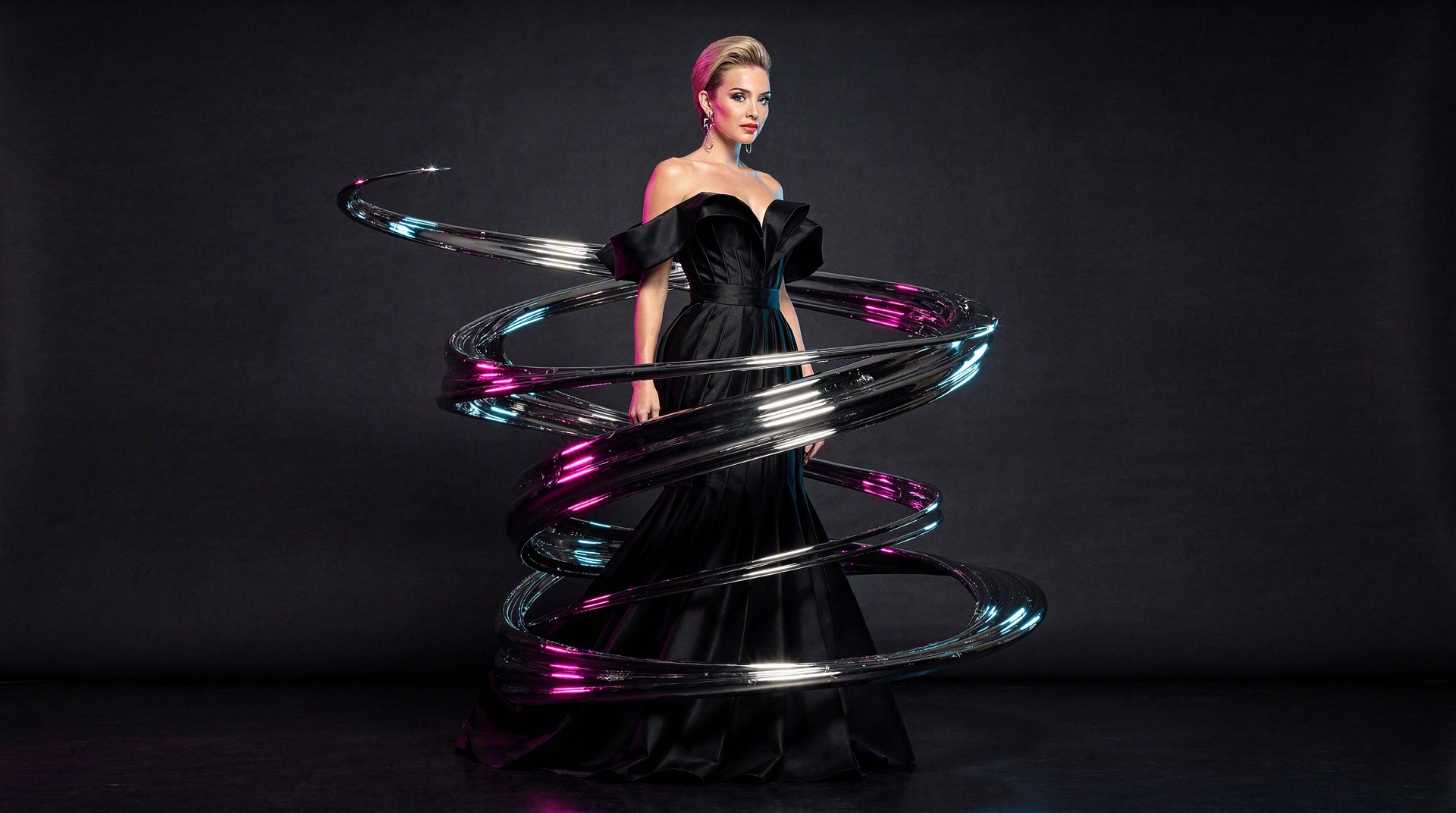
Our sixth prompt brings flux art into the fashion studio. Instead of a landscape, the flow wraps around a human subject, so the energy has to respect the body, the fabric and the light. It is the kind of image I would storyboard for a fragrance or jewelry campaign.
6. Liquid Chrome Fashion Flux
Prompt:
A high-fashion studio portrait of a woman in a sculptural black gown, standing against a dark seamless backdrop. Ribbons of liquid chrome light spiral around her body and drift through the air like slow-motion smoke, catching magenta and cyan reflections on her skin and fabric. Soft key light from camera left, rim light from behind, glossy highlights on the flowing metal. Shot on Hasselblad X2D, 90mm lens, f/4, ISO 100. Aspect ratio 16:9. No text.The trick here is the lighting logic. A soft key and a clean rim light let the chrome ribbons read as real reflective objects instead of a glowing overlay. The medium format camera reference pushes the model toward crisp skin and fabric detail.
Swap the magenta and cyan for gold and white and the same prompt becomes a luxury watch ad. Keep the backdrop dark so the flux stays the hero.
Prompt 7: Deep Ocean Flux
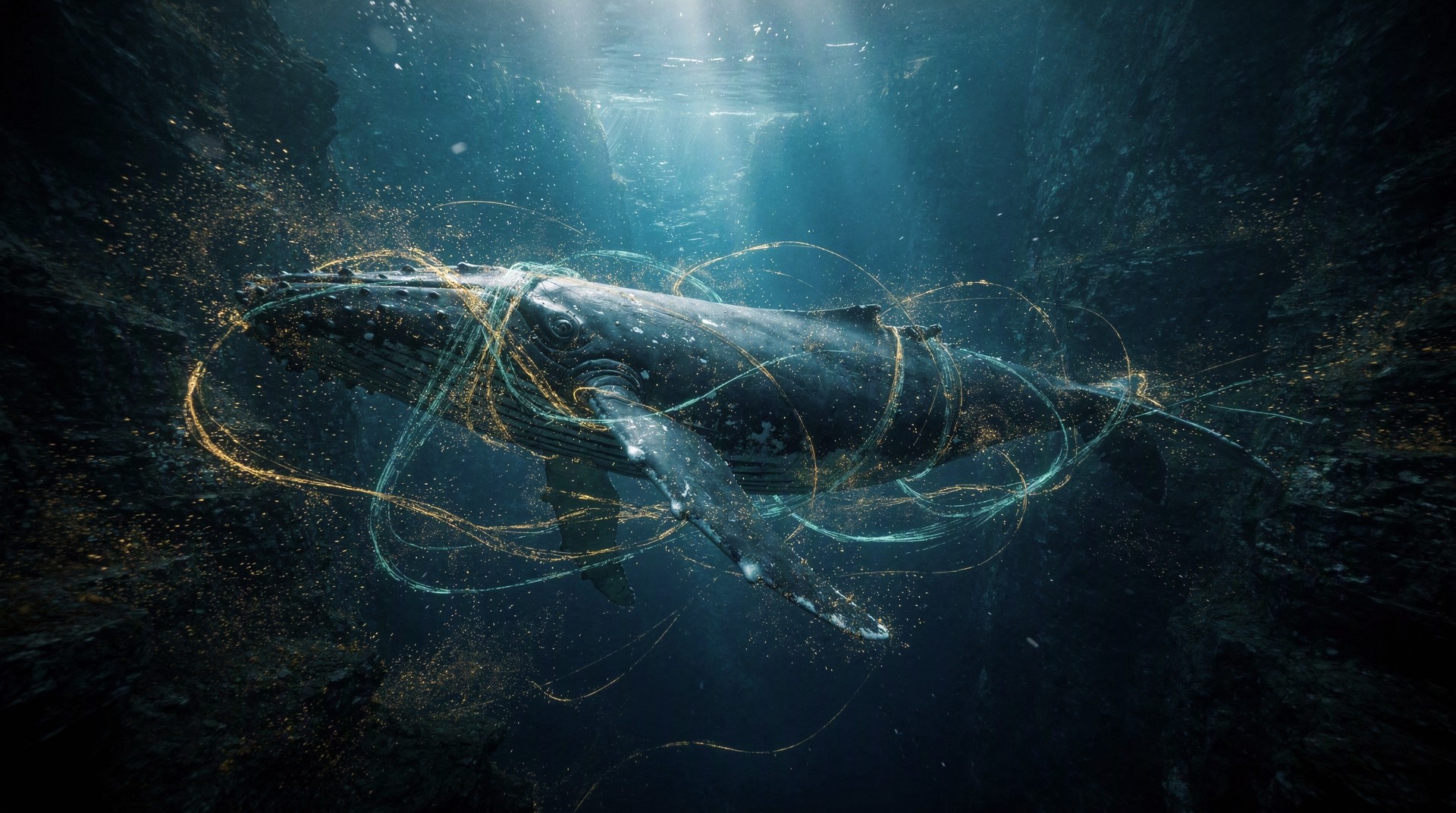
Prompt seven goes underwater, where light behaves differently and scale is everything. A single large animal gives the viewer an anchor, and the flowing energy reads like ocean currents made visible. This is flux art as quiet, monumental calm.
7. Deep Ocean Flux
Prompt:
A wide underwater shot inside a deep ocean trench, where a colossal whale glides through dark blue water. Glowing ribbons of turquoise and gold energy flow in long currents around its body, weaving through drifting plankton and shafts of faint sunlight from far above. Particles suspended in the water, volumetric light, calm and monumental mood. Shot on Red V-Raptor in a deep-sea housing, 14mm wide-angle lens, f/2.8, ISO 1600. Aspect ratio 16:9. No text.Suspended particles are what sell the water. They catch the light and give the image depth, so always mention plankton, silt or marine snow when you prompt underwater scenes.
The wide lens makes the whale feel huge against the trench walls. Try a longer lens for a more intimate, documentary feel.
Prompt 8: Desert Storm Flux
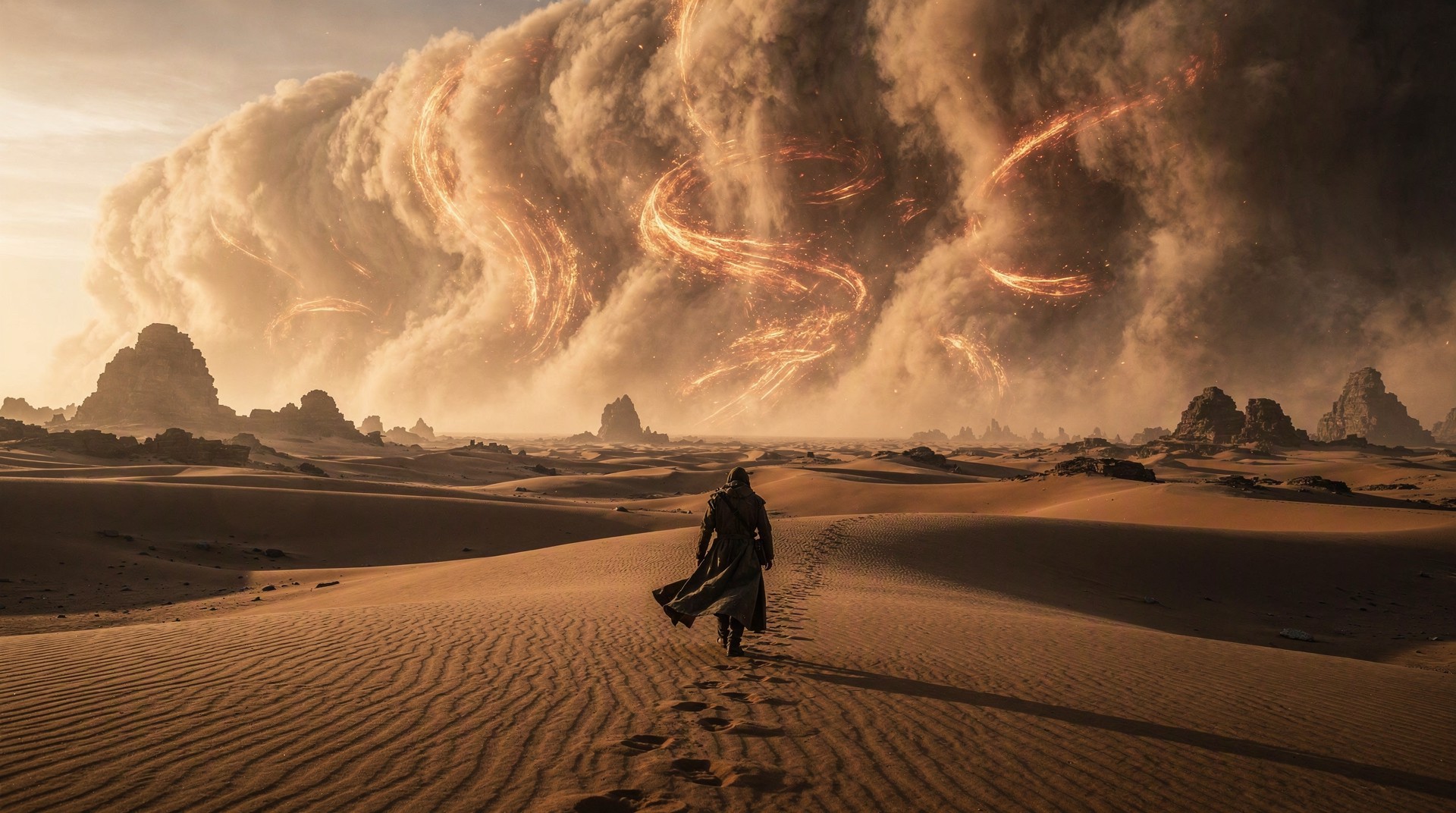
Our eighth prompt is about scale and threat. A lone figure walks toward a wall of sand while threads of fire light move through it. The flux art here is not decoration, it is the weather itself.
8. Desert Storm Flux
Prompt:
A lone traveler in a long coat walking across vast desert dunes at golden hour as a towering sandstorm rolls in. Streams of glowing amber and crimson energy swirl through the wall of sand, bending around rock formations and lifting grains of light into the sky. Hard low sun, long shadows, warm dust haze, epic scale. Shot on Arri Alexa 65, 50mm lens, f/5.6, ISO 400. Aspect ratio 16:9. No text.Placing a small human figure in the lower third is a classic way to communicate scale. The footprints leading back to the camera add a story without a single extra word in the prompt.
Warm amber against a dusty sky keeps the palette tight. If you want a colder mood, move the sun to blue hour and shift the energy to teal.
Prompt 9: Molten Foundry Flux
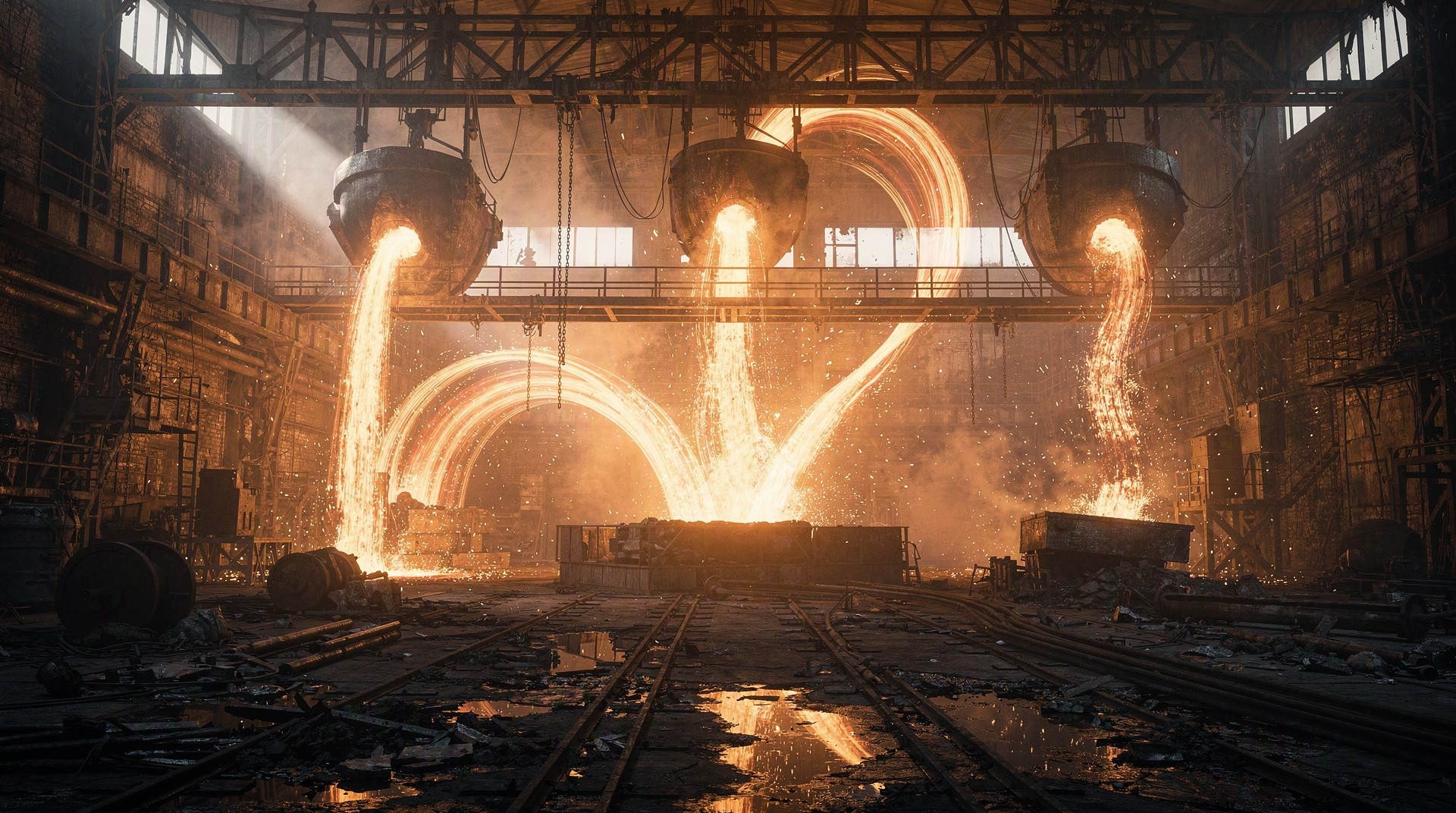
Prompt nine is industrial. Molten metal pours from giant ladles and arcs through the air in glowing curves, inside a space that has been abandoned for decades. It is a good example of flux art grounded in real materials and heat.
9. Molten Foundry Flux
Prompt:
The interior of a vast abandoned steel foundry, with rivers of molten metal pouring from overhead ladles and arcing through the air in luminous orange and white ribbons. Sparks scatter like fireflies across rusted catwalks, cranes and soot-stained brick, smoke catching the glow. Strong contrast between the dark industrial space and the incandescent flow. Shot on Arri Alexa Mini LF, 24mm lens, f/2.8, ISO 800. Aspect ratio 16:9. No text.Contrast does the heavy lifting. The dark, rusted architecture makes the molten light feel dangerous and real. Describing smoke or haze lets the glow bloom naturally into the space.
Reflections in puddles on the floor double the light for free. Mention wet ground in your prompt and you get that extra layer.
Prompt 10: Glacial Aurora Flux
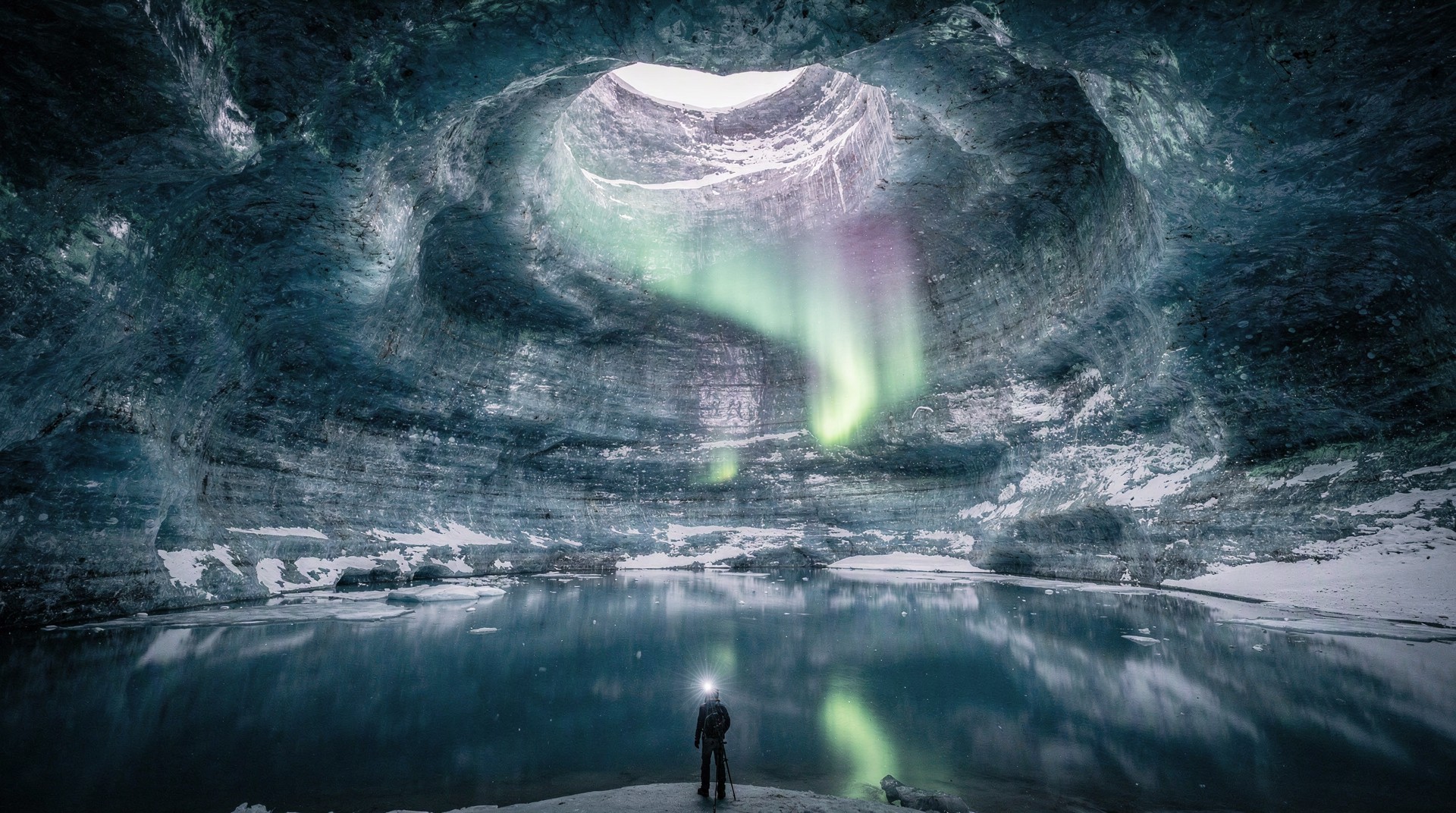
We finish with silence. Prompt ten takes us inside a glacial ice cave, where the flowing light is an aurora pouring through an opening in the ceiling. After fire and metal, this flux art prompt is about cold, stillness and reflection.
10. Glacial Aurora Flux
Prompt:
The inside of a glacial ice cave, with translucent blue walls and frozen ceilings rippling with natural patterns. Ribbons of aurora-green and violet light flow through the cave from an opening above, reflecting across polished ice and a still pool at the floor. A tiny explorer with a headlamp stands at the edge for scale. Cold, serene, crystalline atmosphere, fine ice mist in the air. Shot on Sony A7S III, 16mm wide-angle lens, f/2, ISO 3200, tripod long exposure. Aspect ratio 16:9. No text.The still pool is the secret weapon. It mirrors the light and doubles the composition, which gives the frame a calm symmetry. The tiny explorer with a headlamp gives the cave its scale.
Long exposure language such as tripod and ISO 3200 helps the model reproduce that smooth, night photography look. Experiment with different aurora colors to change the emotional temperature.
Every AI image in this article was generated with AI Render Pro, the prompting engine I built for filmmakers and creatives. Read the full breakdown here.
Frequently Asked Questions
Which AI model works best for flux art prompts?
All ten renders in this article were made with FLUX.2 Pro through AI Render Pro. Flux responds well to long, descriptive prompts that name the subject, the flowing energy, the lighting and a real camera and lens. Other image models can also produce flux art, but detailed camera language is what gives Flux its photographic quality.
How do I write a flux art prompt that works?
Start with a clear subject and setting, then describe the flowing energy: its color, material and how it moves around the scene. Add lighting such as volumetric glow or hard rim light, finish with a camera, lens and aspect ratio, and end with “No text.” Change one element at a time, like the color of the energy or the lens, to see what shifts the mood.
What defines good flux art style prompts?
Good flux art style prompts are characterized by their ability to evoke dynamic movement, fluidity, and transformation within the generated image, often blending organic and abstract elements. They typically include descriptors for flowing energy, shifting patterns, intricate details, specific lighting that emphasizes movement, and a clear sense of how these elements interact with the subject and environment.
Precision in language, detailing textures, colors, and the overall mood, is crucial for achieving compelling flux art.
Discover more from Olivier Hero Dressen Blog: Filmmaking & Creative Tech
Subscribe to get the latest posts sent to your email.

Work with Olivier
Director | CD | DP & Photographer
Specializing in commercials, music videos, AI-driven filmmaking, and cinematic storytelling for brands and production companies.
🌍 Shanghai · Paris · Los Angeles · Dubai
🎬 View Portfolio & Get in Touch