
AI Render Pro is a subscription app that turns plain language descriptions into production ready prompts for AI image and video models. Version 8.5 runs seven modules, from pre-production character sheets through a storyboard builder to image and video studios with 29 integrated models. Plans start at $9 a month. I built it because I was tired of typing blind.
Need a Director for Your Next Project?
From commercials to branded campaigns—Olivier brings creative vision and technical expertise.
→ View ProjectsKey Takeaways
- What it is: AI Render Pro is an AI film production studio, not a single prompt box. Version 8.5 ships seven connected modules.
- Scale: 16 video models, 13 image models, 95 camera techniques, and 9 dropdown controls in the prompt engine.
- The real advantage: it speaks cinematography. Camera bodies, lens families, film stocks, and lighting setups instead of vague adjectives.
- Bottom line: plans start at $9 a month, and the pipeline replaces the five tools most people currently juggle.
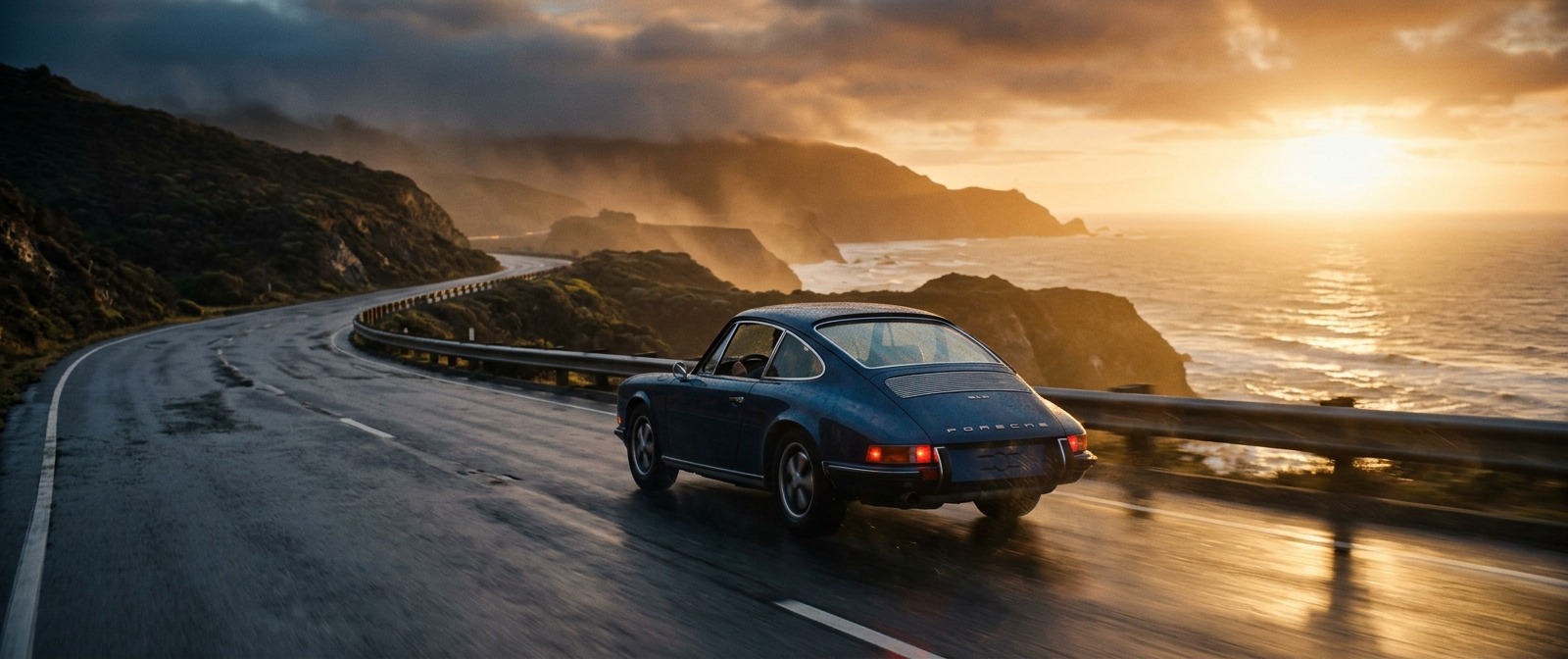
A lone vintage sports car on a wet coastal highway at golden hour, shot on ARRI Alexa with a Zeiss Master Prime 35mm lens, Kodak Vision3 500T film stock, low crash dolly push-in, warm backlit haze, long lens compression, shallow depth of field, cinematic widescreen
Build a prompt like this in AI Render Pro →What Render Pro Actually Is
Search for “render pro” and you will find a pile of 3D rendering engines. This is not one of them. AI Render Pro does not render polygons. It writes the instructions that AI image and video models need in order to produce something that looks like it came off a set rather than out of a stock library.
The distinction matters, because the failure mode people hit with generative tools is almost never the model. The models are extraordinary. The failure is the input. You type “cinematic shot of a car” and the model has to guess the camera, the lens, the time of day, the stock, the movement, and the grade. It guesses badly, and you get that flat over-processed look that announces itself as AI from across the room.
I have spent twenty years directing commercials and films, and the vocabulary that makes a shot work on set is specific. Not “moody lighting” but a neon noir setup with practicals in frame. Not “film look” but Kodak Vision3 500T. AI Render Pro puts that vocabulary into dropdowns so you stop guessing at it.
The Seven Modules, and Why the Pipeline Matters
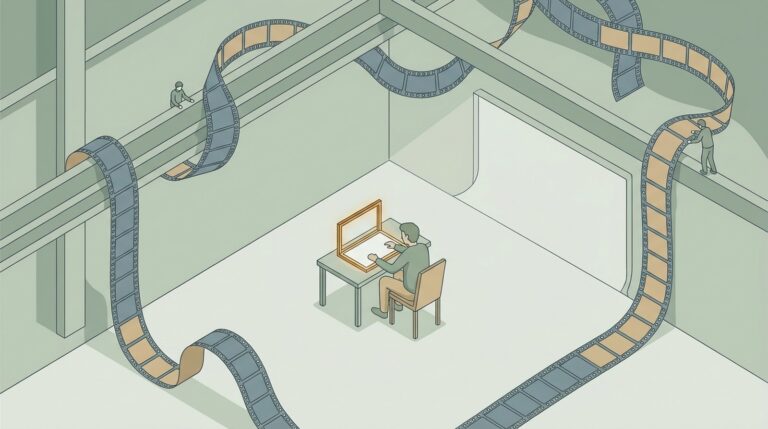
Version 8.5 is built as a pipeline: Prompt Studio, Pre-Production, Storyboard Builder, Image Studio, Video Studio, Director’s Room, and the Vault. Each module feeds the next.
That structure is the actual product. Most people working with AI visuals are running one tool for stills, another for video, a chat window for prompt help, a notes app for storage, and a spreadsheet pretending to be a storyboard. Five tools, no connective tissue, and every handoff loses information. The pipeline exists so that a character you design in Pre-Production is still the same character when it reaches the Video Studio.
Inside the Prompt Studio: Nine Controls, Five Modes
The Prompt Studio has nine dropdown controls and five creative modes: Elite Director, Commercial, Photographer, Designer, and Nano Banana. Each mode shapes the output for a different kind of production, so a commercial brief and a documentary portrait do not come out sounding identical.
There is also an Enrich button. Feed it a rough prompt and Gemini refines it with camera movement, atmosphere, and texture detail. It is the fastest way to see what your prompt was missing, because the gap between what you wrote and what comes back is a free lesson in specificity.
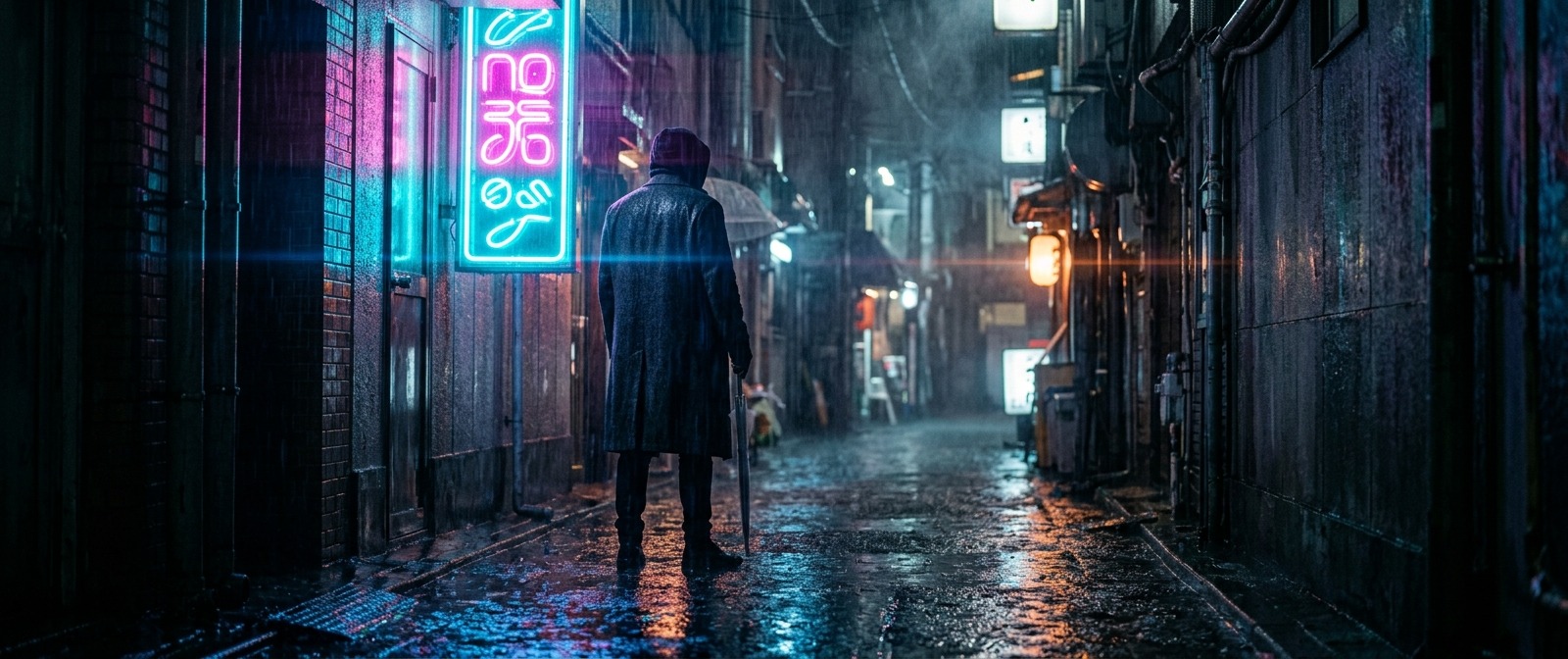
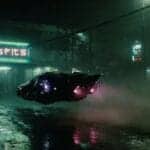
A figure in a long coat standing under a rain-soaked neon sign in a narrow alley at night, neon noir lighting setup, magenta and cyan practicals reflecting in wet asphalt, volumetric haze, anamorphic lens flare, shot on RED V-Raptor, shallow focus, cinematic widescreen
Build a prompt like this in AI Render Pro →Camera Profiles, Lenses, and Why They Change the Output
The camera profiles cover ARRI Alexa, RED V-Raptor, Sony Venice, Panavision, and IMAX 70mm. The lens library runs from Zeiss Master Primes to vintage Cooke glass, anamorphic, macro, and tilt-shift.
This is not decoration. Naming a body and a lens constrains the model in ways adjectives cannot. An anamorphic call brings oval bokeh and horizontal flare. Vintage Cooke glass brings softer falloff and gentler contrast in the highlights. A long lens compresses the background. You are giving the model physics to obey instead of a mood to interpret.
Film Stock Emulation Instead of Filters
Stock options include Kodak Vision3 500T, CineStill 800T, Fuji Velvia, Portra 400, and Tri-X black and white. The difference between naming a stock and asking for a “film look” is the difference between a specification and a wish.
Portra 400 has a particular way with skin. Velvia pushes saturation in a direction that reads as landscape photography. CineStill halates around bright practicals. Those are real characteristics of real emulsions, and models trained on enormous photographic corpora have absorbed them.
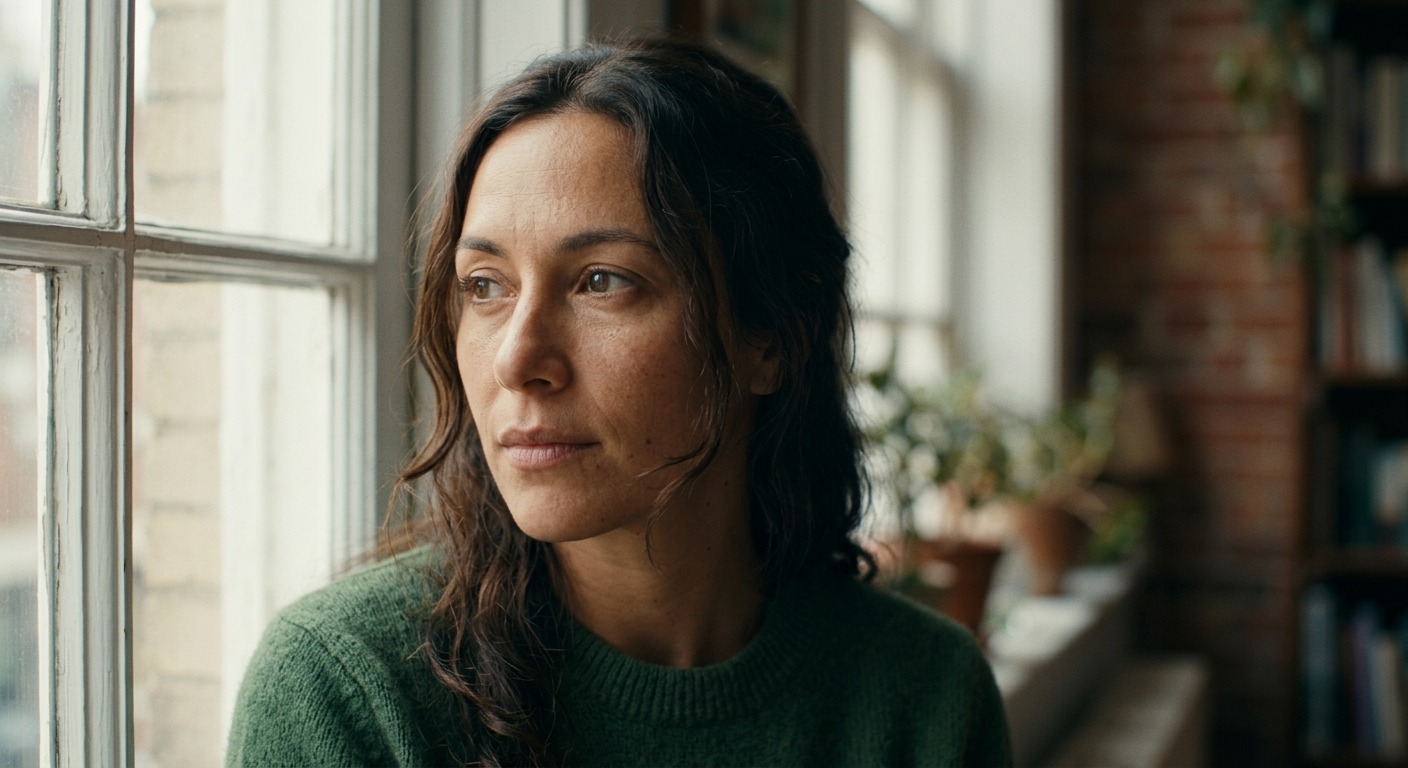
A close portrait of a woman by a window in soft north light, Rembrandt lighting, shot on Sony Venice with a vintage Cooke lens, Kodak Portra 400 emulation, warm skin tones, gentle halation on the highlights, creamy bokeh, fine analog grain
Build a prompt like this in AI Render Pro →Sixteen Lighting Setups and Twenty Two Locations
Sixteen lighting setups ship as presets: golden hour, neon noir, studio soft, Rembrandt, high key, volumetric, and more. Twenty two locations cover urban, desert, underwater, space station, neon city, forest, and rooftop.
Lighting is the highest leverage control in the whole app. Change nothing else in a prompt, swap the lighting setup, and you get a genuinely different image. Same truth as on set, where the lighting plan decides the shot long before anyone argues about the lens.
Forty One Camera Movements and Thirty Eight Transitions
The technique library holds 95 entries: 41 camera movements, 38 transitions, and 22 visual effects. Crash dolly, Steadicam float, whip pan, infinite zoom, vertigo effect, bullet time. On the cutting side, match cut, J-cut, whip transition, morph dissolve, light leak, glitch, and film burn.
Movement is where AI video still separates people who know what they are asking for from people who do not. “Camera moves” produces drift. A crash dolly push-in produces a crash dolly push-in.
Image Studio and Video Studio: Twenty Nine Models in One Place
The Image Studio carries 13 models including Nano Banana Pro Ultra 4K, GPT Image 2, and Flux Dev, with text-to-image and image-to-image plus location, lighting, and quality presets.
The Video Studio carries 16 models including Seedance 2.0, Kling 3.0, Veo 3.1, Wan 2.7, and HappyHorse. You can upload reference images, tag them with @Image, and select quality up to 4K. Twenty nine models in total, generated from inside the app rather than pasted between five browser tabs.
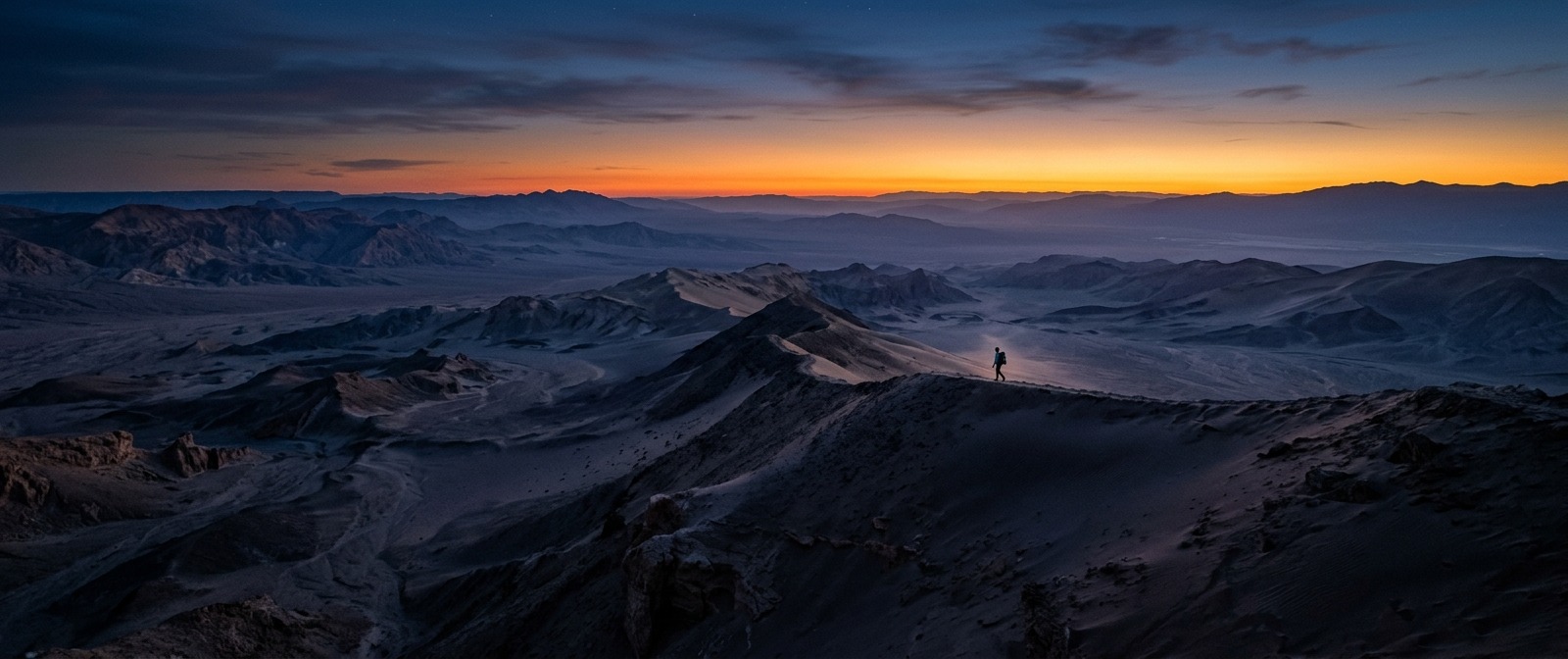
A wide desert landscape at blue hour with a single figure walking a ridge line, IMAX 70mm scale, anamorphic widescreen, deep cool shadows against a warm horizon band, atmospheric depth haze, tilt-shift free ultra wide composition, epic scale
Build a prompt like this in AI Render Pro →Pre-Production and the Storyboard Builder
Pre-Production handles character turnarounds, expression sheets, wardrobe flat lays, product shots, and environment plates. You build the cast and the world before generating a single finished frame, which is the step most AI workflows skip and then regret.
The Storyboard Builder is a scene by scene editor with camera movement, transition, and visual effect set per shot. It exports as a video prompt, a storyboard sheet, per scene prompts, or a grid to video prompt, so the plan leaves the app in whatever shape the next step needs.
The Vault and the Director’s Room
The Director’s Room is an AI chat with reference image upload and all 95 techniques available to it. You brainstorm shot lists, plan transitions, and map @Image references, and it persists across sessions, so the conversation is still there tomorrow.
The Vault is the memory. Save any prompt from any module, search it, filter by category, and push it straight back into the Image or Video Studio. Every prompt you write becomes an asset instead of something you lose when you close the tab.
Who It Is For, and Who It Is Not For
It is built for filmmakers, commercial directors, brand teams, photographers, designers, and anyone who thinks in shots rather than keywords. If you already speak cinematography, it removes the typing. If you are learning, the dropdowns teach you the vocabulary by showing you what changes when you use it.
It is the wrong tool if you want one image, once, and do not care what it looks like. Free generators handle that. The value here compounds across a body of work, when consistency and a repeatable pipeline start to matter more than any single render.
Plans start at $9 a month. The full module breakdown is on the AI Render Pro page.
Frequently Asked Questions
Is Render Pro a 3D rendering engine?
No. AI Render Pro is a prompt engineering and AI production app. It does not render 3D geometry. It builds the prompts that AI image and video models use, and it generates through those models directly inside the app.
What does AI Render Pro cost?
Plans start at $9 a month for version 8.5. That covers the seven modules, the 95 technique library, and access to the integrated image and video models.
Which AI models does it support?
Twenty nine models are integrated: 13 image models including Nano Banana Pro Ultra 4K, GPT Image 2, and Flux Dev, and 16 video models including Seedance 2.0, Kling 3.0, Veo 3.1, and Wan 2.7. Prompts are also optimized for Midjourney and Runway.
Do I need to know cinematography to use it?
No. The controls are dropdowns, so you can pick a camera, a lens, a film stock, and a lighting setup without knowing the theory first. Most people learn the vocabulary by watching what each choice does to the output.
Can I reuse prompts across projects?
Yes. The Vault saves any prompt from any module, with search and category filters, and sends saved prompts straight back into the Image Studio or Video Studio.
Discover more from Olivier Hero Dressen Blog: Filmmaking & Creative Tech
Subscribe to get the latest posts sent to your email.
Work with Olivier
Director | CD | DP & Photographer
Specializing in commercials, music videos, AI-driven filmmaking, and cinematic storytelling for brands and production companies.
🌍 Shanghai · Paris · Los Angeles · Dubai
🎬 View Portfolio & Get in Touch