
This post is actually a remastering of one of my older articles. Around 20 years ago, I was working as an animation director, and this is one of the old characters I created for a full 2D/3D animated film produced by a (now RIP) Paris-based company called La P‑Loche.
Need a Director for Your Next Project?
From commercials to branded campaigns—Olivier brings creative vision and technical expertise.
→ View Projects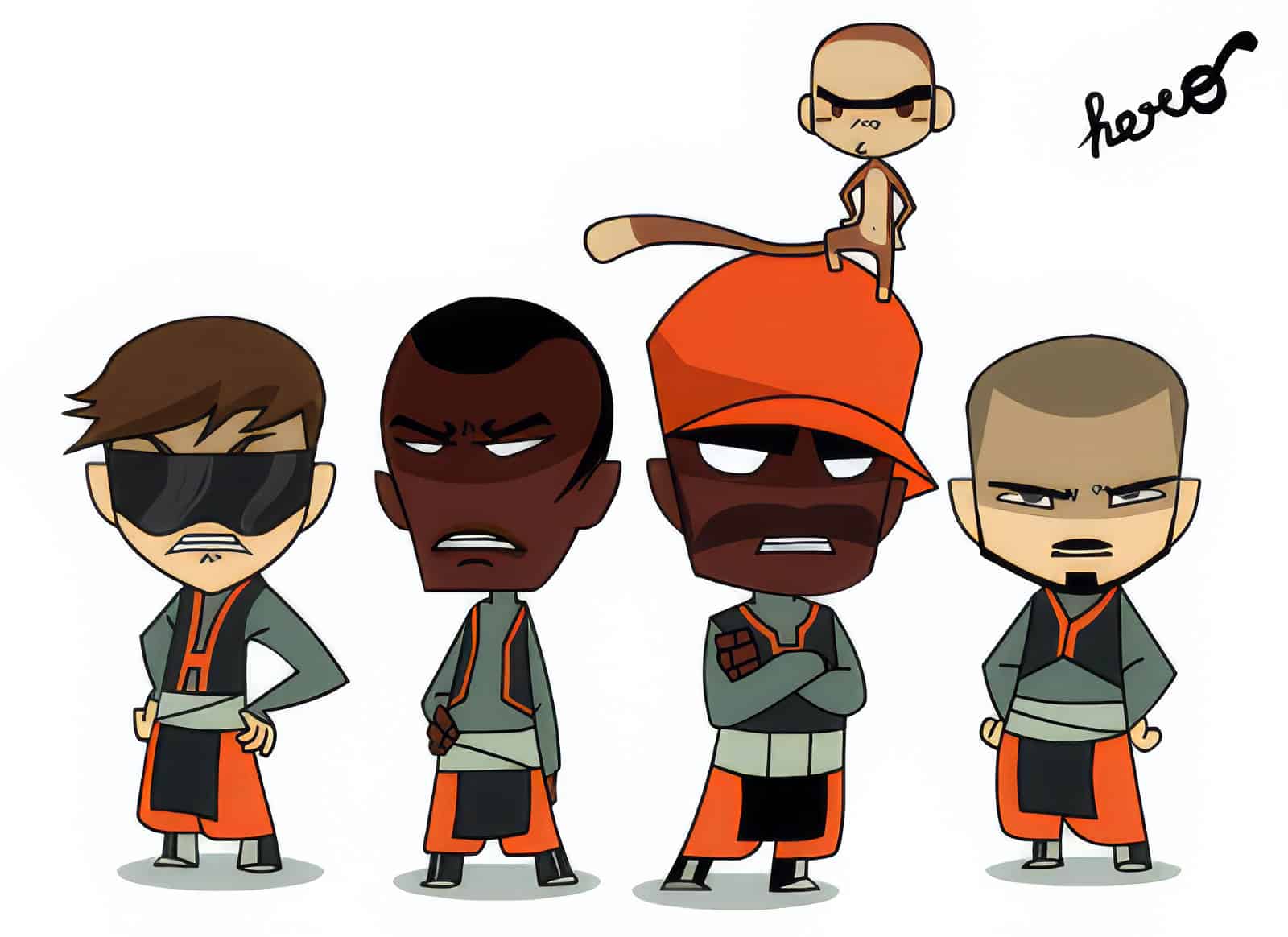
Character design remastered – Topaz AI upscale for character art
The original blog post was quite old, so the image was tiny. I reworked and upscaled it using Topaz AI with a 4x upscale, which did a surprisingly clean, almost-perfect job on the details.
The animation itself was produced in Flash, composited in After Effects, and edited in tools like Premiere (or even Vegas Video at the time), mixing techniques that were pretty hybrid for that era.
If you remember that project, thanks for being part of this journey for so long. I invite you to check out my more recent work and experiments in character design, including my articles about characters in Midjourney and AI Render Pro.
2026 update – falling back into the rabbit hole
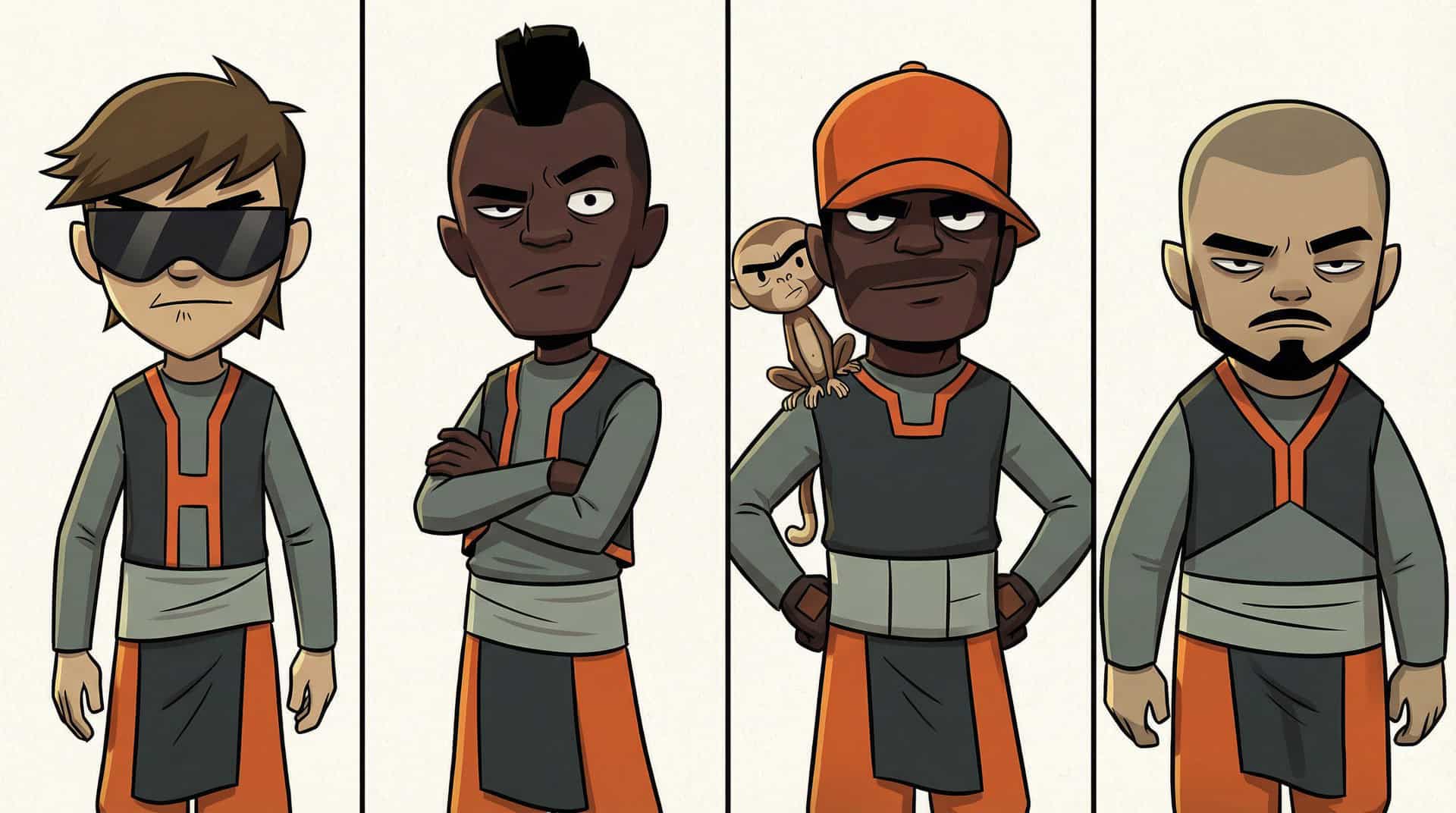
Since it is now 2026 and these designs were created in the early 2000s, revisiting this character felt like opening a time capsule from my early days as an animation director at La P‑Loche in Paris. What started as a simple Topaz AI upscale quickly turned into a full remaster experiment, exploring how far modern tools can push an old character design without losing its original DNA.
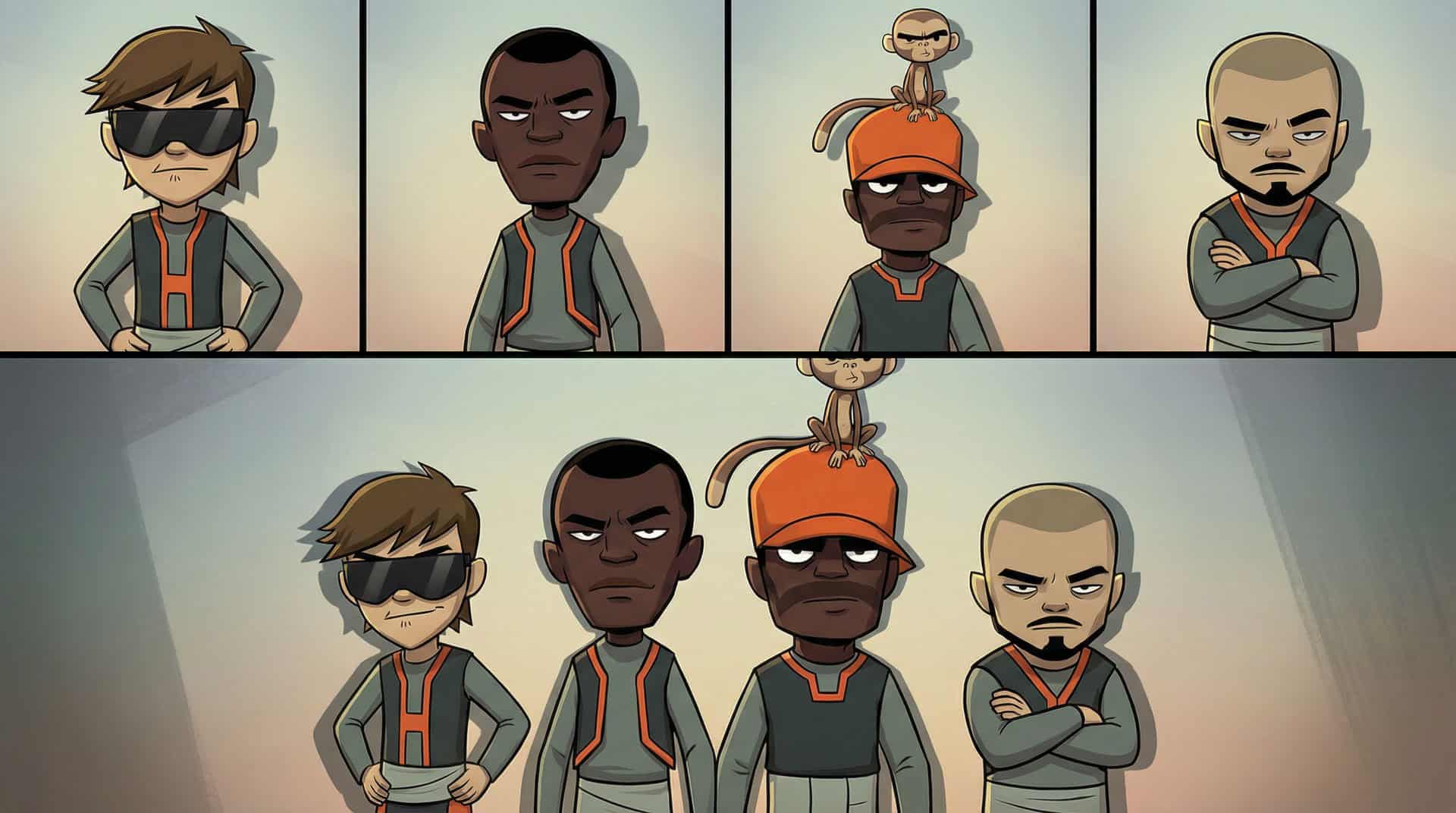
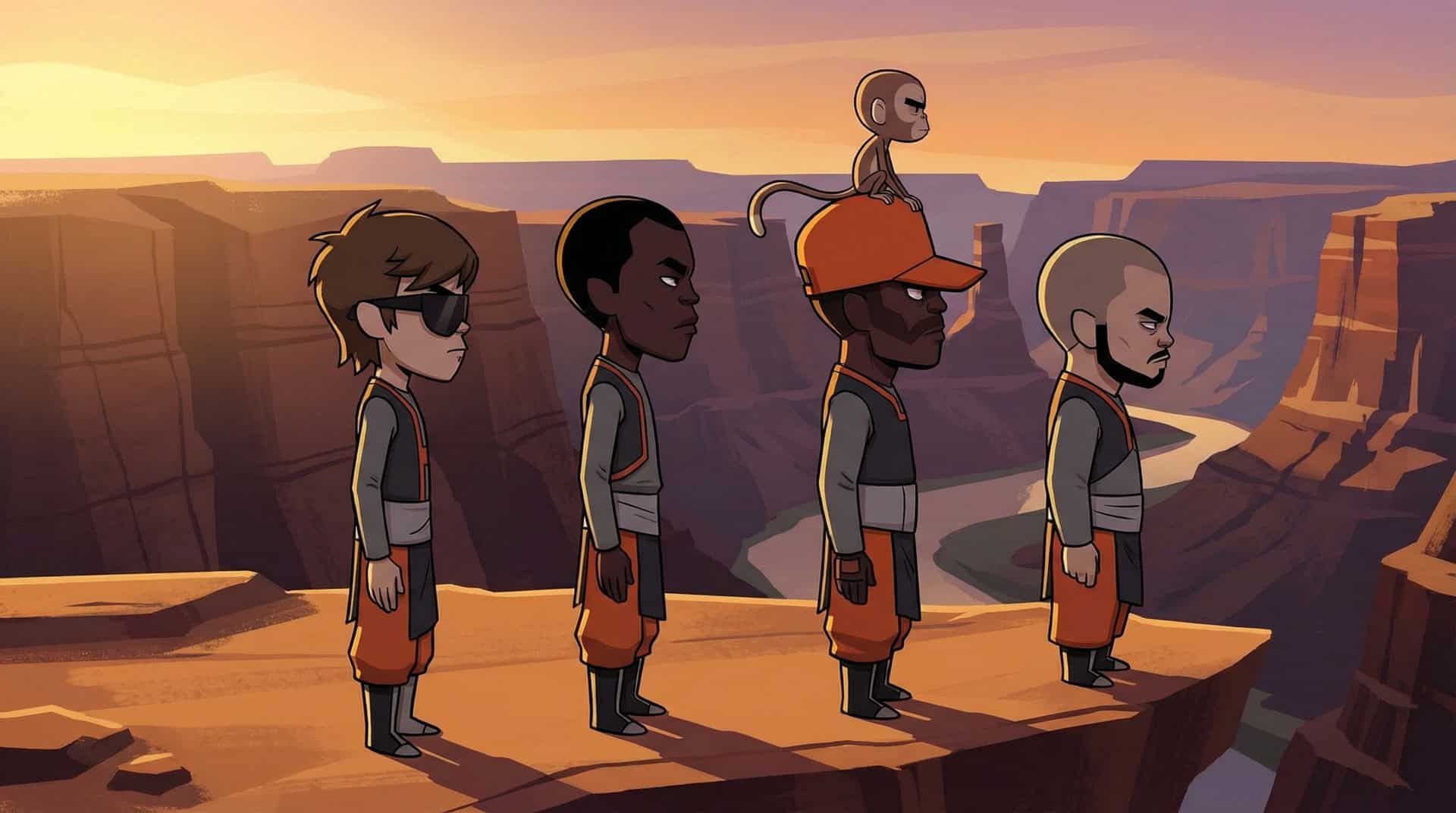
AI Render Pro and Nano Banana gave me a way to test different lighting setups, materials and stylizations while still keeping the silhouette, proportions and attitude of the original drawing intact. The new renders feel surprisingly consistent from angle to angle, which is something that used to demand a massive amount of manual cleanup back in the Flash and After Effects days.
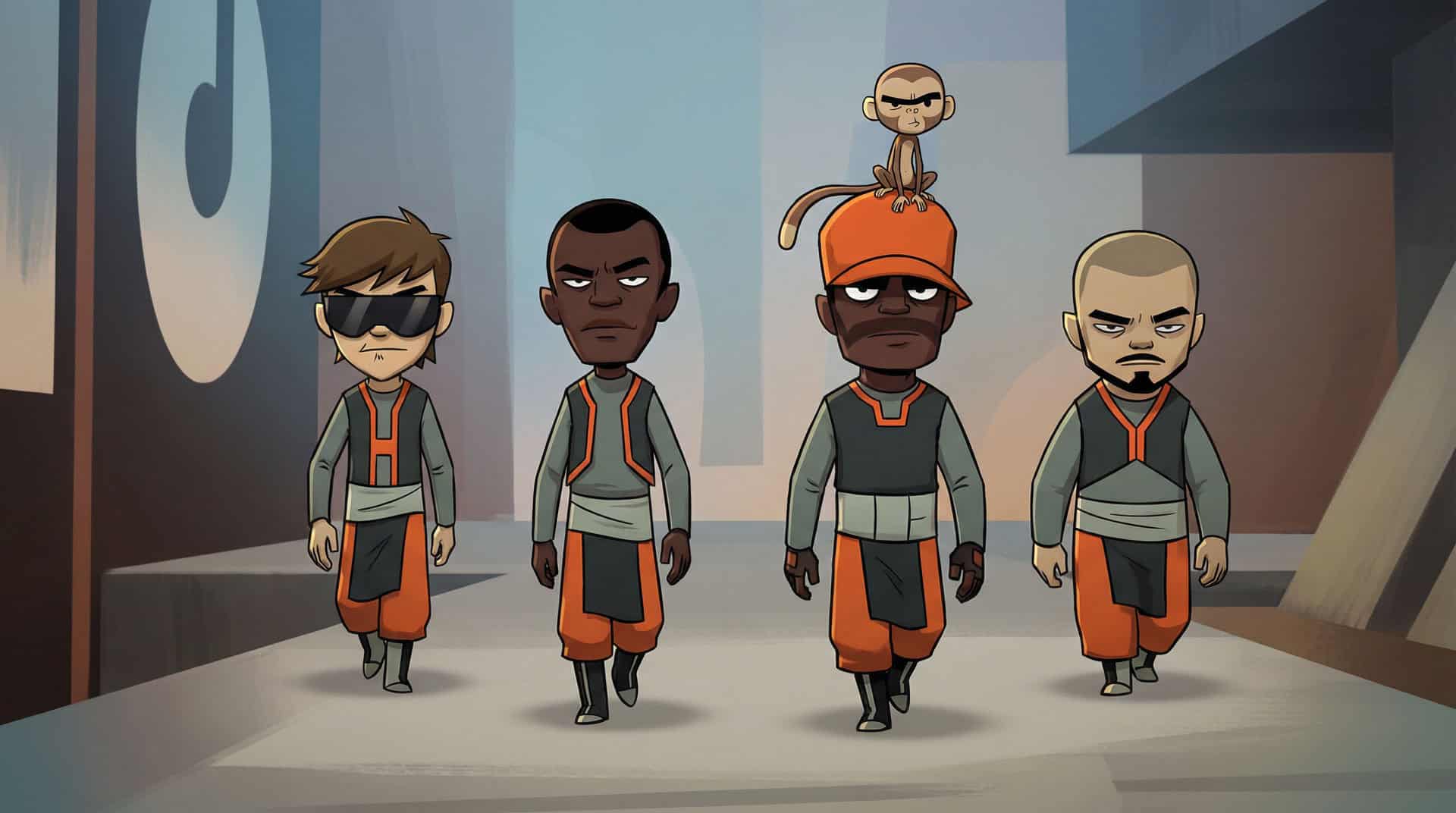
General prompt from AI RENDER PRO:
Use the uploaded image as the exact character reference.
Preserve face shapes, skin tones, hairstyles, clothing colors, proportions, and graphic style exactly.
Do not redesign the characters.
Do not change outfits.
Only change pose, camera, and environment.
Maintain a hybrid 3D base with 2D graphic shading, similar to Gorillaz music videos.
A cinematic still frame featuring the same four characters from the uploaded reference image, walking forward together in a loose formation.
They retain their exact character designs, outfits, and facial proportions.
Visual style: hybrid 3D characters with 2D cel-shaded textures, bold outlines, flat color blocks, subtle painterly shading, inspired by Gorillaz music videos.
Camera: medium-wide shot, eye level, slightly frontal.
Mood: confident, cool, understated attitude.
Background: minimalist urban abstract environment, soft gradients, graphic shapes, muted concrete tones.
Lighting: soft studio lighting with subtle rim light, no harsh shadows.
Clean composition, no motion blur, no realism drift.
What’s next in this remaster series?
This post is likely to become the first chapter of a bigger “legacy character remaster” series on the blog. The plan is to revisit more cartoon characters from different projects, show original vs remaster, and document how tools like Topaz AI, AI Render Pro and Nano Banana can extend the life of older IPs.
If this kind of process interests you, keep an eye on upcoming posts where I will share more before/after breakdowns, prompt notes, and maybe even early exploration for new anime concepts based on these refreshed designs.
How AI Render Pro Revolutionizes Character Design Workflow
AI Render Pro has fundamentally changed the character design workflow by solving one of the medium’s most persistent challenges: maintaining visual consistency across multiple angles, poses, and environments. Traditional character design required tedious model sheets, turnarounds, and reference guides to ensure consistency, a process that could take days or weeks before even beginning production. With AI Render Pro, designers can now upload a single character reference and generate dozens of perfectly consistent variations instantly, preserving every detail from facial features and proportions to clothing textures and color palettes.
This is revolutionary not just for speed, but for creative exploration, you can test your character in different lighting scenarios, from various camera angles, or in completely different environments without losing the core design identity. For animation studios working on tight deadlines, this means rapid iteration during the concept phase: directors can see their characters in context before committing to full production, catching design issues early when changes cost hours instead of thousands of dollars.
For indie creators and solo artists, AI Render Pro democratizes access to professional-quality character development that was previously only achievable by large studios with dedicated character design departments. The tool excels particularly at hybrid 2D/3D styles, like the Gorillaz aesthetic shown in these La P-Loche remasters, where maintaining that delicate balance between cel-shaded flatness and dimensional depth has always required expert artistic judgment.
By preserving your original character DNA while offering infinite variation, AI Render Pro doesn’t replace the designer’s vision; it amplifies it, turning the tedious technical maintenance of consistency into an
Q&A – character design remaster
Q: Why remaster such an old design now?
A: This design is part of a 20‑year‑old 2D/3D animated film produced at La P‑Loche in Paris, and remastering it with modern tools is a way to reconnect with that era while preserving the artwork in better quality.
Q: What tools did you use to upscale the artwork?
A: The original image was tiny, so it was reworked and upscaled with Topaz AI at 4x, which delivered a surprisingly clean and almost‑perfect reconstruction of the lines and textures.
Q: How was the original animation produced?
A: The project mixed Flash for animation, After Effects for compositing, and editing in tools like Premiere or even Vegas Video, which was quite a hybrid workflow for that time.
Q: Can this workflow be used on other legacy projects?
A: Yes, the same Topaz AI upscale character art approach can be applied to old frames, concept art, or stills from early digital projects to bring them closer to today’s visual
/heading
Discover more from Olivier Hero Dressen Blog: Filmmaking & Creative Tech
Subscribe to get the latest posts sent to your email.
Work with Olivier
Director | CD | DP & Photographer
Specializing in commercials, music videos, AI-driven filmmaking, and cinematic storytelling for brands and production companies.
🌍 Shanghai · Paris · Los Angeles · Dubai
🎬 View Portfolio & Get in Touch
[…] but for storytelling, we need movement, emotion, and intent. This is where you transition from a character designer to a director, and where Nano Banana’s one-shot editing capabilities truly shine. Its ability […]