
- Master Natural Language Prompting: Nano Banana excels with conversational, detailed descriptions. Combine physical traits, personality, and context into natural language prompts that tell a story rather than list features.
- Leverage Character Consistency: Nano Banana’s groundbreaking character consistency feature maintains facial features and identity across multiple edits. Start with a strong base image and evolve it through iterative prompting.
- Edit Like a Director: Use dynamic, action-focused language to place your characters in scenes filled with life. Nano Banana’s one-shot editing capabilities transform static portraits into cinematic moments.
- Build Complete Worlds: Fuse artistic styles, control atmosphere through lighting descriptors, and use multi-image context to create cohesive visual narratives that feel professionally crafted.
I’ve spent years of my life trying to pull characters from my imagination onto a page or a screen. From tagging “Hero” on city walls as a kid to storyboarding scenes for a film, the process has always been a mix of excitement and frustration. A character feels so clear in your head, but translating that essence is the real work.
Need a Director for Your Next Project?
From commercials to branded campaigns—Olivier brings creative vision and technical expertise.
→ View ProjectsWhen I first started experimenting with AI image tools, that feeling returned. The results were stunning but often felt… inconsistent. It wasn’t until I started working deeply with Nano Banana, particularly through its integration with Google’s Gemini, that something clicked. This tool doesn’t just respond to keywords; it understands conversations and maintains the integrity of your characters across edits.
This shift from commanding to conversing is everything. What makes Nano Banana revolutionary is its ability to maintain character consistency, something that has been the holy grail of AI image generation. For anyone trying to create not just a pretty picture, but a person, a being with a past, a mood, a purpose who can exist across multiple scenes, Nano Banana offers a unique canvas.
It allows us to be writers and directors, not just operators. This guide is a collection of Nano Banana character design prompts and ideas that have worked for me in my workflow. These aren’t magic spells, but frameworks for thinking that can help you pull those unforgettable characters out of your head and onto the screen.
Laying the Foundation: The Natural Language Persona Prompt
The first step in crafting powerful Nano Banana character design prompts is embracing its conversational nature. Nano Banana, powered by Google’s Gemini models, thrives on natural language descriptions that read like you’re talking to a creative collaborator. Unlike tools that prefer comma-separated keywords, Nano Banana wants you to describe your character the way you’d describe them to an illustrator over coffee. It can connect a character’s clothing to their personality, their expression to their backstory, and their posture to their emotional state because it processes language with genuine understanding, not just pattern-matching.
This process mirrors the early stages of professional creative development. In animation and video games, concept artists at studios like Naughty Dog or Pixar don’t just draw a character; they receive a detailed brief outlining their history, motivations, and role in the story. A character’s worn-out boots or pristine armor tells a story. We can simulate this by crafting a prompt that is less like a technical specification and more like a character biography. By front-loading this level of narrative detail, you anchor the character’s core identity, making subsequent generations and edits more cohesive. This is a foundational step explored in many of my Filmmaking AI Workflows, where a strong concept is paramount.
What makes this especially powerful in Nano Banana is that your initial prompt can be refined through conversation. If your first generation isn’t quite right, you can describe what needs to change in natural language, “make her expression more contemplative,” “add more weathering to the coat,” “shift the lighting to be moodier”, and Nano Banana understands these nuanced requests.
Practical Tip: Before you write a single word of your prompt, take two minutes to write a short, three-sentence bio for your character. Who are they? What do they want? What is their primary mood? Then, speak these details naturally into your prompt as if you’re describing them to a friend. This simple exercise will transform your Nano Banana character design prompts from mechanical descriptions into living, breathing character briefs.
Here is my first draft in AI Render Pro:
Prompt 1: The Conversational FoundationCreate a character for me: a young android detective named Kaelen. She has short, asymmetrical silver-blue hair that catches the light, with glowing cyan optical sensors instead of regular eyes. You can see subtle cybernetic seams tracing along her jawline. She's wearing a worn nano-fabric trench coat over a simple black turtleneck and tactical cargo pants, the kind of outfit that's seen action.
Her expression should convey both intense curiosity and a kind of weary determination, like she's seen too much but refuses to give up. Go for a gritty cyberpunk noir aesthetic with cinematic lighting that emphasizes the contrast between her human-like features and her artificial nature.
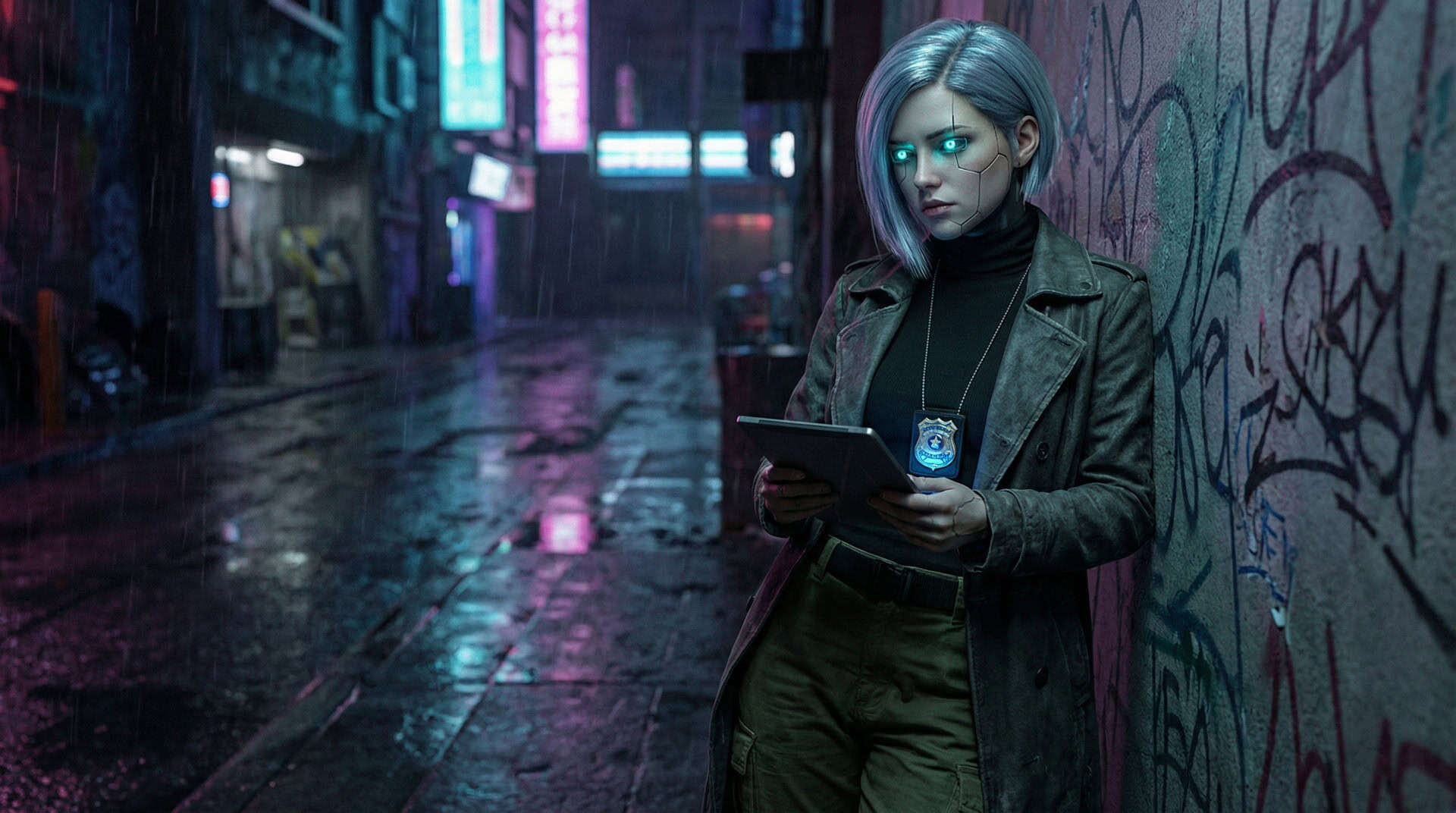
EDIT: I thought the result wasn’t quite as cinematic as I expected, so I did some research about a specific setup to add more realism and added this prompt at the end:
Additional prompt from AI Render Pro:Desaturated color palette, subtle film grain, slight film flashing. Shot on 35mm film, Mitchell FC 65, Panavision C-Series wide anamorphic lens, Eastman 100T 5247. Feels like a paused frame from a finished sci-fi feature film. Realistic, grounded, premium, no concept-art look, no exaggerated cyberpunk elements.
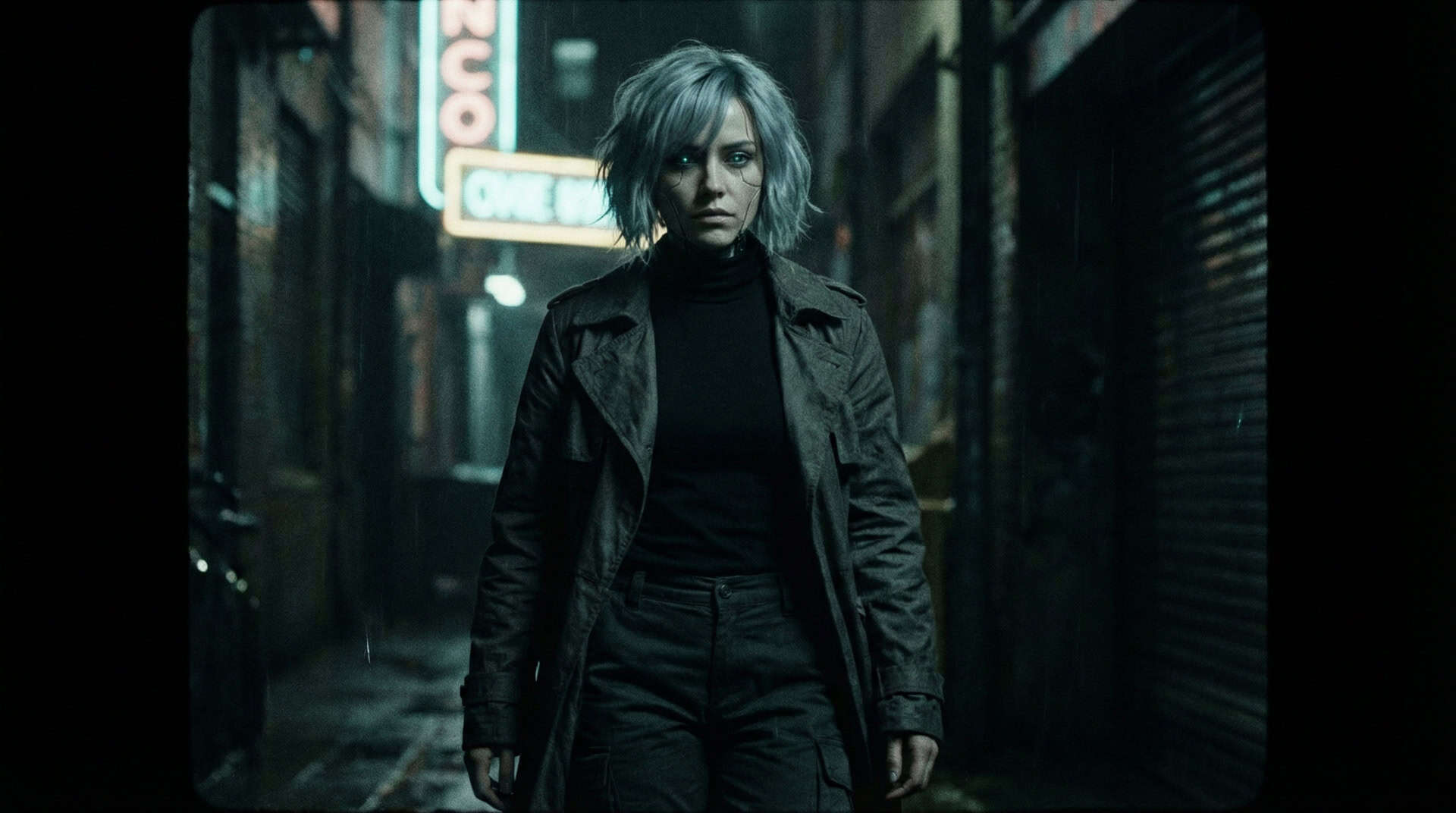
It added actual physical information about the camera, film stock, and other data that are great in that regard. It’s directly implemented into AI RENDER PRO and is part of a recent update that takes different configurations from iconic movies for better realism.
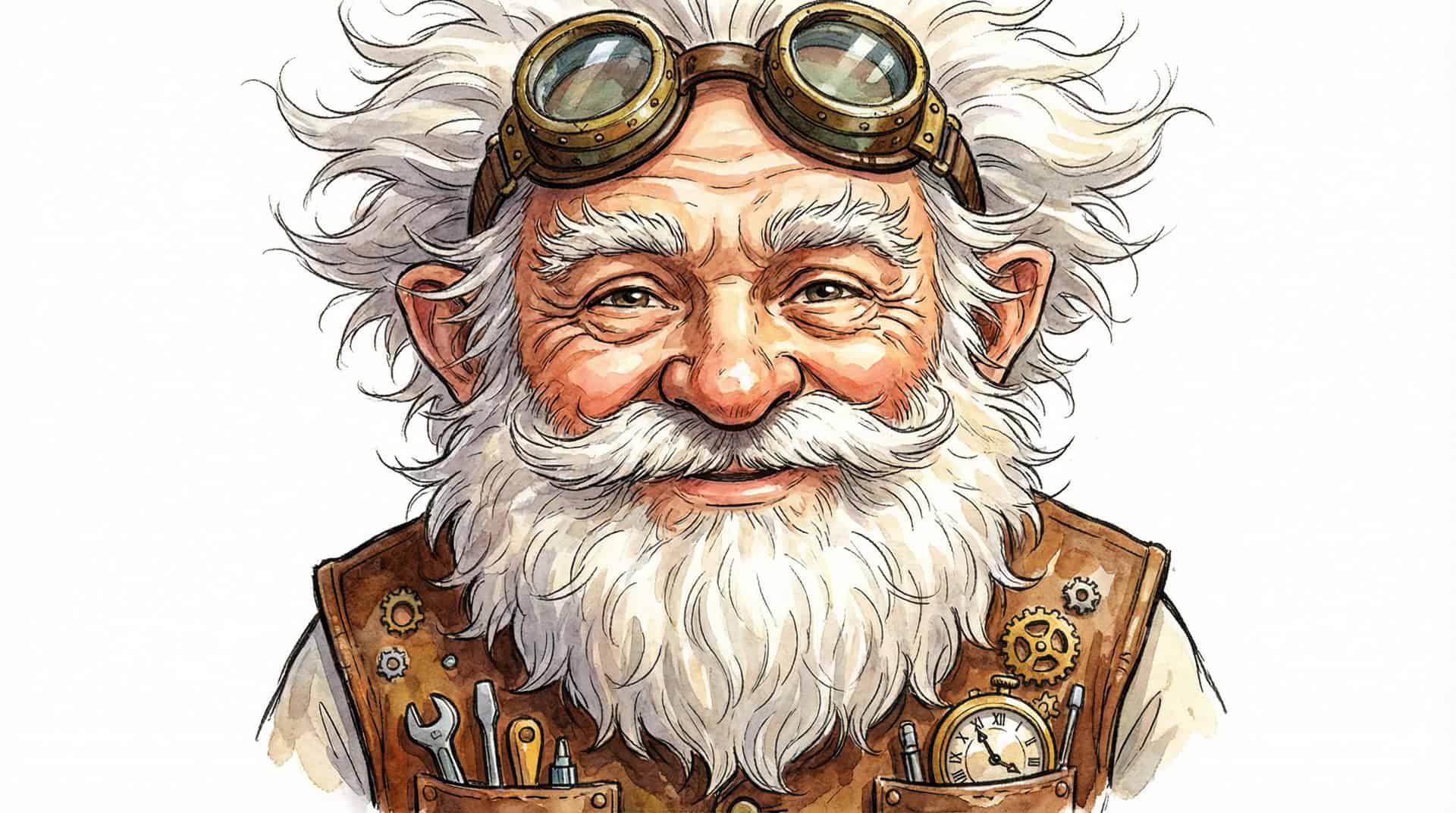
Prompt 2: The Warm Character PortraitI need a close-up portrait of a cheerful old gnome inventor named Alistair. Picture this: he has this wild, untamed white beard that practically merges with his bushy eyebrows, and you can see deep laugh lines around his kind eyes. He's got these tarnished brass steampunk goggles pushed up on his forehead, and he's wearing a well-loved leather artisan's vest that's covered in countless small pockets. Tiny, intricate tools are peeking out from those pockets.
The overall style should be warm and vibrant, like something from a fantasy storybook illustration, make it feel inviting and full of character.
From Portrait to Performance: Action and Emotion
A character is defined by their actions. A static portrait is a great starting point, but for storytelling, we need movement, emotion, and intent. This is where you transition from a character designer to a director, and where Nano Banana’s one-shot editing capabilities truly shine. Its ability to understand complex scene descriptions and maintain character integrity while adding dynamic elements is what sets it apart.
You can take your established character and place them in completely new scenarios, asking for specific poses, expressions, and environmental interactions, all while keeping their core identity intact.
This technique is essentially digital storyboarding. Each prompt becomes a keyframe that communicates a beat in the narrative. Think about how directors like Denis Villeneuve use a character’s posture to convey their entire inner world, a slight slump of the shoulders, a determined stride, a hesitant glance. We can achieve the same subtlety with Nano Banana’s natural language understanding.
The video below touches on how these small details contribute to the overall narrative feel. By focusing on action verbs, emotional states, and environmental context, you guide the AI to consider body language, facial expression, and the character’s interaction with their world, making the resulting image far more compelling and story-rich.
Nano Banana’s scene preservation and blending capabilities mean your character won’t feel pasted into a new background, they’ll feel like they genuinely belong in the scene. A static image is an introduction; an image with action is an invitation into their story. Practical Tip: Use the “[Character reference] + [Action/Scene] + [Emotional tone] + [Technical direction]” structure.
Since Nano Banana works best with image-to-image editing, start with your base character portrait and then use prompts like: “Take this character and show her sprinting through a rain-soaked alley, her face showing intense concentration, with motion blur and a low camera angle.” This provides clear, directable instruction that Nano Banana can interpret cinematically while maintaining consistency.
Prompt 3: The Dynamic Action SceneUsing the android detective Kaelen from the previous image, place her in an action scene: she's sprinting through a rain-soaked, neon-lit alleyway in a futuristic city. Show her leaping over a steaming puddle, her nano-fabric trench coat billowing dramatically behind her. Her face should show that same intense concentration we established before. Give me lots of motion blur and dynamic energy, captured from a low angle looking up at her. Make it feel like a freeze-frame from an action sequence.
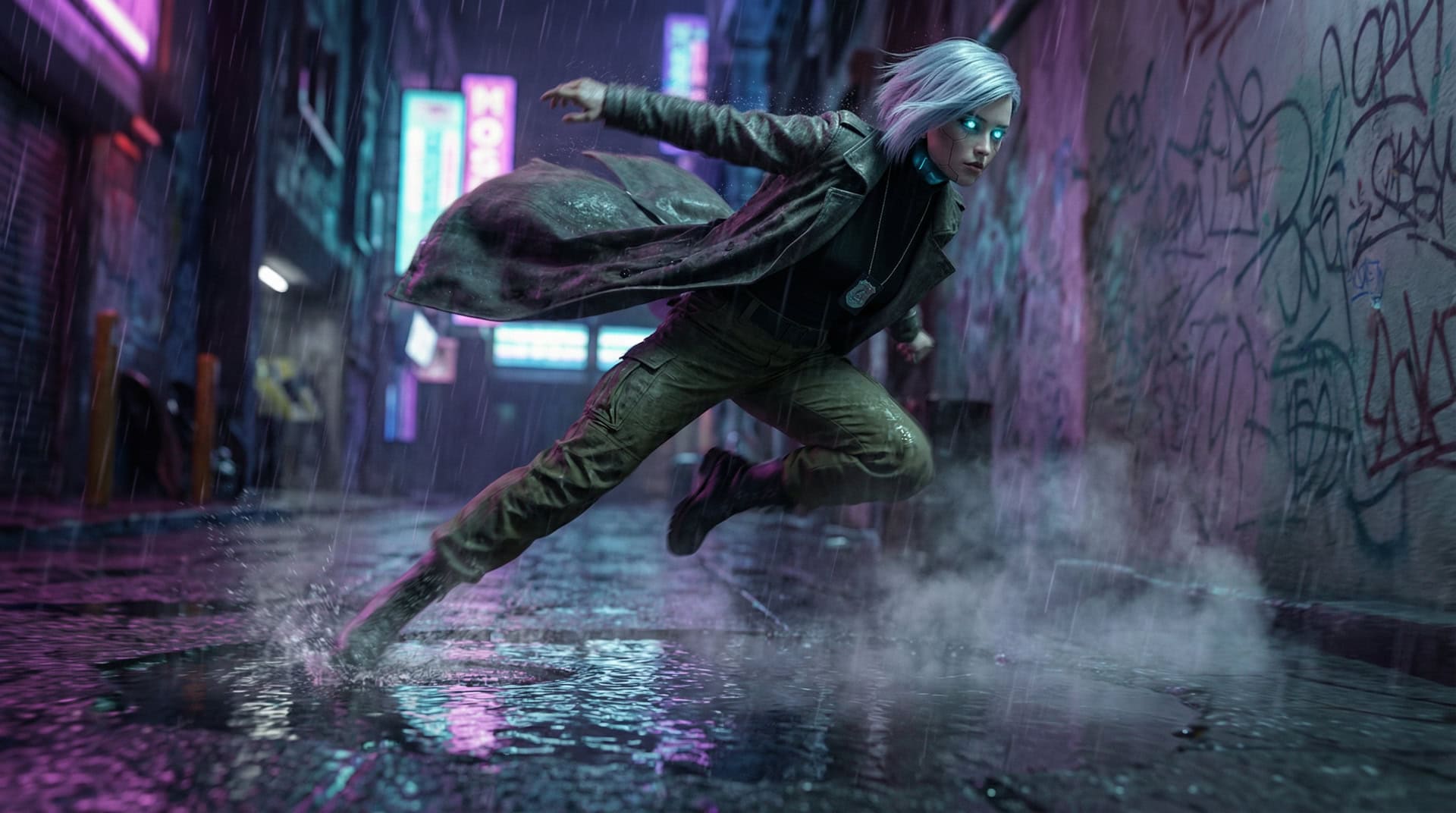
After I asked AI RENDER PRO to add real lenses and film stock information to match my previous more realistic prompt:
Additional prompting from AI Render Pro:Desaturated color palette, subtle film grain, slight film flashing. Shot on 35mm film, Mitchell FC 65, Panavision C-Series wide anamorphic lens, Eastman 100T 5247. Feels like a paused frame from a finished sci-fi feature film. Realistic, grounded, premium, no concept-art look, no exaggerated cyberpunk elements.
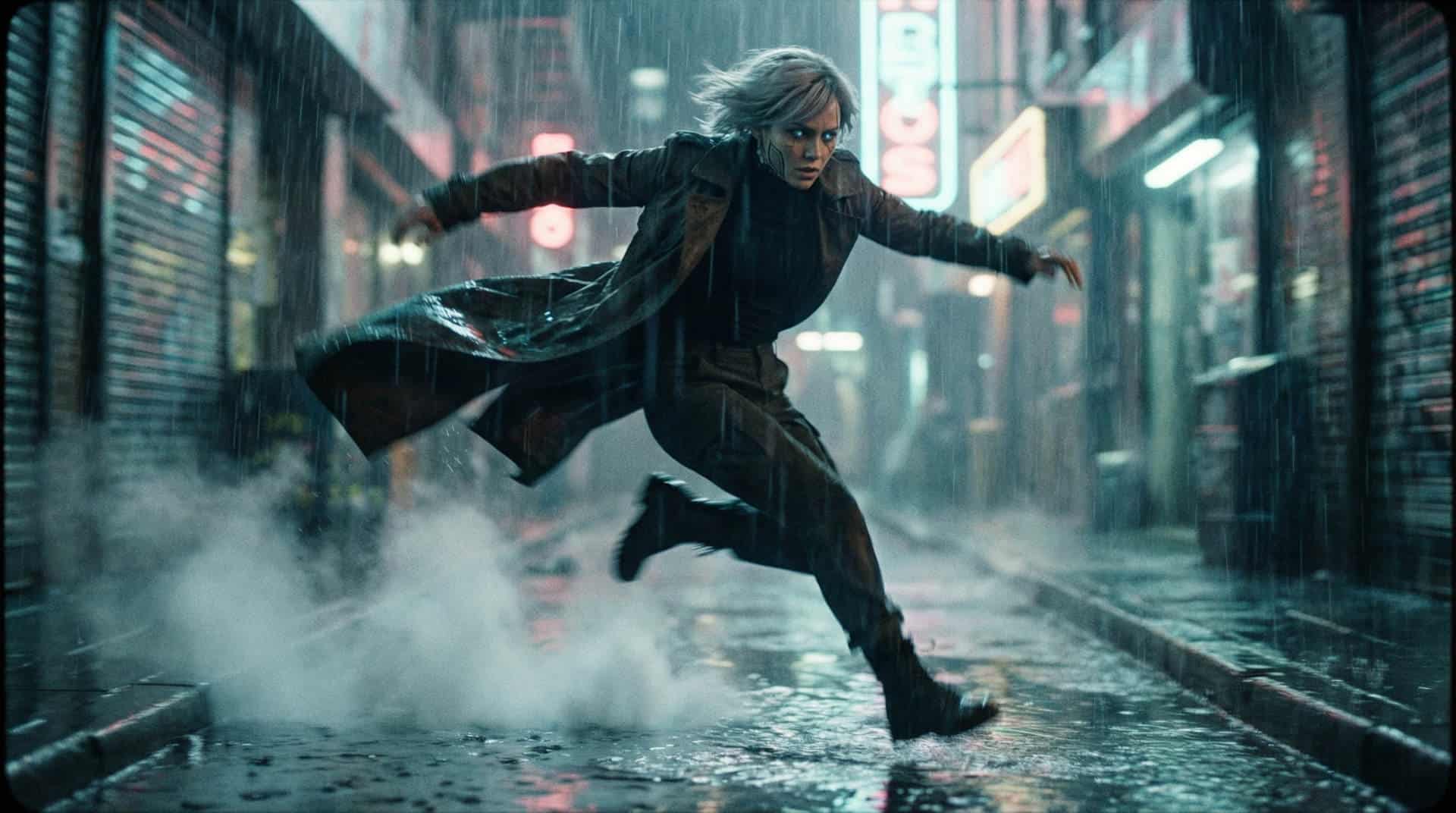
And voila! The render is really stunning right now!
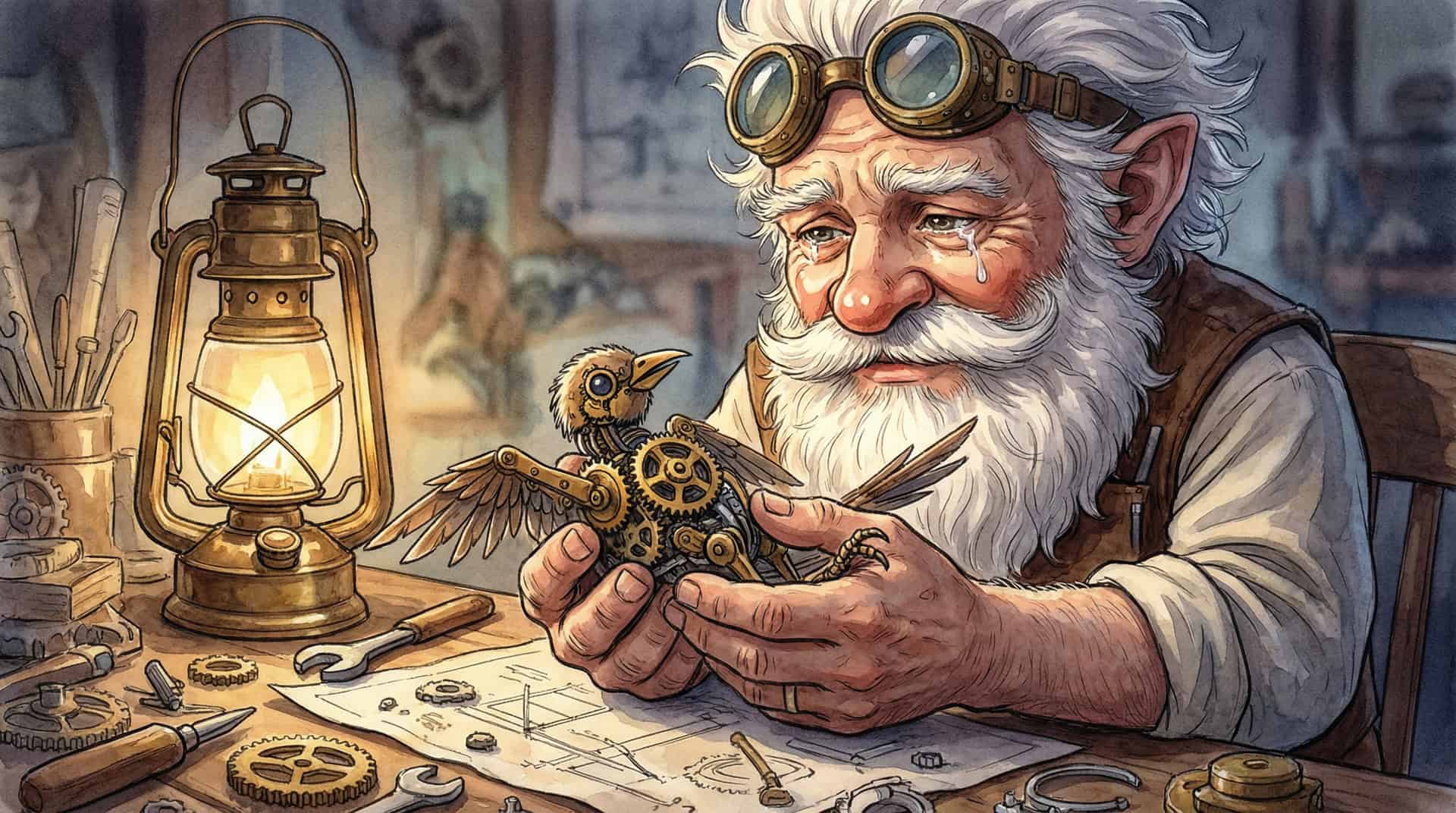
Prompt 4: The Subtle Emotional MomentTake Alistair from the previous image and place him at his cluttered workbench. He's gently holding a broken clockwork bird in his palms, looking at it with this bittersweet, nostalgic expression. There's a single tear welling up in his eye. Keep the lighting soft and warm, coming from a single oil lantern on the desk that casts long, moody shadows. The focus should be on his hands and face, making it feel intimate and emotional.
The Game-Changer: Nano Banana’s Character Consistency
Here we arrive at what makes Nano Banana revolutionary: its character consistency feature. Creating one beautiful image is easy. Creating ten images of the same character in different poses and locations is what separates casual experimentation from professional pre-production work. This has been the barrier that kept AI art from being truly usable for comics, storyboards, lookbooks, and any narrative project requiring visual continuity. Nano Banana has essentially solved this problem in a way that previous tools couldn’t.
The way it works is elegantly simple yet remarkably powerful. Once you’ve generated a character you love, you can reference that image directly in subsequent prompts. Nano Banana’s multi-image context capabilities mean it can analyze your reference character, understand their key features, facial structure, hairstyle, clothing, body type, and maintain those elements across completely different scenes and poses.
This isn’t just copying and pasting; it’s a genuine understanding of what makes that character unique and preserving those qualities while allowing for natural variation in expression, lighting, and perspective. This is a game-changer for narrative projects and a technique I’m exploring in depth for my upcoming guides, building on the principles of structured prompting from my AI Render Pro work.
Mastering consistency is what elevates AI art from a novelty to a viable pre-production tool. It allows you to visually explore a character’s journey, test lighting scenarios, and storyboard sequences with a stable “digital actor.” Practical Tip: Create a project folder for each major character. Save your best “hero” image of that character, the one that captures their essence perfectly. This becomes your reference image. When you want to place them in a new scene, upload the reference image along with your new prompt that describes the scene. Keep notes about which combinations worked best. This becomes your project’s digital cast sheet.
A couple of more AI RENDER PRO prompts for Nano Banana :
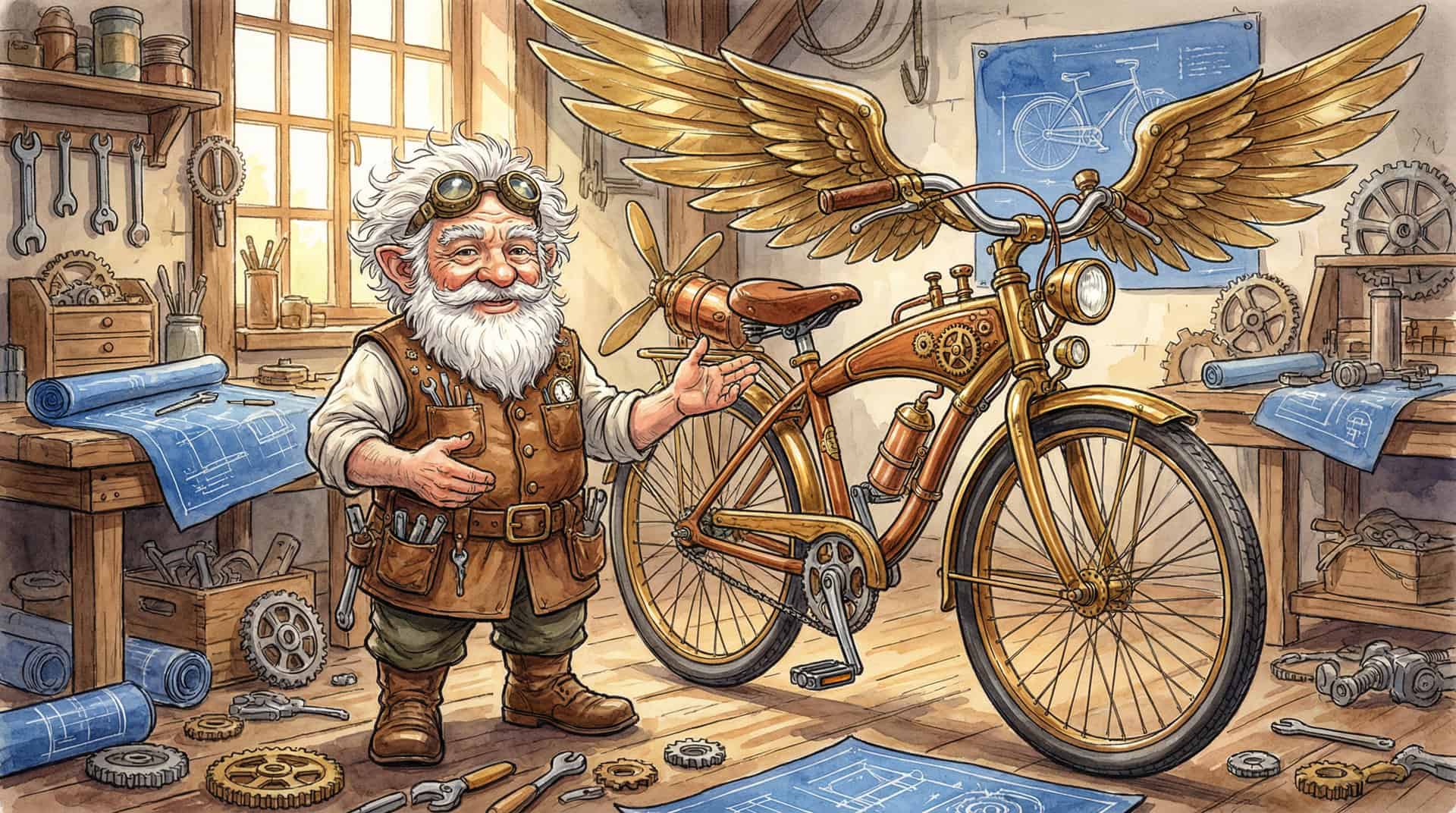
Prompt 5: The Scene EvolutionUsing the character from the attached image (Alistair), show him now standing proudly in front of his latest creation: a fantastical flying bicycle made of brass and polished wood. Keep his appearance exactly as it is in the reference, same beard, same goggles, same vest, but put him in this new context with a proud, accomplished expression. The scene should be in his workshop with tools and blueprints scattered around.
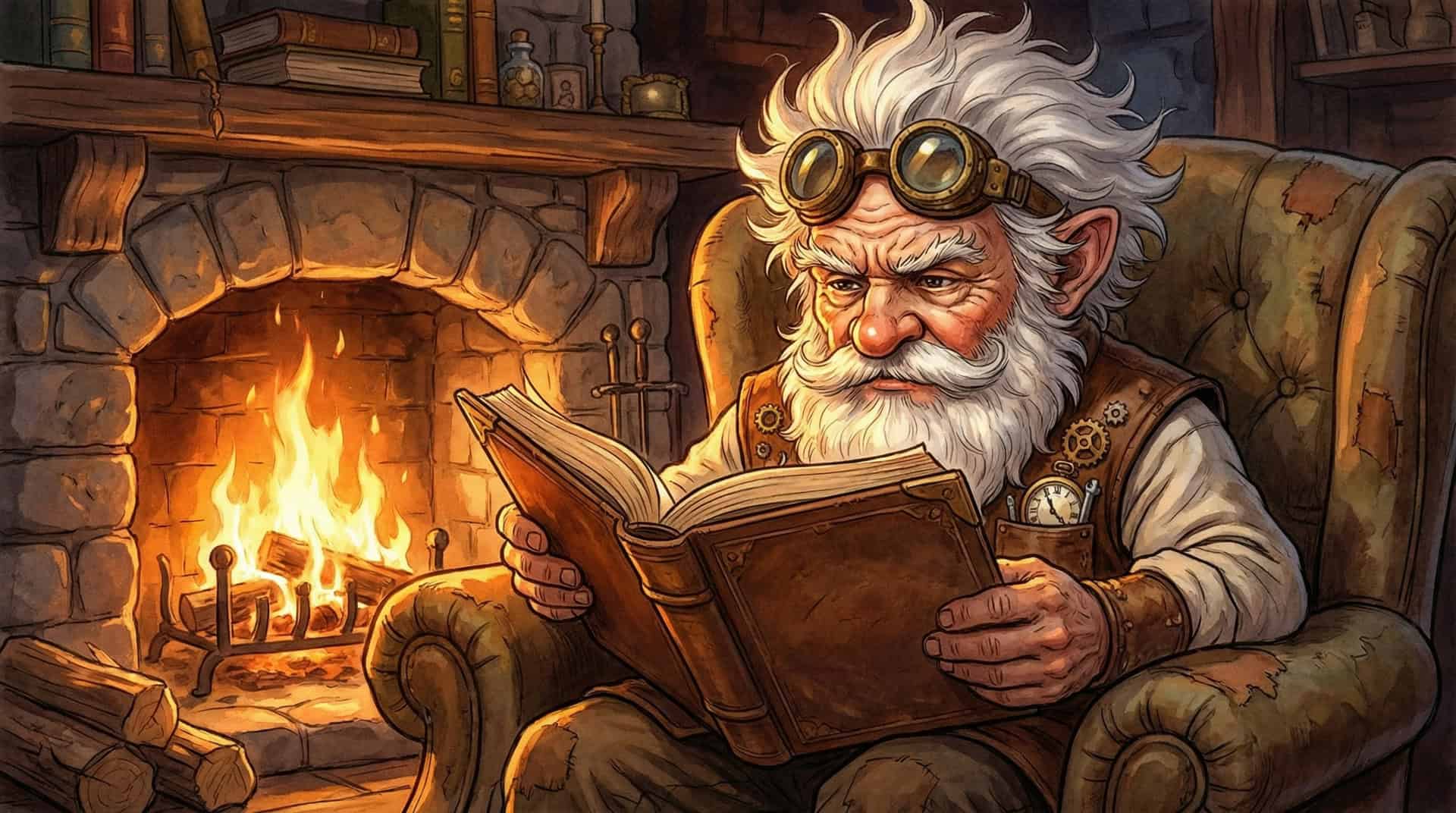
Prompt 6: The Environment ShiftTake the character from this reference image and place him in a completely different setting. He's now sitting in a cozy, overstuffed armchair by a roaring fireplace, completely engrossed in reading a large, leather-bound book. Keep his facial features, beard style, clothing, and goggles identical to the reference, but adjust his pose and expression to show deep concentration on his reading. Warm, flickering firelight should be the main light source.
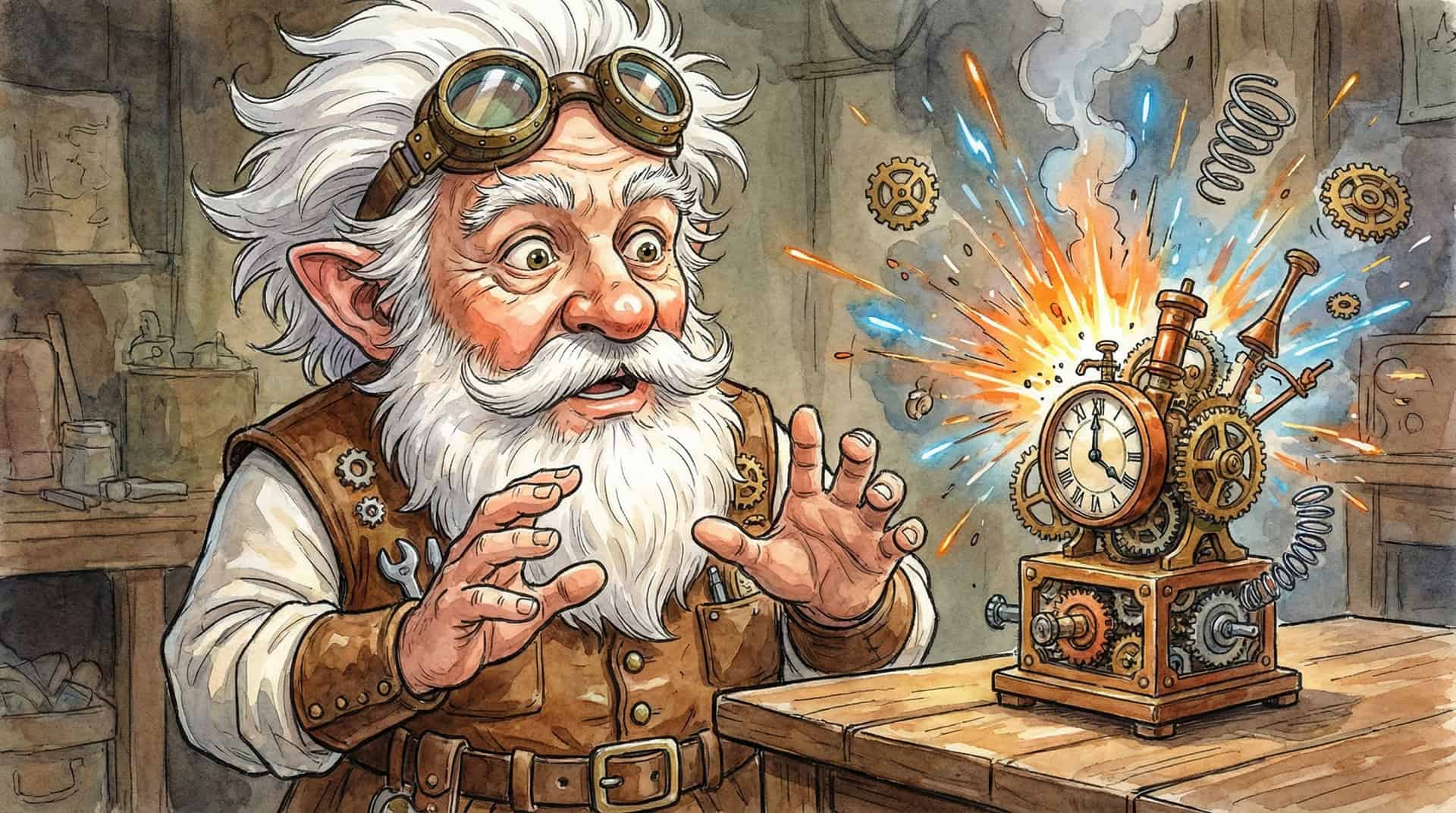
Prompt 7: The Reaction ShotUsing the character from the reference image, show him with a surprised, slightly alarmed expression as one of his small clockwork inventions on the table beside him begins to spark and whir erratically. Maintain his exact appearance from the reference, every detail of his face, beard, clothing, and goggles, but capture this moment of unexpected mechanical chaos. Maybe show some sparks flying and his hands raised slightly in surprise.
Supercharging Your Workflow with AI Render Pro
While Nano Banana is incredibly powerful, crafting effective prompts still requires understanding structure, style terminology, and narrative principles. This is where integrating a specialized tool into your workflow makes all the difference. My AI Render Pro system was built specifically to solve this challenge. It’s a trained AI agent designed for a wide range of design applications, from character concepts to scene composition, and it speaks the language of visual storytelling fluently.
Think of AI Render Pro as your creative partner who helps you articulate exactly what you see in your mind. Instead of struggling to remember technical terms for lighting setups or wrestling with how to describe a character’s emotional nuance, you can interact conversationally with AI Render Pro. Describe your vision in simple terms, “I need a noir detective character who looks world-weary”, and it generates structured, detailed prompts optimized for tools like Nano Banana.
It understands cinematic language, artistic styles, and the subtle elements that bring characters to life. For filmmakers and creatives working on narrative projects where character consistency and visual coherence are critical, AI Render Pro eliminates the guesswork and dramatically accelerates your iteration process. It’s the difference between fumbling in the dark and having a lighting director who knows exactly where to place every lamp.
Mastering Style and Atmosphere
A character never exists in a void. They are a product of their world, and that world is defined by its style and atmosphere. This is where your voice as an artist truly comes to the forefront. Nano Banana is a phenomenal stylistic interpreter, capable of understanding complex aesthetic directions and blending disparate artistic influences into a cohesive whole. You can describe a style that fuses the biomechanical horror of H.R. Giger with the delicate fantasy of Arthur Rackham, and it will grasp the intent. This is about more than just aesthetics; it’s about using style to inform the story and the character’s place within it.
Beyond artistic fusion, you can direct the atmosphere with the precision of a cinematographer. Nano Banana’s natural language processing means you can use specific lighting descriptions (“Rembrandt lighting,” “dappled forest light,” “harsh neon glow”) and emotional descriptors (“a lonely, contemplative mood,” “a chaotic and energetic scene”) and it understands exactly what you’re trying to achieve. This is a concept I delve into deeply in my Midjourney Mastery Guide, and the principles apply beautifully here. Your prompt should not only describe the subject but also the lens through which you are viewing it, both literally and metaphorically.
Defining a unique and consistent style is what gives your project a memorable identity. It’s the visual DNA that makes a world feel immersive and believable. Whether you’re aiming for the look of a traditional medium or inventing a new genre, being specific and conversational is key. Practical Tip: Don’t just name an artist or a style. Describe the qualities of that style that you want to emulate in natural language. Instead of just “in the style of Studio Ghibli,” try “Give this the feel of a Studio Ghibli film, hand-painted watercolor backgrounds, soft natural lighting filtering through, and that characteristic charm in the character’s expression.
Keep it gentle and inviting.” This gives Nano Banana more concrete emotional and technical context to work with. This is one of the best approaches when crafting Nano Banana character design prompts.
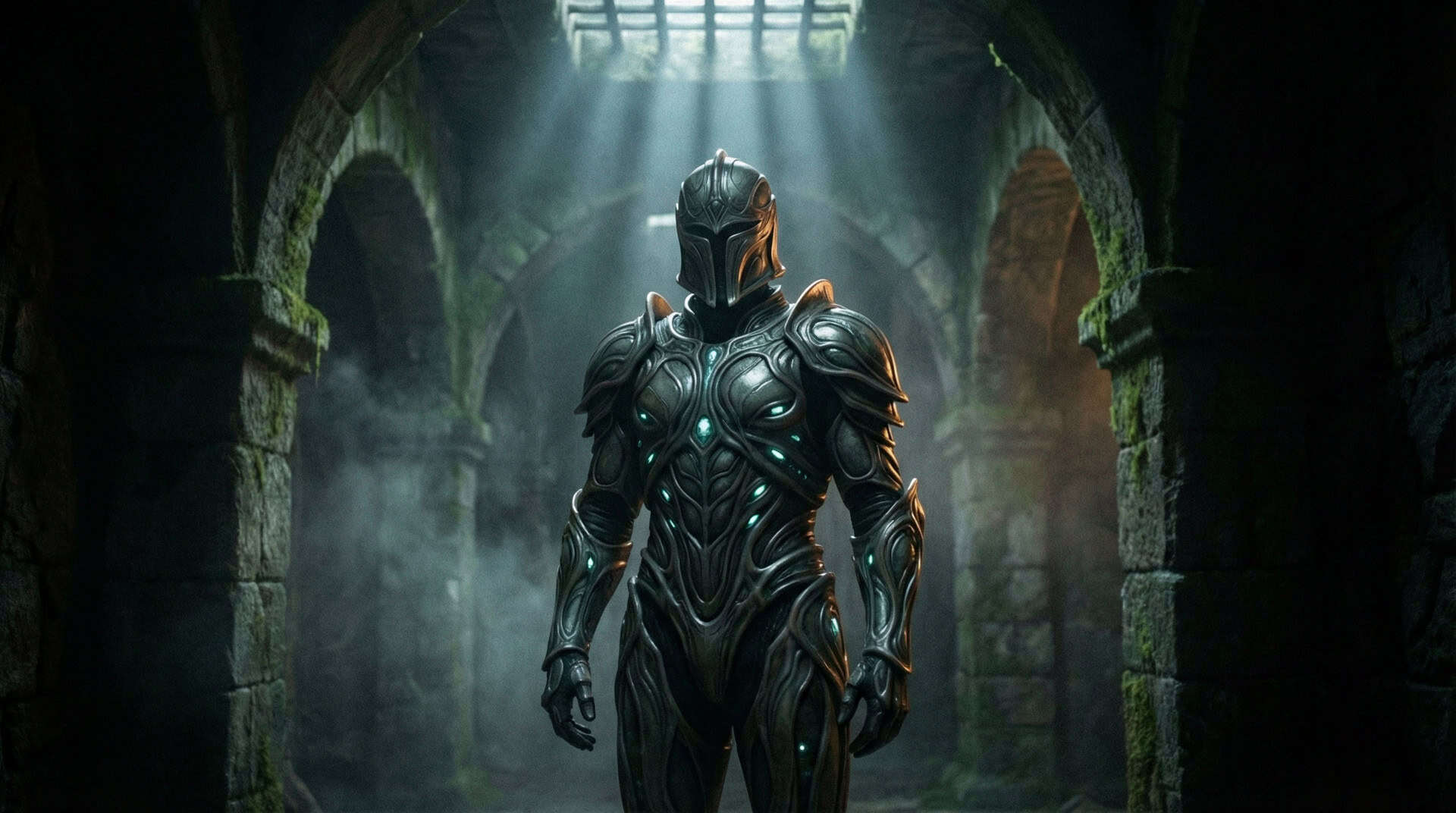
Prompt 8: The Style FusionCreate a stoic fantasy knight character wearing ornate, glowing elven armor. I want the style to be this strange and beautiful fusion, take the biomechanical, almost disturbing quality of H.R. Giger's work, but blend it with the delicate, ethereal feel of Arthur Rackham's watercolors. The mood should feel dark and enchanting at the same time. Make the armor look both organic and technological, with these intricate, flowing lines that feel both beautiful and slightly unsettling.
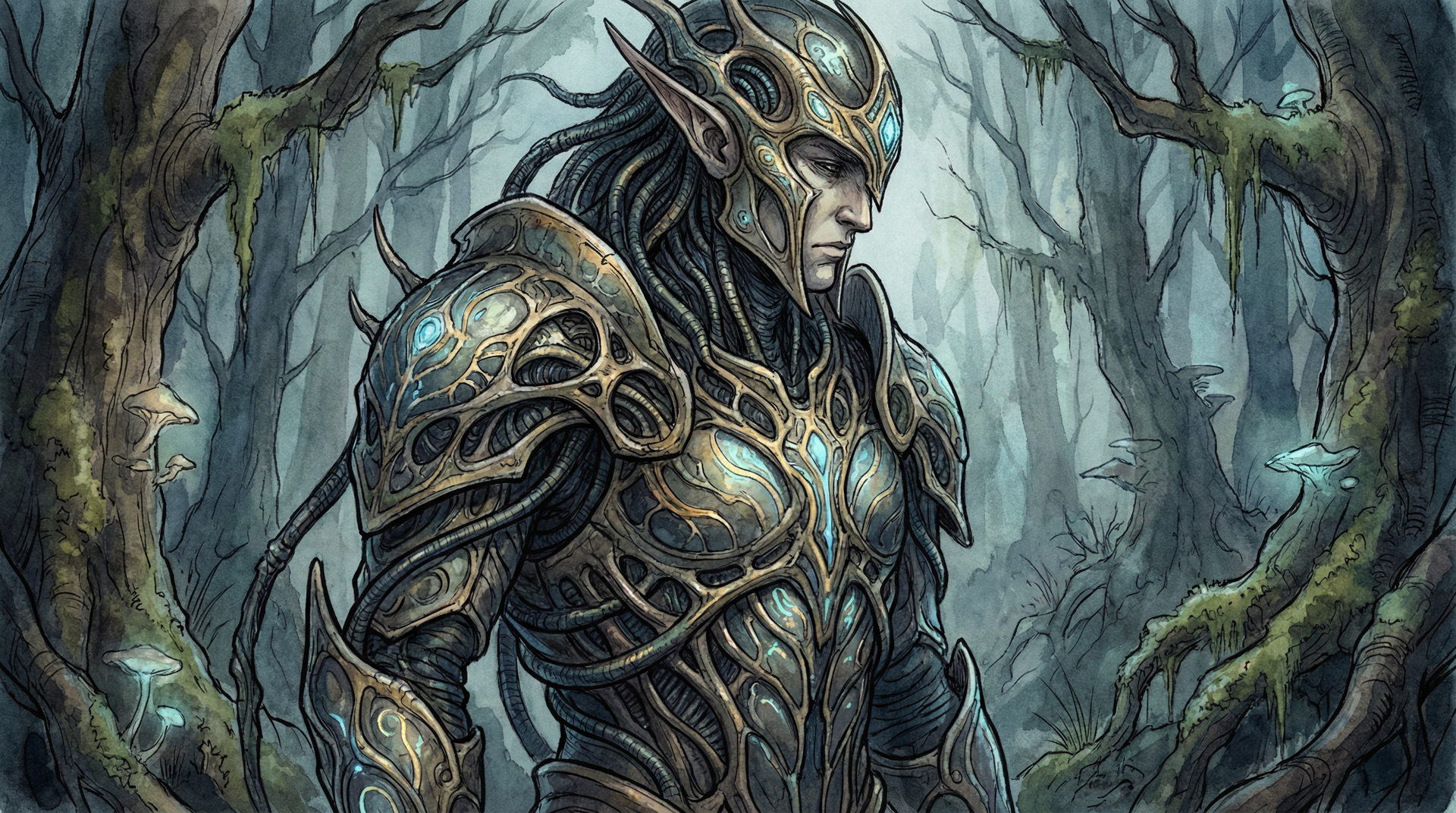
You want more realistic and cinematic results? Easy, just ask to AI Render Pro! Since it’s Alien-inspired, I wanted to capture the feeling of the original Alien movies by Sir Ridley Scott! 1970s vintage look!
And here is the new prompt from my discussion with AI RENDER PRO:
Prompt 8 Take TWO: The Style Fusion Inspiration Ridley ScottA stoic fantasy knight wearing ornate elven armor, standing still and composed. The armor is a haunting fusion of organic and technological design, flowing biomechanical forms inspired by H.R. Giger, combined with the delicate, ethereal elegance of Arthur Rackham. Intricate, elongated lines, subtle glow embedded within the armor’s structure, beautiful yet faintly unsettling.
Dark, enchanting atmosphere, mysterious, restrained, cinematic.
Filmed as a realistic movie still on 35mm anamorphic, using a Panavision Panaflex camera, Panavision C-Series lenses, Kodak Eastman 5247 film stock, 2.39:1 aspect ratio.
Practical low-key lighting inspired by Alien (1979), top-lit and back-lit, minimal fill, deep shadows treated as texture, subtle atmospheric haze catching light beams.
Desaturated color palette, fine organic film grain, soft highlight halation, natural lens distortion, no digital sharpness.
Feels like a lost frame from a late-1970s dark fantasy sci-fi film, grounded, tactile, physical, not concept art, not digital illustration.
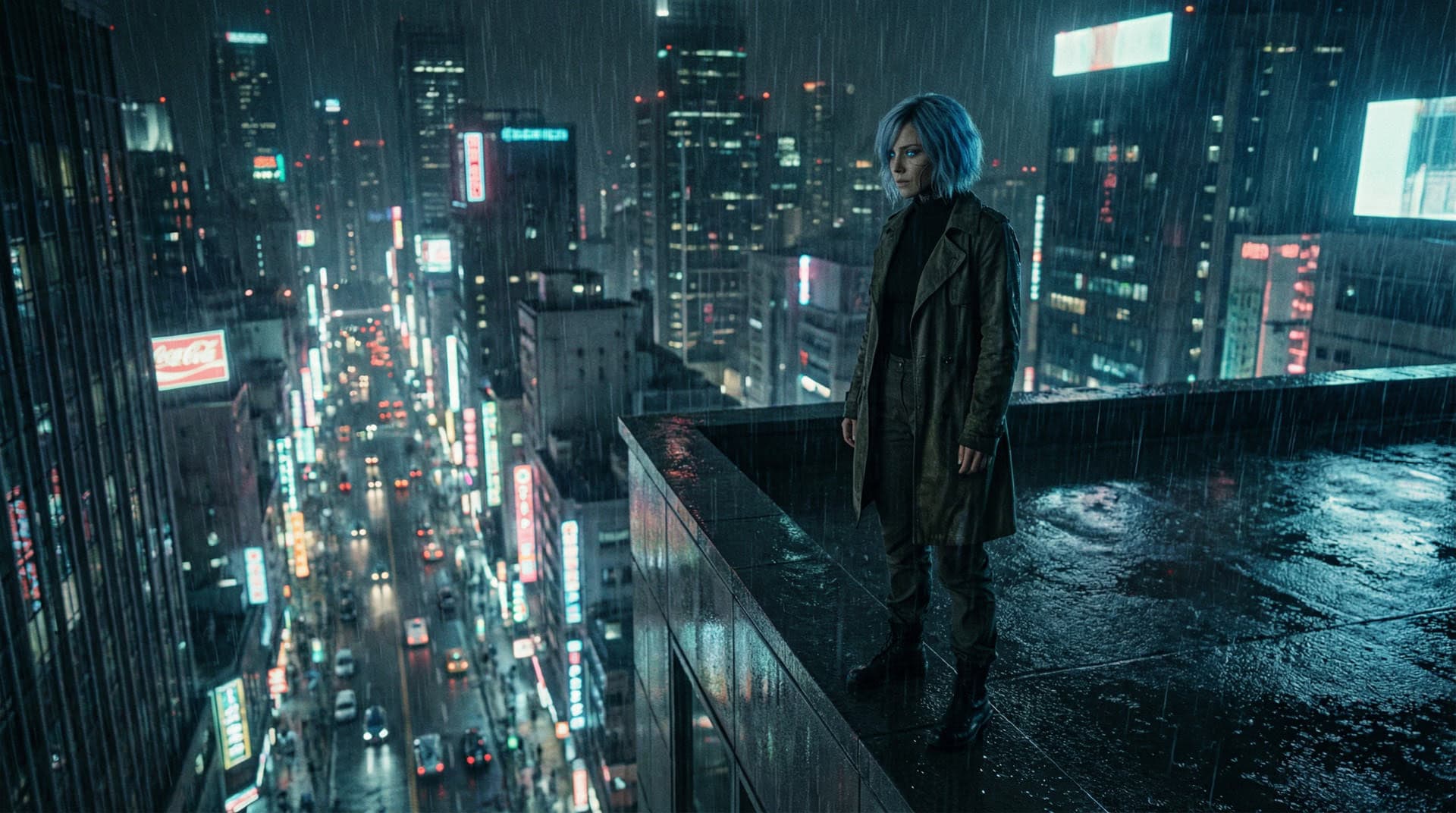
Prompt 9: The Atmospheric SceneTake Kaelen from the reference image and place her on a skyscraper rooftop overlooking this vast, futuristic city at night. The mood needs to feel lonely and contemplative, she's alone with her thoughts. All the lighting should come from the ambient glow of countless neon signs and flying vehicles far below. Shoot this with an ultra-wide-angle perspective to emphasize the scale and her isolation. Go for that Blade Runner aesthetic, rain-slicked surfaces, atmospheric haze, that melancholy sci-fi feeling.
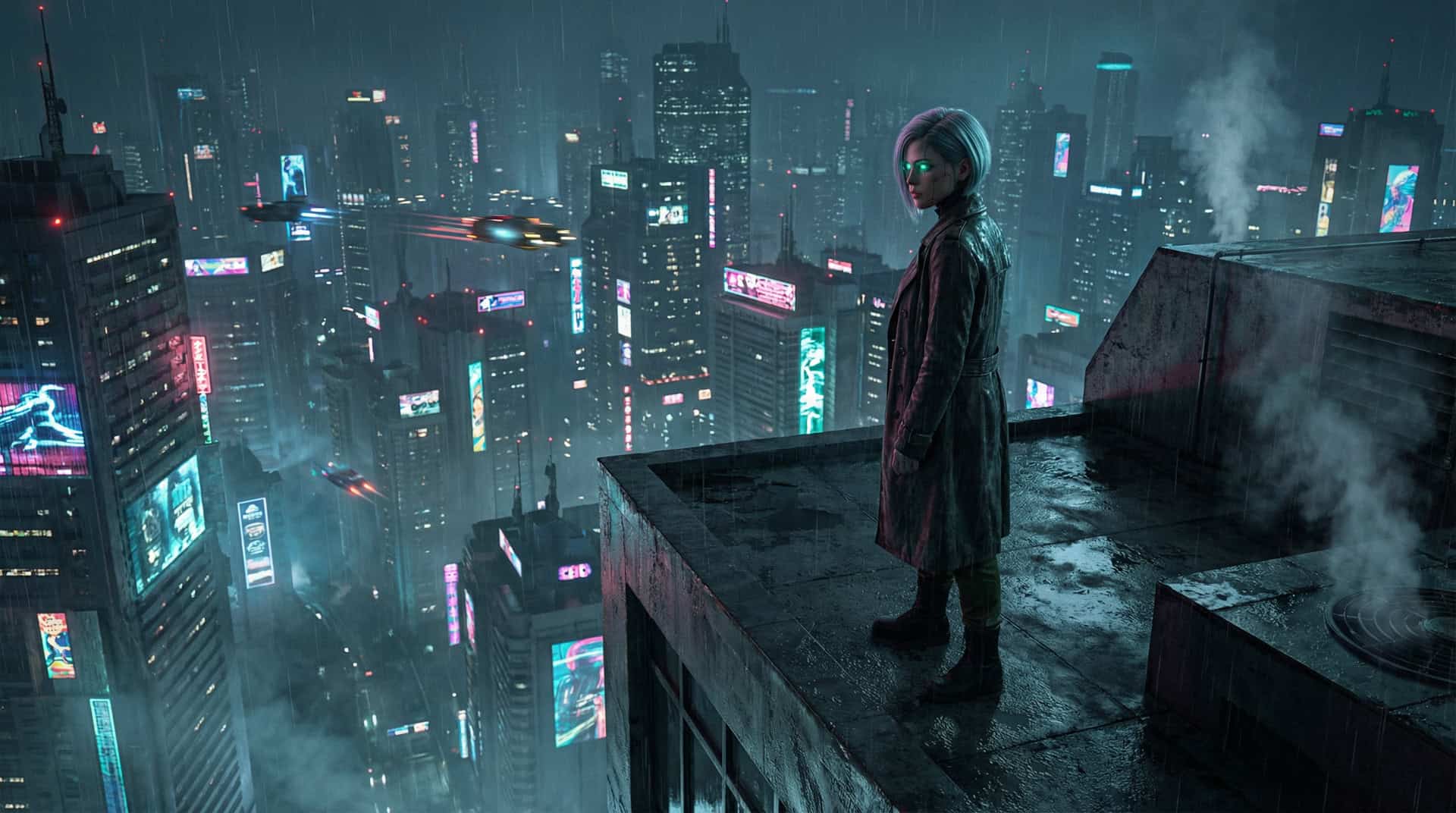
Additional prompting from AI Render Pro:Desaturated color palette, subtle film grain, slight film flashing. Shot on 35mm film, Mitchell FC 65, Panavision C-Series wide anamorphic lens, Eastman 100T 5247. Feels like a paused frame from a finished sci-fi feature film. Realistic, grounded, premium, no concept-art look, no exaggerated cyberpunk elements.
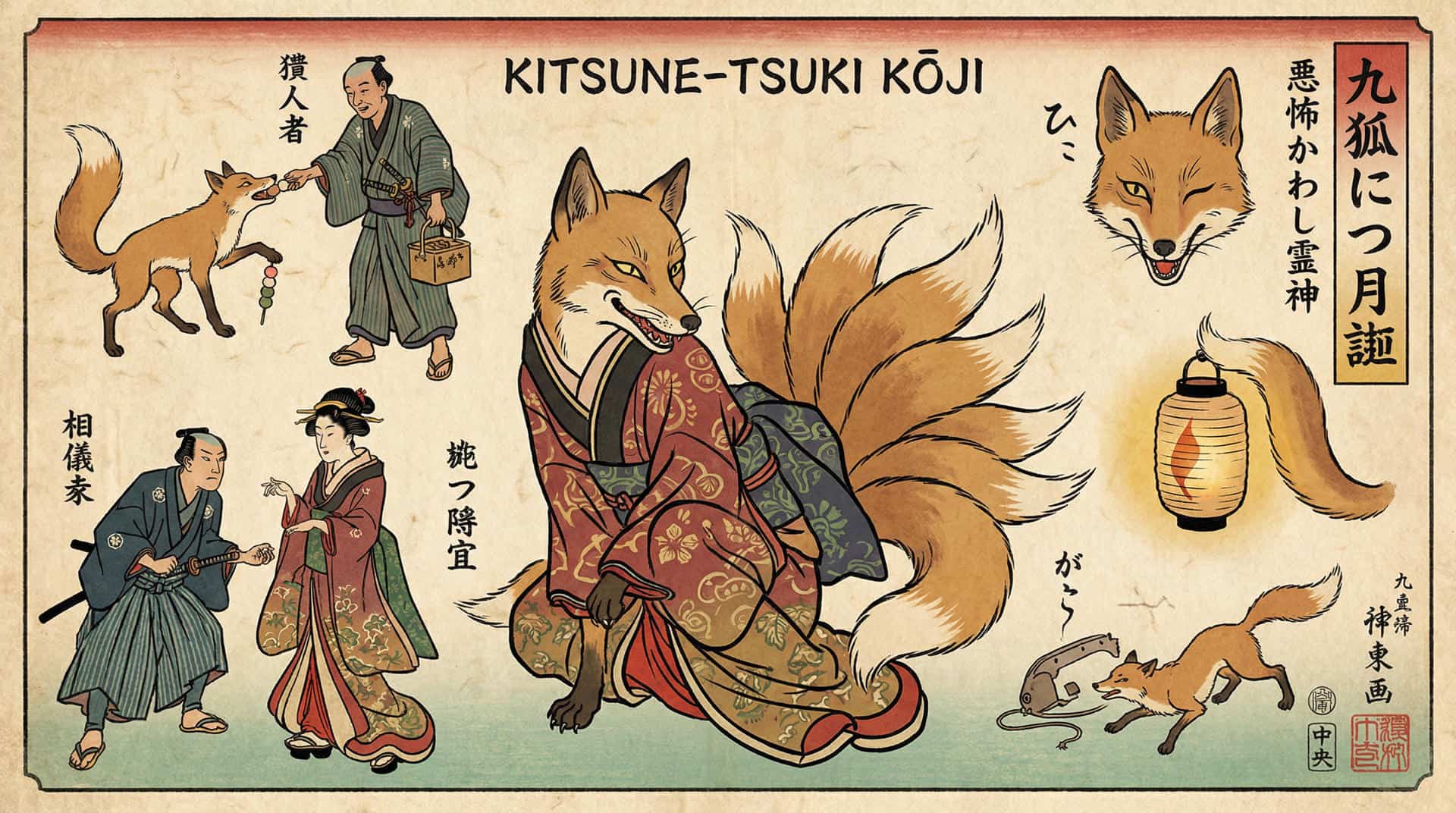
Prompt 10: The Artistic MediumDesign a character sheet for a mischievous nine-tailed fox spirit (kitsune), but render it in the style of traditional Japanese woodblock prints, that Ukiyo-e aesthetic. Include several small vignettes on one sheet showing different poses and expressions that showcase its playful and cunning nature. Use flat, bold colors, strong black outlines, and give it that textured paper background that classic woodblock prints have. Think Hokusai or Hiroshige, but for character design.
Internal Links for Further Learning
- For a structured approach to complex prompt creation, check out my guide: AI Render Pro.
- To learn more about applying these concepts in another powerful AI tool, see the 10 Powerful Midjourney Prompts for Character Design.
- For a broader look at how AI is shaping visual storytelling, explore our articles on Filmmaking AI Workflows.
Conclusion
These techniques, building natural language personas, injecting dynamic action, leveraging character consistency, and defining unique atmospheres, are the building blocks for creating truly compelling characters with Nano Banana. What makes this tool special is its conversational nature and its groundbreaking ability to maintain character identity across multiple images. It invites us to be more than just prompt engineers; it asks us to be storytellers and directors.
The tool is a collaborator that’s ready to listen and understand. The journey from a blank prompt to a character that feels alive and consistent across an entire narrative is one of the most rewarding creative experiments I’ve undertaken recently.
For those looking to streamline this process even further and build a powerful library of reusable, optimized prompts, my AI Render Pro guide is designed to help you organize and elevate your creative workflow specifically for these kinds of design applications. Now, what kind of unforgettable characters are you going to bring to life? And more importantly, what stories will they tell across your visual narrative?
FAQ
Can I use these Nano Banana character design prompts in other AI tools like Midjourney or DALL-E?
The core principles of natural language and detailed description apply everywhere, but you’ll need to adapt your approach. Nano Banana excels with conversational, flowing descriptions that sound like you’re talking to a person. Midjourney typically responds better to comma-separated keywords and parameters (like --ar 16:9), while DALL-E 3 sits somewhere in between. Think of it as learning to speak to different creative collaborators, the ideas translate, but the language varies slightly.
How does Nano Banana’s character consistency actually work?
When you upload a reference image of your character and provide a new prompt, Nano Banana analyzes the reference to understand core features, facial structure, distinctive elements like hairstyles or clothing, body proportions, and unique characteristics. It then generates the new scene while preserving these elements. The feature uses Google’s advanced Gemini models, which have an exceptional understanding of visual consistency. It’s powered by multi-image context processing, meaning it can truly “see” and remember your character across generations.
Why isn’t my character’s consistency perfect every time?
While Nano Banana’s character consistency is the best available in current AI tools, it’s still an approximation rather than a perfect lock. Think of it as maintaining the “spirit” of the character, their key features, overall appearance, and distinctive elements, rather than pixel-perfect reproduction. Factors such as dramatic lighting changes, extreme camera angles, or highly dynamic poses can introduce greater variation. Minor details, such as exact clothing wrinkles, small accessories, or background elements, will naturally vary. For professional work requiring absolute consistency (like comics or animation), you may still need some touch-up work in Photoshop or similar tools, but Nano Banana dramatically reduces the amount of post-work needed compared to other AI tools.
What’s the difference between Nano Banana and Nano Banana Pro?
Nano Banana (powered by Gemini 2.5 Flash Image) is excellent for fast, creative character editing and is available to free-tier users with some limitations. Nano Banana Pro (powered by Gemini 3 Pro Image) offers enhanced capabilities, including higher precision, better reasoning for complex requests, support for up to 4K resolution, improved text rendering in multiple languages, and more advanced creative controls. Pro is ideal for professional work that requires the absolute highest quality and control. Both versions maintain the same intuitive natural language interface and character consistency features, but Pro offers more refinement and technical capabilities.
Discover more from Olivier Hero Dressen Blog: Filmmaking & Creative Tech
Subscribe to get the latest posts sent to your email.
Work with Olivier
Director | CD | DP & Photographer
Specializing in commercials, music videos, AI-driven filmmaking, and cinematic storytelling for brands and production companies.
🌍 Shanghai · Paris · Los Angeles · Dubai
🎬 View Portfolio & Get in Touch

[…] further aid in their blending into the mundane. For more unique character concepts, exploring Nano Banana character design prompts can provide similar inspiration. The camera choice, a Fujifilm X-T5, with a 23mm f/1.4 prime lens, […]
[…] enabling creators to move beyond generic outputs and sculpt truly memorable and visually rich AI personas with precision and artistic […]
[…] WHY IT WORKS: This prompt succeeds because of its layered specificity. It starts with a clear character definition and age, then immediately introduces the core fusion: cybernetics and mysticism. The description of the robe, skin, and hands provides tangible visual elements that the AI can interpret. By specifying “eyes glowing with data streams,” we hint at her unique abilities without explicitly stating them, allowing the visual to speak for itself. The “holographic crystal ball” further solidifies the blend of technology and foresight. For more ideas on how to craft such unique characters, explore 10 Powerful Nano Banana Character Design Prompts for Unforgettable Storytelling. […]
[…] lighting conditions, and it will maintain that likeness across every generated shot. Second is the power of negative prompts. Just as vital as telling the AI what you want is telling it what you don’t want. I frequently […]
[…] a hyper-realistic cityscape or a fantastical realm. This isn’t just decoration; it’s storytelling through space and object. It grounds the performance and immerses the viewer. Without this foundation, even the […]
[…] delivery. The goal is to remove technical friction, allowing the creative team to focus solely on storytelling. This is the core principle behind any significant studio upgrade. It is about building a […]
[…] landscape of modern television has seen a significant evolution, particularly in how it approaches genre storytelling. The horror series stands as a prime example, moving beyond anthology formats to embrace serialized […]
[…] insight — Drone cinematography, when executed with precision and narrative intent, elevates storytelling beyond mere […]
[…] context — The pursuit of authentic visual storytelling through precise shot design elevates commercial work and distinguishes serious filmmakers in a saturated market. […]
[…] insight — The anamorphic lens is a precise tool for cinematic storytelling, not merely a stylistic […]
[…] insight — The ARRI ALEXA established a new gold standard for digital cinema, defining an era of visual storytelling through its consistent image quality and robust engineering. The success can be attributed, in part, to the […]
[…] industry often misreads the desire for a part two. Audiences connect with stories, not just characters. They want deeper immersion, not just more of the same. The myth is that replication guarantees […]
[…] of external software licenses or complicated data transfers. It’s a complete solution for visual storytelling. The enhanced features of DaVinci Resolve 20 new have made Fusion even more […]
[…] Girl was a turning point. It opened my eyes to the power of visual storytelling, the importance of character design, and the sheer joy of creating something truly unique. It also introduced me to the mind of Jamie […]
[…] creative decisions and less time waiting for their machines to catch up, pushing the boundaries of visual storytelling without technical […]
[…] patterns, tropes, and even predicting audience engagement points. This isn’t about formulaic storytelling, but about understanding the mechanics of narrative structure to then subvert them, innovate upon […]
[…] the authoritative power of a low angle that makes characters feel imposing, to the vulnerable intimacy of a high angle that creates sympathy, each angle carries […]
[…] more like a conversation. This shift is perfectly captured by a concept some are calling the “Nano Banana” AI tool—a way of describing the surgical, yet simple, power of Google’s latest image […]
[…] something dull or off-target. To help you unlock Midjourney’s full potential, we’ve compiled 10 powerful prompts for character design, complete with examples and tips. Whether you’re creating concept art for a game, illustrations […]