
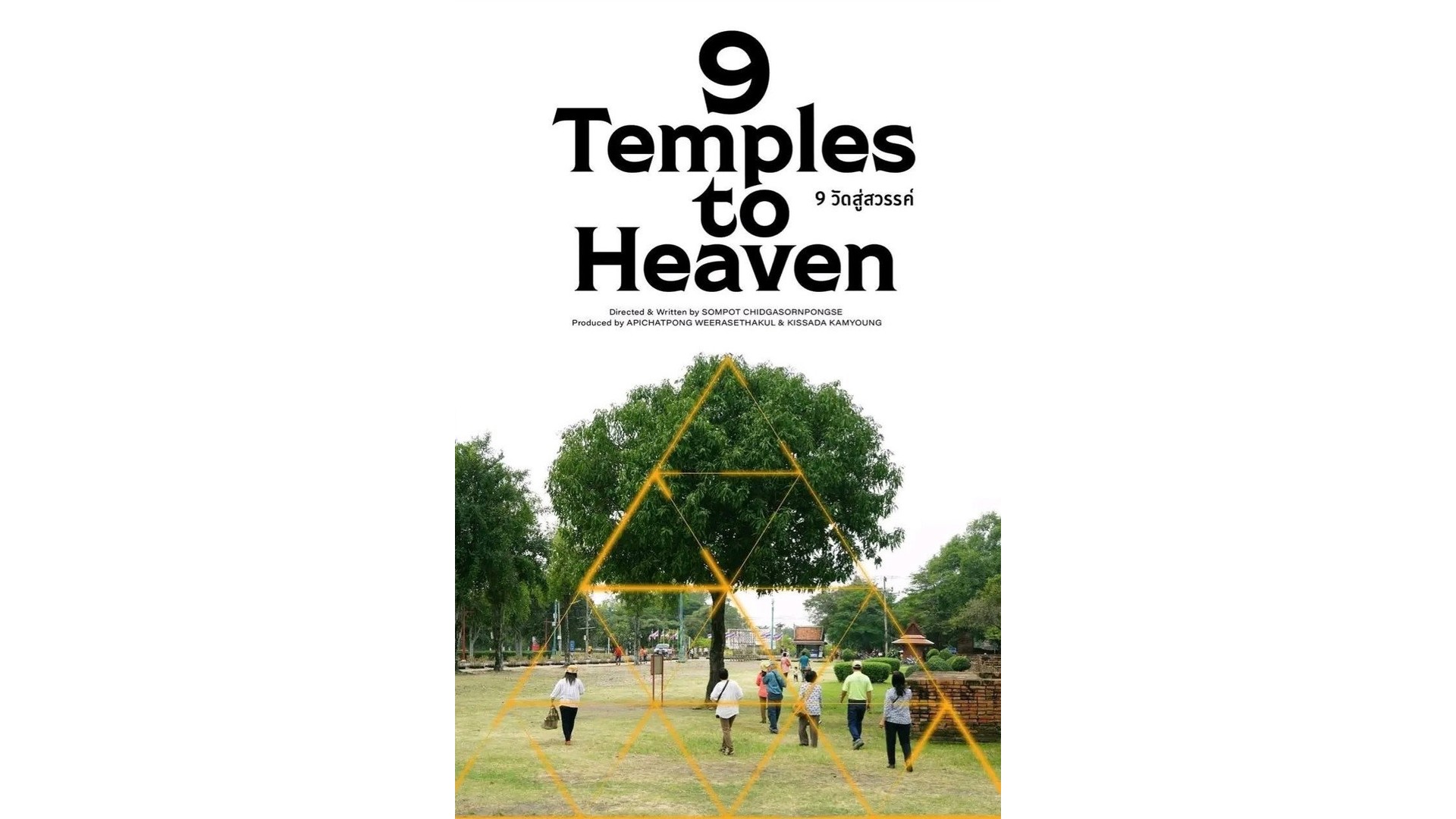

9 Temples to Heaven — By the Numbers
Sompot Chidgasornpongse
2026-09-17
140 minutes
Drama / Comedy
Kick the Machine · petit chaos · E&W Films
Date: Wednesday, September 16, 2026
Need a Director for Your Next Project?
From commercials to branded campaigns—Olivier brings creative vision and technical expertise.
→ View Projects9 Temples to Heaven Review: A Day of Ritual Journey
9 Temples to Heaven is the slowest movie I have seen in years, and it is also one of the most rewarding theatrical experiences I have had at a festival. Directed by Sompot Chidgasornpongse, this Thai drama unfolds over a single day as a family drives across the country to visit nine Buddhist temples. The pacing is deliberate to the point of provocation, yet that patience becomes the film’s greatest strength.
The premise is deceptively simple. Sakol, a middle-aged man, is told by a fortune teller that his elderly mother may die soon. He gathers his siblings, their children, and his mother for a ritual journey to nine temples where she used to pray, hoping to make amends and secure her health. What follows is not a plot-driven road movie but a meditative observation of family dynamics, faith, and mortality.
I attended the screening with two friends at the second edition of a reborn festival, one that returned after years of absence: The Bangkok International Film Festival. We walked in expecting a conventional drama and instead found something closer to installation art. The film feels like a moving painting, one that asks you to sit with discomfort and find meaning in stillness.

Why This Film Feels Like a Meditation Rather Than a Movie
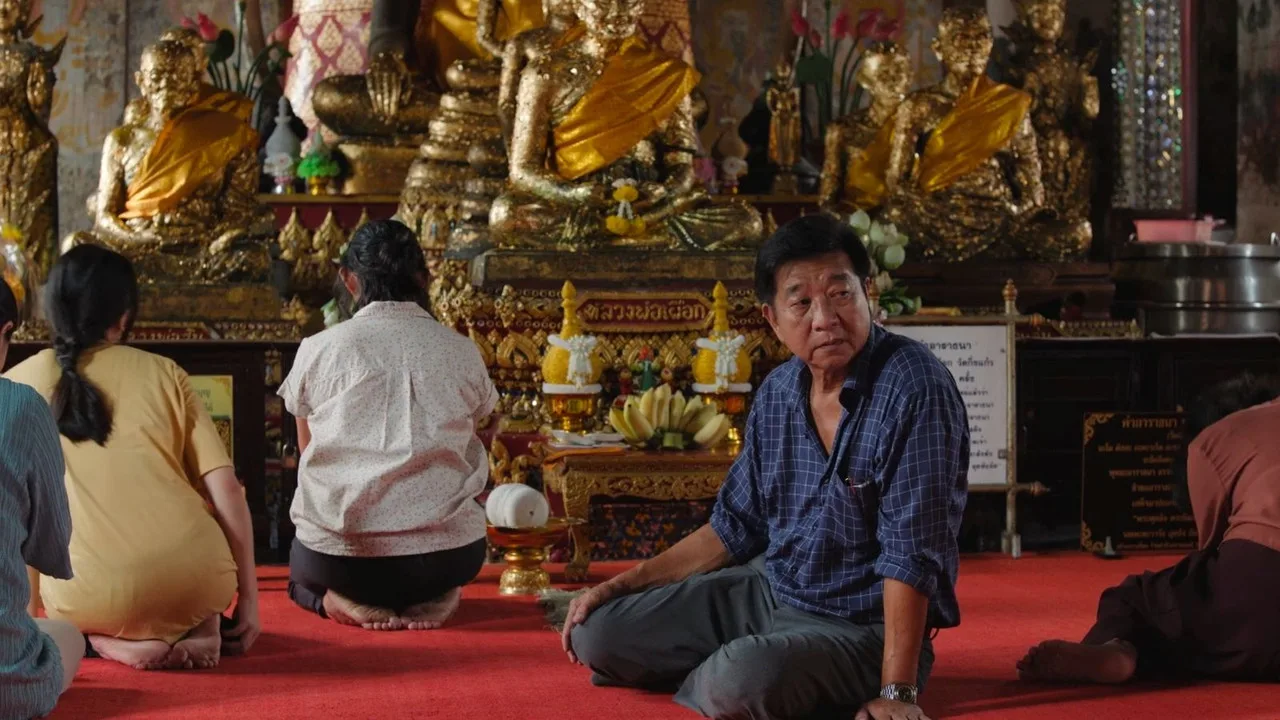
The director’s approach to time is radical, and it is the core of the film’s emotional impact. Scenes linger long after a typical editor would have cut away. Characters sit in silence, and the camera holds on empty spaces, allowing the audience to breathe and reflect. This is not accidental; it is a deliberate choice that turns the viewing experience into a form of contemplation.
At one point, a monk speaks to the family about meditation and the nature of attachment. On the surface, this dialogue feels like an interruption to the narrative. But as the film progresses, it becomes clear that the monk’s words are directed at us, the audience. The advice about patience and presence mirrors the film’s own structure. The director is not just telling a story about Buddhism; he is making us practice it.
The result is a film that rewards those who surrender to its rhythm. It is not entertainment in the traditional sense. It is an invitation to slow down, to notice the small gestures between family members, and to consider what it means to confront death with grace. I found myself thinking about my own family, about the conversations I have not had, and about the rituals we create to cope with loss.
The Director’s Defiant Rejection of Conventional Craft
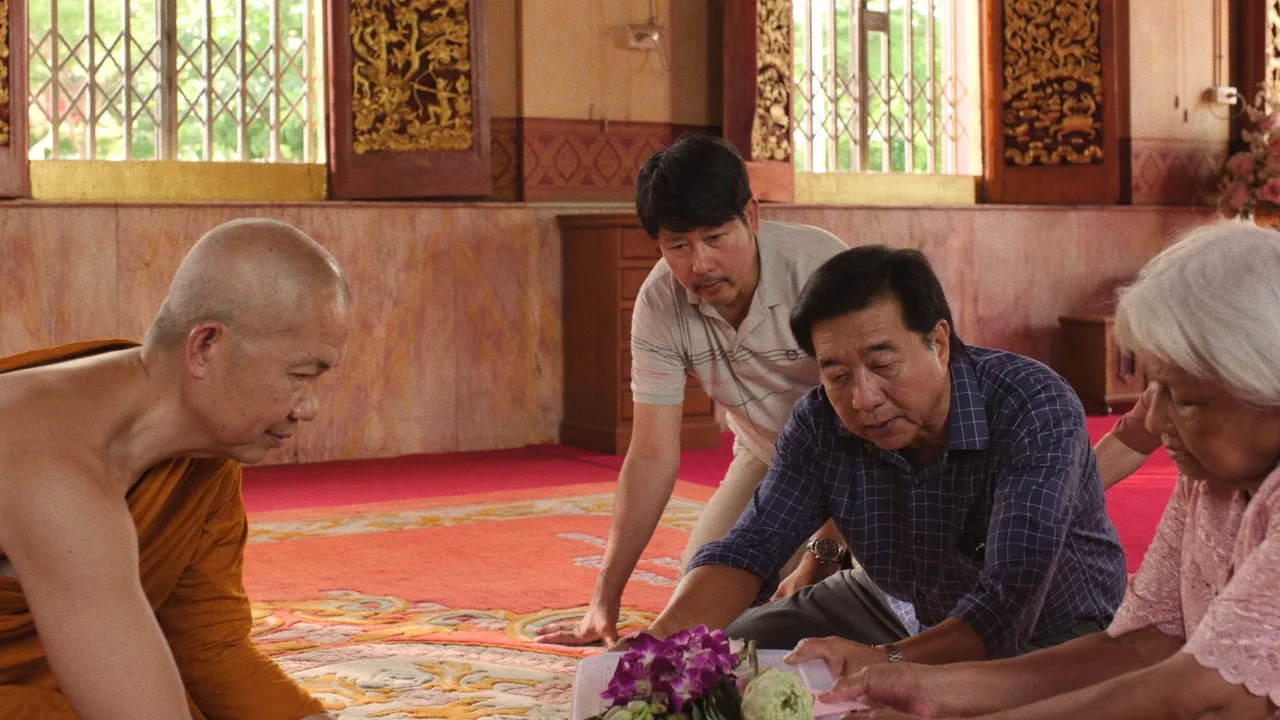
Sompot Chidgasornpongse breaks nearly every rule of mainstream filmmaking, and that is precisely what makes this work so compelling. In a typical dialogue scene, the editor would cut between close-ups and reverse shots to guide the viewer’s attention. Here, the camera often frames everything except the people talking. We see a wall, a window, a piece of furniture, while the conversation happens off-screen or in the periphery.
This choice is not a mistake. It is a statement. By denying us the expected visual cues, the director forces us to listen more carefully, to read body language, and to construct meaning from fragments. The timing is also unconventional. Some scenes feel stretched to the breaking point, while others end abruptly, leaving us disoriented. This unpredictability keeps us engaged, even as the film tests our patience.
As a director myself, I understand the temptation to make everything clear and digestible. We are taught to respect the audience’s attention span, to keep the story moving, and to use coverage to protect the edit. Chidgasornpongse throws all of that out the window. He imposes his own rhythm, his own logic, and his own sense of what matters. It is a bold and often beautiful act of artistic defiance.
The craft extends to the performances as well. The cast feels completely natural, as if they are not acting but simply living in front of the camera. There is no melodrama, no theatrical gestures. The emotional weight comes from restraint. This is especially impressive given the large ensemble, which includes multiple generations of a single family.
A Personal Story Hidden Within a Universal Journey
🎬 AI Render Pro Studio, the AI film production suite I built and use on my own productions. Script breakdown, storyboards, 30+ video models including Seedance 2.5 and Kling O3, image generation, retouch, 7K upscaling and audio, all in one browser workspace. $19/month flat, bring your own API keys and pay providers at cost, no credit packs, no markup. Try AI Render Pro Studio →
The film is loosely autobiographical, drawn from the director’s own experience with his family. This personal connection is evident in the specificity of the details, from the way the grandmother is treated to the unspoken tensions between siblings. One character, a non-believer, stands apart from the religious fervor of the others. I suspect this character is the director’s stand-in, his way of questioning the rituals he grew up with while still honoring them.
This duality gives the film its complexity. It is neither a celebration of faith nor a critique of it. Instead, it presents belief as something messy, personal, and deeply human. The family uses the pilgrimage as an excuse to gather around their mother, perhaps for the last time. The temples are the destination, but the journey is about connection.
Chidgasornpongse is not a newcomer to this territory. He previously served as the first assistant director to Apichatpong Weerasethakul, the Thai master who won the Palme d’Or at Cannes. That pedigree is visible in the film’s contemplative style and its willingness to embrace ambiguity. The influence is there, but the voice is distinctly his own.
The film has been selected for the Camera d’Or competition at Cannes and is Thailand’s official entry for the Best International Feature Film at the 99th Academy Awards. This recognition is well deserved. It is a work that demands attention and rewards those who are willing to meet it on its own terms.
What Working Directors Can Learn From This Film
For anyone who makes films, 9 Temples to Heaven on Wikipedia is a masterclass in trusting your instincts. It is easy to over-edit, to add music, to explain everything. This film does none of that. It trusts the audience to stay with it, and it trusts the material to carry the weight.
One lesson is the power of negative space. By leaving gaps, both in the narrative and in the frame, the director creates room for the audience to project their own feelings. This is something I think about when I work on brand films, where every second is precious. The instinct is to fill every moment with information. But sometimes, the most powerful thing you can do is let a moment breathe.
Another lesson is the importance of a clear point of view. The film is not trying to please everyone. It is a singular vision, executed with confidence. This is a reminder that the best work often comes from a place of personal truth, not from trying to anticipate what an audience wants.
I also appreciated the film’s documentary-like quality. It feels like we are observing real people, not watching actors perform. This is achieved through a combination of long takes, natural lighting, and a willingness to let scenes unfold without interference. It is a style that many filmmakers attempt, but few pull off with this level of conviction.
I write my prompts with AI Render Pro, the prompting engine I built for filmmakers and creatives. Read the full breakdown here.
A Journey Worth Taking, Even If It Tests Your Patience
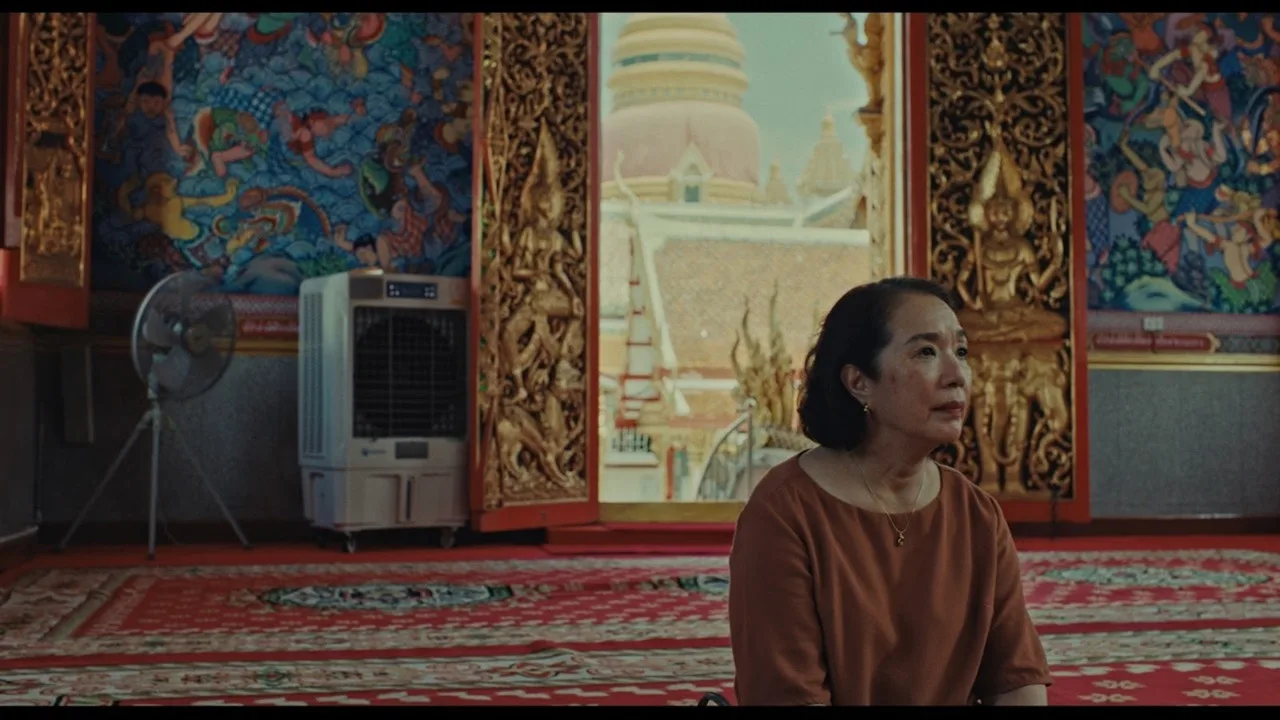
This is not a film for everyone. If you need constant action, clear plot points, or conventional storytelling, you will likely be frustrated. But if you are open to a different kind of cinematic experience, one that feels more like poetry than prose, this is a must-see. It is a film that rewards attention and punishes distraction.
I left the screening feeling changed, not in a dramatic way, but in a subtle, lingering manner. The images stayed with me for days. I found myself thinking about the grandmother, about the family’s quiet moments of care, and about the temples they visited. This is the mark of a great film: it does not end when the credits roll. It continues to live in your mind.
For those interested in the broader context of Thai cinema, the Screen Daily review offers a thoughtful analysis of the film’s themes. The Variety interview with the director provides insight into his creative process. The International Cinephile Society review praises the film as an excellent portrait of Buddhism’s role across generations.
If you are a filmmaker or a serious cinephile, I strongly recommend seeking this out. It is a reminder that cinema can be so much more than entertainment. It can be a space for reflection, a tool for understanding, and a bridge between cultures. It is also a testament to the power of a single, uncompromising vision.
For those who want to explore similar ideas in their own work, I have written about budgeting your first AI film, a guide that touches on the importance of intentionality in every frame. The lessons from Chidgasornpongse’s approach apply beyond traditional filmmaking. They are relevant to anyone who creates moving images, whether for the big screen or for a client.
I also recommend reading my review of Mayday, which features Reynolds and Branagh, a very different kind of film but one that also demonstrates the power of strong directorial choices. And for a deeper dive into the tools that help filmmakers execute their vision, consider Hero’s Essentials, a curated list of filmmaker gear.
This film is a trip, a meditation, and a gift. It will not be to everyone’s taste, but for those who are willing to take the journey, it is an experience you will not forget.
Thailand Sent This Film to the Oscars
The context matters here, because it tells you how seriously this film is being taken at home. 9 Temples to Heaven is Thailand’s official submission for Best International Feature at the 99th Academy Awards. Not a nominee, a submission: the National Federation of Motion Pictures and Contents Associations picked it from 51 eligible titles, narrowed to a shortlist of eight, and sent this one. Nominations are announced later, ahead of the ceremony in March 2027.
That is a bolder choice than it sounds. Thailand has been submitting films since 1984, 33 entries in total, and has never once been nominated. The closest it came was How to Make Millions Before Grandma Dies, which reached the fifteen-film shortlist. Sending a slow, contemplative debut about a family driving between temples, rather than something with obvious international momentum, is a committee betting on craft over calculation. I respect it.
The festival run backs the bet. It premiered in Directors’ Fortnight at Cannes, the first Thai feature selected for that sidebar in nineteen years, since Pen-ek Ratanaruang’s Ploy in 2007. Sompot took Best Director in the Asian New Talent competition at Shanghai, where Sompop Songkampol won Best Actor. It picked up a competition award at the New Zealand International Film Festival. Then it came home: it opened the Bangkok International Film Festival on 13 September and went nationwide on the 17th.
Sitting in Bangkok, that last part is the strange bit. The whole world had seen this film before the country it is about could buy a ticket. It is Sompot’s first narrative feature after nine years of work, and after roughly two decades as first assistant director to Apichatpong Weerasethakul on Tropical Malady, Syndromes and a Century, Cemetery of Splendour and Memoria. Apichatpong produces here. You can feel that lineage in every held shot.
Frequently Asked Questions
What is 9 Temples to Heaven about?
A fortune teller warns Sakol that his elderly mother may die before her upcoming birthday, so he takes her and eight other family members on a single-day pilgrimage to nine Buddhist temples to make merit and change her fate. As the day wears on, the mother weakens and the family’s differences in belief start to show.
Is 9 Temples to Heaven nominated for an Oscar?
Not yet. It is Thailand’s official submission for Best International Feature at the 99th Academy Awards, which is the step before nominations. The Academy narrows all national submissions to a fifteen-film shortlist and then to five nominees. Thailand has submitted 33 films since 1984 and has never been nominated.
Who directed 9 Temples to Heaven?
Sompot Chidgasornpongse, in his first narrative feature. He spent around two decades as first assistant director to Apichatpong Weerasethakul, including on Tropical Malady, Syndromes and a Century, Cemetery of Splendour and Memoria. Apichatpong is a producer on this film, alongside Kissada Kamyoung.
Where can I watch 9 Temples to Heaven?
It opened the Bangkok International Film Festival on 13 September 2026 and went on nationwide release in Thailand on 17 September. Outside Thailand it has been travelling the festival circuit since its Cannes premiere, including the New York Film Festival, so check local festival listings.
How long is 9 Temples to Heaven?
Around 140 minutes. It is deliberately unhurried, so treat the runtime as part of the experience rather than an obstacle.
Did 9 Temples to Heaven win anything?
Yes. Sompot Chidgasornpongse won Best Director and Sompop Songkampol won Best Actor in the Asian New Talent competition at the Shanghai International Film Festival, and the film took a competition award at the New Zealand International Film Festival. It premiered in Directors’ Fortnight at Cannes, the first Thai feature in that section in nineteen years.
Cast and Crew
Key Crew
- Director: Sompot Chidgasornpongse
- Screenplay: Sompot Chidgasornpongse
- Cinematography: Jonathan Ricquebourg
- Editor: Tham Kattiyakul
Main Cast
- Amara Ramnarong — Grandma
- Surachai Ningsanond — Sakol
- Jirawut Chiwaruck — Pongpol
- Yaneenan Jiraphatjittrin — Wimol
- Klaichan Phunman — Anchalee
- Sompot Songkampol — Tor
- Poon Sirapob — Koon
References and Further Reading
- 9 Temples to Heaven on Wikipedia — production details, cast and release history.
- 9 Temples to Heaven on TMDB — cast, crew, budget and box-office data.
- 9 Temples to Heaven on IMDb — full credits and technical specs.
- Thailand picks 9 Temples to Heaven for the Oscar race — Variety.
- Thailand selects 9 Temples to Heaven — Deadline.
- Sompot Chidgasornpongse on Wikipedia — director background and filmography.
Discover more from Olivier Hero Dressen Blog: Filmmaking & Creative Tech
Subscribe to get the latest posts sent to your email.

Work with Olivier
Director | CD | DP & Photographer
Specializing in commercials, music videos, AI-driven filmmaking, and cinematic storytelling for brands and production companies.
🌍 Shanghai · Paris · Los Angeles · Dubai
🎬 View Portfolio & Get in Touch