
Key Takeaways
- First insight, Harnessing AI for minimalist poster design demands precise, cinematic prompting to achieve clean, bold aesthetics that resonate with modern visual language.
- Craft highlight, The power of these 8 minimalist poster prompts lies in their ability to leverage AI Render Pro’s advanced rendering capabilities, focusing on composition, lighting, and camera parameters to translate abstract concepts into striking visuals.
- Industry context, As AI tools become indispensable, mastering specific, detailed prompts for minimalist poster design is crucial for designers and artists aiming to produce high-quality, commercially viable work efficiently.
- Bottom line, These 8 minimalist poster prompts serve as a foundational guide, providing actionable, copy-paste solutions for generating impactful, clean, and bold AI poster designs, ensuring an evergreen resource for creative professionals.
The landscape of visual communication is rapidly evolving, and the demand for striking ai poster designs is at an all-time high. As a director and cinematographer with two decades in the industry, I’ve witnessed firsthand the transformative power of precision in visual storytelling. This principle extends directly to AI art generation. To achieve truly clean, bold, and minimalist poster designs, your prompts must be as meticulously crafted as a shot list for a feature film. This guide provides 8 minimalist poster prompts, each designed to cut through the noise and deliver impactful visuals, leveraging the nuanced control offered by tools like AI Render Pro. We’re not just generating images; we’re directing them, frame by frame, pixel by pixel, to achieve a specific, high-calibre aesthetic.
Need a Director for Your Next Project?
From commercials to branded campaigns—Olivier brings creative vision and technical expertise.
→ View ProjectsGeometric Simplicity: The Foundation of a Bold AI Poster
Minimalist design often finds its strongest voice in geometric simplicity. This approach isn’t about absence, but about intentional presence – using fundamental shapes to convey complex ideas with clarity and impact. When crafting an ai poster with this aesthetic, every line, circle, square, or triangle is a deliberate choice, stripped of superfluous detail. The goal is to create a visual language that is immediate, universal, and timeless. My experience in framing shots for cinematic effect tells me that a strong composition built on geometric principles is inherently powerful, guiding the viewer’s eye with an almost architectural precision. This particular prompt focuses on leveraging AI to generate an ai poster that feels both modern and classic, suitable for a wide range of applications from tech conferences to art exhibitions.
The Prompt:
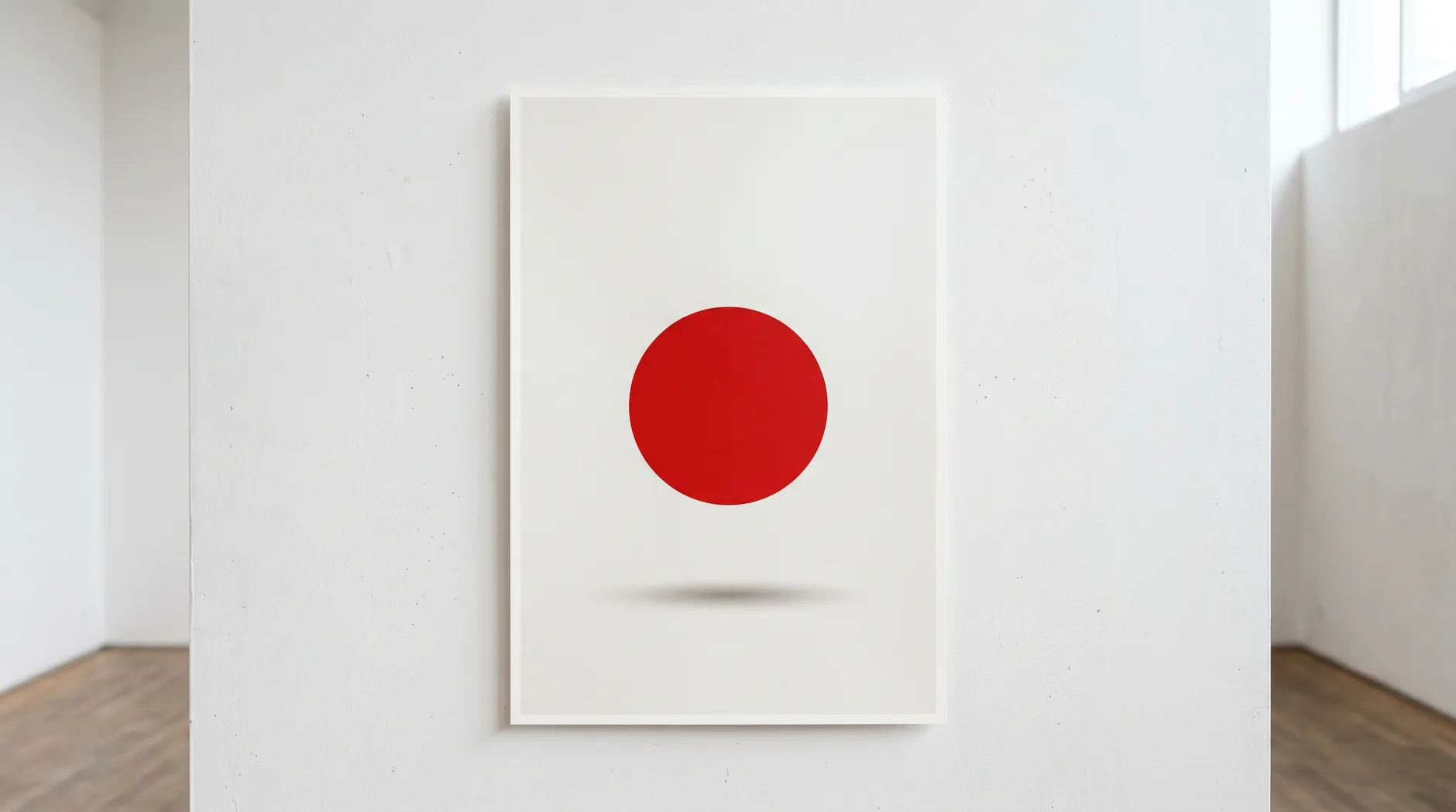
"A minimalist poster: A singular, bold, primary-colored geometric shape (e.g., a perfect red circle) floating in a vast, stark white void. The shape casts a subtle, soft shadow. Clean lines, ultra-minimalist, Swiss Style influence."
Why it Works:
This prompt is effective because it specifies every critical element for a minimalist ai poster. “Singular, bold, primary-colored geometric shape” provides a clear subject and color palette, preventing the AI from introducing unnecessary complexity. The “vast, stark white void” establishes the crucial negative space, a cornerstone of minimalism. The instruction for a “subtle, soft shadow” adds depth without clutter, indicating a sophisticated lighting setup.
“Clean lines, ultra-minimalist, Swiss Style influence” grounds the aesthetic firmly in established design principles known for their clarity and precision. The technical camera and lens specifications (Hasselblad X1D, 90mm lens, f/8) direct the AI to render with the characteristic sharpness, depth of field, and perspective of professional medium format photography.
The lighting (natural diffused studio lighting from above, high-key) ensures a bright, even illumination that enhances the clean aesthetic and highlights the shape without harshness. Finally, “Kodak Portra 400 film stock” imparts a subtle, organic texture and color rendition, preventing the image from feeling sterile or overly digital, adding a touch of classic photographic artistry to the ai poster.
What Makes it Special:
What makes this prompt special is its marriage of abstract design principles with concrete cinematic rendering instructions. It doesn’t just ask for minimalism; it dictates how that minimalism should be rendered. The choice of a Hasselblad camera implies a high-resolution, meticulously composed image, while the 90mm lens offers a natural perspective, avoiding distortion.
The f/8 aperture ensures a sharp focus across the entire subject, crucial for highlighting the geometric precision. The “natural diffused studio lighting” and “high-key” setup are key to achieving the clean, shadow-soft aesthetic, reminiscent of fine art photography or product shots. The “Kodak Portra 400 film stock” adds a layer of warmth and authenticity, ensuring the primary color pops without being oversaturated, and giving the ai poster a tactile quality.
This level of detail ensures the AI understands the desired photographic quality, transforming a simple concept into a visually rich and compelling ai poster, perfect for those seeking a bold yet understated visual identity.
Negative Space Mastery: Crafting Impactful AI Posters
The art of negative space is not merely about what is absent, but about how that absence defines and amplifies what is present. In the context of creating a compelling ai poster, mastering negative space is paramount for achieving true minimalism and visual impact. It allows the subject to breathe, preventing visual clutter and guiding the viewer’s eye with deliberate intention. Think of it as the silence between musical notes that gives the melody its power.
For this particular approach to an ai poster, we aim to use the surrounding empty space as an active compositional element, not just a background. This technique, when executed correctly, can make a simple form profoundly memorable. It’s a trick I’ve often used in cinematography to isolate characters or objects, drawing immediate focus and imbuing them with greater significance.
This prompt specifically targets the AI’s ability to understand and render spatial relationships, making the void as important as the form itself.
The Prompt:
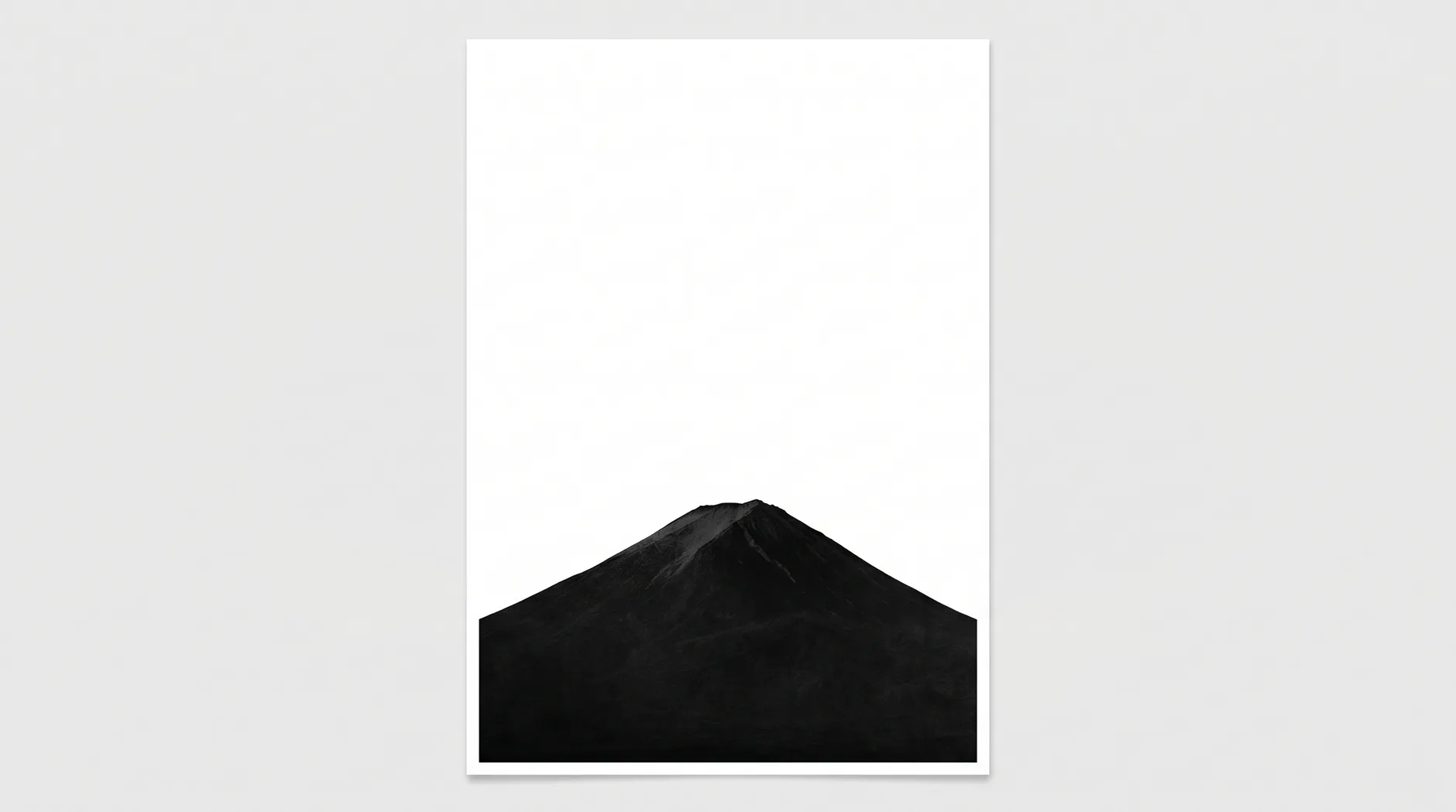
"A minimalist poster: An abstract, subtly textured, single black silhouette of a mountain peak rising from the bottom edge, dramatically framed by an immense, pure white negative space that dominates the composition. The silhouette has razor-sharp edges. Ultra-clean, stark contrast, inspired by Japanese ink wash painting."
Why it Works:
This prompt excels in defining the core concept of negative space. “Immense, pure white negative space that dominates the composition” explicitly instructs the AI on the primary visual element. The “single black silhouette of a mountain peak” provides a clear, strong subject that benefits immensely from this spatial arrangement. “Razor-sharp edges” ensures the silhouette is crisp and well-defined against the white.
The “subtly textured” detail on the silhouette adds a layer of sophistication, preventing it from appearing flat, while still maintaining minimalism. “Ultra-clean, stark contrast, inspired by Japanese ink wash painting” sets a high bar for aesthetic purity and visual drama, drawing on a tradition known for its masterful use of empty space. The camera and lens specifications (Canon EOS R5, 70-200mm f/2.8 lens at 200mm, f/11) are crucial.
The telephoto lens at 200mm compresses perspective, making the mountain appear more imposing and isolated, while f/11 ensures maximum sharpness across the silhouette. The “single hard directional light from the side” is key for creating dramatic shadows and revealing the subtle texture on the peak, enhancing its three-dimensionality within the minimalist context.
“Low-key” reinforces the stark contrast, and “Ilford HP5 Plus film simulation” provides a classic, high-contrast black and white look, perfect for this dramatic ai poster.
What Makes it Special:
The distinction of this prompt lies in its explicit direction for dramatic lighting and film emulation to enhance the negative space concept for an ai poster. The “single hard directional light” isn’t just about illuminating the subject; it’s about shaping the negative space with shadows, adding depth and narrative.
The “low-key” instruction, combined with the “Ilford HP5 Plus film simulation,” creates a timeless, almost sculptural quality, reminiscent of classic photography that emphasizes form and shadow. This combination elevates the simple silhouette into a powerful statement.
The telephoto lens choice (200mm) is strategic for minimalist poster design, as it flattens the perspective and emphasizes the graphic quality of the silhouette against the vast background, making the ai poster incredibly impactful. This prompt doesn’t just ask for negative space; it instructs the AI on how to render it with photographic artistry, ensuring the final ai poster is not just clean, but also profoundly dramatic and aesthetically rich.
Monochromatic Impact: A Powerful AI Poster Strategy
Monochromatic design, when applied to an ai poster, is far more than just using a single color. It’s about exploring the full spectrum of tones, shades, and tints within that one color, creating depth, mood, and visual hierarchy without the distraction of a broader palette. This approach demands precision and an understanding of how light interacts with color to produce subtle variations that convey meaning. From a cinematographer’s perspective, working monochromatically forces a focus on form, texture, and light, much like shooting black and white film. Every gradient, every shadow, every highlight within that single hue becomes critical. This prompt aims to leverage the AI’s ability to generate complex tonal variations within a restricted color scheme, resulting in an ai poster that is both bold and sophisticated. It’s about achieving maximum impact with minimal chromatic information, a challenge that, when met, yields incredibly powerful results for any ai poster.
The Prompt:
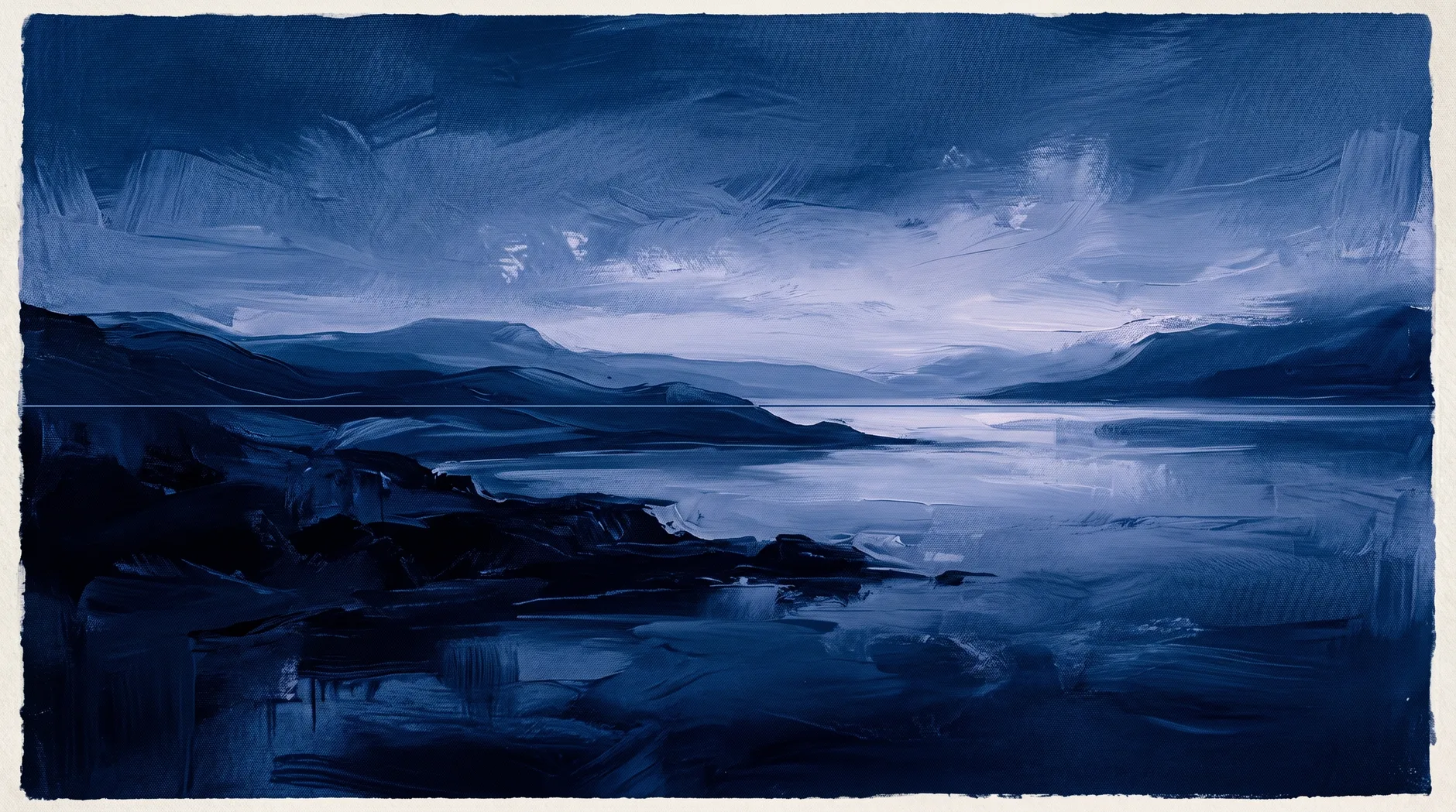
"A minimalist poster: A serene, abstract landscape rendered entirely in shades of deep indigo blue, ranging from near-black shadows to soft, pale highlights. A single, subtle, geometric horizon line divides the composition. Textured, painterly brushstrokes visible, evoking a sense of calm and mystery. Precise composition, 8K, artistic render."
Why it Works:
This prompt precisely defines the monochromatic aesthetic for an ai poster. “Rendered entirely in shades of deep indigo blue, ranging from near-black shadows to soft, pale highlights” is a clear instruction for a rich, nuanced monochromatic palette. The “serene, abstract landscape” provides a suitable subject for this exploration of tone, allowing for broad, sweeping gradients.
The “single, subtle, geometric horizon line” introduces a minimalist structural element without breaking the monochromatic rule, grounding the composition. “Textured, painterly brushstrokes visible” adds an artistic, organic dimension, ensuring the ai poster doesn’t feel flat or overly digital, enhancing the sense of depth and hand-crafted quality.
The camera choice (Sony Alpha 7S III) is known for its low-light capabilities and excellent color rendition, even in challenging conditions. The 50mm f/1.8 lens is a versatile prime, offering a natural perspective, and f/5.6 provides a good balance of sharpness and depth. “Soft ambient twilight lighting” is crucial for creating the nuanced shadows and highlights within the indigo spectrum, enhancing the “calm and mystery” specified. “Low-key” reinforces the deep, rich tones.
“Fuji Velvia 50 film simulation” is a bold choice for a monochromatic prompt, as Velvia is known for its vibrant saturation, but here it’s used to instruct the AI to produce a monochromatic image with rich, deep, and subtly varied tones within the specified indigo, rather than flat grays, resulting in a unique and impactful ai poster.
What Makes it Special:
The uniqueness of this prompt lies in its sophisticated approach to monochromatic rendering for an ai poster. It doesn’t just ask for blue; it asks for shades of blue, with specific instructions for shadows and highlights, and even texture. The “painterly brushstrokes” instruction guides the AI to adopt an artistic rendering style, moving beyond mere photography to a more illustrative feel, while still maintaining high-resolution detail.
The “soft ambient twilight lighting” is key to achieving the subtle tonal shifts that define a successful monochromatic piece, creating a mood that is both profound and inviting. The “Fuji Velvia 50 film simulation,” while typically associated with vibrant colors, is cleverly employed here to push the AI towards a rich, saturated monochromatic depth, ensuring the indigo isn’t dull but vibrant within its singular hue.
This nuanced combination ensures the ai poster is not just minimalist but also deeply atmospheric and artistically rendered, making it stand out as a powerful example of monochromatic design.
Typographic Elegance: When Text Becomes the AI Poster
🎬 AI Render Pro Studio, the AI film production suite I built and use on my own productions. Script breakdown, storyboards, 30+ video models including Seedance 2.5 and Kling O3, image generation, retouch, 7K upscaling and audio, all in one browser workspace. $19/month flat, bring your own API keys and pay providers at cost, no credit packs, no markup. Try AI Render Pro Studio →
In the realm of minimalist design, sometimes the most powerful visual is pure text. Typographic elegance transforms words from mere conveyors of information into primary artistic elements. When creating an ai poster where text is central, the choice of typeface, its scale, placement, and the interplay with negative space become paramount. It’s about distilling a message down to its absolute essence, allowing the form of the letters themselves to carry significant aesthetic weight. As a director, I understand the power of a single, perfectly placed title card. This prompt focuses on generating an ai poster where typography isn’t just on the poster, but is the poster, demanding the AI to render text with the same meticulous attention to detail and composition as it would a complex image. The goal is a bold statement, delivered with understated grace, achieving maximum impact through the careful orchestration of font and space.
The Prompt:
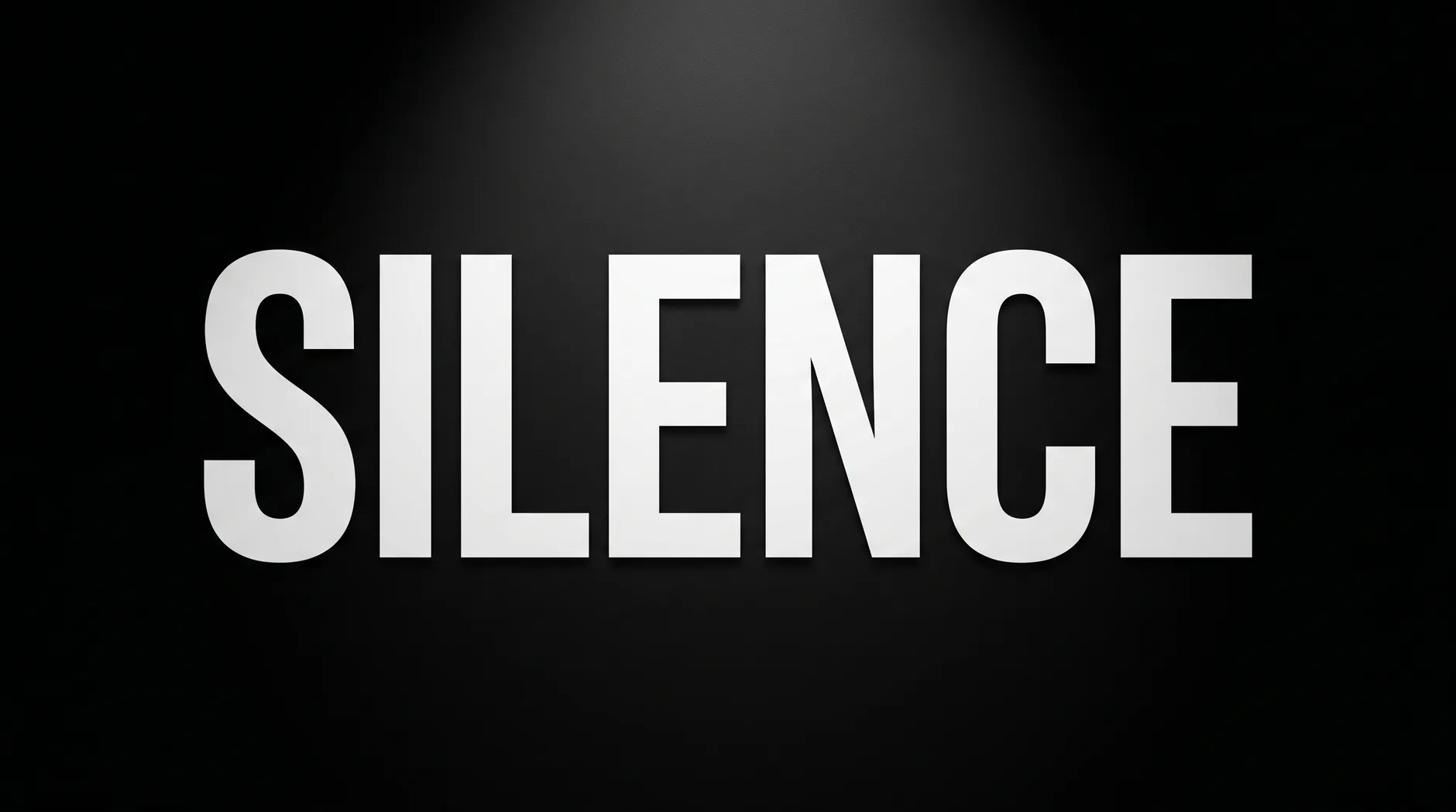
"A minimalist poster: A single, perfectly centered, bold sans-serif word (e.g., 'SILENCE') in pristine white, against a deep, velvety matte black background. The typography is monumental, clean, with precise kerning and leading. The edges of the letters are razor-sharp. Ultra-minimalist, Swiss Style influence, focusing on typographic precision."
Why it Works:
This prompt is highly effective because it treats typography as a primary visual subject for an ai poster, not an afterthought. “Single, perfectly centered, bold sans-serif word… in pristine white, against a deep, velvety matte black background” establishes a clear, high-contrast, and inherently minimalist aesthetic.
The specific instruction for “monumental, clean, with precise kerning and leading” guides the AI to focus on the subtleties of typographic design that elevate text to art. “Razor-sharp edges” is critical for the crispness expected in high-quality print. “Ultra-minimalist, Swiss Style influence, focusing on typographic precision” firmly anchors the design in a tradition known for its clarity and elegance.
The camera (Phase One XF IQ4) is a top-tier medium format system, implying extreme detail and resolution. The 110mm f/2.8 lens offers a slightly telephoto perspective, ideal for isolating the text, and f/4 provides a shallow depth of field that subtly separates the text from the background, even on a flat plane, adding a touch of dimension.
“Theatrical spotlight from above illuminating the text with soft falloff” is a masterful lighting instruction, creating subtle dimensionality on the letters and a rich, deep black background without being completely flat. “Low-key, cinematic black and white” reinforces the dramatic, high-contrast aesthetic, ensuring the ai poster feels powerful and timeless. This comprehensive approach ensures the AI understands that the text itself is the artwork, not just a label.
What Makes it Special:
What sets this prompt apart is its meticulous attention to the photographic rendering of typography for an ai poster. It doesn’t just specify a font and color; it describes how light should interact with the text. The “theatrical spotlight from above with soft falloff” is a sophisticated lighting setup, giving the letters a subtle, almost sculptural quality, hinting at their three-dimensional presence despite being a flat graphic.
This lighting prevents the text from looking merely pasted on, instead integrating it organically into the composition. The choice of a Phase One camera and a prime lens emphasizes the desire for extreme photographic realism and detail, making every curve and line of the typography pristine. The “cinematic black and white” directive adds a layer of classic elegance and drama, transforming a simple word into an iconic visual statement.
This prompt pushes the AI to consider the text as a meticulously lit subject, creating an ai poster that is both graphically bold and subtly nuanced, a true testament to typographic elegance.
Single Object Focus: Unleashing Power in AI Poster Design
Sometimes, the most profound statement in an ai poster comes from the isolation of a single, powerful object. This approach strips away all distractions, forcing the viewer’s attention onto one element and allowing its form, texture, and inherent meaning to resonate fully. It’s a technique I’ve used extensively in filmmaking to create iconic shots, where an object becomes a symbol, imbued with narrative weight simply by its presence and framing.
For a minimalist ai poster, this means selecting an object that is visually interesting or conceptually significant and presenting it with absolute clarity against an uncluttered backdrop. The challenge is to make that single object captivating enough to carry the entire composition. This prompt guides the AI to render an object with photorealistic detail and artistic flair, ensuring it dominates the visual field with understated authority.
The Prompt:

"A minimalist poster: A singular, pristine, highly detailed seashell rendered in exquisite macro detail, floating centrally in a vast, ethereal, soft pastel gradient background (e.g., subtle peach fading to pale lavender). The seashell has natural imperfections and textures. Ultra-clean, delicate, elegant, focus on organic forms. Shot on a Fujifilm GFX 100S with a 120mm macro lens, f/2.8, soft box lighting from front-right, diffused fill light from left, high-key, Ektachrome film simulation, precise composition, 8K, hyperrealistic render."
Why it Works:
This prompt effectively captures the essence of single-object focus for an ai poster. “Singular, pristine, highly detailed seashell rendered in exquisite macro detail” provides a clear subject and emphasizes the level of detail required. The “floating centrally in a vast, ethereal, soft pastel gradient background” creates the necessary minimalist context and introduces a subtle, appealing color scheme that supports rather than competes with the subject.
“Natural imperfections and textures” ensures the object feels real and organic, adding visual interest without clutter. “Ultra-clean, delicate, elegant, focus on organic forms” sets the overall aesthetic tone. The camera and lens specifications are crucial for this macro approach. The Fujifilm GFX 100S is a high-resolution medium format camera, ideal for capturing intricate details.
The 120mm macro lens is specifically designed for extreme close-ups, ensuring the “exquisite macro detail” is achieved. The f/2.8 aperture, while shallow, is appropriate for macro photography to isolate the subject, with the “soft box lighting from front-right” and “diffused fill light from left” creating a beautiful, even illumination that highlights textures and forms without harsh shadows. “High-key” reinforces the bright, airy feel.
“Ektachrome film simulation” adds a vibrant yet natural color rendition, making the seashell pop with lifelike color and depth, resulting in a stunning ai poster.
What Makes it Special:
The distinction of this prompt lies in its granular instructions for macro photography and sophisticated lighting for an ai poster. It doesn’t just ask for a seashell; it demands an “exquisite macro detail” with “natural imperfections and textures,” guiding the AI to render a subject with biological accuracy and artistic sensitivity.
The combination of a Fujifilm GFX 100S and a 120mm macro lens specifically instructs the AI to simulate a professional macro shoot, capturing details invisible to the naked eye. The “soft box lighting from front-right” and “diffused fill light from left” is a professional studio lighting setup, designed to sculpt the object with gentle shadows and highlights, making it truly three-dimensional against the flat background.
The “Ektachrome film simulation” is a deliberate choice to imbue the image with vibrant, true-to-life colors and fine grain, enhancing the organic beauty of the seashell. This level of technical photographic detail ensures the ai poster isn’t just a simple image of an object, but a high-art rendering that celebrates the intricate beauty of a single form, making it a compelling focal point.
If you are looking to create a powerful character design or object, this prompt provides a solid foundation.
Abstract Line Art: Minimalism for the AI Poster
Abstract line art represents minimalism at its purest: conveying form, movement, and emotion with the fewest possible strokes. For an ai poster, this approach relies on the AI’s ability to interpret gestural quality and spatial relationships, transforming simple lines into dynamic and expressive compositions. It’s about stripping away color and complex forms to reveal the inherent beauty and power of line itself.
As a filmmaker, I appreciate how a single line can define a horizon, suggest a character’s silhouette, or imply motion across a frame. This prompt aims to create an ai poster that feels both contemporary and timeless, drawing on the elegance of pure graphic design. The challenge is to ensure the lines are not merely drawn, but possess a deliberate artistry and impactful presence, making the ai poster a study in elegant simplicity.
The Prompt:
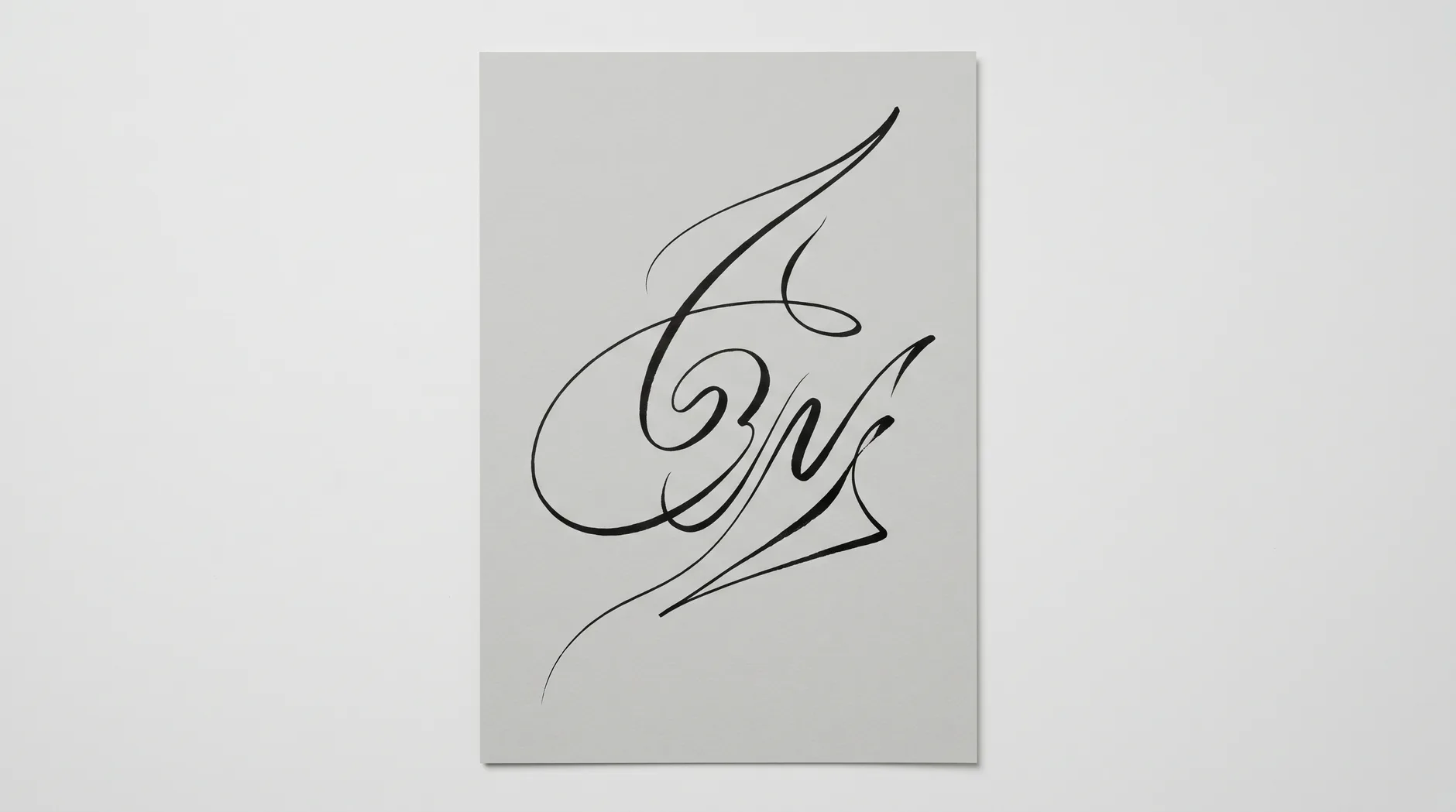
"A minimalist poster: A single, continuous, elegant black line forming an abstract, fluid shape that suggests motion and grace, against a pristine, pale grey background. The line varies subtly in thickness, with smooth curves and sharp angles. Ultra-minimalist, clean, inspired by modern abstract art and calligraphy. Even studio lighting, flat perspective, neutral color profile, precise composition, 8K, vector-art render."
Why it Works:
This prompt is highly effective for generating abstract line art for an ai poster because it precisely defines the characteristics of the line and its environment. “Single, continuous, elegant black line forming an abstract, fluid shape that suggests motion and grace” provides clear artistic direction for the line’s form and emotional resonance.
The “pristine, pale grey background” offers a neutral canvas that allows the black line to stand out without harsh contrast, maintaining a soft elegance. “The line varies subtly in thickness, with smooth curves and sharp angles” adds visual complexity and dynamism, preventing the line from appearing static or monotonous.
“Ultra-minimalist, clean, inspired by modern abstract art and calligraphy” sets a high aesthetic standard, referencing artistic traditions known for their refined use of line. The camera and lens specifications (Leica M11, 35mm f/2 Summicron lens, f/5.6) are chosen for their reputation for optical precision and sharpness, ensuring the lines are rendered with utmost clarity.
“Even studio lighting” and “flat perspective” are crucial for emphasizing the two-dimensional, graphic quality of line art, preventing unwanted shadows or distortions. “Neutral color profile” ensures the focus remains purely on the black and grey tones. The instruction for a “vector-art render” is vital, telling the AI to produce clean, scalable graphics rather than a pixel-based photographic image, which is ideal for this type of ai poster design.
What Makes it Special:
What makes this prompt particularly special is its explicit instruction for a “vector-art render” combined with high-end photographic equipment specifications for an ai poster. This duality guides the AI to produce a graphic image with the precision and crispness typically associated with vector art, while retaining the subtle imperfections and artistic sensibility of something shot with a premium camera like a Leica.
The “Leica M11” and “35mm Summicron lens” imply a level of optical purity and aesthetic quality that elevates the simple line art. The “subtle variation in thickness” and the “fluid shape suggesting motion” are key details that transform a basic line into an expressive artistic statement. The “even studio lighting” and “flat perspective” ensure that the ai poster focuses solely on the line’s form and movement, without distractions.
This prompt pushes the AI to deliver a sophisticated graphic design that feels both digitally perfect and artistically nuanced, making it an exemplary minimalist ai poster.
Deconstructed Forms: Reimagining the AI Poster
Deconstructed forms in minimalist design take a recognizable object or concept and break it down into its fundamental components, often reassembling them in an abstract or fragmented manner. This approach to an ai poster challenges the viewer to re-evaluate their perception, finding beauty and meaning in the essential parts rather than the whole.
It’s a technique that allows for conceptual depth within a minimalist framework, transforming familiar subjects into fresh, intriguing visuals. As a director, I often think about deconstructing a scene into its core emotional beats. This translates directly to visual design: stripping away the superfluous to reveal the underlying structure.
This prompt aims to guide the AI in creating an ai poster that is both abstract and suggestive, offering a new perspective on a common object through careful fragmentation and minimalist composition, resulting in a powerful and thought-provoking ai poster.
The Prompt:
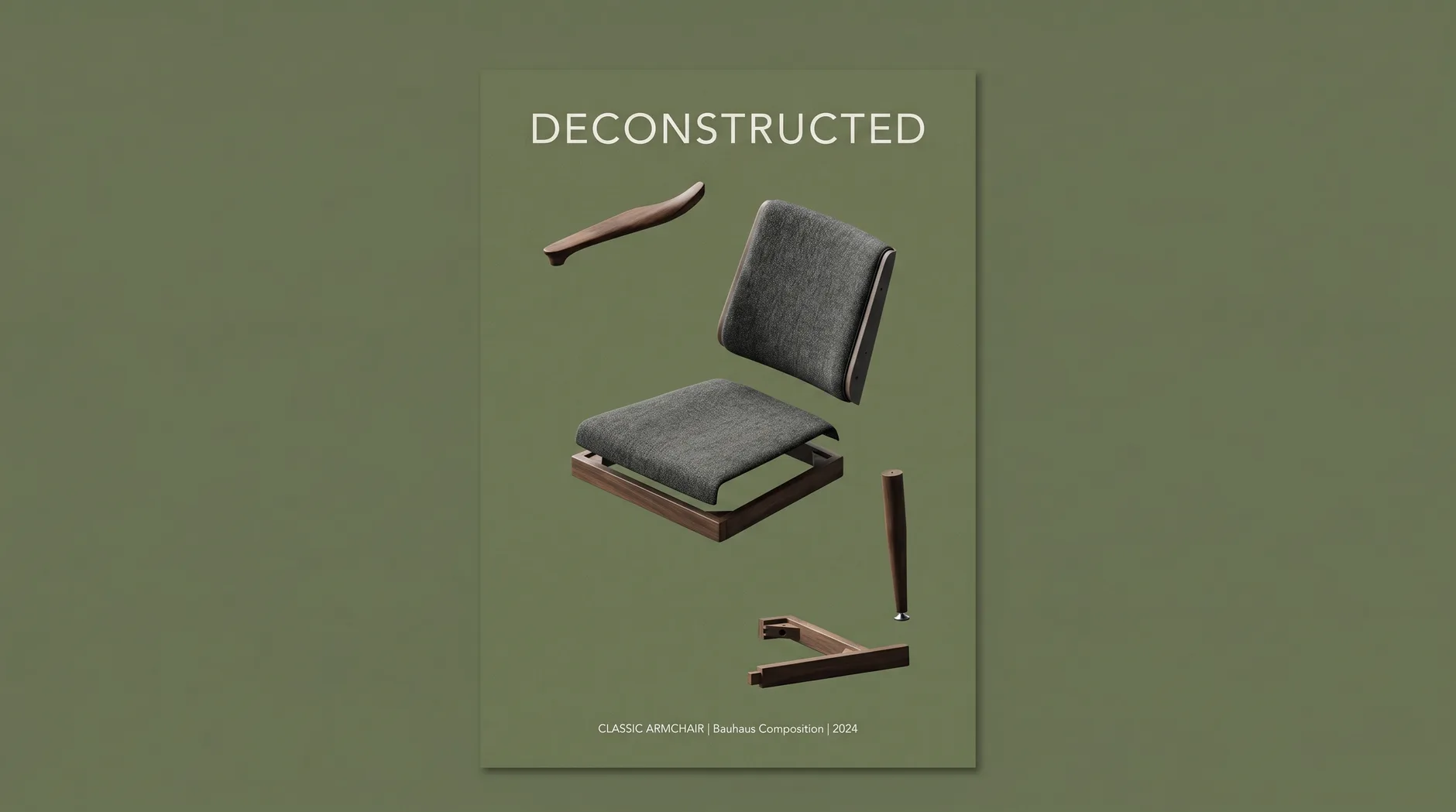
"A minimalist poster: Deconstructed elements of a classic armchair (e.g., a single armrest, a fragment of the backrest, a detached leg), floating in a precise, artful arrangement against a solid, muted olive green background. Each element is rendered with clean edges and subtle textural variations, hinting at its original form. Ultra-minimalist, conceptual, Bauhaus influence. Crisp, directional overhead lighting with soft shadows, neutral color profile, precise composition, 8K, high-fidelity render."
Why it Works:
This prompt effectively articulates the concept of deconstructed forms for an ai poster. “Deconstructed elements of a classic armchair… floating in a precise, artful arrangement” clearly defines the subject and its fragmented presentation, emphasizing intentional composition. The “solid, muted olive green background” provides a sophisticated, non-distracting canvas that allows the individual elements to stand out.
“Each element is rendered with clean edges and subtle textural variations, hinting at its original form” ensures that while deconstructed, the pieces remain recognizable and visually interesting. “Ultra-minimalist, conceptual, Bauhaus influence” grounds the aesthetic in a design philosophy known for its functionalism and geometric simplicity, perfect for this approach.
The camera and lens specifications (Medium Format Digital Back, 80mm f/2.8 lens, f/11) are chosen for their ability to deliver extreme detail and sharpness, crucial for rendering the individual elements with high fidelity. The 80mm lens offers a natural perspective, and f/11 ensures everything is in sharp focus. “Crisp, directional overhead lighting with soft shadows” is key to defining the forms and creating subtle depth without harshness, making the elements feel sculptural.
“Neutral color profile” ensures the focus remains on form and texture. The “high-fidelity render” instruction ensures maximum realism and detail for the ai poster.
What Makes it Special:
The unique aspect of this prompt lies in its detailed direction for both the abstract concept and its realistic rendering for an ai poster. It doesn’t just ask for broken pieces; it asks for “deconstructed elements” presented in a “precise, artful arrangement,” implying a thoughtful, almost architectural approach to composition.
The “crisp, directional overhead lighting with soft shadows” is a sophisticated lighting setup that highlights the three-dimensionality and subtle textures of each fragment, making them feel tangible and real despite their abstract arrangement. The choice of a high-end Medium Format Digital Back and a prime lens emphasizes the desire for photographic realism and extreme detail, ensuring that even fragmented pieces are rendered with impeccable clarity.
The “Bauhaus influence” is important here, as it pushes for a functional, clean aesthetic even within the deconstruction. This prompt ensures the ai poster is not merely a collection of parts, but a carefully composed, conceptually rich piece of art that invites contemplation, offering a fresh take on what an ai poster can be.
Gradient Harmony: Subtle Transitions, Bold AI Poster Results
Gradient harmony in an ai poster utilizes smooth, continuous color transitions as the primary visual element, creating depth, mood, and a sense of calm or energy without relying on distinct objects or harsh lines. It’s about the interplay of light and color, allowing hues to melt into one another seamlessly, evoking emotion through pure chromatic experience. As a cinematographer, I often use subtle lighting gradients to shape mood and direct attention within a frame.
This approach to an ai poster taps into the AI’s ability to generate incredibly smooth and nuanced color blends, transforming a simple background into a captivating artwork. The goal is to create a visual field that is both minimalist and rich, where the absence of a defined subject only amplifies the power of color itself, resulting in a bold yet ethereal ai poster.
The Prompt:

"A minimalist poster: A seamless, ultra-smooth gradient transitioning from a deep, atmospheric teal at the top to a soft, warm amber at the bottom. The gradient is perfectly even, with no banding, evoking a serene sunset or sunrise. Ultra-minimalist, ethereal, clean, inspired by abstract color field painting."
Why it Works:
This prompt is highly effective in guiding the AI to create a harmonious gradient for an ai poster. “Seamless, ultra-smooth gradient transitioning from a deep, atmospheric teal at the top to a soft, warm amber at the bottom” provides a clear, evocative color scheme and direction for the transition. “Perfectly even, with no banding” is a critical instruction, pushing the AI to render the gradient with technical precision, preventing common digital artifacts.
“Evoking a serene sunset or sunrise” adds a poetic, emotional dimension to the abstract colors. “Ultra-minimalist, ethereal, clean, inspired by abstract color field painting” firmly establishes the aesthetic and artistic influences. The camera and lens specifications (RED Komodo 6K, 18-35mm T2.0 lens, T/4) are chosen for their cinematic quality and ability to capture subtle color nuances. The RED Komodo is a high-end cinema camera, ensuring a rich, deep color space.
The 18-35mm lens offers a wide to normal perspective, suitable for capturing expansive gradients, and T/4 provides a balanced exposure. “Soft, diffused backlight mimicking natural light” is crucial for illuminating the gradient in a way that enhances its depth and ethereal quality, making it feel organic rather than purely digital. “Neutral color profile” ensures the colors are rendered accurately and beautifully.
The “cinematic render” instruction ensures the final ai poster has a polished, high-quality, film-like appearance.
What Makes it Special:
The distinctiveness of this prompt lies in its sophisticated use of cinematic terminology to achieve a purely abstract, color-based ai poster. It doesn’t just ask for a gradient; it specifies the quality of the gradient (“seamless, ultra-smooth, no banding”) and its emotional resonance (“serene sunset or sunrise”).
The choice of a “RED Komodo 6K” cinema camera, typically used for feature films, along with a high-quality cinema lens (18-35mm T2.0), pushes the AI to render the gradient with an incredible depth of color, dynamic range, and smooth transitions that are characteristic of professional cinematography.
The “soft, diffused backlight mimicking natural light” is a key element, instructing the AI to treat the gradient as if it were a physical phenomenon being lit, giving it a tangible, almost atmospheric presence. This level of detail in lighting and camera choice ensures the ai poster transcends a simple digital blend, becoming a rich, immersive visual experience, a true testament to the power of gradient harmony.
The Real Cost of AI Filmmaking Is Not the Prompts
Every frame in this article came from a written prompt, and the difference between a workable result and a usable one is specificity. This is what a production-ready prompt looks like in practice, with the frame it produced:

A perfect, smooth sphere, crafted from pure matte white ceramic with a subtle, delicate textureThe part that actually drains a budget is not the prompt writing though. It is the credit system. Most AI platforms charge a subscription, then sell credits on top of it, with a markup on every render and a counter that resets each month whether you shipped anything or not. Generate, upscale, regenerate a few takes, and a single short film chews through pricing tiers fast.
AI Render Pro Studio is the pipeline I built to cut that out. One browser workspace for the whole run: script breakdown, storyboards, image generation, more than 30 video models including Seedance 2.5 with 30-second native-audio takes, Seedance 2.0 in native 4K and Kling O3, plus retouch, upscaling past 7K and an audio studio. It costs $19 a month flat, and you plug in your own API keys, so every render is billed by the provider at cost. No markup, no credit packs, no expiring tokens. On a real project that difference is not a rounding error, it is the budget.
Try AI Render Pro Studio, $19/month →
The showcase render above was generated with AI Render Pro. Read the full breakdown here.
Frequently Asked Questions
How important is specific camera and lens terminology in AI prompts for minimalist poster design?
Extremely important. Using specific camera (e.g., Hasselblad, Leica, RED) and lens (e.g., 90mm, 50mm Summicron) terminology guides the AI to render images with the characteristic depth, perspective, sharpness, and color science associated with those professional tools, significantly enhancing the photorealistic or cinematic quality of your minimalist ai poster.
Can these minimalist ai poster prompts be adapted for different AI art generators?
Yes, while optimized for AI Render Pro’s nuanced control, these prompts provide a strong foundation that can be adapted for other AI art generators like Midjourney, DALL-E, or Stable Diffusion. You may need to experiment with specific phrasing or adjust stylistic modifiers to achieve similar results, as each AI model has its unique interpretation capabilities.
What is the role of “film stock” or “film simulation” in creating minimalist ai posters?
Film stock or simulation (e.g., Kodak Portra, Ilford HP5, Ektachrome) introduces subtle color shifts, grain, contrast curves, and overall tonal qualities that prevent digital sterility. It adds an organic, timeless, and often nostalgic aesthetic to your ai poster, enriching the minimalist design with character and depth.
How do I ensure “clean lines” and “razor-sharp edges” in my AI poster output?
Explicitly stating “clean lines,” “razor-sharp edges,” “precise composition,” and “8K, extreme detail” in your prompt, alongside high-resolution camera specifications, helps guide the AI. Additionally, specifying “vector-art render” for graphic designs or high f-stops (e.g., f/8, f/11) for photographic renders can improve sharpness and clarity.
Why is “precise composition” mentioned repeatedly in these minimalist ai poster prompts?
For minimalist design, composition is everything. “Precise composition” emphasizes the critical importance of spatial arrangement, balance, and the intentional placement of elements within the frame. It tells the AI that every aspect of the layout, including negative space, must be carefully considered and rendered with artistic exactitude for the ai poster to be effective.
Discover more from Olivier Hero Dressen Blog: Filmmaking & Creative Tech
Subscribe to get the latest posts sent to your email.

Work with Olivier
Director | CD | DP & Photographer
Specializing in commercials, music videos, AI-driven filmmaking, and cinematic storytelling for brands and production companies.
🌍 Shanghai · Paris · Los Angeles · Dubai
🎬 View Portfolio & Get in Touch