
Key Takeaways
- First insight, Google Veo, especially Veo 3, marks a significant step in generative AI, offering integrated video and audio creation. This means synchronized dialogue, effects, and ambient sound directly from text prompts, moving beyond the limitations of purely visual AI outputs. For filmmakers, this capability dramatically enhances the fidelity of early-stage visualizations, allowing for more immersive and convincing pitches.
- Craft highlight, For creatives, Veo’s ability to generate specific 8-second clips at up to 4K resolution provides substantial utility in previz, mood-board creation, and rapid prototyping. It allows directors to quickly explore diverse visual styles, camera movements, and character interactions. However, current constraints around continuous narrative flow and the imperative for ethical content generation demand careful, directed application within a professional workflow.
- Industry context, The rapid development from the initial Veo announcement to Veo 3 in just over a year underscores an aggressive pace of innovation in text-to-video AI. Google’s strategic integration of the model into platforms like Gemini and Flow indicates a commitment to making AI video generation accessible across various production scales and complexity levels, from quick ideation to more structured scene building.
- Bottom line, While a powerful tool for specific tasks, Veo remains an instrument requiring skilled human direction. Its current capabilities are best leveraged for accelerating ideation, providing visual and auditory references, and creating short-form content elements, rather than autonomously producing complete, intricate narrative films. It serves as an extension of the creative team, not a replacement for human artistic vision.
The arrival of Google Veo signifies a notable advancement in generative AI for video production. As a director with two decades in the industry, I see these sophisticated tools not as replacements for human creativity, but as specialized instruments that, when understood deeply and applied judiciously, can extend the boundaries of creative possibilities.
Need a Director for Your Next Project?
From commercials to branded campaigns—Olivier brings creative vision and technical expertise.
→ View ProjectsVeo, developed by Google DeepMind, is a text-to-video model designed to create moving images and now, crucially, synchronized sound, directly from user prompts. Its evolution has been swift, presenting distinct capabilities and challenges for professional use that demand a nuanced understanding from those of us in the trenches of film and content creation.
The Genesis of Google Veo
Google DeepMind first introduced Veo in May 2024, an announcement that immediately captured the attention of the creative and technological worlds. This unveiling at Google I/O 2024 positioned the model as a significant step forward in generative AI for video. The core promise was deceptively simple yet held profound implications for anyone involved in visual storytelling: the ability to create video based purely on descriptive text prompts.
For years, the dream of translating imagination directly into moving images has been a cornerstone of science fiction; Veo offered a tangible, albeit nascent, step towards that reality.
At its debut, Google claimed Veo could generate 1080p videos over a minute long. This was a notable benchmark at the time, pushing past the shorter, lower-resolution outputs of many contemporary models. For a director accustomed to the lengthy and resource-intensive processes of traditional pre-visualization, the prospect of rapidly articulating a sequence and seeing it rendered, even roughly, fundamentally alters the creative conversation.
It shifts discussions from abstract descriptions and static storyboards to concrete, dynamic visual references. Imagine being able to instantly show a client or a production designer not just a mood image, but a brief, animated glimpse of a scene’s intended atmosphere, camera movement, or character interaction.
This capability promised to accelerate the initial conceptualization phase, allowing for more iterations and a clearer alignment of vision among all creative stakeholders before significant financial and human capital were committed to a project.
However, even at this early stage, industry veterans understood that a minute of generated 1080p video was a proof-of-concept, not a production-ready asset. The focus was on its potential for ideation and visualization, offering a glimpse into a future where the friction between idea and execution could be dramatically reduced.
The genesis of Veo was less about delivering a finished product and more about opening a new frontier in the creative toolkit, prompting filmmakers to consider how such a tool could reshape their pre-production workflows and their approach to visual development.
Veo’s Rapid Development Timeline
The speed of the model’s evolution has been nothing short of intense, reflecting the fierce competition and rapid advancements characteristic of the AI sector. Google moved with remarkable agility from the initial announcement of Veo to subsequent, more robust releases. This aggressive development cycle underscores the industry’s push for increasingly sophisticated generative AI tools, constantly refining capabilities and expanding practical applications.
In December 2024, Google released Veo 2, making it available through its VideoFX platform. This version represented significant upgrades over its predecessor. Crucially, Veo 2 supported 4K resolution video generation, a substantial leap in fidelity. For a cinematographer or a director presenting to high-end clients, enhanced resolution translates directly to more usable, higher-quality output, even for preliminary previz.
A 4K clip, even if short, offers a level of detail and sharpness that can make a mood reel or a visual concept far more compelling and believable. It allows for closer scrutiny of textures, lighting, and environmental nuances, moving closer to the visual standard expected in professional production.
Beyond resolution, Veo 2 also exhibited an improved understanding of physics within its generated scenes. This might sound like a technical detail, but its impact on realism and believability is profound. A smoother camera move, a more realistic interaction of objects within a scene, or a naturalistic depiction of motion is invaluable for a director striving to convey a specific vision. Gone are some of the jarring, unnatural movements often seen in earlier generative models.
This enhanced physical coherence meant that the output became more than just a sequence of images; it began to embody a sense of a coherent, albeit AI-simulated, reality. For previz, this refinement is critical: if a generated shot visually defies the laws of physics, it immediately breaks immersion and requires more imaginative leaps from the viewer, undermining its utility as a reference.
By April 2025, Google made Veo 2 accessible to advanced users via the Gemini app. This move expanded its reach, allowing a wider range of creators, developers, and early adopters to experiment with its capabilities. The rapid iteration from a public announcement to a more robust, accessible tool in less than a year speaks volumes about the resources committed to this technology and Google’s intent to position Veo as a leading player in the generative video space.
This swift progression demanded that professionals constantly update their understanding of the model’s capabilities and, more importantly, its limitations, to effectively integrate it into their evolving workflows.
The pace only accelerated from there. Veo 3 arrived in May 2025 with native audio, covered in detail below. Google followed it with Veo 3.1 in October 2025, adding richer, more realistic audio across existing capabilities like Ingredients to Video and Scene Extension, plus new editing tools to insert or remove objects from a shot without rebuilding it from scratch. By April 2026, Veo-powered generation inside Google Vids became free for any standard Google account, alongside a new AI music tool called Lyria 3. Then, at Google I/O 2026, Google introduced Gemini Omni Flash, a separate multimodal model that its own developer documentation now recommends as the default choice for video generation, reserving Veo 3.1 for specific jobs like scene extension, last-frame control, and legacy pipeline integration.
Google Veo 3: Integrating Sound with Vision
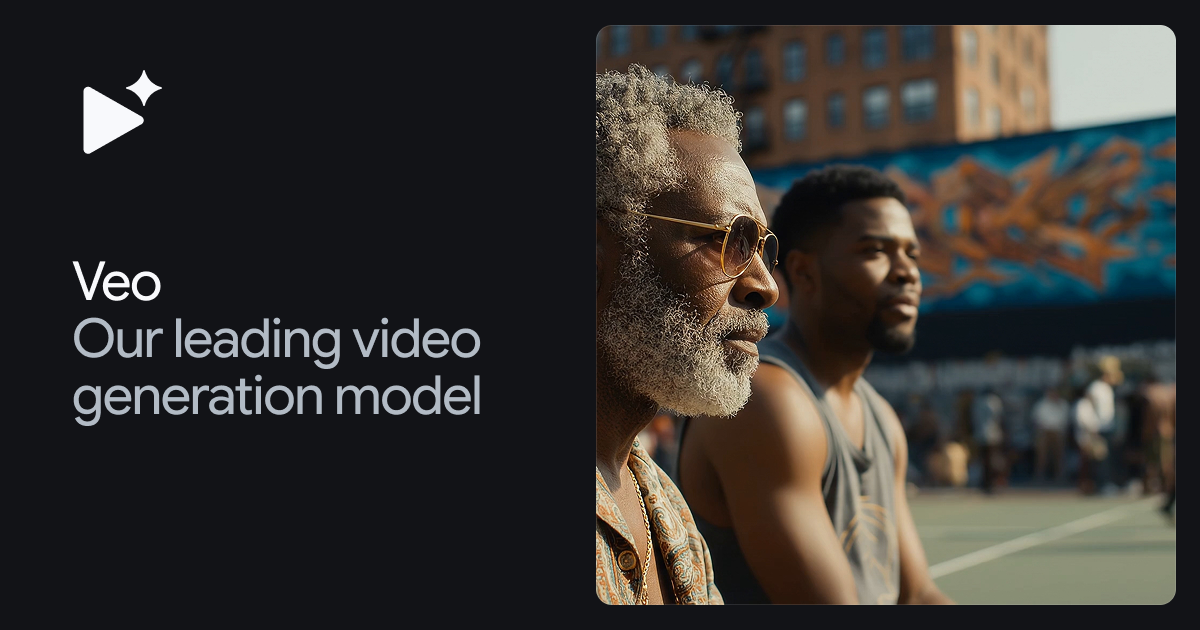
The most significant leap for Google Veo arrived in May 2025 with the release of Veo 3. This version transcended purely visual generation by integrating synchronized audio. For the first time, the model could now generate dialogue, sound effects, and ambient noise that precisely matched the visuals it created. This advancement fundamentally altered the landscape of AI video generation, moving beyond the silent film era of earlier models.
From a director’s perspective, this capability is transformative for early-stage production. Prior to Veo 3, a visually striking previz still required significant mental effort from the viewer to imagine the accompanying soundscape. Now, when I generate a scene, I can specify not just the visual elements but also character dialogue, the rustle of leaves in a specific wind, the hum of an engine, or the distant murmur of a crowd, all synchronized with the on-screen action.
This elevates a previz from a mere visual placeholder to a far more immersive and evocative experience. The addition of sound allows for the conveyance of mood, tone, and narrative information in a way that visuals alone cannot achieve. A client pitch becomes infinitely more compelling when I can present a short sequence that not only looks like the intended final product but also sounds like it.
Whether illustrating the tension in a dramatic conversation, the playful energy of a commercial, or the serene atmosphere of a documentary scene, synchronized audio provides an emotional depth that was previously unattainable with AI-generated content at this stage.
DeepMind CEO Demis Hassabis aptly described it as the moment AI video generation left the era of the silent film, a statement that resonates deeply within the filmmaking community. The integration of sound means that the generated content can now simulate a much richer, more complete sensory experience. This is crucial for conveying the full artistic intent of a scene, ensuring that both visual and auditory elements work in concert to tell the story.
For character work, being able to hear dialogue, even if placeholder, can refine casting ideas or help an actor visualize the rhythm of a scene. For environmental storytelling, the ambient sound immediately places the viewer within the world. This greatly streamlines the creative iteration loop, allowing for faster feedback and refinement of ideas that encompass the full audiovisual spectrum.
Alongside Veo 3, Google also announced Flow, a new video-creation tool. Flow is powered by both Veo and Imagen, indicating a broader ecosystem for generative content aimed at simplifying and expanding the creative process. This tool was later rebranded as Google Flow at the 2026 Google I/O keynote, with the additional announcement of Google Flow Music, further solidifying Google’s ambitious vision.
This integration suggests a long-term strategy to build a comprehensive suite of AI tools for multimedia creation, where different models work in concert to handle various aspects of content generation, from image to video to music. For directors, this means the potential for a more integrated and streamlined workflow, where AI assistance can span multiple creative domains, offering a unified creative platform.
It signals a future where the conceptualization and preliminary visualization of complex multimedia projects could become significantly faster and more accessible.
Veo 3.1: More Control, and the Rise of Gemini Omni Flash
Five months after Flow launched, Google reported that creators had generated more than 275 million videos through it, and the feedback was consistent: people loved what Veo produced but wanted more control over the result. Veo 3.1, released in October 2025, was Google’s direct answer. Pricing stayed the same as Veo 3, but the toolset grew considerably.
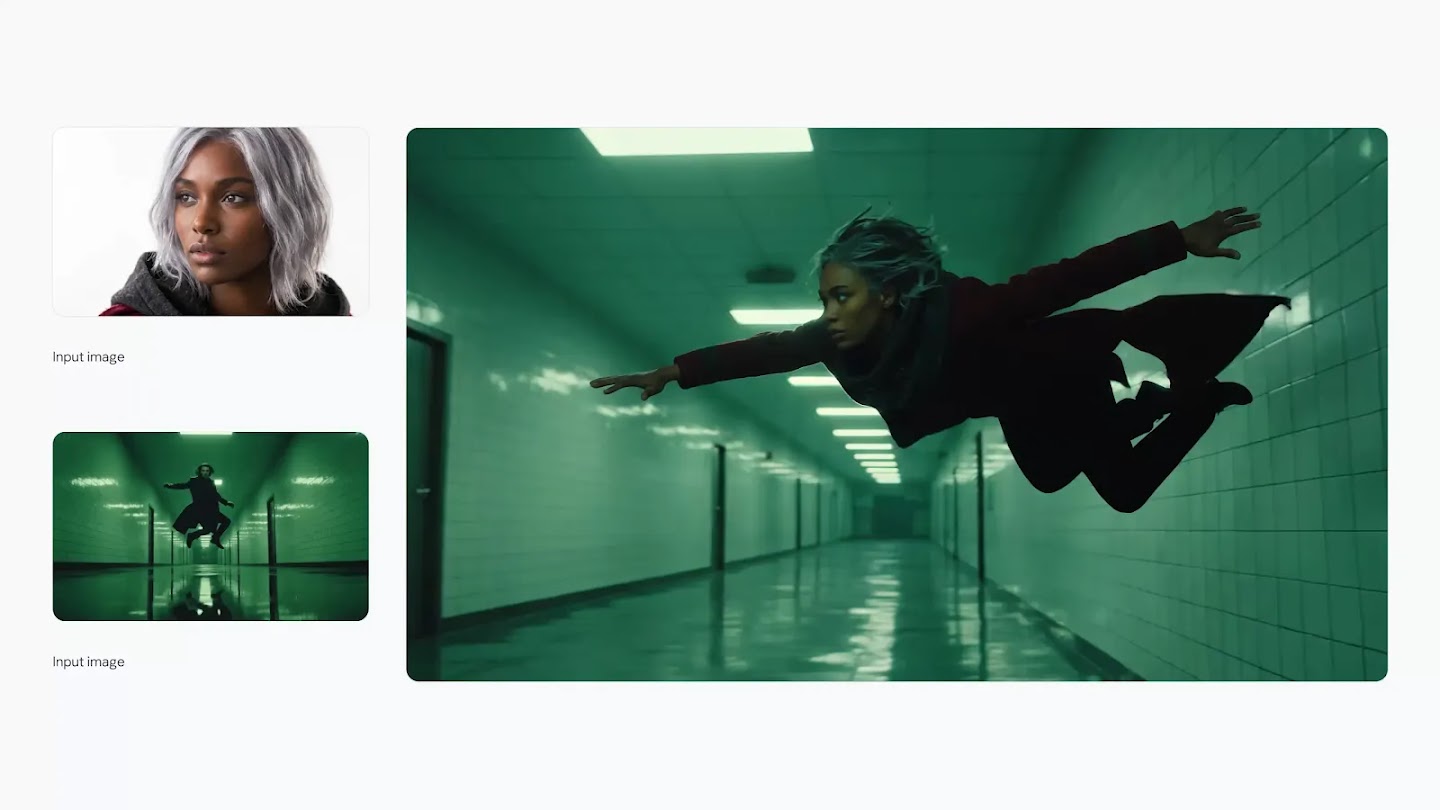
For the first time, audio came to existing capabilities like Ingredients to Video, First and Last Frame, and Scene Extension, all of which previously generated silent clips. Ingredients to Video lets a filmmaker feed in up to three reference images to steer a character, an object, or a visual style, and Flow assembles a final scene that matches. Scene Extension can now chain clips into a continuous shot lasting a minute or more, generating each new segment from the final second of the last one to preserve continuity. Google also added the ability to insert a new object into an existing shot, with the model accounting for scale, shadows, and lighting, and a remove-object tool that reconstructs the background behind whatever gets deleted.
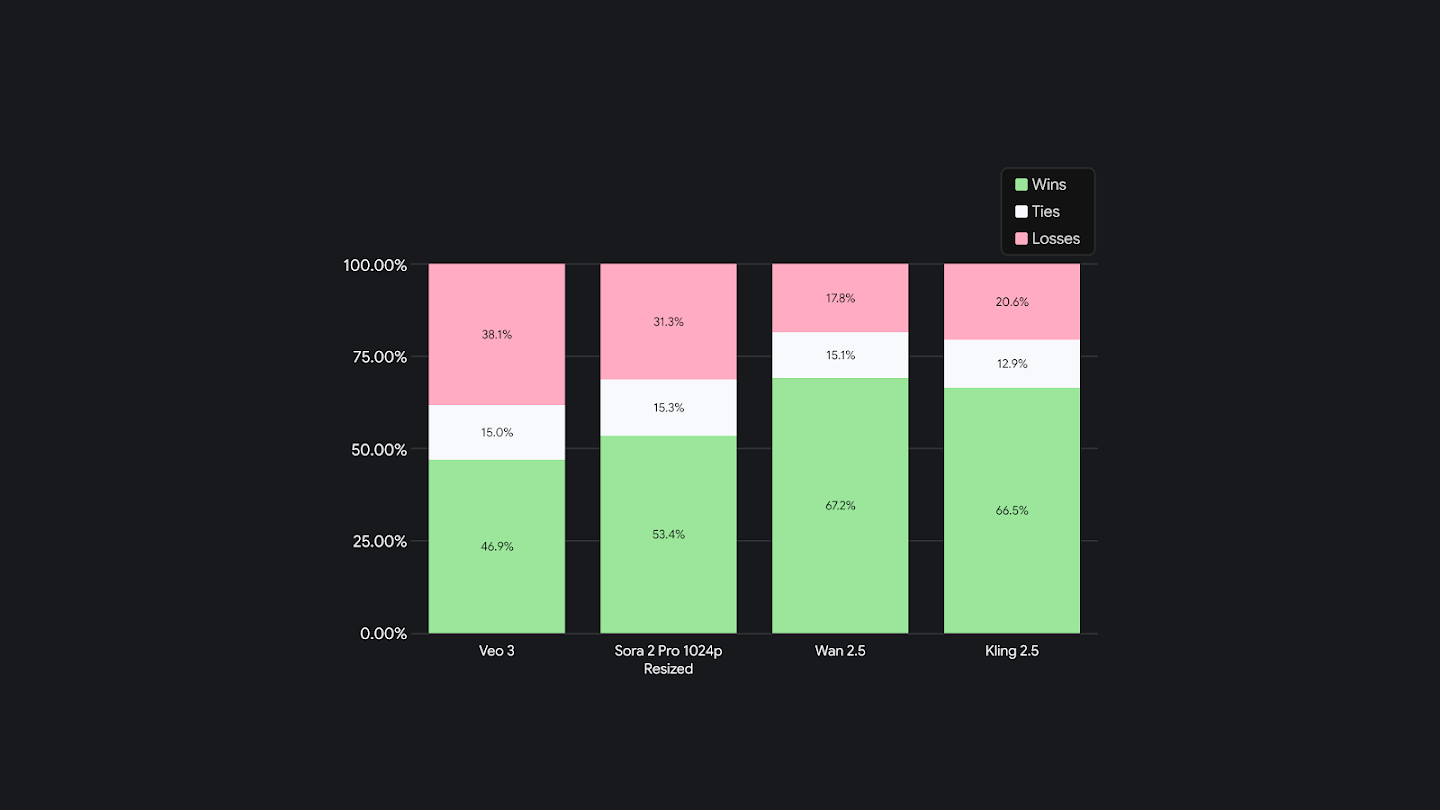
Reception from working creators was mixed rather than uniformly glowing, which is worth noting for anyone evaluating the model on hype alone. Some early testers found Veo 3.1 noticeably behind OpenAI’s Sora 2 on raw output quality and pricier to run, while praising Google’s reference-image and scene-extension tooling as a genuine advantage. Clip length also remained capped at eight seconds per generation, regardless of public claims about longer outputs, so “a minute or more” refers to chained extensions, not a single continuous render.
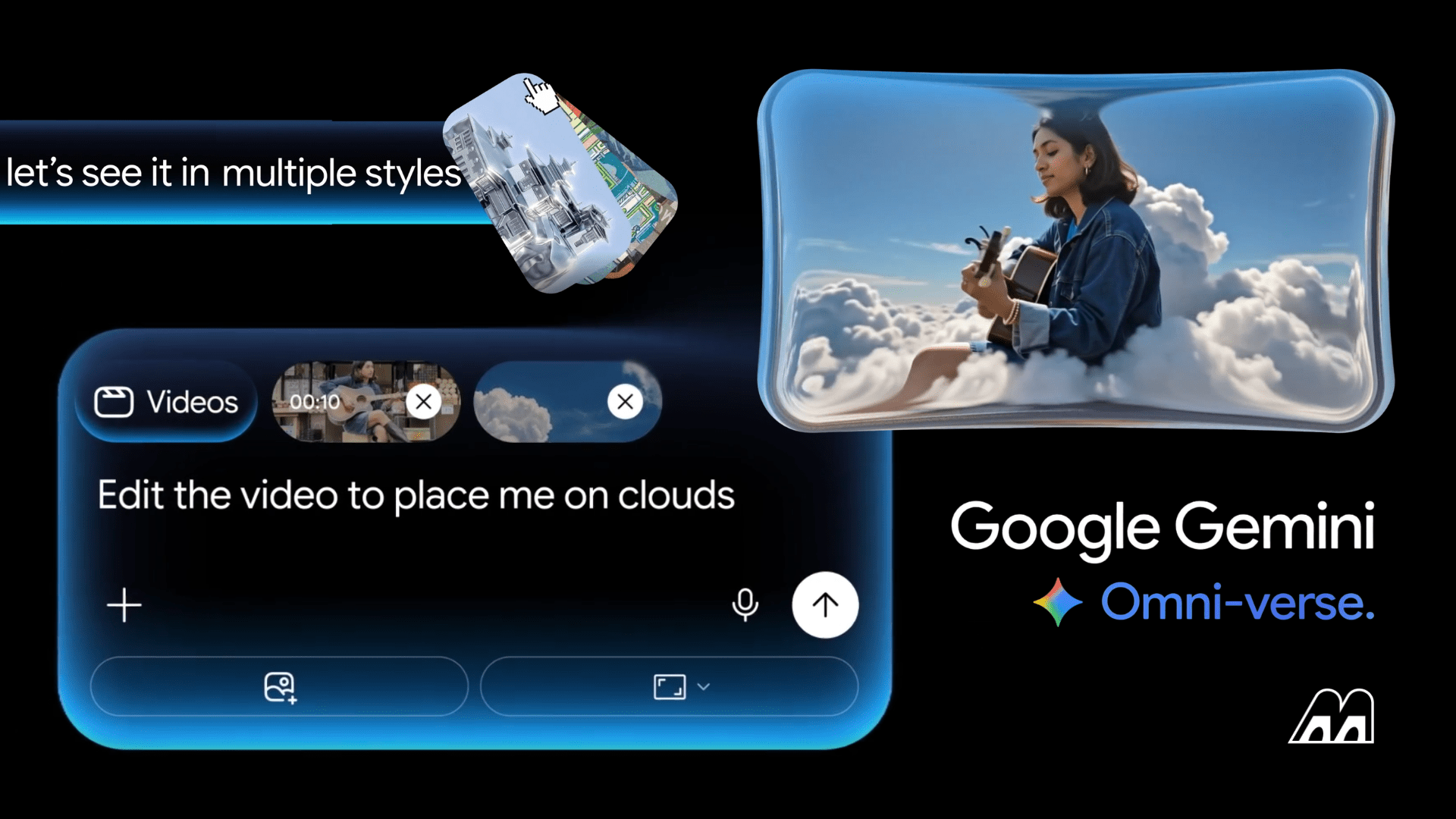
The bigger structural shift landed at Google I/O 2026, when Google introduced Gemini Omni Flash, a new multimodal model built for fast, conversational video creation and editing rather than one-shot generation. Google’s own developer documentation for the Gemini API now recommends Omni Flash as the default for video generation, citing better coherence, multi-turn conversational editing, and stronger character consistency across a scene. Veo 3.1 has not been discontinued. Google’s official Veo pages still list it as the current Veo line, and the documentation frames it as the right tool for specific jobs: scene extension, precise last-frame control, and legacy pipelines already built around it. In practice, that makes 2026 a two-model landscape rather than a straightforward succession. Which one belongs in a workflow depends on whether the job calls for fast, iterative editing or the specific control features Veo 3.1 still does best.
Resolution and Runtime: Technical Specifications

Understanding the technical specifications of generative AI models like Veo is not merely an academic exercise; it’s crucial for practical application in a professional production environment. Early iterations of Veo claimed 1080p output, and Veo 2 pushed this to a sharp 4K resolution. These numbers directly dictate the quality and utility of the output I can integrate into my workflow.
Generating 4K video opens up possibilities for higher fidelity previz or even elements for certain types of lower-budget content. While it’s clear that generative AI won’t replace a high-end RED or ARRI camera system for principal photography anytime soon, 4K output means that the visual references are exceptionally clear. For client presentations, demonstrating a scene in 4K resolution offers a level of professionalism and detail that significantly enhances the pitch.
It allows for critical evaluation of lighting, texture, and composition without the ambiguity of lower-resolution artifacts. In previz, a 4K clip allows a director to meticulously examine camera placement, lens choices (even if simulated), and the nuanced interaction of light and shadow, providing a much more accurate representation of the intended final look.
A significant practical constraint for users is the current limitation of creating a maximum of eight seconds per clip. This constraint profoundly informs how one approaches script breakdown, visual design, and the overall conceptualization when using Veo. An eight-second clip is certainly not a film, but it is enough for a specific shot, a compelling character beat, a dynamic visual transition, or a crucial reaction.
When I’m breaking down a commercial script, I think in terms of these precise, impactful moments, a product reveal, a specific emotional reaction shot, a sweeping landscape pan, or a quick dialogue exchange. Eight seconds per clip allows for intensely focused ideation on these individual narrative and visual beats.
This limitation means that Veo is a tool for building sequences brick by brick, not for generating a complete, flowing narrative arc in one go. It requires an editorial mindset from the outset. I treat each generated clip like a single shot or a short sequence of shots that will eventually be assembled in an edit suite, much like putting together storyboards, animatics, or even raw footage.
The length also dictates the potential for sustained action or complex character interaction, which is inherently limited but perfectly suitable for rapid, focused visualizations. For instance, generating a full chase sequence in one prompt is impossible, but generating distinct 8-second segments of the chase, a close-up on a driver, a car rounding a corner, a wide shot of the environment, is entirely feasible.
This forces a director to be precise with prompts, breaking down complex ideas into manageable, visually distinct components, thereby fostering a more structured and iterative approach to visual development.
Integrating Veo into the Filmmaking Workflow
For a working director, integrating a sophisticated tool like Veo means understanding its strengths and weaknesses within a traditional production pipeline. It’s not a turnkey solution for a complex brand film or a feature; rather, it’s a powerful assistant for specific, often iterative, stages.
My own experience building and using AI production tools, such as AI Render Pro, reinforces this perspective: AI should maximize efficiency and quality, using intelligent automation to accelerate creative iteration, not replace the nuanced judgment of a human filmmaker.
During the crucial pitching phase, a strong visual can make all the difference, transforming abstract ideas into palpable experiences. Being able to generate a short, high-fidelity clip, complete with synchronized audio, to convey a specific mood, a unique visual style, a character’s look, or a key narrative beat is immensely powerful. This is where Veo 3’s capabilities truly shine.
It allows me to *show* a client, an investor, or a production team, rather than merely describe, how a scene might feel or look. This immediate, immersive visualization solidifies a concept, builds confidence, and ensures a shared understanding of the artistic direction long before committing significant resources to traditional previz, concept art, or location scouting.
Imagine pitching a gritty noir piece and being able to instantly generate a rainy, neon-lit alley scene with the sound of distant sirens and a character’s whispered dialogue – this moves beyond aspiration into tangible representation.
In the previz stage, Veo allows for unprecedented rapid iteration of shots and sequences. Instead of waiting days or weeks for a 3D artist to model, light, and animate a scene, I can prompt Veo with different camera angles, explore various lighting conditions (e.g., golden hour, stark moonlight), or experiment with character actions and blocking. This drastically speeds up the visual development process, enabling more exploration of creative options in a fraction of the time.
The 8-second clip limitation, far from being a hindrance, becomes a directive to focus on key moments, much like a cinematographer designs individual shots. These individual moments are then assembled in an edit suite later, similar to how one might cut together storyboards or animatics.
This allows for a modular approach to visual storytelling, where each “brick” is carefully crafted by the AI under human direction, and then meticulously placed in the larger narrative structure.
The “edit-suite reality” when working with Veo outputs is crucial to understand. While the model generates impressive individual clips, achieving narrative continuity, consistent character appearance, and precise pacing across multiple 8-second segments requires significant editorial skill. It’s akin to piecing together many short takes from different camera setups.
The editor becomes the maestro, stitching these AI-generated moments together, smoothing transitions, ensuring visual logic, and often adding additional elements or traditional VFX to mask any inconsistencies that the AI might have introduced. This process demands a human eye for detail, rhythm, and storytelling that no AI currently possesses. Sound design, too, becomes a critical human intervention.
While Veo 3 provides synchronized audio, a professional sound designer will layer, refine, and master these elements, adding foley, ambient beds, and music to create a truly rich and impactful soundscape that complements the visuals and elevates the emotional resonance.
For post-production, particularly in areas like abstract title sequences, motion graphics, or certain visual effects elements, Veo could offer interesting generative elements. Its ability to create unique visual textures, dynamic patterns, or bespoke motion graphics from text prompts could be an efficient way to explore creative directions without extensive traditional animation.
However, maintaining aesthetic and narrative continuity across multiple generated clips for a longer sequence remains a key challenge that necessitates careful editorial oversight, much like any other asset generation process. I would primarily use it for discrete shots, background elements, or conceptual overlays rather than main action where precise control over performance, timing, and intricate narrative causality is critical.
The director’s role, therefore, evolves into that of a highly skilled curator and orchestrator, guiding the AI, refining its outputs, and ultimately weaving the generated pieces into a cohesive, human-directed work of art.
The Business of Veo: Subscriptions and Platforms

Access to Veo is structured around multiple subscription tiers and through Google “AI credits.” This model reflects a common approach to monetizing advanced AI services, offering flexibility for different user needs, from individual creators and small production houses to larger studios. Understanding these access points and their underlying cost implications is key for effectively integrating the model into a production budget and workflow.
The concept of “AI credits” is particularly pertinent here. Generating high-resolution, complex video with synchronized audio is a computationally intensive process. Each clip generated consumes processing power, which translates into these credits. For an independent filmmaker or a small creative agency, managing these credits becomes a budgetary consideration.
A quick previz iteration might consume a few credits, but generating multiple variations of several scenes, exploring different visual styles or dialogue options, can quickly accumulate costs. This credit-based system encourages efficient prompting and a clear understanding of desired outputs to optimize resource allocation.
Larger studios, with more substantial budgets, might opt for higher subscription tiers that provide a greater volume of credits or priority processing, reflecting their higher demand for rapid, high-volume generation.
The software itself can be operated through two primary consoles: Google Gemini and Google Flow. Gemini is designed for shorter, quicker projects, leveraging the Gemini AI chat model for streamlined interaction. This interface is ideal for rapid ideation, generating isolated clips to test concepts, or quickly visualizing an idea that emerges spontaneously during a creative meeting.
Think of it as a quick sketchpad for visual ideas – a director might use Gemini to quickly generate five different looks for a character or five distinct camera movements for a single shot. The emphasis is on speed and accessibility, allowing for rapid experimentation without getting bogged down in complex project management features.
Google Flow, on the other hand, is positioned more as a comprehensive movie editor, moving beyond single-clip generation. It allows users to create longer projects with an emphasis on continuity, supporting the use of the same characters and actors across multiple clips. For a director working on a branded content piece, a short film, or a longer previz sequence, Flow’s ability to manage character consistency over longer forms is a critical feature.
This moves beyond single-shot generation to enable more complex scene construction, even with the inherent 8-second clip constraint. Flow would be the environment where a director stitches together multiple generated segments, ensuring character appearance remains consistent and the narrative flows logically. The interface provides tools for sequencing, perhaps rudimentary editing, and a framework for managing a more complex project involving numerous AI-generated assets.
The distinction between Gemini and Flow indicates Google’s understanding that different phases and scales of production require tailored interfaces and capabilities. Gemini serves as the initial brainstorming and rapid prototyping tool, while Flow aims to provide a more structured environment for assembling these generated components into a cohesive, longer-form output.
This multi-platform approach suggests a strategy to cater to the diverse needs of the creative industry, from casual experimentation to more structured, project-based work, all while operating within a flexible, credit-based economic model that balances accessibility with the computational demands of the underlying AI.
Navigating Content Challenges and Ethical Considerations

Like any powerful generative AI, Veo presents significant challenges related to content generation and ethical use. These issues are not unique to the model but are amplified by its advanced capabilities, especially with the introduction of synchronized audio in Veo 3, which adds another layer of realism and potential for misuse.
Reports from Gizmodo in July 2025 highlighted that early Veo 3 users were often directing the model to generate what might be termed “low-quality” or mundane content. This included commonplace scenarios like “man on the street” interviews or haul videos of people unboxing products. While seemingly innocuous, this demonstrates that users, when given powerful new tools, often test their boundaries with easily promptable, if uninspired, content.
It also underscores a potential saturation risk in the market for generic, AI-generated content. Furthermore, 404 Media also reported instances where the model sometimes repeated the same joke or narrative trope in response to different prompts, indicating a lack of true creative variance or deep contextual understanding in certain situations. This ‘repetition’ or ‘laziness’ from the AI side can be a significant hurdle for creatives looking for genuinely novel output.
A far more serious concern emerged in July 2025 when Media Matters for America reported the upload of racist and antisemitic videos generated using Veo 3 to platforms like TikTok. This incident unequivocally highlights the critical issue of misuse inherent in powerful generative AI tools.
Ryan Whitwam of Ars Technica rightly commented on the inherent difficulty AI systems face in entirely preventing such content: “In a perfect world, Veo 3 would refuse to create these videos, but vagueness in the prompt and the AI’s inability to understand the subtleties of racist tropes (i.e., the use of monkeys instead of humans in some videos) make it easy to skirt the rules.” This is a stark reminder that the ethical development and deployment of generative AI must be an ongoing, rigorous process, continuously refined with robust safeguards, sophisticated content moderation algorithms, and a profound understanding of societal harms.
The responsibility here extends beyond the developer to the user, who must engage with these tools ethically and responsibly. For directors, this means a heightened awareness of the content they are generating and a commitment to preventing the propagation of harmful narratives, even inadvertently.
Regarding training data, a perennial concern in the AI community, commentators speculated that Google had trained the service on a vast array of existing video content, potentially including YouTube videos or Reddit posts. However, Google itself has not explicitly stated the specific sources of its training content.
This lack of transparency, while common across the industry due to proprietary concerns, contributes to ongoing debates about data sourcing, intellectual property rights, potential biases embedded within AI models, and the question of fair use.
Filmmakers and content creators are rightly concerned about the provenance of the visual and auditory styles that the AI emulates; understanding the training data is crucial for navigating issues of creative originality and potential infringement. The ethical landscape of generative AI is complex and continuously evolving, demanding vigilance, thoughtful policy, and a commitment to responsible innovation from both developers and users.
My Take: Practical Applications and Limitations of Veo
From my perspective as a director who builds and uses AI tools, Veo holds significant promise, but its current limitations dictate its best and most responsible use. It’s a powerful ideation engine and a previz accelerator, not a primary content generator for complex, nuanced narratives. The distinction is crucial for any professional looking to integrate this technology effectively.
Where the model excels is in speed and breadth of exploration. If a client wants to visualize five different visual styles for a single scene, or variations on a camera move, Veo can deliver those rapidly, saving immense time and resources compared to traditional methods. For mood boards, pitch videos, and animatics, the ability to generate specific 8-second clips with synchronized audio is incredibly valuable.
It can give life to a storyboard in a way static images simply cannot, allowing all stakeholders to experience a visual and auditory approximation of the final product. Imagine showcasing a specific lighting setup for a dramatic scene, or the precise timing of a comedic beat with accompanying sound effects – this level of immediate feedback drastically streamlines creative decision-making.
However, the 8-second clip length and persistent challenges with narrative continuity across multiple generated segments are real constraints. A commercial needs precise pacing, specific character beats, and a consistent visual and auditory language across sequences to be effective.
Stitching together dozens of 8-second clips, even with Flow’s help, requires significant editorial intervention and a profound understanding of cinematic flow to achieve a cohesive, compelling narrative. The raw output is often an assemblage of powerful individual moments, but the art of weaving them into a seamless story remains firmly in the human domain.
I wouldn’t use Veo today to generate a finished commercial from scratch for a client like Moncler or Jaguar, because the level of granular control over specific performances, intricate camera choreography, nuanced subtext, and precise storytelling is simply not yet available.
Furthermore, the ethical pitfalls observed with Veo 3, from mundane repetition to the generation of harmful content, remind us that creative oversight and critical judgment are paramount. As a filmmaker, I am ultimately responsible for the content I produce and the messages it conveys. Relying solely on an AI without careful curation, ethical review, and artistic refinement is a non-starter.
The model is a tool to be directed, a highly sophisticated paint-by-numbers system that requires a master artist to choose the colors, define the strokes, and interpret the subject matter. It complements human creativity, accelerating certain parts of the process, but the ultimate vision, the moral compass, and the critical judgment must remain unequivocally human.
The ‘art of prompting’ itself is a developing skill, demanding that directors articulate their vision with unprecedented precision, almost speaking a new language to instruct the AI effectively. This is where human creative intelligence remains irreplaceable.
The Future Outlook for Generative Video AI
The rapid evolution of Veo, from its initial announcement to Veo 3 with integrated audio, paints a clear trajectory for generative video AI. Much of what follows was written as a forecast, and by mid-2026 a good deal of it had already happened: Veo 3.1 shipped richer audio and finer editing control, and Google introduced an entirely separate model, Gemini Omni Flash, built specifically for the conversational, iterative editing this section anticipates. We are moving towards increasingly sophisticated models that handle more complex requests and generate higher-fidelity, more coherent outputs, and increasingly, towards more than one model built for different parts of that job.
The shift from purely visual generations to synchronized sound is a major milestone, setting a new standard for text-to-video models and profoundly influencing what we can expect from future iterations.
Future versions will undoubtedly focus on addressing current limitations, which are well understood by both developers and the creative community. Extending clip lengths is an obvious area for improvement, allowing for more sustained action and complex scene development without requiring excessive editorial stitching. Equally important will be enhancing narrative continuity across multiple generated segments.
This means the model needs to “remember” and consistently apply character appearances, environmental details, lighting conditions, and plot points across a longer sequence of prompts.
Achieving fine-grained control over elements like specific character performances (e.g., subtle emotional nuances), precise camera movements (e.g., Dolly zooms, complex tracking shots), and nuanced directorial choices will be critical for the model to move beyond previz into more substantial content generation.
The “improved understanding of physics” noted in Veo 2 is a promising sign for more realistic and believable outputs, gradually reducing the uncanny valley effect often seen in earlier generative content. As the model’s grasp of real-world physics, material properties, and natural phenomena deepens, its outputs will become increasingly indistinguishable from traditionally captured or rendered footage, at least for short bursts.
This realism will be crucial for professional adoption in demanding fields like advertising and visual effects.
Integration into broader creative suites, as seen with Google Flow, suggests a path towards more user-friendly and production-ready tools. We can expect future iterations to offer more intuitive interfaces, deeper integration with professional editing and VFX software, and perhaps even collaborative features for creative teams.
As these systems become more capable and smoothly woven into existing workflows, the line between AI-assisted production and fully AI-generated content will continue to blur. However, the need for human artistic direction, meticulous quality control, and discerning ethical judgment will only increase in importance as the tools become more powerful.
The director’s role will shift from manually executing every detail to expertly guiding and refining the vast outputs of intelligent creative assistants, maintaining the vision and soul of the project.
The evolution of computational resources, coupled with breakthroughs in AI algorithms, means that the pace of development will likely remain aggressive. We may see personalized models, trained on specific directors’ styles or studio aesthetics, offering even more tailored creative assistance.
The future is not one where AI replaces human storytellers, but one where it empowers them with unprecedented tools to visualize, iterate, and refine their narratives with greater speed and fidelity than ever before.
Beyond the Screen: Veo’s Broader Impact
The model’s capabilities extend significantly beyond traditional filmmaking and advertising. Its ability to generate specific scenarios with synchronized audio can have broader applications across various industries, offering a dynamic new way to visualize and communicate complex information. This democratizes the creation of dynamic, multimedia content, making it accessible to a wider range of professions and applications.
Imagine the implications for interactive training modules. Instead of static text or basic animations, a company could generate realistic, interactive video scenarios for employee training, simulating complex procedures, safety protocols, or customer service interactions, complete with dialogue and ambient sound.
For rapid prototyping in fields like architectural visualization or urban planning, Veo could quickly generate animated walkthroughs of proposed designs, allowing stakeholders to experience spaces virtually and test different design options in real-time.
In the realm of virtual and augmented reality experiences, the model could generate dynamic, responsive background elements or even entire interactive mini-scenes from text prompts, enriching immersive environments with unprecedented ease and variety.
For educational content, Veo could quickly illustrate complex scientific concepts, historical events, or intricate processes, providing vivid visual and auditory explanations on demand. A student struggling with quantum mechanics might prompt the model for an animation showing particle interactions, or a history buff could request a short scene depicting a specific moment from ancient Rome, complete with environmental sounds and period dialogue.
In advertising, beyond previz, the model could generate numerous variations of short-form ads for A/B testing, allowing marketers to optimize for engagement and conversion rates without incurring extensive traditional production costs. This could reshape how ad campaigns are developed and refined, enabling data-driven creative decisions at an unprecedented scale.
However, this broad impact also amplifies the ethical responsibilities. The incidents of misuse reported for Veo 3 underscore the absolute necessity for robust content moderation, stringent ethical guidelines, and responsible deployment across all platforms.
As generative AI becomes more pervasive, the discussion around its societal implications, from the potential for deepfakes and misinformation to questions of artistic integrity and authorship, will continue to evolve and intensify. My experience building creative tools has consistently taught me that the technology is only as good as the intention and control of its user.
DesignHero Shop, for example, focuses on providing tools that empower creators, ensuring human agency remains at the forefront of technological advancement. The broader impact of Veo, therefore, hinges not just on its technological prowess, but on the collective commitment of its developers, users, and society at large to wield its power responsibly and ethically, safeguarding human creativity and promoting beneficial applications across all domains.
Frequently Asked Questions
What is Veo?
Veo is a text-to-video generative AI model developed by Google DeepMind. It creates videos based on user prompts and, with Veo 3, can also generate synchronized audio, including dialogue, sound effects, and ambient noise. It serves as a powerful tool for visual ideation and previz in creative workflows.
When was Veo first announced and released?
Veo was initially announced in May 2024 at Google I/O. Veo 2, which included 4K resolution, was released in December 2024 via VideoFX. Veo 3, which critically integrated synchronized audio, was released in May 2025.
Is Veo still relevant in 2026?
Yes, though the landscape shifted since Veo 3’s launch. Veo 3.1, released in October 2025, remains Google’s current documented Veo line, with richer audio, editing tools, and free access through Google Vids as of April 2026. However, Google’s own Gemini API documentation now recommends its newer Gemini Omni Flash model, introduced at I/O 2026, as the default for most video generation tasks, reserving Veo 3.1 for specific capabilities like scene extension and legacy pipeline integration.
What is Gemini Omni Flash, and does it replace Veo?
Gemini Omni Flash is a multimodal model Google introduced at I/O 2026 for fast, conversational video creation and editing, supporting text, image, audio, and video inputs together. Google has not stated that it replaces Veo. Its own documentation positions Omni Flash as the new default for most use cases while keeping Veo 3.1 available and current for specific capabilities.
What are the key capabilities of Veo 3?
Veo 3 generates videos up to 4K resolution and, critically, creates accompanying synchronized audio such as dialogue, sound effects, and ambient noise that matches the visuals. It allows for the creation of clips up to eight seconds long and can be used with Google Gemini for rapid ideation and Google Flow for more structured, longer-form project assembly.
How can creators access Veo?
Veo is accessible through multiple subscription tiers and via Google “AI credits.” It can be run through two primary consoles: Google Gemini, which is better suited for shorter, quick projects and ideation, and Google Flow, designed for longer projects with an emphasis on character and narrative continuity.
What are the known limitations or challenges of using Veo?
Current limitations include a maximum clip length of eight seconds, which necessitates extensive human editing for longer narratives and coherent continuity. There have also been reports of the model generating low-quality or repetitive content, and serious ethical concerns have arisen regarding the generation and upload of racist and antisemitic videos, highlighting the need for vigilant human oversight and ethical consideration.
Discover more from Olivier Hero Dressen Blog: Filmmaking & Creative Tech
Subscribe to get the latest posts sent to your email.
Work with Olivier
Director | CD | DP & Photographer
Specializing in commercials, music videos, AI-driven filmmaking, and cinematic storytelling for brands and production companies.
🌍 Shanghai · Paris · Los Angeles · Dubai
🎬 View Portfolio & Get in Touch