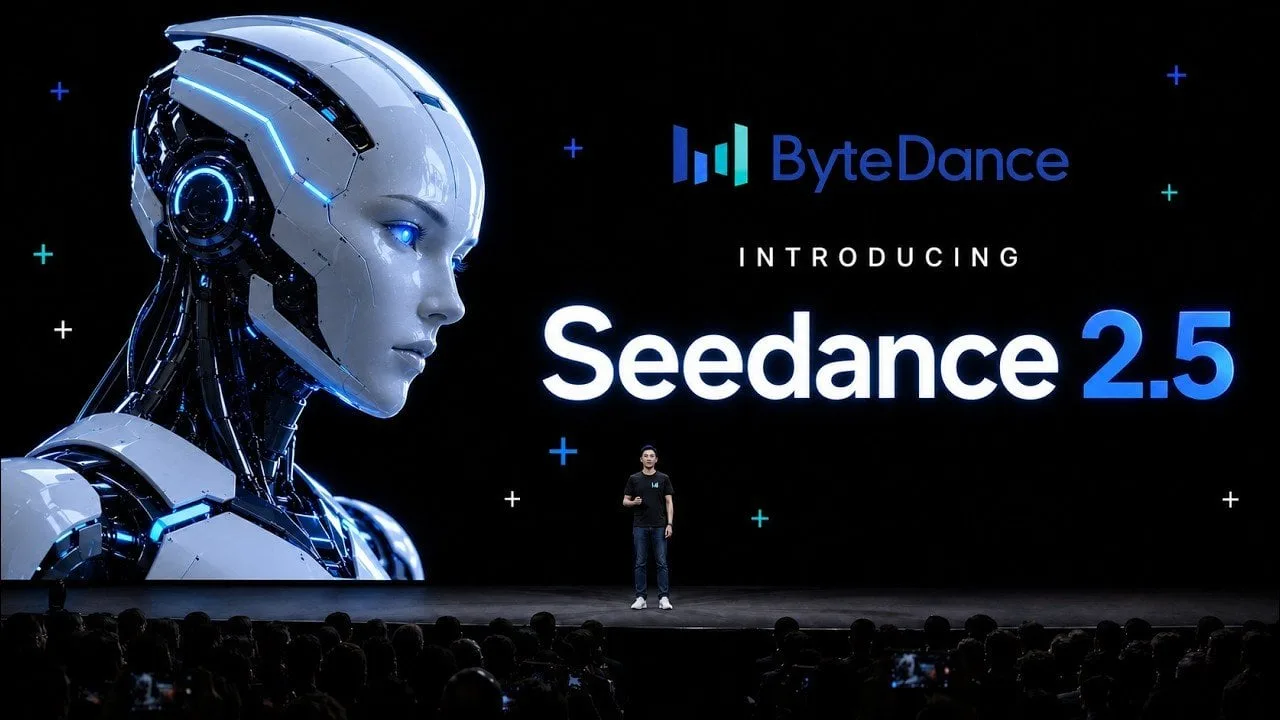

Seedance 2.5 is ByteDance’s video model that generates 30 seconds of continuous single-shot footage in one pass, accepts up to 50 multimodal references, and adds a four-mode editing suite. It was announced on 23 June 2026 at the Volcano Engine FORCE conference in Beijing and launched to consumers on 31 July on Jimeng and Doubao Pro. What it does not ship, despite widespread reporting to the contrary, is native 4K.
Need a Director for Your Next Project?
From commercials to branded campaigns—Olivier brings creative vision and technical expertise.
→ View ProjectsKey Takeaways
- The headline: 30 seconds of native single-shot video in one pass, roughly double the previous ceiling.
- References: up to 50 multimodal inputs in a single generation, including up to 30 images, 10 video clips and 10 audio clips.
- Editing: a four-mode suite covering timestamp-level control, green screen replacement, camera-perspective re-editing and reference-based editing.
- The 4K caveat: native 4K was announced for Seedance 2.0 at the same keynote. ByteDance has published no 4K claim for 2.5.
- Access: launched 31 July 2026 on Jimeng and Doubao Pro in China. The BytePlus ModelArk API is listed as coming soon, not live.
What Seedance 2.5 Actually Ships
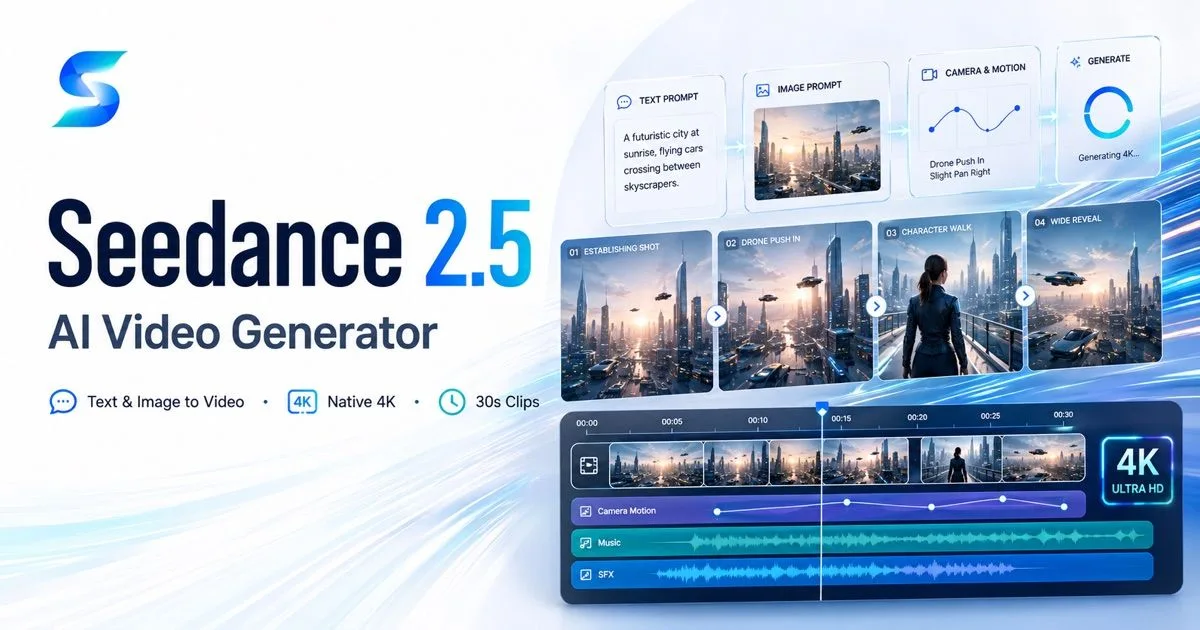
Strip out the noise from launch week and the release comes down to three things: duration, references, and editing control. Thirty seconds in a single generation. Fifty reference assets feeding one pass. A set of editing modes that let you change part of a clip without regenerating all of it.
That is a meaningful release. It is also a narrower one than most coverage suggested, because ByteDance announced Seedance 2.5 on the same stage, on the same day, as a 4K upgrade to Seedance 2.0 and a new image model called Seedream 5.0. Those three things have been blurred together ever since, and the blur runs in one direction: features from the siblings keep getting attributed to 2.5.
ByteDance also reported that its enterprise Seedance platform had reached roughly $2 billion in annualised revenue heading into the release, which is the context for why the rollout has been staged rather than thrown open.
Fifteen Seconds to Thirty: The Real Editing Advantage
The jump from roughly fifteen seconds to thirty sounds incremental. In an edit it is not, and the reason has nothing to do with the extra seconds themselves.
Under fifteen seconds you are cutting around the model. You generate several short clips, then spend the edit hiding the joins, because a stitched sequence carries a visible seam wherever two generations meet: a slight shift in a face, a lighting mismatch, a texture that moves when it should not. Continuity work eats the time you saved by generating in the first place.
A single continuous take removes the seam because there is nothing to join. Thirty seconds also happens to be a real deliverable length. It is a broadcast spot, a pre-roll, a full social cutdown. For the first time the native output length and the actual brief line up.
Fifty References in a Single Pass
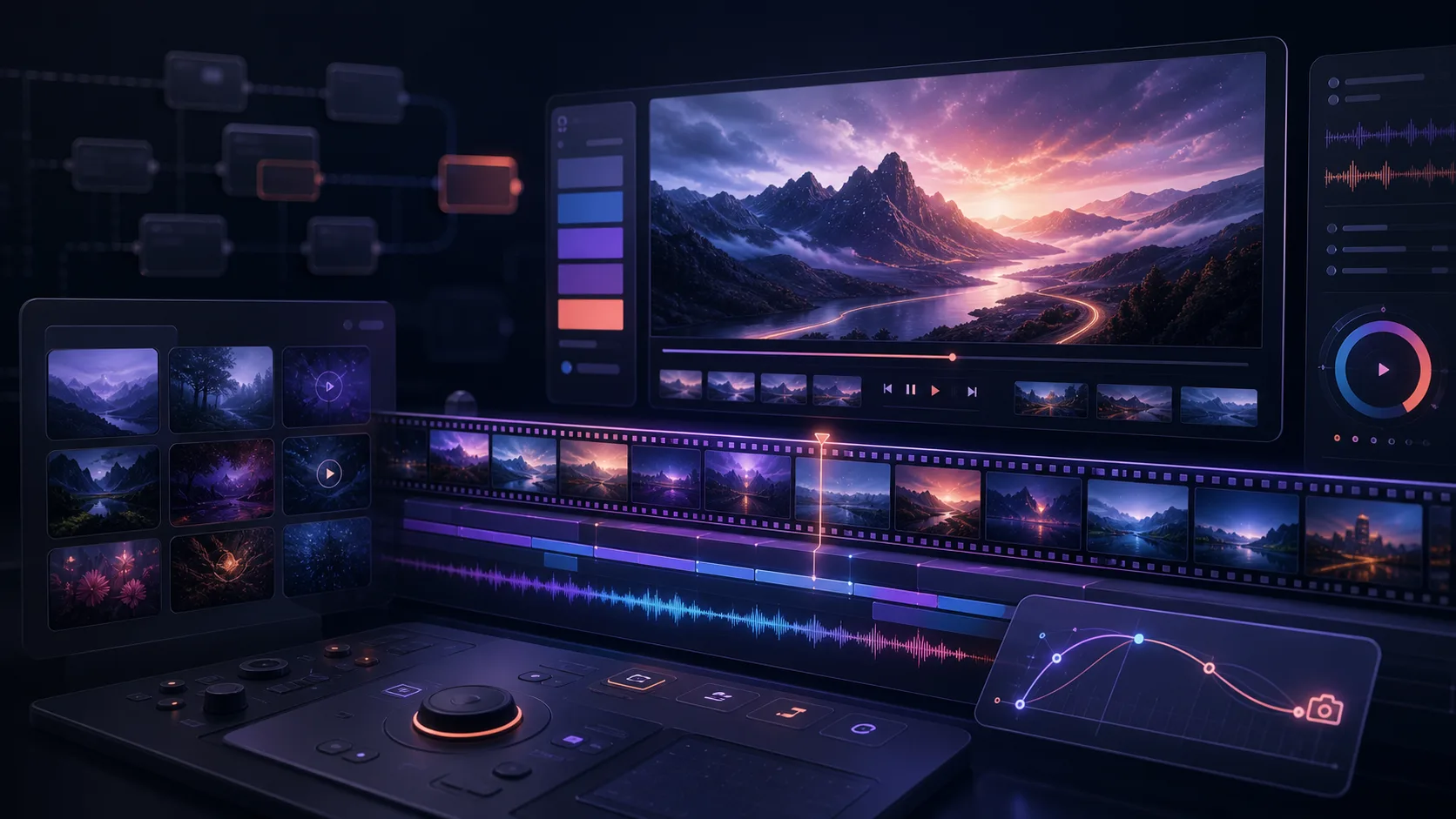
The reference system is the upgrade I would argue matters more than duration. Seedance 2.5 accepts up to 50 full-modality reference inputs in one generation: up to 30 images, 10 video clips and 10 audio clips, per figures ByteDance confirmed.
The point is control. Thirty images is enough to define a character from several angles, lock a product’s exact geometry, fix a palette, and set a location, all at once. On a brand job the failure that kills you is never that the footage looks bad in isolation. It is that the product changes shape between shots. Feeding the model that many locked references is the closest an AI video tool has come to the reference-board approach a real production already runs on.
ByteDance also claims better identity stability across multi-person and ensemble scenes, which is where consistency has historically fallen apart fastest.
The Four-Mode Editing Suite
Four editing modes ship with 2.5: timestamp-level editing, green-screen background replacement, camera-perspective re-editing of an existing clip, and reference-based editing. A clay-render referencing mode was also part of the launch material.
Timestamp-level control is the one to watch. Being able to address a specific moment in a clip and change it, without regenerating the whole thing, is the difference between a generator and something you can actually take notes on. Every client revision until now has meant rolling the dice on a full regeneration and losing the parts that were already approved.
Camera-perspective re-editing is the other genuinely production-shaped feature: re-frame a take you already have rather than starting over. That is coverage, which is what edits are actually built from.
The 4K Confusion, and What Resolution You Actually Get
This needs saying plainly, because a large share of the coverage has it wrong, and this article previously did too.
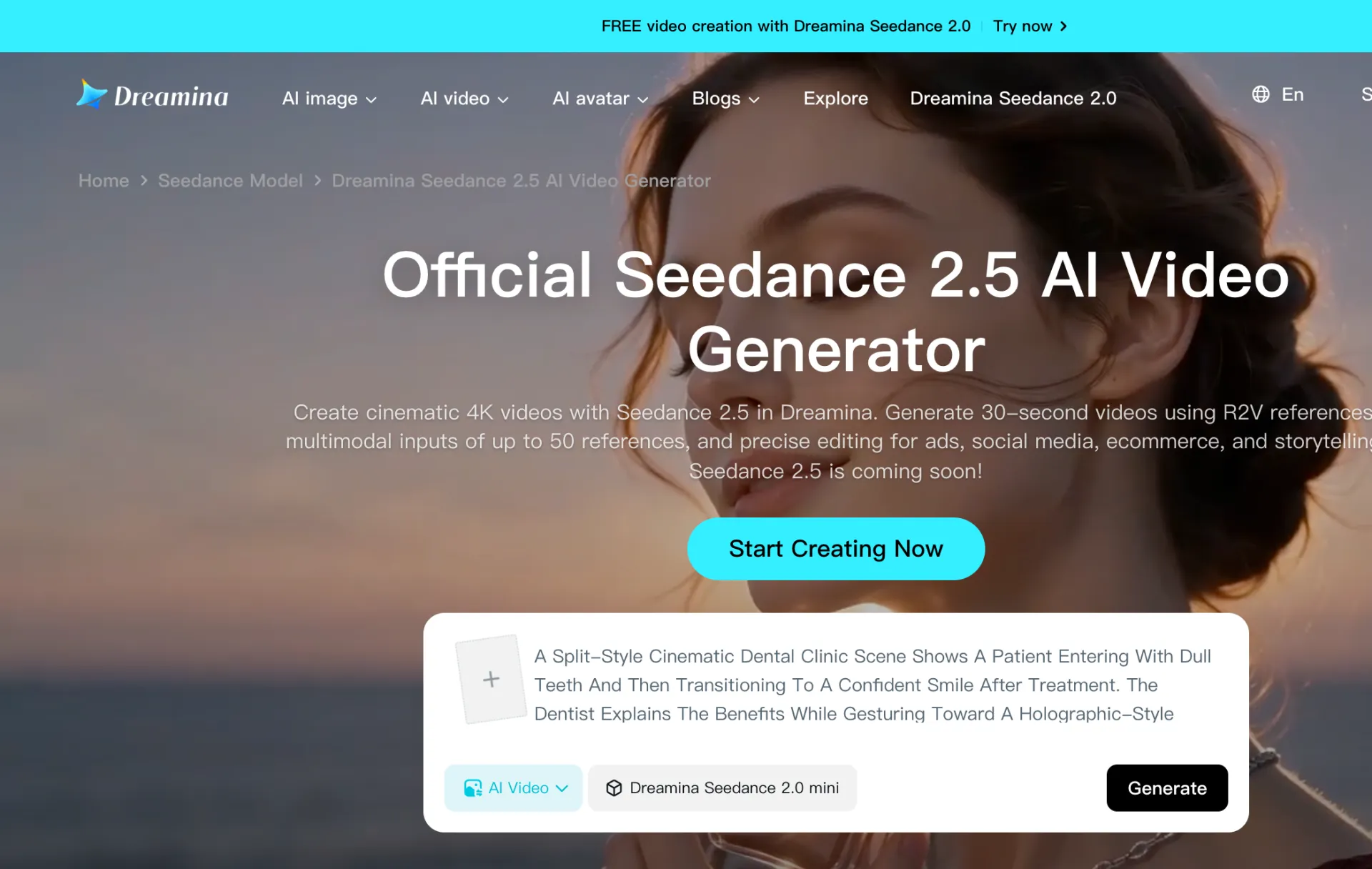
Native 4K was announced for Seedance 2.0, not 2.5. Both announcements happened at the same June keynote, minutes apart, which is how the figure migrated. ByteDance’s own 31 July launch post for 2.5 makes no resolution claim at all, publishes no pricing, and cites no benchmark. Its Dreamina product page for Seedance 2.5 does not mention 4K anywhere in its feature list or FAQ, while a separate, explicitly branded Seedance 2.0 4K product page sits alongside it.
So if 4K is a hard requirement on your delivery spec, the model to look at right now is 2.0, not 2.5. Several affiliate and comparison sites list native 4K and even 10-bit colour among 2.5’s confirmed specs. None of it traces back to a first-party source. Treat resolution as unconfirmed until ByteDance publishes an output spec.
Where You Can Actually Use It Today
Seedance 2.5 launched on 31 July 2026 on Jimeng Web and Doubao Pro, China first. Dreamina, the international CapCut-facing interface, and wider third-party access through BytePlus ModelArk are expected to follow.
The API is the part worth being careful about. ByteDance’s own launch post describes ModelArk access as coming soon, and the ModelArk model list showed no Seedance 2.5 entry on launch day. That contradicts mid-July reports that the API was already live. If you are scoping a pipeline around programmatic access, do not build against a date that has not been confirmed.
A beta Ultra-Long Video mode has also been observed on Jimeng extending single generations to 180 seconds, and multi-round extension can push a sequence to several minutes. Both are worth watching rather than planning around.

What Longer Native Clips Change in the Pipeline
The practical shift is where the work sits. Short-clip generation pushes the effort downstream into the edit, where you are patching continuity, the same trap that catches people in AI-assisted editing workflows. Thirty-second native takes with fifty locked references push it upstream into preparation: building the reference set, writing the prompt properly, deciding the shot before you generate it.
That is simply pre-production, and it is a healthier place for the work to live. Twenty years of directing commercials, music videos and shorts teaches you that the expensive mistakes are the ones you fix on the day rather than the ones you solve on paper. Any tool that moves decisions earlier is doing you a favour, even when it feels slower at first.
The same discipline applies to still work, where consistent character prompting lives or dies on the reference set. It also changes what you brief. If a model can hold a thirty-second take, the honest question stops being how to hide the cuts and becomes whether the shot deserves to be thirty seconds long.
How Seedance 2.5 Compares to Kling and Sora
On duration and reference capacity, Seedance 2.5 is currently the most aggressive offer of the group. Nothing else, including Google Veo, is advertising 30 seconds of native single-shot output with a 50-asset reference pass.
On everything else, the comparison is not yet possible. There is no published pricing, no benchmark, and no leaderboard entry. Kling and Sora have public access, documented behaviour, and a body of work you can judge them by. Seedance 2.5, outside China, mostly has a launch post.
For physics-heavy effects work or specific stylisation, the established tools remain the safer pick today. The reason to care about 2.5 is the single-take length and the reference control, and only if you can actually get access to it.

Real-World Limitations and Open Questions
The gaps are genuine and worth listing. No published output resolution. No published pricing. No independent benchmark. No confirmed API date. Access is China-first, which for most readers of this article means no access at all yet.
ByteDance does claim reduced plastic-looking artifacts, a long-standing weakness in the Seedance family, but no independent testing has confirmed it. Early examples circulating have come from early-access creators rather than neutral evaluation, so treat them as promotional material. Worth reading alongside the ethics of AI-generated footage if this is heading into client work.
None of that makes the release unimportant. It makes it unfinished, which is a different thing, and worth revisiting once the API opens and someone outside the program can measure it.
Frequently Asked Questions
Does Seedance 2.5 support 4K?
ByteDance has published no 4K claim for Seedance 2.5. Native 4K output was announced for Seedance 2.0 at the same June 2026 keynote, and the two have been widely conflated since. The official Seedance 2.5 launch post makes no resolution claim, and the Dreamina product page for 2.5 does not list 4K. If 4K is a hard delivery requirement, Seedance 2.0 is the model that advertises it.
How long a clip can Seedance 2.5 generate?
Thirty seconds of native single-shot video in one pass. Multi-round extension can carry a sequence to several minutes, and a beta Ultra-Long Video mode observed on Jimeng extends single generations to 180 seconds.
How many reference inputs does it accept?
Up to 50 full-modality references in a single pass: up to 30 images, 10 video clips and 10 audio clips, per figures ByteDance confirmed.
Can I access Seedance 2.5 through an API?
Not confirmed. ByteDance’s launch post describes BytePlus ModelArk access as coming soon, and no Seedance 2.5 entry appeared on the ModelArk model list at launch, despite earlier reports that the API was live.
What does Seedance 2.5 cost?
No pricing has been published. The launch post lists no price and no benchmark figures.
Where can I use it right now?
It launched on 31 July 2026 on Jimeng Web and Doubao Pro, China first. Dreamina and wider international access are expected to follow.
Discover more from Olivier Hero Dressen Blog: Filmmaking & Creative Tech
Subscribe to get the latest posts sent to your email.

Work with Olivier
Director | CD | DP & Photographer
Specializing in commercials, music videos, AI-driven filmmaking, and cinematic storytelling for brands and production companies.
🌍 Shanghai · Paris · Los Angeles · Dubai
🎬 View Portfolio & Get in Touch