

Key Takeaways
- First insight, Kling AI represents a significant leap in AI video generation, offering impressive realism and control that demands attention from professional creatives seeking to integrate advanced tools into their workflow.
- Craft highlight, Its ability to generate long, consistent video sequences from text or image prompts challenges traditional animation and VFX pipelines, pushing artists to redefine their creative processes and embrace AI as a co-creator.
- Industry context, Positioned as a direct competitor to established models like Sora, Kling AI’s emergence from Kuaishou underscores a rapidly evolving landscape where accessibility to high-fidelity AI video tools is democratizing complex visual production.
- Bottom line, While still in its early stages, a thorough Kling AI review reveals it as a powerful, transformative instrument for filmmakers and visual artists, necessitating a critical understanding of its capabilities, limitations, and ethical implications for future projects.
A comprehensive kling ai review reveals it as a formidable new contender in the generative AI video space, offering filmmakers and visual artists unprecedented tools for creating realistic, high-definition video from simple text or image prompts, significantly streamlining pre-visualization and content creation workflows.
Need a Director for Your Next Project?
From commercials to branded campaigns—Olivier brings creative vision and technical expertise.
→ View ProjectsThis technology promises to democratize complex visual effects and animation, enabling rapid iteration and conceptual development previously unattainable for independent creators.
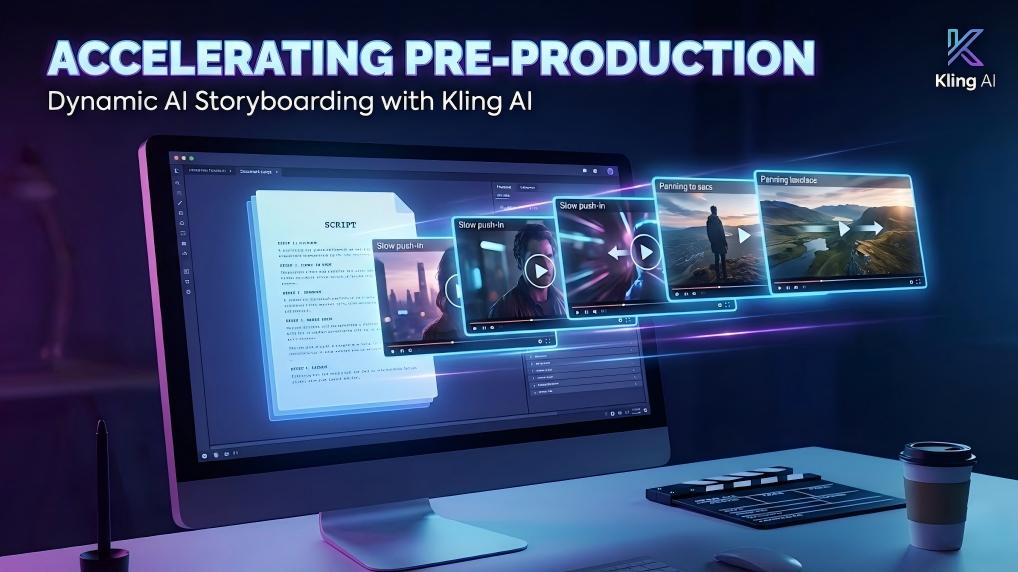
Kling AI: The New Frontier in Generative Video
When Kuaishou unveiled Kling AI, the creative industry paused. This wasn’t just another incremental update; it was a statement. As a filmmaker, I’ve witnessed countless technological shifts, from the advent of digital cinema to the rise of real-time rendering. Each promised revolution, but few delivered with the immediate, visceral impact of advanced generative AI models. Kling AI, in its initial demonstrations, appears to be one such paradigm shifter.
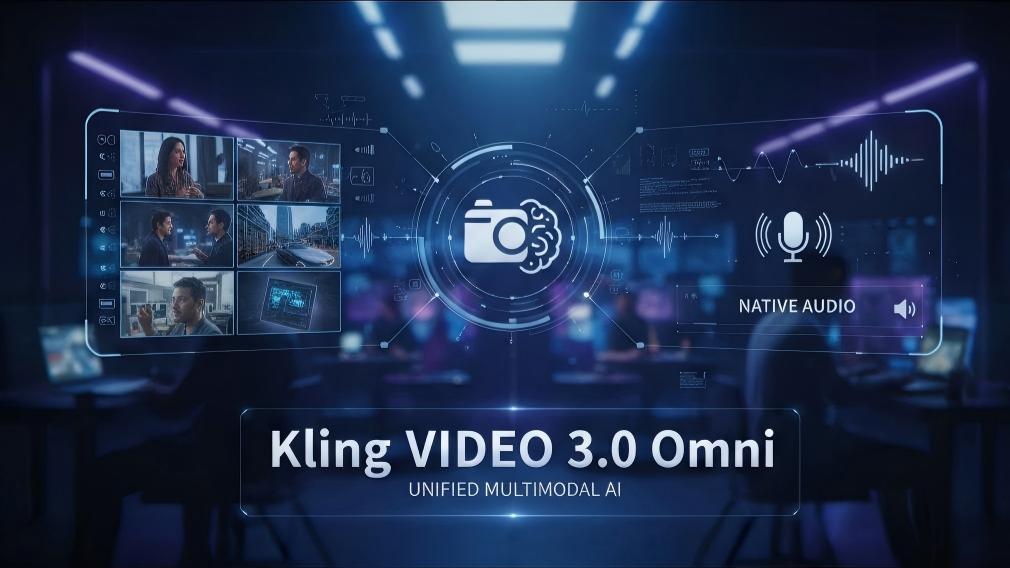
It’s a tool designed to produce high-definition, realistic video sequences from text prompts, images, or even short video clips, offering a level of control and fidelity that previously required extensive resources and specialized skills. This is not simply about automating tasks; it’s about enabling new forms of expression and accelerating the ideation process for visual storytellers.

My initial Kling AI review focuses on its promise to bridge the gap between abstract concepts and tangible visual output. Imagine being able to describe a complex scene – a bustling futuristic market, a serene alien landscape, a dynamic character interaction – and have the AI generate a coherent, visually stunning video sequence in minutes. This capability transforms pre-production.
Storyboarding, animatics, and even preliminary VFX shots can be iterated upon with unprecedented speed. For independent filmmakers or small studios, this could mean the difference between a project remaining on paper and coming to life. The ability to visualize complex ideas quickly allows for more creative exploration, risk-taking, and refinement before committing to expensive production phases.
The core of Kling AI’s appeal lies in its sophisticated understanding of temporal consistency and physics. Early AI video models often struggled with maintaining character identity, object persistence, or logical motion across frames. A detailed Kling AI review suggests that Kuaishou has made significant strides in these areas, delivering videos that exhibit a remarkable degree of coherence and realism. This is crucial for narrative integrity.
A character needs to look like the same character throughout a sequence, and objects need to interact with their environment plausibly. Without this consistency, the illusion breaks, and the tool becomes a novelty rather than a utility. The demonstrations showcase an AI that can generate complex camera movements, dynamic lighting, and subtle character animations, all from high-level prompts.
This level of nuanced control is what separates a powerful artistic tool from a mere technological demonstration. For working artists, time is currency. Kling AI offers a potential massive return on investment by compressing time-consuming processes. Concept artists can generate multiple visual directions for a project in hours instead of days. Directors can test out various blocking and camera angles without needing a full crew or location.
Animators can create base animations to refine, rather than starting from scratch. This efficiency doesn’t diminish the artist’s role; it elevates it. Instead of being bogged down by repetitive or technically demanding tasks, artists can focus on the higher-level creative decisions, on narrative, emotion, and thematic depth.
The promise of Kling AI is not to replace the artist, but to augment their capabilities, transforming the creative workflow into something more fluid, iterative, and ultimately, more ambitious. This is the lens through which any serious Kling AI review must be conducted: its real-world impact on the craft.
Technical Prowess: Decoding Kling AI’s Architecture
Understanding the technical underpinnings of Kling AI is crucial for any artist looking to leverage its full potential. While Kuaishou has not released a comprehensive white paper detailing every aspect of its architecture, the demonstrated capabilities suggest a sophisticated diffusion model, likely incorporating transformer-based architectures for temporal consistency.
This approach allows Kling AI to generate video by iteratively refining noise into coherent visual sequences, informed by the input prompt. The key innovation appears to be its ability to handle longer video sequences and maintain character and object consistency across those sequences, a significant challenge for previous generative models. This isn’t just about generating pretty pictures; it’s about generating narratives that hold together visually over time.
One of the most impressive aspects highlighted in a preliminary Kling AI review is its capacity for high-resolution output. Generating video at 1080p or higher, with detailed textures and realistic lighting, requires immense computational power and a finely tuned model. This suggests a massive training dataset, likely comprising billions of video clips and images, allowing the AI to learn the intricate patterns of motion, light, and composition that define the real world.
The quality of the output directly correlates with the diversity and scale of the training data. For artists, this means the AI has a vast visual vocabulary to draw upon, reducing the need for hyper-specific prompting in many cases, though precise prompts will always yield more targeted results. The ability of Kling AI to generate complex camera movements, pans, tilts, dollies, and even dynamic handheld simulations, is another testament to its advanced architecture.
This isn’t trivial. It implies that the model understands not just what objects are in a scene, but how a camera interacts with them, how perspective shifts, and how motion blur or depth of field should be applied. This level of cinematic understanding embedded within the AI is what makes it a tool for filmmakers, not just image generators. It suggests an underlying representation of 3D space and camera dynamics that allows for more sophisticated visual storytelling.
A thorough Kling AI review must acknowledge this fundamental shift from simple frame generation to intelligent scene construction. Furthermore, the responsiveness to various input modalities is noteworthy. Whether starting from a text description, an image, or even a short video clip for style transfer or extension, Kling AI demonstrates versatility. This multi-modal input capability is vital for artists who often start their creative process from different points.
A concept artist might begin with a sketch, a director with a textual scene description, and a VFX artist with a pre-existing shot. The flexibility of Kling AI to adapt to these different starting points makes it a truly integrated tool, rather than a niche application. This technical flexibility ensures that it can fit into diverse creative pipelines, enhancing rather than dictating the initial spark of an idea.
The promise is a powerful engine that understands and responds to varied creative intentions, making the overall Kling AI experience more adaptable for professional use.
Creative Applications for Filmmakers and Artists
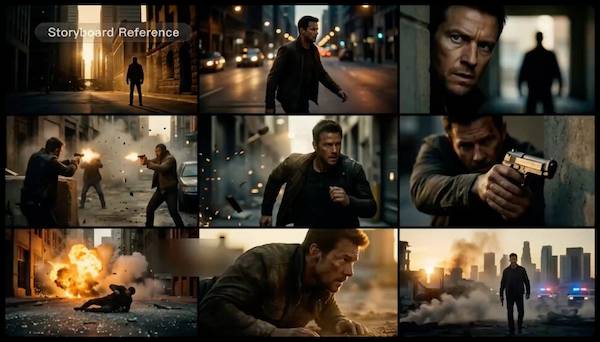
For filmmakers and visual artists, the emergence of tools like Kling AI isn’t just about novelty; it’s about expanding the toolkit of possibilities. The most immediate and impactful application lies in pre-visualization. Imagine a director describing a complex action sequence or a subtle character interaction, and within minutes, having a high-fidelity animatic generated.
This goes far beyond traditional storyboards, offering dynamic motion, lighting, and even preliminary performances. This rapid iteration allows for exploring countless creative options, refining camera angles, pacing, and visual style long before a single frame is shot on set. This process, traditionally time-consuming and expensive, can now be compressed, freeing up resources for on-set execution and post-production polish.
This is where a practical Kling AI review truly shines, demonstrating its utility. Beyond pre-viz, Kling AI opens doors for independent animation and experimental filmmaking. Artists without access to large animation studios or extensive VFX budgets can now conceptualize and even produce short-form animated content with unprecedented ease.
Character design, environment creation, and motion sequences can be generated and refined, allowing solo creators or small teams to punch above their weight. This democratization of high-end visual production means that compelling stories, previously limited by technical constraints, can now find their visual form. Think of animated shorts, music videos, or even interactive art installations – all benefiting from the ability to rapidly generate complex visual assets.
The creative possibilities are vast, limited only by the artist’s imagination and their ability to craft effective prompts. Another significant application lies in concept art and visual development. Generating variations of environments, costumes, or creature designs in motion can provide invaluable insights that static images simply cannot. How does a creature move? How does light play on its scales as it turns?
How does a futuristic city feel with dynamic weather and moving vehicles? Kling AI can answer these questions, providing a living mood board that evolves with the creative vision. This iterative visual feedback loop accelerates the design process, ensuring that final assets are more aligned with the director’s or artist’s intent.
This isn’t about replacing human designers but empowering them with a dynamic assistant that can bring their ideas to life faster and with more fidelity. This capability alone warrants significant attention in any serious Kling AI review. Furthermore, Kling AI can serve as a powerful tool for ideation and overcoming creative blocks. When faced with a blank page, sometimes seeing even a rudimentary visual can spark new ideas.
Inputting abstract concepts or emotional keywords and seeing what the AI generates can lead to unexpected directions, novel compositions, or entirely new narrative threads. It acts as a creative partner, offering visual interpretations that can inspire and push boundaries. For documentary filmmakers, it could also assist in reconstructing historical events or visualizing abstract concepts where archival footage is scarce.
The ability to generate complex, plausible scenes from minimal input makes it a powerful asset across various genres and disciplines, solidifying its place as a potentially transformative tool in the creative landscape. The flexibility and speed offered by AI Render Pro, the prompting tool for filmmakers and creatives can further enhance this process, helping artists craft the precise prompts needed to unlock Kling AI’s full potential.
Kling AI vs. The Competition: Sora, Luma, and RunwayML
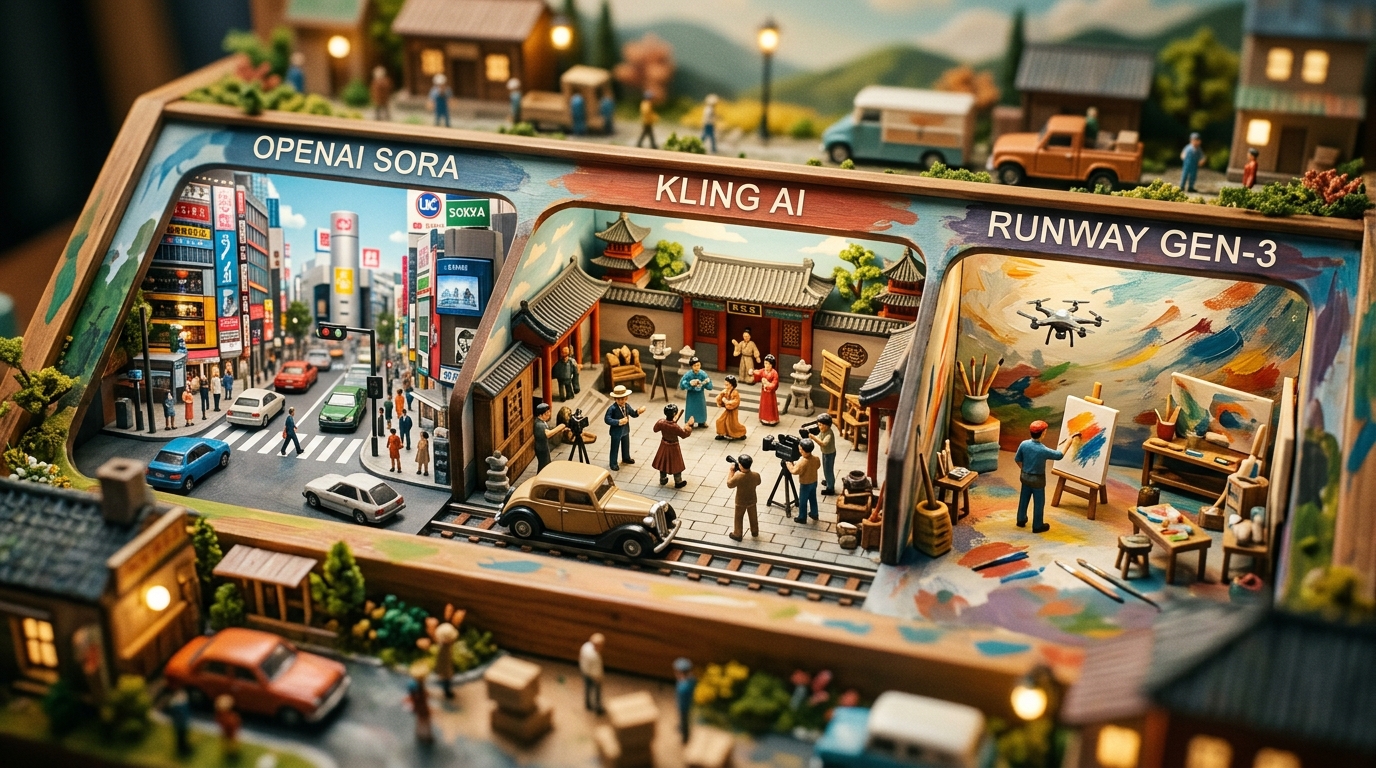
The generative AI video landscape is becoming increasingly competitive, with major players vying for supremacy. Kling AI enters a field already populated by formidable contenders like OpenAI’s Sora, Luma AI’s Dream Machine, and the more established RunwayML. A comparative Kling AI review is essential to understand its unique position and potential impact.
Each of these tools offers distinct advantages, and understanding them helps artists choose the right instrument for their specific needs. OpenAI’s Sora, while not yet publicly available, set a new benchmark for realism and temporal consistency with its initial demonstrations. Its ability to generate highly complex, minute-long scenes with intricate details and consistent physics was astonishing.
Kling AI appears to directly challenge Sora’s capabilities, particularly in its emphasis on high-definition output and fluid motion. Early demonstrations of Kling AI also showcase impressive character consistency and dynamic camera movements, suggesting it’s operating in a similar league. The key difference might lie in accessibility and integration.
Sora’s eventual release model remains to be seen, while Kling AI, coming from Kuaishou, might target a broader market, potentially with different pricing or platform integration strategies. The race here is not just about raw technical power, but about how these powerful tools are put into the hands of creators. Luma AI’s Dream Machine, while also impressive, generally targets shorter, more stylized clips with a faster generation time.
It excels at rapid ideation and generating quick visual bursts. While capable of realistic outputs, its strength often lies in its speed and ease of use for shorter sequences. RunwayML, on the other hand, has been a pioneer in the space, offering a suite of AI tools beyond just text-to-video, including various forms of image and video manipulation. Its Gen-1 and Gen-2 models have been integral for many artists experimenting with AI.
RunwayML’s strength lies in its comprehensive ecosystem and its continuous evolution, catering to a wide range of post-production needs. A Kling AI review suggests it might focus more singularly on the text/image-to-video generation, aiming for ultimate fidelity and length in that specific domain, potentially at the expense of other AI-powered editing features offered by Runway.
The core differentiator for Kling AI, based on current observations, seems to be its potential for generating longer, more coherent narrative sequences with a strong emphasis on photorealism. This positions it as a direct competitor to Sora for high-end cinematic applications, while offering a different value proposition than the rapid, often shorter-form outputs of Dream Machine or the broader toolkit of RunwayML. For artists, this means more choices.
If you need quick, stylized concepts, Dream Machine might be your go-to. If you need a comprehensive AI-powered editing suite, RunwayML could be better. But if your primary need is to generate extended, realistic video sequences from detailed prompts, Kling AI makes a very compelling case. The competitive landscape is forcing each developer to push boundaries, ultimately benefiting the creative community with more powerful and specialized tools.
Workflow Integration: Streamlining Your Production Pipeline with Kling AI
🎬 AI Render Pro Studio, the AI film production suite I built and use on my own productions. Script breakdown, storyboards, 30+ video models including Seedance 2.5 and Kling O3, image generation, retouch, 7K upscaling and audio, all in one browser workspace. $19/month flat, bring your own API keys and pay providers at cost, no credit packs, no markup. Try AI Render Pro Studio →
Integrating new technology into an established creative workflow is often the most significant hurdle, regardless of how powerful the tool. For Kling AI to truly become an indispensable asset for filmmakers and artists, it must seamlessly fit into existing production pipelines, enhancing rather than disrupting them. A critical Kling AI review from a practical standpoint must address this integration challenge.
The goal is not to replace entire departments but to augment human talent and accelerate specific phases of production. In pre-production, Kling AI can revolutionize storyboarding and animatics. Instead of static drawings or rudimentary 2D animations, directors and cinematographers can generate dynamic, moving versions of scenes. This allows for real-time experimentation with camera angles, blocking, lighting, and even character performance.
The ability to iterate on these visual concepts quickly means that creative decisions can be made earlier and with greater confidence, reducing costly changes down the line. Imagine a director describing a complex tracking shot, and Kling AI providing a dozen variations to choose from, each with slightly different camera speeds, focal lengths, or character movements. This level of visual feedback is invaluable for refining a vision before stepping onto a set.
During production, Kling AI might find its place in virtual production environments or for generating proxy assets. For complex VFX shots, rough AI-generated versions can serve as placeholders or reference material for the live-action shoot. This can help guide camera operators, actors, and lighting technicians in understanding the final visual intent.
While not yet capable of replacing practical effects or on-set cinematography, its ability to quickly generate complex backgrounds or elements could assist in planning and visualization on the fly. The immediate feedback loop it offers can help bridge the gap between imagination and execution. Post-production is another area ripe for Kling AI integration.
For VFX artists, it could assist in generating elements that are difficult or expensive to shoot, such as crowd scenes, specific environmental effects, or even background plate extensions. While high-fidelity final renders will still require human artistry and specialized software, Kling AI can provide a strong starting point or fill in gaps.
For editors, it could be used to generate b-roll footage, abstract sequences, or even quick transitions based on textual descriptions, adding visual richness without extensive asset creation. The challenge here will be maintaining stylistic consistency with existing footage, which Kling AI will need to be adept at.
Ultimately, the successful integration of Kling AI will depend on its API accessibility, user-friendliness, and its ability to accept and export common industry file formats. If it can ingest existing 3D models, textures, or character rigs and output in formats compatible with software like Unreal Engine, Blender, or Nuke, its utility will skyrocket.
The aim is for Kling AI to become a powerful plugin, a creative accelerator that fits into the existing ecosystem of tools, allowing artists to focus on the storytelling and craft, while the AI handles the heavy lifting of visual generation. This pragmatic approach to workflow integration is what will define its long-term success.
Challenges and Limitations: What a Kling AI Review Reveals
While the capabilities of Kling AI are undeniably impressive, a balanced Kling AI review must also critically examine its challenges and limitations. No technology is a silver bullet, and understanding where Kling AI currently falls short is as important as recognizing its strengths, particularly for professional applications. These limitations often dictate how and where the tool can be effectively deployed in a production pipeline.
One primary challenge, common to all generative AI models, is the issue of precise control. While Kling AI can generate highly realistic and coherent videos from prompts, achieving exact, frame-by-frame control over every element, motion, and composition remains difficult. Filmmakers and animators often require pixel-perfect precision to execute their vision.
While prompting techniques are evolving, and tools like AI Render Pro are designed to help refine these, the current generation of AI video models can still produce unexpected artifacts or interpretations that deviate from the artist’s specific intent. This lack of granular control means that for highly specific, polished final shots, human intervention and traditional VFX pipelines will still be necessary for the foreseeable future.
Kling AI is a powerful generator, but not yet a perfect executor of specific, pre-visualized artistic choices down to the minute detail. Another limitation often observed in generative AI is the occasional struggle with physical plausibility or semantic understanding in complex scenarios. While Kling AI shows promise in maintaining consistency, there can still be moments where objects interact unnaturally, reflections are incorrect, or character actions defy realistic physics.
For example, a character might pick up an object in one frame, and it might subtly change shape or position in the next, or their hand might pass through it. These subtle glitches, while improving, are still present and can break the illusion of realism, especially in longer, more complex sequences. For high-stakes cinematic productions, these inconsistencies are unacceptable and require significant post-correction, which can negate the time-saving benefits of AI generation.
The “black box” nature of AI models also presents a challenge. When an AI generates an undesirable output, it’s often difficult to understand why it made those specific choices or how to precisely adjust the prompt to correct the issue. This trial-and-error process can be time-consuming and frustrating. While artists can learn to craft better prompts, the inherent unpredictability means that a perfect output is not guaranteed on the first try, or even the tenth.
This contrasts with traditional software where specific parameters can be adjusted to achieve predictable results. The creative process with AI becomes more about guiding and curating, rather than direct manipulation. Finally, the ethical and legal implications surrounding training data, copyright, and deepfakes remain significant limitations and concerns.
While not a technical limitation of Kling AI itself, these external factors heavily influence its responsible deployment and adoption. The source of the training data, the potential for misuse, and the evolving legal landscape surrounding AI-generated content are complex issues that all AI developers, including Kuaishou, must address. Without clear guidelines and robust safeguards, the widespread adoption of such powerful tools could face significant headwinds.
Any thorough Kling AI review must acknowledge these broader societal and legal challenges that impact its viability.
Ethical Considerations and the Future of AI in Art
The advent of powerful generative AI tools like Kling AI brings with it a host of ethical considerations that the creative community, developers, and society at large must grapple with. As a filmmaker, I believe it’s imperative to approach these tools not just from a technical or creative perspective, but also with a deep understanding of their societal impact.
A comprehensive Kling AI review cannot ignore these critical discussions, as they shape the very future of art and industry. One of the most pressing concerns revolves around the provenance of the training data. AI models learn by ingesting vast amounts of existing content – images, videos, text. The question of whether this data was ethically sourced, and whether the original creators were compensated or even consented to their work being used for training, is paramount.
Many artists feel that their intellectual property is being exploited without their permission or fair remuneration. This issue has led to legal challenges and a growing demand for transparency from AI developers. Kuaishou, like other companies, faces the responsibility of ensuring their Kling AI model is built on ethically acquired data, respecting copyright and intellectual property rights.
Without this, the foundation of the technology rests on shaky ground, potentially undermining trust within the creative community. The Verge has covered extensively the ongoing legal battles concerning AI and copyright, highlighting the urgency of these discussions. Another significant ethical concern is the potential for deepfakes and misinformation.
Tools like Kling AI, capable of generating highly realistic video, could be misused to create convincing but fabricated footage, leading to defamation, fraud, or political manipulation. While developers often state their intent to implement safeguards, the technology’s power makes such misuse a constant threat. The responsibility falls on both the developers to build in robust detection and prevention mechanisms, and on users to exercise ethical judgment.
The creative community must also be part of the solution, developing best practices and advocating for responsible AI use. The impact on employment within the creative industries is also a major point of discussion. Will Kling AI and similar tools displace artists, animators, and VFX professionals? While many argue that AI will augment rather than replace, enabling artists to focus on higher-level creative tasks, the economic reality for some roles could shift.
It’s crucial for the industry to foster retraining and adaptation, ensuring that artists can evolve with the technology. This isn’t just about individual jobs; it’s about the future structure of creative teams and the value placed on human creativity in an AI-assisted world. Finally, there’s the philosophical question of authorship and the definition of art itself. When an AI generates a video, who is the author? The prompt engineer? The developer of the AI?
The original artists whose work contributed to the training data? These questions challenge our traditional notions of creativity and ownership. Embracing AI in art requires a re-evaluation of these concepts, fostering a collaborative future where human ingenuity and artificial intelligence work in concert. The ethical discussions surrounding Kling AI are not peripheral; they are central to its acceptance and its responsible evolution as a creative force. The Wikipedia page on AI art delves into many of these ongoing debates.
Accessibility and the Democratization of High-End Visuals
One of the most profound implications of technologies like Kling AI, and a key aspect of any relevant Kling AI review, is its potential to democratize access to high-end visual production. Historically, creating realistic, high-definition video content required significant financial investment in equipment, software licenses, and highly skilled personnel.
This often placed professional-grade visual storytelling out of reach for independent filmmakers, small studios, and artists with limited resources. Kling AI could fundamentally alter this landscape. By providing a tool that can generate complex visual sequences from simple text prompts, Kling AI lowers the barrier to entry for cinematic quality visuals.
An independent filmmaker with a compelling script but a shoestring budget could potentially generate sophisticated pre-visualizations, elaborate concept art, or even entire animated sequences that would otherwise be impossible. This isn’t about replacing the need for talent or vision, but about providing the means for that talent and vision to manifest visually without needing millions of dollars.
This democratization fosters a more diverse and vibrant creative ecosystem, allowing voices from all backgrounds to tell their stories with high production values. Consider the impact on education and training. Aspiring filmmakers and visual artists can experiment with complex visual ideas without years of specialized training in 3D modeling, animation, or visual effects software.
They can learn the principles of cinematography, editing, and storytelling by rapidly iterating on AI-generated content. This hands-on, rapid feedback loop can accelerate learning and skill development, preparing a new generation of creatives who are fluent in both traditional and AI-driven production methods. This shift in learning paradigms alone could be transformative for creative arts programs worldwide.
Furthermore, Kling AI could empower content creators beyond traditional film. YouTubers, social media influencers, and even small businesses could produce high-quality animated explainers, product demos, or narrative shorts without needing to hire extensive production teams. This expands the reach of professional-grade visuals into everyday content creation, elevating the overall quality of digital media.
The ease with which complex visual ideas can be brought to life means that creative ideas are no longer constrained by technical limitations or budget ceilings for a broad range of applications. However, true democratization also depends on the accessibility model of Kling AI. Will it be offered as a subscription service? Will there be tiered access? Will there be a free tier for educational or experimental use?
The pricing and availability strategy adopted by Kuaishou will be crucial in determining how widely adopted and truly democratizing the tool becomes. If it remains an exclusive, high-cost solution, its impact on the broader creative community will be limited. But if it follows a more accessible model, Kling AI could indeed usher in a new era of visual storytelling, making sophisticated visuals a tool for the many, not just the privileged few.
Mastering Prompts for Optimal Kling AI Results
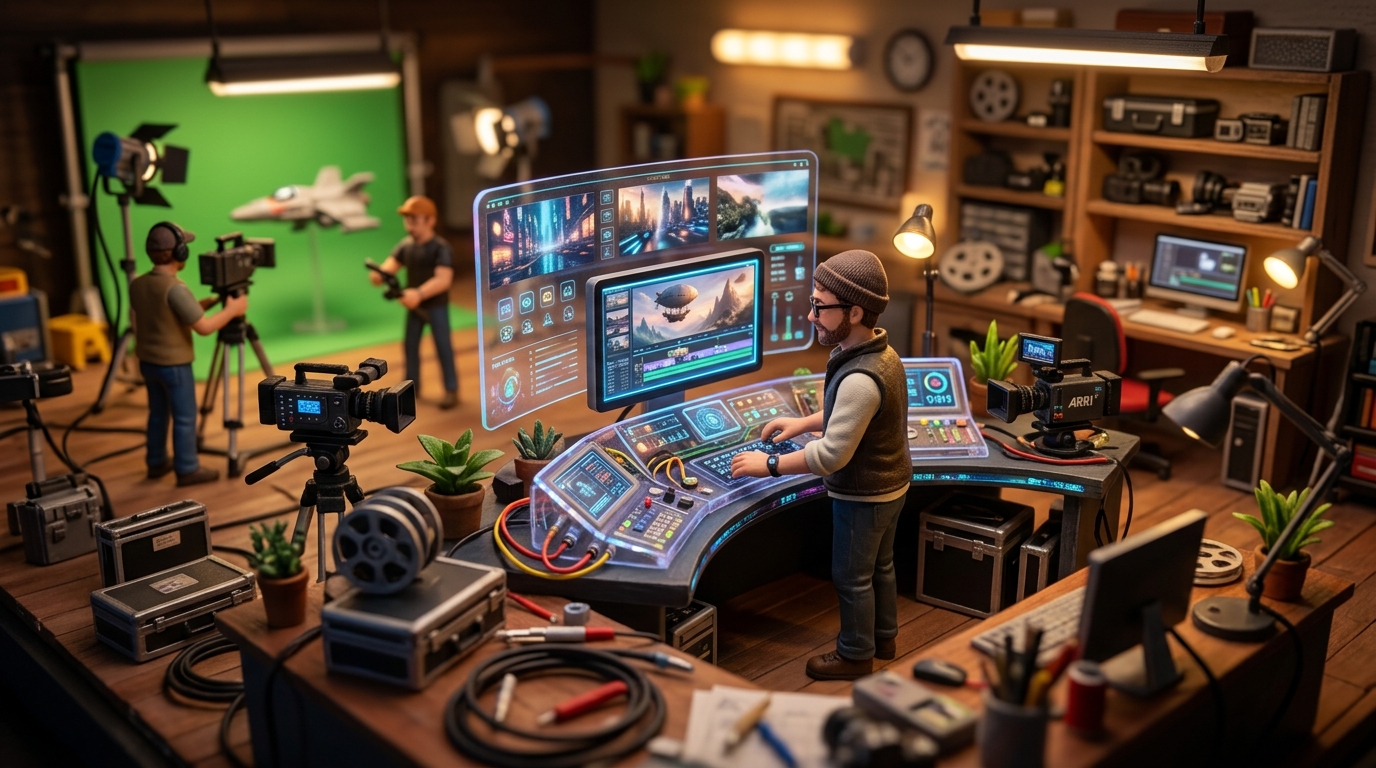
The power of any generative AI, and certainly of Kling AI, lies not just in its underlying algorithms but in the finesse with which users interact with it. For filmmakers and artists, mastering prompt engineering will be as crucial as mastering a camera or editing software. A thorough Kling AI review must emphasize that the quality of the output is directly proportional to the clarity, detail, and creative intent embedded within the prompt.
This isn’t just typing words; it’s communicating a vision to a non-human intelligence. Effective prompting for Kling AI involves a blend of descriptive language, technical specifications, and artistic direction. It’s about painting a picture with words, guiding the AI through the desired scene.
This means specifying not just the subject matter (e.g., “a medieval knight”), but also the environment (“standing on a windswept cliff overlooking a stormy sea”), the lighting (“dramatic chiaroscuro lighting, sunset”), the camera angle (“low-angle wide shot, slow dolly zoom”), and even the mood or emotional tone (“stoic, determined”). The more specific and evocative the prompt, the better Kling AI can interpret and generate a visually coherent and artistically aligned video.
This is where tools like character design prompts can be invaluable for maintaining consistency. Beyond descriptive language, understanding the “language” of the AI itself is vital. This often involves experimenting with keywords, phrases, and even negative prompts (e.g., “no cartoon style,” “avoid shaky cam”) to steer the AI away from undesirable outputs.
Learning which terms yield specific aesthetic results, or which camera movements are best interpreted, comes through iterative testing and observation. It’s a dialogue, a process of refinement where the artist learns the AI’s tendencies and strengths. This iterative process is where the creative magic happens, transforming vague ideas into concrete visuals. For filmmakers, integrating cinematic language into prompts will be key.
Terms like “cinematic,” “anamorphic,” “24fps,” “dolly shot,” “rack focus,” or “golden hour lighting” can significantly influence the aesthetic and technical quality of the generated video. Kling AI’s ability to understand and interpret these specific filmmaking cues is what elevates it from a generic image generator to a specialized tool for visual storytelling.
The more filmmakers treat the prompt as a virtual shot list or a mini-screenplay, the more powerful their results will be. Furthermore, leveraging image or video inputs alongside text prompts can significantly enhance control. Providing a reference image for character design, a mood board for color grading, or a short video clip for motion style can give Kling AI a stronger starting point and ensure greater consistency.
This multi-modal prompting approach allows artists to combine the strengths of different input types, guiding the AI with visual cues as well as textual instructions. Mastering these techniques will distinguish proficient users from casual experimenters, unlocking the true potential of Kling AI as a collaborative creative partner.
The Economic Impact of Kling AI on the Creative Industry
The introduction of a powerful tool like Kling AI will inevitably send ripples through the economic landscape of the creative industry. While the immediate focus tends to be on creative applications, a thorough Kling AI review must also consider its broader economic implications for studios, freelancers, and the market for visual content. This impact will likely be multifaceted, creating both opportunities and challenges.
One significant economic impact could be a reduction in production costs, particularly for early-stage development and pre-visualization. Traditional animatics, concept art, and even some basic VFX shots require considerable time, talent, and therefore, budget. By accelerating these processes and potentially reducing the need for extensive human resources in these phases, Kling AI could lower the overall cost of pre-production.
This could enable more projects to get off the ground, as the initial investment required to visualize a concept becomes more manageable. For smaller studios and independent producers, this cost-saving could be a game-changer, allowing them to compete more effectively with larger, more established players. However, this cost reduction also raises concerns about job displacement.
While many foresee AI as an augmentation tool, there is a legitimate fear that certain entry-level or repetitive roles in animation, storyboarding, and junior VFX might see reduced demand. The industry will need to adapt, with professionals upskilling to become “AI prompt engineers,” supervisors of AI-generated content, or focusing on the higher-level creative and conceptual aspects that AI cannot replicate.
This shift will necessitate investment in retraining and new educational pathways to ensure the workforce remains relevant and valuable in an AI-integrated ecosystem. Reuters has reported on the broad economic impacts of AI, underscoring these concerns across various sectors. On the flip side, Kling AI could unlock new markets and revenue streams.
The ability to generate high-quality visual content quickly and affordably could create demand for personalized content, niche animations, or rapid prototyping services that were previously too expensive to consider. Imagine highly customized marketing videos for small businesses, or interactive visual experiences tailored to individual users.
This expansion of accessible visual content could lead to a boom in new creative ventures and a broader consumption of visually rich media. Freelancers who master Kling AI could offer specialized services, carving out new niches in the market. Furthermore, the competition among AI developers like Kuaishou, OpenAI, and Luma AI is driving rapid innovation, which benefits the end-user.
As these tools become more powerful and accessible, they will push the boundaries of what’s possible, potentially increasing the overall demand for high-quality, engaging visual content. The economic landscape will shift, rewarding adaptability, creativity, and a willingness to embrace new technologies.
The key will be for the creative industry to proactively shape this future, rather than passively react to it, ensuring that the economic benefits are widely distributed and that human artistry remains at the core of value creation.
The Future Trajectory of Kling AI and Generative Video
The release of Kling AI marks a significant milestone, but it is merely a waypoint in the rapidly accelerating journey of generative video technology. Looking ahead, a forward-thinking Kling AI review must consider the probable future trajectory of this tool and the broader field it inhabits. The pace of innovation in AI is staggering, suggesting that today’s cutting-edge capabilities will be tomorrow’s baseline.
One clear trajectory for Kling AI is increased fidelity and length. While current models can generate impressive short sequences, the holy grail remains the ability to produce feature-film-length, narrative-driven content with complete temporal and character consistency. Future iterations of Kling AI will undoubtedly push towards longer, more complex scenes, better continuity across cuts, and a deeper understanding of narrative flow.
This will require advancements in memory management, long-range coherence, and perhaps even AI models that can ‘understand’ scripts and story arcs, rather than just isolated prompts. Another area of intense development will be precise control. As discussed, current limitations include a lack of granular control over specific elements.
Future versions of Kling AI will likely incorporate more sophisticated control mechanisms, perhaps allowing users to manipulate 3D camera paths, adjust character poses, or paint directly onto generated frames to influence the AI’s output. Integration with traditional 3D software and animation tools will become more seamless, enabling hybrid workflows where artists can use AI for broad strokes and human expertise for fine-tuning.
This blend of AI generation and human refinement will define the next generation of creative tools. The training data will also evolve. Expect to see more curated, ethically sourced datasets, potentially with opt-in mechanisms for artists to contribute their work and be compensated.
This will not only address ethical concerns but could also lead to more specialized AI models trained on specific artistic styles, genres, or historical periods, offering even more tailored creative outputs. The ability for Kling AI to ‘learn’ from a user’s specific artistic style or past projects could revolutionize personalized content creation. Furthermore, real-time generation and interactivity will be critical.
Imagine directing an AI-generated scene in real-time, making adjustments to camera, lighting, or performance on the fly. This would transform pre-visualization into a truly interactive experience, blurring the lines between game engines and generative AI. The future of Kling AI, and generative video at large, is likely to be characterized by increasing autonomy, deeper creative collaboration, and a continuous push towards photo-realism combined with unprecedented control.
For artists, this means a future where the only limit to visual storytelling is imagination itself, provided they are willing to adapt and learn alongside these evolving intelligent tools.
Final Verdict: A Comprehensive Kling AI Review
After a thorough Kling AI review, it’s clear that Kuaishou’s entry into the generative video space is not just another competitor, but a significant force poised to reshape aspects of the creative industry. Kling AI demonstrates a remarkable leap forward in producing high-definition, temporally consistent, and realistic video content from diverse inputs.
Its core strength lies in its ability to translate abstract creative concepts into tangible visual sequences with impressive fidelity, challenging the benchmarks set by rivals like Sora and pushing the boundaries of what’s possible with AI-driven visual creation. For filmmakers, animators, and visual artists, Kling AI represents a powerful new tool in their arsenal.
It promises to revolutionize pre-visualization, accelerate concept development, and democratize access to high-end visual production, enabling independent creators to achieve cinematic quality previously out of reach. The potential for rapid iteration, exploring countless creative options, and streamlining various stages of the production pipeline is immense.
This efficiency doesn’t diminish the artist’s role; rather, it empowers them to focus on the higher-level creative and narrative aspects of their craft, using AI as a sophisticated co-creator. However, a balanced Kling AI review also acknowledges its current limitations. Precise, frame-by-frame control remains a challenge, and occasional inconsistencies or unexpected outputs still require human oversight and refinement.
The ethical considerations surrounding training data, copyright, and the potential for misuse are critical discussions that Kuaishou and the wider industry must continue to address proactively. The economic impact, while promising new opportunities, also necessitates a thoughtful approach to workforce adaptation and education. Ultimately, Kling AI is more than just a technological marvel; it’s a catalyst for change.
Its arrival signals a future where the lines between concept and execution become increasingly blurred, where creative ideas can manifest visually with unprecedented speed and fidelity. For artists willing to engage with its nuances, master the art of prompting, and adapt their workflows, Kling AI offers a transformative opportunity to expand their creative horizons and tell stories in ways previously unimaginable.
It is a tool that demands attention, warrants deep exploration, and promises to be a cornerstone of the evolving digital creative landscape. The journey with Kling AI has just begun, and its impact will undoubtedly resonate for years to come.
Frequently Asked Questions
What is Kling AI?
Kling AI is a new generative artificial intelligence model developed by Kuaishou that creates high-definition, realistic video sequences from text prompts, images, or short video clips. It aims to offer advanced capabilities in temporal consistency, character fidelity, and dynamic camera movements for filmmakers and visual artists.
How does Kling AI compare to Sora or RunwayML?
Kling AI directly competes with OpenAI’s Sora in its pursuit of high-fidelity, long-form video generation with strong consistency. Compared to RunwayML, which offers a broader suite of AI-powered editing tools, Kling AI appears to focus more intensely on the core text/image-to-video generation, aiming for ultimate realism and length in that specific domain.
What are the main benefits of using Kling AI for creators?
The main benefits include accelerating pre-visualization, enabling rapid iteration of creative concepts, democratizing access to high-end visual production for independent artists, and streamlining various stages of the filmmaking and animation pipeline. It allows for quick generation of complex scenes and dynamic visuals from simple prompts.
Are there any ethical concerns with Kling AI?
Yes, like all generative AI, Kling AI raises ethical concerns regarding the sourcing of its training data (copyright and artist compensation), the potential for misuse in creating deepfakes or misinformation, and its impact on employment within the creative industries. Responsible development and usage are critical.
How can artists get the best results from Kling AI?
To get the best results from Kling AI, artists should master prompt engineering by using clear, detailed, and evocative language that includes descriptive elements, technical specifications (e.g., camera angles, lighting), and artistic direction. Experimentation with keywords, negative prompts, and multi-modal inputs (text + image/video) is also crucial for refining outputs.
Discover more from Olivier Hero Dressen Blog: Filmmaking & Creative Tech
Subscribe to get the latest posts sent to your email.
Work with Olivier
Director | CD | DP & Photographer
Specializing in commercials, music videos, AI-driven filmmaking, and cinematic storytelling for brands and production companies.
🌍 Shanghai · Paris · Los Angeles · Dubai
🎬 View Portfolio & Get in Touch