
Key Takeaways
- First insight, Mastering 5 nostalgic bloom prompts allows artists to evoke profound emotional resonance and specific vintage aesthetics in AI-generated imagery.
- Craft highlight, Precise prompt engineering, detailing film stock, lighting, and temporal cues, is crucial for achieving authentic 5 nostalgic bloom effects.
- Industry context, Generative AI tools, especially those enhanced by platforms like AI Render Pro, are democratizing the creation of sophisticated 5 nostalgic bloom visuals for diverse artistic projects.
- Bottom line, Leveraging these 5 nostalgic bloom prompts empowers creatives to transcend simple image generation, crafting evocative, memory-laden visual narratives that truly connect.
The art of generating a compelling nostalgic bloom effect through AI prompts involves more than just adding “vintage” to your text; it requires a deep understanding of light, filmic qualities, and emotional triggers to create visuals that resonate with a sense of the past. These 5 prompts are designed to help working artists achieve rich, evocative, and technically precise nostalgic imagery.
Need a Director for Your Next Project?
From commercials to branded campaigns—Olivier brings creative vision and technical expertise.
→ View ProjectsThe Essence of Nostalgic Bloom in AI Artistry
The term “nostalgic bloom” encapsulates a visual aesthetic that combines the soft, ethereal glow often associated with overexposed film or specific lens characteristics with the emotional weight of memory and longing for the past. As a filmmaker, I understand that light is not merely illumination; it is emotion, narrative, and time. When we prompt AI to create a nostalgic bloom, we are asking it to interpret these complex layers, not just render pixels.
The goal is to craft an image that feels less like a photograph and more like a remembered moment, slightly idealized, perhaps, and imbued with a gentle, dreamlike quality.
Achieving a truly authentic nostalgic bloom requires a deliberate approach to prompt engineering. It’s about specifying not just the subject, but the conditions under which that subject is perceived. This includes granular details about lighting, camera optics, film stock emulation, and even the subtle imperfections that define vintage media. Simply adding “nostalgia” or “bloom” to a prompt rarely yields the desired depth.
Instead, we must dissect what constitutes that feeling and translate it into actionable AI directives. This precision is what elevates a generic AI image to a piece of evocative art.
The current landscape of generative AI, particularly in 2026, offers unprecedented control over these subtle artistic elements. Tools have evolved significantly since the early days of 2023, allowing for more nuanced control over parameters like spectral blooming, lens flare characteristics, and the precise emulation of specific film emulsions.
This evolution means that the distinction between a truly professional AI-generated image and a hastily assembled one lies squarely in the prompt engineer’s ability to articulate their vision with technical clarity. Our exploration of the 5 nostalgic bloom prompts will demonstrate this principle in practice, guiding you to harness these powerful capabilities.
1. Golden Hour Reverie: The Soft Focus Nostalgic Bloom
The golden hour, that magical period just after sunrise or before sunset, inherently lends itself to a nostalgic bloom effect. The low angle of the sun creates long shadows and a warm, diffused light that seems to wrap around subjects, often producing a natural lens flare or bloom around bright sources. This prompt specifically targets that soft, romanticized glow, combining it with elements that suggest a bygone era without being overtly period-specific.
It evokes a universal sense of warmth and gentle memory, making it ideal for scenes that require an understated, emotional depth.
The key here is to specify the quality of light and its interaction with the environment. We’re not just asking for “golden hour” but for the effect it has on the visual plane, the soft focus, the subtle haze, and the way light spills and blooms. This approach moves beyond simple descriptive prompting to a more analytical, effects-driven methodology, directly influencing the AI’s rendering engine.
By carefully constructing this prompt, we can guide the AI to interpret these elements in a way that truly captures the essence of a tranquil, remembered moment.
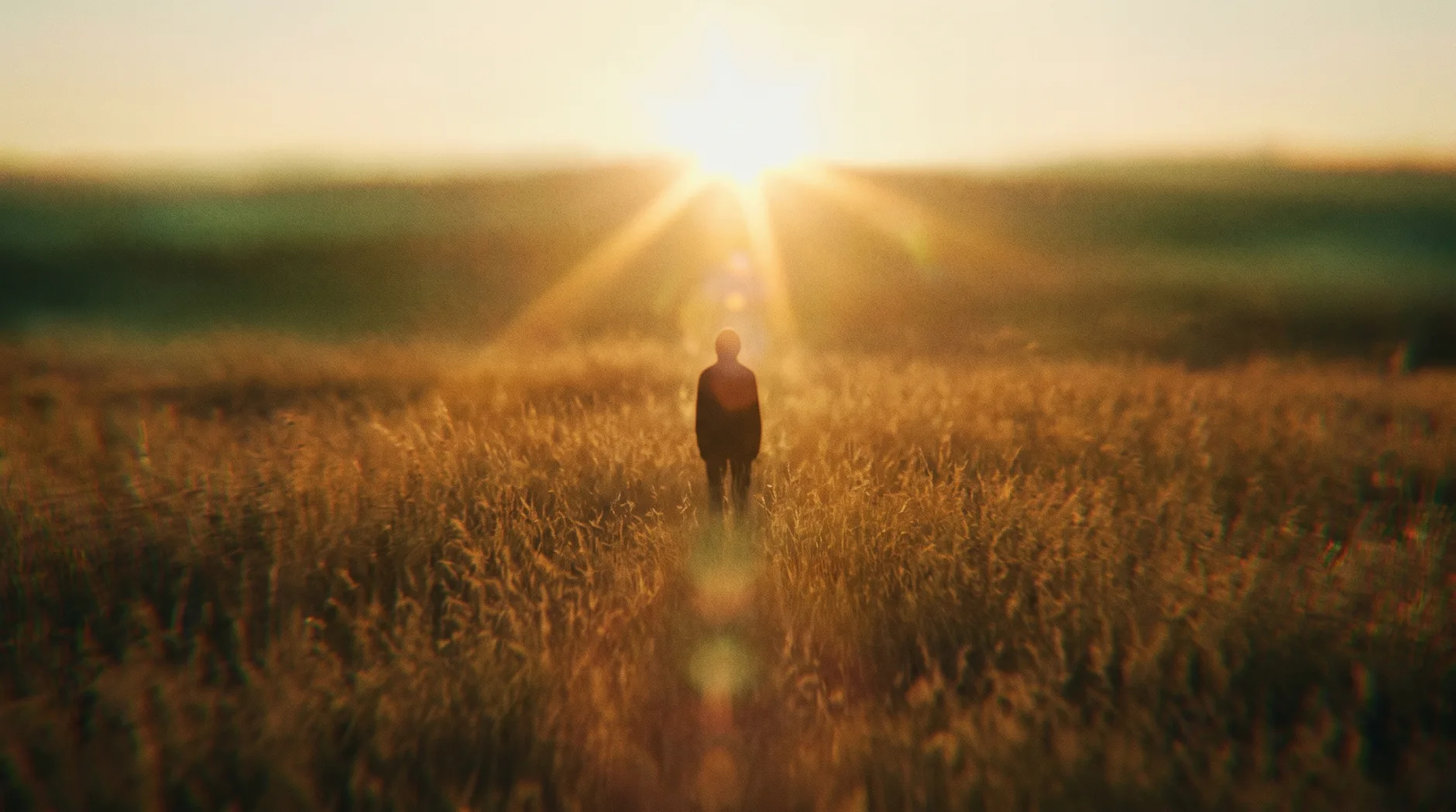
Prompt:
A lone figure stands silhouetted against a vast, open field during a late golden hour, soft focus, cinematic wide shot. Sunlight streams from behind, creating a strong, warm lens bloom and subtle ethereal haze around the edges, mimicking vintage 1970s film photography. The atmosphere is serene and dreamlike, with gentle, diffused light. Fine grain texture visible, slight chromatic aberration, and a warm color palette dominated by amber and muted greens. Aspect ratio 16:9. No text.This prompt aims for a gentle, almost painterly nostalgic bloom, emphasizing the interaction of light and atmosphere. For best results, experiment with varying the intensity of the “lens bloom” modifier, and consider adding specific vintage lens names if your AI model supports it, to further refine the optical characteristics.
2. Y2K Neon Haze: Digital Echoes of a Recent Past
The Y2K aesthetic, a vibrant and often chaotic blend of late 90s and early 2000s digital optimism and burgeoning tech, offers a distinct flavor of nostalgic bloom. This isn’t the soft, analog glow of the 70s, but a more electric, often slightly pixelated or glow-infused bloom born from early digital cameras, CRT screens, and the distinct color palettes of that era.
When we talk about Y2K, we’re discussing a very specific cultural and technological moment that has recently seen a significant resurgence in interest. For artists looking to tap into this specific vein of retro aesthetics, precision in prompting is paramount.
The challenge with Y2K is to capture its inherent digital-analog hybrid nature. It’s about the bleed of neon lights, the slight distortion of early digital video, and the optimistic yet often clunky visual language of nascent internet culture. Our prompt must guide the AI to understand these specific visual cues, translating them into a nostalgic bloom that feels authentic to the turn of the millennium.
The “slight bloom effect” and “nostalgic film look” mentioned in discussions around Y2K prompts are crucial here, especially when leveraging tools like AI Render Pro, the prompting tool for filmmakers and creatives, which excels at rendering these nuanced stylistic parameters. This period’s aesthetic is an excellent example of how nostalgia isn’t limited to distant history but can encompass even relatively recent memories.
2. Y2K Neon Haze: Digital Echoes of a Recent Past
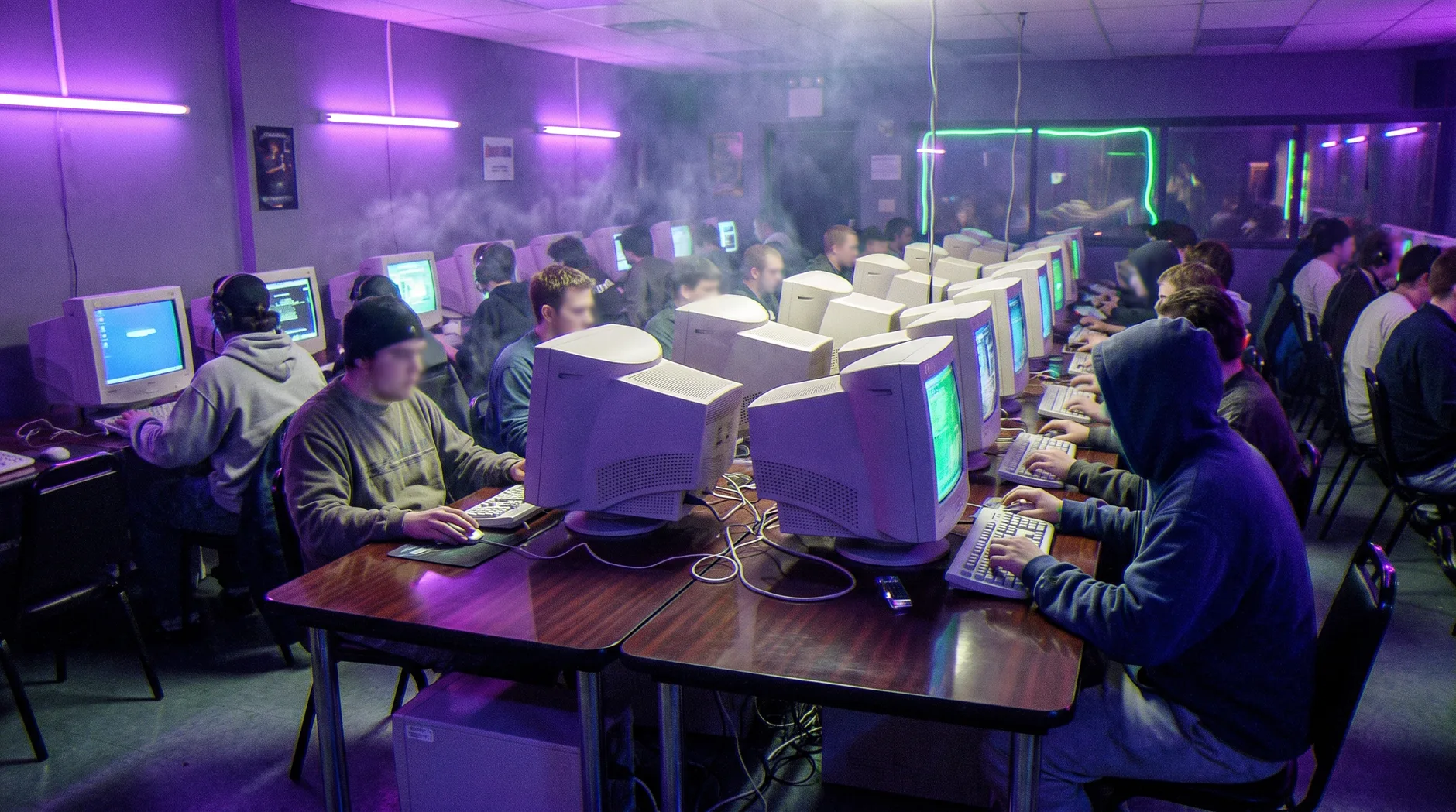
Prompt:
A bustling cyber cafe interior from the year 2000, bathed in the glow of CRT monitors and purple neon signs. Heavy atmospheric haze, creating a distinct Y2K nostalgic bloom effect around all light sources. The scene features people interacting with bulky computers, a slight pixelation artifact, and a vibrant, slightly oversaturated color palette with blues, purples, and electric greens. Distorted reflections on glossy surfaces. Wide angle, low light photography style, simulating early digital camera aesthetics. Aspect ratio 16:9. No text.This prompt focuses on the specific digital-era glow of Y2K. To enhance the effect, consider adding specific early digital camera models or film stocks like “Kodak Portra 400 with slight push processing” for a grittier, yet still vibrant, feel, as discussed in various Y2K prompts guides.
🎬 AI Render Pro Studio, the AI film production suite I built and use on my own productions. Script breakdown, storyboards, 30+ video models including Seedance 2.5 and Kling O3, image generation, retouch, 7K upscaling and audio, all in one browser workspace. $19/month flat, bring your own API keys and pay providers at cost, no credit packs, no markup. Try AI Render Pro Studio →
3. Cinematic Sepia Tint: Evoking Mid-Century Grandeur
For a more classic, mid-20th-century nostalgic bloom, the sepia tint, combined with the characteristics of vintage film, provides an unparalleled sense of historical depth. This prompt aims to recreate the grandeur and often dramatic lighting of mid-century cinema, where light was sculpted and controlled to tell a story.
The bloom here is less about accidental flare and more about the inherent glow and tonal range of specific film stocks and the way light interacts with period-appropriate environments. We’re looking to evoke an era of elegance and narrative weight, a visual language that speaks of foundational cinematic techniques.
The choice of “CineStill 800T” as a reference is deliberate. As noted in discussions about retro prompts, CineStill 800T is a modern film stock known for its unique halation and bloom characteristics, especially with bright light sources at night. This film stock, while contemporary, beautifully emulates the qualities of older tungsten-balanced cinema films, making it an excellent proxy for achieving a cinematic nostalgic bloom.
The blend of a sepia tone with these filmic qualities creates an image that feels both ancient and intimately familiar, a memory pulled directly from a classic film reel.
3. Cinematic Sepia Tint: Evoking Mid-Century Grandeur
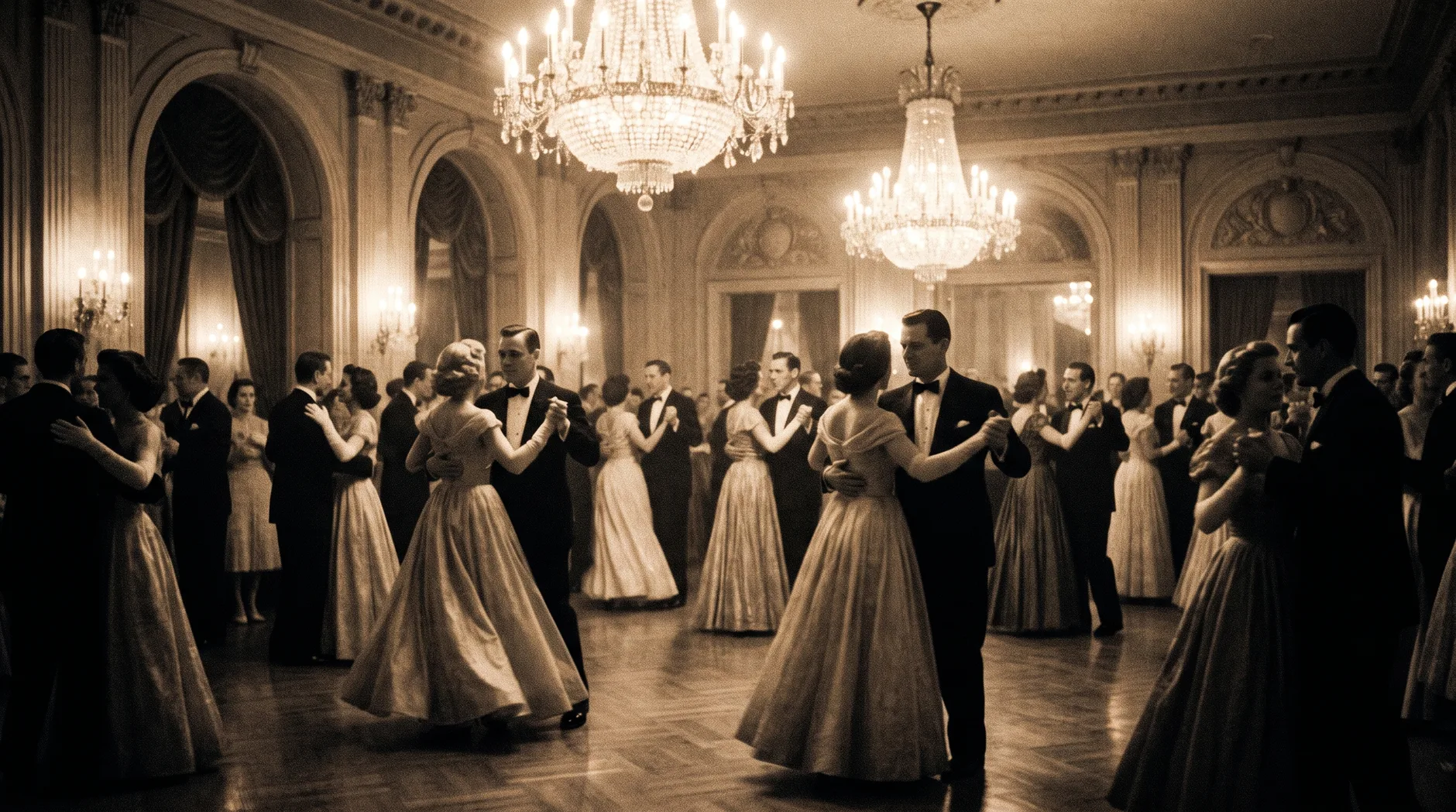
Prompt:
A grand, ornate 1950s ballroom scene, bathed in a warm, diffused sepia tint. Elegant couples are dancing under sparkling chandeliers, which cast a dramatic, blooming light. The image features a strong cinematic nostalgic bloom, reminiscent of classic Hollywood film noir, with deep shadows and highlights that subtly glow. Fine film grain, soft focus on background elements, and a slightly muted, desaturated color palette with dominant sepia and amber tones. Shot on CineStill 800T film emulation. Aspect ratio 16:9. No text.This prompt leverages specific film stock characteristics for a sophisticated nostalgic bloom. To vary the effect, consider other vintage film emulations like “Kodachrome” for a more vibrant, yet still period-appropriate, feel, or “Ilford HP5 Plus” for a grittier black and white bloom with a subtle sepia overlay.
4. Grainy Polaroid Memory: Intimate, Imperfect Recall
The Polaroid instant photograph holds a unique place in our collective memory of nostalgia. Its distinct square format, often uneven development, and immediate physical presence evoke a sense of intimacy and imperfection. A nostalgic bloom within this context is less about cinematic polish and more about the raw, unfiltered quality of a snapshot, a fleeting moment captured with all its inherent flaws and charm.
This prompt aims to recreate that specific, tactile feeling, focusing on the unique visual signature of instant film.
The beauty of the Polaroid aesthetic lies in its limitations, which paradoxically enhance its emotional impact. The soft focus, the slight color shifts, and especially the characteristic grain and light bleed around bright areas contribute to a potent nostalgic bloom. We’re instructing the AI to mimic not just the look of a Polaroid, but its feel, the sense of a cherished, slightly faded memory.
This approach is particularly effective for character-focused scenes where the goal is to convey personal history and emotional depth, making the viewer feel as though they are holding a tangible piece of the past.
4. Grainy Polaroid Memory: Intimate, Imperfect Recall
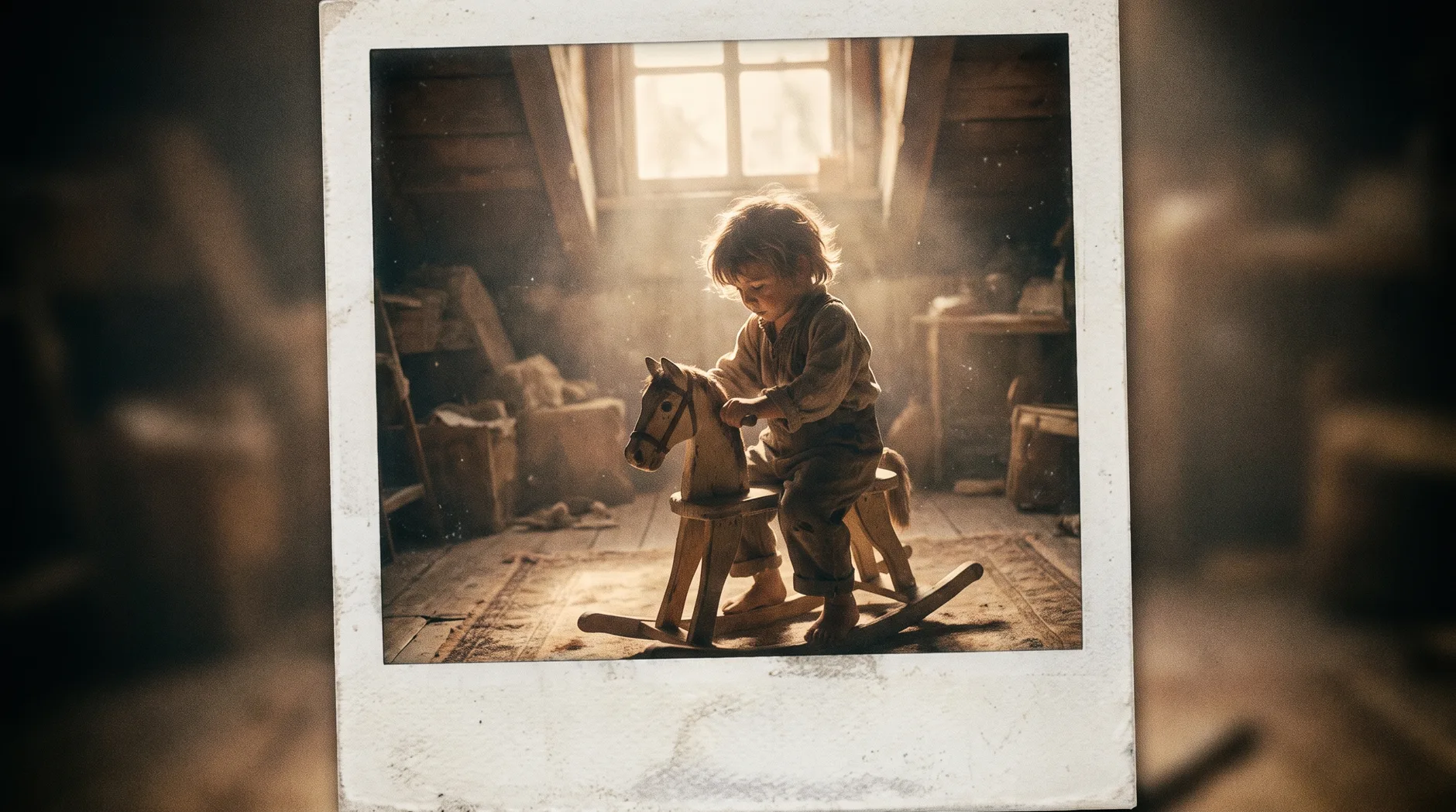
Prompt:
A candid portrait of a child playing with a vintage toy in a sun-drenched attic, framed as an aged Polaroid instant photograph. Strong, soft light creates a gentle nostalgic bloom around the child's hair and the dust motes in the air. The image has a heavy, organic film grain, slightly muted and faded colors typical of old instant film, and a subtle vignette. The composition is intimate and slightly off-kilter, capturing a spontaneous moment. Aspect ratio 1:1 square, no text.This prompt is designed to replicate the unique charm of instant film. For greater authenticity, specify the exact Polaroid model, e.g., “Polaroid SX-70 emulation,” and experiment with varying degrees of “faded colors” to simulate different ages of the instant print. The square aspect ratio is crucial for this specific effect.
5. Spectral Dreamscape Distortion: Warped Memories and Dissolving Realities
Moving beyond straightforward emulation, this prompt delves into a more abstract and psychological interpretation of the nostalgic bloom. It seeks to capture the feeling of a memory that is crumbling, shifting, or dissolving, infused with a spectral glow that suggests an almost otherworldly quality. This is where the “memory warping” and “layered distortion” elements become paramount, creating a visual metaphor for the unreliable and fragmented nature of recollection.
This approach is particularly powerful for conceptual art or scenes that require a deeper, more unsettling emotional resonance.
The concept of “spectral nostalgia blooms” discussed on platforms like PromptBase highlights this advanced level of prompt engineering. It’s about combining the bloom effect with elements of surrealism and decay, often using textures like “worn parchment” or “dissolving realities.” This pushes the AI’s generative capabilities to create images that are not just visually appealing but also deeply symbolic.
The resulting image becomes a dreamscape, a visual representation of the mind’s internal landscape as it grapples with faded pasts. This is a powerful demonstration of how a nostalgic bloom can be manipulated to convey complex psychological states, not just historical periods.
5. Spectral Dreamscape Distortion: Warped Memories and Dissolving Realities
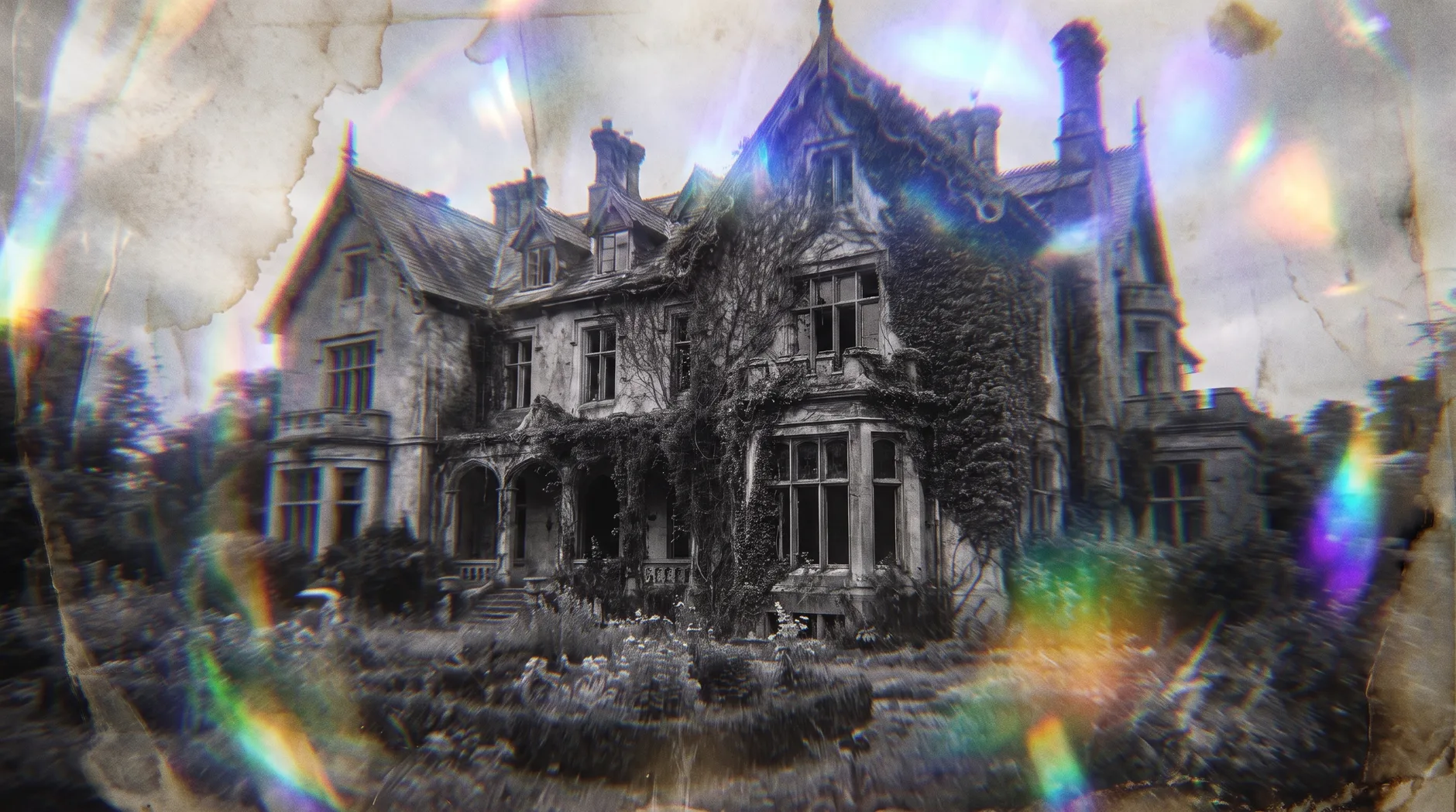
Prompt:
An abandoned, overgrown manor house at dusk, viewed through a lens with extreme spectral blooming and layered distortion, evoking crumbling memories. The light sources, faint moonlight and distant, ethereal glows, create a vibrant, almost psychedelic nostalgic bloom that bleeds across the frame, warping architectural lines. The image has a dreamlike, dissolving reality effect, with textures resembling worn parchment and translucent overlays. High contrast, desaturated colors with unexpected flashes of spectral light. Aspect ratio 16:9. No text.This is an advanced prompt for abstract, psychological nostalgic bloom effects. Experiment with different “distortion” and “memory warping” parameters, and consider adding specific surrealist artists as style references (e.g., “in the style of Zdzisław Beksiński”) to further enhance the dreamlike and unsettling qualities.
Crafting Emotion Through Light and Texture: The Nostalgic Bloom Imperative
As a director and cinematographer, I’ve always understood that light is the primary tool for shaping emotion and narrative. The nostalgic bloom, in all its variations, is fundamentally an exercise in manipulating light and its interaction with various textures and surfaces to evoke a specific emotional response. Whether it’s the gentle, diffused glow of a golden hour or the sharp, bleeding neon of a Y2K cybercafé, the quality of light is what defines the mood and the era.
It’s not enough to simply ask for “good lighting”; we must specify its characteristics, its source, its intensity, and its interaction with the environment.
The textures we choose to include in our prompts, film grain, chromatic aberration, pixelation, worn parchment, are equally vital. These imperfections are often what lend authenticity to a nostalgic image, grounding it in the physical realities of past photographic and cinematic processes. Without these details, a nostalgic bloom can feel artificial, lacking the tangible quality that makes an image resonate as a memory.
The interplay between light and texture creates a visual language that speaks volumes, allowing the AI to generate images that are rich in sensory detail and emotional depth. It transforms a flat render into a vibrant, lived experience.
The mastery of these elements is what separates a truly compelling AI artist from a casual user. It requires a keen eye, a deep understanding of visual history, and the technical vocabulary to communicate that vision to the AI. This is precisely the kind of detailed prompt engineering that platforms like AI Render Pro are designed to facilitate, allowing artists to iterate and refine their vision with unprecedented control.
The persistent pursuit of an authentic nostalgic bloom pushes the boundaries of what generative AI can achieve, moving it closer to a true creative partner.
The Technical Palette for an Authentic Nostalgic Bloom
Achieving a truly authentic nostalgic bloom goes beyond artistic vision; it demands a precise technical vocabulary within your prompts. Think of it as specifying the exact lens, film stock, and lighting setup you’d use on a physical set. For instance, the choice of “soft focus” isn’t just an aesthetic preference, but a reference to specific optical effects like those produced by vintage lenses or diffusion filters.
Similarly, “fine grain texture” directly points to the characteristics of certain film emulsions, which vary significantly from, say, the coarser grain of earlier stocks or the clean look of modern digital sensors. These are the elements that contribute to the overall authenticity.
When we talk about “spectral blooming” or “chromatic aberration,” we are describing specific optical phenomena that add a layer of realism and period accuracy. Chromatic aberration, for example, is a common imperfection in older lenses, where colors refract at slightly different angles, causing color fringing. Incorporating such details tells the AI to introduce these subtle yet crucial “flaws” that define a vintage look.
This level of technical specificity is what allows the AI to move beyond a generic “old photo” filter and create an image that genuinely feels like it was captured decades ago. This meticulous approach to prompt construction is indispensable for any artist aiming for high-fidelity nostalgic bloom effects.
Moreover, the aspect ratio plays a significant role in framing the nostalgic bloom. A 1:1 square ratio immediately evokes a Polaroid or older medium format camera, while a 16:9 or 2.35:1 ratio points towards cinematic aspirations. These subtle cues, when combined with specific lighting (like “backlighting” or “diffused light”) and color palettes (e.g., “muted desaturated colors” or “vibrant oversaturated colors”), create a comprehensive visual brief for the AI.
The more precise you are with these technical details, the more accurately the AI can render your desired nostalgic bloom, making it a powerful tool for filmmakers and visual artists alike. This structured approach to prompting is a hallmark of effective generative AI usage in 2026.
AI Render Pro and the Future of Nostalgic Bloom Generation
The advent and continuous evolution of tools like AI Render Pro, the prompting tool for filmmakers and creatives have fundamentally changed how artists approach the creation of complex visual effects, including the nuanced nostalgic bloom. These platforms are designed not just to generate images, but to offer granular control over the aesthetic parameters that define a specific look.
For instance, AI Render Pro’s rendering parameters specifically allow for fine-tuning elements like “slight bloom effect” and “nostalgic film look,” which are critical for achieving the precise vintage aesthetic we’ve discussed. This level of control is what empowers artists to move beyond generic outputs and craft truly distinctive visual narratives.
The future of generating nostalgic bloom effects with AI lies in increasingly sophisticated prompt engineering interfaces and more intelligent models that can interpret abstract artistic concepts with greater fidelity. As AI continues to learn from vast datasets of historical imagery and film, its ability to recreate the subtle imperfections and emotional qualities of past media will only grow.
This means that the prompts we use today, while effective, will likely become even more powerful and nuanced in the coming years. The ongoing advancements in generative AI are not just about creating more realistic images, but about providing artists with a broader and more responsive creative palette.
For working artists, this signifies a paradigm shift. The ability to rapidly prototype visual ideas, experiment with different nostalgic bloom effects, and fine-tune parameters without the traditional constraints of physical production is invaluable. AI Render Pro, currently ranking well in its category, is at the forefront of this movement, providing the bridge between artistic intention and AI execution.
It allows filmmakers, photographers, and graphic designers to explore the full spectrum of nostalgic aesthetics, from the subtle to the dramatic, ensuring that the emotional core of their vision remains intact. The power to create a perfect nostalgic bloom is now truly within reach.
Every AI image in this article was generated with AI Render Pro, the prompting engine I built for filmmakers and creatives. Read the full breakdown here.
Frequently Asked Questions
What is a nostalgic bloom prompt?
A nostalgic bloom prompt is an AI image generation instruction designed to create visuals that combine a soft, ethereal glow (the “bloom”) with elements that evoke a sense of memory, longing, or a specific past era (the “nostalgic”). It emphasizes specific lighting, filmic qualities, and period details to achieve an emotionally resonant vintage aesthetic.
How do I create a character sheet prompt in nano banana?
To create a character sheet prompt in a tool like Nano Banana, focus on detailing the character’s physical appearance, attire, personality traits, and any specific props or environmental context. Specify “character sheet layout,” “front, side, and back views,” and “consistent art style” to ensure a comprehensive and cohesive visual reference. For more detailed guidance, consider exploring specific Nano Banana character prompts resources.
What is an introduction to prompt engineering for generative AI videos?
Prompt engineering for generative AI videos involves crafting precise textual instructions to guide AI models in creating dynamic, animated sequences. It requires specifying not only visual elements like characters, settings, and styles but also temporal aspects such as motion, transitions, and narrative flow. Understanding how different keywords and parameters influence AI video generation is crucial for effective results.
How can I master y2k vintage prompts?
Mastering Y2K vintage prompts involves focusing on the specific aesthetics of the late 1990s and early 2000s, including elements like early digital camera effects, neon lighting, chunky technology, vibrant and sometimes oversaturated color palettes, and a blend of digital and analog imperfections. Incorporate terms like “pixelation,” “CRT glow,” “low-res digital,” and specific fashion trends from that era to achieve authentic results. Consult resources like 20 Essential Y2K Prompts: Master Retro Aesthetics! for specific examples.
What are the key elements for a successful vintage photo prompt?
Key elements for a successful vintage photo prompt include specifying a particular time period (e.g., “1970s,” “1950s”), detailing film stock emulation (e.g., “Kodachrome,” “CineStill 800T”), describing lighting conditions (e.g., “soft diffused light,” “harsh flash”), and incorporating stylistic imperfections (e.g., “film grain,” “light leaks,” “sepia tone,” “chromatic aberration”).
These details collectively guide the AI to create an authentic period feel, as explored in guides like 30 Best ChatGPT Vintage Photo Prompts (2026) – AI Academy.
More content:
AI in Real Commercial Productions: How I Actually Use It
11 Character Design Prompts That Keep Your Character Consistent Across Every Shot
Mastering Midjourney: A Filmmaker’s Guide to Cinematic AI Art
10 Insanely Powerful Midjourney Prompts for Character Design (With Examples)
The Truth About Midjourney v7, DALL·E & Stable Diffusion – Which Wins?
Discover more from Olivier Hero Dressen Blog: Filmmaking & Creative Tech
Subscribe to get the latest posts sent to your email.

Work with Olivier
Director | CD | DP & Photographer
Specializing in commercials, music videos, AI-driven filmmaking, and cinematic storytelling for brands and production companies.
🌍 Shanghai · Paris · Los Angeles · Dubai
🎬 View Portfolio & Get in Touch