

Key Takeaways
- First insight: James Vanderbilt’s “Nuremberg” (2025) is not a courtroom procedural. It is a psychological horror film about the banality of evil, anchored by Russell Crowe’s chilling performance as Hermann Göring and Rami Malek’s haunted psychiatrist.
- Craft highlight: Dariusz Wolski’s cinematography and Brian Tyler’s score create an atmosphere of moral decay that mirrors the 2026 audience’s own geopolitical dread.
- Industry context: The film’s $11.8 million budget and $37 million box office prove that mid-budget historical drama can still find an audience, if the script dares to be uncomfortable.
- Bottom line: “Nuremberg” is essential viewing in 2026 precisely because it refuses to let the viewer feel superior to the men on trial. That is its power and its burden.
I put off watching James Vanderbilt’s “Nuremberg” for months. The Nuremberg trials are a story I have consumed in dozens of iterations, “Schindler’s List,” “Life is Beautiful,” the endless documentaries. I thought I knew what the film would say. I was wrong.
Need a Director for Your Next Project?
From commercials to branded campaigns—Olivier brings creative vision and technical expertise.
→ View ProjectsNuremberg — By the Numbers
James Vanderbilt
2025-11-06
149 minutes
History / Drama
$12 million
$37 million
Bluestone Entertainment · Walden Media · Filmsquad
Judgment is coming.

Why I Resisted Watching This Film
It took me a long time to press play. The world of 2026 is not the world of 1945. Geopolitics have shifted, and it feels like we broke everything we were supposed to learn from that war. Sixty to seventy million people died. And now, anti-semitism is rising again. Genocides are happening, and the world watches. Arrest warrants are issued for people committing heinous crimes, and they roam free.
I was afraid that “Nuremberg” would confirm what I already suspected: that we learned nothing. That the trial was a milestone, but a hollow one. I did not want to sit through two and a half hours of that confirmation.

But I am a director. I have spent years sitting on award juries, most recently the Asian Academy Creative Awards, watching films that tell us who we are. I know that the most important stories are the ones we resist. So I watched it.

The Göring Problem: Russell Crowe’s Masterclass
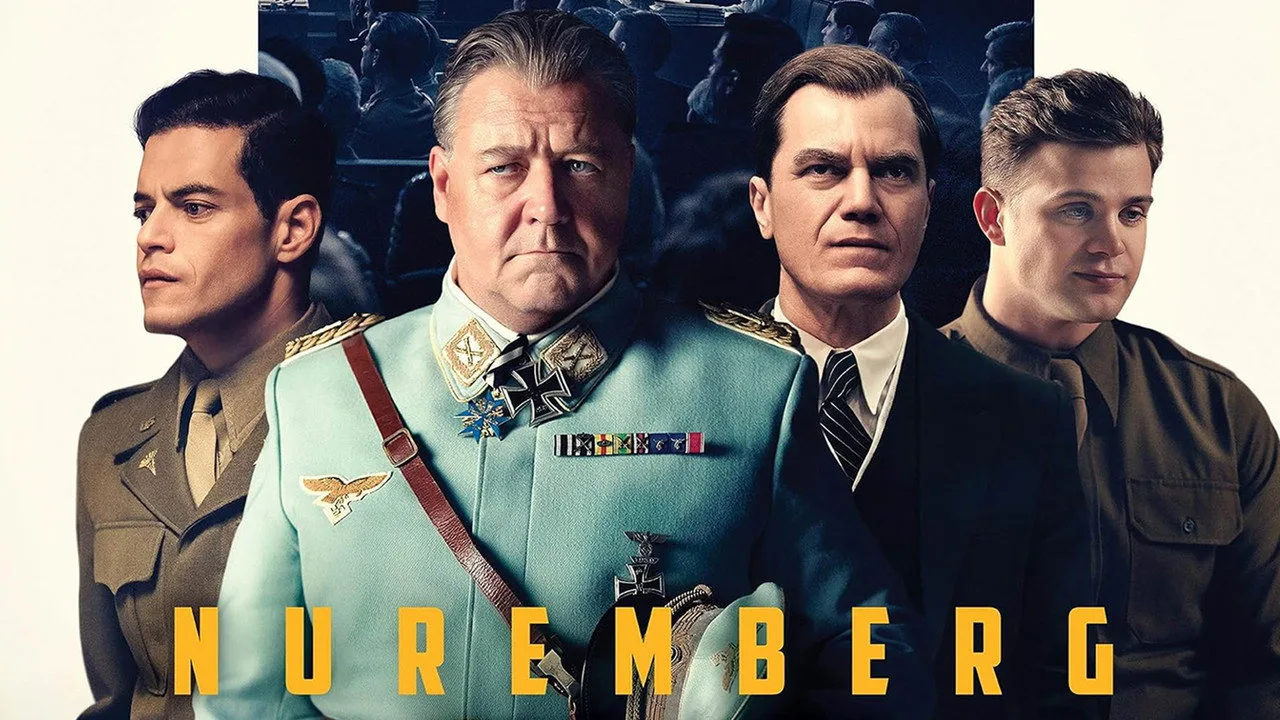
Russell Crowe does not play Hermann Göring as a monster. He plays him as a man who enjoys the game. That is what makes the performance so unsettling.
The real Göring was the second-highest-ranking Nazi at the trial. He was charismatic, intelligent, and utterly unrepentant. Crowe captures that intelligence with a smirk that never quite leaves his face. He dominates every scene he is in, not through volume, but through control. You can see him calculating, always calculating.
Rami Malek plays Douglas Kelley, the American psychiatrist assigned to evaluate the Nazi defendants before the trial. Malek’s Kelley is a man who believes in science, in the power of the mind to explain evil. He walks into the prison confident that he will find pathology. Instead, he finds men who remind him of himself.
That is the film’s central thesis, and it lands like a punch. The men on trial are not different from us. They are regular men who cultivated a heinous philosophy and implemented it through their society. The film forces you to sit with that discomfort.
🎬 AI Render Pro Studio, the AI film production suite I built and use on my own productions. Script breakdown, storyboards, 30+ video models including Seedance 2.5 and Kling O3, image generation, retouch, 7K upscaling and audio, all in one browser workspace. $19/month flat, bring your own API keys and pay providers at cost, no credit packs, no markup. Try AI Render Pro Studio →
The Psychiatrist’s Mirror: Douglas Kelley and the Poison Pill
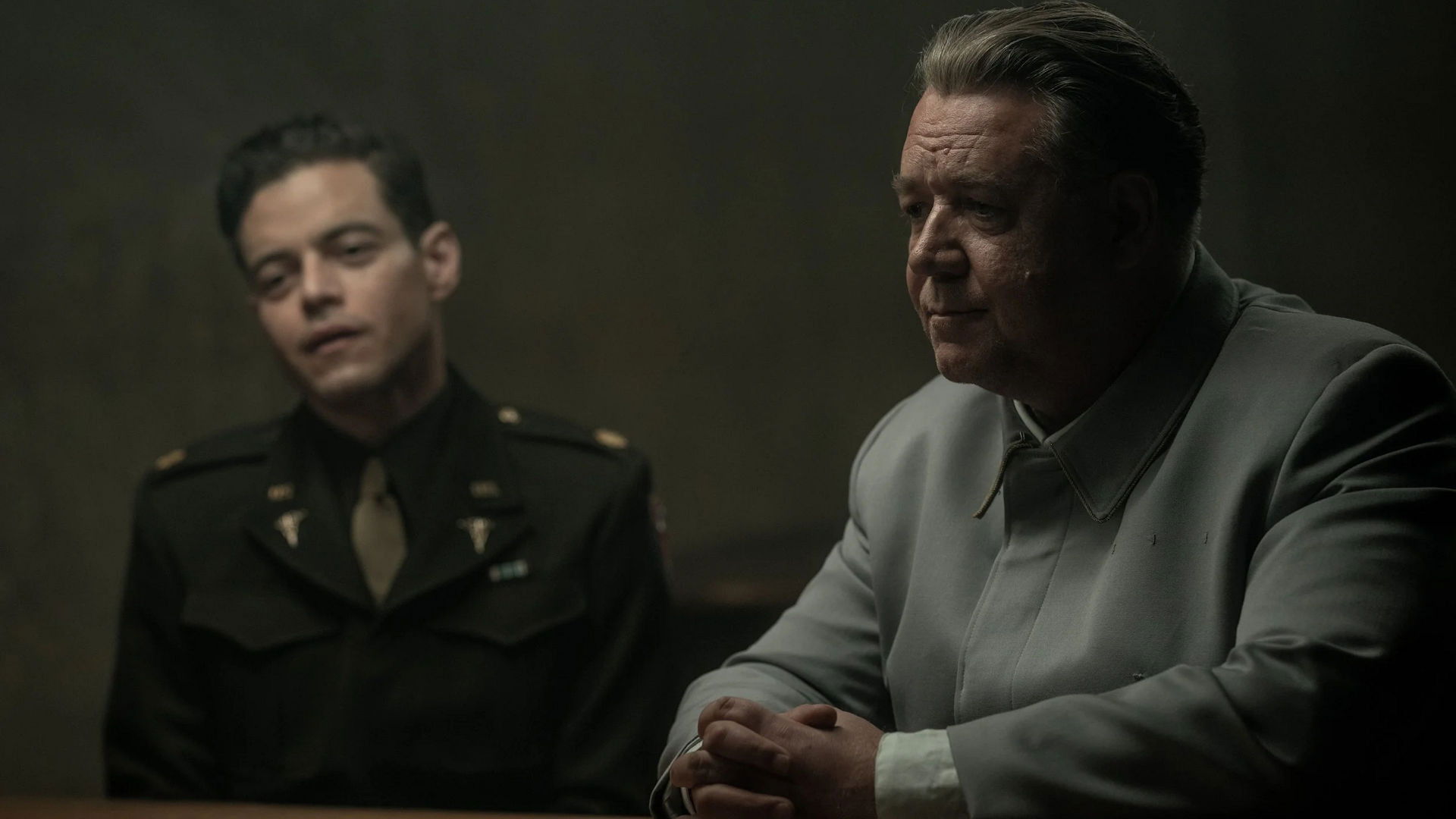
Spoiler alert:
That detail is not a coincidence. The film does not spell it out, but the implication is clear. Goldensohn spent months inside the heads of the Nazi leadership. He listened to their justifications, their rationalizations. He saw that they were not insane. They were ordinary. And that knowledge destroyed him.
I have seen this phenomenon on sets. You spend months inside a story, inside a character’s moral universe. It changes you. I once directed a short film about a war criminal, and I found myself dreaming in his voice. It took weeks to shake. Goldensohn never shook it.
What the Film Gets Right About Evil
The film’s greatest strength is its refusal to pathologize the defendants. They are not lunatics. They are not possessed. They are men who made choices, and who convinced themselves those choices were right.
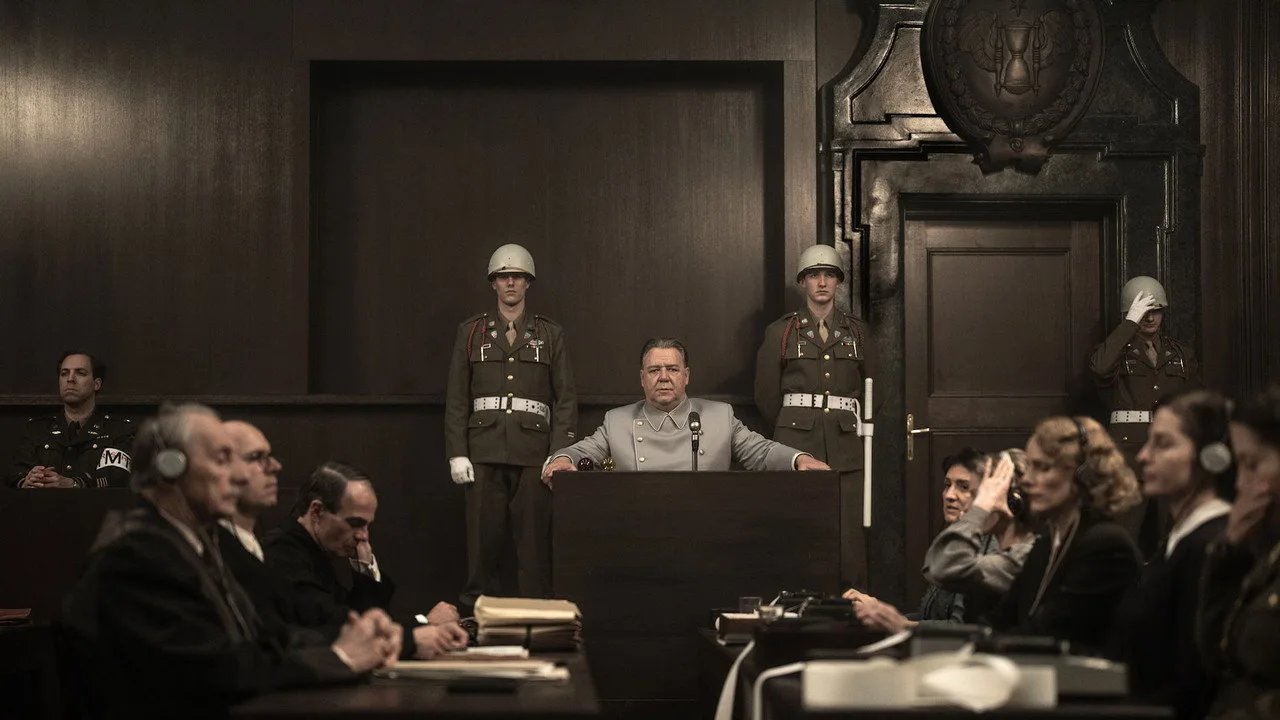
Michael Shannon plays an American prosecutor, his quiet fury building over the runtime. Leo Woodall plays an interpreter who translates the atrocities without flinching. Every performance is calibrated to show how normal this all was. The trial was a job. The genocide was a job.
There is a moment where Kelley asks Göring if he feels guilt. Göring laughs. He says he did what was necessary for his country. He believes it. That is the horror. He believes it.
What the Film Omits: The Millions Left Unspoken
I have a criticism. The film focuses almost exclusively on the Jewish victims of the Holocaust. That is right and necessary. But the Nuremberg trials also dealt with crimes against the Roma and Sinti, against Slavs, against political prisoners, against homosexuals. The film does not give them space.
Seventy million people died in that war. The Bolsheviks, the Gypsies, the disabled, the Jehovah’s Witnesses, their stories remain untold in this film. I understand the narrative choice. You cannot tell every story in 149 minutes. But I felt their absence.
As a filmmaker, I know that every omission is a statement. I would have liked one scene that widened the lens. But Vanderbilt chose to keep the focus tight on the courtroom and the prison. That is a valid choice. It just left me wanting more.
Cinematography and Score: The Architecture of Dread
Dariusz Wolski shot this film. He is the cinematographer behind “The Martian” and “Prometheus.” Here, he uses wide lenses and cold light. The prison cells are gray. The courtroom is sterile. There is no warmth anywhere.
Brian Tyler’s score is minimalist. Strings that hold a single note for too long. Drums that sound like footsteps. It does not tell you how to feel. It creates a space where you can feel whatever comes up.
I watched this film on a large screen at home, and I found myself leaning forward. The sound design is meticulous. Every door closing, every chair scraping, every pen on paper, it all lands with weight. You are in that room with these men.
Budget and Box Office: A Mid-Budget Victory
“Nuremberg” was made for $11.8 million. It has grossed $37 million worldwide as of early 2026. That is a solid return for a historical drama with no superheroes.
In an industry obsessed with $200 million blockbusters, this film proves that mid-budget cinema still has an audience. The key is the script. Vanderbilt wrote it himself, and he trusted the audience to sit with discomfort. He did not add car chases. He did not add a love story. He trusted the material.
I have sat in pitch meetings where producers asked me to “lighten up” a script about war. “Make it more accessible,” they say. “Nuremberg” proves that accessible is not the same as good. Sometimes the audience wants to be challenged.
Why This Film Hurts More in 2026
I watched this film in September 2026. The news is full of stories I do not want to read. Genocide in plain sight. Anti-semitism in Europe and America. Leaders who smile while children die.
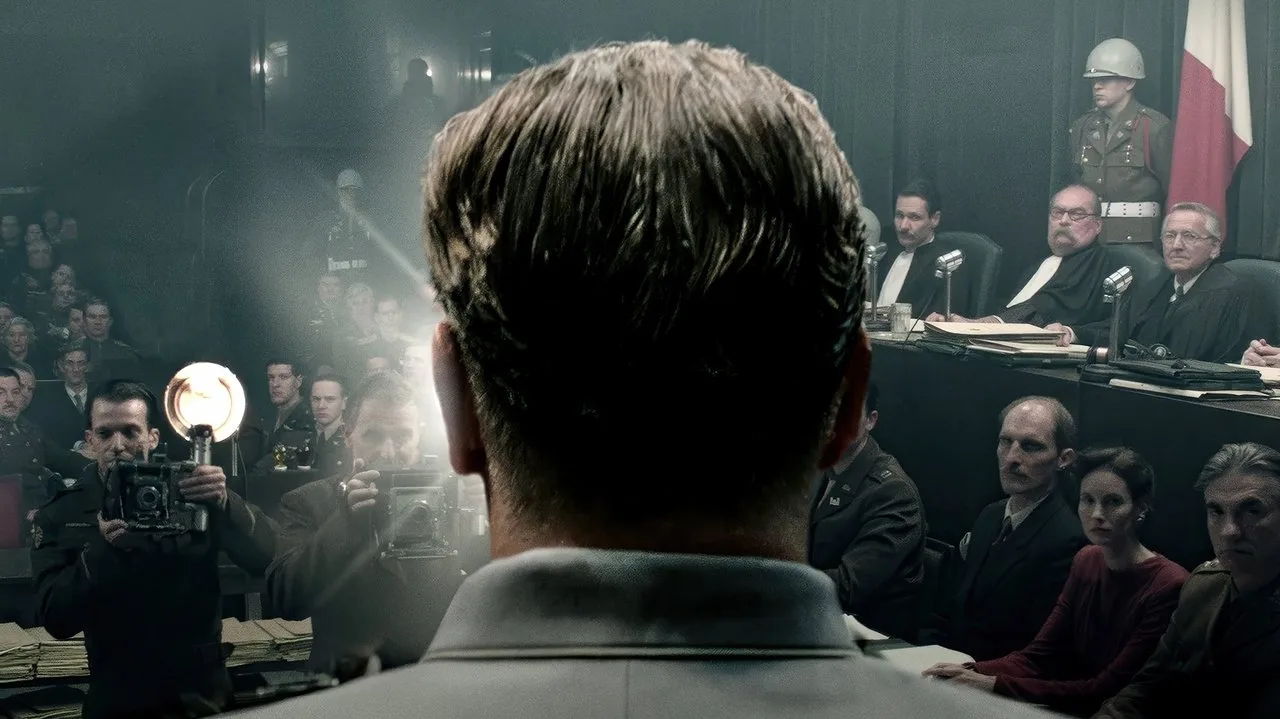
The film ends with the sentences being read. Some men hang. Some go to prison. Göring cheats the gallows. The world moves on. But the film’s final shot is Kelley’s face. He has just learned that the war in Korea has started. He looks at the camera, and you can see him thinking: “We did not learn anything.”
That is why I resisted watching this film. I knew that look. I have felt it myself. The Nuremberg trials were supposed to be the end of something. Instead, they were just a chapter. We are still writing the same story.
The Verdict: A Film That Demands to Be Watched
I cannot say I enjoyed “Nuremberg.” Enjoyment is the wrong word. It is a film that sits on your chest for days afterward. You find yourself thinking about it in the shower. You find yourself arguing with it in your head.
But it is essential. It is essential because it does not let you off the hook. It does not let you say “those men were monsters.” It forces you to say “those men were human, and so am I, and so are the people committing atrocities today.”
That is the lesson. No religion, no skin color, no nationality protects you from the capacity for violence. Everyone of us could be violent. Everyone of us could be hurtful. The only defense is vigilance. The only defense is choosing, every day, to be better.
I am glad I watched it. I am glad I waited until 2026 to watch it, because it hits harder now. The world has not learned. But this film is a reminder that we still can.
I write my prompts with AI Render Pro, the prompting engine I built for filmmakers and creatives. Read the full breakdown here.
Cast and Crew
Key Crew
- Director: James Vanderbilt
- Screenplay: James Vanderbilt
- Cinematography: Dariusz Wolski
- Music: Brian Tyler
- Editor: Tom Eagles
- Production Design: Eve Stewart
Main Cast
- Rami Malek — Douglas Kelley
- Russell Crowe — Hermann Göring
- Michael Shannon — Justice Robert H. Jackson
- Leo Woodall — Sergeant Howie Triest
- John Slattery — Colonel Burton Andrus
- Richard E. Grant — Sir David Maxwell-Fyfe
- Mark O’Brien — Colonel John Amen
References and Further Reading
- Nuremberg on Wikipedia — production details, cast and release history.
- Nuremberg on TMDB — cast, crew, budget and box-office data.
- Nuremberg on IMDb — full credits and technical specs.
- James Vanderbilt on Wikipedia — director background and filmography.
Frequently Asked Questions
Is “Nuremberg” historically accurate?
The film is based on real events and real people. It takes some dramatic liberties, particularly with the character of Douglas Kelley, but the core of the trial and the interviews is faithful to the historical record. The Wikipedia page on the Nuremberg trials provides a comprehensive overview of the actual events.
Why did Dr. Leon Goldensohn kill himself with a cyanide capsule?
The film implies that his immersion in the minds of the Nazi defendants led to a psychological collapse. He died in 1961, and the method of his death, a cyanide capsule, was the same method Göring used. The parallel is not explained in the film, but it is left for the viewer to interpret.
Who is the director of “Nuremberg”?
The film was directed by James Vanderbilt, who also wrote the screenplay. Vanderbilt is known for writing “Zodiac” and directing “Truth.” He brings a journalist’s rigor to the material.
Where can I find more information about the real Nuremberg trials?
The Wikipedia article on the Nuremberg trials is an excellent starting point. For primary source material, the U.S. National Archives holds the complete trial transcripts.
Is the film suitable for younger viewers?
No. The film contains graphic descriptions of atrocities, psychological manipulation, and the moral weight of genocide. It is rated R and is appropriate only for mature audiences.
This review was written by Olivier Hero Dressen, a filmmaker and director based in Bangkok. Readers can see more of his directorial work at herodirector.tv.
Discover more from Olivier Hero Dressen Blog: Filmmaking & Creative Tech
Subscribe to get the latest posts sent to your email.

Work with Olivier
Director | CD | DP & Photographer
Specializing in commercials, music videos, AI-driven filmmaking, and cinematic storytelling for brands and production companies.
🌍 Shanghai · Paris · Los Angeles · Dubai
🎬 View Portfolio & Get in Touch