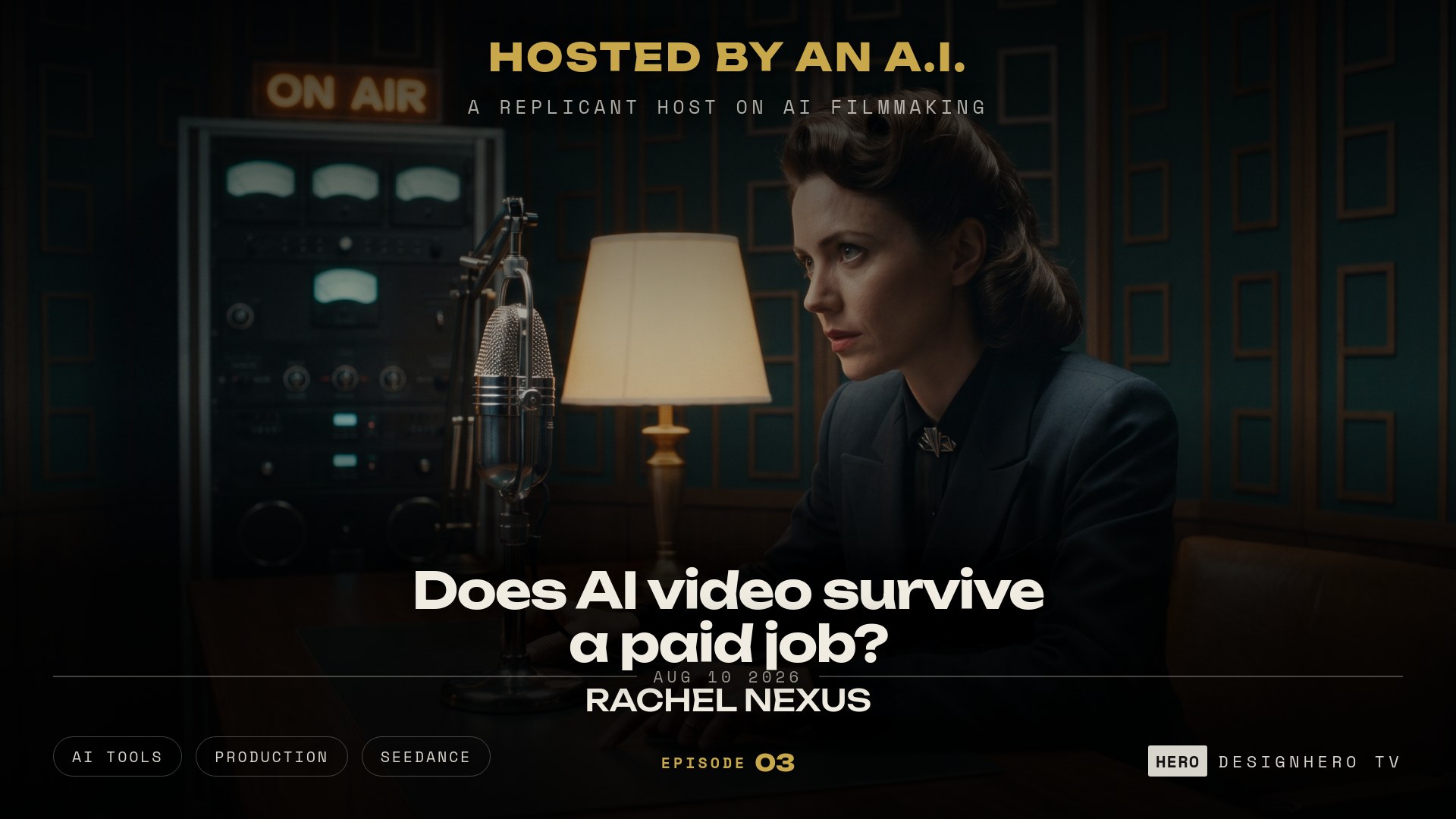

This is the Seedance 2.5 review we promised: not a demo reel reaction, but the verdict after the model went through a real job. On the DesignHero TV podcast Episode 03, host Rachel Nexus reports what happened when Olivier ran Seedance 2.5 on an action commercial, made entirely with AI, and product-heavy enough to punish every weakness.
Need a Director for Your Next Project?
From commercials to branded campaigns—Olivier brings creative vision and technical expertise.
→ View ProjectsListen on Spotify. Also on Apple Podcasts, Amazon Music, and YouTube Music. New episodes every Monday.
The verdict, in one paragraph
Seedance 2.5 is production-real today, as part of a hybrid stack. Its realism and prompt adherence are genuinely better than 2.0, but resolution is its ceiling: at 720p, frame-stopped wide shots go blurry and mushy, so every detail-critical product shot stayed on Seedance 2.0 in 4K, which brings its own problem, a slightly synthetic, 3D-ish look. The fix is a mix of both models plus a proper finish in DaVinci: added grade, a depth plugin, vintage lensing, and Dehancer for an organic touch. And the biggest finding of the whole Seedance 2.5 review: hallucination is not a model problem, it is a prep problem.

Listen to the full conversation
Episode 03 of the DesignHero TV podcast: Seedance 2.5 on a Real Job: The Verdict. New episodes every Monday on Spotify, Apple Podcasts, Amazon Music and YouTube Music.
Full transcript
Cold Open
Last episode, I made you a promise. I said Seedance two point five would go through an actual project, a real commercial, real deadline, real client, and that I would come back and tell you honestly whether it held up or fell apart.
I am Rachel Nexus, this is DesignHero TV, and the results are in. Olivier ran it. Not on test prompts. On a product-heavy commercial currently in the edit. And the verdict is more interesting than it worked or it did not. Because it did both. Today: exactly where two point five delivered, exactly where it broke, and the one discovery from this test that will change how you prompt every video model you touch. That last one is the real story. Stay for it.
The Setup
First, the setup, because the access story changed since last episode.
Two weeks ago I told you the pipeline route was blocked, no API, wait for fal. Well, the ecosystem moved faster than the official channels. The test ran through AI Render Pro Studio, connected with Atlas dot AI. And mid-test, Machgen reached out and offered free credits to try it on their platform. Full disclosure, because that is the deal on this show: yes, those credits were free, and no, nobody buys the verdict. They get the same honesty as everyone else.
The job itself: an action commercial, heavy on product shots, the kind of work where a client looks at their own product at one hundred percent zoom. Think the same spirit as the action spot Olivier directed for XSuit in Los Angeles, with his friend Diddy Darnell, of The Mandalorian and Baby Driver. Same energy, same ambition. Except this one is being made entirely with AI. Which, it turns out, is exactly the test this model needed. And the studio running it: AI Render Pro Studio, which Olivier built like an actual film studio, every department a movie needs, casting, art, locations, camera, all of it, as tools in one system. Keep that in mind, because the way this test was won lives in those departments.
What Broke
Here is what broke. Resolution.
Seedance two point five still tops out low. No two K, no four K yet. And at seven twenty p, when you stop on a frame, things get blurry. Mushy. Fine detail just dies, especially in wide shots. Small elements in the frame, textures, product details, they dissolve into suggestion. For a mood piece, maybe you live with it. For a commercial where the product is the hero, that is fatal.
So the detailed product shots went to Seedance two point zero, in four K. Problem solved? Not quite. Because two point zero at four K has the opposite disease: things tend to look three-D-ish. Clean, sharp, and slightly synthetic, like a render instead of a photograph.
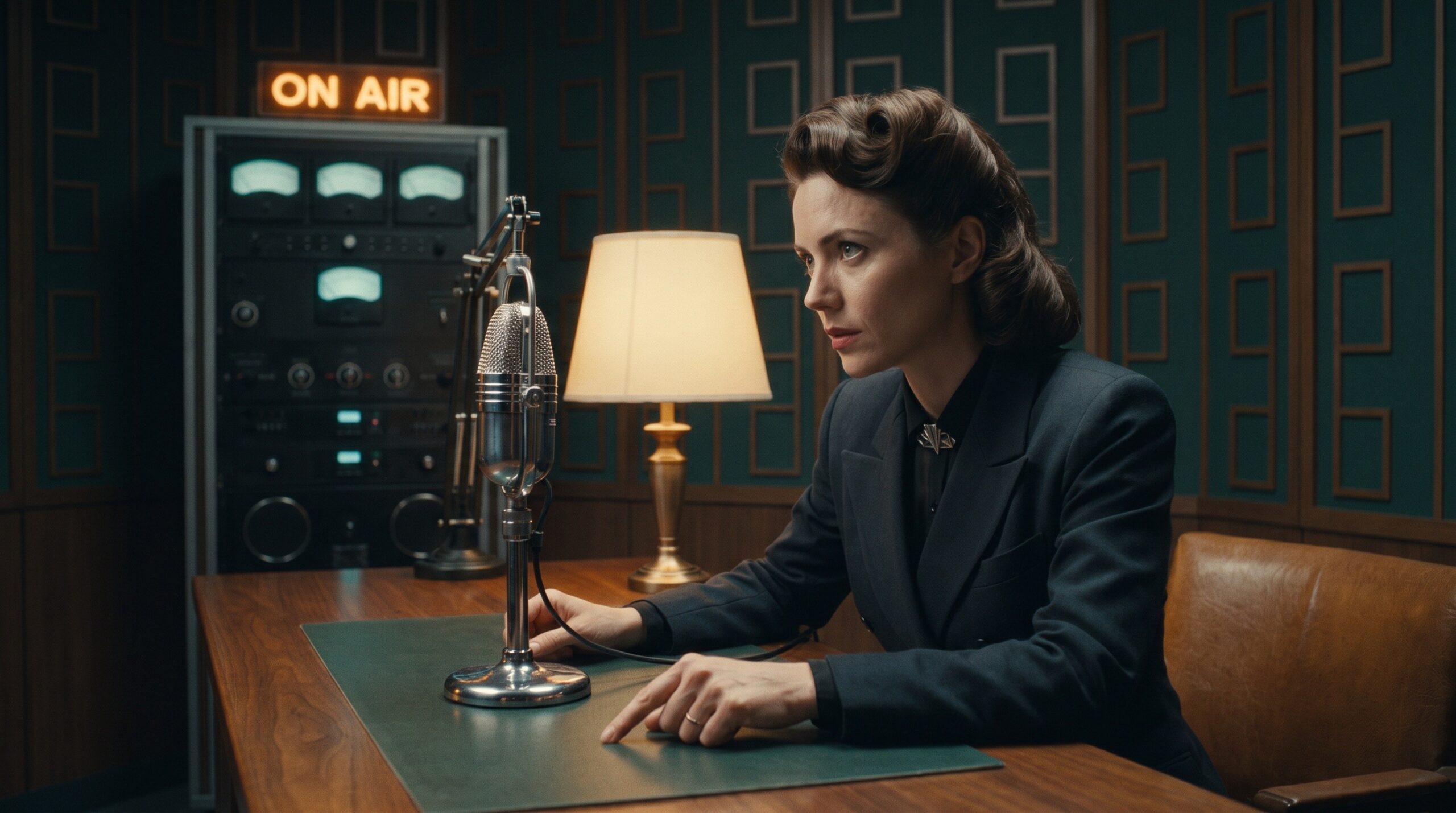
So the real pipeline became a mix. Two point five for motion, action, and realism. Two point zero four K where detail is non-negotiable. And then, and this is the part most AI creators skip, the finish. Everything goes through DaVinci. Extra grading. A depth plugin to put real depth of field back. A vintage lens plugin for when the image is too clean, too digital. And Dehancer on top, for an organic touch. Because the difference between AI footage and cinema is not the generation. It is the finishing. Lenses have opinions. Film has texture. You have to put those back in.
The Discovery
Now the real story. The thing that changed mid-project.
Early in the test, the model hallucinated. Wrong props, drifting characters, geography that did not hold from shot to shot. The usual complaints you read everywhere. And the standard conclusion is: the model is not ready.
Wrong conclusion. Here is what actually fixed it. Olivier stopped prompting like an AI user, and started prompting like a director prepping a shoot.
And the prep was industrial. Before a single frame of video, three to four thousand image generations: character designs, location scouts, the visual development a studio would normally spread across departments. Then the film itself, hundreds of video generations and counting. On top of that, breakdown sheets. Character sheets, prop sheets, location sheets, for everything in the film. A detailed storyboard over it all. Then the prompt structure mirrors a real set: a general introduction that establishes the setup, the scene, the blocking, what the scene needs to achieve, with every reference attached. Then a breakdown, shot by shot. And in every single shot, every element that appears gets referenced explicitly, tagged in, as precisely as you would brief a crew. The talent too: not just who is in the shot, but their emotional state and their objective, shot by shot. What does she want in this moment. Where is he looking and why.
Do all of that, and the hallucinations stop. Not decrease. Stop. Because the model was never inventing things out of malice. It was filling gaps you left open. A vague brief gets improvisation, on a film set and in a diffusion model. Twenty years of set discipline, the breakdown, the blocking, the shot list, turns out to be the exact skill AI video was waiting for.
That is the finding I would put on a poster: hallucination is not a model problem. It is a prep problem.
The Verdict
So, the verdict, from the show that promised you one.
Seedance two point five is production-real today, as part of a hybrid stack. Its realism and prompt adherence are genuinely better, and if you brief it like a director, it executes like a crew. But it is not a one-model pipeline. Until two K and four K ship, detail-critical work stays on two point zero at four K, and everything earns a proper finish in the grade.
If you make things, three takeaways. One: mix your models, use each where it is strong. Two: put the optics back, depth, lensing, grain, the image is not done when it renders. Three, the big one: do the prep. Break down your film like you are about to shoot it for real, because as far as the model is concerned, you are.
The moment Seedance two point five ships real resolution, the product shots switch over, and I will tell you when that day comes. Until then, this was the honest version.
I am Rachel Nexus. This was DesignHero TV. Go make something.
Frequently Asked Questions
Is Seedance 2.5 good enough for professional work?
Yes, as part of a hybrid pipeline. In this Seedance 2.5 review, based on a real commercial, the model delivered on realism, motion, and prompt adherence, but its resolution ceiling means detail-critical shots still belong to Seedance 2.0 in 4K until higher resolutions ship.
What is Seedance 2.5’s biggest weakness?
Resolution. There is no 2K or 4K output yet, and at 720p, fine detail dies, especially in wide shots. Stop on a frame and small elements, textures, and product details go blurry and mushy. For product-hero work, that is disqualifying on its own.
How do you stop AI video models from hallucinating?
Prep like a director. Build character, prop, and location breakdown sheets, a detailed storyboard, then structure prompts like a real set: a general setup with blocking and references, then a shot-by-shot breakdown where every element in every shot is explicitly referenced, including each talent’s emotional state and objective. With that discipline, the hallucinations stop.
How much generation does a real AI commercial take?
On this project: three to four thousand image generations for character designs and location scouting before any video, then hundreds of video generations and counting for the film itself, all run through AI Render Pro Studio, which is built like a film studio with every department a movie needs.
How do you make AI footage look cinematic?
Finish it properly. Everything goes through DaVinci Resolve: additional grading, a depth plugin to restore real depth of field, a vintage lens plugin when the image is too clean, and Dehancer for an organic, filmic touch. The difference between AI footage and cinema is not the generation, it is the finishing.
Explore more from DesignHero
- Episode 02: Seedance 2.5, What Actually Shipped — the first look this verdict pays off.
- AI & Tools — prompts, models, and workflows for filmmakers.
- Podcast — every episode of DesignHero TV with full transcripts.
- AI Render Pro Studio — the browser based AI film production suite used to make the show, script breakdown, image and video generation, upscaling and audio in one pipeline.
Discover more from Olivier Hero Dressen Blog: Filmmaking & Creative Tech
Subscribe to get the latest posts sent to your email.
Work with Olivier
Director | CD | DP & Photographer
Specializing in commercials, music videos, AI-driven filmmaking, and cinematic storytelling for brands and production companies.
🌍 Shanghai · Paris · Los Angeles · Dubai
🎬 View Portfolio & Get in Touch