


Key Takeaways
- First insight, Sony Pictures Entertainment’s fiscal year 2025 saw revenue flatline at $9.9 billion, a clear indicator of stagnation in a market demanding aggressive growth and innovation.
- Craft highlight, The decision to shut down the Pixomondo VFX division directly impacted Sony Pictures’ profitability, reflecting the immense financial pressures and strategic recalculations involved in managing high-end visual effects operations within a major studio.
- Industry context, This financial hit underscores a broader industry trend where traditional studio models face challenges from market saturation, evolving consumption patterns, and the volatile economics of in-house post-production, forcing studios to re-evaluate costly internal divisions.
- Bottom line, Sony Pictures’ recent financial performance serves as a stark reminder that even established entertainment giants must relentlessly adapt their operational structures and investment strategies to navigate a rapidly changing, cost-intensive creative landscape.
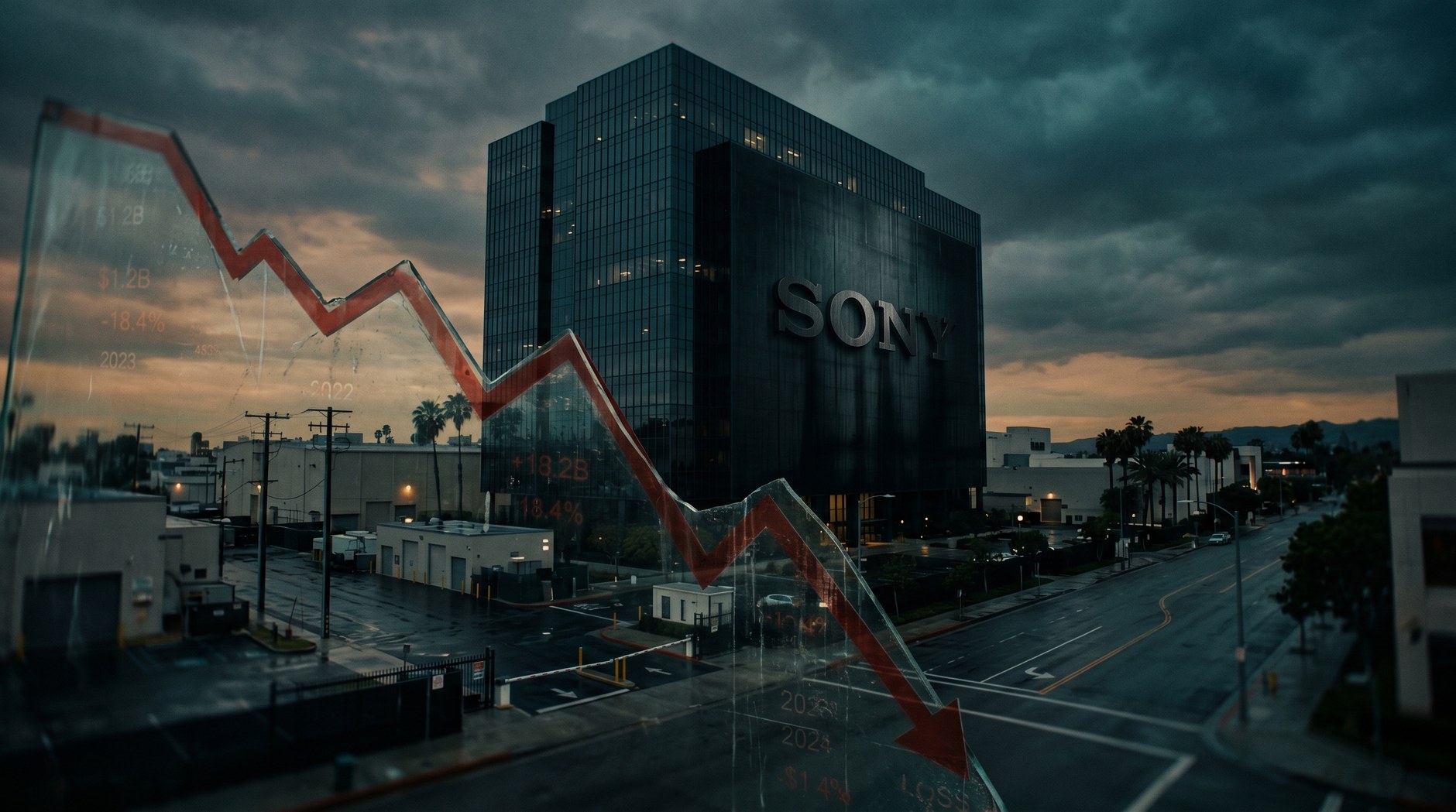
In fiscal year 2025, Sony Pictures Entertainment’s revenue remained stubbornly flat at $9.9 billion, a figure that, while substantial, signals a troubling lack of growth in a highly competitive global entertainment market. This plateau, however, is only part of the story; the company’s profit took a significant and direct hit from a strategic, yet costly, decision: the shutdown of its renowned visual effects division, Pixomondo. This move, a stark operational pivot, illuminates the intense financial pressures and strategic re-evaluations facing major studios as they grapple with the economics of high-end content creation.
Need a Director for Your Next Project?
From commercials to branded campaigns—Olivier brings creative vision and technical expertise.
→ View ProjectsRevenue Stagnation: The $9.9 Billion Plateau for Sony Pictures
The financial report for fiscal year 2025 painted a clear, if concerning, picture for Sony Pictures Entertainment: revenue remained flat at $9.9 billion. In an industry defined by relentless competition, escalating production costs, and the constant demand for fresh, engaging content, a lack of growth is, in essence, a retreat. This stagnation is not merely a statistical anomaly; it reflects underlying challenges within the studio’s operational and creative strategies. While $9.9 billion is a substantial sum, it represents a missed opportunity for expansion and market share capture, especially when competitors are aggressively investing in new ventures and content libraries. The global entertainment landscape is not static; it demands continuous innovation and successful execution to maintain, let alone grow, revenue streams.
This flatlining revenue can be attributed to several factors. Firstly, the performance of theatrical releases, while having some successes, did not consistently deliver the blockbuster numbers required to significantly move the needle. The post-pandemic theatrical market remains unpredictable, with audiences becoming more selective. Secondly, the licensing of content to streaming platforms, a vital revenue component, faced increased competition and potentially lower per-title valuations as streaming services themselves seek greater cost efficiencies. Thirdly, the home entertainment market continues its slow decline, unable to offset the shifts in consumption habits. For Sony Pictures, maintaining the status quo in revenue highlights the difficulty of achieving significant financial uplift without a transformative hit or a major strategic shift that captures new market segments or monetizes existing assets more effectively. The pressure to innovate across all divisions, from film and television production to distribution and ancillary markets, has never been greater. The $9.9 billion figure, therefore, serves as a benchmark for the challenges that lie ahead, emphasizing the urgent need for strategic adjustments to reignite growth. The flat revenue directly impacts the resources available for future investments and makes any operational misstep, such as a costly division shutdown, even more impactful on the bottom line. For more on how studios navigate these challenges, consider exploring topics like the streaming effect and production economics. This revenue stagnation is a critical backdrop against which the subsequent profit plunge must be understood.

The Pixomondo Pivot: When a VFX Division Sinks Sony Pictures’ Profits
The most direct and immediate cause for Sony Pictures‘ profit plunge in fiscal year 2025 was the shutdown of its visual effects division, Pixomondo. This was not a minor adjustment but a significant operational overhaul. Pixomondo, a company with an impressive portfolio including work on acclaimed series like Game of Thrones and major feature films, represented a substantial investment in in-house VFX capabilities for Sony. The decision to close such a prominent division is never taken lightly and invariably comes with considerable financial implications. These implications extend beyond simply ceasing operations; they include severance packages for employees, the write-down of assets, and potential contract termination costs. Such expenses are one-off but significant, directly impacting the profitability metrics for the reporting period.

The rationale behind the shutdown likely stemmed from a confluence of factors, including the high overhead associated with running a large-scale, state-of-the-art VFX house, the fluctuating demand for visual effects services, and the intensely competitive nature of the VFX industry itself. Maintaining a top-tier VFX division requires continuous investment in technology, software, and highly specialized talent. When these costs outweigh the strategic benefits or the revenue generated, studios are compelled to make difficult choices. For Sony Pictures, the Pixomondo shutdown was a strategic pivot, but one that came with an unavoidable short-term financial penalty. This penalty directly contributed to the reported profit plunge, demonstrating how quickly operational decisions, even those intended for long-term fiscal health, can affect immediate financial results. The industry’s evolving landscape, where studios increasingly rely on external vendors for specialized VFX work to manage costs and flexibility, likely played a role in this decision. This shift underscores a broader trend in Hollywood, where the lines between in-house production and outsourced services are constantly redrawn to optimize financial performance. The impact of such closures on the VFX talent pool and the broader industry is also noteworthy, as discussed in reports like this one from Reuters on Hollywood VFX industry struggles.
Unforeseen Post-Production Costs: The True Burden of In-House VFX
Operating an in-house visual effects division like Pixomondo, while offering creative control and seamless integration, often comes with a hidden financial burden: unforeseen post-production costs. These are not just the planned expenses for rendering and artist salaries, but the cumulative impact of project delays, scope creep, technology upgrades, and the sheer volatility of large-scale cinematic effects work. For Sony Pictures, the decision to close Pixomondo suggests that these burdens had become unsustainable, directly contributing to the profit downturn. A single complex sequence can demand hundreds, if not thousands, of artist hours, specialized computing power, and proprietary software, all of which are expensive to maintain and update. When a film’s production schedule shifts, or a director requests significant visual changes late in the game, the costs for an in-house team can balloon rapidly, far exceeding initial budgets.
Furthermore, the cyclical nature of film production means that a large VFX house might experience periods of intense activity followed by lulls. During these quieter times, the studio still bears the fixed costs of salaries, rent, and equipment, even if projects are not generating sufficient revenue to cover them. This imbalance can quickly erode profitability. The challenge of balancing peak demand with idle capacity is a perennial problem for in-house VFX studios. The initial investment in establishing Pixomondo would have been substantial, and the ongoing operational costs, including research and development for new techniques and hardware, are immense. The closure indicates that Sony Pictures likely found that the cost-benefit analysis no longer justified maintaining such a division. Outsourcing VFX work to independent studios, while having its own complexities, offers a more flexible cost structure, allowing studios to scale up or down based on project needs without the persistent overhead. This strategic shift away from internal VFX divisions can be seen as a direct response to the escalating and often unpredictable costs associated with creating cinematic magic. Understanding the intricacies of VFX breakdown secrets reveals just how complex and costly these processes can be for studios.

Market Saturation and Content Glut: Why Audiences Aren’t Boosting Sony Pictures’ Bottom Line
The entertainment industry today is characterized by an unprecedented volume of content, a phenomenon often referred to as “content glut” or market saturation. This environment directly impacts Sony Pictures‘ ability to drive revenue growth and, consequently, its profitability. With a multitude of streaming services, traditional television channels, and film studios all vying for audience attention and subscription dollars, the competition is fiercer than ever. This saturation means that even high-quality productions from Sony Pictures must fight harder to stand out, attract viewership, and generate the box office returns or licensing fees necessary to fuel significant profit. Audiences, faced with an overwhelming choice, are becoming more selective and less loyal to individual platforms or studios.
This content glut has several detrimental effects on studio finances. Firstly, it drives up the cost of production as studios compete for top talent, compelling narratives, and cutting-edge visual effects. Secondly, it dilutes audience attention, making it harder for any single title to become a breakout hit that can single-handedly boost revenue. Even successful films or series might not achieve the same cultural penetration or financial dominance they once did simply because there are so many other options available. Thirdly, it creates downward pressure on licensing fees. Streaming platforms, now producing their own original content at an accelerated pace, are less reliant on acquiring third-party content and can negotiate harder on price. For Sony Pictures, this means that while they continue to produce and distribute a wide array of films and television shows, the financial returns on these investments are becoming increasingly challenging to secure. The flat revenue of $9.9 billion in fiscal year 2025 is a direct consequence of this saturated market, where even strong content struggles to translate into exponential financial growth, further highlighting the financial strain that led to decisions like the Pixomondo shutdown. The sheer volume of content makes it challenging for any single piece of media to achieve the kind of runaway success seen in previous eras, impacting overall studio profitability. For insights into how other studios manage their visual effects needs in this environment, consider the detailed discussions around Fantastic Four VFX breakdown secrets, which highlight the external collaborations often employed.
Strategic Disinvestment: The Pixomondo Shutdown as a Calculated Retreat
The closure of Pixomondo by Sony Pictures was not an impulsive decision but a calculated act of strategic disinvestment. This move signifies a broader re-evaluation of how a major studio allocates its resources and defines its core competencies in an era of rapid technological and market shifts. While it immediately impacted profit, the long-term goal was likely to streamline operations, reduce fixed overheads, and pivot towards a more agile, asset-light model for visual effects production. In an industry where technological advancements in VFX are continuous and expensive, maintaining an in-house division requires constant, significant capital expenditure. From investing in the latest rendering farms to training staff on new software and techniques, the financial demands are relentless.
By divesting from Pixomondo, Sony Pictures is likely signaling a strategic shift towards greater reliance on external, specialized VFX vendors. This approach offers several advantages: it converts fixed costs into variable costs, allowing the studio to scale its VFX spending up or down based on specific project needs; it provides access to a wider pool of specialized talent and diverse creative approaches without the burden of permanent employment; and it mitigates the risk associated with technological obsolescence, as external vendors are responsible for their own infrastructure upgrades. This strategic retreat, though painful in the short term due to the associated costs of closure, positions Sony Pictures to potentially achieve greater financial flexibility and efficiency in the long run. It aligns with a trend observed across various industries where companies focus on their core strengths and outsource non-core, yet essential, functions. The profit plunge, therefore, can be viewed as the cost of this strategic realignment, a necessary expense to re-engineer the studio’s operational model for future sustainability and profitability. The decision reflects a pragmatic assessment of the economic realities of modern filmmaking, where the benefits of in-house services must constantly outweigh their escalating costs. The shift towards external partnerships is also evident in how studios approach complex projects, often seen in the collaborative efforts highlighted in discussions about Superman VFX secrets.

Talent Drain and Industry Consolidation: The Broader VFX Landscape Challenge
The challenges faced by Pixomondo, ultimately leading to its shutdown and the subsequent profit hit for Sony Pictures, are not isolated incidents but reflect deeper issues within the broader visual effects industry. One significant factor is the persistent talent drain. The demand for highly skilled VFX artists, supervisors, and technical directors far outstrips supply, leading to intense competition for talent. This drives up labor costs, which form a substantial portion of a VFX studio’s operating expenses. When top talent moves between companies or even countries for better opportunities, it creates instability and increased recruitment costs for the studios left behind. The specialized nature of VFX work means that replacing experienced personnel is not a quick or inexpensive process.
Furthermore, the VFX industry has been undergoing a period of significant consolidation. Larger, more diversified VFX conglomerates are acquiring smaller studios, creating an oligopoly where a few major players dominate the market. This consolidation can make it difficult for independent or studio-owned divisions like Pixomondo to compete effectively on price, scale, or access to the largest projects. These larger entities often benefit from economies of scale, centralized infrastructure, and a global presence that allows them to chase tax incentives and leverage talent pools more efficiently. For Sony Pictures, maintaining Pixomondo in such an environment may have become an increasingly uphill battle, financially and strategically. The shutdown, therefore, could be seen as an acknowledgement of these systemic pressures, where the cost of retaining top-tier talent and competing with consolidated giants became too great for an in-house division. The profit plunge is a direct consequence of absorbing these costs and making the difficult decision to exit a segment of the industry that, despite its creative importance, has proven financially challenging for many. The ongoing struggle for profitability in the VFX sector is a well-documented issue, with many studios facing similar pressures, as outlined in articles from sources like TechCrunch discussing the VFX industry crisis.
The Streaming Effect and Production Economics: Reshaping Studio Profitability
The rise of streaming services has fundamentally reshaped the economics of content production, directly influencing the financial performance of studios like Sony Pictures. While streaming has opened new avenues for content distribution and consumption, it has also introduced a complex set of challenges that can impact profitability, contributing to the flat revenue and the necessity of actions like the Pixomondo shutdown. The “streaming effect” refers to several intertwined phenomena: the insatiable demand for original content, the shift from transactional revenue (ticket sales, DVD purchases) to subscription-based models, and the intense competition for audience eyeballs.
Firstly, the demand for content has driven up production budgets across the board. To compete with the sheer volume of originals from Netflix, Disney+, Amazon Prime Video, and others, studios must invest heavily in high-quality productions, often featuring elaborate visual effects. This increased spending strains budgets, making every dollar spent on divisions like Pixomondo more scrutinized. Secondly, the shift to subscription models means that revenue is generated differently. Instead of individual purchases, studios often license their content to streamers for a fixed fee or participate in complex revenue-sharing agreements. These deals, while providing consistent income, may not always deliver the same profit margins as a runaway theatrical success or a strong home video run. Thirdly, the pressure to produce a continuous stream of content can lead to less strategic, more volume-driven decision-making, where the focus on quantity over quality can dilute brand value and strain resources. For Sony Pictures, navigating this new landscape means constantly re-evaluating where and how to invest its production dollars. The flat revenue suggests that the studio has yet to fully optimize its strategy to thrive in this streaming-dominated world, and the decision to close Pixomondo can be seen as an attempt to reduce a significant fixed cost in response to these evolving production economics. The ongoing debate between practical vs digital effects also plays into these economic considerations, as studios weigh the costs and benefits of different approaches.

Technological Disruption and VFX Innovation: A Double-Edged Sword for Studios
Technological disruption and the relentless pace of innovation in visual effects present a double-edged sword for major studios like Sony Pictures. While new technologies offer incredible creative possibilities and enhance storytelling, they also come with substantial financial implications that can impact profitability and necessitate difficult decisions, such as the Pixomondo shutdown. The industry is constantly evolving, with advancements in areas like real-time rendering, virtual production, AI-driven tools, and photogrammetry. To remain competitive, an in-house VFX division must continuously invest in the latest hardware, software licenses, and training for its artists and technicians. This capital expenditure is immense and never-ending.
For a studio like Sony Pictures, maintaining an in-house division at the forefront of this innovation curve becomes a significant financial drain. The cost of upgrading render farms, acquiring licenses for cutting-edge software, and recruiting specialists in emerging fields like AI rendering vs traditional is staggering. If the return on investment from these innovations, in terms of enhanced film quality, faster production times, or cost savings, does not materialize quickly enough, the division can become a financial liability. Furthermore, the rapid pace of change means that yesterday’s state-of-the-art technology can quickly become obsolete, necessitating further investment. The shutdown of Pixomondo can be interpreted as a pragmatic response to this technological treadmill. By outsourcing VFX, Sony Pictures can leverage the investments made by specialized VFX houses that focus solely on these technological advancements, without bearing the direct capital burden. This strategy allows the studio to access cutting-edge effects without the continuous, high fixed costs, thus aiming to improve long-term profitability even if it causes a short-term profit plunge due to closure expenses. The financial strain imposed by the need to stay technologically current is a critical factor in understanding the studio’s strategic choices. For an in-depth look at how AI is transforming this space, articles on AI image enhancement are particularly relevant.
Brand Value and IP Leverage: How Sony Pictures Aims to Re-Energize Growth
In the face of flat revenue and the profit hit from the Pixomondo shutdown, Sony Pictures‘ strategy for re-energizing growth increasingly hinges on maximizing its extensive brand value and leveraging its valuable intellectual property (IP). While the fiscal year 2025 results highlight operational challenges, the underlying strength of Sony Pictures lies in its vast library of films, television shows, and iconic characters. This IP is a critical asset that, if managed effectively, can drive significant future revenue and profit. The focus shifts from costly in-house production units to more efficient ways of developing, producing, and distributing content based on established brands.
Leveraging IP involves multiple avenues: developing new films and series based on popular franchises, expanding into video games (a strong area for Sony Corporation as a whole), creating theme park attractions, and merchandising. The success of properties like Spider-Man, Ghostbusters, and Jumanji demonstrates the immense potential of existing IP. For Sony Pictures, the flat revenue of $9.9 billion suggests that while these efforts are ongoing, they haven’t yet translated into the desired growth trajectory. The closure of Pixomondo, therefore, can be viewed as part of a broader strategy to free up capital that can be reinvested into developing more compelling IP-driven content or acquiring new valuable properties. By divesting from a high-overhead division, Sony Pictures aims to become more financially agile, allowing for greater investment in content creation and marketing that directly exploits its brand equity. This strategic pivot emphasizes that in a saturated market, established brand recognition and beloved characters are more crucial than ever for cutting through the noise and securing audience engagement. The long-term profitability of Sony Pictures will heavily depend on its ability to transform its IP into diversified, highly successful entertainment experiences across various platforms. The potential for strong IP to drive enormous box office success is evident in discussions around films like Super Mario Galaxy box office. More information on Sony’s overall strategy can be found on its investor relations page.

The Path Ahead: Redefining Profitability for Sony Pictures Entertainment
The fiscal year 2025 results, marked by flat revenue and a profit hit from the Pixomondo shutdown, serve as a critical inflection point for Sony Pictures Entertainment. The path ahead involves a comprehensive redefinition of profitability, moving beyond traditional metrics to encompass a more agile, cost-efficient, and strategically focused operational model. This redefinition will likely involve a continued emphasis on disciplined spending, strategic partnerships, and a sharp focus on content that offers the highest potential for return on investment. The days of simply throwing money at big productions, particularly in high-cost areas like in-house VFX, appear to be over, replaced by a more surgical approach to financial management.
For Sony Pictures, this means not just managing costs but also actively seeking out new revenue streams and optimizing existing ones. This could include exploring innovative distribution models, expanding into emerging markets, and further integrating its entertainment divisions with other parts of the Sony Corporation, such as PlayStation. The shutdown of Pixomondo, while costly in the short term, is a clear signal that the studio is willing to make difficult decisions to streamline its operations and improve its long-term financial health. The move represents a shift towards a more flexible production ecosystem, where specialized work like visual effects is increasingly outsourced to external partners, allowing the studio to focus its internal resources on core creative development and strategic management of its intellectual property. The challenge for Sony Pictures now is to demonstrate that these strategic adjustments will indeed lead to renewed growth and sustainable profitability in the coming fiscal years. The success of this redefinition will be crucial for maintaining its position as a major player in the global entertainment industry. The lessons learned from this period will undoubtedly influence how the studio approaches future investments and operational structures. For a broader understanding of Sony Pictures’ place in the global entertainment landscape, its Wikipedia page offers a comprehensive overview.
Frequently Asked Questions
What caused Sony Pictures’ profit plunge in fiscal year 2025?
Sony Pictures’ profit plunge was primarily caused by the direct financial hit incurred from the shutdown of its visual effects division, Pixomondo. This strategic decision involved significant one-off costs such as severance, asset write-downs, and contract terminations, directly impacting the company’s profitability for the fiscal year.
How did the Pixomondo shutdown impact Sony Pictures’ finances?
The Pixomondo shutdown directly impacted Sony Pictures’ finances by generating substantial one-off expenses related to closing the division. These costs, coupled with the flat revenue of $9.9 billion for fiscal year 2025, significantly eroded the company’s overall profit for the period.
Why did Sony Pictures decide to shut down Pixomondo?
Sony Pictures likely decided to shut down Pixomondo due to the high overhead costs of maintaining an in-house VFX division, the volatile demand for visual effects services, and a strategic shift towards leveraging external vendors for greater cost flexibility and access to specialized talent in a competitive industry.
What does “flat revenue at $9.9 billion” signify for Sony Pictures?
Flat revenue at $9.9 billion signifies a lack of growth for Sony Pictures in fiscal year 2025, indicating stagnation in a dynamic and competitive global entertainment market. This suggests challenges in increasing market share or monetizing content effectively, highlighting the need for strategic adjustments.
How is Sony Pictures planning to re-energize growth and profitability?
Sony Pictures is planning to re-energize growth and profitability through strategic disinvestment, like the Pixomondo shutdown, to reduce fixed costs and reinvest capital. This involves leveraging its strong intellectual property, focusing on disciplined spending, and potentially exploring new distribution models and partnerships.
Discover more from Olivier Hero Dressen Blog: Filmmaking & Creative Tech
Subscribe to get the latest posts sent to your email.

Work with Olivier
Director | CD | DP & Photographer
Specializing in commercials, music videos, AI-driven filmmaking, and cinematic storytelling for brands and production companies.
🌍 Shanghai · Paris · Los Angeles · Dubai
🎬 View Portfolio & Get in Touch