

Key Takeaways
- Pre-production is the foundation, Most short films don’t fail on set; they fail before the camera ever rolls. A rushed script and a missing shot list cascade into every later department.
- Casting and crew alignment matter more than gear, Talent and team selection set the ceiling for what’s achievable. Misalignment costs you performances, momentum, and morale long before it costs you money.
- Technical discipline is non-negotiable, Audio failures, exposure drift, and undisciplined coverage are the silent killers of independent short films. Skill beats kit, but only when both are working.
- Post-production can’t save what production didn’t capture, A muddled edit usually traces back to muddled coverage. The cut reveals every earlier compromise, and amplifies them.
The journey of making a short film is often romanticized, pitched as a pure expression of artistic vision, free from the commercial demands of features. The reality, for nearly every filmmaker who’s done it more than once, is a brutal crucible of logistical pressure, budget constraints, and human error. The films that survive that crucible aren’t the ones with the biggest ideas; they’re the ones whose makers respected the boring fundamentals. The four mistakes below come up again and again in post-mortems of failed independent short films. None of them are dramatic. All of them are avoidable. This piece isn’t about indicting any single project, it’s a composite breakdown drawn from common failure modes, written for filmmakers who’d rather learn the lessons before their own production teaches them.
Need a Director for Your Next Project?
From commercials to branded campaigns—Olivier brings creative vision and technical expertise.
→ View ProjectsWhy Short Films Break: A Composite Post-Mortem
The independent short film landscape is full of stories of triumph against impossible odds, but for every Sundance darling there are countless projects that falter, unfinished, unreleased, or quietly abandoned. The reasons rarely look dramatic from the outside. There’s no single catastrophic moment, no villain. Instead, there’s a chain of small compromises early on that hardens, scene by scene, into something that can’t be cut around.
Short films are particularly unforgiving because their margins are so thin. A feature can absorb a weak act; a short cannot. With only ten or fifteen minutes to land a premise, develop a character, and execute a turn, every department has to perform near its ceiling. When pre-production is shaky, the foundation cracks and everything above it tilts. When the cast and crew aren’t aligned to the same vision, the energy on set dissipates faster than the schedule. When the technical baseline slips, audio, exposure, focus, no edit can fully recover it. And when post-production tries to fix problems that should have been solved on set, the cut becomes a negotiation rather than a refinement.
The four mistakes below recur often enough across post-mortems that they read less like individual errors and more like a default failure mode for independent short filmmaking. Filmmakers who’ve shared their experiences publicly, whether in industry pieces like the BBC’s reporting on the difficult truth of making movies or in personal post-mortems on craft blogs, tend to describe the same pattern. Understanding it in advance is the cheapest film-school education available.
Mistake 1: A Fragile Foundation, Skipping Rigorous Pre-Production

The single most common point of failure in a struggling short film is the pre-production phase. The temptation to rush this stage is enormous. Pre-production has no visible product. Nobody applauds a shot list. Cast and crew are pressing for a start date. The director is impatient to point a camera at something. So it gets compressed, shortcut, or skipped, and the entire production pays for it from day one. The New York Film Academy’s guidance on pre-production is unambiguous on this point: the time spent here is the cheapest time on the entire project.
The pattern of pre-production failure looks remarkably consistent. The script goes into production without enough revision passes. Themes are clear in the director’s head but not on the page. Storyboards exist for a few hero shots but not for the connective tissue between them. There’s no proper shot list, so coverage decisions get made in the moment, under time pressure, with the AD asking what’s next. Locations get scoped briefly but never properly tested for sound, light direction, or logistical access. Props and wardrobe are handled at the last moment.
The domino effect on set is immediate. Without a shot list, the day overruns. Without a properly broken-down script, actors arrive without enough preparation. Without a sound scout, the lavs pick up a hum from a refrigeration unit nobody noticed in the location recce. Without rehearsed blocking, the DP improvises lighting on the fly. None of these are catastrophic alone. Together they fill a hard drive with footage that doesn’t quite cut together, and an edit suite filled with workarounds.
Rigorous pre-production is also the period where a director still has the cheapest possible leverage to change their mind. Cutting a scene on the page costs nothing. Cutting a scene on the day costs the day. Cutting a scene in the edit costs the entire shoot day that produced it. The discipline isn’t glamorous, but the math is brutal. For a deeper look at how preparation translates into on-set efficiency, the broader discipline of guerilla filmmaking shows what’s possible when prep is taken seriously even on the tightest budgets.
Mistake 2: A Mismatched Ensemble, Casting and Crew Misalignment
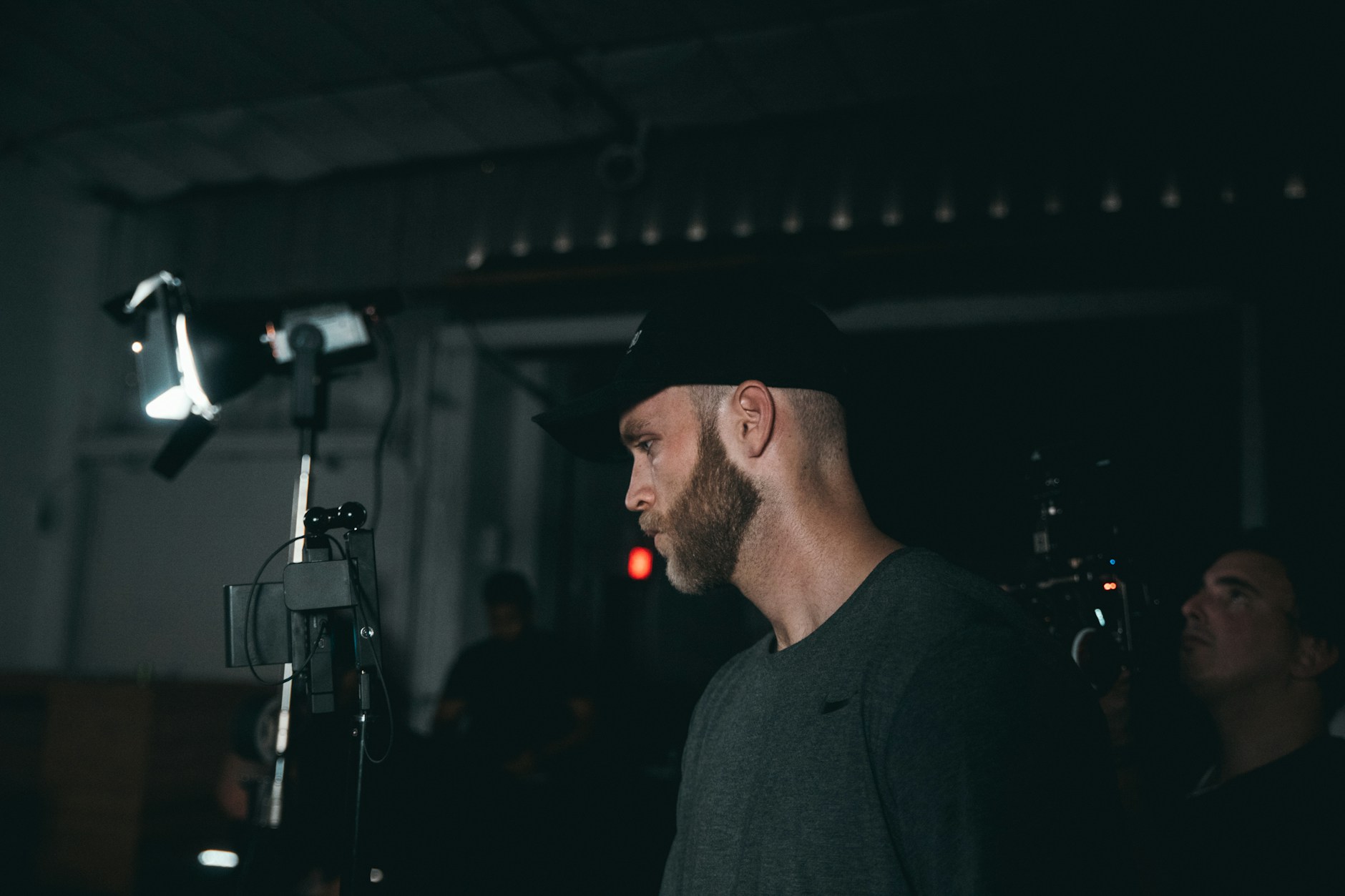
If pre-production sets the foundation, casting and crew selection set the ceiling. The most thorough shot list in the world can’t save a short film if the actors aren’t right for their roles or the crew isn’t aligned with the director’s vision. Independent short films are especially vulnerable here because the talent pool is often shaped by who’s available and willing to work for low or deferred rates, which is a very different filter than “who’s right for the part.”
Casting failures rarely show up as bad performances. They show up as performances that are technically competent but emotionally off-tone. The actor delivers the lines as written, but the texture is wrong, too theatrical for an intimate piece, too restrained for a heightened one, too contemporary for a period beat. In a feature there’s time to find the rhythm; in a short, every line of dialogue is load-bearing, and one mismatched performance can collapse an entire scene. Strong directors understand performance and craft, the kind of attention to character physicality and rhythm seen in the methods of actors like Daniel Day-Lewis and in director styles like Darren Aronofsky’s, but they also know that the work starts long before the camera rolls, in the room with the actors.
Crew alignment is the second half of this trap. A short film crew of six is not a feature crew of sixty miniaturized. Every head of department has to absorb the director’s vision deeply enough to make independent decisions on set, because the director cannot be in three places at once. When the DP has a different sense of the film’s visual language than the director, every shot becomes a negotiation. When the sound recordist doesn’t understand the emotional register of a scene, they boom for clarity when the scene needs presence. When the production designer hasn’t internalized the tone, the props feel decorative rather than meaningful.
These misalignments rarely surface during pre-production conversations, which tend to be enthusiastic and broad. They surface on day two of the shoot, when fatigue strips away politeness and small disagreements become hard problems. The fix isn’t a longer pre-production meeting; it’s specificity. Reference films, mood boards, lighting tests, blocking rehearsals, anything that turns abstract alignment into concrete shared reference. A team that has rehearsed a difficult scene together on a Saturday afternoon in a borrowed space is a different team than one that meets on set for the first time.
Mistake 3: Technical Pitfalls, The Silent Saboteurs

Even with a strong script, a sharp shot list, and a well-aligned team, a short film can be undone by a small number of technical failures that compound across the shoot. These are the silent saboteurs, issues serious enough to damage the final film, but ordinary enough that nobody flags them in the moment. By the time they’re visible in the edit, the shoot is over and the cost of fixing them has become prohibitive.
Audio is the most common offender. Independent shorts under-resource sound recording at a rate that would astonish anyone working in television. The boom op is the camera assistant, the lavs are clipped on without a proper sound check, the location was chosen for its look without a thirty-second listen for HVAC noise or street traffic. Dialogue ends up unusable for one or more takes, ADR isn’t budgeted, and the edit becomes a hunt for the least-bad reading. Audiences forgive a great deal visually, but they will not tolerate dialogue they can’t hear cleanly.
Camera-side, the equivalent failure is undisciplined coverage. The director shoots the master and the singles but skips the cutaways, the reaction beats, the inserts that an editor will quietly thank them for. Modern cameras give DPs enormous latitude on exposure, but that latitude becomes a problem when shots from different takes don’t intercut cleanly, minor variations in color temperature, lens choice, or framing accumulate into a sequence that feels stitched rather than seamless. For directors leaning on movement-driven coverage, the basics matter more, not less: clean gimbal technique and rehearsed drone cinematography separate footage that cuts from footage that fights the cut. Industry standards bodies like the SMPTE exist precisely because consistency at this level is what makes professional work feel professional.
Lighting is the third pitfall. Inexperienced productions tend to either over-light, flattening the image into a sitcom look, or under-light and rely on the camera’s ISO to do the work, which produces noise and color shifts that don’t grade out. New technologies, including virtual production tools that have reached independent filmmakers, have changed what’s possible on small budgets, but only when the team has practiced with them. A new tool deployed for the first time on a paying shoot day is a tool that will cost you a paying shoot day.
Mistake 4: Post-Production Purgatory, An Unresolvable Edit

Post-production purgatory is the state a short film enters when the edit cannot resolve. The cuts have been tried in every order. The pacing problem in act two has been addressed three different ways. The performance that didn’t quite land cannot be replaced because the coverage doesn’t exist. The director has watched the film so many times they can no longer see it. Months pass. The film either ships in a compromised form or quietly disappears.
The honest truth about post-production purgatory is that it’s almost always a problem inherited from production. Editing reveals what was captured, and what was not. A scene that wasn’t fully covered cannot be saved by a clever cut. A performance that was rushed on set cannot be slowed in the edit without showing the seams. A sound mix problem traceable to the wrong microphone choice will survive every plugin you throw at it. The widely reported promise of AI-assisted editing tools is genuine for routine tasks, assembly, transcription, basic syncing, but it does not change this fundamental relationship. A bad set day is a bad edit week.
What post-production can do is reveal the film honestly to the people closest to it. An experienced outside editor, brought in late, will see the film as an audience does, without the emotional attachment to scenes that took a hard day to shoot. Test screenings, even informal ones with three or four people in a living room, surface pacing and clarity problems that the director can no longer perceive. The discipline at this stage is the willingness to cut beloved material and to be honest about what the film actually is, rather than what it was supposed to be. For shorts leveraging newer tools, this is also where techniques like AI image enhancement and the broader VFX breakdown craft can salvage specific shots, but they salvage shots, not stories.
It’s also worth noting how dramatically the post-production landscape is changing. Tools like Googleflow and the kind of prompt engineering workflows now possible with ChatGPT-5 and Veo 3 Flow are reshaping what independent filmmakers can attempt at every stage, and even concept-stage work, like building an AI concept trailer, is now part of pre-visualization. But these tools amplify discipline; they don’t substitute for it. A weak pre-production with great AI tools produces a weak film with great visual effects.
Rebuilding: How to Avoid the Same Trap
The four mistakes above share a single underlying pattern: each one is a moment where a filmmaker traded long-term project health for short-term momentum. Rushing pre-production buys speed at the cost of the shoot. Compromising on casting buys availability at the cost of performance. Skipping technical discipline buys time on the day at the cost of the edit. Pushing problems into post buys the illusion of progress at the cost of the final film. The discipline that prevents these trades is unglamorous, and that’s exactly why it’s underused.
For filmmakers approaching their next short, the practical rebuild looks like this. Treat pre-production as the most important stage of the project, not the prelude. Cast and crew for alignment first, availability second. Establish a technical baseline, audio, exposure, coverage, that the team rehearses before the shoot, not during it. And enter post-production with the assumption that you will need to cut more than you expect, including material you love. None of these are new ideas. All of them are taught in every credible film program. The reason short films keep breaking on them is that they’re easy to know and hard to enforce, especially when energy is high and a start date is approaching.
The filmmakers who break this pattern aren’t more talented than the ones who don’t. They’ve simply built the habits of discipline early. Every successful short film is a vote in favor of fundamentals over ambition. And every failed one is, on inspection, a vote against them.
Frequently Asked Questions
What is the single most common reason short films fail?
Inadequate pre-production. Most failures attributed to budget, casting, or technical issues trace back to compressed or skipped pre-production. A thorough script breakdown, shot list, location recce, and rehearsal schedule prevent the cascading problems that show up later as “we didn’t have time to fix it on set.”
How can a director ensure better crew alignment?
Through specificity, not enthusiasm. Reference films, mood boards, lighting tests, and rehearsed blocking turn vague creative agreement into concrete shared reference. The single most useful pre-production exercise is rehearsing the hardest scene with the actual cast and key crew, in a stand-in space, before the shoot.
What are common technical mistakes to avoid in a short film?
Three in particular: under-resourcing sound (no dedicated recordist, no location sound test, no ADR budget), undisciplined coverage (missing cutaways, inserts, and reaction beats that editors rely on), and inconsistent lighting setups that don’t intercut cleanly. None are exotic. All recur in failed shorts.
Can post-production save a troubled short film?
Rarely in any deep sense. Post can refine, recover specific shots, and reveal the film honestly to a director who’s lost perspective, but it cannot create coverage that wasn’t shot or fix performances that weren’t captured. The honest test is whether the film cuts together cleanly on a first assembly. If it does, post can polish it. If it doesn’t, the problem is upstream.
Why is it valuable for filmmakers to share their failures publicly?
Because the lessons are non-obvious in advance and painfully obvious in hindsight. Most filmmakers who’ve made shorts have lived through some version of these mistakes, but the independent film community tends to celebrate finished work and stay quiet about post-mortems. The few public ones, in trade publications, on craft blogs, in director Q&As, represent some of the most cost-effective filmmaking education available.
Discover more from Olivier Hero Dressen Blog: Filmmaking & Creative Tech
Subscribe to get the latest posts sent to your email.

Work with Olivier
Director | CD | DP & Photographer
Specializing in commercials, music videos, AI-driven filmmaking, and cinematic storytelling for brands and production companies.
🌍 Shanghai · Paris · Los Angeles · Dubai
🎬 View Portfolio & Get in Touch






I left a comment earlier about the impact African stories will have on enriching global audiences’ experiences. We have untapped potential fused with an amazing pool of talent that will get viewers so excited! Africa has arrived with a bang, which will “Waka-Waka,” streaming audiences to our beat of entertainment.
Please have a peek at my link provided to peruse my spec script, To Catch a Thief. Thank you