
Key Takeaways
- First insight, Mastering the 5 Y2k prompt examples provided here is crucial for creatives looking to authentically capture the distinct digital optimism and retro-futuristic vibe of the turn of the millennium in their AI-generated visuals.
- Craft highlight, Each of the 5 Y2k prompt examples leverages specific stylistic keywords, material textures, lighting conditions, and compositional cues to evoke the era’s unique blend of technological wonder and nascent digital aesthetics.
- Industry context, The resurgence of Y2K aesthetics in 2026’s design and media landscape makes a finely tuned y2k prompt an invaluable asset for artists, designers, and filmmakers seeking to tap into this powerful nostalgic current.
- Bottom line, By dissecting and applying these 5 Y2k prompt structures, artists can consistently generate high-quality, on-brand Y2K imagery, differentiating their work in a crowded creative field and meeting current market demands.
To master the visually distinctive aesthetic of the early 2000s, a precise y2k prompt is essential for any artist leveraging AI image generation tools. These prompts distill the era’s unique blend of digital optimism, nascent internet culture, and vibrant, often metallic or translucent, material design into actionable commands for AI.
Need a Director for Your Next Project?
From commercials to branded campaigns—Olivier brings creative vision and technical expertise.
→ View Projects
This article provides five meticulously crafted y2k prompt examples, designed to help filmmakers, designers, and digital artists unlock authentic Y2K visuals for their projects in 2026 and beyond.
Introduction to Y2K Aesthetics and AI Synthesis
The Y2K aesthetic, a stylistic echo from the late 1990s and early 2000s, continues its powerful resurgence across fashion, music, and visual media in 2026. This distinctive period was characterized by a unique blend of nascent digital technology, futuristic optimism, and a hint of millennium anxiety. For visual artists, understanding and replicating this aesthetic is paramount, and the advent of sophisticated AI image generators has opened new avenues for its exploration.
Crafting an effective y2k prompt is no longer just about descriptive keywords; it’s about engineering a precise visual language that AI can interpret to evoke that specific, often paradoxical, era.
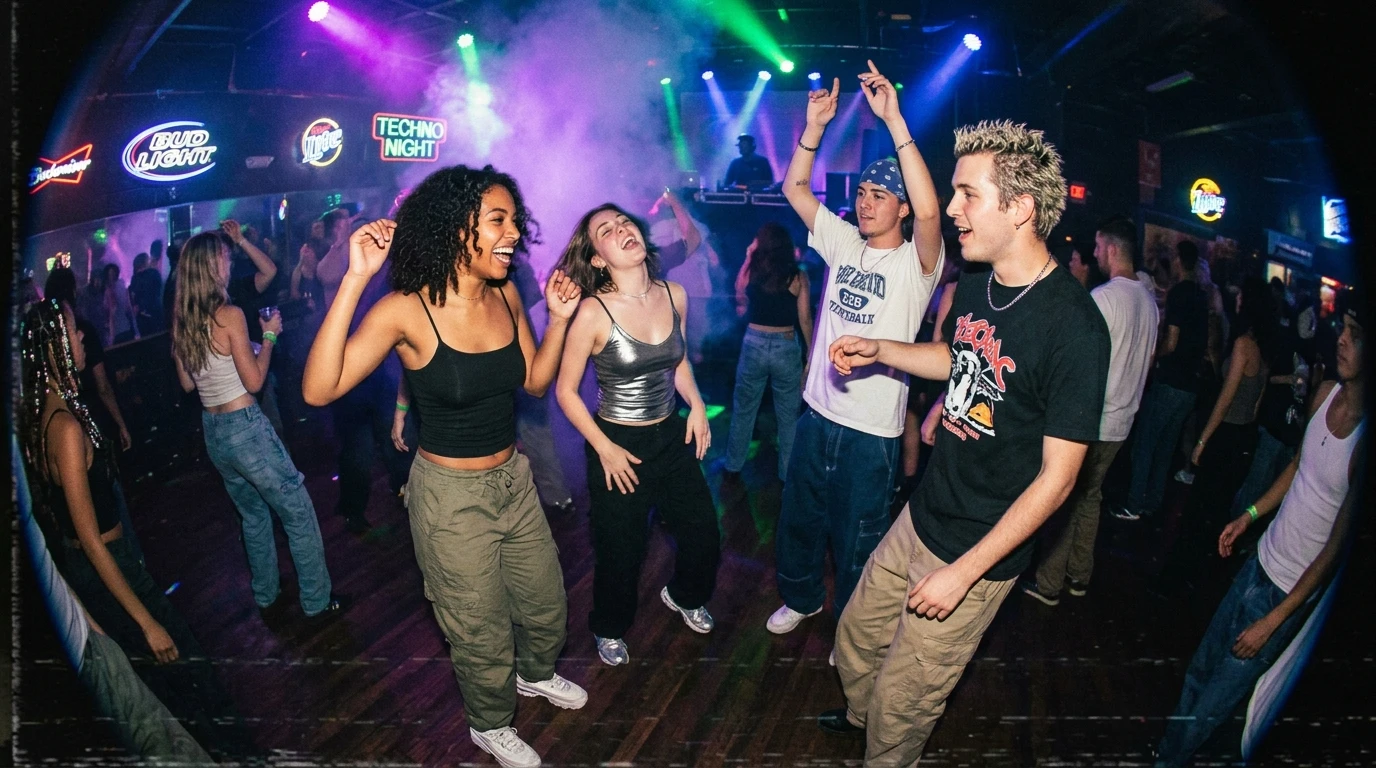
As a filmmaker and creative director, I’ve witnessed firsthand how AI has transformed the conceptualization phase of projects. The ability to generate complex visual ideas almost instantaneously has accelerated workflows and broadened creative possibilities. When it comes to niche aesthetics like Y2K, the challenge lies in moving beyond generic interpretations to capture the nuanced details that make the style truly authentic.
A well-constructed y2k prompt acts as a blueprint, guiding the AI to produce results that resonate with the target audience’s nostalgic sensibilities.
The visual lexicon of Y2K encompasses a wide array of elements: glossy, reflective surfaces, translucent plastics, metallic textures, vibrant bubblegum colors, early CGI graphics, low-resolution digital artifacts, and a prevailing sense of technological wonder. From the sleek lines of a flip phone to the shimmering fabric of a pop star’s outfit, every detail contributes to the overall ambiance.
This comprehensive guide will break down the components of a successful y2k prompt, offering five distinct examples that cover different facets of the era. Each prompt is designed to be a starting point, a robust foundation upon which you can build your unique artistic vision.
The goal here is not merely to create images that look Y2K, but to imbue them with the feeling of the era. This requires an understanding of the cultural context that shaped these visuals. The transition into a new millennium brought with it both excitement for the future and a lingering uncertainty, themes that subtly weave their way into the design and art of the time.
By providing AI with specific instructions that touch upon these underlying sentiments, we can generate imagery that is not only visually accurate but also emotionally resonant.
Deconstructing the Y2K Prompt: Core Elements
To consistently generate compelling Y2K imagery, it’s crucial to understand the building blocks of an effective y2k prompt. This isn’t just about throwing in keywords like “Y2K” or “retro-futuristic.” It requires a deeper dive into the specific visual and thematic characteristics that define the era. As creative professionals, our precision in communication with AI mirrors the precision required in traditional filmmaking or design. Ambiguity leads to inconsistent results; clarity leads to stunning visuals.
The core elements of a robust y2k prompt typically include:
- Subject Matter: What is the focal point? Is it a person, an object, a landscape, or an abstract concept? The subject should inherently or adaptably fit the Y2K context. Think early digital devices, pop culture icons, specific fashion items, or architectural styles of the period.
- Aesthetic Modifiers: These are the keywords that define the overall style. Examples include “Y2K aesthetic,” “early 2000s,” “millennium style,” “retro-futuristic,” “digital age,” “bubblegum pop,” “glitch art,” “cyberpunk lite,” or “Web 1.0.” Be specific about the flavor of Y2K you’re aiming for.
- Color Palette: Y2K is often associated with vibrant, sometimes clashing, colors. Consider iridescent blues, metallic silvers, neon greens, electric purples, bubblegum pinks, and translucent pastels. Specifying these can dramatically alter the mood.
- Materials and Textures: This is a critical component. Think glossy plastics, brushed metals, iridescent fabrics, reflective surfaces, chrome accents, and even a slight degradation or pixelation that hints at early digital rendering.
- Lighting and Atmosphere: The lighting in Y2K visuals often ranges from harsh, artificial studio lighting to neon glows, diffused soft light through translucent panels, or even the glow of early CRT screens. The atmosphere might be clean and sterile, or slightly grungy and underground.
- Composition and Camera Details: How is the image framed? Is it a close-up, a wide shot, a Dutch angle? Specifying camera lenses, film grain (or digital noise), and aspect ratio (like 16:9 for modern screens, or 4:3 for a more authentic retro feel) adds another layer of control.
- Post-Processing/Effects: Consider adding terms like “chromatic aberration,” “lens flare,” “digital artifacts,” “scanlines,” “grain,” or “VHS effect” to further enhance the period authenticity.
By meticulously combining these elements, you construct a powerful y2k prompt that leaves little to chance. It allows the AI to draw from its vast dataset of Y2K-era imagery and synthesize a result that is both aesthetically pleasing and historically accurate. The following prompts illustrate how these elements can be woven together to achieve distinct Y2K visions.
1. Digital Utopia & Early Tech Glamour
The turn of the millennium was brimming with an almost naive optimism about technology. The future was bright, sleek, and digital. This first y2k prompt aims to capture that sense of digital utopia, where technology was not just functional but also a statement of glamour and progress. Think of early 2000s tech advertisements, where devices were presented as gleaming artifacts of a new age.
The aesthetic leans into clean lines, reflective surfaces, and a bright, almost ethereal lighting that suggests innovation and aspiration.
This specific flavor of Y2K is less about the gritty realities and more about the polished dream. It’s the vision of the future that was sold to us, a world where everything would be interconnected, efficient, and visually stunning. For filmmakers, this might translate into title sequences or establishing shots for a narrative set in an optimistic alternate 2000s. For designers, it could be the basis for product mock-ups or branding that evokes a sense of sleek, vintage tech.
This prompt is designed to elicit that pristine, almost sterile, yet undeniably appealing digital aesthetic that defined a significant part of the Y2K era.
1. Digital Utopia: The Nexus Device
Prompt:
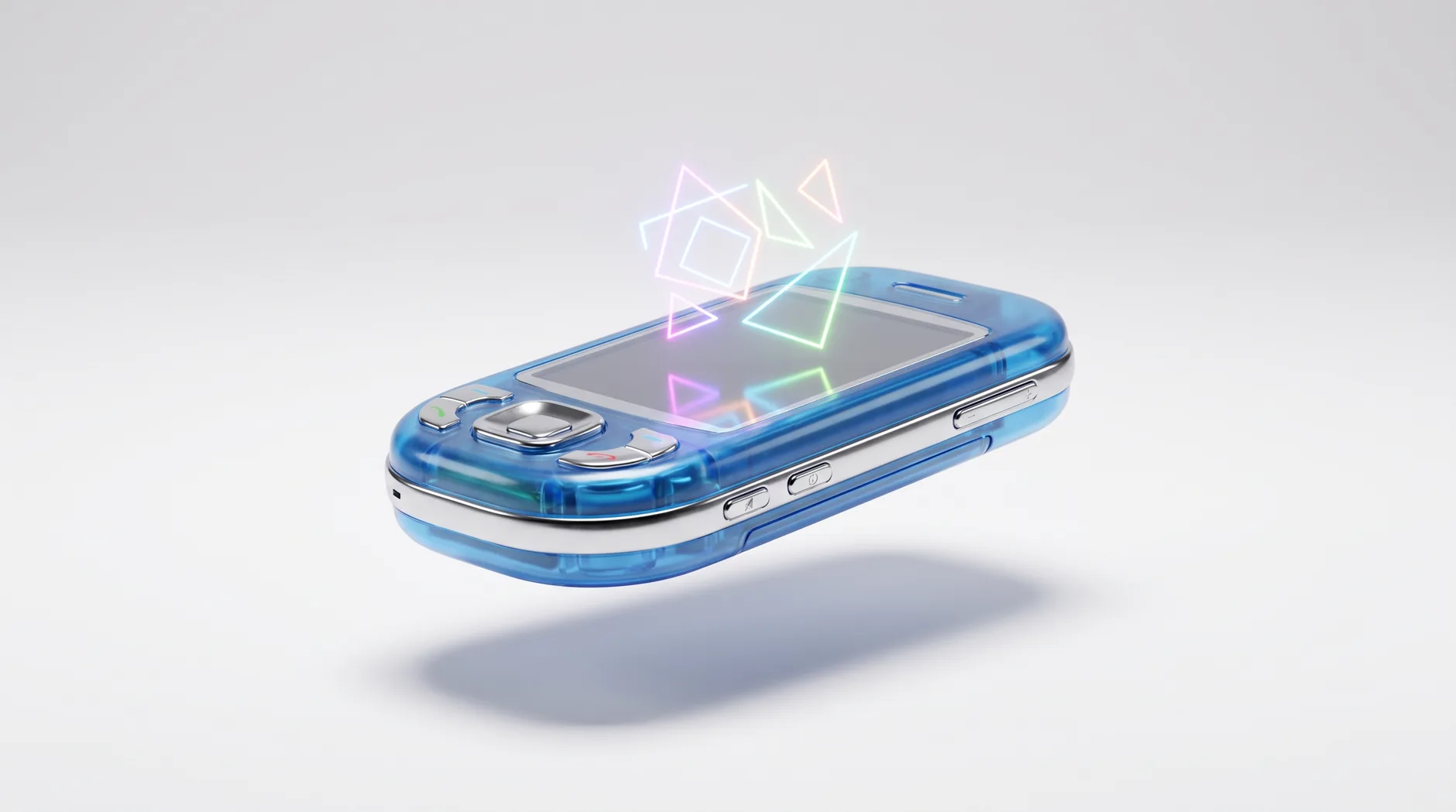
A close-up shot of a futuristic Y2K-era personal communication device, sleek translucent blue plastic casing with chrome accents, glowing holographic interface displaying abstract geometric patterns, set against a pristine white studio background with soft, diffused key lighting from above. The device is levitating slightly, casting a subtle shadow. Sharp focus, macro photography style, high-resolution, digital rendering, clean lines, optimistic aesthetic, 16:9 aspect ratio, no text.This prompt achieves a high-fidelity representation of early 2000s technological optimism, focusing on clean design and aspirational materials. For best results, ensure the AI emphasizes translucency and soft reflections on the chrome elements, avoiding any grunge or lo-fi textures.
The emphasis on “translucent blue plastic” and “chrome accents” is key here, as these materials were ubiquitous in Y2K design. The “glowing holographic interface” adds that touch of futuristic wonder that was so prevalent. By specifying “pristine white studio background” and “soft, diffused key lighting,” we guide the AI towards a clean, professional, and aspirational look, rather than something gritty or raw.
The “macro photography style” ensures that the intricate details of the imagined device are brought to the forefront, making it feel tangible and real, despite its digital origin.
2. Bubblegum Pop and Iridescent Surfaces
The Y2K era was undeniably dominated by a vibrant, often saccharine, pop culture. Music videos, fashion, and consumer products embraced a playful, almost childlike exuberance, characterized by bright, contrasting colors and fantastical elements. This second y2k prompt dives headfirst into that bubblegum pop aesthetic, focusing on iridescent materials, playful shapes, and a sense of energetic fun.
This style is less about technological seriousness and more about youthful expression and bold visual statements.
Think of the visual language of pop stars from the late 90s and early 2000s, outfits shimmering with glitter, sets bathed in neon, and an overall sense of maximalist joy. The use of iridescent materials, which shift colors depending on the light, was particularly popular, adding a dynamic and futuristic sheen to everything from clothing to accessories.
This prompt is ideal for generating visuals for album art, fashion editorials, or any project that requires a burst of unapologetically cheerful Y2K energy. It’s about capturing that effervescent spirit that defined so much of the era’s mainstream culture.
2. Bubblegum Pop Dreamscape
🎬 AI Render Pro Studio, the AI film production suite I built and use on my own productions. Script breakdown, storyboards, 30+ video models including Seedance 2.5 and Kling O3, image generation, retouch, 7K upscaling and audio, all in one browser workspace. $19/month flat, bring your own API keys and pay providers at cost, no credit packs, no markup. Try AI Render Pro Studio →
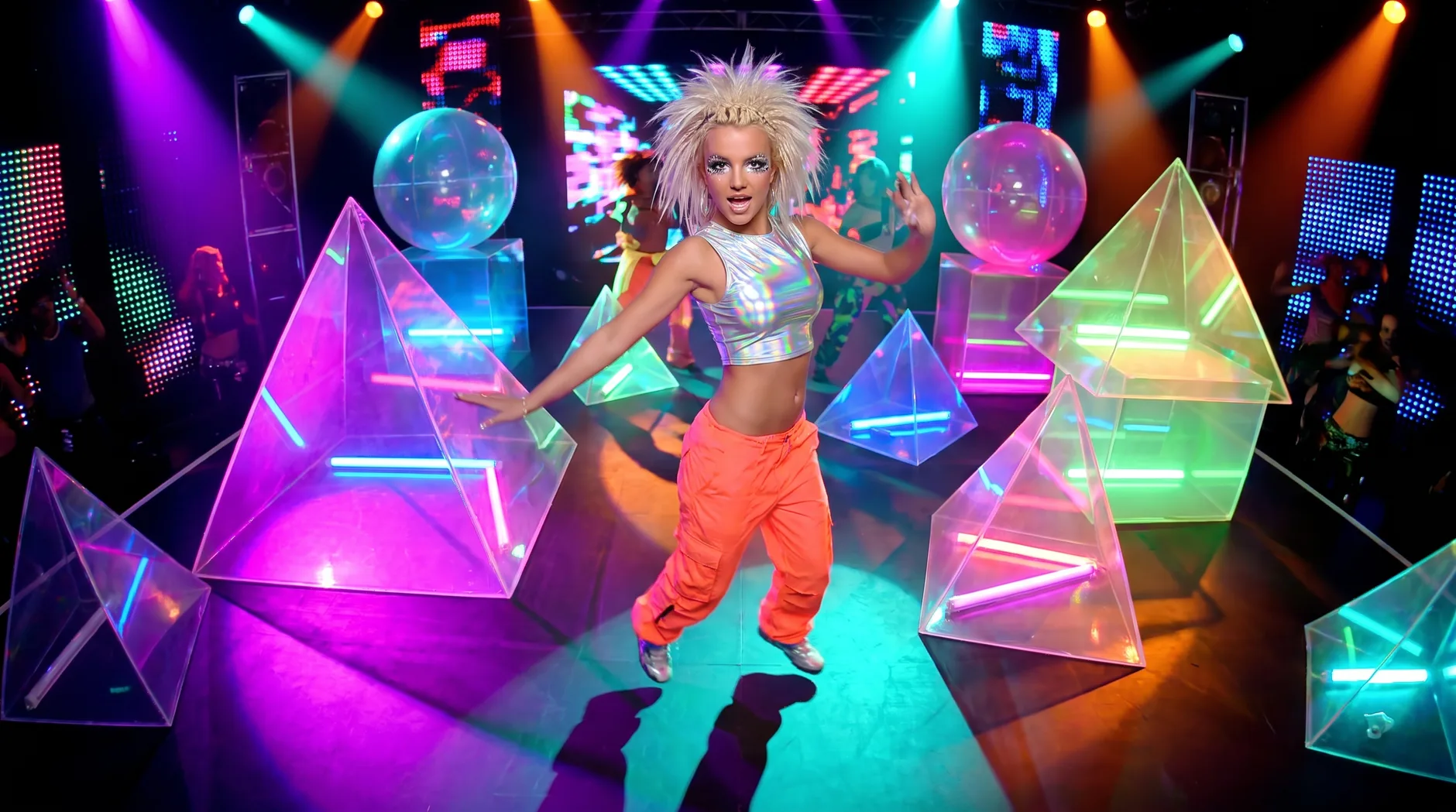
Prompt:
A vibrant Y2K bubblegum pop music video still featuring a young woman with frosted hair and glitter makeup, wearing an iridescent crop top and low-rise cargo pants. She is posing dynamically on a set made of oversized, translucent geometric shapes in neon pink, electric blue, and lime green. Strong, theatrical studio lighting with colored gels, creating dramatic shadows and highlights. Wide-angle shot, energetic composition, pop art influence, high contrast, glossy finish, 16:9 aspect ratio, no text.This prompt encapsulates the flamboyant, high-energy side of Y2K pop culture, emphasizing bold colors and dynamic staging. To enhance the effect, experiment with different hair and makeup styles popular in the era, such as zig-zag partings or metallic eyeshadows.
The “frosted hair and glitter makeup” immediately grounds the subject in the Y2K aesthetic, while the “iridescent crop top and low-rise cargo pants” define the fashion. The “oversized, translucent geometric shapes in neon pink, electric blue, and lime green” create a quintessential Y2K set design, reminiscent of early music videos and children’s television shows. “Strong, theatrical studio lighting with colored gels” reinforces the pop video feel, adding depth and drama.
This prompt ensures the AI understands the playful, yet highly stylized, visual language required for this specific y2k prompt application.
3. Glitch Art and Low-Poly Cyber-Scapes
While Y2K was largely about technological optimism, there was also an underlying fascination with the nascent, sometimes imperfect, nature of digital media. Early 3D graphics, limited bandwidth, and the occasional digital artifact gave rise to an aesthetic that embraced the “glitch.” This third y2k prompt delves into the more experimental and raw side of Y2K, focusing on low-poly graphics, digital errors, and abstract cyber-scapes that hint at the frontier of digital exploration.
It’s a nod to the early days of personal computing and internet graphics, when limitations often became artistic opportunities.
This specific sub-genre of Y2K is particularly appealing to those who appreciate the imperfections and unique characteristics of early digital rendering. It evokes a sense of nostalgia for a time when graphics were blocky, textures were simple, and the digital world still felt somewhat alien and mysterious. This prompt is excellent for creating abstract backgrounds, conceptual art pieces, or even character designs that embody a rudimentary yet captivating digital form.
It speaks to the era’s fascination with virtual reality and cyberspace, often depicted with simplified, geometric forms due to technological constraints.
3. Glitch in the Matrix: Low-Poly Dream
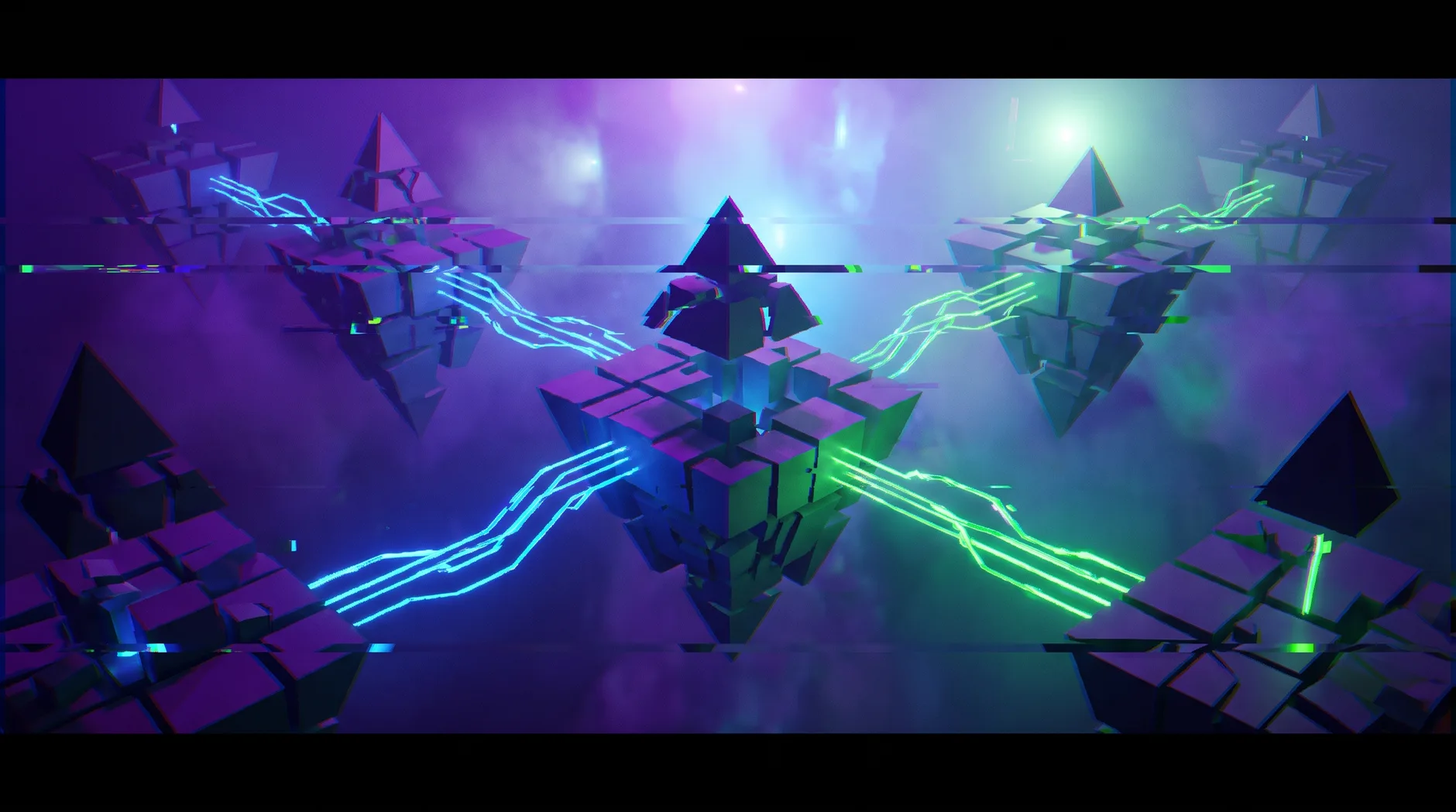
Prompt:
An abstract Y2K cyber-scape rendered in a low-polygon 3D style, featuring floating geometric islands connected by glowing data streams. The scene is dominated by a palette of deep purples, electric blues, and neon greens, with intentional digital glitches and chromatic aberration. Soft, volumetric fog permeates the environment, illuminated by distant, ethereal light sources. Rendered with a slight pixelation effect, reminiscent of early PC games. Cinematic wide shot, atmospheric, digital art, 16:9 aspect ratio, no text.This prompt captures the raw, experimental energy of early digital art and the “glitch” aesthetic prevalent in Y2K. To achieve a more pronounced retro feel, consider adding specific early 3D software names or game engine styles as modifiers, if your AI supports them.
The phrases “low-polygon 3D style” and “intentional digital glitches and chromatic aberration” are crucial for this y2k prompt. They directly instruct the AI to mimic the visual limitations and accidental artistry of early digital rendering. The color palette of “deep purples, electric blues, and neon greens” is typical of early cyberpunk and digital aesthetics, while “volumetric fog” adds an atmospheric depth that was often attempted in early 3D environments.
“Slight pixelation effect” further cements the connection to early PC games, ensuring the output feels genuinely vintage and not merely a modern interpretation of a low-poly style.
4. Grunge, Rave, and Underground Edge
Beyond the polished optimism and bubblegum pop, the Y2K era also harbored a vibrant underground scene, heavily influenced by grunge, rave culture, and a burgeoning interest in alternative fashion. This side of Y2K was grittier, darker, and more rebellious, often incorporating industrial elements, distressed textures, and a more subdued, yet still impactful, color palette.
This fourth y2k prompt focuses on capturing this counter-cultural vibe, leaning into the raw energy of underground parties and the distinctive fashion that emerged from it.
This aesthetic speaks to a different kind of futurism, one that’s less about sleek, corporate visions and more about DIY technology and street-level innovation. It’s the visual language of zines, independent music, and experimental art that flourished in the margins. For filmmakers, this could translate into character designs for a grungier sci-fi narrative or mood boards for urban settings. Designers might use this for alternative branding or edgy editorial work.
This prompt aims to evoke the feeling of a dimly lit warehouse party or a rebellious fashion statement, highlighting the diverse influences that shaped the Y2K period.
4. Cyber-Grunge Rave Portrait
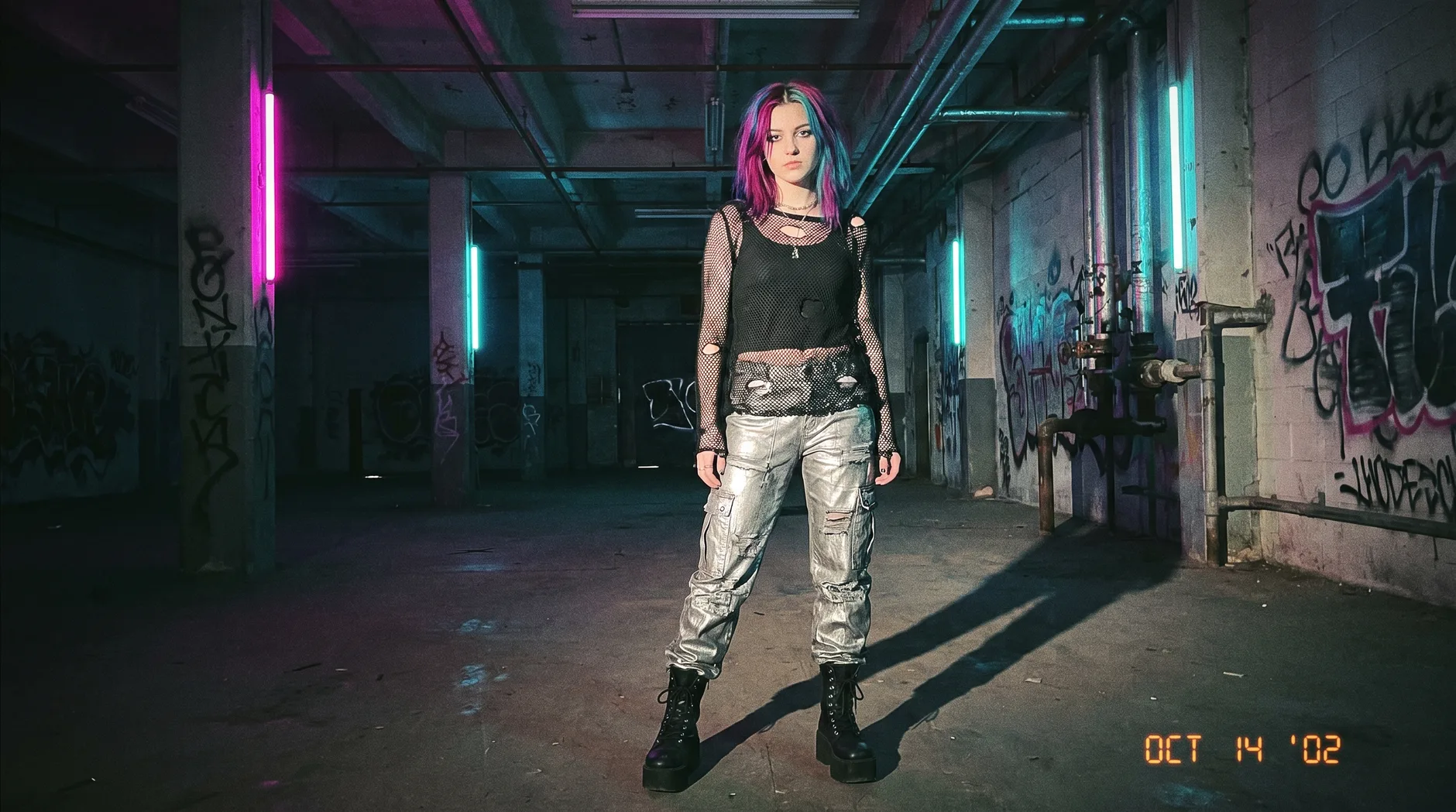
Prompt:
A full-body portrait of a young individual with dyed hair and distressed clothing, featuring metallic silver cargo pants, a mesh top, and chunky platform boots. They are standing in a dimly lit, industrial warehouse space, illuminated by flickering neon tubes in magenta and cyan, casting long, dramatic shadows. The background includes graffiti and exposed pipes. Grungy aesthetic, lo-fi digital photography, strong flash, slight film grain, raw, authentic Y2K underground style, 16:9 aspect ratio, no text.This prompt successfully evokes the raw, underground energy of Y2K grunge and rave culture. Pay attention to the details of distressed textures and the interplay of neon light with deep shadows to maximize its impact. Experiment with different hair colors and industrial backdrops.
The description of “dyed hair and distressed clothing,” alongside “metallic silver cargo pants, a mesh top, and chunky platform boots,” paints a clear picture of Y2K alternative fashion. The “dimly lit, industrial warehouse space, illuminated by flickering neon tubes in magenta and cyan” provides an authentic backdrop for rave culture.
Crucially, “Grungy aesthetic, lo-fi digital photography, strong flash, slight film grain” are critical modifiers for this y2k prompt to ensure the AI produces a raw, unpolished look, rather than something overly slick. This combination captures the rebellious spirit and visual texture of the era’s underground scene.
5. Web 1.0 Nostalgia & Pixelated Dreams
The early internet, fondly remembered as Web 1.0, was a wild, unrefined landscape of blinking GIFs, garish color schemes, and rudimentary HTML. This era gave birth to a distinct visual language that, while often clunky by today’s standards, holds immense nostalgic appeal. This fifth and final y2k prompt focuses on replicating that specific Web 1.0 aesthetic, embracing pixelation, simple interfaces, and the charming imperfections of early digital design. It’s a journey back to the days of dial-up and Geocities.
For many, the visual cues of Web 1.0 are instantly recognizable and evoke a powerful sense of nostalgia. The simplicity, the often amateurish design, and the raw experimentation of that period created an aesthetic unlike any other. This prompt is ideal for projects that aim to evoke a sense of internet history, digital archaeology, or simply a playful homage to the web’s foundational years.
It’s about celebrating the quirky charm of a time when the internet was still finding its visual voice, a truly unique aspect of the broader Y2K aesthetic.
5. Geocities Glitch: Web 1.0 Homepage
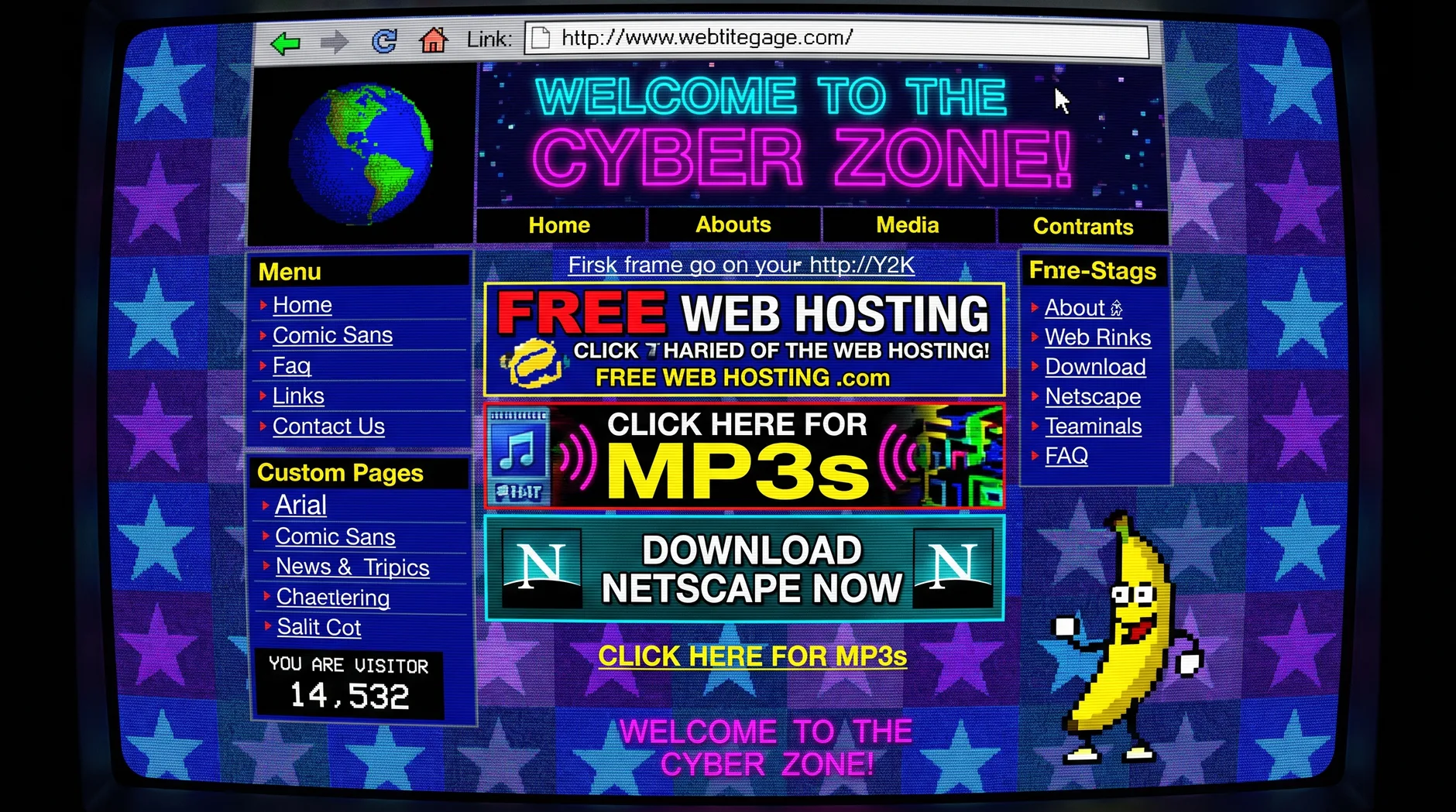
Prompt:
A simulated Y2K Web 1.0 homepage screenshot, featuring a busy layout with pixelated animated GIFs (e.g., a spinning globe, blinking text, dancing banana), a tiled background texture of stars, and prominent low-resolution banner ads. The color scheme is a clashing mix of bright primary colors and neon accents. Text uses early web fonts like Arial or Comic Sans. The overall image has a slight CRT monitor curvature and scanline effect. Screenshot aesthetic, nostalgic, lo-fi digital, 16:9 aspect ratio, no text.This prompt perfectly captures the chaotic charm of early internet design, leaning into pixelation and busy layouts. To enhance authenticity, specify particular types of animated GIFs or iconic early web elements that were common during Web 1.0’s peak.
The core of this y2k prompt lies in “busy layout with pixelated animated GIFs,” “tiled background texture of stars,” and “prominent low-resolution banner ads,” which are hallmarks of early web design. The “clashing mix of bright primary colors and neon accents” and “early web fonts like Arial or Comic Sans” further solidify the aesthetic.
Finally, adding “slight CRT monitor curvature and scanline effect” provides an authentic presentation layer, making the generated image feel like it’s genuinely being viewed on a period-appropriate display. This comprehensive approach ensures the AI delivers a truly nostalgic Web 1.0 experience, a vital facet of the Y2K visual landscape.
6. Chrome and Liquid Metal Futurism
Chrome was the material signature of the era. Not the matte brushed metal of today’s hardware, but a wet, liquid, almost alive mirror finish that turned every object into a reflection of its surroundings. It ran through car design, album art, title sequences and interface design alike, and it carried an implicit promise that the future would be frictionless.
This sixth y2k prompt is about that material behaviour rather than a specific object. Chrome is difficult for image models because it has no colour of its own; it only reports what is around it. Describing the environment and the light is what produces convincing metal.
Useful for title cards, product concepts, and any sequence that needs a hard futuristic register without leaning on neon.
6. Liquid Chrome: The Mercury Object
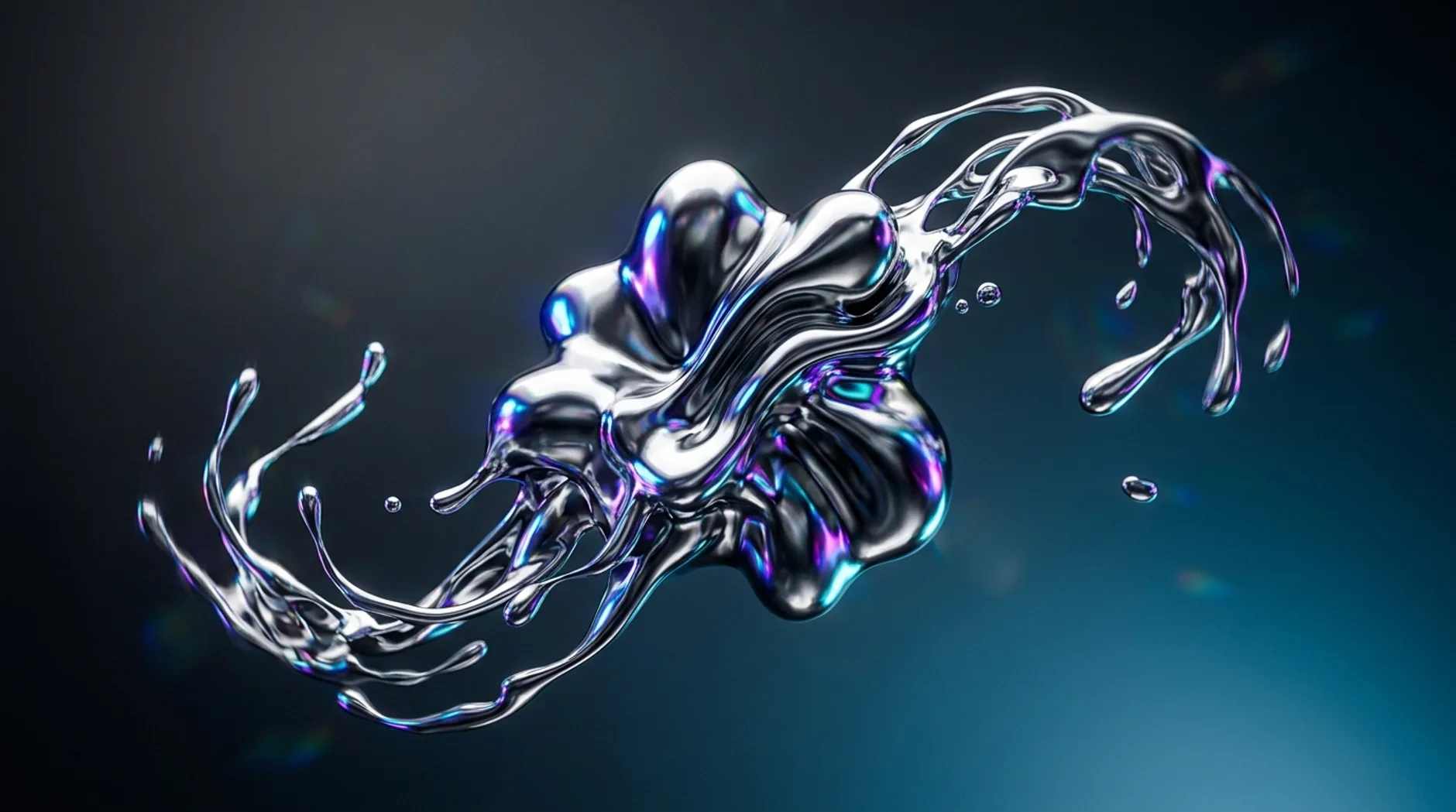
Prompt:
A sculptural chrome object with a liquid mercury surface, morphing between solid and fluid states, suspended against a deep gradient backdrop of silver and cool blue. Highly reflective mirror finish catching coloured studio lights, sharp specular highlights, subtle motion blur at the edges where the metal flows. Late-1990s CGI futurism, high gloss, macro product photography, 16:9 aspect ratio, no text.Chrome renders badly when you describe the metal and not the room. Add specific coloured light sources and a defined backdrop, and the reflections do the work for you.
7. Translucent Tech and Frosted Plastic
Where chrome was the outside, translucent plastic was the inside. The late nineties made a virtue of showing the machine: coloured casings you could see straight through to the circuit board, in ice blue, tangerine and grape. It made technology feel friendly and slightly edible.
This y2k prompt asks the model to render a material with real optical depth. The instruction that matters most is backlighting, because a translucent object photographed with front light just looks like tinted plastic. Light passing through it is what sells the effect.
This one is particularly strong for product concepts and mock-ups, since the whole aesthetic was built around consumer hardware.
7. See-Through Machine: Frosted Hardware
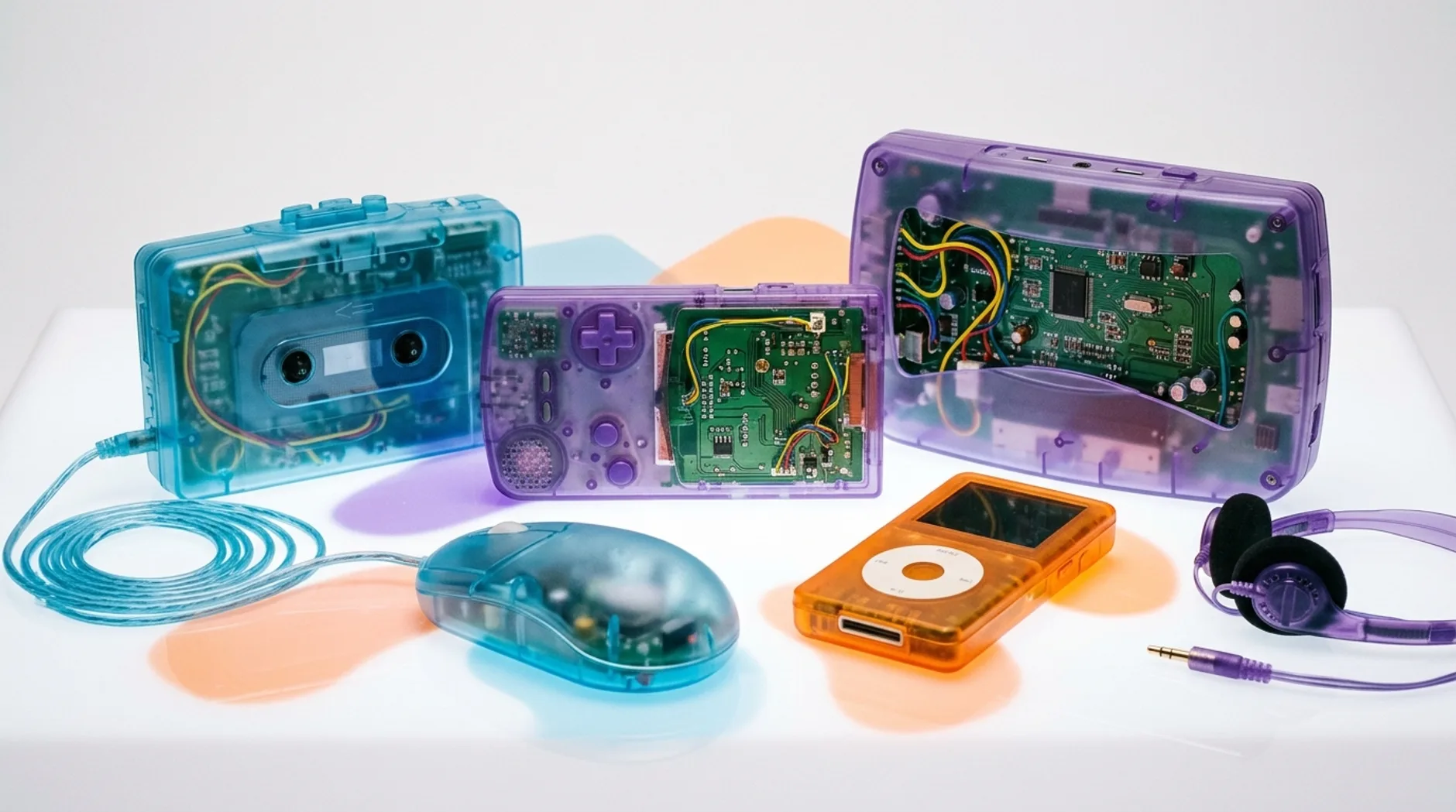
Prompt:
A collection of translucent frosted-plastic consumer electronics in ice blue, tangerine and grape, arranged on a white acrylic surface. Visible internal circuit boards and coloured wiring through the casing, backlit so the plastic glows from within, soft candy-coloured shadows. Bondi blue era industrial design, glossy injection-moulded finish, clean studio lighting, 16:9 aspect ratio, no text.Backlighting is the single instruction that makes translucent plastic read correctly. Without it you get tinted opaque plastic instead of visible internals.
8. CD and Disc Culture Iridescence
The compact disc is the most concentrated visual artefact of the period. A mirrored surface that splits white light into a full spectrum, cheap enough to be everywhere and beautiful enough to end up on countless covers and music videos. Iridescence became shorthand for the era itself.
This y2k prompt works because it gives the model a specific physical behaviour to render: prismatic colour separation across a reflective surface at varying angles. Naming the optical effect rather than just asking for rainbow colours produces a far more convincing result.
Shallow depth of field is doing real work here. It keeps the image reading as photography rather than illustration.
8. Rainbow Data: The Disc Still Life
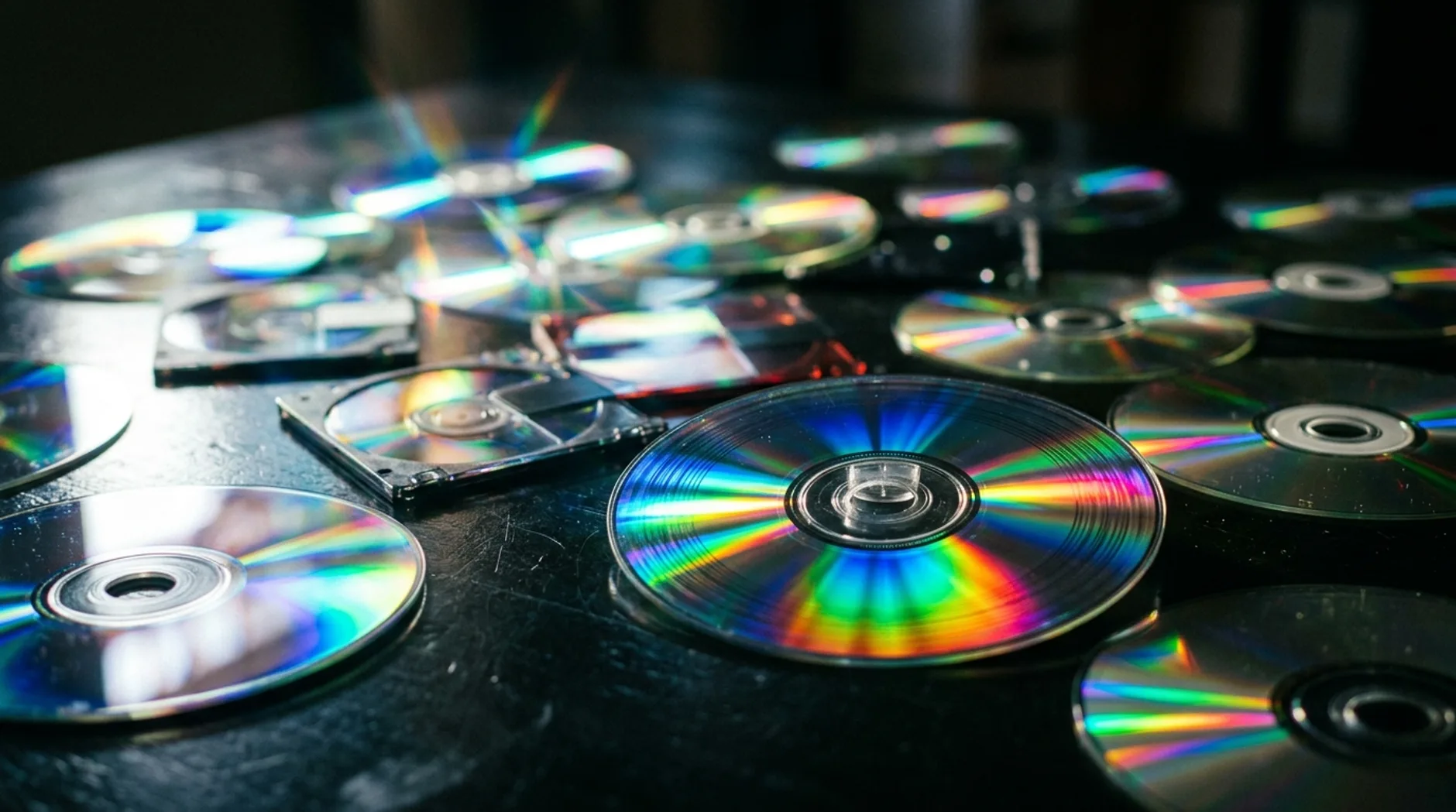
Prompt:
A scattered arrangement of compact discs and mini-discs catching light at different angles, each surface throwing a full iridescent rainbow spectrum across a dark reflective table. Shallow depth of field, one disc in sharp focus in the foreground, oil-slick colour separation, hard directional key light creating prismatic flares. Editorial still life photography, 16:9 aspect ratio, no text.Name the optical behaviour, prismatic separation and oil-slick colour, rather than simply asking for rainbow colours. Models respond far better to the physics than to the adjective.
9. Early 3D Screensavers and Desktop Dreams
Before real-time graphics were good, screensavers were where most people encountered 3D. Chrome torus knots, checkerboard planes running to a gradient horizon, flat-shaded low-poly geometry and a single hard lens flare. It was a rendering aesthetic born entirely from technical limits.
This y2k prompt deliberately asks for those limits. Low polygon counts, visible flat shading and primitive reflections are the point, not defects to be smoothed away. Modern models default to photoreal, so the constraint has to be stated explicitly.
For filmmakers this is a rich vein for interstitials, transitions and any sequence set inside a period computer.
9. Render Farm Dreams: The Screensaver Scene
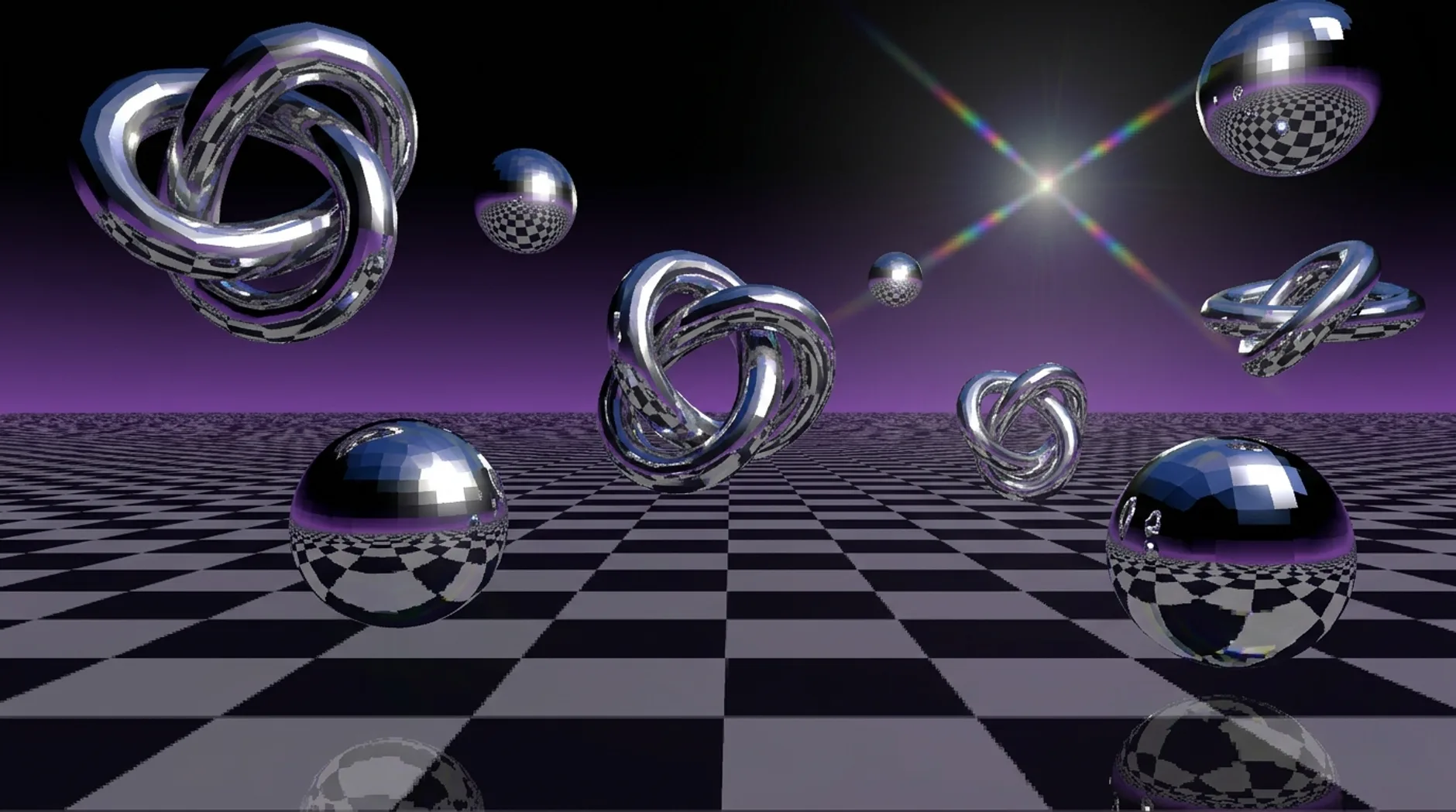
Prompt:
An early-2000s 3D screensaver scene: chrome torus knots and mirrored spheres floating above an infinite checkerboard plane that fades into a purple-to-black gradient horizon. Hard specular highlights, low-polygon geometry with visible flat shading, lens flare from a single distant light source, primitive ray-traced reflections. Retro CGI render aesthetic, 16:9 aspect ratio, no text.State the technical limits explicitly. Low-poly, flat shading and primitive reflections are the aesthetic; a modern model will smooth them away unless told not to.
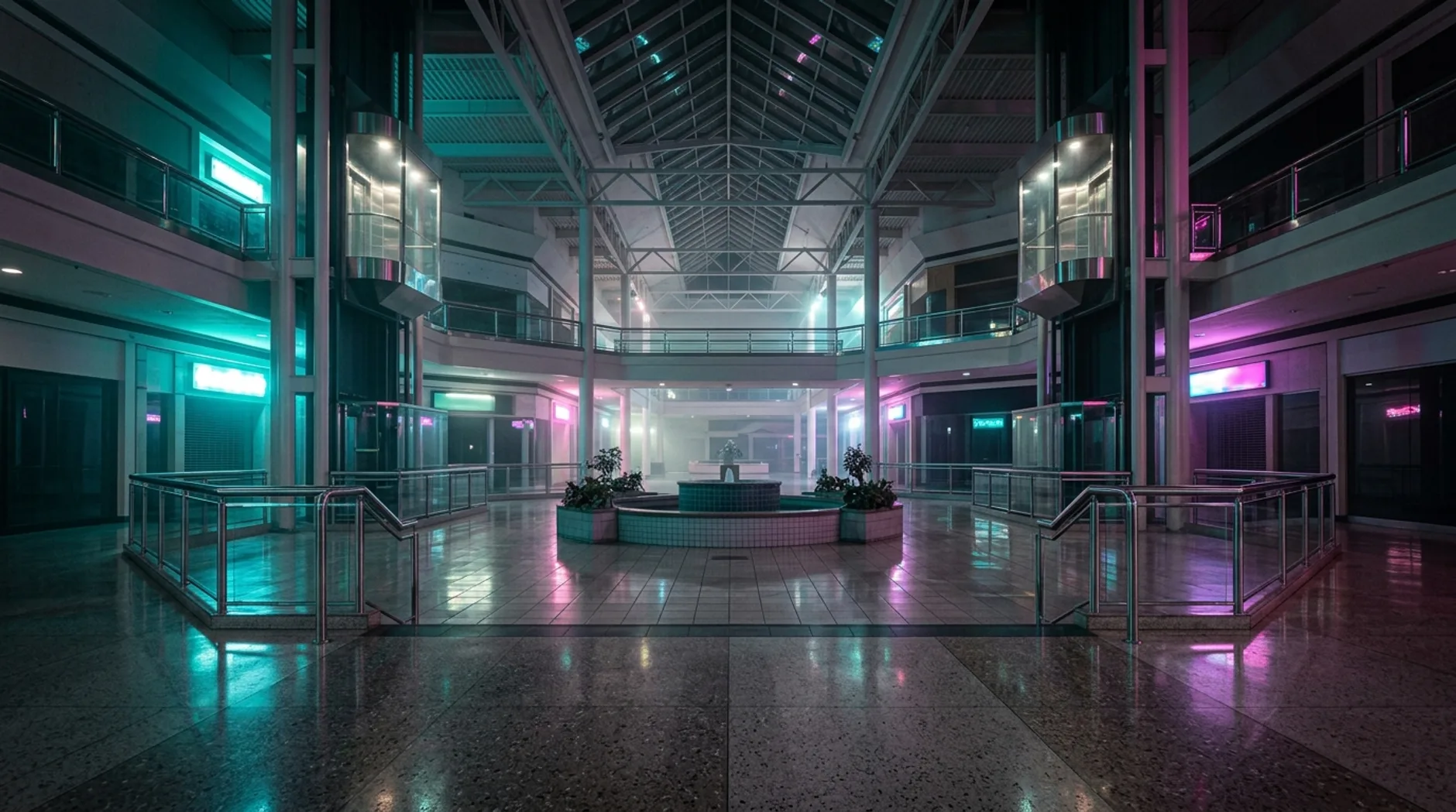
10. Mall and Rave Interior Atmosphere
The mall was the physical stage for all of this. Glass elevators, chrome handrails, tiled fountains and a lighting scheme built from signage rather than daylight. Empty and after hours, it becomes something closer to a set than a shop.
This final y2k prompt is the most cinematic of the ten. It specifies architecture, light sources, atmosphere and composition together, which is exactly how you would brief a location for a shoot rather than describe a picture.
The haze is the critical instruction. Without atmosphere the neon has nothing to travel through and the image flattens out.
10. After Hours: The Empty Mall Atrium
Prompt:
The empty atrium of a late-1990s shopping mall at night, glass elevator shafts, chrome handrails and a tiled fountain, lit only by teal and magenta neon signage reflecting off polished floors. Deep atmospheric haze, long exposure look, wide symmetrical composition, cool shadows against warm accent lights. Cinematic architectural photography, 16:9 aspect ratio, no text.Atmospheric haze is what lets neon read as light rather than as coloured shapes. It is the difference between a set and a screenshot.
Refining Your Y2K Prompt Strategy for Artistic Control
While the five provided y2k prompt examples offer robust starting points, true mastery in AI art generation comes from refinement and iteration. As creatives, our role is not just to issue commands, but to guide the AI with an artist’s eye, pushing the boundaries of what is possible. The initial output from a prompt is rarely the final piece; it’s a foundation upon which layers of artistic intent are built.
This iterative process is where the real magic happens, transforming a good prompt into an exceptional one.
One key aspect of refinement involves understanding the subtle impact of weighting different elements within your y2k prompt. Most advanced AI tools allow for adjusting the emphasis of certain keywords or phrases. For instance, if “translucent plastic” is crucial, you might give it a higher weight to ensure its prominence. Conversely, if a background element is too distracting, you can de-emphasize it or even negate it with specific commands.
This granular control allows for fine-tuning the AI’s interpretation, bringing the output closer to your precise vision.
Another powerful technique is combining elements from different prompts or introducing new modifiers based on your initial results. Perhaps you like the lighting from Prompt 1 but want the material textures from Prompt 4. By intelligently merging these aspects, you can create hybrid aesthetics that are uniquely yours. This experimental approach is vital for exploring the full spectrum of Y2K possibilities and discovering unexpected visual combinations.
The goal is to develop an intuitive understanding of how different keywords interact and influence the final image.
Furthermore, consider the emotional resonance you want to evoke. Is it pure nostalgia, a critique, a celebration, or something more complex? Infusing your y2k prompt with emotional or narrative cues can subtly shift the AI’s interpretation, adding depth beyond mere visual replication.
For example, adding “moody atmosphere” or “sense of longing” can push the AI to select colors, compositions, and lighting that align with that emotional tone, even within a specific aesthetic like Y2K. This elevates the AI-generated art from a mere copy to a piece with genuine artistic intent.
The Future of Retro: Y2K Prompts in 2026’s Creative Landscape
In 2026, the Y2K aesthetic is far from a fleeting trend; it has cemented its place as a significant cultural touchstone, constantly reinterpreted and reimagined. The enduring appeal of the late 90s and early 2000s stems from its unique position at the cusp of a new millennium, bridging analog and digital, optimism and anxiety. For creatives, understanding how to harness the y2k prompt effectively means staying relevant in a continuously evolving visual landscape. This aesthetic offers a rich palette for commentary, nostalgia, and innovative design.
The longevity of the Y2K aesthetic can be attributed to several factors. Firstly, it represents a period of significant technological transition, which resonates deeply in our hyper-digital present. Secondly, for a generation now entering their prime creative years, Y2K is the aesthetic of their formative youth, sparking powerful nostalgic connections.
As noted by cultural observers, the cyclical nature of fashion and design ensures that past styles are continually re-examined through a contemporary lens. The Verge, for instance, has extensively covered how platforms like TikTok have amplified and diversified Y2K’s reach since 2022.
Looking ahead, the evolution of the y2k prompt will likely involve more sophisticated blending with other contemporary styles. We might see “Y2K-cyberpunk fusion,” “Y2K-minimalism,” or even “Y2K-bioluminescent” aesthetics emerging. AI’s ability to seamlessly combine disparate visual concepts means that the boundaries of Y2K are constantly expanding.
Artists will increasingly use AI to explore these hybrid forms, pushing the aesthetic into new, uncharted territories while retaining its core identity. This demands a flexible and adaptable approach to prompt engineering.
Furthermore, as AI models become more nuanced, the precision required in a y2k prompt will likely increase. This isn’t a limitation but an opportunity for greater artistic control. The ability to specify minute details, down to the exact shade of iridescent plastic or the subtle distortion of a CRT screen, will empower creators to realize their visions with unprecedented accuracy.
The future of Y2K in 2026’s creative landscape is not just about looking back, but about using the past as a springboard for innovative, AI-driven artistic expression. This ongoing dialogue between nostalgia and cutting-edge technology defines our current creative epoch.
Leveraging AI Render Pro for Y2K Mastery
For filmmakers and creative directors, the challenge of translating a precise visual aesthetic like Y2K into high-quality imagery is significant. This is where tools like AI Render Pro, the prompting tool for filmmakers and creatives become indispensable. It’s not merely about inputting a y2k prompt; it’s about having a system that understands the nuances of cinematic and artistic direction, enabling consistent and professional results.
My experience in over two decades of filmmaking has taught me that the right tools are as crucial as the creative vision itself.
AI Render Pro is specifically engineered to bridge the gap between abstract creative concepts and concrete visual outputs. Its intuitive interface and advanced parsing capabilities allow users to apply the detailed y2k prompt structures discussed in this article with greater efficacy.
Instead of wrestling with inconsistent AI interpretations, creatives can rely on a platform designed to understand complex stylistic directives, camera parameters, and lighting schemes, all critical for authentic Y2K generation. This is particularly vital when aiming for the hyper-specific textures and moods of the Y2K era, from the glossy sheen of translucent plastics to the pixelated charm of Web 1.0.
The tool provides a structured environment where you can systematically experiment with different components of your y2k prompt. You can easily modify color palettes, adjust lighting conditions, or swap out material descriptions to see instant visual changes.
This rapid prototyping capability is invaluable for exploring the full range of the Y2K aesthetic, allowing you to iterate quickly and zero in on the exact look you envision without extensive manual adjustments or guesswork. For a director, this means more time spent on creative decision-making and less on technical troubleshooting.
Furthermore, AI Render Pro’s integration with various underlying AI models ensures that you’re always working with the most cutting-edge generation technology. This adaptability is crucial as AI capabilities continue to evolve rapidly. The platform streamlines the process of translating a detailed y2k prompt into a stunning visual, providing a reliable workflow that supports creative exploration and delivers professional-grade results.
This empowers artists to push their Y2K-inspired projects from concept to compelling visual with efficiency and artistic integrity. The ability to consistently reproduce specific aesthetics across multiple generations is a game-changer for maintaining visual continuity in larger projects. For more insights on leveraging AI for professional realism, explore our article on How to Master Cinematic AI Art Direction.
The Real Cost of AI Filmmaking Is Not the Prompts
Every frame in this article came from a written prompt, and the difference between a workable result and a usable one is specificity. This is what a production-ready prompt looks like in practice, with the frame it produced:

A close-up shot of a futuristic Y2K-era personal communication device, sleek translucent blue plastic casing with chrome accents, glowing holographic interface displaying abstract geometric patterns, set against a pristine white studio background with soft, diffused key lighting from above. The device is levitating slightly, casting a subtle shadow. Sharp focus, macro photography style, high-resolution, digital rendering, clean lines, optimistic aesthetic, 16:9 aspect ratio, no text.The part that actually drains a budget is not the prompt writing though. It is the credit system. Most AI platforms charge a subscription, then sell credits on top of it, with a markup on every render and a counter that resets each month whether you shipped anything or not. Generate, upscale, regenerate a few takes, and a single short film chews through pricing tiers fast.
AI Render Pro Studio is the pipeline I built to cut that out. One browser workspace for the whole run: script breakdown, storyboards, image generation, more than 30 video models including Seedance 2.5 with 30-second native-audio takes, Seedance 2.0 in native 4K and Kling O3, plus retouch, upscaling past 7K and an audio studio. It costs $19 a month flat, and you plug in your own API keys, so every render is billed by the provider at cost. No markup, no credit packs, no expiring tokens. On a real project that difference is not a rounding error, it is the budget.
Try AI Render Pro Studio, $19/month →
Every AI image in this article was generated with AI Render Pro, the prompting engine I built for filmmakers and creatives. Read the full breakdown here.
Frequently Asked Questions
What defines a Y2K prompt in AI art?
A Y2K prompt in AI art is a detailed set of instructions designed to generate imagery reflecting the aesthetic of the late 1990s and early 2000s. It typically includes keywords for digital optimism, early tech, vibrant or metallic colors, translucent materials, and sometimes pixelation or glitch effects.
Why is the Y2K aesthetic popular again in 2026?
The Y2K aesthetic’s resurgence in 2026 is driven by nostalgia for a period of technological transition and cultural optimism. It appeals to a generation entering their prime creative years, offering a unique blend of retro-futurism that continues to inspire fashion, music, and digital art.
How can I make my Y2K prompt more authentic?
To make your Y2K prompt more authentic, focus on specific details like translucent plastics, chrome finishes, early web graphics (e.g., blinking GIFs), low-poly 3D rendering, and characteristic color palettes (bubblegum pinks, electric blues, neon greens). Incorporating period-specific fashion or tech items also helps significantly.
What AI tools are best for generating Y2K prompt images?
While many AI image generators can interpret a Y2K prompt, tools like AI Render Pro are designed to offer more precise control over stylistic elements, camera settings, and lighting. This allows for higher fidelity and more consistent results, crucial for professional creative applications.
Can a Y2K prompt be combined with other styles?
Absolutely. A Y2K prompt can be effectively combined with other styles to create hybrid aesthetics, such as “Y2K-cyberpunk” or “Y2K-minimalism.” Experimenting with these combinations allows for innovative interpretations of the core Y2K aesthetic, pushing creative boundaries in AI-generated art.
Discover more from Olivier Hero Dressen Blog: Filmmaking & Creative Tech
Subscribe to get the latest posts sent to your email.

Work with Olivier
Director | CD | DP & Photographer
Specializing in commercials, music videos, AI-driven filmmaking, and cinematic storytelling for brands and production companies.
🌍 Shanghai · Paris · Los Angeles · Dubai
🎬 View Portfolio & Get in Touch