

Key Takeaways
- First insight, Mastering the y2k aesthetic in AI image generation requires precise prompt engineering, focusing on the specific technological limitations and cultural nuances of the early 2000s to achieve authentic lo-fi retro visuals.
- Craft highlight, Our guide provides 8 meticulously crafted AI prompts, detailing camera models, lens choices, lighting setups, simulated film stocks, and post-processing techniques to replicate iconic Y2K photography styles, from digicam flash portraits to MySpace mirror selfies.
- Industry context, The resurgence of the y2k aesthetic in fashion, media, and digital art underscores a broader trend of nostalgic visual content, making these AI techniques invaluable for creatives seeking to tap into this popular retro demand.
- Bottom line, By leveraging these detailed prompts, creators can bypass generic AI outputs and generate highly specific, contextually accurate Y2K imagery that resonates with the era’s unique blend of emerging digital technology and late-90s analog carryovers.
The resurgence of the y2k aesthetic has captivated designers, marketers, and artists, eager to recapture the unique visual language of the early 2000s. This era, characterized by its blend of nascent digital technology and lingering analog sensibilities, produced a distinct lo-fi retro look, from the harsh flash of early digicams to the pixelated charm of MySpace profiles. As AI image generation tools become increasingly sophisticated, the ability to precisely engineer prompts to evoke this specific period is a powerful creative asset. This article provides a practical guide, offering 8 detailed AI photo prompts designed to help you recreate authentic Y2K visuals with unparalleled accuracy. Each prompt meticulously outlines camera specifications, lens choices, lighting conditions, film stock simulations, and post-processing techniques, ensuring your AI-generated images truly embody the spirit of the millennium’s dawn.
Need a Director for Your Next Project?
From commercials to branded campaigns—Olivier brings creative vision and technical expertise.
→ View ProjectsThe Unfiltered Gaze: Digicam Flash Portrait
The early 2000s introduced a new era of personal photography, largely driven by affordable digital point-and-shoot cameras. These devices, often equipped with rudimentary built-in flashes, produced a distinctive visual signature: harsh, direct lighting, often accompanied by red-eye and a slightly washed-out yet vibrant colour palette. Replicating this specific lo-fi quality is crucial for an authentic y2k aesthetic. The goal here is not photographic perfection, but rather the charming imperfections that defined casual snapshots of the era.
The limitations of early digital sensors meant lower resolution compared to film, leading to a softer, less detailed image when viewed at larger sizes, but a characteristic crispness when the flash hit directly. The fixed wide-angle lenses common on these cameras also contributed to a certain perspective, often capturing a slightly distorted, intimate view of the subject. When crafting an AI prompt for this look, we must emphasize these technical constraints as aesthetic virtues. The direct flash creates deep, unforgiving shadows and highlights textures in an almost brutalist manner, making faces appear more starkly defined. This is a far cry from the nuanced, diffused lighting favoured in modern portraiture, and it’s precisely this starkness that makes it iconic.
To achieve this, the AI needs to understand the interplay between the subject’s proximity to the camera, the intensity of the flash, and the resulting colour shifts. The red-eye effect, a common byproduct of the flash reflecting off the retina, is an essential detail that immediately grounds the image in the early 2000s. Furthermore, the typical JPEG compression of the era often introduced visible artifacts, especially in areas of high contrast or complex detail. These subtle degradations, which modern cameras strive to eliminate, are vital for an authentic retro feel. Think of candid party photos or holiday snaps from the early 2000s, they rarely looked polished, but they captured a raw energy. This prompt aims to bottle that energy.

Prompt: A candid portrait of a young woman, mid-2000s fashion, direct gaze into camera, taken indoors at night.

Camera: Sony Cyber-shot DSC-P71 (2002 model), auto mode.

Lens: Fixed 39mm equivalent (wide-angle).

Lighting: On-camera built-in flash, direct and harsh, creating strong shadows behind the subject.

Film Stock: N/A (simulated low-resolution CCD sensor, early digital noise).

Post-processing: High contrast, slightly overexposed highlights, deep shadows, visible red-eye in pupils, mild JPEG compression artifacts, desaturated reds and blues, slightly greenish white balance, subtle chromatic aberration, dated digital timestamp in bottom right corner.

Focus: Sharp on face, slight fall-off in background due to flash illumination.
This prompt focuses on recreating not just the visual style but the inherent technical limitations that defined much of the casual photography of the period. The choice of a specific camera model, like the Sony Cyber-shot DSC-P71, helps ground the AI in a particular technological era, guiding its understanding of sensor quality, lens characteristics, and flash behaviour. The inclusion of “dated digital timestamp” is a meta-detail that immediately places the image in its historical context, a common feature on early digital prints. Emphasizing the “harsh” and “direct” nature of the flash is key, as it’s the primary light source determining the overall look. The desired “desaturated reds and blues” with a “slightly greenish white balance” are specific colour shifts often seen in early digital cameras, which struggled with accurate colour rendition under challenging flash conditions. Achieving this level of detail through AI art direction prompts allows for an unparalleled fidelity to the source aesthetic. For more on the general history of digital cameras and their early impact, consider sources like CNET’s history of digital cameras.
Reflecting an Era: The MySpace Mirror Selfie
Before Instagram, there was MySpace. And before front-facing cameras, there was the mirror selfie. This particular visual trope is perhaps one of the most iconic representations of the early 2000s casual photography and the burgeoning social media landscape. The MySpace mirror selfie embodies a specific blend of self-expression, amateur photography, and the unfiltered reality of a teenager’s bedroom. It’s a core component of the y2k aesthetic, reflecting a time when personal online identities were being forged with limited tools.
The aesthetic characteristics are distinct: often taken with a compact digital camera or early phone camera, held at an awkward angle, reflecting the photographer’s arm, and revealing a cluttered, personal space in the background. The on-camera flash is almost always present, creating blown-out highlights on the mirror and often a visible lens flare or glare. The quality is inherently low-fidelity – grainy, slightly out of focus, and heavily compressed due to early internet upload speeds and platform limitations. These aren’t professional portraits; they’re raw, authentic glimpses into personal worlds.
The mirror itself becomes a central element, not just a reflective surface. It often shows smudges, dust, or even stickers, adding to the authenticity. The background, typically a bedroom, is crucial for setting the scene. Posters, CDs, unmade beds, and personal effects all contribute to the narrative of early 2000s youth culture. The pose is often casual, sometimes self-conscious, sometimes defiant. The composition is rarely perfect; the photographer’s arm might be visible, the frame might be slightly off-kilter, and the flash might create harsh shadows or overexpose parts of the image. These imperfections are not flaws to be corrected but essential elements of the aesthetic. It’s about capturing a moment, not crafting an image. The challenge for AI is to embrace these “mistakes” as integral to the style.
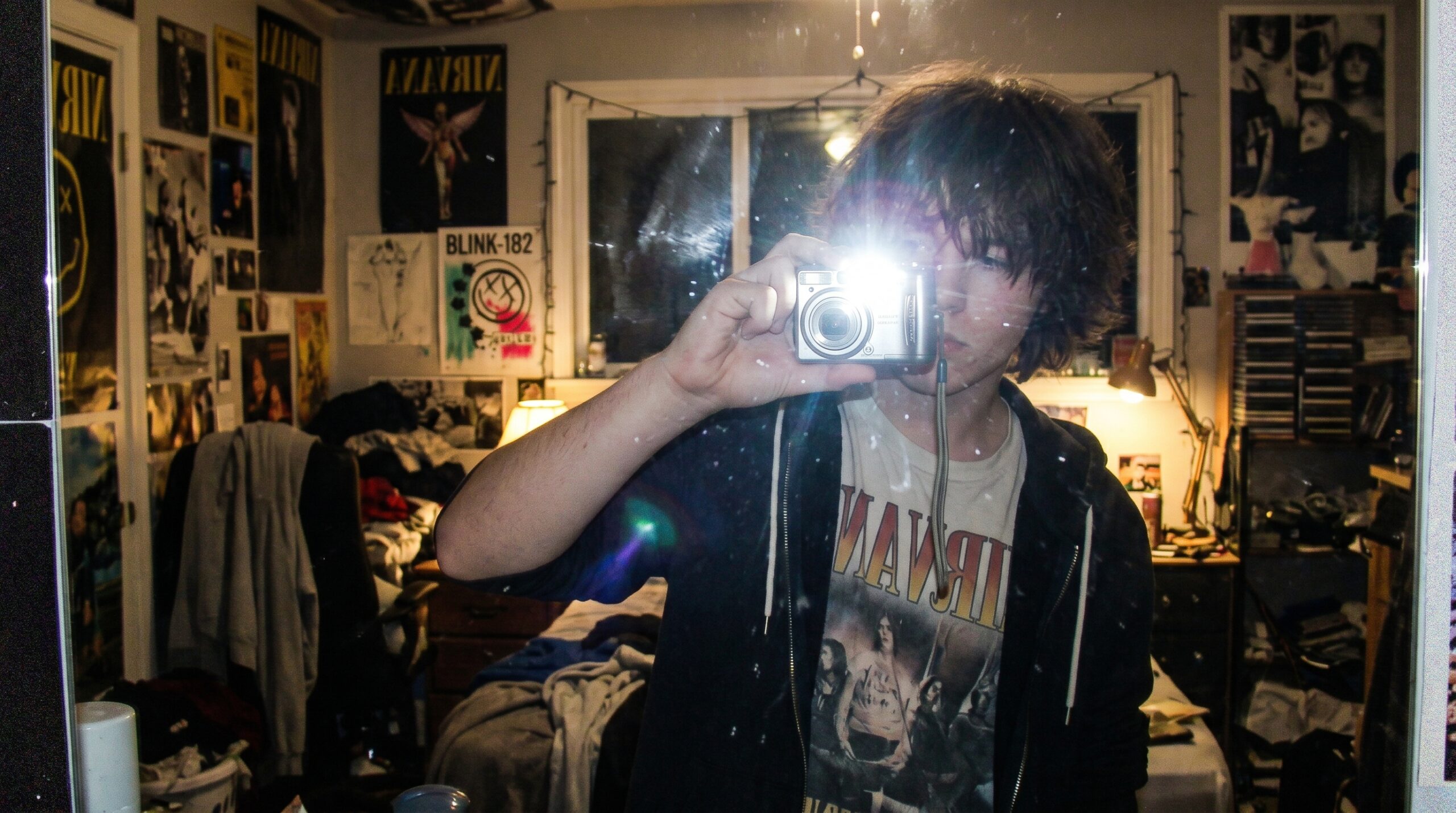
Prompt: A young person (gender-neutral) taking a selfie in a cluttered bedroom mirror, visible arm holding a compact digital camera.

Camera: Nokia 7650 (early camera phone, 2002) or a low-end Canon PowerShot A40 (2001).

Lens: Fixed wide-angle, equivalent to 35-40mm.

Lighting: On-camera built-in flash, direct and harsh, causing reflections and glare on the mirror surface. Ambient warm, dim room lighting from a desk lamp or overhead fixture.

Film Stock: N/A (simulated very low-resolution CMOS sensor, heavy digital noise).

Post-processing: Overexposed highlights on the mirror, deep shadows in the room, visible lens flare/glare from flash, high digital grain/noise, soft focus, heavy JPEG compression artifacts, slightly desaturated colours with a warm cast, visible smudges on the mirror, slightly off-kilter composition.

Focus: Softly focused on the reflection, background details slightly blurry.
This prompt instructs the AI to emulate the specific output of very early camera phones or basic digital cameras, which were characterized by extremely low resolution and poor low-light performance, hence the reliance on flash. The “cluttered bedroom” is vital for establishing the context, filled with objects that scream early 2000s. The “visible arm holding a compact digital camera” is a signature detail that distinguishes it from modern front-facing camera selfies. The “heavy JPEG compression artifacts” are a direct nod to the limitations of early digital image storage and internet speeds, which often forced heavy compression for online sharing. This kind of detailed prompt engineering for video and stills is crucial for accurate historical recreation. MySpace itself, though changed, still exists as a cultural artifact, as seen on its official website.
Fashion Forward (Backwards): Low-Rise Denim Editorial
The early 2000s ushered in a distinct fashion sensibility, and few trends were as pervasive or iconic as low-rise denim. From pop stars to everyday fashionistas, showing off a sliver of midriff or a decorated hip was the norm. Recreating this specific fashion editorial look requires understanding the photography styles prevalent in magazines like Teen Vogue, YM, or Cosmopolitan of the era. This isn’t the raw, unpolished look of a digicam snapshot; it’s a styled, professional shot, yet still carries the distinct visual cues of early digital or late-film commercial photography. It’s a key element of the broader y2k aesthetic.
These editorials often featured bright, clean lighting, sharp focus on the clothing and model, and a generally aspirational yet accessible feel. While professional, the digital photography of the early 2000s, even in high-end studios, still possessed a certain aesthetic that differs from today’s ultra-sharp, hyper-realistic imagery. There was often a subtle softness, a slightly less dynamic range, and a particular way colours rendered, sometimes with a touch more saturation or a specific colour cast depending on the lighting setup. The styling itself is paramount: the denim must be authentically low-rise, paired with period-appropriate tops, accessories, and hairstyles. The model’s pose should reflect the confident, sometimes playful, attitudes of the era.
The background for such an editorial could vary from a minimalist studio setting to an urban street scene or even a mall environment, but it would always be carefully chosen to complement the fashion. The lighting would be controlled, often using large softboxes or beauty dishes to create flattering but not overly dramatic illumination. The post-processing, while professional, would reflect the capabilities of early digital retouching software – perhaps less seamless than today, with a tendency towards vibrant but slightly artificial colours, and a focus on smoothing skin tones while retaining some texture. The goal is to capture the glossy, aspirational feel of a magazine spread from 2002.
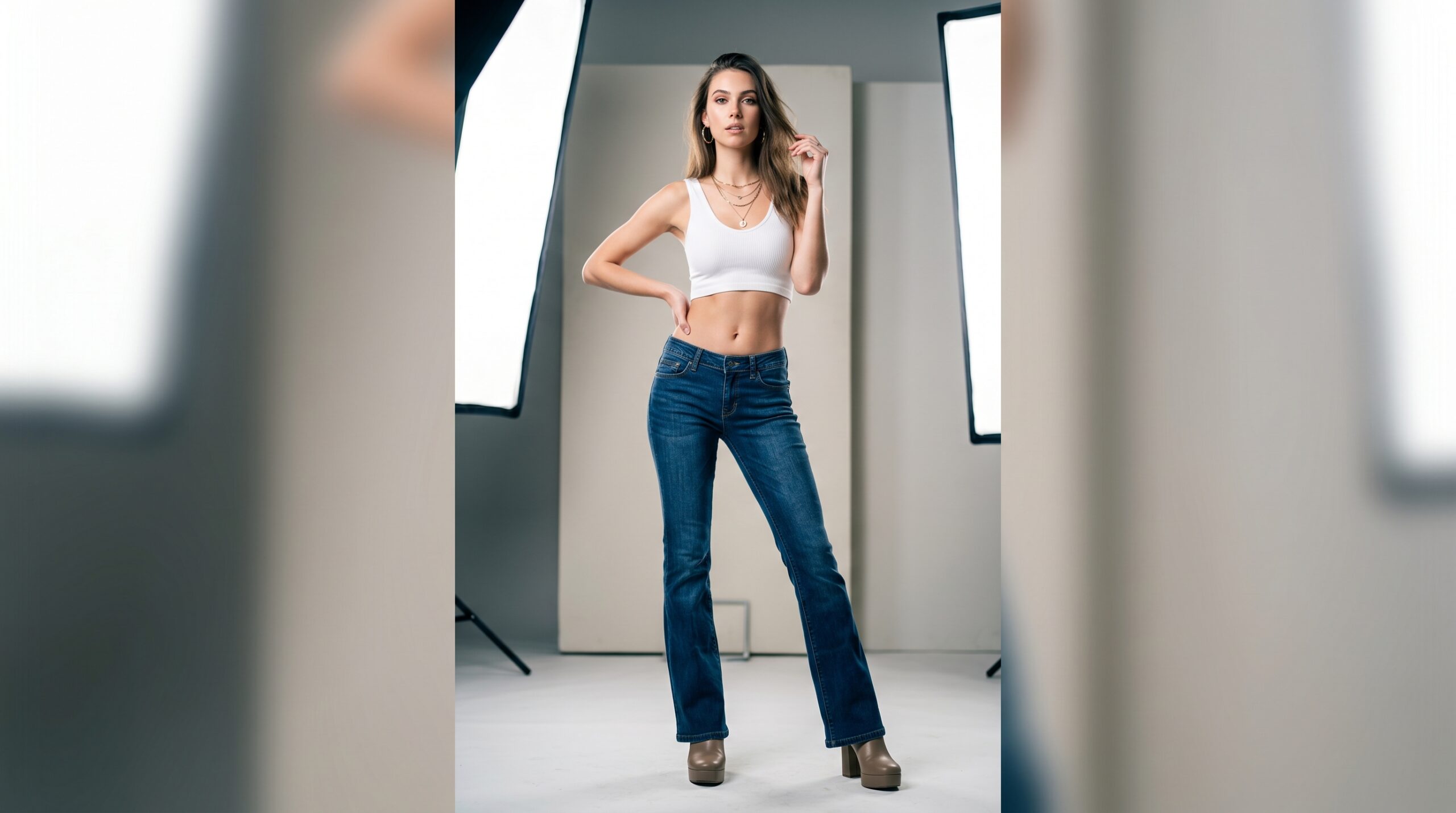
Prompt: Full-body fashion editorial shot of a slender female model, mid-20s, wearing low-rise flared denim jeans and a fitted crop top, striking a confident pose.

Camera: Canon EOS-1D (2001 model, early professional DSLR) or Mamiya RZ67 Pro II (medium format film camera).

Lens: Canon EF 85mm f/1.8 (for DSLR) or Mamiya Sekor 110mm f/2.8 (for medium format), ensuring shallow depth of field.

Lighting: Studio setup with large softboxes, key light from front-left, fill light from front-right, subtle hair light from behind, clean and bright.

Film Stock: Simulated Fuji Velvia 50 (for vibrant colours, if film) or early digital sensor simulation (for DSLR).

Post-processing: Clean and sharp, vibrant but slightly desaturated blues in denim, smooth skin tones with subtle texture, high contrast, glossy magazine print finish, subtle vignette, slight colour shift towards cool tones, minimal digital noise, high resolution.

Focus: Pin-sharp on the model's face and denim details, background softly blurred.
This prompt details the use of early professional equipment, like the Canon EOS-1D, which marked a significant shift in fashion photography towards digital. Alternatively, including the Mamiya RZ67 Pro II acknowledges the continued prominence of medium format film for its superior resolution and tonal range, often scanned for digital output. The choice of Fuji Velvia 50, a slide film known for its intense saturation and fine grain, would give that glossy, high-fashion magazine look. The “slightly desaturated blues in denim” and “subtle colour shift towards cool tones” are specific nuances that differentiate this from modern editorials. This detailed approach is a testament to the power of AI rendering vs traditional methods in replicating specific historical aesthetics. For more on the fashion trends of the era, you can refer to articles like Wired’s take on Y2K fashion.
Adorning the Millennium: Butterfly Clip Beauty
The butterfly clip was more than just a hair accessory in the early 2000s; it was a symbol of playful femininity and a ubiquitous element of the y2k aesthetic. From elaborate updos to simple accent pieces, these colourful, often glittery clips adorned the heads of countless young women. Capturing this beauty trend in an AI-generated image requires a focus on detail, soft lighting, and a slightly idealized yet authentic portrayal that evokes magazine spreads or beauty product advertisements of the era.
The aesthetic goal here is a close-up or mid-shot that highlights the hair and the clips, often paired with other period-appropriate beauty elements like subtle shimmer makeup or thin eyebrows. The lighting should be soft and flattering, emphasizing the texture of the hair and the delicate details of the clips without harsh shadows. This look is less about raw reality and more about a polished, aspirational image, similar to what you might find in a beauty section of a teen magazine. The depth of field would typically be shallow, drawing attention to the subject’s face and hair, blurring out the background to maintain focus.
The post-processing would involve a gentle touch, aiming for smooth skin tones, enhanced hair texture, and vibrant yet natural colours for the clips. Any digital noise would be minimal, and the overall image would feel clean and bright. The model’s expression would likely be soft, serene, or subtly playful, aligning with the innocent yet stylish vibe of the period. This prompt seeks to recreate a specific kind of beauty photography that was popular, showcasing a trend that defined an entire generation’s youthful style.

Prompt: Close-up beauty shot of a young woman, early 20s, with styled hair adorned with multiple small, colourful butterfly clips, soft smile.

Camera: Nikon D100 (2002 model, early consumer DSLR) or Canon EOS 3 (35mm film SLR).

Lens: Nikon AF-S Nikkor 50mm f/1.8G (for DSLR) or Canon EF 50mm f/1.4 (for film), with shallow depth of field.

Lighting: Soft, diffused natural light from a large window (golden hour effect) or a large octabox studio light, gentle fill light from below.

Film Stock: Simulated Kodak Portra 400 (for warm skin tones and fine grain, if film) or early digital sensor simulation (for DSLR).

Post-processing: Soft skin tones, enhanced hair texture and shine, vibrant colours on butterfly clips, slight glow effect, subtle vignette, minimal digital noise, slightly warm white balance, clean and clear image with a dreamy quality.

Focus: Sharp on the face and butterfly clips, eyes in sharp focus.
The choice of the Nikon D100 or Canon EOS 3 with a 50mm prime lens reflects the shift towards more accessible professional-quality photography while still retaining a certain aesthetic signature of the early 2000s. The simulated Kodak Portra 400 film stock is excellent for achieving warm, flattering skin tones and a soft, natural look, which was highly desired in beauty photography before digital became dominant. The “slight glow effect” and “dreamy quality” are specific post-processing touches that further enhance the nostalgic, idealized beauty shot. This kind of precise control over the output is where tools like AI image enhancement become invaluable. For more about specific film stocks and their characteristics, you can consult resources like Kodak’s official site for Portra film.
Shine On: The Glossy Lip-Gloss Close-Up
If there was one beauty product that defined the early 2000s, it was lip gloss. The shinier, the better. From subtle shimmers to vibrant tints, the glossy lip was a staple, and beauty advertisements of the era often featured extreme close-ups designed to highlight this very specific, reflective texture. This visual signature is an integral part of the y2k aesthetic, evoking a sense of youthful glamour and playful experimentation with makeup.
To replicate this, the AI prompt must prioritize extreme detail on the lips, emphasizing the specular highlights and the wet, almost liquid appearance of the gloss. The lighting would be critical, often direct and somewhat harsh, specifically designed to catch and reflect light off the glossy surface. Ring flashes were particularly effective for this, creating a characteristic circular reflection in the eyes and an even, direct illumination that made everything shine. The colour palette would be vibrant, focusing on the lip gloss’s shade, often complemented by subtle, clean skin tones.
The post-processing for such a shot would be meticulous. While aiming for a clean and perfected look, it would still carry the slight digital rendering characteristics of the time, perhaps a touch less “perfect” than today’s hyper-smooth beauty shots, but still highly polished. The focus would be razor-sharp on the lips, with a very shallow depth of field blurring out any background elements to ensure maximum attention on the product. The goal is to create an image that could have been torn directly from a 2000s beauty magazine advertisement, selling the dream of perfectly shiny lips.
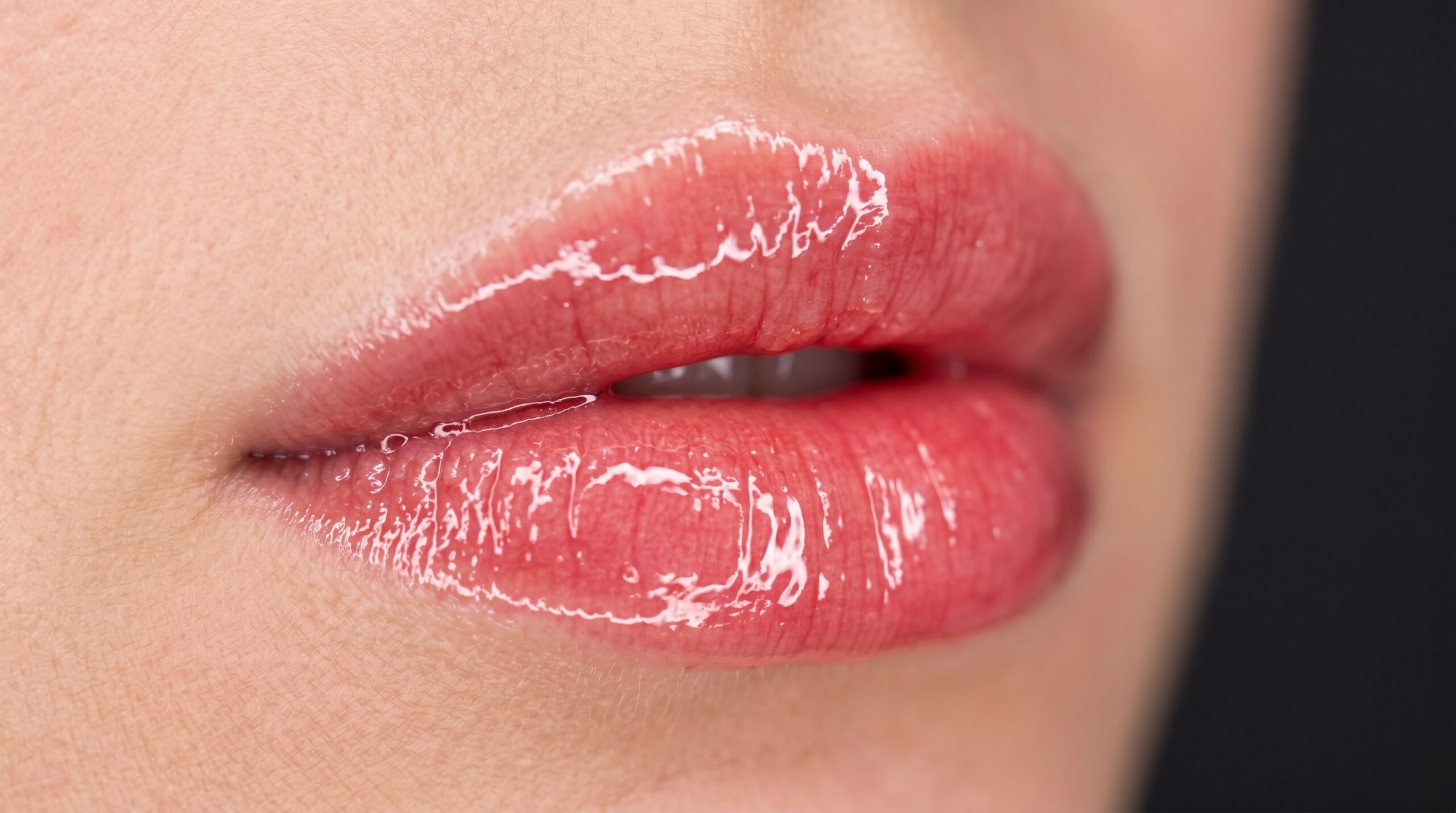
Prompt: Extreme close-up shot of a woman's lips, coated in ultra-glossy, clear lip gloss, slightly parted.

Camera: Canon EOS-1D Mark II (2004 model, professional DSLR) or Nikon D2X (2004 model).

Lens: Canon MP-E 65mm f/2.8 1-5x Macro Photo (for extreme macro) or Nikon AF Micro-Nikkor 60mm f/2.8D.

Lighting: Dedicated macro ring flash, direct and even, creating prominent specular highlights on the lips. Additional soft fill light from above.

Film Stock: N/A (simulated high-resolution CCD/CMOS sensor with minimal noise).

Post-processing: Exaggerated specular highlights on lips, high saturation for lip colour, clean and smooth skin texture around mouth, razor-sharp focus on lip texture, ultra-glossy finish, subtle diffusion on skin, vibrant but slightly artificial colour rendition, high resolution, clean background blur.

Focus: Absolute pin-sharp focus on the wet texture and contours of the lips.
The specification of macro lenses like the Canon MP-E 65mm or Nikon AF Micro-Nikkor 60mm is essential for achieving the extreme close-up and detail required for this prompt. The “macro ring flash” is a key lighting element, directly responsible for the characteristic specular highlights that define the glossy look. The “exaggerated specular highlights” and “ultra-glossy finish” are explicit instructions for the AI to push this effect, replicating the idealized beauty standards of the period. This level of granular control is a hallmark of effective Googleflow filmmaker guide principles applied to AI image generation, ensuring the output aligns perfectly with the creative vision. For understanding the impact of AI on creative industries, particularly in image generation, sources like TechCrunch’s coverage of AI image generation advancements can be insightful.
Iconic Styles: Frosted Tips Music-Video Still
The frosted tips hairstyle was an undeniable cultural phenomenon of the late 90s and early 2000s, synonymous with boy bands, pop-punk artists, and action heroes. Capturing this look within a music video still context means emulating the specific visual language of MTV and VH1 during that era: dynamic, often slightly gritty, and always with a distinct colour grade that defined early digital video or film transferred to video. This is a powerful component of the y2k aesthetic, instantly recognizable and deeply nostalgic.
Music videos of the time often utilized a mix of film and early HD video cameras, resulting in a look that could range from super-saturated and stylized to slightly desaturated and raw, depending on the genre and artist. The lighting would be dramatic, typically stage or concert lighting, with strong backlights, practical effects like smoke or fog, and often a deliberate use of lens flares to add to the visual flair. The composition would be dynamic, capturing movement and energy, reflective of the fast-paced editing style of music videos. The focus would be on the performer, their expression, and crucially, their iconic hairstyle.
Post-processing for a music video still would involve a specific colour grade, often cooler tones for rock, warmer for R&B, or highly stylized for pop. There would be a visible film grain or digital noise, a slight motion blur to imply movement, and a general aesthetic that prioritizes energy and mood over pristine photographic quality. The frosted tips themselves need to be rendered with precision, showing the distinct contrast between the bleached ends and the darker roots, reflecting light in a characteristic way.

Prompt: A still from an early 2000s pop-punk music video, featuring a male lead singer, mid-20s, with prominent frosted tips hairstyle, mid-performance on stage with a microphone.

Camera: Panasonic AG-HVX200 (2005, early HD video camera) or Arriflex 16SR3 (16mm film camera).

Lens: Canon HJ11ex4.7B (broadcast zoom for video) or Zeiss Super Speed MKIII (for 16mm film), wide aperture for shallow depth.

Lighting: Dynamic stage lighting, strong blue/purple backlights, orange practical lights on stage, subtle fog/haze, sharp spotlights on the performer.

Film Stock: N/A (simulated early digital video sensor with noticeable noise) or FujiFilm Eterna (for 16mm film, processed for high contrast).

Post-processing: High contrast, slightly desaturated overall colour palette with emphasized blues and oranges, visible digital noise/film grain, subtle motion blur, strong lens flares from backlights, gritty texture, slightly warm skin tones, sharp focus on face and frosted tips.

Focus: Sharp on the performer's face and hair, background stage elements slightly blurred.
The choice of the Panasonic AG-HVX200 or Arriflex 16SR3 highlights the transitional period in music video production, where digital video was emerging but film still held sway. The “dynamic stage lighting” and “subtle fog/haze” are crucial for creating the atmospheric conditions typical of live performances captured for music videos. The “slightly desaturated overall colour palette with emphasized blues and oranges” is a specific colour grading technique common in the era, often referred to as a “teal and orange” look before it became ubiquitous. The inclusion of “visible digital noise/film grain” is essential for the authentic texture of a music video still. This level of detail in prompting is akin to blending practical and digital effects, where the AI is instructed to simulate real-world photographic and cinematic phenomena.
Mall Culture: Candy-Coloured Mall Fashion
The mall was a quintessential social hub in the early 2000s, and its brightly lit corridors and storefronts provided the perfect backdrop for displaying the era’s vibrant, often candy-coloured fashion trends. Think Juicy Couture tracksuits, brightly coloured graphic tees, cargo pants, and platform sneakers, all presented in a casual, accessible context. This particular visual niche is crucial for capturing the broader y2k aesthetic, reflecting a time of consumerism, youth culture, and distinct stylistic choices.
The photographic style for mall fashion imagery would often mimic a candid snapshot, but with an underlying awareness of composition and styling. The lighting would primarily be the mixed fluorescent and natural light typical of mall environments, which often imparted a specific colour cast, sometimes cool, sometimes slightly greenish. The colours of the clothing would be highly saturated, popping against the often more neutral tones of the mall architecture. The poses would be relaxed, natural, reflecting teenagers or young adults simply hanging out, shopping, or posing casually for friends.
Post-processing would generally be clean but not overly stylized. Colours would be vibrant, perhaps slightly exaggerated to emphasize the “candy-coloured” aspect. There might be a subtle flatness to the image due to the often-even but uninspired mall lighting, and resolution would be typical of consumer-grade digital cameras of the time. The background details, storefronts, other shoppers, food court elements, are essential for grounding the image firmly in a 2000s mall setting, providing contextual authenticity.
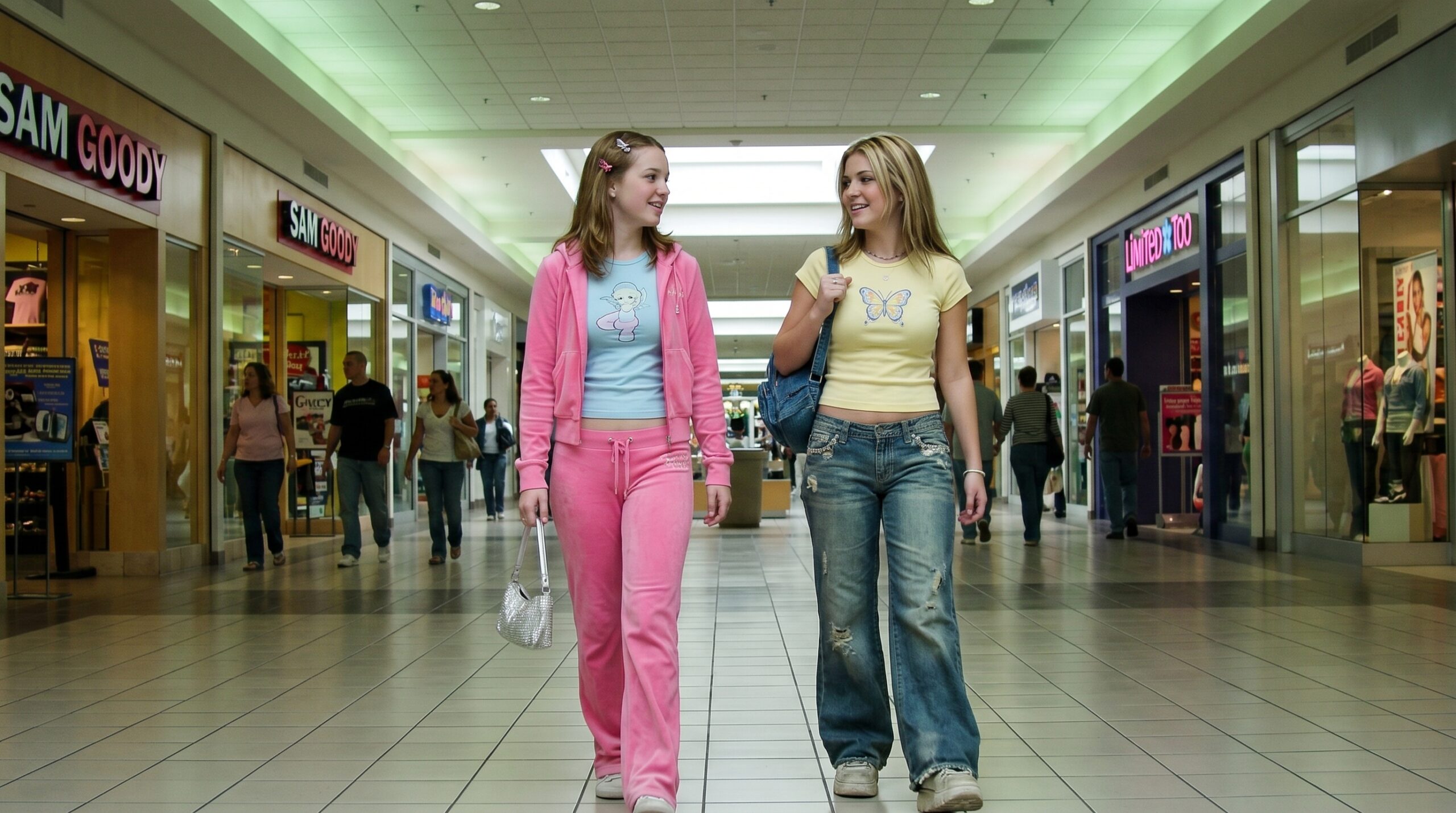
Prompt: Full-body shot of two young women, late teens/early 20s, dressed in vibrant, candy-coloured Y2K fashion (e.g., bright pink tracksuit, pastel graphic tee, low-rise jeans), walking casually through a brightly lit indoor shopping mall.

Camera: Olympus C-700 Ultra Zoom (2001 model, mid-range consumer digital) or Fujifilm FinePix S602 Zoom (2002 model).

Lens: Built-in zoom lens, around 35-70mm equivalent.

Lighting: Mixed fluorescent overhead lighting from the mall, combined with some natural light filtering from skylights or entrances. Creates a slightly cool or greenish cast, even, but not dynamic.

Film Stock: N/A (simulated early CCD sensor, moderate digital noise).

Post-processing: High saturation on clothing colours, slightly desaturated background, clean but slightly flat overall image, moderate contrast, subtle colour cast from fluorescent lights, minimal digital noise, sharp focus on subjects, background details visible but slightly softer.

Focus: Sharp on the subjects in the foreground, background mall elements in soft focus.
The selection of specific consumer digital cameras like the Olympus C-700 or Fujifilm FinePix S602 directly addresses the target aesthetic. These cameras were popular for casual photography and produced images with characteristic colour rendition and resolution. The “mixed fluorescent overhead lighting” is a critical detail, as it defines the unique, often slightly clinical, colour temperature of mall environments, which is distinct from natural outdoor light or studio setups. Emphasizing “high saturation on clothing colours” ensures the “candy-coloured” aspect is prominent, while “slightly desaturated background” helps the subjects pop. This thoughtful approach to prompts can even lead to creating an AI concept trailer that captures a specific era’s mood.
The Digital Sanctuary: Dial-Up Bedroom Interior and the Y2K Aesthetic
The bedroom of an early 2000s teenager or young adult was a personal sanctuary, a space where burgeoning digital life intersected with analog comforts. It was often cluttered with a mix of emerging technology, a bulky CRT monitor, a landline phone, perhaps an early CD player, and traditional personal items like posters, books, and trinkets. Capturing this interior requires an understanding of the specific objects, the quality of light, and the general atmosphere that defines this particular slice of the y2k aesthetic. It’s a nostalgic look back at the dawn of widespread home internet.
The aesthetic goal is to create a warm, inviting, yet slightly dated interior shot. The lighting would typically be a mix of practical lights within the room (desk lamp, overhead fixture), ambient light from a window, and the distinctive glow of a CRT monitor. The colour palette would lean towards warm tones, reflecting the cozy nature of a personal space, but with the occasional cool blue from a screen or a vibrant pop from a poster. The composition would be naturalistic, showing the room as it genuinely would be, with an emphasis on the details that scream “early 2000s.”
Post-processing would involve a warm white balance, soft shadows, and a subtle diffusion to evoke a sense of nostalgia. The image should feel lived-in, authentic, and slightly imperfect, much like a casual photo taken by a friend or family member. The focus should be on creating an immersive environment where every object contributes to the period’s authenticity, from the chunky beige computer tower to the ubiquitous clear plastic storage boxes. This scene represents a pivotal moment in domestic technology and youth culture.
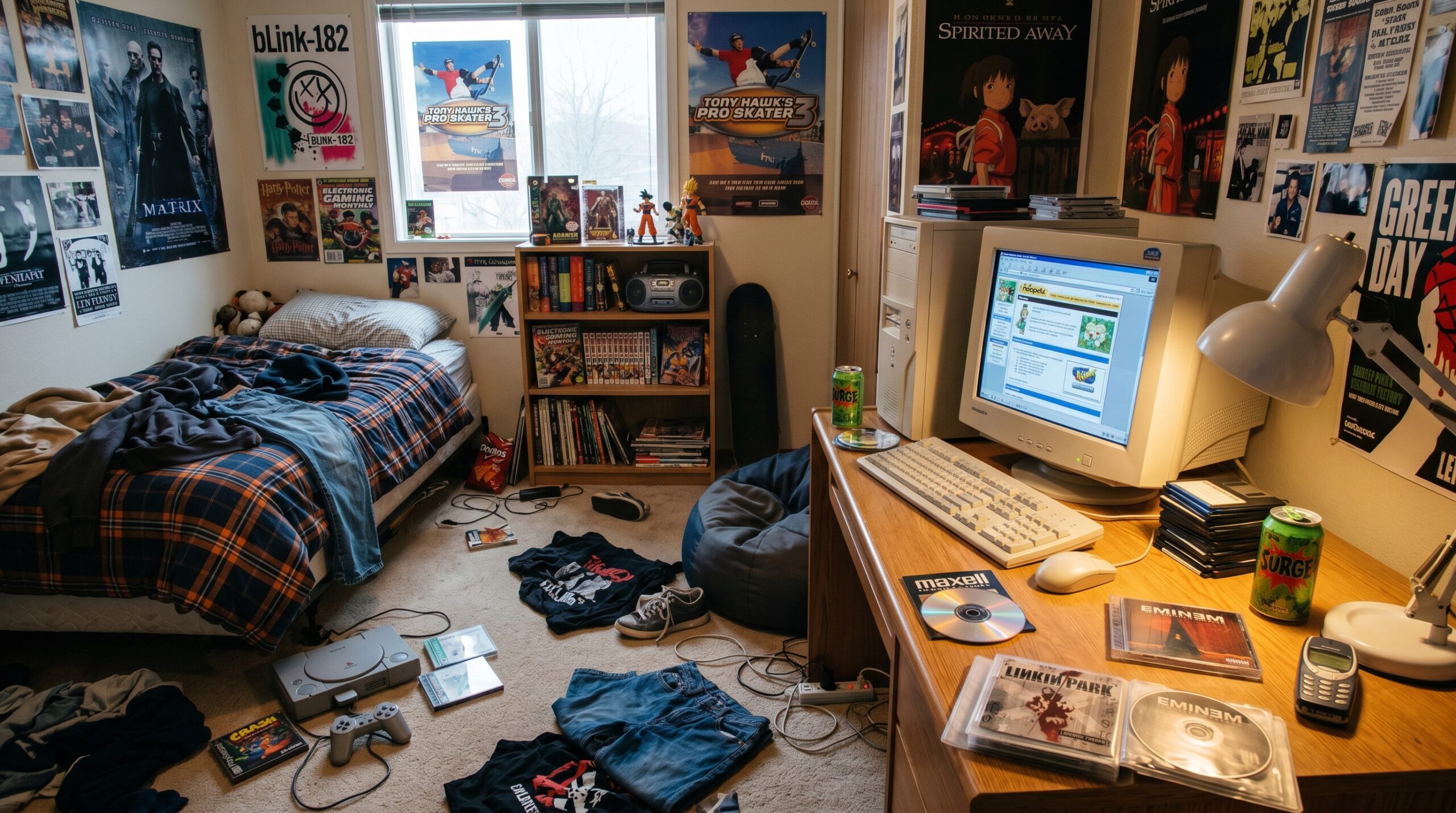
Prompt: Interior shot of a teenager's bedroom from the early 2000s, cluttered with period-appropriate items.

Camera: Fujifilm FinePix S3 Pro (2004 model, prosumer DSLR) or Minolta DiMAGE 7i (2002 model).

Lens: Fujifilm EBC Fujinon 18-55mm f/2.8-4 (for DSLR) or Minolta 28-200mm (for DiMAGE), wide-angle perspective.

Lighting: Mixed lighting: warm desk lamp glow, soft ambient light from a window (overcast day), faint blue glow from a CRT computer monitor, overhead room light off or very dim.

Film Stock: N/A (simulated early digital sensor with warm colour rendition and minimal noise).

Post-processing: Warm white balance, soft shadows, slight diffusion, moderate contrast, rich but slightly muted colours, visible texture on fabrics and surfaces, subtle depth of field to emphasize foreground clutter, no harsh highlights, authentic CRT monitor glow.

Focus: General focus throughout the room, emphasizing the foreground objects and the CRT monitor.
The choice of cameras like the Fujifilm FinePix S3 Pro or Minolta DiMAGE 7i represents consumer and prosumer digital cameras that were widely available and used for casual interior photography. The “mixed lighting” is crucial, especially the “faint blue glow from a CRT computer monitor,” which is an iconic visual cue of the era. The “cluttered with period-appropriate items” is a broad instruction that allows the AI to populate the scene with specific details like a chunky beige PC, a landline phone, CDs, and posters of bands popular in the early 2000s. The “warm white balance” and “soft diffusion” contribute to the nostalgic and cozy atmosphere. This detailed world-building through prompts can be compared to complex tasks like what the Nano Banana AI tool might achieve in specialized domains. For a broader context on the Y2K era’s cultural impact, the Y2K problem on Wikipedia provides a good starting point.
The Real Cost of AI Filmmaking Is Not the Prompts
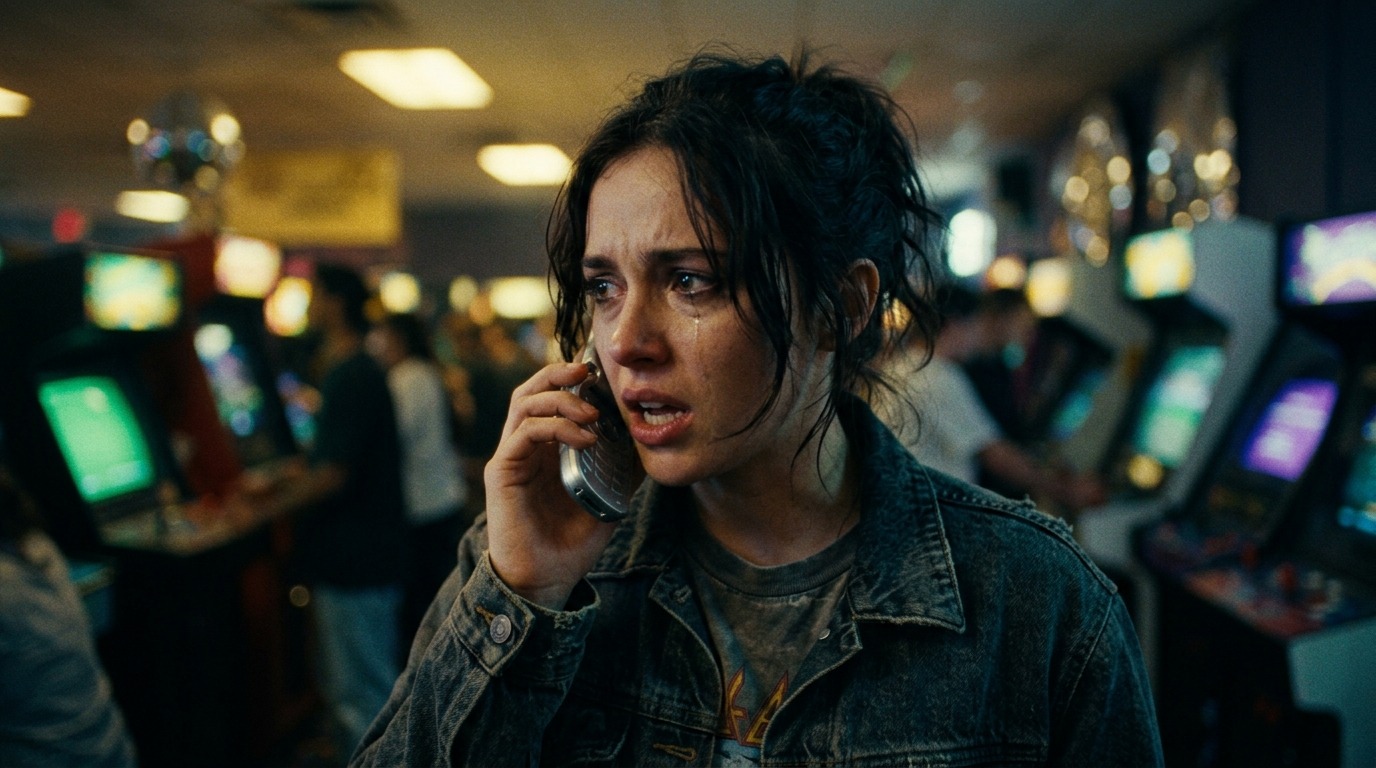
Every frame in this article came from a written prompt, and the difference between a workable result and a usable one is specificity. This is what a production-ready prompt looks like in practice, with the frame it produced:
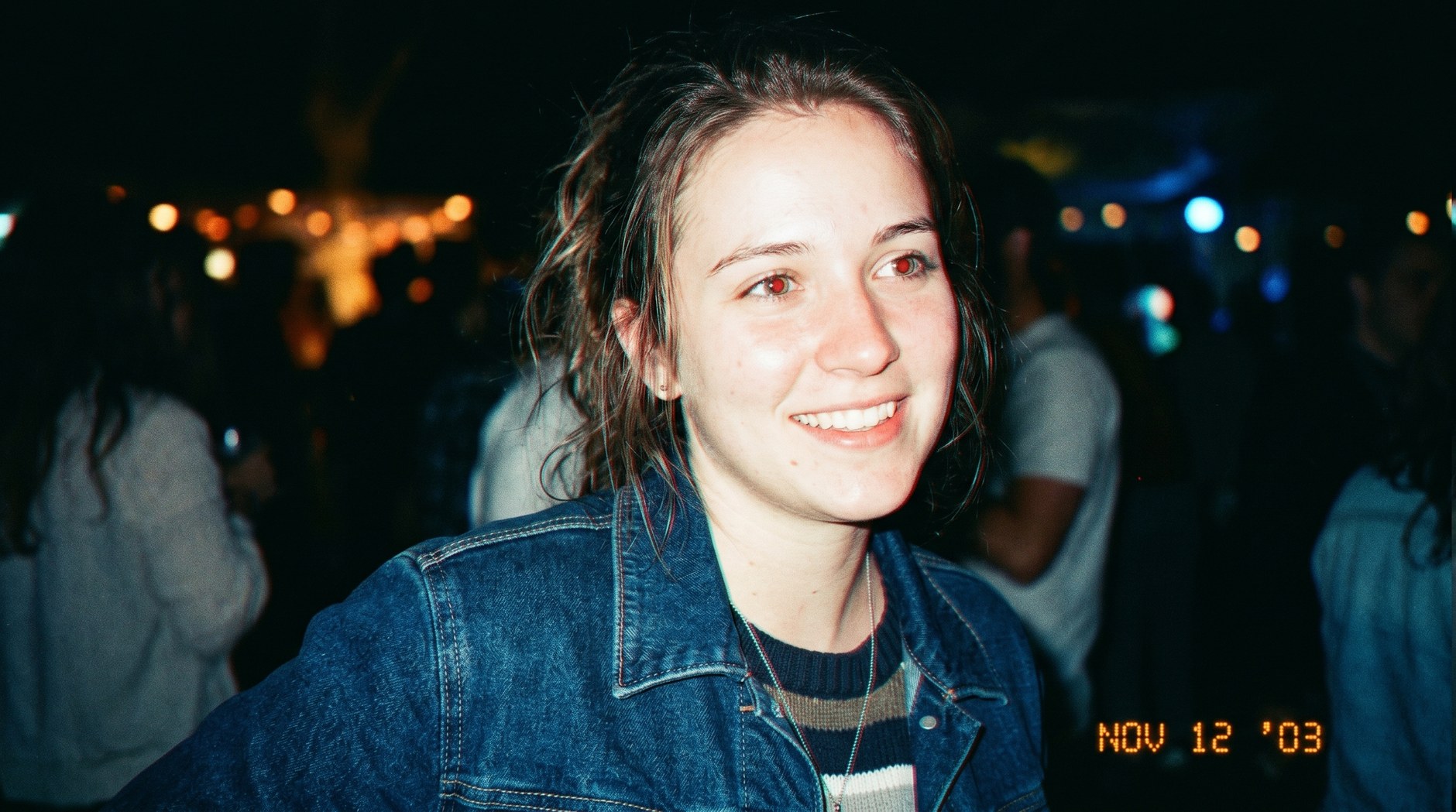
Candid portrait, medium shot, head and shoulders, slightly off-center. Captured with an early 2000s digital camera, exhibiting harsh direct on-camera flash, deep shadows, and blown-out highlights. Features distinct low-resolution sensor noise, visible JPEG compression artifacts, and blocky pixels. The color palette is vibrant yet slightly desaturated, with cool whites and warm skin tones. Post-processing includes strong chromatic aberration, prominent red-eye effect, and a subtle, faded digital timestamp in the bottom right corner. 16:9 aspect ratio. Abstract, out-of-focus background. No text overlays, logos, or watermarks. No environmental staging.The part that actually drains a budget is not the prompt writing though. It is the credit system. Most AI platforms charge a subscription, then sell credits on top of it, with a markup on every render and a counter that resets each month whether you shipped anything or not. Generate, upscale, regenerate a few takes, and a single short film chews through pricing tiers fast.
AI Render Pro Studio is the pipeline I built to cut that out. One browser workspace for the whole run: script breakdown, storyboards, image generation, more than 30 video models including Seedance 2.5 with 30-second native-audio takes, Seedance 2.0 in native 4K and Kling O3, plus retouch, upscaling past 7K and an audio studio. It costs $19 a month flat, and you plug in your own API keys, so every render is billed by the provider at cost. No markup, no credit packs, no expiring tokens. On a real project that difference is not a rounding error, it is the budget.
Try AI Render Pro Studio, $19/month →
Frequently Asked Questions
What does ‘Y2K Aesthetic’ truly encompass?
The Y2K aesthetic encompasses the fashion, technology, and design trends prevalent from the late 1990s to the early 2000s. It’s characterized by a mix of futurism (chrome, metallic, transparent plastics), early digital technology (CRT monitors, chunky cell phones), and a distinct pop culture sensibility (low-rise jeans, butterfly clips, vibrant colours). It represents a period of transition from analog to digital, with a unique visual language.
Why is precise camera and lighting information important for AI prompts?
Precise camera and lighting information is crucial because it dictates the fundamental visual characteristics of an image, such as depth of field, colour rendition, noise levels, and overall mood. Early digital cameras and lighting setups had distinct limitations and qualities that define the Y2K aesthetic; specifying these helps the AI accurately simulate those historical photographic conditions, moving beyond generic “retro” filters.
Can these prompts be adapted for different AI image generators?
Yes, these prompts are designed with enough detail to be adaptable across various advanced AI image generators (e.g., Midjourney, DALL-E 3, Stable Diffusion). While syntax might vary slightly between platforms, the core descriptive elements, camera type, lens, lighting, film stock, and post-processing, provide universal guidance for achieving the desired Y2K aesthetic. Experimentation with platform-specific parameters is encouraged.
How do I ensure the generated images don’t look too modern or generic?
To avoid a modern or generic look, emphasize the “lo-fi” and “imperfect” aspects of early digital photography in your prompts. Include details like “JPEG compression artifacts,” “digital noise,” “red-eye,” “harsh on-camera flash,” and specific colour shifts (e.g., “greenish white balance”). Explicitly mentioning specific camera models from the early 2000s also helps ground the AI in the correct technological era.
Are there any ethical considerations when generating nostalgic content with AI?
When generating nostalgic content with AI, consider the source of the AI’s training data and potential biases. Ensure the content doesn’t misrepresent historical figures or events in a harmful way. While these prompts focus on aesthetic recreation, always be mindful of cultural appropriation or perpetuating stereotypes, especially when depicting specific fashion or social trends.
Discover more from Olivier Hero Dressen Blog: Filmmaking & Creative Tech
Subscribe to get the latest posts sent to your email.

Work with Olivier
Director | CD | DP & Photographer
Specializing in commercials, music videos, AI-driven filmmaking, and cinematic storytelling for brands and production companies.
🌍 Shanghai · Paris · Los Angeles · Dubai
🎬 View Portfolio & Get in Touch