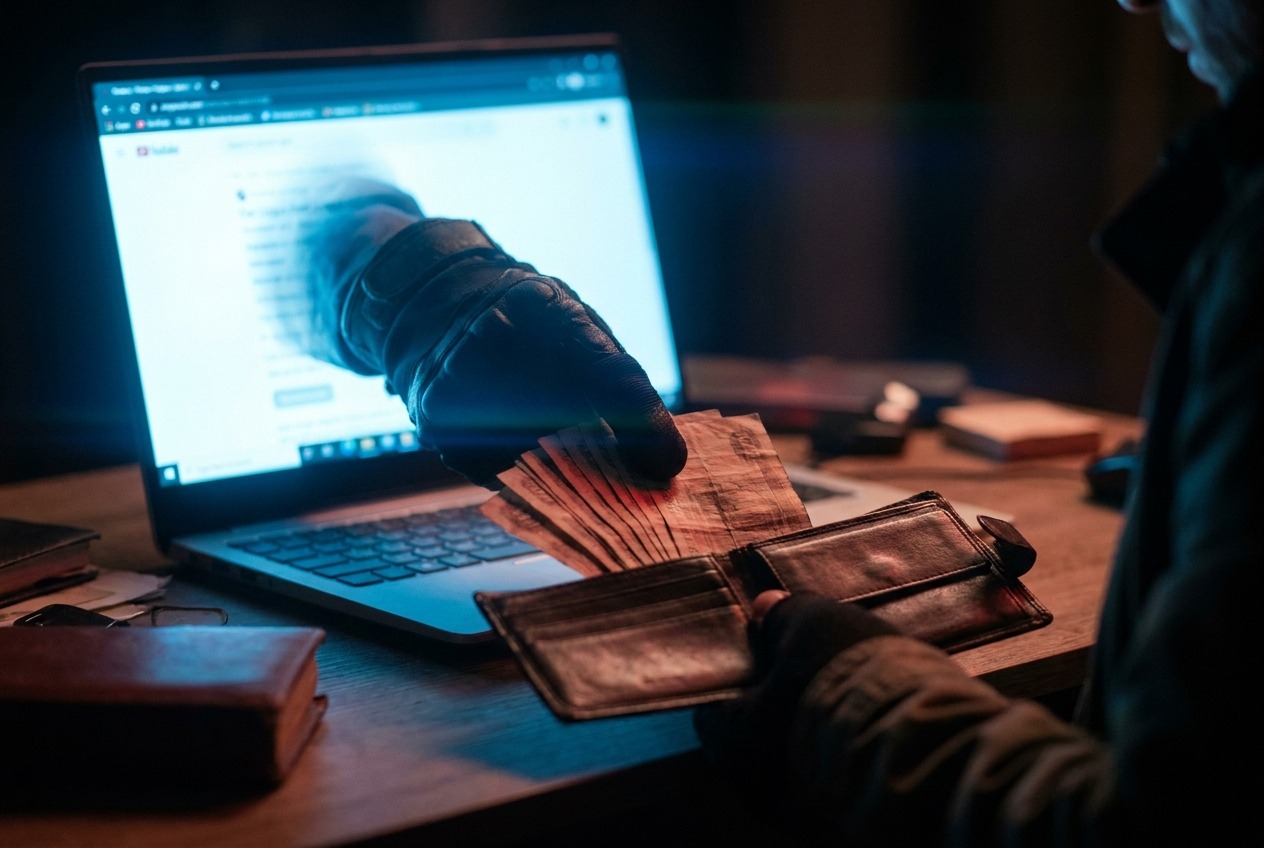

I wanted to read one article. I paid three dollars for it. Over the next two years an Academia.edu subscription I never knew I had, never asked for and never used took $566 from my account in four silent automatic payments, each one larger than the last. This is the paper trail, the emails that hid the price rises, and exactly what got some of the money back.
Need a Director for Your Next Project?
From commercials to branded campaigns—Olivier brings creative vision and technical expertise.
→ View ProjectsI am publishing it because the pattern is not unique to me. It is documented in hundreds of complaints, and once you know its shape you can spot it in your own accounts in about five minutes.
One Document About the Congo
I am writing a film set partly in the Congo, and the research took me back to the early twentieth century, into the kind of colonial-era papers and journal articles that only exist as scans on academic archives. I am Belgian, so this history is not abstract to me. I needed one specific article, an old piece that no library near me holds.
Academia.edu had it. This is the unglamorous side of making films, weeks of reading before a single frame exists. It was gated behind a paywall that looked like a one-off payment of three dollars. That is a reasonable price for a document, so I paid it, read the article, took my notes, and moved on with the script.
What I did not register was that the three dollars were not a purchase. It was the opening payment on a trial that would convert to an annual subscription, at a price that would then rise every year without anyone asking me again.
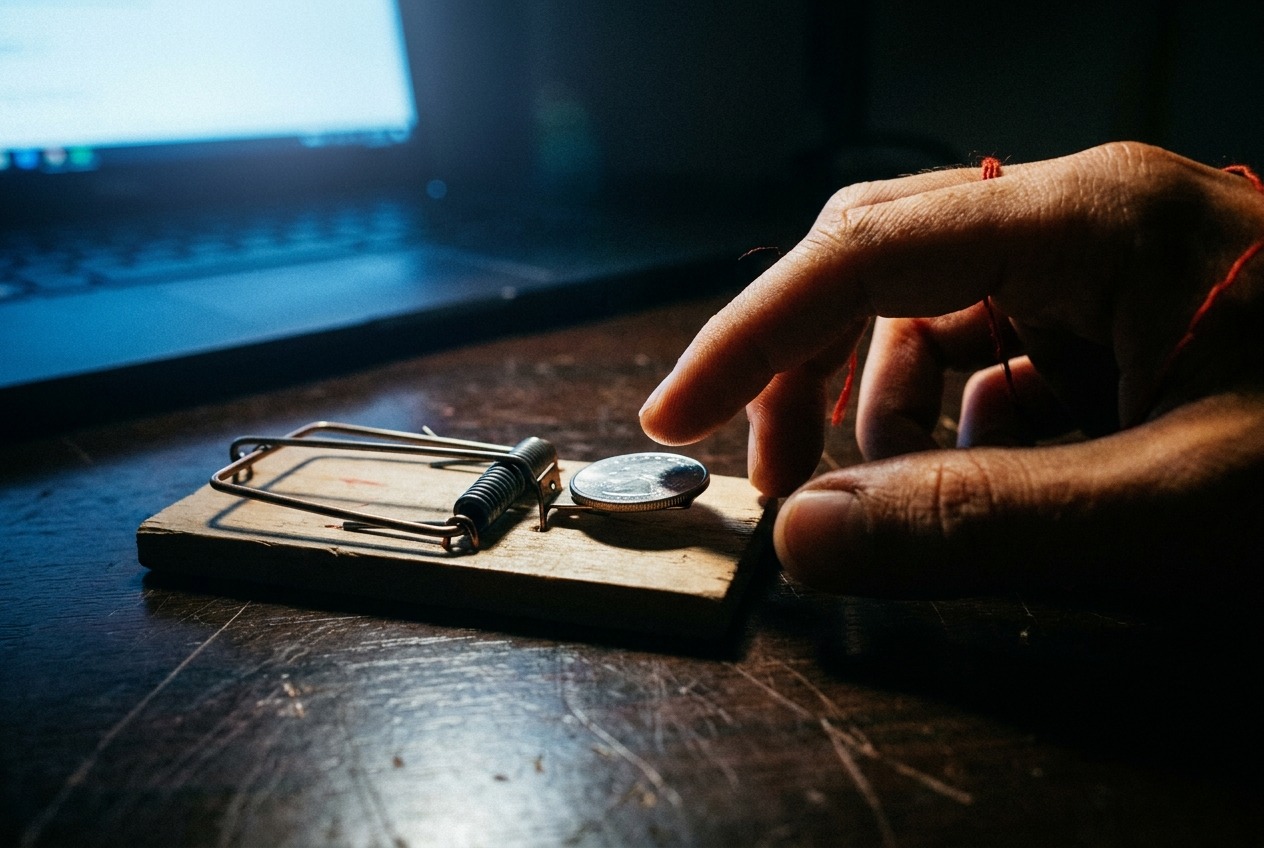
How $3 Became $566
These are the exact charges from my PayPal history. Every one of them is labelled Automatic Payment.
| Date | Charge | What it was |
|---|---|---|
| 17 July 2024 | $3.00 | The trial charge |
| 16 August 2024 | $89.00 | Trial converts to a paid year |
| 12 September 2025 | $178.00 | Renewal, price doubled |
| 27 August 2026 | $296.00 | Renewal, up another 70 percent |
| Total | $566.00 | 25 months |
Read the middle column top to bottom. Three, eighty-nine, one hundred and seventy-eight, two hundred and ninety-six. Each renewal was priced higher than the last, and at no point was I asked to agree to the new price. It was simply taken.
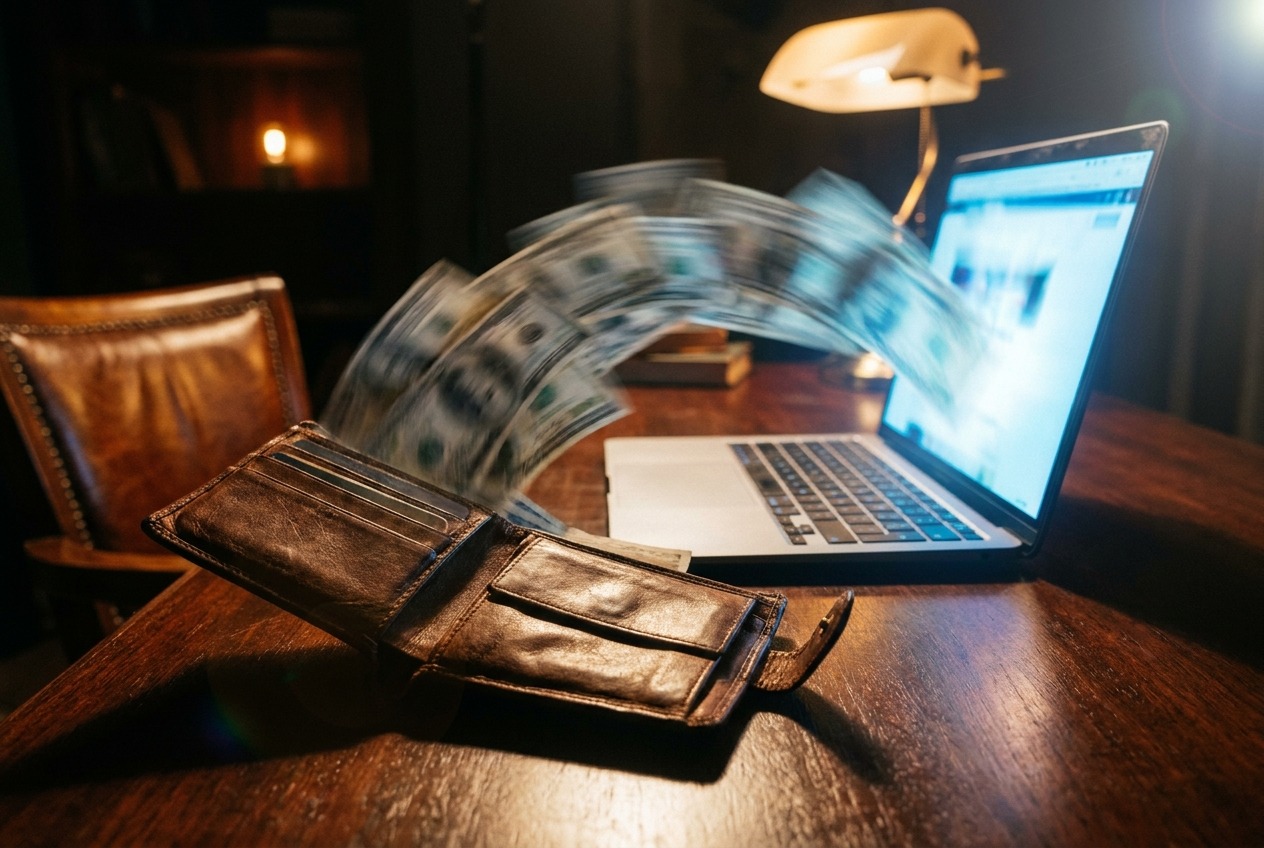
The Emails That Kept Me From Noticing
Two years is a long time not to notice a subscription. Part of the answer is that I am busy. The larger part is that the emails were built to look relevant while saying nothing.
Academia.edu sends a steady stream of messages built on keyword matching. One told me that the name Olivier Hero was mentioned in 59 papers. That reads, at a glance, like my work is being cited and discussed. It is not. Olivier Hero is my artist name, not my full name, and not one of those papers had anything to do with me. The system had matched a couple of words to strangers with similar names and dressed the result up as news about my career. It is an automated string search designed to make you open the email and feel that the platform is about you. I opened some. I half trusted them for a while. That was the point. And to be clear, whether that feature worked or not is beside the point. I did not want it. I wanted one article, and I paid the three dollars they asked for it.
I get tens of thousands of emails a year, and I doubt I am unusual in that. So after a while these went where most people’s noise goes: ignored, unread, deleted in batches. Which meant that in two years I never once saw a plain message that said, in one line, you are about to be charged this amount on this date. That email does not exist in my inbox. What exists instead are hundreds of automated notices about papers that were never mine.
Then there is the one email that actually mattered, the one that disclosed the renewal price was rising 70 percent. It was not a billing notice. It was a routine-looking digest of recommended papers, several paragraphs of research suggestions I had not asked for, and the price line was at the very bottom, after all of it. If you scanned the subject and the first screen, which is how anyone reads a recommendation email, you missed it. I missed it.
My honest reaction is that it feels borderline fraudulent. I am not a lawyer, and fraud is a legal word with a legal meaning, so I will use the term the consumer-protection world uses instead: a dark pattern. An interface designed so that the disclosure technically exists while the reader is steered away from ever seeing it. Whatever you call it, the effect was that I was auto-enrolled, auto-renewed, and then had my price raised 70 percent, without a single moment where I knowingly said yes.
I Found It by Accident
I did not sit down to audit my subscriptions. I was in PayPal for an unrelated reason, it is where a lot of the money on real productions moves through, and a $296 line item caught my eye because I could not place it. I went back through two years of transactions and the ladder was sitting there in plain sight, four automatic payments to a site I had used for one afternoon. That is the part that should worry you: I only found it because I happened to be looking at the right screen for a different reason.
What I Did, in Order
This is the sequence, including the two things that did not work, because those are as useful as the thing that did.
- Cancelled on Academia.edu itself. Straightforward, and not enough on its own.
- Found the billing agreement underneath. PayPal still showed an active automatic billing agreement with Academia.edu, separate from anything on the site. Cancelling the subscription on the merchant side does not cancel the authorisation on the payment side. I cancelled that too. If you do only one thing from this article, check for this.
- Emailed premium-support@academia.edu asking for a refund of the pattern, not just the last charge.
- Read the Better Business Bureau profile. Academia.edu carries hundreds of complaints over the past three years, and a large share describe exactly this: a one-dollar article that became a triple-digit annual charge with no clear moment of consent. One complainant describes paying a dollar to view an article and later finding over three hundred dollars taken. Another says the one-dollar article became a charge of 169 a month later and was never clearly presented as a trial. Trustpilot has more than eight hundred reviews telling the same story in different currencies.
- Tried to file a BBB complaint and could not. The BBB only accepts complaints from addresses in the United States and Canada. I live in Bangkok. So the main public complaint record for a company with a worldwide customer base is closed to most of that base. That quietly protects the company, and it is worth knowing before you spend time on it.
- Filed a PayPal dispute instead. I cited the full two-year pattern, attached the buried-disclosure email, and disputed the most recent charge.
- PayPal refunded the $296 within minutes. No investigation period, no back and forth.
What Came Back and What Did Not
I got $296 back. The earlier three charges, $3 plus $89 plus $178, a total of $270, are gone. Payment disputes generally only reach recent transactions, and nobody is going to reopen a charge from two summers ago. So roughly half of what was taken stays taken.
I am including that because it is the honest version, and because it changes the advice. A dispute is not a time machine. The clock on recovering money starts the day the charge lands, and every month you do not look is money that becomes permanent. This is not the first time I have had to write one of these. My $21,000 towing story had the same lesson at the bottom of it.
Do This Today
- Open your PayPal automatic payments list right now. Settings, then Payments, then Automatic payments. Most people have never looked at it. Do the same on any card that has a merchant list.
- Treat merchant cancellation and payment authorisation as two separate things. Cancel both. A cancelled account with a live billing agreement underneath it is still a live billing agreement.
- Screenshot any renewal or price-change email the moment it arrives, even if you plan to ignore it. It is your evidence later, and buried disclosures are exactly the kind of thing a dispute reviewer wants to see.
- Go to the payment provider before the complaint board. A PayPal or card dispute on the latest charge is faster and more effective than any review site, and it works from any country.
- Do not wait. The most recent charge is the recoverable one. Older charges become harder or impossible to touch the longer they sit.
Why My Own Apps Are Priced the Way They Are
I build software as well as films, and experiences like this one are the reason both of my apps are priced the way they are. No trial that quietly becomes a subscription. No credit packs. No renewal that costs more than the last one. A flat number you can see before you pay, and a free tier that stays free.
AI Render Pro Studio is my AI film production suite: script breakdown, storyboards, image and video generation across more than 30 models, retouch, upscaling and audio in one browser workspace. It costs $19 a month flat, and you bring your own API keys, so every render is billed by the provider at cost. That is the opposite of the credit-platform model, where you pay a subscription and then pay again, with a markup, for every generation. I have written about what it actually does and about what different models really cost per image, because the cost side is the part most people never see until the bill arrives.
Production Mogul is the other one, a browser app that turns a blank page into a client-ready production quote: budget, crew, gear, conditions, schedule and PDF in one document, with rates that adjust to the market you are shooting in. The full app is free to use, with no signup and no card. Exporting, saving and printing unlock at $19 a month or $190 a year, and that price does not climb while you are not looking. It exists because filmmakers and photographers were being asked to pay enterprise software prices for what is, in the end, a well-built quote. The rest of what I actually use day to day is on my creative tools page.
Try Production Mogul free AI Render Pro Studio, $19/month
I got my article. The film is still being written. Everything else that happened, the enrollment, the renewals, the 70 percent increase, was money taken for something I never wanted, from someone who never said yes. That is the whole story, and the receipts are above.
Frequently Asked Questions
Is the $1 or $3 Academia.edu trial a one-time payment?
No. Whether it is priced at one dollar or three, it is the opening charge on a trial that converts to a paid annual subscription. The subscription then auto-renews each year, and in my case and many documented others, at a higher price each time.
How do I cancel an Academia.edu subscription properly?
Cancel it in your Academia.edu account settings, then also cancel the automatic billing agreement in PayPal or with your card issuer. The two are separate, and cancelling only on the website can leave the payment authorisation active.
Will Academia.edu refund a renewal charge?
Their stated policy is that trial and first-year payments are refundable while renewals are not. That policy is the reason so many complaints exist. A PayPal or card dispute on the most recent charge is the route that worked for me.
Can I file a BBB complaint against Academia.edu from outside the US?
No. The Better Business Bureau only accepts complaints from US and Canadian addresses. If you are elsewhere, go straight to a payment dispute, and leave a review on Trustpilot if you want the pattern on record.
How far back can a PayPal dispute recover charges?
In practice, only recent transactions. My $296 charge from a few weeks earlier was refunded within minutes. The three earlier charges totalling $270 were not recoverable. Dispute the latest charge quickly and do not assume older ones will come back.
What is a dark pattern?
A dark pattern is an interface or communication designed so that a disclosure technically exists while the user is steered away from noticing it. Burying a 70 percent price increase at the bottom of a recommendations email is a textbook example.
Others Who Hit the Same Wall
I am not the interesting part of this story. The interesting part is how many people have written almost exactly the same account, on completely unrelated corners of the internet, over several years. A few I found without trying hard:
- A Reddit thread on Academia.edu quietly raising its annual price
- An Apple Community thread from users trying to work out where the charge came from
- Lee Hopkins, a refund warning about Academia.edu
- Clueless Doctors, a 2023 warning about hidden Academia.edu charges
- Hunter Baker on LinkedIn, on where to actually find academic papers for free
- A discussion in the BAJR Archaeology group on Facebook
Different countries, different currencies, different professions. Same shape every time: a small payment for one document, a silent conversion, a renewal nobody agreed to, and a refund refused. If you have your own version, the comments are open.
References
Discover more from Olivier Hero Dressen Blog: Filmmaking & Creative Tech
Subscribe to get the latest posts sent to your email.
Work with Olivier
Director | CD | DP & Photographer
Specializing in commercials, music videos, AI-driven filmmaking, and cinematic storytelling for brands and production companies.
🌍 Shanghai · Paris · Los Angeles · Dubai
🎬 View Portfolio & Get in Touch