
Key Takeaways
- First insight, The historical parallel between photography’s disruption of portrait painting and AI art’s impact on contemporary creative fields is fundamentally flawed, as the underlying mechanisms and implications for human creativity differ vastly.
- Craft highlight, While photography introduced a new technical craft, AI art shifts the creative locus from direct manual skill to prompt engineering and curation, redefining the very essence of artistic production and the role of the human creator.
- Industry context, Photography created new markets and professional categories; AI art, conversely, threatens to devalue human creative labor by democratizing (and often commoditizing) image generation, raising unprecedented questions about intellectual property and economic viability for artists.
- Bottom line, The disruption caused by AI art is not a mere evolution of tools but a paradigm shift that challenges the conceptual foundations of art, authorship, and the intrinsic value of human ingenuity in ways photography never did.
The advent of ai art has triggered a wave of comparisons to photography’s impact on painting in the 19th century, a historical parallel frequently invoked to contextualize the current creative upheaval. This article argues that such comparisons, while superficially appealing, fundamentally misrepresent the nature of the disruption. To truly understand the seismic shifts occurring, we must delve into the nuanced differences between “From Portrait Painters to Prompt Engineers: Creative Disruption Then and Now,” recognizing that AI’s challenge to creativity is not merely a technological evolution but a conceptual revolution.
Need a Director for Your Next Project?
From commercials to branded campaigns—Olivier brings creative vision and technical expertise.
→ View ProjectsThe Indexical vs. The Synthetic: Nature of Creation
When photography emerged in the 19th century, it presented a novel method of capturing reality. A photograph was, by its very nature, an indexical image, a direct physical imprint of light from a specific moment in time and space. The camera, a mechanical extension of the human eye, recorded what was demonstrably there. This direct link to reality was photography’s revolutionary power, offering unparalleled accuracy and speed in representation. Portrait painters, who had for centuries earned their living by rendering likenesses, suddenly faced a competitor that could produce an objectively “truer” image faster and cheaper. This forced painting to re-evaluate its purpose, moving away from mere replication towards interpretation, emotion, and abstraction, ultimately liberating it to explore new conceptual frontiers. The disruption was profound, but it was a disruption rooted in a new form of recording reality.
Contrast this with the generative process behind ai art. AI models do not capture reality; they synthesize it. They operate by analyzing vast datasets of existing human-created images, extracting patterns, styles, and concepts, and then generating new images based on these learned statistical relationships. An AI-generated image is not an index of a real-world scene but a statistical hallucination, a sophisticated pastiche derived from millions of prior human artistic endeavors. It’s a simulation, not a capture. This fundamental difference in origin profoundly impacts how we perceive its output and its relationship to human creativity. Where photography offered a new window onto the world, ai art offers a mirror reflecting and re-mixing our collective visual history. This distinction is critical when we discuss “From Portrait Painters to Prompt Engineers: Creative Disruption Then and Now,” as the former introduced a new lens, while the latter introduces a new kind of creative engine that operates on the very fabric of existing art. The implications for originality and artistic intent are thus far more complex and challenging with AI. Indexicality on Wikipedia provides a deeper dive into this concept. This fundamental difference in how images are brought into existence means that the challenges posed by ai art are not merely about efficiency or accuracy, but about the very definition of creation itself. The disruption isn’t just about a new tool, but a new mode of being for the image. Artists are now grappling with AI art direction prompts as a core part of their workflow, fundamentally altering the genesis of an artwork.
From Craftsmanship to Curation: The Evolution of Skill
The skills required to be a successful portrait painter in the pre-photographic era were immense: mastery of anatomy, color theory, brushwork, composition, and the nuanced ability to capture a subject’s likeness and character. Photography, while offering a different skill set, still demanded significant craftsmanship. A photographer needed to understand optics, lighting, chemical processes in the darkroom, and the art of composition. It was a new craft, requiring technical proficiency and an artistic eye to manipulate light and shadow, to frame a moment, and to develop an image from latent potential to tangible print. The transition “From Portrait Painters to Prompt Engineers: Creative Disruption Then and Now” for photography involved a shift in the medium of craft, not an abolition of it.
With ai art, the nature of skill undergoes a far more radical transformation. The traditional artistic skills of drawing, painting, sculpting, or even operating a camera are largely bypassed. Instead, the “prompt engineer” or AI artist focuses on articulating concepts through textual prompts, curating outputs, and iteratively refining parameters. While this requires a new form of imaginative articulation, critical thinking, and aesthetic discernment, it does not demand the decades of manual dexterity and visual training that defined traditional art forms. The machine handles the rendering; the human guides the machine. This isn’t to say there’s no skill in prompt engineering, but it’s a skill set fundamentally different from the physical, tactile engagement with materials that characterized both painting and early photography. The disruption is not merely the introduction of a new craft, but a redefinition of what “craft” means in the context of visual art. It raises questions about the value of human touch and the direct expression of skill. A recent article in Wired on prompt engineering highlights this new skill. This shift impacts how artists perceive their own value and how society values art produced without traditional craft. The discussion around AI rendering vs traditional is directly relevant here, as it underscores the divergence in skill sets required.
Authorship and Intent: A Blurring Line
In the era of portraiture, authorship was unequivocal. The painter was the author, their hand, eye, and intention directly responsible for every brushstroke. With photography, authorship remained clear: the photographer composed the shot, pressed the shutter, and developed the image. Their creative choices, lighting, angle, subject matter, timing, defined the work. The intent was the photographer’s, even if the camera was a mechanical aid. The “From Portrait Painters to Prompt Engineers: Creative Disruption Then and Now” narrative always centered on the human creator.
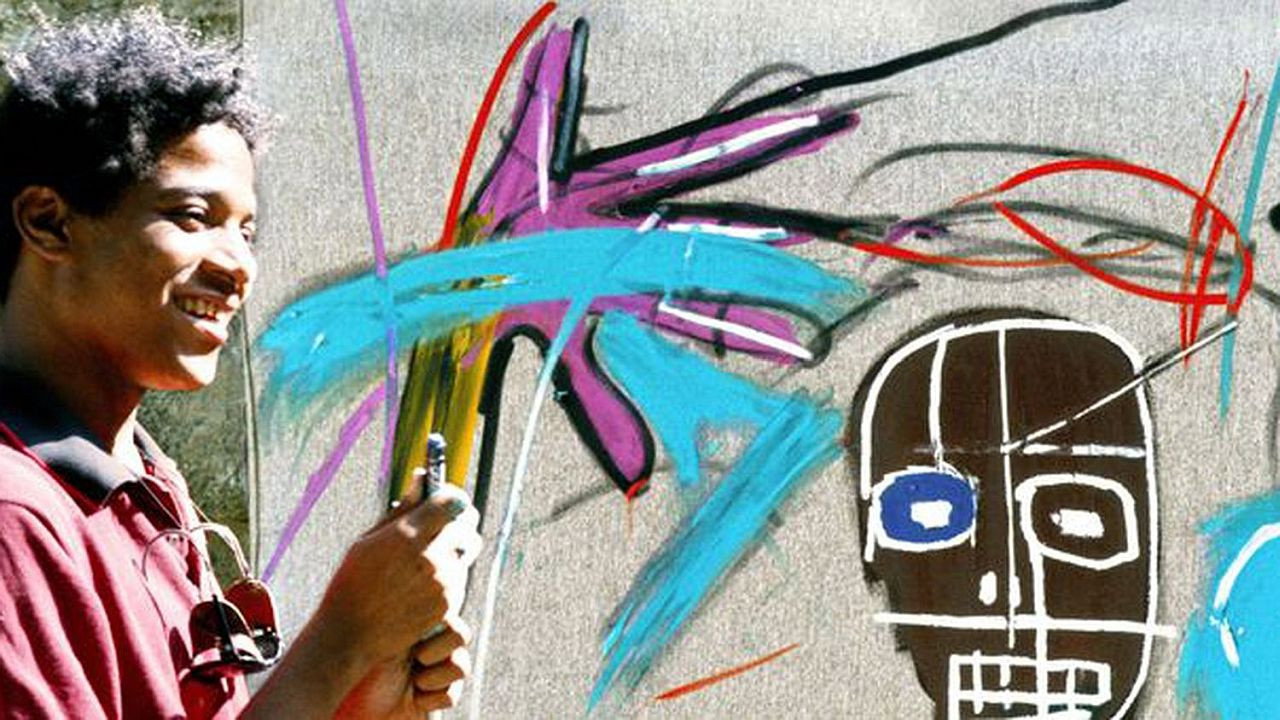
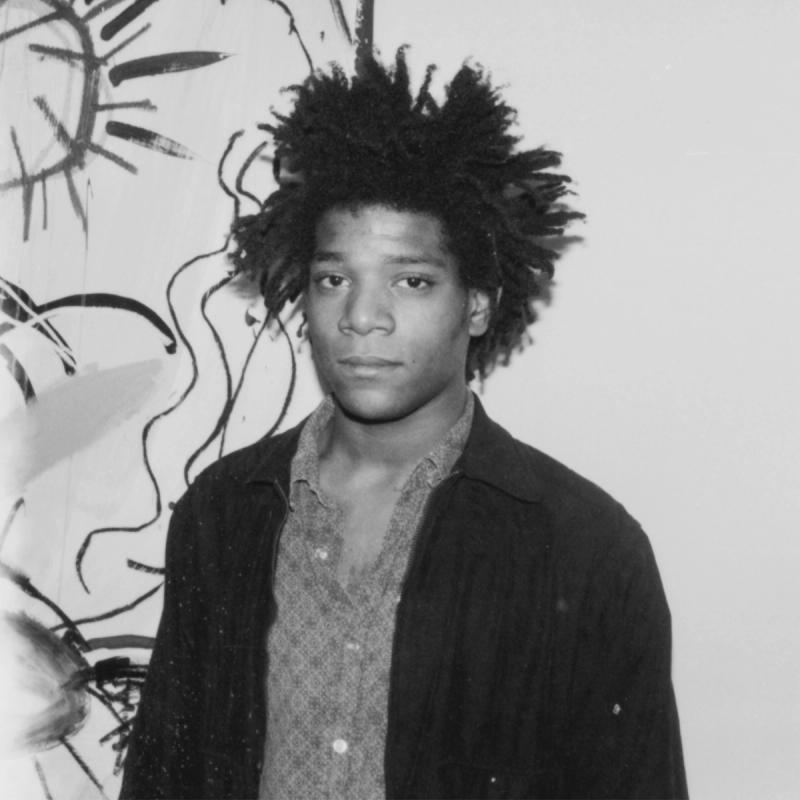
AI art, however, introduces a profound ambiguity regarding authorship and intent. When a prompt engineer inputs “a neo-expressionist painting of a robot contemplating a sunset in the style of Jean-Michel Basquiat, highly detailed, dramatic lighting,” who is the author? Is it the prompt engineer, whose words initiated the process? Is it the developers of the AI model, whose algorithms and training data made the generation possible? Is it, in part, the countless artists whose work was ingested into the training data, often without their consent or attribution? The intent becomes fractured. The prompt engineer’s intent is to guide, but the AI’s “intent” (if one can even call it that) is to fulfill a statistical probability based on its training. The output is a collaboration, but one where the human role is more akin to a director guiding an infinitely skilled, yet non-sentient, assistant. This fundamentally challenges legal frameworks around copyright and intellectual property, as noted in ongoing AI training data lawsuits reported by Reuters. The very concept of a singular, intentional author, central to Western art history, is destabilized by ai art. The ambiguity surrounding authorship in ai art stands in stark contrast to the clear lines drawn in photography and painting, forcing a re-evaluation of what it means to “create.” This is a key difference in the “From Portrait Painters to Prompt Engineers: Creative Disruption Then and Now” comparison, where AI introduces a truly novel question of agency. The legal battles surrounding AI training data lawsuits underscore this unresolved issue.
Economic Disruption: New Markets vs. Devaluation
When photography disrupted portrait painting, it did not entirely obliterate the market for painted portraits. Instead, it carved out a new, more accessible market for photographic portraits, creating new professions and industries around camera manufacturing, film development, and photographic studios. Painting, while challenged, diversified into new forms, finding patrons for landscapes, still lifes, and eventually abstract works that photography could not replicate in the same expressive manner. The economic “disruption” of photography was largely one of market expansion and diversification, with new jobs emerging alongside old ones adapting. It was a clear case of “From Portrait Painters to Prompt Engineers: Creative Disruption Then and Now” that saw new opportunities.
The economic impact of ai art presents a far more ominous picture for many existing creative professionals. AI models can generate high-quality images, illustrations, and concept art at speeds and volumes that no human can match, and often at little to no cost. This capability directly threatens the livelihoods of illustrators, graphic designers, concept artists, stock photographers, and even certain aspects of filmmaking (e.g., storyboarding, matte painting). The concern is not merely about a new competitor, but about the potential for widespread devaluation of human creative labor. If an AI can generate a thousand variations of a logo or concept art in minutes, what is the market value of a human artist’s single, carefully crafted piece? This isn’t just about market share; it’s about the fundamental economics of creative work. The potential for ai art to flood the market with cheap, algorithmically generated content could depress prices and reduce demand for human-made art across numerous sectors, as discussed by TechCrunch on AI art ethics. This represents a far more existential threat to creative economies than photography ever posed to painting, where the latter simply redefined value while the former risks eroding it entirely. The rapid rise in Nvidia AI investments in creative tools only accelerates this economic shift.
The Ethical and Legal Minefield of AI Art
Photography, upon its invention, certainly raised ethical questions, primarily concerning privacy (e.g., candid street photography) and potential misuse. However, the legal frameworks for copyright, ownership, and intellectual property were relatively straightforward: the person who took the photograph owned the copyright. Over time, laws adapted to accommodate this new medium, establishing clear precedents for its use and protection. The “From Portrait Painters to Prompt Engineers: Creative Disruption Then and Now” journey for photography was one of integration into existing legal structures, with modifications.
Ai art, by contrast, has plunged the creative world into an unprecedented ethical and legal quagmire. The core issue lies in the training data: AI models are trained on vast corpora of existing images, many of which are copyrighted works scraped from the internet without the explicit consent or compensation of the original creators. This raises fundamental questions about fair use, derivative works, and the rights of artists whose styles and creations are being mimicked and monetized by AI systems. Furthermore, the potential for deepfakes and the generation of harmful or misleading content introduces new ethical challenges related to truth, authenticity, and manipulation. There are no clear legal precedents for who owns the copyright to an AI-generated image, especially one that heavily references existing styles or works. Governments and legal bodies worldwide are scrambling to address these issues, but the pace of technological development far outstrips legislative response. This means that unlike photography, which largely fit into existing legal paradigms with minor adjustments, ai art demands a complete rethinking of intellectual property law and ethical guidelines. The debate around AI copyright law is a testament to this profound legal disruption. The complexities of AI search changing creative work further compound these legal and ethical dilemmas, as the provenance of generated content becomes increasingly obscure.
The Role of Human Experience and Originality
A portrait painter infused their work with their unique interpretation of the subject, their personal style, and their lived experience. Even when striving for realism, the human element, the artist’s hand, their emotional connection, their subjective gaze, was undeniably present. Photography, too, allowed for immense personal expression. A photographer’s perspective, their empathy for the subject, their unique way of seeing the world, all contributed to the originality of their work. The “From Portrait Painters to Prompt Engineers: Creative Disruption Then and Now” narrative highlighted human agency as central.
Ai art challenges the very notion of originality and the role of human experience in creation. While a human prompt engineer guides the AI, the “creativity” of the output stems from statistical extrapolation of existing data, not from a lived human experience, emotional depth, or a unique, singular vision in the traditional sense. The AI has no personal narrative, no struggles, no triumphs, no unique perspective on life. Its output is a recombination of learned patterns, however sophisticated. This raises a philosophical question: can something truly be original if it is derived from existing works, especially when the generative process lacks human consciousness or intention? The debate isn’t just about whether ai art is “art,” but what “originality” means in an age of algorithmic synthesis. While human artists can use AI as a tool, the output often carries a certain homogeneity, a “style of the machine,” that can dilute genuine human expression. This aspect makes the comparison to photography, which always amplified human vision, fundamentally flawed. The discussion about AI concept trailers illustrates how human creativity is still vital in guiding AI, but the core generation is distinct.
Redefining the Creative Process: Beyond the Tool
Photography, for all its revolutionary impact, remained a tool. A camera, lenses, film, darkroom equipment, these were instruments manipulated by a human hand and guided by a human mind. The creative process involved the photographer’s direct engagement with the physical world and the technical aspects of their equipment. It was an extension of human capabilities, allowing for new forms of visual documentation and artistic expression. The shift “From Portrait Painters to Prompt Engineers: Creative Disruption Then and Now” was about adopting a new, powerful tool.
Ai art transcends the definition of a mere tool. It functions more like a co-creator, an autonomous generative engine that interprets and extrapolates from human input. The creative process shifts from direct manipulation of materials or light to an abstract dialogue with an algorithm. The artist becomes less of a solitary creator and more of a conductor, a curator, or even a conversationalist with a powerful, albeit non-sentient, entity. This redefines the very essence of the creative process. It’s not just about using a new brush; it’s about delegating significant portions of the “painting” to an intelligent system. This changes the focus from how something is made to what is prompted and why certain outputs are chosen. The control paradigm shifts from direct tactile engagement to a more intellectual and abstract guidance. This fundamental alteration in the creative workflow means that ai art isn’t just a new medium; it’s a new paradigm for creation itself, demanding a re-evaluation of human artistic roles and responsibilities. The use of prompt engineering for video further exemplifies this shift in creative control and process.
The Unprecedented Scale of AI Art Generation
One of the most striking differences between the disruption caused by photography and that of ai art lies in the sheer scale and speed of output. A photographer, even a prolific one, could produce a finite number of images in a day or a lifetime. Each photograph required a discrete act of composition, exposure, and development. The output was constrained by physical limitations and human time. This made each image, even a commercial one, a relatively scarce commodity, contributing to its perceived value and the livelihood of the photographer. The “From Portrait Painters to Prompt Engineers: Creative Disruption Then and Now” with photography was about efficiency, but still within human limits.
AI art generators operate at an entirely different magnitude. A single prompt can yield dozens, hundreds, or even thousands of variations in mere seconds or minutes. The capacity for generation is virtually limitless, constrained only by computational power and time. This unprecedented volume of output has profound implications. It means the market can be saturated with imagery, potentially driving down the value of all visual art, both human-made and AI-generated. It also means that the uniqueness of any single image becomes fleeting, as countless similar variations can be conjured with slight prompt adjustments. This commoditization of imagery, driven by boundless output, is a challenge that photography never posed. Photography democratized image creation, but AI art hyper-commoditizes it, fundamentally altering its economic and artistic value proposition. This scale of generation is perhaps the most shocking way ai art isn’t like photography, and it presents a unique challenge to the creative industries. The rapid development of AI browsers and tools only exacerbates this capacity for mass generation, making the issue of scale increasingly pressing.
Frequently Asked Questions
Is the comparison between AI art and photography’s impact on painting entirely invalid?
No, it’s not entirely invalid as both represent significant technological disruptions to established creative practices. However, the nature, scope, and implications of these disruptions differ so fundamentally that a direct equivalency leads to a misunderstanding of AI art’s true impact.
How did photography specifically impact portrait painters?
Photography offered a faster, cheaper, and arguably more accurate method of capturing a likeness, directly challenging the portrait painter’s primary income source. This forced painters to evolve, shifting their focus from literal representation to more interpretive and expressive forms of art.
What is the biggest ethical concern surrounding AI art?
The biggest ethical concern revolves around the use of copyrighted material for training AI models without consent or compensation to the original artists. This raises serious questions about intellectual property, fair use, and the economic viability of human creators.
What new skills are emerging with AI art?
The primary new skill is “prompt engineering,” which involves crafting precise textual instructions to guide AI models to generate desired images. Curation, aesthetic discernment, and iterative refinement of AI outputs also become crucial skills.
Will AI art completely replace human artists?
While AI art poses a significant economic threat to certain creative roles, it is unlikely to entirely replace human artists. Instead, it will likely redefine human roles, emphasizing unique human insight, conceptualization, emotional depth, and the ability to critically guide and integrate AI tools into a broader creative practice.
Discover more from Olivier Hero Dressen Blog: Filmmaking & Creative Tech
Subscribe to get the latest posts sent to your email.
Work with Olivier
Director | CD | DP & Photographer
Specializing in commercials, music videos, AI-driven filmmaking, and cinematic storytelling for brands and production companies.
🌍 Shanghai · Paris · Los Angeles · Dubai
🎬 View Portfolio & Get in Touch