



Key Takeaways
- First insight, The “smart umbrella” exemplifies how everyday objects are evolving into data-gathering entities, shifting from mere tools to predictive companions that anticipate user needs based on learned patterns and environmental data.
- Craft highlight, This article dissects the intricate mechanisms, from advanced sensors to AI algorithms, that enable an umbrella to “remember” its owner, revealing the invisible infrastructure behind seemingly simple smart devices.
- Industry context, The rise of the self-aware smart umbrella signals a broader trend in the Internet of Things (IoT), pushing the boundaries of pervasive computing and challenging traditional notions of privacy and object utility.
- Bottom line, While offering unprecedented convenience, the smart umbrella’s ability to remember and predict serves as a potent metaphor for an over-engineered future where personal data becomes the fuel for every interaction, often at an unacknowledged cost to individual autonomy.
A smart umbrella, once a simple defense against the rain, is now evolving into something far more complex: a device that remembers its owner, predicts their needs, and integrates seamlessly, perhaps too seamlessly, into their daily existence. This transformation from a mere utility to a sentient, data-gathering companion is not just a technological marvel; it is a stark metaphor for an over-engineered future where convenience often comes at the silent cost of privacy and autonomy. We are moving into an era where our possessions don’t just serve us; they know us, anticipate us, and in doing so, subtly shape our lives.
Need a Director for Your Next Project?
From commercials to branded campaigns—Olivier brings creative vision and technical expertise.
→ View ProjectsThe Dawn of Sentient Objects: When Your Umbrella Remembers
The concept of an inanimate object possessing a memory, let alone a personality, once belonged solely to the realm of science fiction. Yet, the advent of the “smart umbrella” challenges this boundary, pushing us to reconsider our relationship with the tools we use daily. This isn’t just about an umbrella that tells you if it’s going to rain; it’s about an umbrella that learns your habits, anticipates your movements, and even subtly influences your decisions. It remembers the routes you take, the times you leave, the specific weather conditions that prompt you to unfurl its canopy. This memory is not organic, but digital, forged from a constant stream of data points that, when aggregated and analyzed, construct a surprisingly accurate profile of its owner.
The shift from passive utility to active companion is profound. A traditional umbrella waits in the stand, inert until called upon. A smart umbrella, however, is constantly engaged, a silent observer gathering intelligence on its environment and its user. It knows when you forget it, where you left it, and perhaps even why you left it. This level of interaction imbues the object with a perceived agency, a sense of being “aware.” For some, this represents the pinnacle of convenience, an ultimate expression of personalized technology. For others, it raises unsettling questions about the increasing surveillance embedded within our most mundane possessions. The smart umbrella, in this context, becomes a vanguard for a new generation of smart objects that don’t just exist alongside us but actively participate in the fabric of our lives, remembering details we might not even consciously track ourselves. This deep integration is a hallmark of an over-engineered future, where every problem, no matter how small, is met with a complex technological solution, often creating new, unforeseen complexities in its wake. The very essence of what constitutes a “tool” is redefined when that tool actively learns and responds, moving beyond simple input-output to a more nuanced, almost symbiotic, relationship. The implications for daily life, from productivity to personal freedom, are only beginning to unfold as these devices become more sophisticated. The ambition to create an AI concept trailer for a film about such a future seems less fantastical with each passing innovation in ubiquitous computing.
When an umbrella starts remembering its owner, it’s not merely a novelty; it’s an indicator of a fundamental shift in how we interact with the material world. This memory is built upon algorithms that process everything from atmospheric pressure to your personal calendar. It’s a digital echo of your routine, a silent testament to the data trails we leave with every interaction, however trivial. The convenience offered is undeniable: never again forgetting your umbrella on a rainy day, or being caught off guard by an unexpected downpour. But this convenience is predicated on a continuous feed of personal information, transforming a simple object into a node in a vast network of data collection. This transformation, while seemingly innocuous, represents a significant step towards a future where every object, from our coffee maker to our car, possesses a similar “memory,” constantly observing, learning, and responding. This is the reality of pervasive computing, where the physical world is increasingly augmented by layers of digital intelligence, making it both more responsive and more opaque.
The Wikipedia page for smart umbrella offers a foundational understanding of the technology, but it scarcely scratches the surface of the psychological and societal implications of such advanced memory capabilities. The umbrella’s memory is a testament to the power of big data and machine learning applied to the most mundane aspects of existence. It’s a prime example of how even the simplest items are being re-engineered for a future where every interaction is logged, analyzed, and used to create a predictive model of our behavior. This continuous data stream allows the smart umbrella to build a robust profile, learning not just what you do, but potentially why you do it, based on correlating your actions with external factors. The allure of such a device lies in its promise of effortless living, a life where minor inconveniences are preemptively handled. However, this promise is intertwined with a subtle erosion of the serendipitous, the unpredictable, the very human act of forgetting and remembering on one’s own terms.
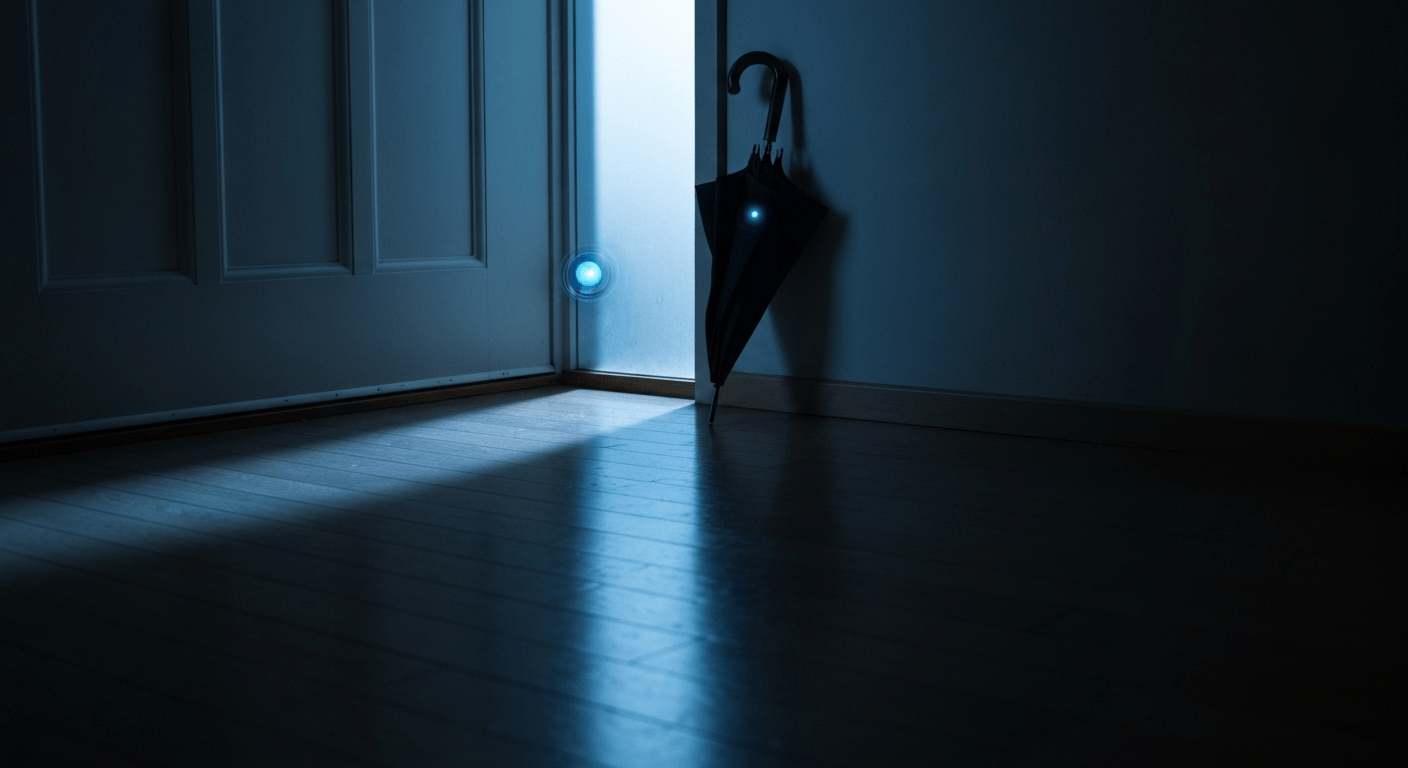
Sensors and the Smart Umbrella’s Memory: A Data Deluge
The “memory” of a smart umbrella is not a single, monolithic entity, but rather an intricate tapestry woven from data collected by an array of sophisticated sensors. These tiny, embedded components are the eyes and ears of the device, constantly gathering information about its environment and its interaction with the user. Pressure sensors might detect grip strength, indicating whether the user is holding it firmly or loosely, perhaps correlating with urgency. Accelerometers and gyroscopes track movement, discerning walking patterns, commuting habits, and even the unique way an individual opens or closes the umbrella. GPS and Bluetooth modules provide precise location data, mapping routes, identifying common destinations, and noting where the umbrella is typically stored or forgotten.
Beyond direct interaction, environmental sensors play a crucial role. Barometers monitor atmospheric pressure, informing the smart umbrella about impending weather changes. Humidity and temperature sensors provide additional context, allowing the device to build a comprehensive understanding of the conditions under which it is most frequently used. When an umbrella starts remembering its owner, it does so by correlating this vast stream of sensor data. For instance, it might learn that on Tuesday mornings, you typically leave for work at 7:30 AM, taking a specific route, and that you tend to forget it if the weather forecast unexpectedly shifts from sunny to rainy after you’ve already left the house. This complex interplay of internal and external data points forms the basis of its predictive capabilities and its “memory” of your patterns.
This data deluge is then fed into on-board processors or sent to cloud-based servers for analysis. Here, machine learning algorithms sift through the noise, identifying recurring patterns and anomalies. It’s a process not dissimilar to how AI image enhancement tools process visual data to refine details; the smart umbrella’s algorithms refine raw sensor input into actionable insights about your behavior. The more you use the smart umbrella, the more data it collects, and the more accurate its memory of your habits becomes. This continuous learning loop means the umbrella isn’t just a static smart device; it’s an evolving entity, constantly updating its understanding of you. This persistent data collection raises significant questions about data retention, security, and who ultimately owns this digital reflection of your daily life.
Consider the sheer volume of data: every step, every grip, every weather fluctuation, every location ping. This isn’t just about avoiding a rainy day; it’s about creating a granular portrait of your movement and behavioral patterns. Companies like Davek, a luxury umbrella brand that has explored smart features, illustrate how even premium products are integrating these complex sensor arrays. The intent is convenience, but the byproduct is a continuous, intimate form of surveillance by an inanimate object. This level of pervasive sensing is characteristic of our over-engineered future, where the perceived inefficiencies of human memory and foresight are systematically replaced by algorithmic precision, often without a full grasp of the long-term implications for individual privacy and autonomy. The reliance on such extensive sensor data for a simple object like an umbrella underscores a broader societal trend towards quantified living, where every aspect of our existence is measurable and, by extension, predictable.
Predictive Patterns: How Your Smart Umbrella Anticipates Needs
The true intelligence of a smart umbrella manifests not merely in its ability to remember past events, but in its capacity to predict future needs. This predictive power is a direct consequence of the extensive data collection and advanced algorithmic processing discussed earlier. When an umbrella starts remembering its owner, it’s not just recalling facts; it’s inferring probabilities. It analyzes historical weather data, cross-references it with your location and schedule, and then makes an educated guess about whether you will need it. For instance, if you consistently leave your house at 8 AM for a downtown commute, and the umbrella detects a 70% chance of rain by 9 AM in that specific area, it might send a notification to your phone: “Don’t forget me!”
This anticipation goes beyond simple weather alerts. The smart umbrella learns your specific thresholds for needing protection from the elements. Perhaps you only carry an umbrella if the chance of rain exceeds 50%, or if the temperature drops below a certain point while precipitation is forecast. It might even learn that you prefer to walk in light drizzle but reach for the umbrella during heavy downpours. These nuanced preferences, once the domain of human intuition, are now codified into the umbrella’s predictive model. This capability is powered by sophisticated machine learning models, similar to those used in prompt engineering for video, where algorithms interpret complex inputs to generate specific outputs. The umbrella, in essence, is running a continuous simulation of your day, assessing potential weather conflicts against your known routine.
The goal is to eliminate the minor friction points of daily life, to provide a seamless, thought-free experience. This quest for ultimate convenience, however, pushes us further into an over-engineered future where our devices, rather than empowering our choices, begin to make them for us. The smart umbrella’s predictions, while seemingly helpful, subtly nudge us towards relying on its algorithmic foresight rather than our own observation or judgment. This dependency can erode our innate capacity for situational awareness, outsourcing a fundamental human skill to a piece of plastic and fabric. The umbrella becomes a proactive agent in your life, not just a reactive tool.
This level of predictive intelligence is a double-edged sword. On one hand, it can genuinely reduce stress and prevent minor inconveniences. On the other, it represents a further step towards a world where our personal data is constantly being analyzed to anticipate our every move, making us more predictable to both the devices we own and the companies that produce them. A report by Wired on the future of IoT and predictive analytics highlights how such capabilities are becoming standard across various smart devices, transforming them from passive tools into active participants in our decision-making processes. When an umbrella starts remembering its owner and predicting their needs, it is no longer just shielding you from the rain; it is gently guiding your behavior, making you a predictable data point in a vast network of interconnected intelligence. This raises profound questions about the nature of free will in an environment saturated with algorithmic suggestions.

The Ghost in the Canopy: AI and Personalization
At the heart of the smart umbrella’s ability to “remember” and anticipate lies artificial intelligence. It’s not a conscious ghost, but an intricate network of algorithms that process vast datasets, learn patterns, and make inferences with remarkable accuracy. This AI acts as the umbrella’s brain, transforming raw sensor data into meaningful insights about its owner. When an umbrella starts remembering its owner, it’s the AI that stitches together fragmented pieces of information – location, weather, usage frequency, grip pressure – into a coherent narrative of your daily habits. This narrative forms the basis of its personalization, making the umbrella feel uniquely attuned to you.
The AI doesn’t just recognize patterns; it adapts. If your routine changes – a new job, a different commute, a shift in preferred walking times – the AI within the smart umbrella updates its model of your behavior. This adaptive learning is crucial for maintaining relevance and utility. It’s akin to the sophisticated algorithms that drive AI search engines, constantly refining their understanding of user intent and context to deliver increasingly personalized results. The umbrella learns your preferences for notifications, for instance: do you prefer a gentle vibration, an app alert, or a subtle glow from the handle? Does it need to remind you every time, or only when there’s a high probability of you forgetting it?
This level of personalization, while seemingly innocuous for an umbrella, highlights a broader trend in the Internet of Things (IoT). Every smart device, from thermostats to toothbrushes, is becoming an extension of our digital selves, collecting data to tailor its function to our individual quirks. The smart umbrella, therefore, isn’t just a weather tool; it’s a personal assistant, albeit a highly specialized one, embedded within a mundane object. This personalization creates a powerful sense of connection and utility, making the device feel indispensable. This is precisely the allure of an over-engineered future: the promise of a world perfectly tailored to our individual desires, managed by unseen algorithms.
However, this deeply personalized experience comes with its own set of considerations. The AI-driven personalization relies on a continuous feed of personal data, creating a digital profile that extends beyond basic demographics to encompass granular behavioral patterns. This profile, while making the umbrella more useful, also makes its owner more predictable and potentially vulnerable. The “ghost in the canopy” might be benevolent, but it is still a pervasive presence, observing and learning. A report by TechCrunch on the privacy implications of hyper-personalized AI underscores the ethical challenges inherent in such deep integration of AI into personal devices. When an umbrella starts remembering its owner through AI, it not only offers convenience but also quietly contributes to the ever-expanding digital dossier that defines our modern existence, raising fundamental questions about control and consent.
Location Tracking and the Ubiquitous Smart Umbrella
One of the most fundamental ways a smart umbrella “remembers” its owner is through persistent location tracking. Equipped with GPS, Bluetooth, and sometimes even Wi-Fi triangulation capabilities, the umbrella is a constant beacon, broadcasting its position and, by extension, the position of its owner. This isn’t just about knowing where you left it; it’s about building a comprehensive map of your daily movements, your regular haunts, and your transient stops. When an umbrella starts remembering its owner through location data, it logs everything: your home address, your workplace, the coffee shop you frequent, the park where you walk your dog, and every path taken in between.
This ubiquitous tracking forms the backbone of its predictive capabilities. By correlating your real-time location with weather forecasts specific to that area, the smart umbrella can provide highly localized and timely alerts. If you’re heading towards a neighborhood known for sudden microclimates, the umbrella knows. If you’re about to enter a building and the forecast indicates a downpour upon exit, it can remind you to take it with you. This precision is a key selling point for an over-engineered future, promising to eliminate the minor frustrations of being unprepared. The umbrella becomes a silent cartographer of your life, mapping your personal geography with astonishing detail.
The implications of this constant surveillance, even by a seemingly benign object, are far-reaching. While the primary intent is convenience, the byproduct is a detailed log of your comings and goings, a digital shadow that follows you everywhere. This data, anonymized or not, can reveal patterns about your lifestyle, your social interactions (if it correlates with other tracked devices), and even your routines. It’s similar to how drone cinematography techniques can map landscapes with incredible detail, but here, the landscape is your personal life. The smart umbrella, through its location tracking, becomes a constant witness, logging your presence and absence, building a memory that is far more comprehensive than your own.
The convenience of never losing your umbrella again, or always being prepared for the rain, is tangible. However, this convenience is predicated on allowing a device to continuously monitor your whereabouts. This data, if compromised or misused, could have significant privacy implications. Furthermore, the aggregation of such location data from multiple smart devices creates an even more detailed, almost inescapable, digital footprint. Organizations like the Electronic Frontier Foundation (EFF) regularly highlight the privacy risks associated with pervasive location tracking, even by consumer devices. When an umbrella starts remembering its owner’s location, it’s not just a personal convenience; it’s a participant in the broader ecosystem of pervasive digital surveillance, a subtle yet powerful reminder of how deeply integrated technology has become in mapping our physical existence.
Behavioral Biometrics: The Smart Umbrella as a Digital Shadow
Beyond explicit location data and weather patterns, the smart umbrella’s memory delves into the subtle realm of behavioral biometrics. This refers to the unique, quantifiable characteristics of an individual’s actions. When an umbrella starts remembering its owner, it’s not just recognizing a pattern of movement; it’s learning the nuances of how that specific individual interacts with it. This might include the specific speed and force with which you open and close the canopy, the angle at which you typically hold it, the rhythm of your steps when carrying it, or even the subtle shifts in grip pressure that might indicate stress or hurriedness.
These subtle interactions, often unconscious on the part of the user, create a unique “behavioral fingerprint.” The umbrella’s embedded sensors – accelerometers, gyroscopes, pressure pads – are constantly collecting this granular data. Over time, the AI processes these inputs, identifying consistent patterns that are unique to its owner. For example, if you always give the umbrella a sharp flick to open it, or consistently hold it tilted slightly forward, the smart umbrella learns this as part of “your” way of using it. This level of detail elevates the umbrella from a generic tool to a personalized extension of the user, making its “memory” intensely personal.
This digital shadow, composed of your unique behavioral biometrics, allows the smart umbrella to offer an even deeper level of personalization. It might adjust its haptic feedback based on your grip, or anticipate your intention to open it based on your arm’s trajectory. This provides a remarkably intuitive user experience, blurring the lines between human action and device response. It’s a prime example of how an over-engineered future seeks to optimize every interaction, making technology feel invisible and seamlessly integrated. The sophistication of these systems is comparable to the advanced algorithms used in gimbal techniques for stabilizing cameras, where minute movements are precisely compensated for.
However, the collection of behavioral biometrics, even by an umbrella, raises significant privacy and security questions. This data is highly personal and, unlike a password, cannot be easily changed. If this behavioral data were to be compromised, it could potentially be used for identity theft or to create highly accurate profiles for targeted advertising or even surveillance. The very traits that make the umbrella feel uniquely yours are also the data points that make you uniquely identifiable to the system. A study published by the IEEE on behavioral biometrics in IoT devices highlights both the promise and the peril of such intimate data collection. When an umbrella starts remembering its owner through these subtle behavioral cues, it moves beyond simple utility into the realm of intimate digital companionship, collecting a persistent, unique record of your physical engagement with the world. This continuous profiling, while designed for convenience, contributes to an ever-growing repository of personal data that defines and, in some ways, controls our digital lives.
The Privacy Paradox: Convenience at What Cost?
The allure of the smart umbrella, with its remarkable ability to remember and anticipate, lies squarely in its promise of unparalleled convenience. Never again will you be caught unprepared for a sudden downpour, nor will you suffer the frustration of forgetting your umbrella at home or in a café. This seamless integration into daily life, where a mundane object becomes a proactive personal assistant, is a powerful draw for many in an increasingly busy world. However, this convenience is not without its cost, primarily in the realm of personal privacy. When an umbrella starts remembering its owner, it does so by collecting, processing, and often transmitting highly personal data.
This creates a privacy paradox: the more useful and “smart” a device becomes, the more data it typically requires about its user. Location history, behavioral patterns, usage frequency, even the specific weather conditions under which you prefer to use it – all contribute to the umbrella’s memory. This data is often stored on cloud servers, processed by third-party algorithms, and potentially shared with other entities. While manufacturers usually promise data anonymization and robust security, the risk of data breaches or misuse remains a persistent concern. The granular detail of this collected information, when aggregated across multiple smart devices, paints an incredibly comprehensive and intimate portrait of an individual’s life, far beyond what one might willingly share.
The editorial angle here is clear: this “smart” umbrella is a perfect metaphor for our over-engineered future: we’re willingly ceding our privacy for trivial conveniences, becoming predictable data points for the devices we own. We accept the trade-off, often without fully understanding the long-term implications of having every aspect of our lives monitored and cataloged by inanimate objects. The argument for convenience often overshadows the discussion about data ownership and control. Who truly owns the memory of your umbrella? Is it you, the user, or the company that designed the algorithms and hosts the data? Questions of AI training data lawsuits and data ownership are becoming increasingly relevant as more devices gather such intimate details.
The problem is exacerbated by the often opaque terms of service that users “agree” to, rarely reading the fine print that outlines how their data will be used. The smart umbrella, a seemingly harmless object, becomes a silent participant in the broader economy of data, where personal information is a valuable commodity. A report by Reuters on data privacy regulations highlights the ongoing global struggle to regulate how companies handle personal data, a struggle that becomes more complex with every new smart device entering the market. When an umbrella starts remembering its owner, it’s not just a technological advancement; it’s a profound ethical challenge, forcing us to weigh the tangible benefits of convenience against the intangible, yet invaluable, cost of our digital privacy. The constant data flow transforms personal space into a public ledger, meticulously maintained by the very objects designed to serve us.
Over-Engineering Our Lives: The Smart Umbrella as a Metaphor
The existence of a smart umbrella that remembers its owner is a potent metaphor for a pervasive trend in modern society: the over-engineering of our lives. We are increasingly compelled to solve every minor inconvenience, every slight imperfection, with complex technological solutions. The simple act of remembering an umbrella, once a minor mental task, is now delegated to an interconnected device, freeing up cognitive load but simultaneously creating a new layer of digital dependency. This reflects a broader societal push towards maximum efficiency and minimal friction, often at the expense of simplicity and human intuition.
The “smart” umbrella, in its quest for ultimate utility, embodies this ethos. It doesn’t just protect you from rain; it predicts, reminds, tracks, and learns. It’s a solution to a problem that, for centuries, humans managed with a simple glance at the sky or a quick check of a weather report. While the immediate benefits are clear – fewer soggy commutes, less forgotten property – the cumulative effect of such pervasive over-engineering is a subtle erosion of our own capacities. We become less reliant on our memory, less observant of our surroundings, and more dependent on the algorithms that now manage these minor aspects of our existence. It’s a world where even the most basic decisions are outsourced, leading to a kind of learned helplessness.
This editorial angle posits that this “smart” umbrella is a perfect metaphor for our over-engineered future: we’re sacrificing basic human faculties and privacy for the illusion of seamless convenience. We’re becoming accustomed to a world where objects are not just tools but active participants in our decision-making, constantly gathering data to refine their “service.” This pervasive data collection, even from an umbrella, contributes to the creation of comprehensive digital profiles that can be used in ways we may not foresee or consent to. The simplicity of a manual umbrella, which merely exists to perform its function without observation or memory, is replaced by a complex system designed to optimize a trivial experience.
The drive to “smartify” everything, from our homes to our clothing, reflects a societal anxiety about inefficiency and a relentless pursuit of optimization. But what is the cost of optimizing away every small challenge? Do we lose something essential about being human when every minor problem is pre-emptively solved by a machine? The smart umbrella forces us to confront these questions. It’s a microcosm of the larger trend where technology, while designed to serve, begins to subtly dictate. The relentless pursuit of a perfectly optimized, frictionless existence, as exemplified by the smart umbrella, can lead to a future that is efficient but ultimately less spontaneous, less private, and less human. The discussion on Googleflow filmmaker guide, for example, explores how even creative processes are becoming increasingly structured and optimized by AI, reflecting this same overarching trend.
The Implications of an Umbrella That Knows You
When an umbrella starts remembering its owner, the implications extend far beyond mere convenience or privacy concerns. This phenomenon signals a profound shift in our relationship with objects, pushing us towards an era where our possessions are not just static tools but dynamic entities with a burgeoning, albeit artificial, intelligence. One primary implication is the blurring of lines between personal space and public data. An umbrella that knows your habits, your routes, and your preferences contributes to a comprehensive digital profile that exists beyond your immediate control. This profile, aggregated with data from other smart devices, paints an incredibly detailed picture of your life, making you highly predictable to both product manufacturers and, potentially, other entities.
Another implication is the subtle erosion of personal autonomy. While the smart umbrella offers helpful reminders, it also subtly nudges behavior. If it constantly reminds you to take it, or suggests optimal routes based on weather, it reduces your reliance on your own memory and decision-making. This dependency, while initially perceived as beneficial, can lead to a gradual outsourcing of cognitive functions to algorithms. We become less attuned to our environment and more reliant on digital prompts, transforming us from active decision-makers into reactive responders to algorithmic suggestions. This paradigm shift resonates with the concerns raised in discussions about AI browsers that anticipate your needs, potentially limiting serendipitous discovery.
Furthermore, the “memory” of the smart umbrella contributes to the commodification of personal experience. Every interaction, every forgotten item, every weather-related decision becomes a data point, valuable for refining algorithms, targeting advertisements, or even influencing future product development. Your unique habits, once private, are now part of a data stream that fuels an entire industry. This transforms personal quirks into marketable insights, reinforcing the idea that in an over-engineered future, everything about us is a resource to be leveraged. The smart umbrella, in its humble capacity, is a testament to this pervasive data economy.
The potential for unintended consequences is also significant. What if the umbrella’s “memory” is faulty, leading to incorrect predictions or unnecessary alerts? What if it creates a feedback loop that reinforces certain behaviors, making you more rigid in your routines? And what about the psychological impact of being constantly observed, even by an inanimate object? The pervasive nature of such “smart” objects can lead to a sense of perpetual surveillance, subtly altering our behavior and sense of freedom. A recent article in The Verge on IoT security and privacy risks underscores these growing concerns. When an umbrella starts remembering its owner, it’s not just about rain protection; it’s about participating in a grand experiment in ubiquitous computing, where the lines between helper and observer, convenience and control, become increasingly blurred.
From Utility to Companion: The Evolution of the Smart Umbrella
The journey of the umbrella from a simple utilitarian object to a “smart” companion that remembers its owner marks a significant evolutionary leap in product design and user interaction. Historically, an umbrella’s value was solely in its function: providing shelter from rain or sun. Its presence was reactive, a response to immediate environmental conditions. Today, with the integration of sensors, AI, and connectivity, the smart umbrella transcends this basic utility, transforming into a proactive entity that anticipates, learns, and even communicates. This shift is characteristic of an over-engineered future, where every object is imbued with intelligence, striving to become more than just a tool, but an indispensable part of our daily lives.
This evolution is driven by the desire for seamless integration and hyper-personalization. When an umbrella starts remembering its owner, it moves beyond a generic product to become a personalized extension of the individual. It learns your unique rhythms, your specific tolerances for weather, and your typical patterns of movement. This intimate knowledge fosters a sense of companionship, where the object feels less like a detached accessory and more like a helpful, albeit silent, partner in navigating the day. This is the same principle applied in advanced systems like AI art direction prompts, where technology aims to understand and augment human creativity by learning specific styles and preferences. The umbrella, in this context, is no longer just an object; it’s an intelligent entity contributing to an ambient computing environment.
The smart umbrella’s evolution into a companion also highlights a broader societal trend towards anthropomorphizing technology. We project human qualities onto devices that exhibit intelligent behavior, fostering an emotional connection. This connection, however, is built on algorithms and data. The “memory” it possesses is purely digital, a collection of data points, yet it feels personal because it reflects our own patterns. This creates a powerful, if artificial, bond, making the device incredibly sticky and difficult to abandon. The value proposition shifts from mere function to a personalized, anticipatory service.
This transformation also redefines the very essence of product-user interaction. Instead of simply using an umbrella, one engages with it. The umbrella sends notifications, tracks its own location, and offers insights. This constant dialogue, even if one-sided, reshapes how we perceive and value our possessions. The smart umbrella becomes a microcosm of the larger Internet of Things ecosystem, where every device is a potential companion, remembering our habits, learning our preferences, and subtly influencing our decisions. This pervasive intelligence, while promising unparalleled convenience, also raises questions about the nature of companionship in an increasingly automated world. The journey from a stick with fabric to a data-driven companion is a testament to technological ambition, but it also compels us to reflect on the true meaning of utility and connection in an over-engineered future. A BBC article on the rise of smart home devices further illustrates this shift from utility to companionship across a range of consumer products.
Reclaiming Simplicity in a Connected World
In an over-engineered future where even an umbrella remembers its owner, the concept of reclaiming simplicity becomes increasingly vital. The relentless pursuit of convenience through advanced technology, while offering undeniable benefits, often adds layers of complexity, surveillance, and digital dependency to our lives. The smart umbrella, with its myriad sensors, AI algorithms, and constant data collection, exemplifies this trajectory. While it promises to eliminate the minor inconvenience of forgetting an umbrella, it simultaneously introduces new concerns about privacy, data ownership, and the subtle erosion of personal autonomy.
Reclaiming simplicity in this connected world means consciously choosing when and how to integrate technology, rather than passively accepting every “smart” upgrade. It involves questioning whether a problem genuinely requires a complex, data-driven solution, or if a simpler, more analogue approach suffices. For instance, the act of checking a weather app or simply observing the sky – traditional methods of deciding whether to carry an umbrella – requires a degree of active engagement and situational awareness that the smart umbrella seeks to bypass. This act of conscious decision-making, even for minor tasks, contributes to maintaining our cognitive faculties and reduces our reliance on external prompts.
This perspective doesn’t advocate for a wholesale rejection of technology, but rather a more discerning adoption. It’s about balance: appreciating the genuine innovations that solve significant problems, while questioning the pervasive “smartification” of every mundane object. When an umbrella starts remembering its owner, it’s a powerful reminder that our devices are becoming extensions of our digital selves, and we must be mindful of what information these extensions are gathering and transmitting. This mindfulness is crucial in an age where Nvidia AI investments are accelerating the development of ever more sophisticated smart devices.
Ultimately, reclaiming simplicity is about reasserting control over our digital lives and fostering a more intentional relationship with our tools. It means understanding that while technology can enhance our lives, it should not replace our fundamental human capacities for memory, observation, and judgment. The smart umbrella, in its sophisticated remembrance, serves as a poignant symbol of this challenge. It compels us to ask: do we truly need every object in our lives to be “smart,” to “remember” us, and to gather our data? Or is there value in the unobserved, the simple, and the unburdened? In a world increasingly defined by algorithmic prediction and pervasive data collection, the choice to embrace simplicity, even for an umbrella, becomes an act of quiet rebellion against an over-engineered future.
Frequently Asked Questions
What does it mean for an umbrella to “remember” its owner?
For a smart umbrella to “remember” its owner means it collects and analyzes data about their habits, preferences, and environment. This includes tracking location, observing usage patterns, and correlating these with weather forecasts to build a predictive profile of the user. It’s a digital memory, not a conscious one.
How does a smart umbrella collect data about its owner?
A smart umbrella collects data through various embedded sensors, including GPS for location tracking, accelerometers and gyroscopes for movement patterns, and environmental sensors like barometers for weather. This raw data is then processed by AI algorithms to identify unique user behaviors and preferences.
What are the benefits of an umbrella that remembers its owner?
The primary benefit is enhanced convenience, such as proactive reminders to take the umbrella when rain is forecast, or location-based alerts if it’s forgotten. It aims to eliminate minor daily inconveniences by anticipating user needs based on learned patterns and real-time data.
What are the privacy concerns associated with a smart umbrella remembering its owner?
The main privacy concerns revolve around the continuous collection of personal data, including location history and behavioral biometrics. This data, if compromised or misused, could lead to privacy breaches, targeted advertising, or a broader erosion of personal autonomy by creating a detailed digital profile of the user.
Is the “smart umbrella” a metaphor for a larger trend?
Yes, the “smart umbrella” is a powerful metaphor for our over-engineered future, highlighting a trend where everyday objects are imbued with advanced technology to solve minor problems. It illustrates how convenience is often traded for pervasive data collection, subtly impacting privacy and fostering dependency on algorithmic predictions in our daily lives.
Discover more from Olivier Hero Dressen Blog: Filmmaking & Creative Tech
Subscribe to get the latest posts sent to your email.
Work with Olivier
Director | CD | DP & Photographer
Specializing in commercials, music videos, AI-driven filmmaking, and cinematic storytelling for brands and production companies.
🌍 Shanghai · Paris · Los Angeles · Dubai
🎬 View Portfolio & Get in Touch