


Key Takeaways
- First insight, ZEISS CinCraft LensCore officially launches, bringing unparalleled ray-traced simulations of legendary ZEISS cinema lenses directly into Nuke, enabling VFX artists to replicate real-world optical characteristics with unprecedented accuracy.
- Craft highlight, LensCore leverages physically accurate ray-tracing to simulate complex optical phenomena like bokeh, lens flare, distortion, and chromatic aberration, ensuring digital compositions perfectly match the aesthetic of on-set cinema lenses.
- Industry context, This integration addresses a long-standing challenge in VFX: achieving seamless continuity between live-action footage and digitally generated elements by providing a robust, precise tool for lens emulation within a professional compositing environment like Nuke.
- Bottom line, ZEISS CinCraft LensCore empowers filmmakers and VFX artists with enhanced creative control, efficiency, and fidelity, solidifying the bridge between traditional cinematography and advanced digital effects workflows.
The quest for seamless integration between live-action footage and computer-generated imagery often hinges on the subtle, yet critical, characteristics of cinema lenses. For decades, ZEISS has been synonymous with optical excellence, shaping the visual language of countless films. Now, with the official launch of ZEISS CinCraft LensCore, that legendary precision steps directly into the digital realm, specifically within Nuke, revolutionizing how VFX artists approach lens simulation. This isn’t just another plugin; it’s a paradigm shift, allowing creators to replicate the nuanced imperfections and beautiful aberrations of real ZEISS glass with ray-traced accuracy, ensuring that digital elements sit perfectly within the photographic reality established by the cinematographer.
Need a Director for Your Next Project?
From commercials to branded campaigns—Olivier brings creative vision and technical expertise.
→ View ProjectsThe Arrival of ZEISS CinCraft LensCore in Nuke
For years, the pursuit of photorealism in visual effects has driven innovation across every facet of the post-production pipeline. Yet, one of the most persistent hurdles has been accurately replicating the unique optical signatures of real-world cinema lenses within a digital environment. Lens distortions, chromatic aberrations, and the distinct quality of bokeh are not merely imperfections; they are fundamental components of a film’s visual language, deeply informing the audience’s perception of realism and aesthetic. Enter ZEISS CinCraft LensCore, a groundbreaking solution that finally bridges this divide, bringing the revered optical science of ZEISS directly into The Foundry’s Nuke, the industry-standard compositing software.
The official launch of CinCraft LensCore marks a significant milestone. It’s not simply about applying a generic distortion map; it’s about a physically accurate, ray-traced simulation of specific ZEISS cinema lenses. This means that when a cinematographer chooses a ZEISS Supreme Prime or a Master Anamorphic on set, the VFX team can now precisely match those optical characteristics within Nuke for any digital elements, ensuring a seamless blend. The implications for creative control and aesthetic consistency are profound. No longer do artists have to approximate or guess; they can work with scientifically validated data, derived from the very lenses used in production. This level of precision is critical for maintaining visual integrity, especially in complex shots where practical and digital effects converge. The tool allows artists to manipulate and fine-tune parameters like T-stop, focus distance, and zoom, seeing the immediate, accurate optical response, just as they would with a physical lens. This brings a new layer of authenticity to VFX secrets, ensuring every detail holds up under scrutiny. The ability to dynamically adjust these parameters within Nuke’s node-based environment offers an unprecedented degree of flexibility and iteration, accelerating workflows and elevating the final output.
This development is a direct response to the increasing demands for hyper-realism in film and television. As resolutions climb and audience expectations for visual fidelity grow, the subtle nuances of lens behavior become ever more critical. ZEISS CinCraft LensCore provides the tools to meet these demands, empowering compositors to integrate CG elements with a photographic realism previously unattainable without extensive, often trial-and-error, manual adjustments. It’s a testament to ZEISS’s commitment to innovation, extending their legacy of optical excellence into the digital domain, and setting a new benchmark for what’s possible in digital lens simulation. For more detailed information on the product, the official ZEISS CinCraft LensCore page offers comprehensive insights into its capabilities and the technology behind it.

Bridging the Gap: The Challenge of Digital Cinema Lenses
The chasm between the physical world of cinematography and the digital realm of visual effects has long been defined by the elusive nature of lens characteristics. While powerful 3D rendering engines can generate stunningly realistic imagery, replicating the organic, sometimes imperfect, beauty of real cinema lenses has remained a significant challenge. Digital artists often resort to approximations, relying on generic distortion grids, chromatic aberration plugins, or manual adjustments to mimic the look of a specific lens. This process is inherently inexact, time-consuming, and prone to inconsistencies, often leading to a subtle disconnect between live-action plates and computer-generated elements.
The problem stems from the complex physics of light interaction with glass. Real cinema lenses are intricate optical systems designed with specific artistic and technical goals in mind. They introduce unique characteristics: a particular quality of out-of-focus blur (bokeh), distinct patterns of lens flare, subtle geometric distortions (barrel or pincushion), and varying degrees of chromatic aberration. These are not flaws to be corrected, but rather signature elements that contribute to the overall cinematic aesthetic. For a VFX shot to truly blend, these optical traits must be faithfully reproduced. Without an accurate digital representation, CG elements can look too “clean,” too “perfect,” or simply out of place within the photographic context of the shot. This is where the manual and often frustrating process of trying to match the look of specific film stock or lens characteristics comes into play, eating up valuable artist time and budget.
ZEISS CinCraft LensCore directly addresses this fundamental issue. By providing ray-traced simulations derived from actual ZEISS lens designs, it eliminates the guesswork. It offers a scientifically validated method to reproduce the exact optical fingerprint of specific cinema lenses. This means that if a film is shot on ZEISS Supreme Primes, the digital environment in Nuke can now accurately reflect the unique bokeh, distortion, and flare characteristics of those very lenses. This level of fidelity is crucial for maintaining the director’s and cinematographer’s artistic intent from capture through to final composite. It’s about ensuring that the digital world doesn’t just look real, but looks photographed through the intended glass. This groundbreaking approach to blending practical vs digital effects significantly elevates the quality and efficiency of VFX work, making the invisible art of compositing truly seamless. The ability to dynamically adjust focal distance and T-stop within Nuke further enhances this realism, allowing artists to precisely match the depth of field and light transmission characteristics of the physical lens, truly bridging the gap.
Ray Tracing: The Heart of LensCore for Ultimate Cinema Lenses
At the core of ZEISS CinCraft LensCore’s unparalleled accuracy lies its sophisticated use of ray tracing. This isn’t just a buzzword; it’s a fundamental shift from traditional image-based lens effects to a physically accurate simulation of how light interacts with the complex optical elements within a real lens. For the first time, the digital representation of cinema lenses in Nuke is driven by the same principles that govern light in the physical world.
Traditional methods of simulating lens effects often rely on post-processing filters or pre-rendered elements. While these can achieve convincing results in many scenarios, they often fall short when it comes to the subtle, dynamic, and physically accurate representation of phenomena like bokeh, complex lens flares, and the nuanced fall-off of sharpness and distortion. These effects are not static; they change dramatically with focal distance, aperture (T-stop), and the position of light sources. A simple filter can’t adapt to these variables with the precision required for high-end visual effects. Ray tracing, by contrast, simulates the path of individual light rays as they travel through a virtual representation of the lens’s internal structure. This allows LensCore to calculate precisely how light would be refracted, reflected, and diffracted by each glass element, resulting in an output that is optically identical to what a real ZEISS lens would produce.
This meticulous approach means that the bokeh generated by LensCore is not just a blurred disk; it accurately reflects the shape of the aperture blades, the internal reflections, and the specific optical design of the chosen ZEISS cinema lens. Lens flares are not generic glows but intricate patterns that change dynamically based on the light source’s position relative to the camera and the lens’s internal coatings. Chromatic aberration, often a tricky effect to simulate authentically, is rendered with scientific precision, varying in intensity and color fringing based on the lens model and the position of elements within the frame. This level of detail is paramount for integrating CG elements into live-action plates, ensuring that the digital light interacts with the virtual lens in the same way as the practical light interacts with the physical lens. It’s a leap forward in AI rendering vs traditional, offering a computational approach that mirrors reality.
The power of ray tracing also extends to the dynamic nature of focus and aperture. Artists can adjust the T-stop and focal distance within Nuke, and LensCore will instantly recalculate the resulting depth of field and bokeh characteristics with physical accuracy. This interactive feedback loop is invaluable for creative exploration and precise shot matching. By leveraging the principles of light physics, ZEISS CinCraft LensCore provides a robust, future-proof solution for bringing the authentic magic of ZEISS cinema lenses into the digital compositing pipeline. For a deeper dive into the technical aspects of ray tracing, resources like this Cornell University lecture on Ray Tracing Basics can provide foundational knowledge.
Unparalleled Integration: Nuke’s New Optical Powerhouse
The choice of Nuke as the host platform for ZEISS CinCraft LensCore is no accident. Nuke, developed by The Foundry, is the industry-standard compositing software, renowned for its node-based workflow, flexibility, and robust capabilities in handling complex visual effects shots. This deep integration means that LensCore isn’t just an external tool; it’s a seamless extension of Nuke’s powerful environment, transforming it into an optical powerhouse for digital artists.
For VFX artists, the node-based workflow of Nuke is central to their efficiency and creative control. CinCraft LensCore integrates directly as a Nuke node, allowing artists to incorporate its sophisticated lens simulations into any part of their compositing graph. This enables precise control over where and how lens effects are applied, whether it’s to a fully CG element, a matte painting, or for subtle enhancements to live-action footage. The ability to chain LensCore nodes, combine them with other effects, and non-destructively iterate on creative choices is a significant advantage. It means artists can experiment with different ZEISS cinema lenses, adjust parameters like T-stop and focus distance, and see the results in real-time, all within their familiar Nuke workspace.
Furthermore, Nuke’s architecture is designed for handling high-resolution, high-dynamic-range (HDR) imagery, which is essential for accurate lens simulation. LensCore leverages Nuke’s ability to process floating-point data, ensuring that the subtle gradations of light, color, and focus are preserved with maximum fidelity. This is crucial for maintaining the full range of information captured by modern digital cinema cameras and for rendering CG elements that can stand up to the closest scrutiny. The integration also benefits from Nuke’s scripting capabilities, allowing studios to automate workflows, standardize lens looks across projects, and integrate LensCore into their existing pipelines with ease. This level of deep integration goes beyond a simple plugin; it signifies a strategic partnership aimed at empowering artists with the most advanced tools available.
The collaboration between ZEISS and The Foundry brings together optical engineering excellence with leading-edge compositing technology. This synergy addresses a critical need in the VFX industry for greater realism and consistency in lens simulation. By making physically accurate, ray-traced lens data directly accessible within Nuke, ZEISS CinCraft LensCore empowers artists to achieve a level of photographic realism that was previously challenging to attain. This not only enhances the visual quality of films but also streamlines production workflows, reduces iteration times, and ultimately frees up artists to focus more on creative problem-solving. More information on Nuke’s capabilities can be found on The Foundry’s official website, highlighting the robust environment LensCore now operates within. This is a game-changer for anyone dealing with VFX breakdown secrets, offering a new layer of authenticity.
The Seven Ultimate Cinema Lenses Simulated by CinCraft
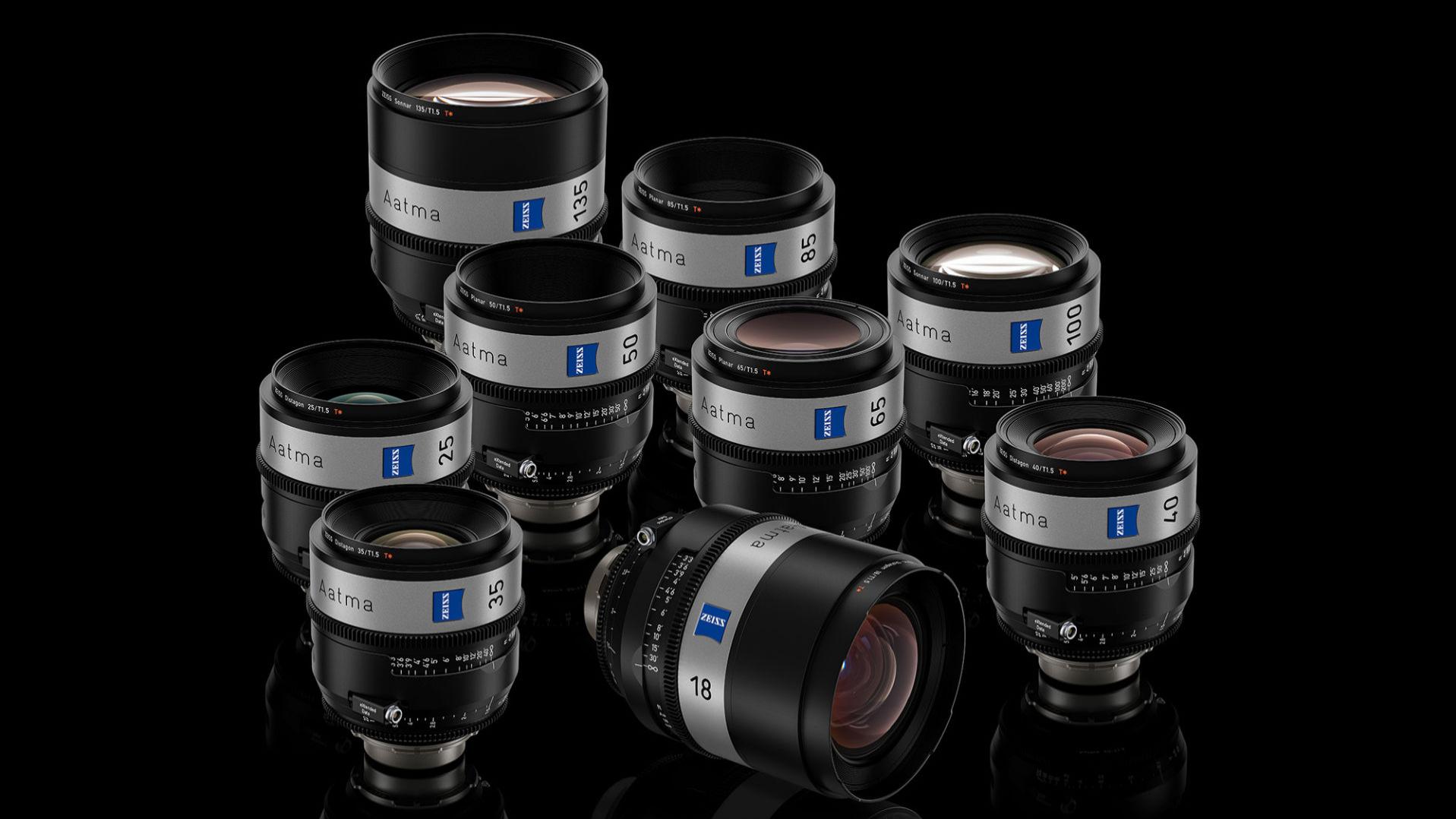
The title “7 Ultimate Cinema Lenses in Nuke with ZEISS CinCraft!” isn’t just catchy; it points to the specific, high-fidelity lens models that CinCraft LensCore brings to the digital domain. While the exact number of individual models might expand over time, the core offering focuses on ZEISS’s most revered cinematic glass, effectively putting an entire virtual lens kit at the fingertips of Nuke artists. These aren’t generic optical profiles; they are ray-traced simulations of the very cinema lenses that have defined the look of countless iconic films.
Currently, CinCraft LensCore provides detailed simulations for several key ZEISS lens families, including:
- ZEISS Supreme Primes: Known for their versatility, wide focal range, and consistent look, Supreme Primes are a staple in modern cinematography. LensCore accurately reproduces their smooth, natural bokeh, minimal breathing, and subtle, pleasing fall-off.
- ZEISS Master Primes: Celebrated for their exceptional speed, sharpness, and virtually no distortion or chromatic aberration, Master Primes set a benchmark for technical perfection. LensCore captures this clinical precision, allowing for incredibly clean digital integration.
- ZEISS Compact Primes (CP.3): Offering a blend of cinematic quality and affordability, the CP.3 lenses are popular for independent films and documentaries. LensCore allows artists to replicate their distinctive character and practical performance.
- ZEISS Master Anamorphics: These lenses deliver the classic anamorphic look with exquisite bokeh, unique flare characteristics, and a wide aspect ratio, all meticulously reproduced within LensCore for authentic widescreen aesthetics.
- ZEISS Ultra Primes: Robust and reliable, Ultra Primes are workhorses known for their consistency and classic cinematic feel. LensCore brings their optical signature, including their characteristic contrast and color rendition, to Nuke.
- ZEISS Standard Speeds: The venerable Standard Speeds offer a slightly more vintage, organic look, often favored for their character. LensCore emulates these subtle differences, providing a broader palette for creative choices.
- ZEISS CZ.2 Cinema Zooms: Offering flexibility without compromising optical quality, these zooms are essential for dynamic shooting. LensCore simulates their variable focal lengths and consistent image quality across the zoom range.
This comprehensive selection covers a broad spectrum of cinematic styles and technical requirements. Each simulated lens within LensCore is built upon meticulously captured optical data and precise geometric models, ensuring that every nuance – from the specific shape of the bokeh to the exact pattern of a lens flare – is faithfully recreated. This means that a compositor can select the exact lens used on set and apply its true optical characteristics to their CG elements, achieving perfect continuity. The ability to switch between these “ultimate cinema lenses” with a few clicks in Nuke empowers artists with unprecedented creative flexibility, allowing them to experiment with different looks and ensure the digital image perfectly matches the director’s vision. This level of access to such a diverse range of high-end drone cinematography techniques and optical characteristics is a revolutionary step for digital production, enhancing the overall fidelity of visual storytelling. For professionals, this means a significant upgrade in their toolkit, allowing them to precisely control the visual language of their projects.

Creative Control and Cinematic Fidelity with ZEISS CinCraft
The power of ZEISS CinCraft LensCore extends far beyond mere technical accuracy; it fundamentally enhances creative control and cinematic fidelity within the Nuke environment. For filmmakers, the choice of cinema lenses is a deeply artistic decision, influencing mood, depth, and the very emotional resonance of a scene. LensCore ensures that these artistic intentions are preserved and extended into the digital realm, rather than being diluted or lost in post-production.
One of the most significant aspects of creative control offered by LensCore is the ability to dynamically adjust lens parameters. Compositors can manipulate the T-stop (aperture), focal distance, and even zoom (for simulated zoom lenses) directly within Nuke. This means they can precisely match the depth of field and bokeh characteristics of the on-set photography, ensuring that foreground and background elements, whether practical or digital, blend seamlessly. Imagine a shot where the focus pulls from a live-action actor to a distant CG creature; LensCore can accurately simulate the lens’s focus breathing and the evolving quality of the bokeh as the focus shifts, adding a layer of organic realism that was previously incredibly difficult to achieve. This interactive capability fosters a more iterative and experimental workflow, allowing artists to explore different optical looks without the need for time-consuming re-renders or approximations.
Furthermore, the faithful reproduction of lens aberrations, such as chromatic aberration, distortion, and vignetting, is not about correcting flaws, but about embracing the character of specific cinema lenses. A subtle barrel distortion or a particular quality of edge softness can contribute significantly to the visual storytelling, grounding the image in a specific aesthetic. LensCore allows artists to dial in these characteristics with precision, ensuring that CG elements inherit the same ‘photographic DNA’ as the live-action plate. This level of fidelity means that directors and cinematographers can be confident that their artistic choices regarding lens selection will be honored and extended into the visual effects, maintaining a consistent and compelling visual language throughout the film. It’s a crucial tool for anyone aiming for the highest standards of gimbal techniques and visual storytelling.
Ultimately, ZEISS CinCraft LensCore empowers artists to be more creative and less constrained by technical limitations. It transforms the compositing stage from a place of mere integration to a space where the optical characteristics of the chosen cinema lenses can be fully leveraged to enhance the narrative. By providing a scientifically accurate and artist-friendly tool, LensCore elevates the entire visual effects pipeline, ensuring that the final image is not just technically perfect, but also cinematically rich and emotionally resonant. This is particularly relevant for projects that demand absolute continuity across diverse production techniques, from live-action to full CG, ensuring every frame contributes to the overall artistic vision. This level of precise control over the image is transformative for achieving the desired cinematic fidelity.
Beyond VFX: Impact on Virtual Production and Pre-Vis
While ZEISS CinCraft LensCore’s immediate impact on Nuke-based visual effects workflows is undeniable, its implications stretch far beyond traditional post-production. The ability to accurately simulate the optical characteristics of specific ZEISS cinema lenses has profound consequences for the rapidly evolving fields of virtual production and pre-visualization. These cutting-edge methodologies rely heavily on real-time rendering and immediate feedback, making precise lens simulation a critical, yet often overlooked, component.
In virtual production environments, where live-action actors interact with large LED volumes displaying real-time rendered CG environments, the fidelity of the virtual camera is paramount. Matching the virtual lens to the physical camera’s lens on set is crucial for seamless integration. If the virtual environment is rendered with a generic lens model, and the physical camera is equipped with, say, ZEISS Supreme Primes, the resulting parallax, distortion, and depth of field discrepancies can break the illusion. CinCraft LensCore, with its physically accurate ray-traced simulations, can be integrated into these real-time pipelines, ensuring that the virtual camera’s optical properties precisely mirror those of the physical camera. This allows for a more accurate representation of the final look on set, empowering directors and cinematographers to make informed creative decisions in real-time, greatly enhancing the effectiveness and realism of virtual production stages. News outlets like Wired have covered the transformative power of virtual production, highlighting the need for tools like LensCore.
For pre-visualization (pre-vis), the benefits are equally significant. Pre-vis is about planning complex shots, blocking scenes, and iterating on camera movements before committing to costly production days. Traditionally, pre-vis lenses have been simplified, offering only basic focal length and field-of-view approximations. With LensCore, pre-vis artists can now work with the exact optical characteristics of the intended ZEISS cinema lenses. This means that the pre-vis output will more accurately represent the final cinematic image, including realistic bokeh, distortion, and flare. Directors and cinematographers can experiment with different lens choices, understand their impact on depth of field and composition, and make more precise decisions about shot design long before cameras roll. This not only saves time and money during principal photography but also leads to a more cohesive and visually sophisticated final product. It’s a powerful step in leveraging prompt engineering for video production and planning.
The ability to carry consistent, high-fidelity lens data from pre-vis through virtual production to final compositing in Nuke creates an unbroken chain of optical accuracy. This continuity is a game-changer for modern filmmaking, enabling a more integrated and efficient workflow that respects the artistic intent of the cinematographer at every stage. ZEISS CinCraft LensCore isn’t just a tool for fixing things in post; it’s a foundational technology for building more realistic and visually compelling narratives from the ground up, impacting how stories are conceived, planned, and ultimately brought to the screen.
Demystifying Digital Optics: The ZEISS Advantage
For too long, the nuances of digital optics have been a black box for many visual effects artists. While they master complex compositing techniques, the subtle characteristics that make real cinema lenses so distinctive have often been approximated rather than genuinely understood and replicated. ZEISS CinCraft LensCore demystifies digital optics by bringing the unparalleled expertise of ZEISS’s optical engineering directly into Nuke, offering an advantage rooted in decades of scientific research and practical application.
The “ZEISS advantage” in optics is not merely about sharpness or clarity; it encompasses a holistic approach to lens design that considers every aspect of image formation. This includes the precise control of aberrations, the consistency of color rendition, the quality of out-of-focus areas (bokeh), and the unique character of lens flares. These are not accidental properties but are meticulously engineered into each lens. When ZEISS brings this level of detail to CinCraft LensCore, they are not just providing a plugin; they are offering a digital twin of their physical lenses, built upon the same scientific principles and data. This means artists are no longer guessing at what a particular lens might look like; they are working with an optically verified simulation.
This level of scientific rigor translates into tangible benefits for VFX artists. Understanding how a specific ZEISS lens handles focus breathing, for instance, or the exact pattern of its chromatic aberration, allows for more informed creative decisions. Artists can now confidently integrate CG elements knowing that the optical effects they apply are faithful to the source material. This precision eliminates the need for extensive trial-and-error, saving valuable time and resources. It also reduces the subjective nature of lens matching, moving it closer to an objective, data-driven process. The result is a more consistent and believable final image, where digital elements sit harmoniously within the photographic reality established by the physical camera and its lenses.
Moreover, the ZEISS CinCraft LensCore acts as an educational tool, allowing artists to intuitively learn about the distinct characteristics of different ZEISS cinema lenses. By experimenting with various lens models and parameters within Nuke, they can gain a deeper appreciation for how optical design influences the cinematic image. This empowers them to make more sophisticated creative choices and communicate more effectively with cinematographers. It’s about bridging the gap between the technical language of optics and the artistic expression of filmmaking. This kind of specialized knowledge is invaluable in an industry that demands both technical prowess and artistic vision, similar to how AI image enhancement tools require an understanding of their underlying algorithms for optimal use. By leveraging ZEISS’s legacy, LensCore elevates the standard of digital lens simulation, making high-end optical effects accessible and understandable for a wider audience of digital artists.
Streamlining VFX Workflows: Efficiency and Accuracy
In the fast-paced world of visual effects, efficiency and accuracy are paramount. Delays caused by imprecise lens matching or iterative adjustments can quickly escalate project costs and strain production schedules. ZEISS CinCraft LensCore directly addresses these challenges by streamlining VFX workflows, offering a solution that is both incredibly accurate and remarkably efficient within Nuke.
One of the most significant efficiency gains comes from eliminating the guesswork associated with traditional lens simulation. Before LensCore, artists often spent considerable time manually trying to match lens distortions, bokeh, and flares to live-action plates. This involved a subjective process of trial and error, often using generic tools that lacked the specific optical signature of the lenses used on set. With LensCore, artists can simply select the exact ZEISS cinema lens used in production, and the physically accurate, ray-traced simulation immediately provides the correct optical characteristics. This direct, data-driven approach drastically reduces setup time and minimizes the need for extensive manual tweaking, allowing artists to focus on creative compositing rather than technical approximations.
The interactive nature of LensCore further enhances efficiency. Artists can adjust parameters like T-stop and focus distance in real-time within Nuke, observing the immediate impact on depth of field, bokeh, and other optical effects. This instant feedback loop allows for rapid iteration and precise matching, accelerating the creative process. Instead of rendering out multiple versions to compare different lens looks, artists can make informed decisions on the fly, saving render farm time and reducing the overall turnaround for shots. This is a critical advantage for projects with tight deadlines and complex visual effects requirements. The integration with Nuke’s node-based workflow also means LensCore can be easily incorporated into existing studio pipelines and automated processes, further boosting productivity. This is akin to the way AI search is changing creative work by providing faster, more relevant information.
Accuracy, of course, underpins this efficiency. By providing scientifically validated lens simulations, LensCore ensures that the digital elements seamlessly integrate with the live-action footage, maintaining perfect optical continuity. This reduces the need for costly revisions down the line, as the initial lens match is inherently more precise. The confidence that comes from working with optically accurate data allows artists to push creative boundaries without worrying about breaking the illusion of realism. This translates into higher quality visual effects delivered on schedule and within budget, a win-win for both artists and producers. The official press release from Foundry regarding the LensCore integration further details how this partnership benefits industry professionals, emphasizing the streamlined workflows and enhanced accuracy now available.

The Future of Digital Cinematography with ZEISS CinCraft LensCore
The launch of ZEISS CinCraft LensCore in Nuke is more than just a new tool; it represents a significant step towards the future of digital cinematography. As filmmaking continues its rapid evolution, blurring the lines between physical and virtual production, solutions that bridge these worlds with precision will become indispensable. LensCore positions itself at the forefront of this evolution, setting new standards for optical realism in visual effects and beyond.
One key aspect of this future is the increasing demand for “digital doubles” – not just of actors, but of entire camera and lens packages. Filmmakers and VFX supervisors want the ability to precisely replicate their on-set setup in the digital domain, ensuring every aspect of the image, including the unique characteristics of their chosen cinema lenses, is carried through to the final composite. LensCore provides this capability, creating a consistent optical language across the entire production pipeline, from pre-production to post-production. This consistency is vital for maintaining the director’s vision and the cinematographer’s artistic intent, especially as projects become more complex and rely more heavily on visual effects.
Furthermore, as virtual production environments become more sophisticated, the need for real-time, accurate lens simulation will only grow. Imagine a future where directors can switch between different ZEISS cinema lenses on a virtual camera, seeing the exact optical impact on their LED wall environment in real-time. LensCore’s ray-traced foundation is perfectly suited for this, offering the potential for even deeper integration into game engines and real-time rendering platforms that drive virtual sets. This would empower cinematographers to make even more informed creative decisions on set, with a complete understanding of how their lens choices will translate to the final image. This also opens new avenues for Googleflow filmmaker guide methodologies, integrating advanced lens data into AI-driven production planning.
The continuous development of CinCraft LensCore itself also points to a dynamic future. ZEISS has a vast catalog of legendary lenses, and the potential to expand LensCore’s library to include even more historical and specialized optics is immense. This would offer artists an even broader palette of cinematic looks, from vintage anamorphic to cutting-edge high-speed primes. As rendering technologies advance, LensCore will undoubtedly evolve to leverage new computational capabilities, pushing the boundaries of what’s possible in digital lens simulation. This ongoing innovation ensures that ZEISS remains a pivotal player in both physical and digital cinematography, continuing its legacy of optical excellence and shaping the visual stories of tomorrow. The industry will increasingly rely on such precision tools, as highlighted by expert analysis on sites like fxguide.com, which covers the latest advancements in VFX technology.
The Legacy of ZEISS Meets the Digital Frontier
For over a century, ZEISS has been at the forefront of optical innovation, shaping the very language of cinema. From the early days of filmmaking to today’s blockbuster productions, ZEISS camera lenses have been the preferred choice for cinematographers seeking unparalleled quality, consistency, and a distinctive cinematic look. The launch of ZEISS CinCraft LensCore is not merely a product release; it’s a testament to this enduring legacy, now extended into the digital frontier of visual effects.
The trust placed in ZEISS optics by generations of filmmakers is built on a foundation of meticulous engineering and scientific precision. Every ZEISS cinema lens is designed with an understanding of how light behaves, how it interacts with glass, and how these interactions translate into the final image. This deep-seated knowledge and commitment to excellence are precisely what CinCraft LensCore brings to Nuke. It’s not a generic simulation but a digital embodiment of ZEISS’s optical DNA, ensuring that the unique character of their lenses, be it the creamy bokeh of a Master Prime or the distinctive flares of an anamorphic, is faithfully preserved in the digital realm.
This move into ray-traced digital simulation represents a natural evolution for ZEISS. Just as they’ve adapted their physical lens designs to meet the demands of digital cinema cameras, they are now adapting their optical science to meet the demands of digital compositing. It’s a recognition that the digital environment is no longer just a place for “fixing” things, but a canvas where artistic intent must be carried through with the same fidelity as on set. By providing a tool that directly integrates their optical expertise into the VFX pipeline, ZEISS empowers artists to maintain the highest standards of visual storytelling, regardless of whether elements are practical or computer-generated. This is a crucial step for artists dealing with complex Sandman VFX world building, where consistency is key.
The impact of this integration is profound. It solidifies the bridge between the cinematographer’s choices on set and the compositor’s work in post-production, fostering a more cohesive and collaborative creative process. Directors and DPs can now have greater confidence that the unique aesthetic they achieve with their chosen ZEISS cinema lenses will be accurately translated and extended to every frame of the film, even those heavily reliant on visual effects. This continuity ensures that the artistic vision remains intact, from the first shot to the final cut. ZEISS CinCraft LensCore is not just a tool; it’s a statement about the enduring value of optical excellence and its indispensable role in the future of filmmaking, cementing ZEISS’s legacy as a pioneer in both the physical and digital domains of cinematic imagery. This blend of tradition and innovation is a hallmark of truly transformative technology.
Frequently Asked Questions
What is ZEISS CinCraft LensCore?
ZEISS CinCraft LensCore is a revolutionary software solution that brings physically accurate, ray-traced simulations of ZEISS cinema lenses directly into The Foundry’s Nuke compositing software. It allows VFX artists to precisely replicate the optical characteristics of real ZEISS lenses for digital elements.
How does LensCore achieve its accuracy?
LensCore leverages advanced ray-tracing technology. This simulates the path of individual light rays through a virtual model of a ZEISS lens’s internal glass elements, accurately reproducing effects like bokeh, lens flare, distortion, and chromatic aberration based on real lens data.
Which ZEISS cinema lenses are simulated in LensCore?
LensCore simulates a range of popular ZEISS cinema lens families, including Supreme Primes, Master Primes, Compact Primes (CP.3), Master Anamorphics, Ultra Primes, Standard Speeds, and CZ.2 Cinema Zooms, offering a comprehensive suite of optical looks.
What are the main benefits for VFX artists using Nuke?
VFX artists gain unparalleled creative control and efficiency. They can dynamically adjust parameters like T-stop and focal distance, ensuring seamless integration of CG elements with live-action plates, reducing guesswork, and accelerating workflows with optically accurate results.
Can LensCore be used for virtual production or pre-visualization?
Yes, the accurate lens simulations of LensCore are highly beneficial for virtual production and pre-visualization. It enables matching virtual camera lenses to physical ones on set and provides realistic optical feedback during planning, enhancing consistency across the entire filmmaking pipeline.
Discover more from Olivier Hero Dressen Blog: Filmmaking & Creative Tech
Subscribe to get the latest posts sent to your email.

Work with Olivier
Director | CD | DP & Photographer
Specializing in commercials, music videos, AI-driven filmmaking, and cinematic storytelling for brands and production companies.
🌍 Shanghai · Paris · Los Angeles · Dubai
🎬 View Portfolio & Get in Touch