
Key Takeaways
- First insight, Crafting compelling vintage prom AI imagery requires precise prompt engineering, leveraging specific era aesthetics, photographic techniques, and film stock emulations to achieve authentic nostalgic results.
- Craft highlight, The power lies in detailing camera settings, lens choices, and lighting styles within prompts, allowing AI models to render scenes with cinematic depth and historical accuracy, transforming simple ideas into evocative visual narratives.
- Industry context, As AI image generation tools like AI Render Pro, the prompting tool for filmmakers and creatives evolve, understanding the nuances of photographic language becomes critical for artists and filmmakers to direct AI with the precision of a seasoned cinematographer, opening new avenues for creative expression.
- Bottom line, These seven retro vintage prom prompts serve as a foundational guide for anyone looking to harness AI for high-fidelity, era-specific visual storytelling, emphasizing the importance of technical detail in achieving truly stunning and emotionally resonant digital art.
The allure of a vintage prom, with its distinct fashion, music, and atmosphere, offers a rich canvas for AI image generation. As a filmmaker with two decades behind the camera, I understand the power of visual storytelling and the meticulous detail required to evoke a specific era. AI tools, when guided with cinematic precision, can transport us to these nostalgic moments with startling accuracy. This article provides seven meticulously crafted prompts designed to generate stunning retro vintage prom imagery, each infused with the technical language of a cinematographer to ensure your AI renders not just a picture, but a scene.
Need a Director for Your Next Project?
From commercials to branded campaigns—Olivier brings creative vision and technical expertise.
→ View ProjectsSetting the Scene for Vintage Prom AI Imagery
The advent of sophisticated AI image generators has democratized visual creation, allowing anyone to conjure complex scenes with simple text prompts. However, to move beyond generic outputs and achieve truly evocative, cinematic results, one must speak the language of the lens. My work in film, from directing to cinematography, has always hinged on understanding how light, composition, and optics shape perception. When applying this knowledge to AI, the precision of your prompt becomes paramount. We’re not just asking for an image; we’re directing a virtual camera, setting up a virtual scene, and choosing a virtual film stock. This requires a level of detail that transcends mere descriptive words, delving into the technical specifications that define a particular aesthetic. The goal is to produce images that feel authentic, as if they were pulled from an archive of period photography or film.
For this guide, we’ll focus on vintage prom themes, exploring different decades and their unique visual signatures. Each prompt is engineered to leverage AI’s capabilities to render specific historical fashion, architectural details, lighting conditions, and emotional tones. Think of these prompts as your directorial notes for an AI-powered production crew. We’ll consider everything from the choice of camera body and lens – a 7artisans Vintage Lens might give a different character than a modern prime – to the type of film stock, which dictates grain, color saturation, and contrast. Understanding these parameters is crucial for any creative working with AI, enabling a fidelity that elevates AI art to a professional standard. This isn’t just about generating a picture; it’s about crafting an experience, a snapshot of history reimagined through digital means. The precision in these prompts helps ensure the AI doesn’t just guess but intelligently constructs the scene based on established photographic principles. For more on the broader implications of AI in art, consider exploring discussions on 7 Surprising Ways AI Art Isn’t Like Photography.
Prompt 1: The Golden Age Glamour Prom (1940s-50s)
This prompt aims to capture the refined elegance and dramatic lighting characteristic of Hollywood’s Golden Age, translating it into a vintage prom setting. We’re talking about an era defined by classic cinema, where light and shadow sculpted faces and amplified emotion.
The Prompt:
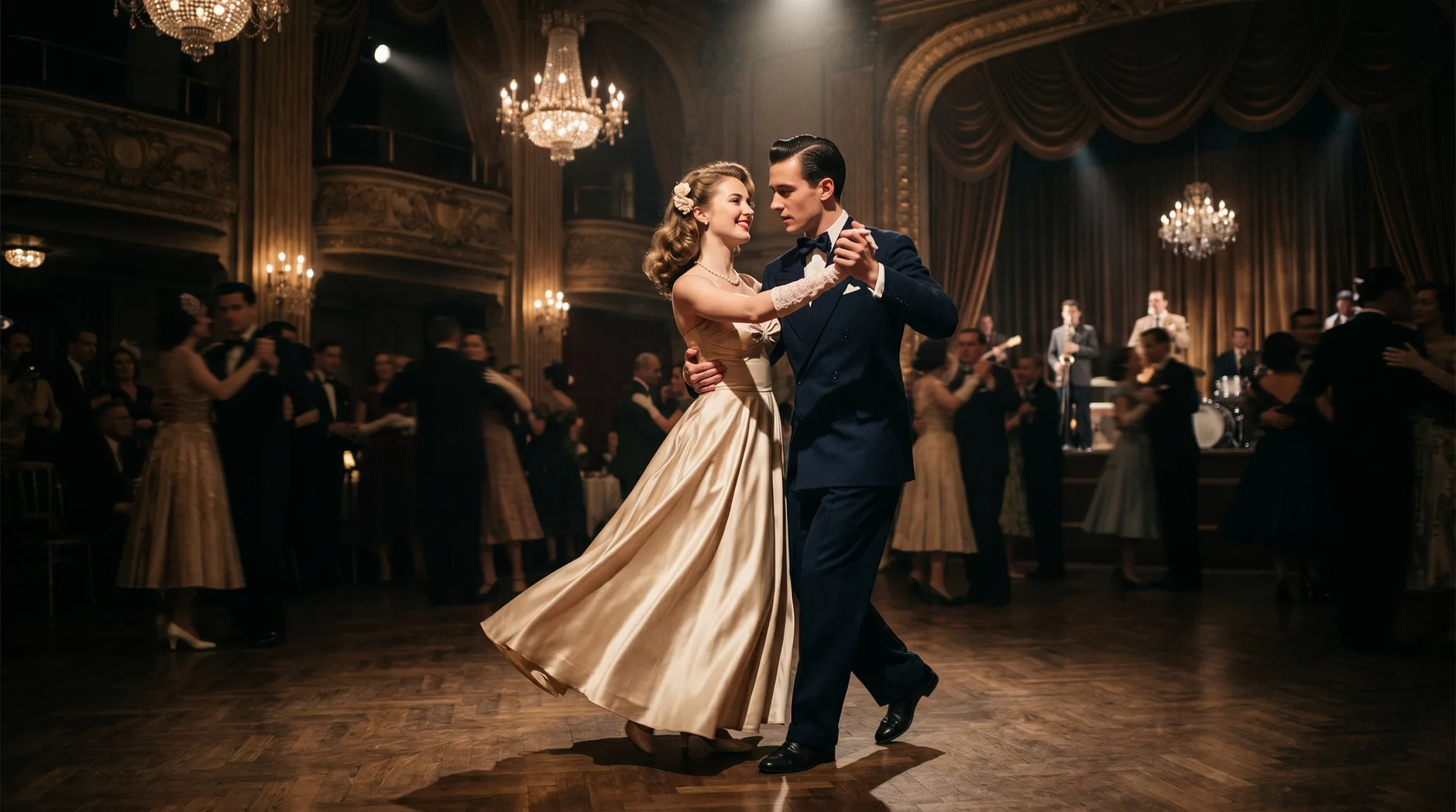
"A young couple, dressed in formal 1940s-50s prom attire, dancing gracefully in a grand ballroom. The woman wears a flowing satin gown, the man a tailored suit. Cinematic, dramatic chiaroscuro lighting, with strong key lights and deep shadows, reminiscent of film noir. Shot on a large format camera, Kodak Portra 400 film stock, with a vintage uncoated prime lens like a Cooke Speed Panchro, wide aperture f/2.8, shallow depth of field, subtle film grain, soft focus on background. Warm, muted color palette with rich blacks and creamy highlights. High detail, photorealistic, elegant, nostalgic. --ar 16:9"
Why It Works:
This prompt works by meticulously detailing both the subject matter and the technical photographic parameters. “1940s-50s prom attire” specifies the fashion. “Cinematic, dramatic chiaroscuro lighting” directly instructs the AI on the lighting style, critical for that era’s look. Chiaroscuro, a technique that uses strong contrasts between light and dark, is fundamental to film noir and classic portraiture. Specifying “large format camera” implies a certain resolution and depth. “Kodak Portra 400 film stock” is key; Portra is known for its natural, pleasing skin tones and fine grain, providing a warm, nostalgic feel without being overly stylized. The “Cooke Speed Panchro” lens choice is deliberate, these vintage lenses are celebrated for their distinctive “Cooke Look,” characterized by gentle fall-off, smooth bokeh, and a slightly lower contrast, contributing to a dreamy, organic image. A “wide aperture f/2.8” ensures a shallow depth of field, isolating the subjects and adding to the cinematic quality. The “warm, muted color palette” reinforces the era’s photographic tendencies, avoiding modern oversaturation.
What Makes It Special:
The combination of specific lighting, a classic film stock, and a revered vintage lens makes this prompt particularly effective. It moves beyond generic “vintage” and pinpoints a very particular aesthetic. The emphasis on “subtle film grain” and “soft focus on background” adds to the authenticity, mimicking the optical qualities of film. This detailed instruction set ensures the AI understands not just what to depict, but how to depict it, delivering a truly glamorous and era-appropriate vintage prom scene. For more on essential gear, check out Hero’s Essentials: filmmaker gear and tools.
Prompt 2: Mid-Century Modern Prom Night (Late 1950s – Early 1960s)
Transitioning from the dramatic flair of the 40s and early 50s, this prompt captures the cleaner lines, pastel palettes, and youthful optimism of the late 1950s and early 1960s. This was an era of post-war prosperity, rock and roll, and burgeoning pop culture, often seen in a bright, almost idealized light.
The Prompt:
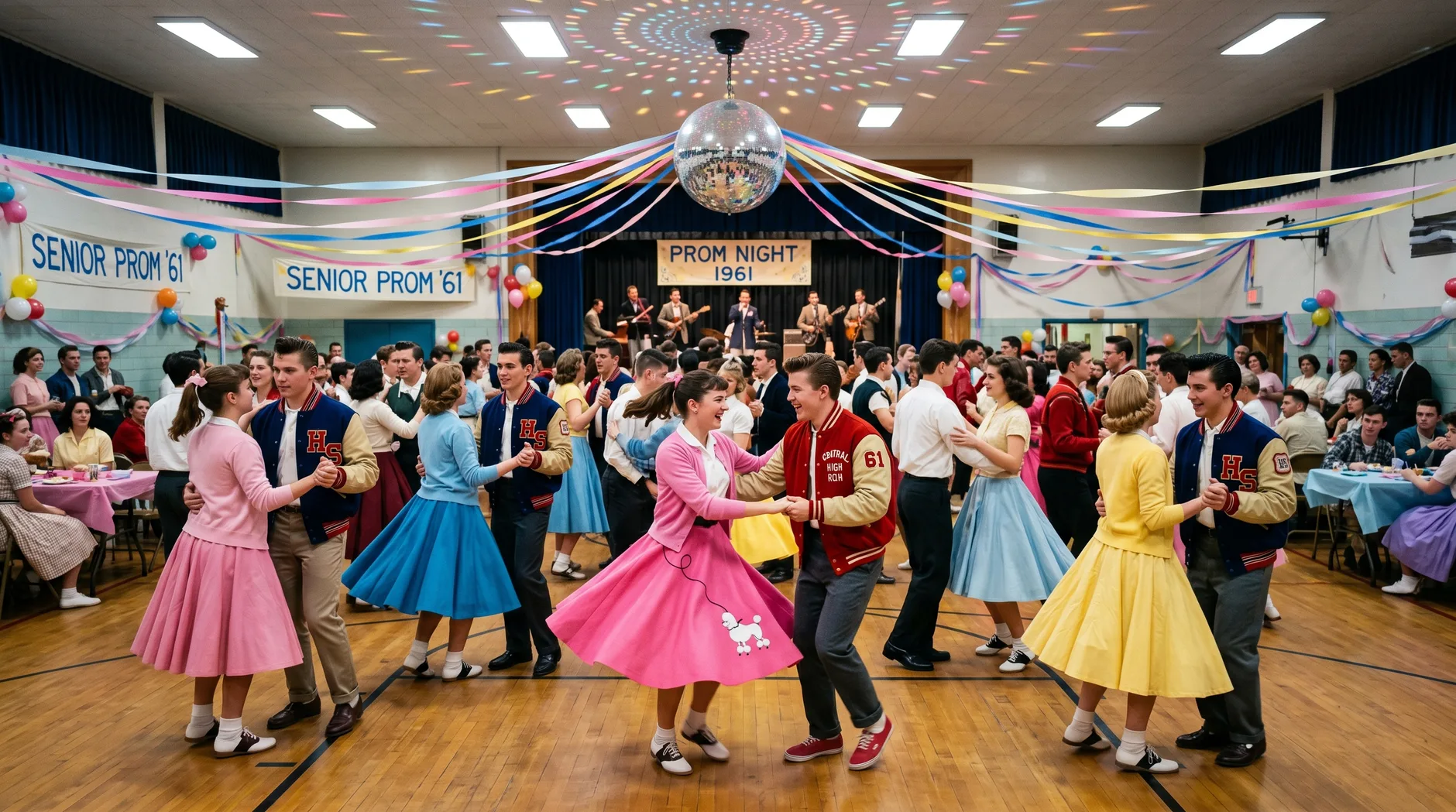
"A lively scene at a 1950s-early 1960s prom, featuring teenagers in poodle skirts, letterman jackets, and slicked-back hair, dancing in a brightly lit school gymnasium decorated with streamers and a prominent disco ball (or similar period equivalent). Flat, even lighting with soft fill, simulating overhead fluorescent or gymnasium lighting. Shot on a medium format Hasselblad 500C/M with an 80mm Planar lens, Ektachrome film stock, aperture f/5.6, deep depth of field, minimal grain, sharp focus throughout. Bright, saturated pastel color palette, clean lines, optimistic, vibrant, nostalgic. High detail, photorealistic. --ar 4:3"
Why It Works:
This prompt succeeds by clearly defining the visual hallmarks of the era. “Poodle skirts, letterman jackets, and slicked-back hair” immediately grounds the fashion. The setting of a “brightly lit school gymnasium decorated with streamers” provides the perfect backdrop. The lighting instruction, “Flat, even lighting with soft fill, simulating overhead fluorescent or gymnasium lighting,” is crucial. Unlike the dramatic chiaroscuro, this era often featured less stylized, more functional lighting, giving a distinct “snapshot” feel. The “Hasselblad 500C/M with an 80mm Planar lens” is a specific choice for its renowned sharpness and clarity, often associated with magazine photography of the period. “Ektachrome film stock” is vital for its characteristic vibrant, saturated colors and fine grain, perfect for capturing the era’s optimistic palette. A “deep depth of field” (f/5.6) ensures that more of the scene remains in sharp focus, typical of documentary or event photography, allowing the viewer to take in all the details of this bustling vintage prom.
What Makes It Special:
The combination of specific fashion, setting, and the choice of Ektachrome film stock with a sharp medium format lens truly differentiates this prompt. It aims for a clean, almost idealized representation of the era, rather than a gritty or overly artistic one. The “bright, saturated pastel color palette” captures the innocence and vibrancy of the late 50s and early 60s. This prompt is designed to produce images that feel like they could have been pulled from a high school yearbook or a family album of the period, perfectly encapsulating the spirit of a mid-century modern vintage prom. For more on creating distinct character aesthetics, consider 7 Essential Character Sheets: Nano Banana Prompts Revealed.
Prompt 3: Psychedelic 70s Disco Prom
🎬 AI Render Pro Studio, the AI film production suite I built and use on my own productions. Script breakdown, storyboards, 30+ video models including Seedance 2.5 and Kling O3, image generation, retouch, 7K upscaling and audio, all in one browser workspace. $19/month flat, bring your own API keys and pay providers at cost, no credit packs, no markup. Try AI Render Pro Studio →
Stepping into the 1970s, this prompt embraces the wild, vibrant, and often hazy aesthetic of disco and psychedelic culture. It’s about movement, color, and a slightly dreamlike quality, perfectly suited for a vintage prom that’s all about letting loose.
The Prompt:
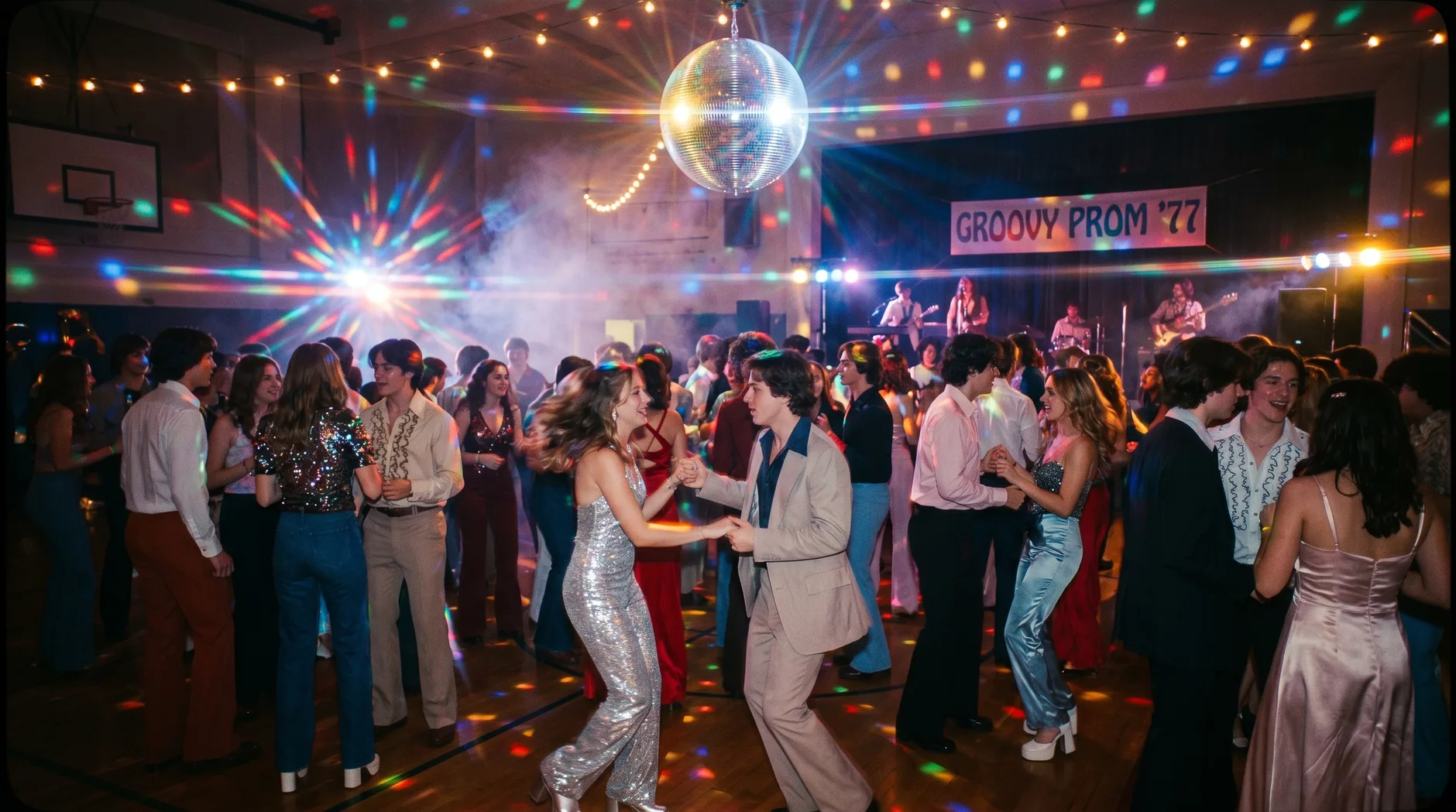
"A chaotic, energetic 1970s disco prom scene. Teenagers in bell bottoms, platform shoes, and sequined outfits dancing under a rotating disco ball. Hazy atmosphere with smoke machine effects. Multi-colored spotlights and flashing strobes creating dynamic, shifting light patterns. Shot on a 35mm film camera, Ektachrome 160T (tungsten balanced) film stock, with a wide-angle vintage anamorphic lens (e.g., Kowa Prominar) for horizontal flares and oval bokeh. Low light, wide aperture f/1.8, slightly soft focus, pronounced film grain, vibrant and saturated colors with a warm bias. Dynamic composition, motion blur, photorealistic, psychedelic, nostalgic. --ar 21:9"
Why It Works:
This prompt effectively captures the 70s disco vibe through several key elements. “Bell bottoms, platform shoes, and sequined outfits” immediately set the fashion. The “rotating disco ball” and “hazy atmosphere with smoke machine effects” are quintessential elements of a 70s dance floor. The lighting instructions, “Multi-colored spotlights and flashing strobes”, are crucial for the dynamic, high-energy look. The choice of “35mm film camera” is standard for the era, and “Ektachrome 160T” (tungsten balanced) is ideal for artificial indoor lighting, known for its punchy colors and fine grain. The “wide-angle vintage anamorphic lens (e.g., Kowa Prominar)” is a game-changer here, specifically requested for its characteristic horizontal lens flares and oval bokeh, which are iconic features of 70s cinema. A “low light, wide aperture f/1.8” ensures a shallow depth of field and emphasizes the challenging lighting conditions, while “pronounced film grain” adds to the authentic retro feel. The “dynamic composition” and “motion blur” further enhance the sense of movement and energy inherent to a 70s vintage prom.
What Makes It Special:
The explicit mention of an “anamorphic lens” for its distinct flares and bokeh is what makes this prompt truly special. It directs the AI to emulate a very specific cinematic look that defined many films of the era. The combination of dynamic lighting, hazy atmosphere, and motion blur, all rendered with the vibrant saturation of Ektachrome, creates an immersive and authentic psychedelic disco experience. The aspect ratio of 21:9 (cinemascope) further enhances the cinematic feel, making the image feel like a still from a classic 70s film. For a glimpse into other bold worlds created with AI, explore 8 Ultimate Cyberpunk Prompts for AI Art: Bold New Worlds.
Prompt 4: 80s Neon Nostalgia Prom
The 1980s were a decade of excess, vibrant colors, big hair, and a distinct synth-pop aesthetic. This prompt aims to recreate that iconic look for a vintage prom, focusing on neon lights, bold fashion, and a slightly dreamlike, often romanticized atmosphere.
The Prompt:
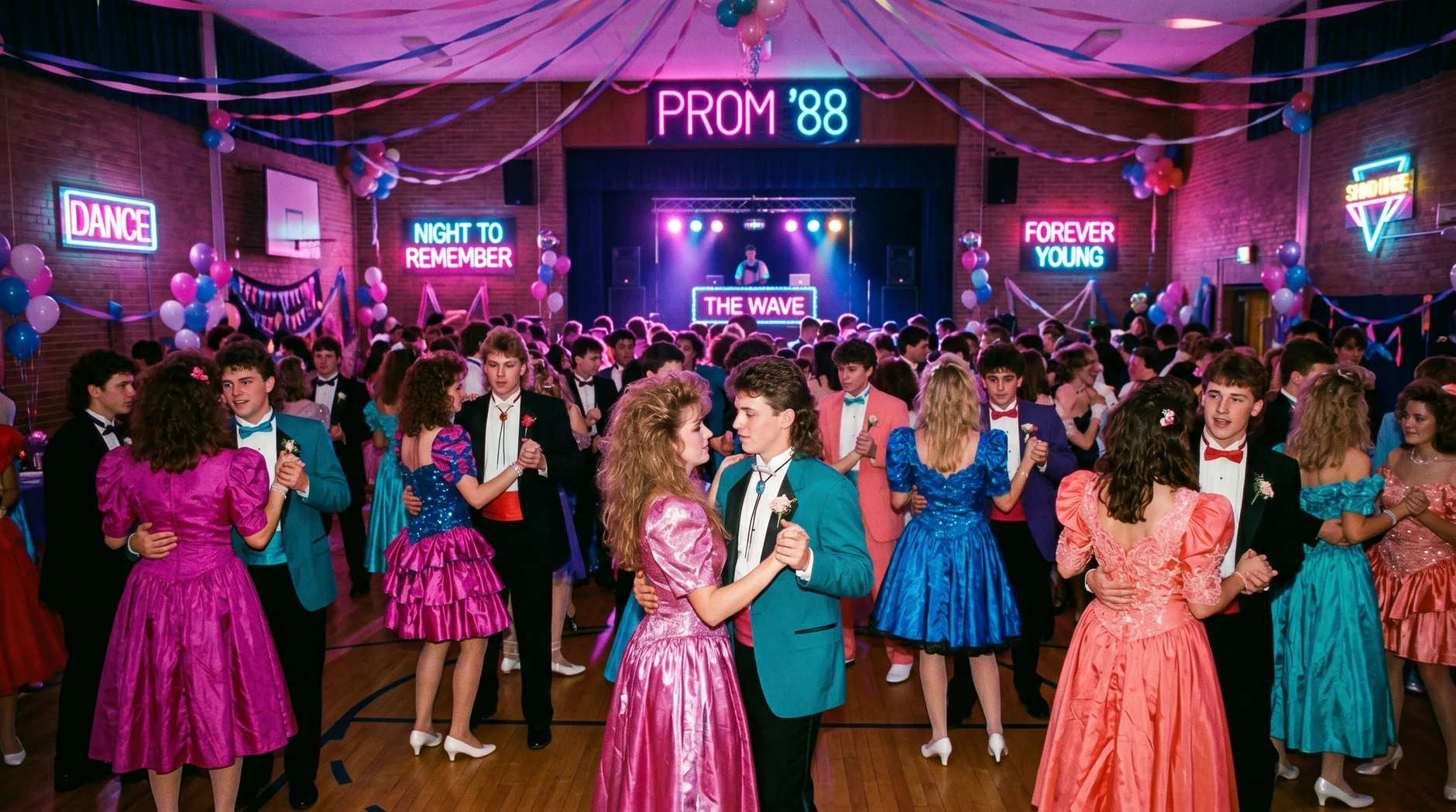
"A quintessential 1980s prom scene, filled with teenagers sporting big hair, shoulder pads, and vibrant pastel or neon outfits. The setting is a gymnasium or community hall bathed in a glow of neon signs and purple/pink uplighting. Soft, diffused lighting with strong practical neon light sources, creating a synthwave aesthetic. Shot on a 35mm film camera, Fuji Superia 400 film stock, with a vintage zoom lens (e.g., Canon FD 50-135mm f/3.5) for a slightly softer, less clinical look. Wide aperture f/2.8, subtle lens flares, dreamlike soft focus, moderate film grain. Electric, saturated colors, strong magenta and cyan tones. Atmospheric, nostalgic, photorealistic. --ar 16:9"
Why It Works:
This prompt effectively conjures the 80s through a combination of fashion, lighting, and film stock choices. “Big hair, shoulder pads, and vibrant pastel or neon outfits” are unmistakable markers of the decade. The “gymnasium or community hall bathed in a glow of neon signs and purple/pink uplighting” perfectly sets the scene, defining the color palette. “Soft, diffused lighting with strong practical neon light sources” captures the era’s blend of romanticized glow and artificial light sources. “Fuji Superia 400 film stock” is an excellent choice for its characteristic vibrant greens and blues, and its ability to render bright, punchy colors, which were prevalent in 80s photography. The “vintage zoom lens (e.g., Canon FD 50-135mm f/3.5)” contributes to a slightly softer, less harsh image compared to modern primes, often seen in 80s films and music videos. A “wide aperture f/2.8” facilitates a shallower depth of field, giving a dreamlike quality, while “subtle lens flares” add to the atmospheric glow. “Moderate film grain” ensures an authentic filmic texture.
What Makes It Special:
The emphasis on “neon signs and purple/pink uplighting” creating a “synthwave aesthetic” is what truly makes this prompt shine. It directly references a modern retro-futuristic style that draws heavily from 80s visuals, ensuring the AI captures that specific blend of retro and vibrant. The choice of Fuji Superia and a vintage zoom lens further refines the look, moving beyond generic 80s to a specific, iconic aesthetic of a true vintage prom. The “electric, saturated colors, strong magenta and cyan tones” are the final touch, perfectly encapsulating the decade’s visual identity. For a deeper dive into retro aesthetics, check out 20 Essential Y2K Prompts: Master Retro Aesthetics!, which provides a contrast to the 80s.
Prompt 5: Grungy 90s Alternative Prom
The 1990s brought a significant shift in aesthetic, moving away from the opulence of the 80s towards a more raw, authentic, and often rebellious look, heavily influenced by grunge and alternative culture. This prompt aims to capture that unpolished, anti-establishment vibe for a vintage prom.
The Prompt:
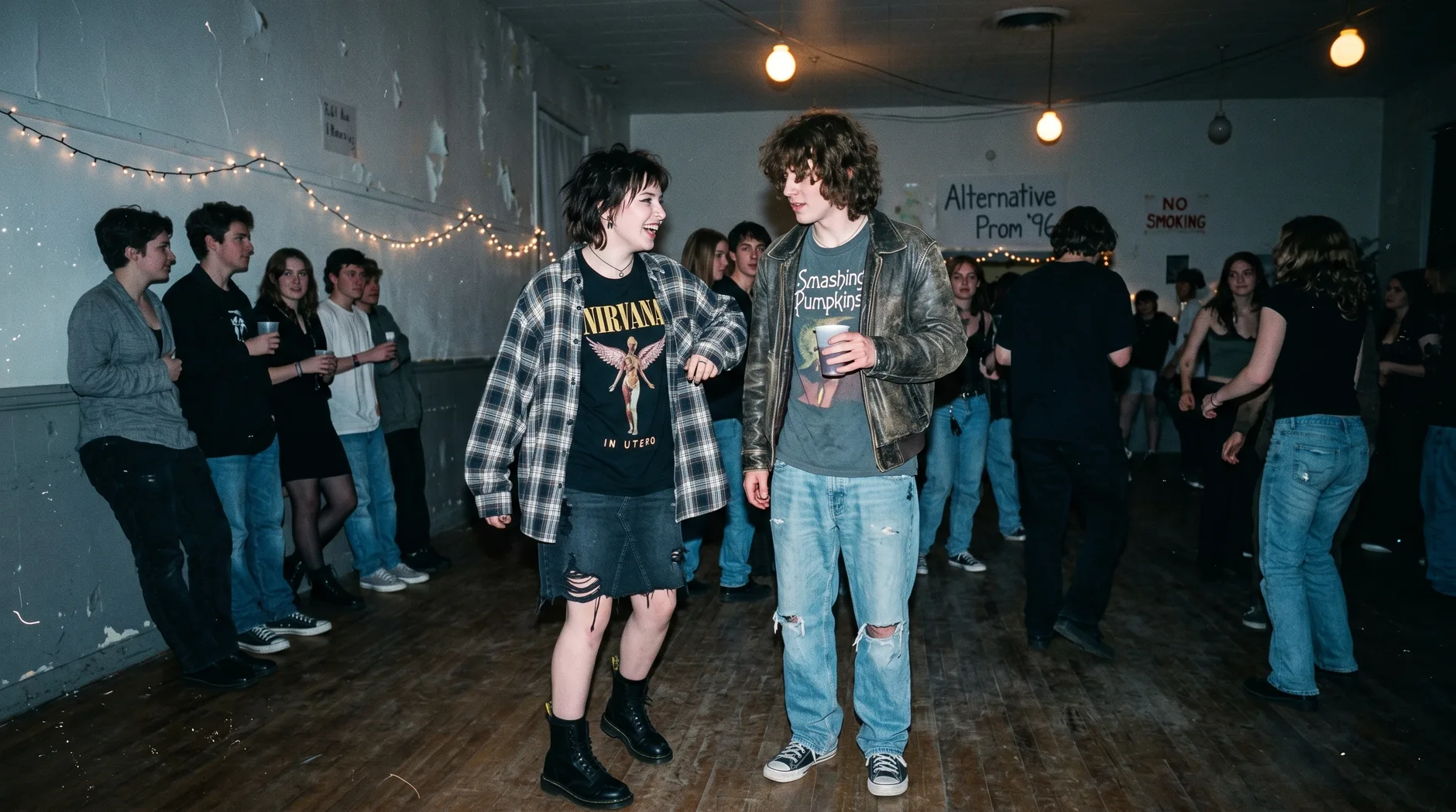
"A raw, authentic 1990s alternative prom scene. Teenagers in flannel shirts, band t-shirts, worn denim, and combat boots, gathered in a dimly lit, slightly rundown community hall. Existing practical lighting – bare bulbs, strung fairy lights – creating harsh shadows and pockets of light. Shot on a 35mm point-and-shoot film camera (e.g., Contax T2), Kodak Gold 200 film stock, wide-angle lens (e.g., 38mm f/2.8), deep depth of field, prominent, gritty film grain. Desaturated, cool color palette with muted tones and strong contrast. Unposed, candid, slightly underexposed, photorealistic, nostalgic. --ar 3:2"
Why It Works:
This prompt effectively captures the anti-glamour of the 90s alternative scene. “Flannel shirts, band t-shirts, worn denim, and combat boots” instantly defines the fashion. The “dimly lit, slightly rundown community hall” with “bare bulbs, strung fairy lights” provides an authentic, unpretentious setting, a stark contrast to earlier eras’ grand ballrooms. The lighting description, “harsh shadows and pockets of light”, is key to the grungy aesthetic, emphasizing realism over stylized beauty. “35mm point-and-shoot film camera (e.g., Contax T2)” is a crucial detail; these cameras were popular for their candid, snapshot quality, often producing images with a specific character. “Kodak Gold 200 film stock” is chosen for its versatility and slightly desaturated, natural color rendition, often seen in personal photography of the era. A “wide-angle lens (e.g., 38mm f/2.8)” combined with a “deep depth of field” ensures a more documentary-style capture, keeping most of the scene in focus. “Prominent, gritty film grain” is essential for the raw, unpolished look, reflecting the aesthetic of the time. The “desaturated, cool color palette with muted tones and strong contrast” further enhances the distinct 90s visual.
What Makes It Special:
The deliberate choice of a “point-and-shoot film camera” and “Kodak Gold 200” is what truly makes this prompt special. It moves beyond generic “90s” to evoke the specific feel of amateur photography from the era, known for its candidness and unvarnished realism. The instruction for “unposed, candid, slightly underexposed” imagery pushes the AI to generate less idealized, more authentic representations of a grunge-era vintage prom. This prompt is designed to produce images that feel like genuine snapshots from a forgotten photo album, capturing the essence of a rebellious and unpretentious decade. For more on the evolution of AI in visuals, consider 3 Million Photos Deleted: Eye-Opening Facial Recognition AI.
Prompt 6: Art Deco Speakeasy Prom (1920s)
Transporting us back to the Roaring Twenties, this prompt aims to capture the sophistication, clandestine charm, and geometric elegance of the Art Deco era, set within a hidden speakeasy-style vintage prom. This period is synonymous with jazz, flappers, and a sense of liberation.
The Prompt:
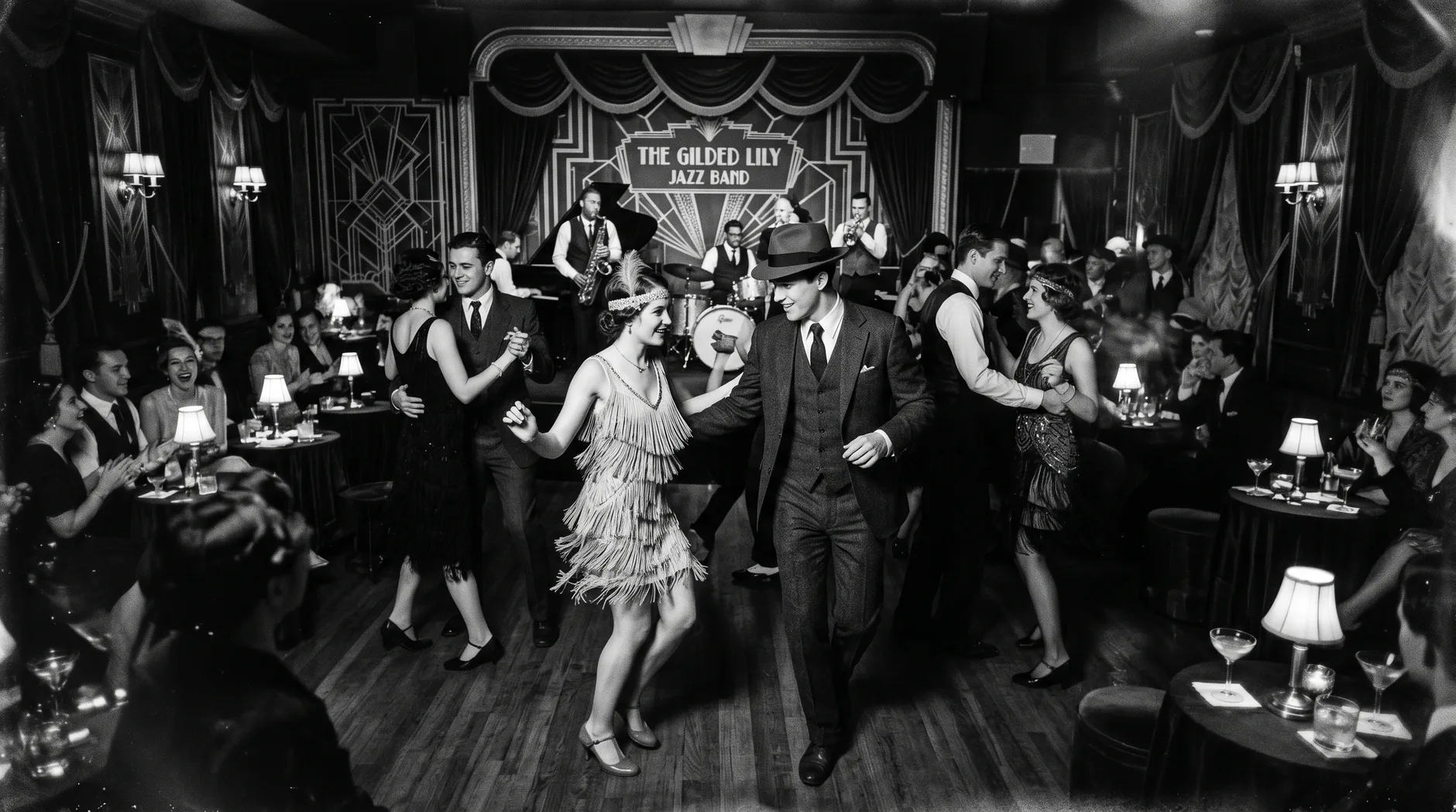
"A clandestine 1920s Art Deco speakeasy prom. Young adults in flapper dresses, feathered headbands, and tailored suits with fedoras, dancing to a live jazz band. Opulent, dimly lit interior with geometric Art Deco patterns on walls, rich velvet, and brass accents. Chiaroscuro lighting with practical lamps and warm, low-key illumination, creating deep shadows and dramatic highlights. Shot on a vintage large format camera (e.g., Graflex Speed Graphic), Ilford HP5 Plus black and white film, with a soft focus portrait lens (e.g., Petzval lens), wide aperture f/2.2, very shallow depth of field, pronounced film grain. High contrast, rich blacks, silvery highlights, timeless, mysterious, photorealistic. --ar 5:4"
Why It Works:
This prompt immediately establishes the 1920s aesthetic through fashion and setting. “Flapper dresses, feathered headbands, and tailored suits with fedoras” are instantly recognizable. The “clandestine 1920s Art Deco speakeasy prom” setting, with its “geometric Art Deco patterns on walls, rich velvet, and brass accents,” creates an atmosphere of hidden luxury. The “chiaroscuro lighting with practical lamps and warm, low-key illumination” is crucial for evoking the intimate, often secretive ambiance of a speakeasy, creating deep shadows and dramatic highlights. The choice of a “vintage large format camera (e.g., Graflex Speed Graphic)” and “Ilford HP5 Plus black and white film” is deliberate; HP5 is a classic black and white film known for its versatility, strong contrast, and beautiful grain, perfect for a timeless, period look. The “soft focus portrait lens (e.g., Petzval lens)” with its characteristic swirly bokeh and wide aperture (f/2.2) provides a very shallow depth of field, isolating subjects and adding a dreamy, romantic quality often seen in early portrait photography. “Pronounced film grain” and “high contrast, rich blacks, silvery highlights” complete the authentic black and white film look.
What Makes It Special:
The combination of specific Art Deco visual motifs, clandestine speakeasy setting, and the explicit choice of black and white film with a Petzval lens is what truly elevates this prompt. The Petzval lens, with its unique optical aberrations, creates a look that is instantly recognizable and deeply nostalgic. This prompt goes beyond simply asking for “1920s” and instead directs the AI to render a specific, highly stylized cinematic vision of a Jazz Age vintage prom, full of mystery and elegance. The aspect ratio of 5:4 is also a nod to early large format photography, enhancing the historical authenticity.
Prompt 7: Victorian Gothic Prom Ball (Late 1800s)
Venturing further back in time, this prompt explores the dark romance and elaborate grandeur of a late 19th-century Victorian Gothic ball, reimagined as a vintage prom. It’s about opulence, intricate details, and a slightly melancholic, dramatic atmosphere.
The Prompt:
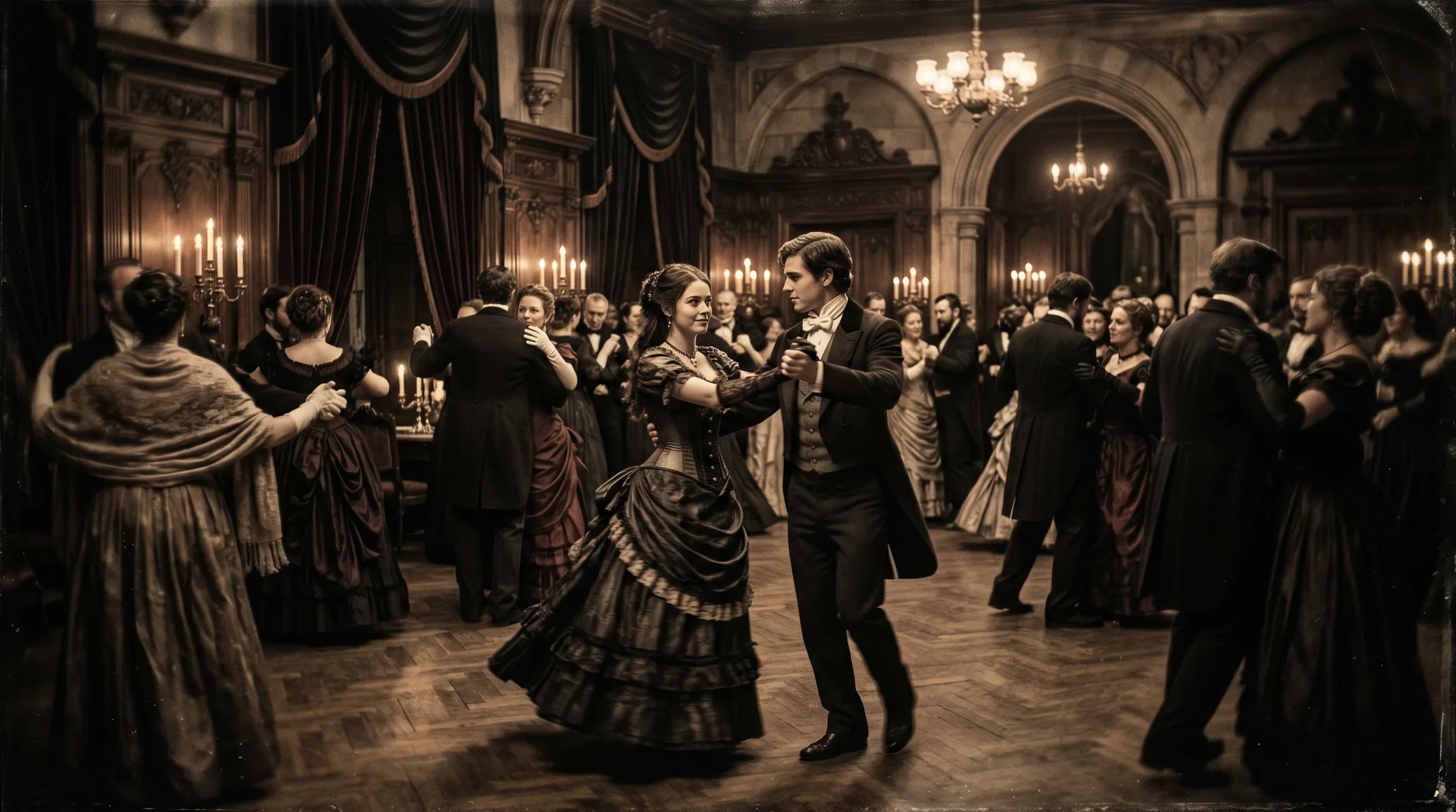
"An opulent and slightly eerie late 1800s Victorian Gothic prom ball. Young men and women in elaborate Victorian evening gowns, tailcoats, and corsets, waltzing in a grand, dimly lit ballroom adorned with heavy drapes, candelabras, and intricate dark wood carvings. Gaslight illumination, creating deep shadows, dramatic highlights, and a warm, flickering glow. Shot on a large format wet plate collodion camera, with a vintage uncoated brass lens (e.g., Dallmeyer Patent Portrait lens), very wide aperture f/1.8, extremely shallow depth of field, subtle imperfections, ethereal soft focus, sepia tone. Moody, dramatic, rich textures, photorealistic, historical, nostalgic. --ar 4:5"
Why It Works:
This prompt immerses the viewer in a specific historical period with rich detail. “Elaborate Victorian evening gowns, tailcoats, and corsets” immediately sets the fashion. The “grand, dimly lit ballroom adorned with heavy drapes, candelabras, and intricate dark wood carvings” paints a vivid picture of the setting. The lighting, “Gaslight illumination, creating deep shadows, dramatic highlights, and a warm, flickering glow,” is crucial for authenticity, replicating the period’s primary light source. The highly specific “large format wet plate collodion camera” and “vintage uncoated brass lens (e.g., Dallmeyer Patent Portrait lens)” are masterstrokes. Wet plate collodion photography, prevalent in the mid-to-late 19th century, is known for its incredible detail, unique tonal range, and inherent imperfections. The Dallmeyer lens, a classic portrait lens of the era, would produce a very wide aperture (f/1.8 for a large format lens is extremely wide), leading to an “extremely shallow depth of field” and a distinctive, ethereal soft focus. “Subtle imperfections” are important for mimicking the handmade nature of wet plate images. The “sepia tone” is a common characteristic of aged collodion prints.
What Makes It Special:
The explicit instruction for “wet plate collodion camera” and “Dallmeyer Patent Portrait lens” makes this prompt exceptionally powerful. It directs the AI to emulate a very specific, challenging, and beautiful photographic process, complete with its unique optical qualities and historical aesthetic. The combination of period fashion, atmospheric gaslight, and the technical quirks of early photography creates a truly unique and deeply evocative image of a Victorian Gothic vintage prom. The “moody, dramatic, rich textures” further enhance the sense of historical depth and romanticism. For more inspiration on cinematic visuals, explore 7 Ultimate Cinema Lenses in Nuke with ZEISS CinCraft!.
Mastering the Art of Vintage Prom AI Prompts
Crafting effective AI prompts, especially for nuanced historical aesthetics like vintage prom themes, is less about finding a magic word and more about understanding the underlying principles of photography and cinematography. Each element in the prompts above, from camera type to film stock, lens choice, and lighting, plays a critical role in shaping the final output. It’s about providing the AI with a detailed blueprint, much like a director gives notes to a cinematographer. The more specific and technically informed your instructions, the more accurately the AI can render your vision.
Think of the AI as an incredibly skilled but literal artist. It understands concepts like “vintage,” but it needs you to define which vintage, and how that vintage should look through the lens. Specifying “Kodak Portra 400” isn’t just a random choice; it’s a directive for color science, grain structure, and dynamic range. Likewise, mentioning an “anamorphic lens” tells the AI to introduce specific optical aberrations like horizontal flares and oval bokeh, which are cinematic signatures. This level of detail transforms a simple request into a sophisticated command, yielding results that are not just visually appealing but historically and aesthetically accurate.
As AI tools continue to evolve, the ability to communicate visually through technical language will become an increasingly valuable skill for creatives. Whether you’re a filmmaker, a graphic designer, or an artist, mastering prompt engineering allows you to direct these powerful tools with precision and artistic intent. These vintage prom prompts are merely a starting point; I encourage you to experiment, swap out film stocks, try different lenses, and adjust lighting to discover your own unique visual narratives. The possibilities are boundless when you approach AI with the discerning eye of a director. DesignHero Shop, filmmaker merch and creative tools offers resources to inspire your creative journey. The future of creative production is here, and it’s being shaped by those who can articulate their vision with clarity and technical understanding. For instance, the growing sophistication of AI models is highlighted in reports from sources like TechCrunch on AI image generation advancements, underscoring the importance of precise prompting.
Every AI illustration in this article was crafted using AI Render Pro, the same prompting engine used across this blog. Read the full breakdown here.
Frequently Asked Questions
How important is specifying film stock in AI prompts?
Specifying film stock is crucial as it dictates the color science, grain structure, contrast, and overall tonal qualities of the image, allowing the AI to emulate the characteristic look of different photographic films. This detail significantly enhances the authenticity and nostalgic feel of the generated image.
Can I use modern camera and lens terminology for vintage prompts?
While you can, using period-appropriate camera types and vintage lens models (e.g., “Cooke Speed Panchro” or “Petzval lens”) will yield more authentic results. Modern lenses are typically sharper and more clinical, which might detract from the desired vintage aesthetic, so be mindful of the specific characteristics you want to achieve.
What is “chiaroscuro lighting” and why is it used in vintage prompts?
Chiaroscuro lighting is a technique that uses strong contrasts between light and dark, usually bold contrasts affecting a whole composition. It’s used in vintage prompts, particularly for eras like the 1920s-1950s, to create dramatic, moody, and cinematic effects reminiscent of classic Hollywood and film noir.
How do aspect ratios affect the final AI image for vintage themes?
Aspect ratios are important for vintage themes as they can mimic the framing of period photography or cinema. For example, 4:3 or 5:4 ratios are common for older photographic prints, while 16:9 or 21:9 can evoke cinematic widescreen formats from specific decades, influencing the composition and overall feel.
Where can I learn more about historical fashion and photography for better prompts?
To refine your prompts, research specific decades’ fashion, architecture, and popular photography styles. Resources like Wikipedia’s article on Prom, historical photography archives, fashion history books, and film studies can provide invaluable insights into period-specific aesthetics. You can also explore articles on film technology, such as those found on Wired’s film section, to understand the tools that shaped visual eras.
Discover more from Olivier Hero Dressen Blog: Filmmaking & Creative Tech
Subscribe to get the latest posts sent to your email.

Work with Olivier
Director | CD | DP & Photographer
Specializing in commercials, music videos, AI-driven filmmaking, and cinematic storytelling for brands and production companies.
🌍 Shanghai · Paris · Los Angeles · Dubai
🎬 View Portfolio & Get in Touch