
Key Takeaways
- First insight, Mastering retro prompts allows AI artists to precisely recreate the aesthetic nuances of bygone eras, from the golden age of cinema to early digital pixel art, unlocking vast creative potential.
- Craft highlight, Effective retro prompts leverage specific AI Render Pro terminology, detailing camera type, lens characteristics, lighting setups, and film stock to achieve authentic, high-fidelity nostalgic imagery.
- Industry context, As AI art generation evolves, the demand for sophisticated and precise retro prompts grows, enabling creators to produce evergreen content that resonates with timeless visual appeal.
- Bottom line, This guide provides actionable, copy-paste retro prompts, empowering both novice and experienced AI artists to generate stunning, era-specific visuals with professional-grade control and detail.
The burgeoning field of AI art generation continues to push creative boundaries, and at its heart lies the power of precise prompting. For those seeking to evoke the rich tapestry of the past, mastering retro prompts is an indispensable skill. This article serves as your definitive guide to crafting seven distinct, era-specific prompts designed to generate stunning, nostalgic AI imagery. As a filmmaker with two decades behind the lens, I understand the critical importance of detail, camera, lens, lighting, film stock, in shaping a visual narrative. These principles apply directly to AI art, where your prompt is the script, and the AI is your crew. Let’s delve into the mechanics of achieving authentic retro aesthetics, providing you with practical, copy-paste prompts that you can immediately integrate into your workflow.
Need a Director for Your Next Project?
From commercials to branded campaigns—Olivier brings creative vision and technical expertise.
→ View ProjectsThe Power of Retro Prompts in AI Art
In an age saturated with hyper-realistic digital imagery, the allure of the past offers a refreshing counterpoint. Retro prompts are not merely about recreating old styles; they are about tapping into a collective nostalgia, evoking emotions, and telling stories through familiar visual languages. The effectiveness of an AI prompt, particularly when aiming for a specific aesthetic, hinges on its precision. Generic commands yield generic results. To truly capture the essence of a bygone era, you must think like a cinematographer, a photographer, a graphic designer from that time.
Consider the technical details: the grain of a specific film stock, the characteristic bokeh of a vintage lens, the dramatic interplay of light and shadow in a classic studio setup. These elements are not just aesthetic choices; they are technical specifications that AI models can interpret and render with remarkable accuracy. Whether you’re aiming for the sepia tones of an early photograph or the vibrant, slightly distorted hues of a VHS tape, the right prompt is your blueprint. This guide focuses on providing you with highly detailed retro prompts that incorporate these nuances, transforming your AI art from generic to genuinely evocative.
The journey into AI art can be daunting, but with tools like AI Render Pro, the prompting tool for filmmakers and creatives, the process becomes more intuitive and powerful. These tools are designed to understand complex visual language, making it easier for artists to translate their vision into AI-generated imagery. Understanding the core principles of photography and cinematography, as outlined in this guide, will significantly enhance your ability to craft effective prompts, regardless of the AI platform you use. The goal is not just to generate an image, but to craft an experience, a memory, a piece of art that resonates deeply with the viewer. The precision in your retro prompts is what makes this possible.
The resurgence of interest in vintage aesthetics across various media, from film to fashion, underscores the timeless appeal of these styles. AI offers an unprecedented opportunity to explore and reinterpret these aesthetics without the physical constraints of traditional media. By providing specific instructions on camera models, lens types, lighting conditions, and even the “film stock” or digital rendering style, we can guide the AI to produce results that are indistinguishable from authentic period pieces. This article aims to demystify that process, offering a practical framework for anyone looking to inject a dose of nostalgia into their digital creations. For more on the broader context of AI art, you can explore the AI art Wikipedia page.
Prompt 1: The Golden Age of Cinema Prompt
To evoke the grandeur and romance of Hollywood’s Golden Age, your retro prompts must speak the language of classic film. Think opulent sets, dramatic lighting, and the unmistakable glow of Technicolor. This prompt aims to capture the essence of films from the 1940s and 1950s, a period defined by its cinematic artistry and visual splendor. We’re looking for images that feel like they belong on a silver screen, full of character and timeless elegance.
The Prompt:

"A glamorous 1940s Hollywood starlet, posed elegantly on a grand staircase, wearing a shimmering satin gown. The scene is bathed in soft, high-key studio lighting with distinct catchlights in her eyes. Shot on an Arriflex 35-III camera with a Cooke Speed Panchro prime lens, using Technicolor film stock, 35mm, with a slight film grain. The composition is a medium shot, slightly low angle, emphasizing her stature. Aspect ratio 1.37:1. Cinematic, opulent, nostalgic. --ar 1.37:1"
Why it Works: This prompt is rich with specific, era-appropriate terminology. The Arriflex 35-III (though a later model, it’s representative of robust film cameras used for such productions) and Cooke Speed Panchro lens are iconic choices known for their beautiful rendering and creamy bokeh, characteristic of classic cinema. Specifying Technicolor film stock is crucial for achieving the saturated yet naturalistic color palette of the era, while 35mm and slight film grain add authentic texture. The description of soft, high-key studio lighting with distinct catchlights directly instructs the AI on the precise lighting setup, essential for the glamorous look. The medium shot, slightly low angle and 1.37:1 aspect ratio (the Academy ratio) further cement the cinematic feel, making it one of the most effective retro prompts for this aesthetic.
What Makes it Special: What sets this prompt apart is its holistic approach to recreating a specific cinematic period. It doesn’t just ask for “vintage” but meticulously details the tools and techniques that defined the Golden Age. The combination of camera, lens, film, lighting, and composition provides the AI with a comprehensive blueprint, resulting in images that exude genuine vintage charm and a professional filmic quality. It allows for the generation of subjects and scenes that feel like they could have been pulled directly from a classic Hollywood movie set, making it an invaluable tool for any artist exploring historical aesthetics. For those interested in the history of cinematic tools, exploring ARRI’s official history can provide deeper context on camera evolution.
For more inspiration on character design, which is crucial for creating convincing starlets, check out 10 Insanely Powerful Midjourney Prompts for Character Design (With Examples).
Prompt 2: Vintage Polaroid Snapshot Prompt
The Polaroid snapshot is an icon of spontaneous, tangible nostalgia. Its unique aesthetic, faded colors, soft focus, and characteristic white border, is instantly recognizable. This prompt aims to capture that immediate, imperfect charm, reminiscent of casual moments frozen in time. It’s about recreating the feeling of pulling a newly developed photo from a camera, shaking it, and watching the image slowly materialize.
The Prompt:
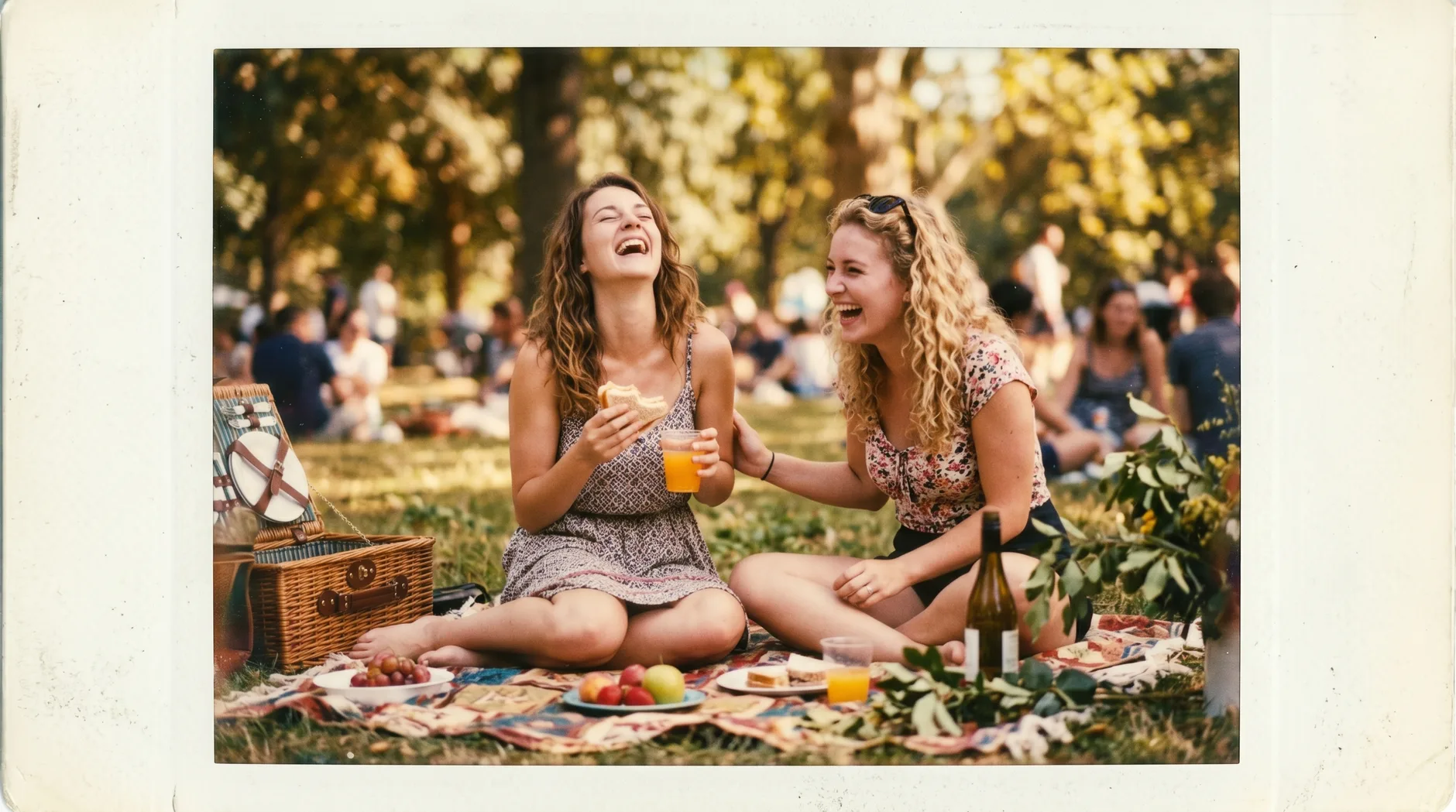
"A candid moment of two friends laughing at a summer picnic, shot on a vintage Polaroid SX-70 camera. The image features slightly faded, warm colors, soft focus with characteristic bokeh, and a distinct white Polaroid frame border. Lighting is natural, slightly overexposed sunlight. Film stock is Impossible Project (Polaroid Originals) Color Film for SX-70, with visible chemical texture and slight imperfections. Composition is off-center, handheld, intimate. Aspect ratio 1:1. Nostalgic, authentic, lo-fi. --ar 1:1"
Why it Works: This prompt zeroes in on the specificities of instant photography. Naming the Polaroid SX-70 camera is key, as it defines the form factor and inherent limitations that contribute to the aesthetic. The description of slightly faded, warm colors and soft focus with characteristic bokeh directly instructs the AI on the visual qualities. Crucially, specifying a distinct white Polaroid frame border ensures the iconic layout. The natural, slightly overexposed sunlight mimics typical outdoor snapshot conditions, while mentioning Impossible Project (Polaroid Originals) Color Film for SX-70 and its visible chemical texture and slight imperfections adds a layer of raw authenticity. The off-center, handheld, intimate composition reinforces the spontaneous nature of a true snapshot. These are powerful retro prompts for capturing genuine instant film vibes.
What Makes it Special: What makes this prompt special is its ability to replicate not just the look, but the feel of a Polaroid photo. It acknowledges the inherent imperfections, the slight overexposure, the chemical textures, the casual framing, that give instant film its character. It moves beyond a generic “vintage photo” to a specific, tangible medium. This prompt is excellent for generating images that feel personal, unposed, and deeply nostalgic, perfect for projects requiring a touch of genuine, everyday history. For more on the brand, visit Polaroid’s official website.
🎬 AI Render Pro Studio, the AI film production suite I built and use on my own productions. Script breakdown, storyboards, 30+ video models including Seedance 2.5 and Kling O3, image generation, retouch, 7K upscaling and audio, all in one browser workspace. $19/month flat, bring your own API keys and pay providers at cost, no credit packs, no markup. Try AI Render Pro Studio →
For tools that help manage your creative output, consider exploring DesignHero Shop, filmmaker merch and creative tools, which offers resources for artists and creators.
Prompt 3: 80s VHS Aesthetic Prompt
The 1980s VHS aesthetic is a vibrant, lo-fi blast from the past, characterized by its distinctive visual noise, saturated colors, and often, a sense of gritty realism or nostalgic dreaminess. This prompt aims to recreate that unmistakable look, complete with tracking lines, color bleed, and the general degradation associated with analog video recordings from the era. It’s perfect for evoking a sense of 80s pop culture, home videos, or low-budget sci-fi.
The Prompt:
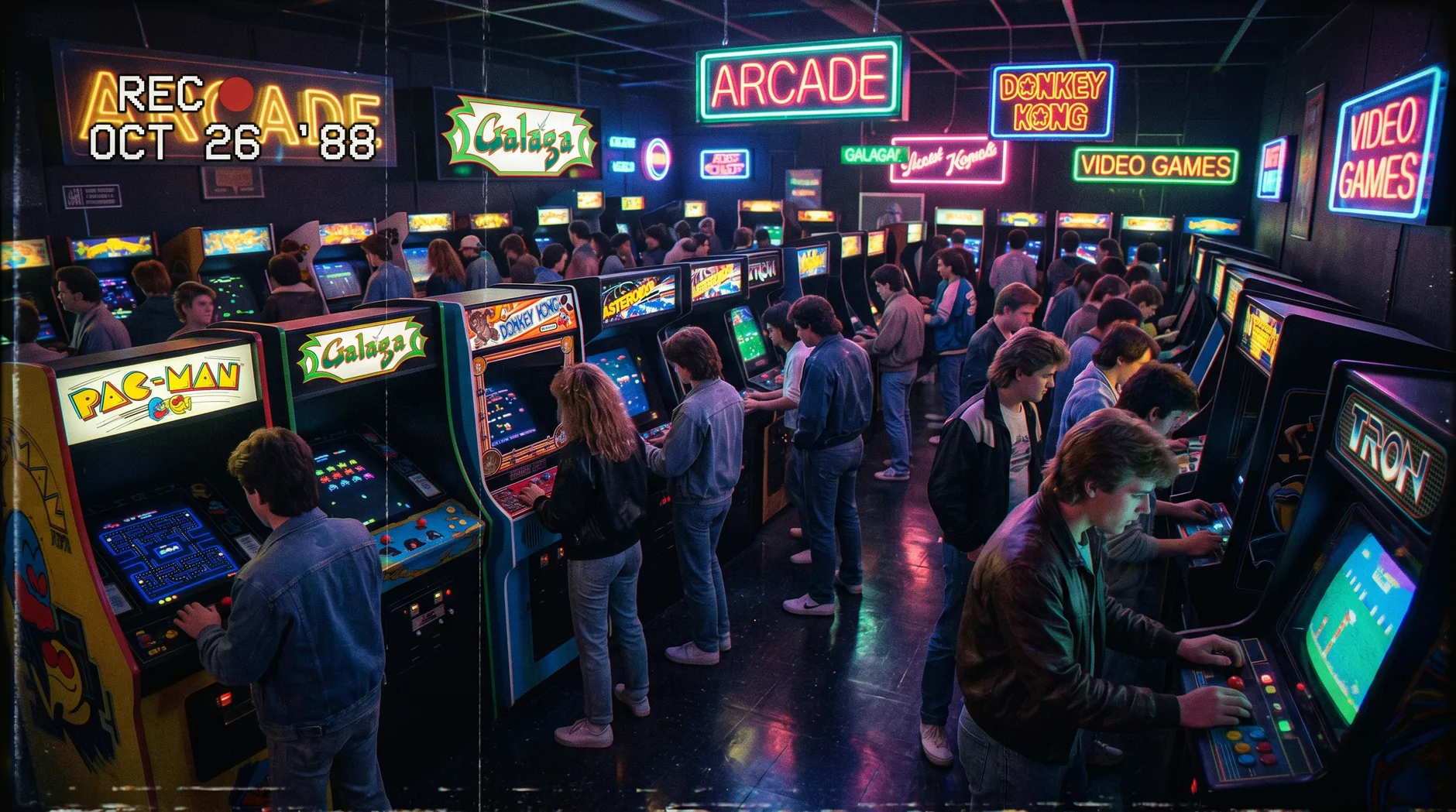
"A vibrant 1980s arcade scene at night, full of neon lights and pixelated game screens. The image is rendered with a strong VHS aesthetic: noticeable tracking lines, heavy analog video noise, color bleeding, and a slightly desaturated yet warm color palette. Shot on a vintage JVC GR-C1 camcorder, low light conditions, with a wide-angle lens. Film stock is a simulated E-180 VHS tape. Composition is dynamic, handheld, with a slightly skewed perspective. Aspect ratio 4:3. Lo-fi, gritty, neon, nostalgic. --ar 4:3"
Why it Works: This prompt meticulously outlines the hallmarks of VHS. Specifying noticeable tracking lines, heavy analog video noise, and color bleeding directly addresses the visual artifacts that define the medium. The slightly desaturated yet warm color palette accurately reflects how colors often appeared on VHS. Naming a vintage JVC GR-C1 camcorder immediately sets the tone, implying the specific lens characteristics and recording quality of an early consumer camcorder. Low light conditions are typical for many candid 80s recordings, and the simulated E-180 VHS tape further grounds the prompt in authenticity. The dynamic, handheld, with a slightly skewed perspective composition reinforces the amateur, spontaneous nature of VHS footage. These are essential details for effective retro prompts of this style.
What Makes it Special: This prompt’s strength lies in its comprehensive approach to replicating analog video imperfections. It doesn’t shy away from the “flaws” but embraces them as integral to the aesthetic. The combination of specific technical details and evocative scene description ensures the AI generates images that truly feel like a paused frame from an old VHS tape. It’s ideal for projects that require a raw, unpolished, yet deeply nostalgic feel, perfect for capturing the spirit of the 80s. For more on how AI can mimic specific visual styles, consider insights from articles like TechCrunch’s coverage on AI image generators. For more retro aesthetics, explore 20 Essential Y2K Prompts: Master Retro Aesthetics!
Prompt 4: Classic Film Noir Prompt
Film noir is a genre defined by its stark black and white visuals, dramatic shadows, and cynical atmosphere. Originating in the 1940s and 50s, its aesthetic is instantly recognizable and powerfully evocative. This prompt aims to guide the AI in creating images that embody the classic film noir style: chiaroscuro lighting, deep contrasts, and a pervasive sense of mystery and suspense. It’s about crafting a mood as much as an image.
The Prompt:
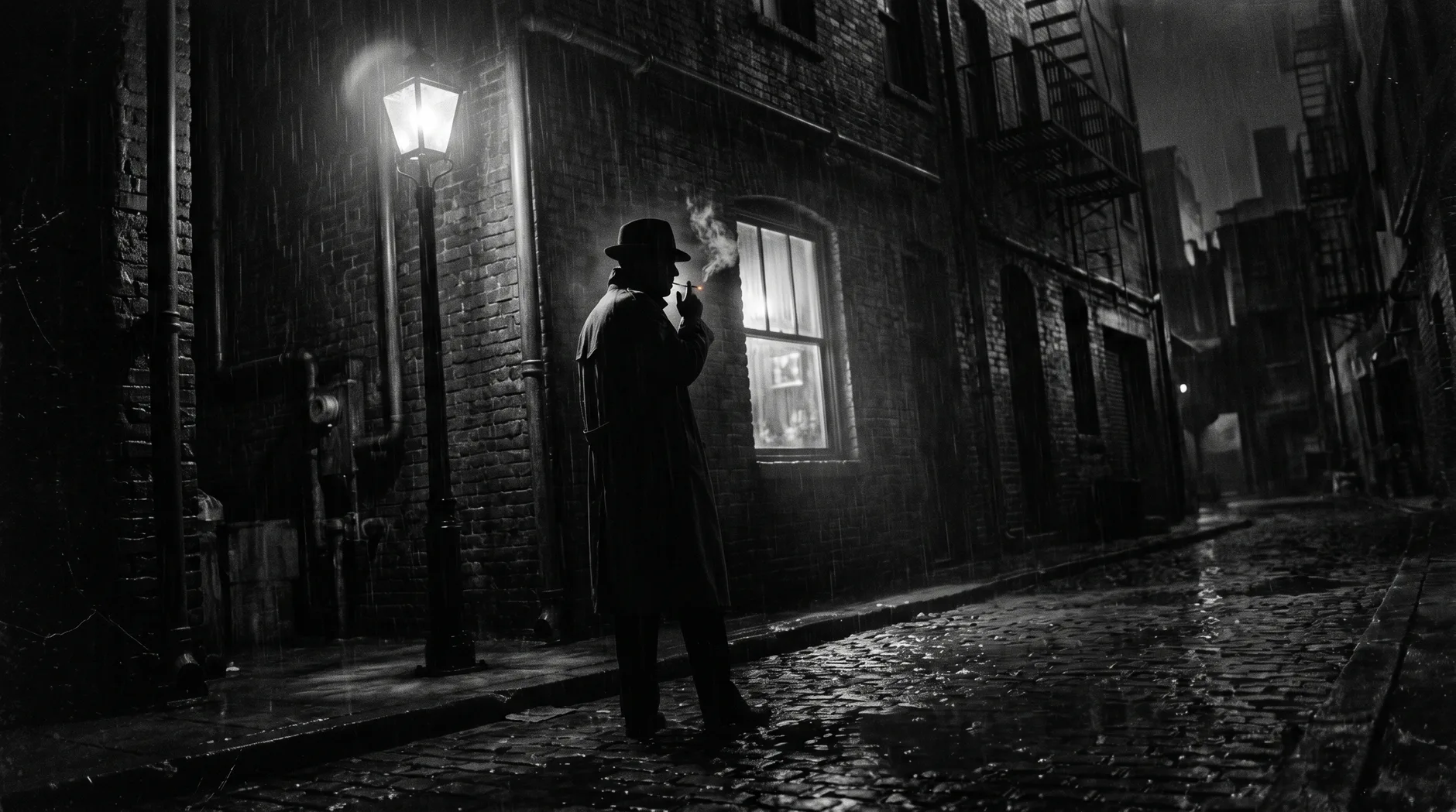
"A trench-coated detective smoking under a flickering streetlamp in a rain-slicked alley at night, silhouetted against a dimly lit window. Rendered in classic film noir style: high contrast black and white, extreme chiaroscuro lighting with sharp shadows and dramatic highlights. Shot on a Graflex Speed Graphic large format camera with a wide-angle 90mm lens, using Kodak Tri-X 400 film stock, pushed two stops for extra grain. Composition is low-key, Dutch angle, emphasizing depth and foreboding. Aspect ratio 1.37:1. Gritty, mysterious, dramatic, nostalgic. --ar 1.37:1"
Why it Works: This prompt is a masterclass in specificity for a monochrome aesthetic. The instruction for high contrast black and white and extreme chiaroscuro lighting with sharp shadows and dramatic highlights directly dictates the fundamental visual language of film noir. Naming the Graflex Speed Graphic large format camera and a wide-angle 90mm lens suggests the characteristic depth of field and perspective of the era. The choice of Kodak Tri-X 400 film stock, pushed two stops for extra grain, is critical for achieving that gritty, textured look synonymous with classic noir photography. The low-key, Dutch angle composition further enhances the mood of unease and psychological tension, making it one of the most powerful retro prompts for this specific genre.
What Makes it Special: This prompt excels at capturing the mood and technical artistry of film noir. It doesn’t just ask for “black and white”; it details the specific type of black and white, the intensity of the contrast, and the techniques used to achieve it. The combination of camera, lens, film processing, and lighting creates a highly authentic and atmospheric image. It’s perfect for artists looking to create powerful, narrative-driven visuals steeped in mystery and drama, reminiscent of cinematic masterpieces from the golden age of detective stories. For a deeper dive into the history of this genre, consult the Film noir Wikipedia page. For other genre-specific prompts, check out 8 Ultimate Cyberpunk Prompts for AI Art: Bold New Worlds.
Prompt 5: Mid-Century Advertising Prompt
The advertising of the mid-20th century (1950s-1960s) boasts a distinct aesthetic: vibrant colors, idealized subjects, and a general air of optimism and domestic bliss. This prompt aims to recreate that iconic look, characterized by carefully staged scenes, bright lighting, and the unmistakable color rendition of Kodachrome film. It’s about capturing the polished, often aspirational, visuals that defined an era of consumerism and post-war prosperity.
The Prompt:
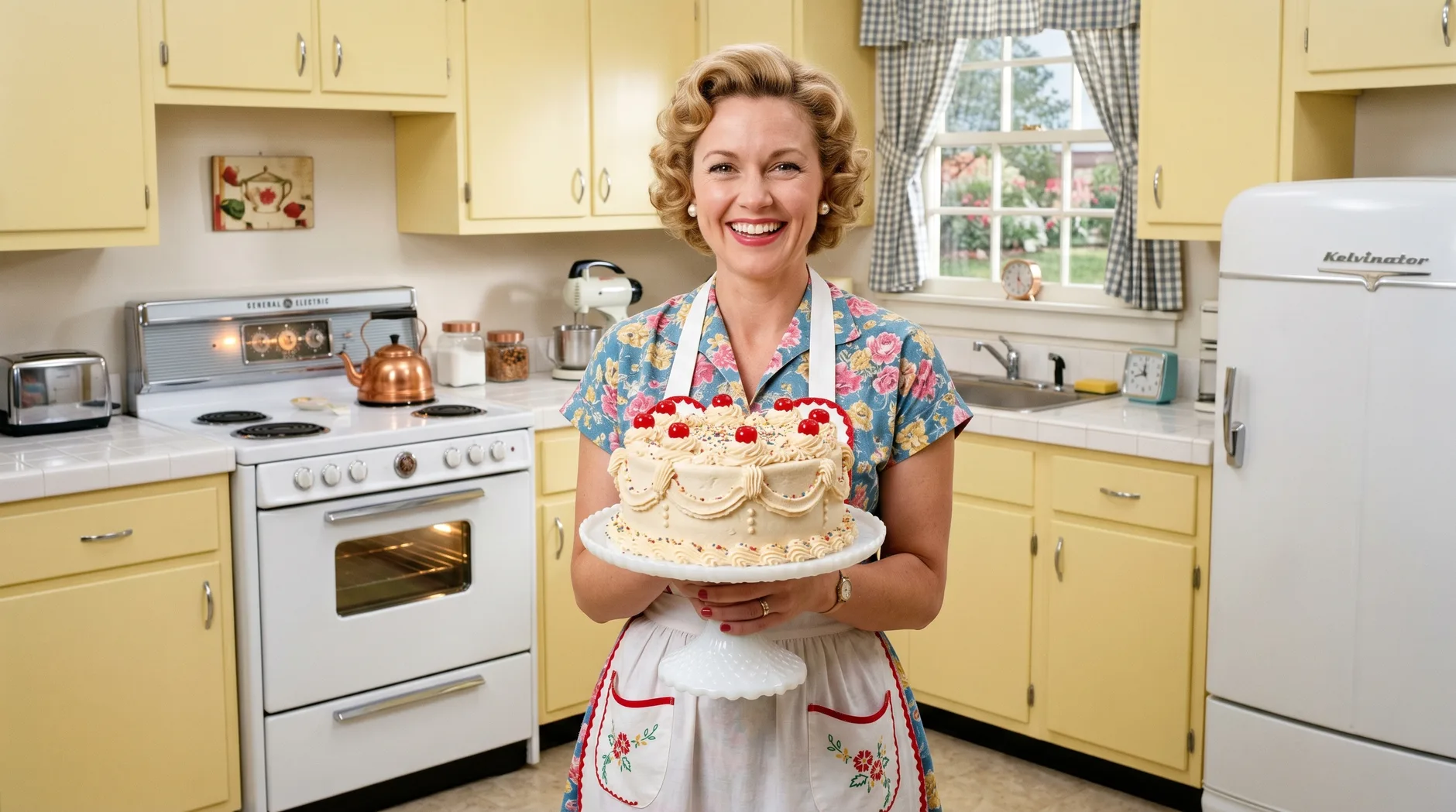
"A cheerful 1950s housewife proudly presenting a newly baked cake in a pristine, brightly lit kitchen. The scene is rendered in the style of a vintage Kodachrome advertisement: vibrant, saturated colors, immaculate details, and a slightly idealized realism. Shot on a Rolleiflex 2.8F twin-lens reflex camera with a Zeiss Planar lens, using Kodachrome 64 film stock. Lighting is softbox studio lighting, high key, evenly diffused, with a subtle rim light. Composition is symmetrical, eye-level, clean, and inviting. Aspect ratio 4:3. Optimistic, vibrant, idealized, nostalgic. --ar 4:3"
Why it Works: This prompt meticulously constructs the visual language of mid-century advertising. Specifying vibrant, saturated colors, immaculate details, and a slightly idealized realism directly addresses the aesthetic goals. The choice of Rolleiflex 2.8F twin-lens reflex camera with a Zeiss Planar lens is perfect for the era, known for its sharp optics and medium format negatives that produced high-quality images for print. Crucially, naming Kodachrome 64 film stock is paramount, as Kodachrome’s unique color rendition is a defining characteristic of the period. The description of softbox studio lighting, high key, evenly diffused, with a subtle rim light precisely dictates the lighting setup, essential for that clean, commercial look. The symmetrical, eye-level, clean, and inviting composition further grounds the image in the advertising conventions of the time. These are powerful retro prompts for commercial aesthetics.
What Makes it Special: This prompt’s strength lies in its ability to generate images that look like they could have been torn directly from a 1950s magazine spread. It captures the era’s optimism and the meticulous staging prevalent in its advertising. The combination of specific camera equipment, legendary film stock, and precise lighting instructions ensures an authentic rendition of a highly stylized period. It’s ideal for artists creating content that needs to evoke a sense of wholesome, idealized Americana or for historical reconstruction projects. For more on the impact of advertising on culture, consider insights from a source like The New York Times’ advertising section. For other inspiring AI prompts, see 8 Ultimate AI Prompts for Editorial Fashion.
Prompt 6: Psychedelic 70s Album Art Prompt
The 1970s brought an explosion of psychedelic art, heavily influenced by counter-culture movements and rock music. Album covers from this era were particularly iconic, featuring swirling patterns, vibrant and often surreal colors, and experimental compositions. This prompt aims to capture that trippy, imaginative aesthetic, perfect for generating visuals that feel like they belong on a classic vinyl record from the era of peace, love, and rock ‘n’ roll.
The Prompt:
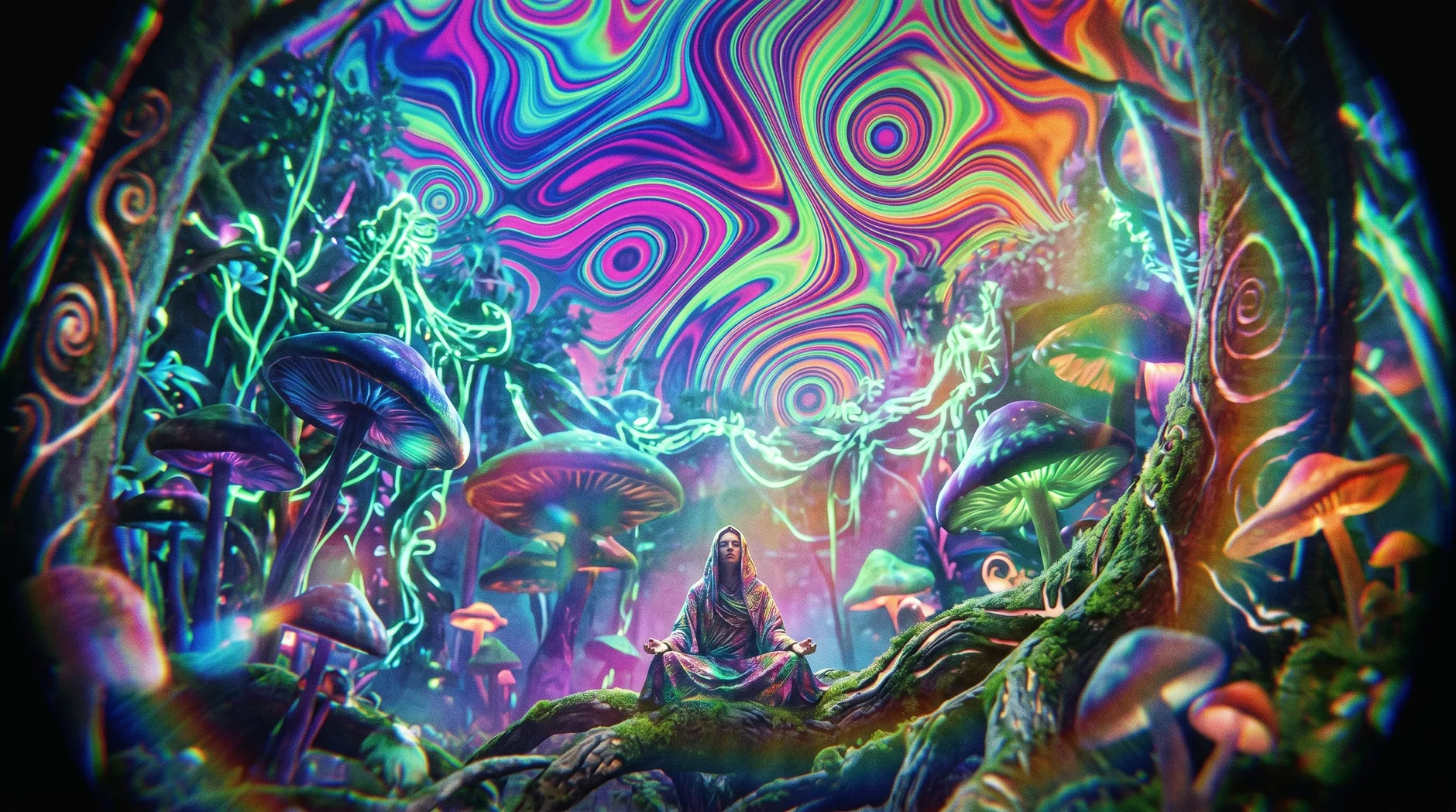
"An ethereal forest scene with giant, glowing mushrooms and swirling, iridescent patterns in the sky, a lone figure meditating in the foreground. Rendered in a psychedelic 1970s album art style: highly saturated, vibrant, and contrasting colors, with noticeable color distortion, lens flares, and a dreamlike, surreal quality. Shot on a Pentax K1000 with a fisheye lens, using heavily processed Ektachrome film stock, with a strong color shift and visible grain. Lighting is theatrical, multi-colored, and hazy. Composition is abstract, wide-angle, with a central, captivating focus. Aspect ratio 1:1. Trippy, surreal, vibrant, nostalgic. --ar 1:1"
Why it Works: This prompt is designed to unleash the wild, imaginative spirit of 70s psychedelic art. The instructions for highly saturated, vibrant, and contrasting colors, with noticeable color distortion, lens flares, and a dreamlike, surreal quality directly target the core visual elements. The choice of a Pentax K1000 with a fisheye lens is excellent for the era, providing that characteristic wide-angle distortion often seen in psychedelic visuals. Specifying heavily processed Ektachrome film stock, with a strong color shift and visible grain, is crucial for achieving the intense, sometimes unpredictable color effects common in experimental photography of the period. The theatrical, multi-colored, and hazy lighting further enhances the hallucinatory atmosphere. These are some of the most adventurous retro prompts for artistic expression.
What Makes it Special: What makes this prompt special is its embrace of the unconventional and the visually experimental. It encourages the AI to generate images that are not just colorful but genuinely psychedelic, with a sense of movement and altered perception. The detailed instructions on color processing, lens choice, and lighting create a coherent and authentic 70s vibe. It’s perfect for artists looking to create fantastical, imaginative, and deeply evocative visuals that pay homage to a truly unique artistic period. For a deeper dive into the art movement, visit the Psychedelic art Wikipedia page. For other vintage lens aesthetics, check out 7 Stunning 7artisans Vintage Lens Photos REVEALED!
Prompt 7: Early Digital Pixel Art Prompt
Before the age of high-definition graphics, early digital art and video games were defined by their pixelated aesthetic. This prompt aims to recreate the charm and simplicity of 8-bit or 16-bit graphics, characterized by low resolution, limited color palettes, and sharp, visible pixels. It’s a nod to the dawn of the digital era, evoking a sense of retro gaming and early computer graphics.
The Prompt:
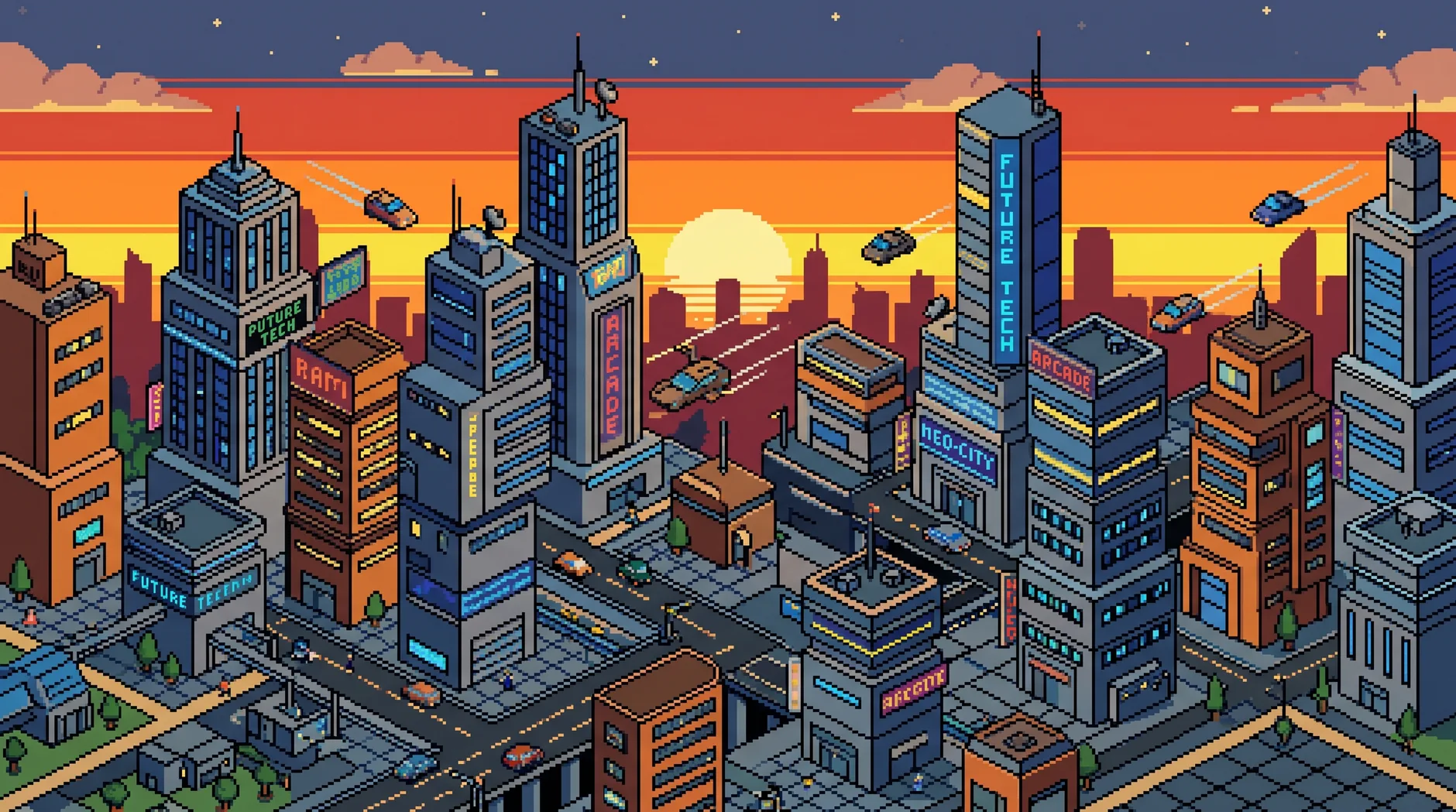
"A futuristic cityscape at sunset, with blocky buildings and flying cars, rendered in the style of early 1980s 8-bit pixel art. The image features a low resolution, limited color palette (e.g., 16 colors), sharp, visible pixels, and no anti-aliasing. The perspective is isometric, reminiscent of classic arcade games. Lighting is simple, flat, with distinct shadows from a single light source. Aspect ratio 4:3. Retro-gaming, pixelated, blocky, nostalgic. --ar 4:3"
Why it Works: This prompt is highly specific about the technical limitations and artistic choices that define early pixel art. Instructions like low resolution, limited color palette (e.g., 16 colors), sharp, visible pixels, and no anti-aliasing are crucial for achieving the authentic look. The mention of 8-bit pixel art immediately sets the technical constraint. The isometric perspective is a direct reference to iconic early video games, providing a strong structural guide for the AI. Simple, flat lighting, with distinct shadows from a single light source, accurately reflects the rendering capabilities of the time, where complex lighting was not feasible. These are precise retro prompts for digital nostalgia.
What Makes it Special: What makes this prompt special is its focus on the fundamental building blocks of early digital imagery. It’s not just about making something “blocky”; it’s about adhering to the technical constraints that shaped the aesthetic. By specifying resolution, color depth, and rendering techniques, the prompt ensures the AI generates an image that genuinely looks like it could have been pulled from an Atari or NES game. It’s perfect for artists looking to create visuals with a distinct retro-gaming vibe, for projects related to digital history, or for a stylized, minimalist aesthetic. For more on the evolution of digital graphics, you might find articles on sites like The Verge’s tech section insightful. For other creative prompting ideas, consider 8 Essential Y2K Aesthetic AI Prompts (Lo-Fi Retro).
Mastering Your Retro Prompts: Advanced Techniques
While the specific retro prompts provided offer a solid foundation, truly mastering AI-generated nostalgia involves understanding the underlying principles and continuously experimenting. As a director and cinematographer, I know that the difference between a good shot and a great shot often lies in the subtle refinements and the intentional breaking of rules. The same applies here.
Layering Details: Don’t be afraid to layer more specific details. For instance, when asking for a 1950s scene, consider adding “period-accurate clothing,” “vintage automobile,” or “specific architectural style.” The more context you provide, the better the AI can ground its interpretation in reality. Think about the entire frame, not just the subject. This meticulous attention to detail is what elevates a prompt from functional to exceptional.
Negative Prompts: Just as important as what you ask for is what you ask not to include. For retro aesthetics, negative prompts like “no modern elements,” “no digital artifacts,” “no clean lines (unless intended for pixel art),” or “no oversaturation (unless intended for psychedelic)” can be incredibly powerful. They act as guardrails, preventing the AI from drifting into undesirable contemporary styles or unintended visual noise. Using Hero’s Essentials: filmmaker gear and tools, you’ll understand the importance of having the right gear for the right shot, and in AI art, negative prompts are part of your essential toolkit.
Iterative Refinement: Rarely does a perfect image emerge from the first prompt. Treat AI generation as an iterative process. Generate a few variations, analyze what works and what doesn’t, and then refine your prompt. Perhaps the film grain isn’t strong enough, or the colors are too modern. Adjust your prompt by adding modifiers like “extreme grain” or “more faded colors.” This back-and-forth dialogue with the AI is where true mastery develops. Consider how a director revises a script or a cinematographer adjusts lighting on set; it’s a continuous process of refinement.
Understanding AI Model Bias: Different AI models (e.g., Midjourney, Stable Diffusion, DALL-E) have different strengths and biases. What works perfectly in one might need slight adjustments in another. Experiment across platforms to see how they interpret your retro prompts. Some might be better at rendering photographic realism, while others excel at stylized illustrations. Knowing your tool is half the battle. This iterative process is similar to how filmmakers test different cameras and lenses for a project to find the perfect fit. For further reading on character sheets, which can help define your subjects, refer to 7 Essential Character Sheets: Nano Banana Prompts Revealed.
By applying these advanced techniques, you move beyond simply copying prompts to truly understanding and manipulating the AI to achieve your specific artistic vision. The goal is to become a conductor of digital imagery, orchestrating every element to produce results that are not just visually appealing, but also deeply resonant and authentically nostalgic. The power of precise language in your retro prompts cannot be overstated. It is the bridge between your imagination and the AI’s rendering capabilities, allowing you to craft timeless pieces in a rapidly evolving digital landscape.
Every AI illustration in this article was crafted using AI Render Pro, the same prompting engine used across this blog. Read the full breakdown here.
Frequently Asked Questions
What exactly are “retro prompts” in AI art?
Retro prompts are detailed textual instructions given to AI image generation models, specifically crafted to produce visuals that mimic the aesthetic styles, technical limitations, and atmospheric qualities of past eras, such as vintage photography, classic cinema, or early digital graphics.
Why is it important to be so specific with camera, lens, and film stock in retro prompts?
AI models are trained on vast datasets of images, including technical metadata. By specifying camera types, lens characteristics, lighting setups, and film stocks, you provide the AI with highly precise cues, allowing it to accurately replicate the unique visual imperfections and qualities associated with those specific tools and mediums from the past.
Can these retro prompts be used with any AI art generator?
While the principles and terminology are universal, the exact syntax and effectiveness may vary slightly between different AI art generators (e.g., Midjourney, Stable Diffusion, DALL-E). You may need to experiment with minor adjustments to optimize the results for your chosen platform.
How can I make my AI-generated retro images look even more authentic?
Beyond the core prompts, consider adding details about period-specific clothing, hairstyles, architecture, or even cultural references. Using negative prompts to exclude modern elements and iteratively refining your prompts based on generated results will also significantly enhance authenticity.
Are there any ethical considerations when generating retro imagery with AI?
When generating retro imagery, be mindful of potential biases in historical representations. Ensure your prompts promote respectful and accurate depictions, especially if dealing with sensitive cultural or social contexts from the past, and always consider the source of the imagery the AI was trained on.
Discover more from Olivier Hero Dressen Blog: Filmmaking & Creative Tech
Subscribe to get the latest posts sent to your email.

Work with Olivier
Director | CD | DP & Photographer
Specializing in commercials, music videos, AI-driven filmmaking, and cinematic storytelling for brands and production companies.
🌍 Shanghai · Paris · Los Angeles · Dubai
🎬 View Portfolio & Get in Touch