

Key Takeaways
- First insight, Harnessing advanced ai prompts is crucial for generating high-fidelity editorial fashion imagery that rivals top-tier magazine aesthetics.
- Craft highlight, Precise technical specifications within each prompt, camera, lens, lighting, film stock, and color palette, are paramount for achieving specific photographic styles, from monochrome studio to candy-color pop editorials.
- Industry context, AI’s role in creative ideation and pre-visualization is rapidly expanding, offering fashion photographers and art directors powerful tools to explore concepts and refine visual narratives before a single shot is taken.
- Bottom line, Mastering these detailed ai prompts transforms generative AI from a novelty into an indispensable asset for producing distinctive, high-impact fashion content for publications like Vogue, Dazed, and AnOther.
The landscape of visual content creation is undergoing a profound transformation, with advanced ai prompts now serving as powerful instruments for designers, photographers, and art directors. For those operating within the high-stakes world of editorial fashion, the ability to generate imagery that embodies the sophisticated aesthetics of publications like Vogue, Dazed, Numero, and AnOther is no longer a distant dream but a tangible reality. This article provides a practical guide, detailing eight ultimate AI prompts meticulously crafted to produce high-end magazine-quality fashion visuals. Each prompt is engineered with specific camera, lens, lighting, film stock, and color palette parameters, ensuring that the generated output is not merely an image, but a photographic statement.
Need a Director for Your Next Project?
From commercials to branded campaigns—Olivier brings creative vision and technical expertise.
→ View Projects1. Monochrome Studio Portrait: The Timeless Elegance
Creating a striking monochrome studio portrait using AI requires an understanding of classic photographic principles. The goal is to emulate the stark beauty and emotional depth found in the works of masters like Richard Avedon or Peter Lindbergh. This prompt focuses on dramatic lighting, sharp detail, and the interplay of light and shadow to define form and texture. The choice of film stock emulation is critical here, as it dictates the grain structure, contrast, and tonal range that contribute to the final aesthetic. A high-resolution medium format look ensures crispness, while specific lighting setups ensure the desired mood.
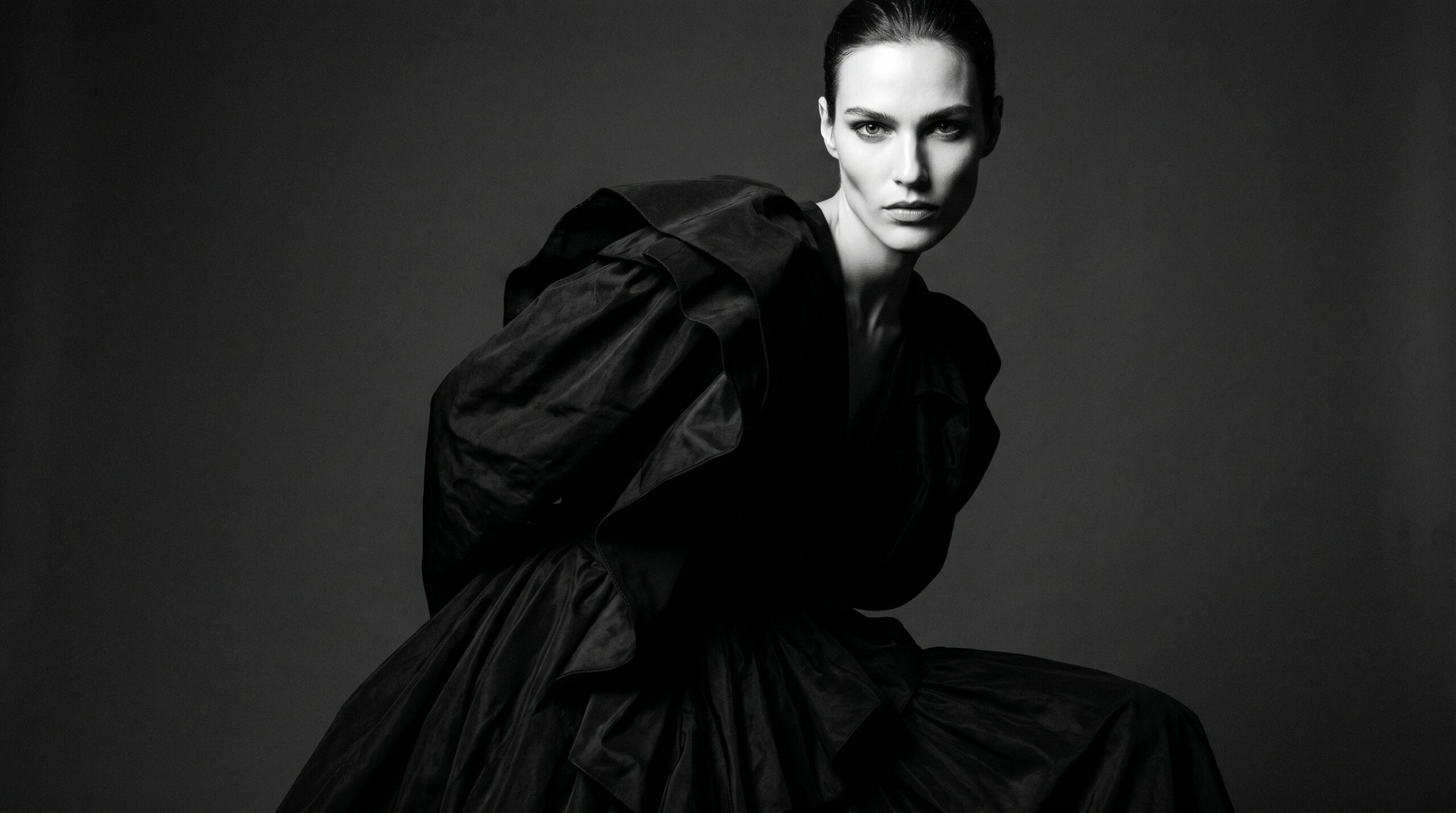
Prompt: A striking, high-contrast monochrome studio portrait of a female model wearing a voluminous, sculptural black gown. The model possesses strong facial features and an intense gaze. Shot against a seamless dark grey backdrop. The lighting is dramatic, hard directional key light from above-right, with a subtle fill light from below-left, creating deep shadows and sharp highlights on the model’s face and the gown’s fabric. Emulate a classic fashion editorial from Vogue Italia. Camera: Hasselblad H6D-400c. Lens: HC 100mm f/2.2. Aperture: f/8. Shutter Speed: 1/200s. ISO: 100. Film Stock Emulation: Ilford HP5 Plus pushed two stops. Color Palette: Pure black, charcoal grey, brilliant white, with rich, deep mid-tones. Minimalist, powerful, timeless, cinematic, high-resolution, sharp focus.
This prompt is designed to produce an image that transcends mere representation, aiming for an iconic quality. The selection of a Hasselblad H6D-400c signifies a desire for incredible detail and dynamic range, typical of high-end studio photography. The HC 100mm f/2.2 lens, when stopped down to f/8, ensures sharpness across the subject while maintaining a degree of subject isolation through depth perception. The simulated Ilford HP5 Plus film stock, pushed two stops, is key for achieving that characteristic gritty, high-contrast monochrome look with rich blacks and textured whites. This attention to detail in the prompt allows the AI to understand the desired visual language, moving beyond generic black and white to a specific, artistic interpretation. For creatives looking to explore similar detailed AI art direction prompts, understanding these parameters is fundamental. The precise control over lighting, as described, is what separates a good AI-generated image from a truly editorial one, mirroring the meticulous setup found in professional studios. The aesthetic aims for the powerful visual storytelling often seen in publications like Vogue’s official website, where every element contributes to a cohesive narrative. The generated image should evoke a sense of strength and sophisticated elegance, characteristic of high fashion editorials. This level of specificity in ai prompts enables unprecedented creative control, allowing for the exploration of complex visual narratives with precision. Furthermore, the ability to specify film stock emulation helps in achieving a specific textural feel that digital photography sometimes struggles to replicate without post-processing, making AI an invaluable tool for pre-visualization and concept development. The emphasis on “minimalist, powerful, timeless, cinematic” reinforces the editorial aspiration.
2. Retrofuturist Couture: Blending Eras with Precision ai prompts
Retrofuturism in fashion editorial marries the nostalgic aesthetics of past visions of the future with contemporary design sensibilities. This genre often features bold silhouettes, metallic accents, and a sense of utopian or dystopian wonder. The challenge is to create an image that feels both historically informed and refreshingly new, avoiding cliché. The prompt below guides the AI to construct a scene that evokes the visual language of 1960s space-age optimism, filtered through a modern couture lens. This requires careful consideration of costume, environment, and the interplay of color and light to achieve a cohesive, imaginative narrative.
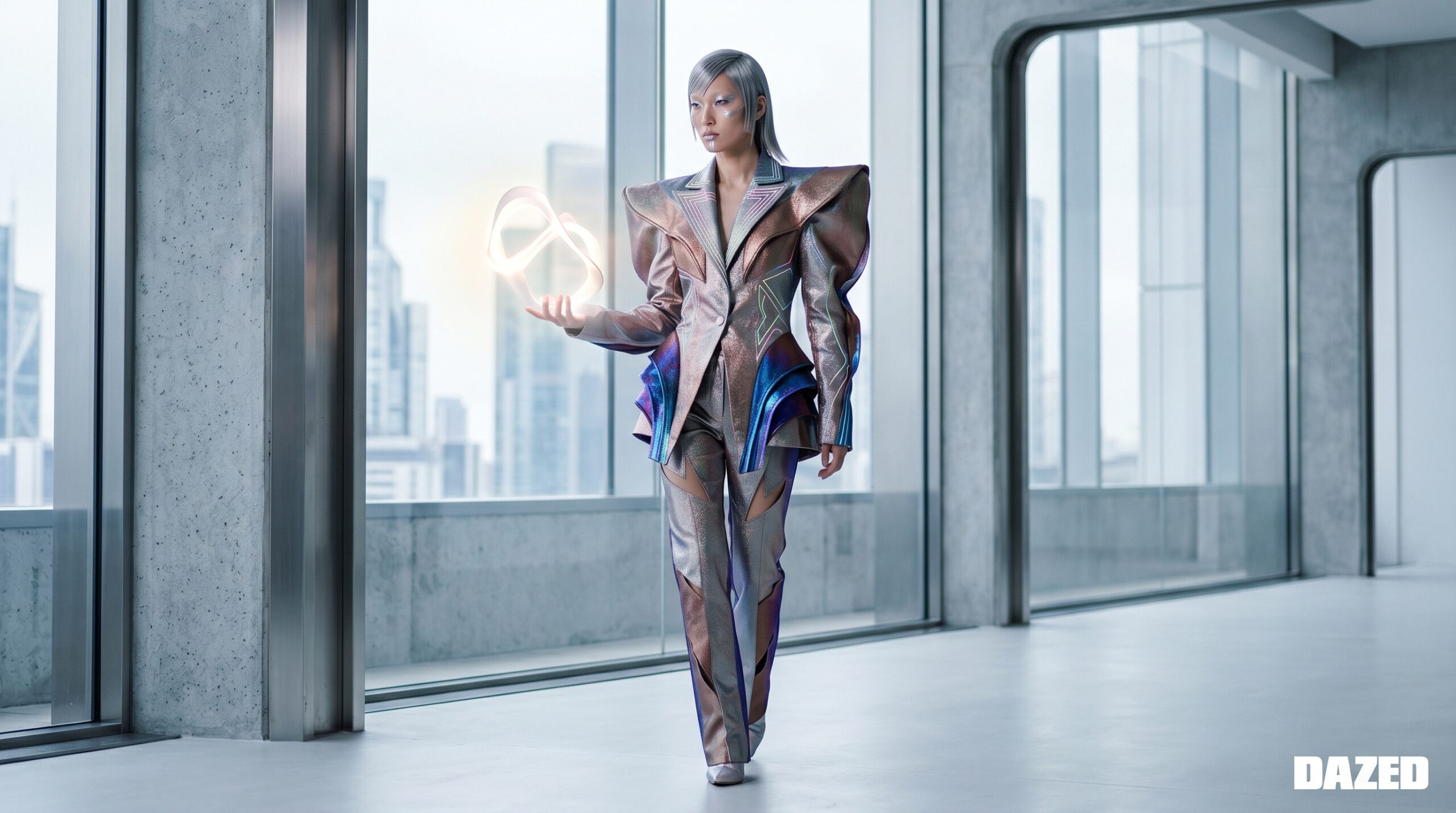
Prompt: A full-body shot of a model adorned in retrofuturist couture, featuring iridescent fabrics, geometric patterns, and exaggerated shoulders, reminiscent of 1960s space-age fashion but with a modern twist. The setting is a minimalist, clean architectural space with soft, diffused natural light filtering through large windows, hinting at a futuristic city skyline in the background. The model holds an abstract, glowing prop. Emulate an editorial from Dazed magazine. Camera: Sony Alpha 1. Lens: FE 50mm f/1.2 GM. Aperture: f/2.8. Shutter Speed: 1/250s. ISO: 400. Sensor Emulation: Modern full-frame digital sensor with high dynamic range. Color Palette: Muted metallics (silver, bronze, rose gold), electric blues, deep purples, and subtle neon accents against a cool grey architectural backdrop. Futuristic, sleek, conceptual, avant-garde, high-fashion, clean lines, ethereal glow.
The Sony Alpha 1, a modern powerhouse, combined with the FE 50mm f/1.2 GM lens, provides exceptional sharpness and shallow depth of field, perfect for isolating the model and her intricate attire. The f/2.8 aperture strikes a balance between subject sharpness and environmental context. The “modern full-frame digital sensor with high dynamic range” ensures that both the iridescent fabrics and the subtle neon accents are rendered with fidelity and vibrancy. The aesthetic aims for the innovative, boundary-pushing content often found in publications like Dazed Digital. The precise description of the setting, “minimalist, clean architectural space with soft, diffused natural light”, is crucial for establishing the retrofuturist mood without making it overly theatrical. This prompt demonstrates how specific ai prompts can guide the generative process towards a complex, layered aesthetic. The inclusion of an “abstract, glowing prop” adds a layer of narrative and visual interest, typical of high-concept fashion editorials. This level of detail is paramount for anyone using AI for prompt engineering for video or still images, ensuring the AI understands the nuance of stylistic intent. The blend of past and future, expressed through fabric choices and architectural hints, requires a sophisticated interpretation by the AI, emphasizing its capability to handle complex artistic directives. The careful balance of “muted metallics” with “electric blues” and “neon accents” is key to achieving the distinctive retrofuturist color scheme, avoiding a flat or overly saturated look. This prompt is a testament to the power of well-constructed ai prompts in pushing creative boundaries.
3. Avant-Garde Silhouette: Sculpting with Light and Shadow
Avant-garde fashion often prioritizes form, structure, and abstract expression over conventional beauty. In this context, the silhouette becomes the primary subject, sculpted by dramatic lighting and stark contrasts. The aim is to create an image where the garment’s shape and the model’s pose combine to form a compelling, almost architectural figure. This prompt emphasizes strong graphic qualities, minimal distractions, and a monochromatic or near-monochromatic color scheme to highlight form. It draws inspiration from designers who challenge traditional fashion norms and photographers who master the art of negative space.
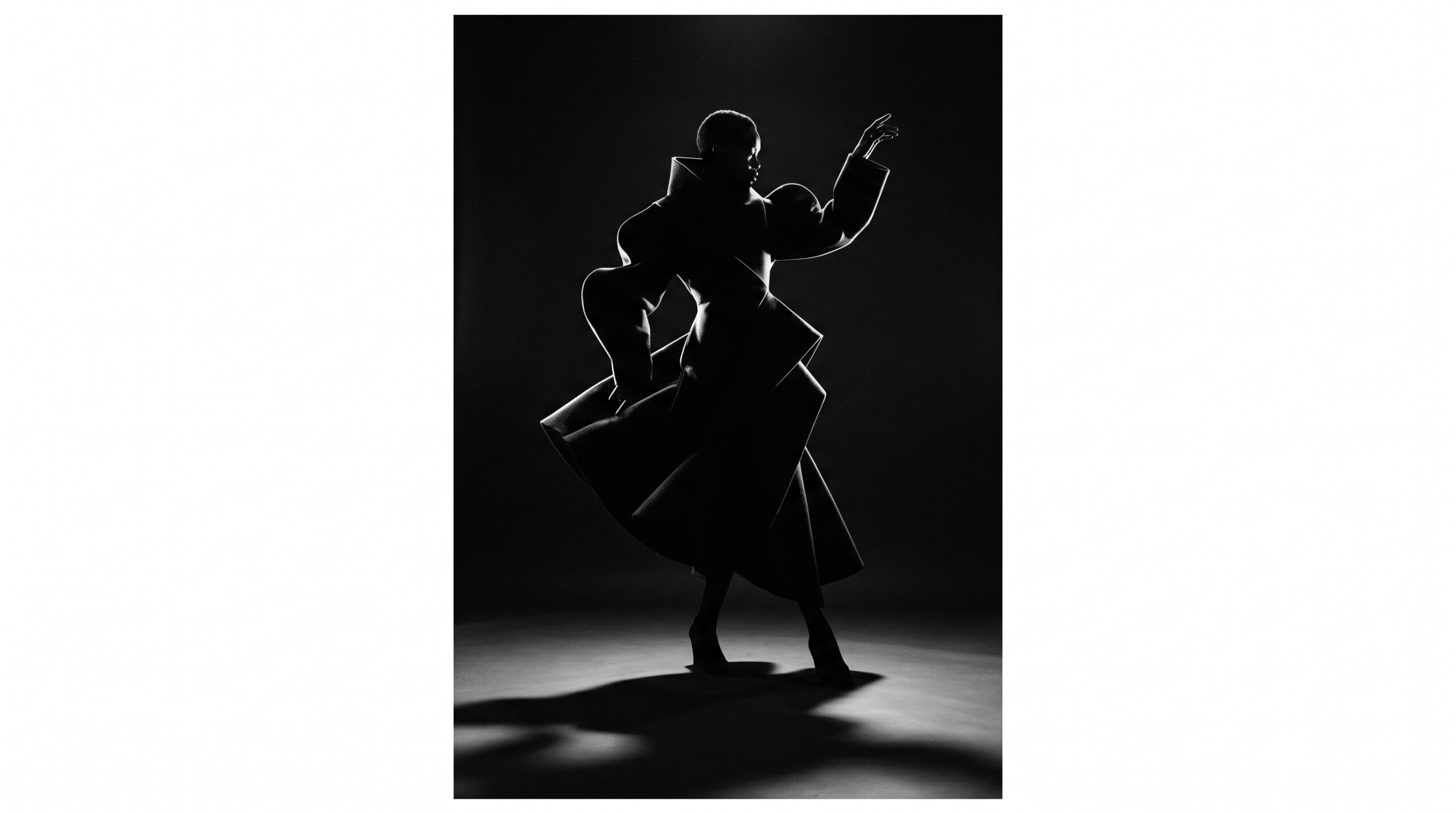
Prompt: A striking, full-body avant-garde silhouette of a model wearing an exaggerated, structural garment with sharp angles and voluminous fabrics. The model is posed dramatically against a pure black background. The lighting is extremely harsh, single-source spotlight from a low angle behind the model, creating a strong rim light that defines the silhouette and casts dramatic, elongated shadows. Only the edges of the garment and model are illuminated, with the interior remaining deep black. Emulate an editorial from AnOther Magazine. Camera: Phase One XF IQ4. Lens: Schneider Kreuznach 80mm LS f/2.8. Aperture: f/11. Shutter Speed: 1/160s. ISO: 50. Sensor Emulation: High-resolution medium format digital back. Color Palette: Pure black, intense white rim light, deep charcoal shadows. Stark, graphic, dramatic, sculptural, minimalist, powerful, high-contrast, conceptual, art-house.
The choice of a Phase One XF IQ4 with a Schneider Kreuznach 80mm LS f/2.8 lens at f/11 ensures unparalleled sharpness and detail, even in extreme lighting conditions. This setup is ideal for capturing the intricate textures and precise lines of an avant-garde garment. The “extremely harsh, single-source spotlight from a low angle behind the model” is the critical element for defining the silhouette, creating a powerful visual impact. This type of lighting is often employed by photographers aiming for a dramatic, almost theatrical effect, where the form is paramount. The “pure black background” and the emphasis on “deep black” for the interior of the silhouette further enhance the graphic quality. This prompt is designed to produce an image that feels like a piece of art, aligning with the experimental and artistic direction of publications like AnOther Magazine. Such precise directives within AI image enhancement prompts are what allow generative AI to deliver artistically coherent results. The focus on “stark, graphic, dramatic, sculptural” keywords reinforces the desired aesthetic, ensuring the AI understands the abstract and artistic intent. The use of a medium format digital back emulation guarantees the fidelity required for large-scale editorial prints, capturing every nuance of the extreme lighting and fabric texture. This approach showcases how AI can be leveraged for highly specific artistic visions, transforming textual descriptions into visually compelling avant-garde fashion statements.
4. Beauty Close-Up Macro: Intimacy and Detail
Beauty editorials demand an extreme level of detail, focusing on skin texture, makeup artistry, and the subtle nuances of facial expression. A macro close-up brings the viewer into an intimate relationship with the subject, highlighting every pore, shimmer, and stroke of color. This prompt is tailored to achieve hyper-realistic detail, soft yet precise lighting, and a shallow depth of field that isolates the intricate features of the face. The goal is to create an image that feels luxurious, clean, and meticulously crafted, suitable for high-end beauty campaigns and magazine spreads.
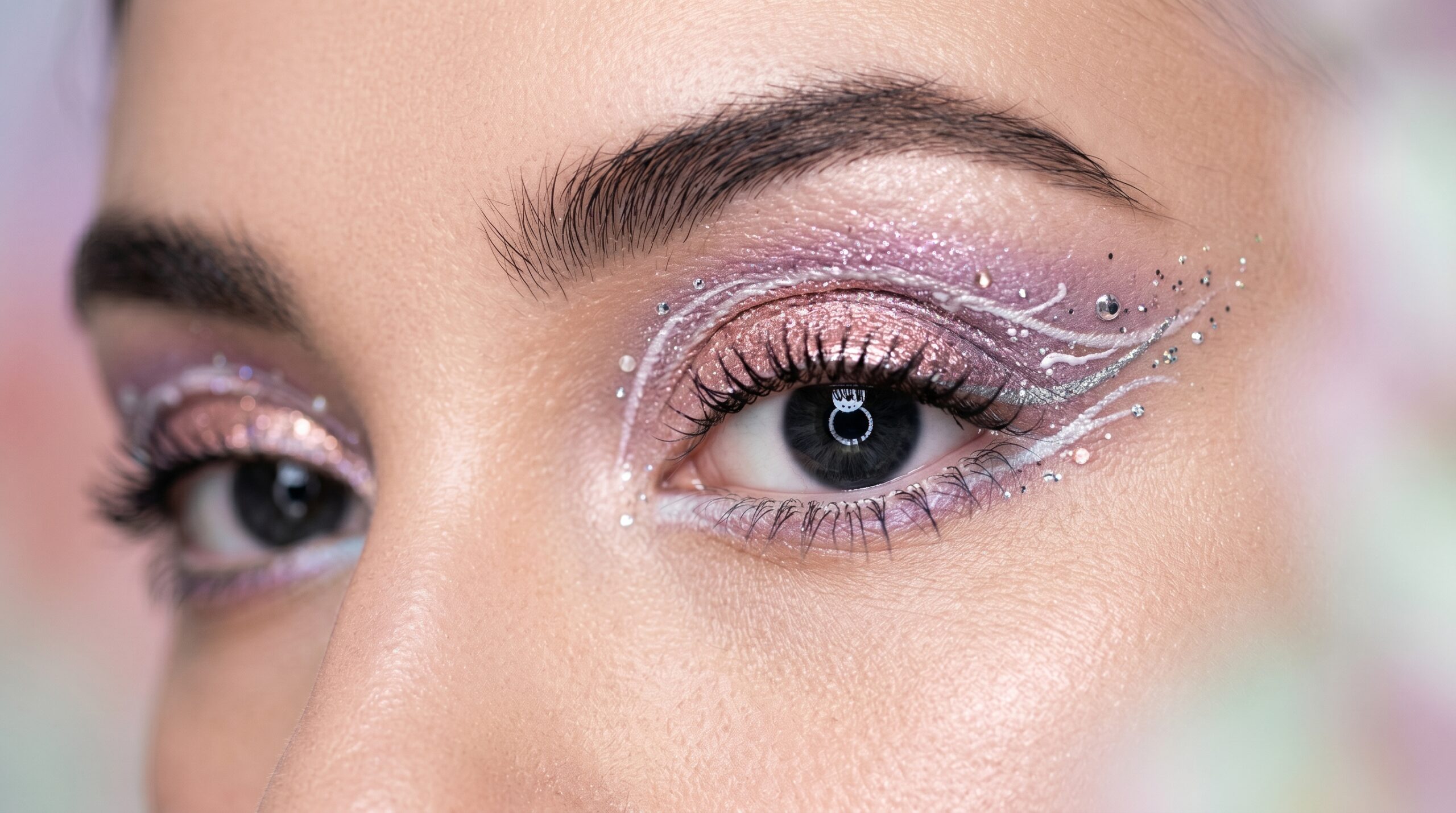
Prompt: An extreme macro close-up portrait of a model’s face, focusing on the eye and intricate, artistic makeup (e.g., glitter eyeshadow, delicate eyeliner patterns). Skin texture is visible but flawless, with subtle highlights. The lighting is soft, diffused, and even, using a large ring light for catchlights and a beauty dish for overall illumination, creating a luminous glow without harsh shadows. Shot against a blurred, creamy pastel background. Emulate a beauty editorial from Numero magazine. Camera: Canon EOS R5. Lens: Canon RF 100mm f/2.8L Macro IS USM. Aperture: f/5.6. Shutter Speed: 1/125s. ISO: 200. Sensor Emulation: High-resolution full-frame mirrorless sensor. Color Palette: Soft pastels (rose, lavender, mint), pearlescent whites, metallic shimmers, natural skin tones. Exquisite detail, luminous, ethereal, delicate, pristine, high-resolution, shallow depth of field, beauty photography.
The Canon EOS R5, paired with the Canon RF 100mm f/2.8L Macro IS USM lens, is the ideal setup for capturing such minute details. The macro lens allows for extreme magnification, while the f/5.6 aperture provides sufficient depth of field to keep the eye sharp, with a beautiful fall-off into creamy bokeh. The description of “soft, diffused, and even” lighting, specifically mentioning a “large ring light for catchlights and a beauty dish,” is crucial for achieving that signature luminous, flawless look typical of high-end beauty photography. This ensures that every element of the makeup artistry is showcased without harshness. The “blurred, creamy pastel background” contributes to the overall soft and luxurious aesthetic. This prompt exemplifies how detailed ai prompts can dictate not just the subject, but also the very mood and texture of an image, aligning with the sophisticated gloss of publications like Numero Magazine. The emphasis on “exquisite detail, luminous, ethereal, delicate” directs the AI towards a refined and pristine visual outcome. This meticulous approach to prompt construction is increasingly relevant as tools like AI rendering vs traditional methods become more sophisticated, demanding greater precision from the user. Capturing the subtle interplay of light on glitter eyeshadow and the delicate patterns of eyeliner requires the AI to interpret complex visual information, pushing the boundaries of generative capabilities. This prompt is a masterclass in how to specify intricate details for beauty-focused AI image generation.
5. Wide Street Fashion: Capturing Urban Narratives
Street fashion editorials capture the dynamic energy of urban environments, blending candid moments with curated style. The goal is to create an image that feels authentic and spontaneous, yet undeniably high-fashion. This prompt aims for a wide, immersive perspective that places the model within a vibrant city scene, emphasizing the interplay between the fashion and its environment. It requires careful consideration of composition, ambient light, and the bustling backdrop to tell a compelling story. The challenge is to make the AI generate a scene that feels lived-in and real, rather than staged.
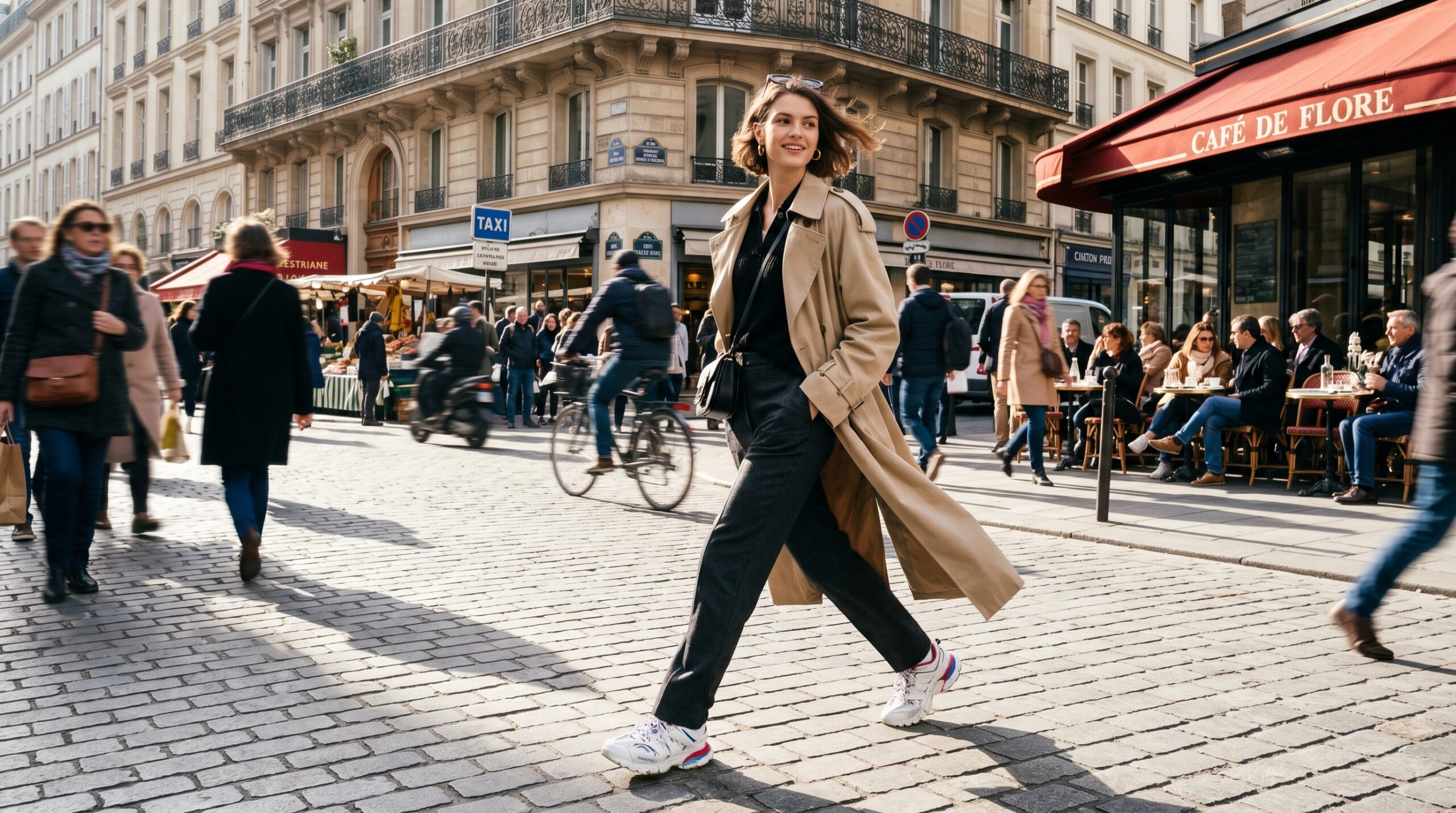
Prompt: A wide, dynamic street fashion shot of a model striding confidently through a bustling, sun-drenched urban environment, perhaps a European cobblestone street or a vibrant market. The model is wearing an effortlessly chic, oversized trench coat, tailored trousers, and statement sneakers. Passersby are blurred in motion, adding to the dynamism. The lighting is bright natural daylight, with long shadows cast by buildings, creating depth and leading lines. Emulate a street style editorial from Vogue Paris or GQ. Camera: Leica M11. Lens: Summicron-M 35mm f/2 ASPH. Aperture: f/8. Shutter Speed: 1/500s. ISO: 200. Sensor Emulation: High-resolution full-frame rangefinder sensor with classic color rendition. Color Palette: Earthy tones (beige, camel, olive), denim blues, pops of contrasting color from the environment (e.g., red awning, yellow taxi). Authentic, spontaneous, dynamic, urban, candid, stylish, high-resolution, deep depth of field, journalistic flair.
The choice of a Leica M11 with a Summicron-M 35mm f/2 ASPH lens at f/8 is deliberate, aiming for the crisp, wide-angle street photography aesthetic that often defines a certain journalistic elegance. The 35mm focal length is classic for street photography, offering a natural perspective without significant distortion. The fast shutter speed of 1/500s helps to freeze the main subject while allowing for subtle motion blur in the background, enhancing the sense of a busy, living environment. The “bright natural daylight, with long shadows” is key to creating a sense of time and place, adding texture and drama to the scene. This prompt is designed to capture the essence of street style, where fashion integrates seamlessly into daily life, resonating with the ethos of publications like Vogue Paris. The description of “passersby blurred in motion” is vital for conveying dynamism without cluttering the frame. When crafting Googleflow filmmaker guide prompts, similar attention to environmental detail and motion can be applied. The “classic color rendition” from the rangefinder sensor emulation ensures a timeless, sophisticated feel, avoiding overly processed digital looks. This prompt effectively leverages detailed instructions to create a dynamic narrative, proving the versatility of ai prompts in generating complex, multi-element scenes that maintain a high-fashion sensibility. The balance between “authentic, spontaneous” and “stylish, high-resolution” is delicate, pushing the AI to produce an image that feels both real and aspirational.
6. Conceptual Still Life with Model: Narrative through Composition
Conceptual still life in fashion editorial goes beyond merely showcasing a product; it tells a story, evokes an emotion, or explores an idea through the arrangement of objects and the subtle presence of a model. This prompt aims to create a highly curated, artistic composition where the model interacts subtly with a collection of symbolic objects, transforming the image into a visual metaphor. It requires precise control over composition, texture, light, and a muted, sophisticated color palette to achieve a gallery-worthy aesthetic.
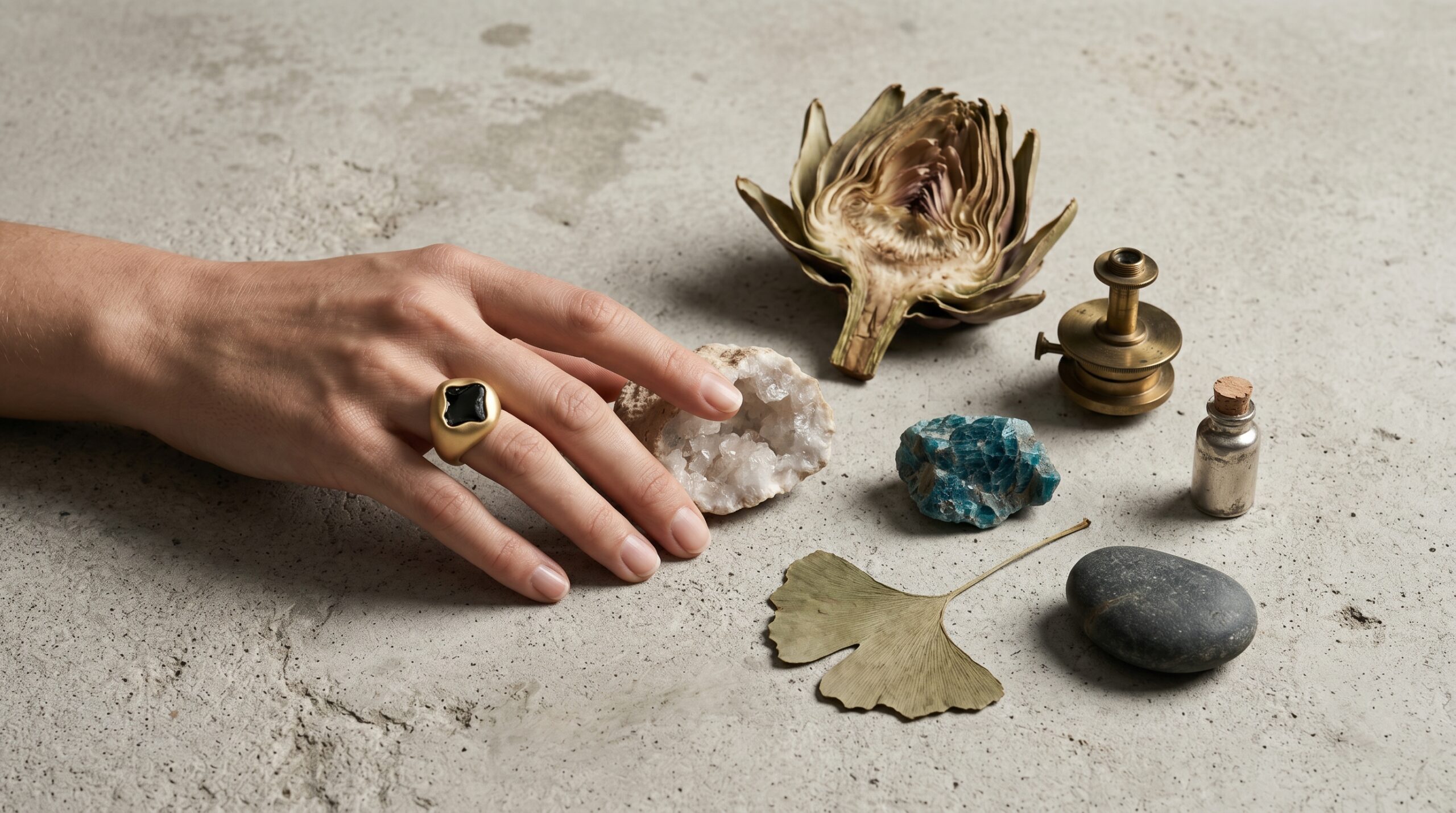
Prompt: A meticulously arranged conceptual still life image featuring a model’s hand delicately interacting with an array of symbolic objects (e.g., ancient artifacts, scientific instruments, deconstructed natural elements like dried flowers or crystals) on a textured, minimalist surface. The model’s hand is adorned with a singular, striking piece of jewelry. The lighting is soft, directional, and highly controlled, resembling museum lighting, creating subtle shadows and highlighting textures. Shot from a slightly elevated angle, with ample negative space. Emulate an art-focused editorial from The Gentlewoman or WSJ. Magazine. Camera: Fujifilm GFX 100S. Lens: GF 120mm f/4 R LM OIS WR Macro. Aperture: f/16. Shutter Speed: 1/60s. ISO: 100. Sensor Emulation: High-resolution medium format sensor with exceptional color depth. Color Palette: Muted earth tones, desaturated blues and greens, metallic accents (gold, silver), natural material textures. Artistic, contemplative, minimalist, symbolic, textural, sophisticated, high-resolution, precise composition, fine art photography.
The Fujifilm GFX 100S, with its incredible 102-megapixel sensor, combined with the GF 120mm f/4 Macro lens, is perfectly suited for capturing the extreme detail and texture required for a conceptual still life. The f/16 aperture ensures deep depth of field, keeping all elements of the arrangement in sharp focus. The “soft, directional, and highly controlled, resembling museum lighting” is critical for creating a sense of reverence and highlighting the textures of both the objects and the jewelry. This lighting choice also contributes to the “contemplative” mood. The “model’s hand delicately interacting” adds a human element without overpowering the still life aspect. This prompt aims for the intellectual and aesthetically refined visual language found in publications like WSJ. Magazine. The specific mention of “symbolic objects” encourages the AI to generate items with inherent narrative potential. Understanding how to guide AI in generating complex compositions is a key aspect of AI search changing creative work. The “muted earth tones, desaturated blues and greens” create a sophisticated and cohesive color story, allowing the textures and forms to truly stand out. This prompt showcases the AI’s ability to handle intricate compositional directives and infuse an image with conceptual depth, moving beyond simple product shots to profound visual narratives. The “ample negative space” further emphasizes the minimalist and artistic intent, ensuring the viewer’s eye is drawn to the carefully curated elements.
7. Futuristic Athleisure: Dynamic and Modern Aesthetics
Athleisure wear has evolved into a significant segment of high fashion, often blending performance aesthetics with avant-garde design. A futuristic athleisure editorial should convey dynamism, innovation, and a sleek, almost technological feel. This prompt focuses on capturing models in active, powerful poses within a minimalist, high-tech environment. The lighting should be sharp and clean, emphasizing the garment’s lines and the model’s form, while the color palette leans towards a cool, contemporary aesthetic with metallic and neon accents. The aim is to create images that feel cutting-edge and aspirational.
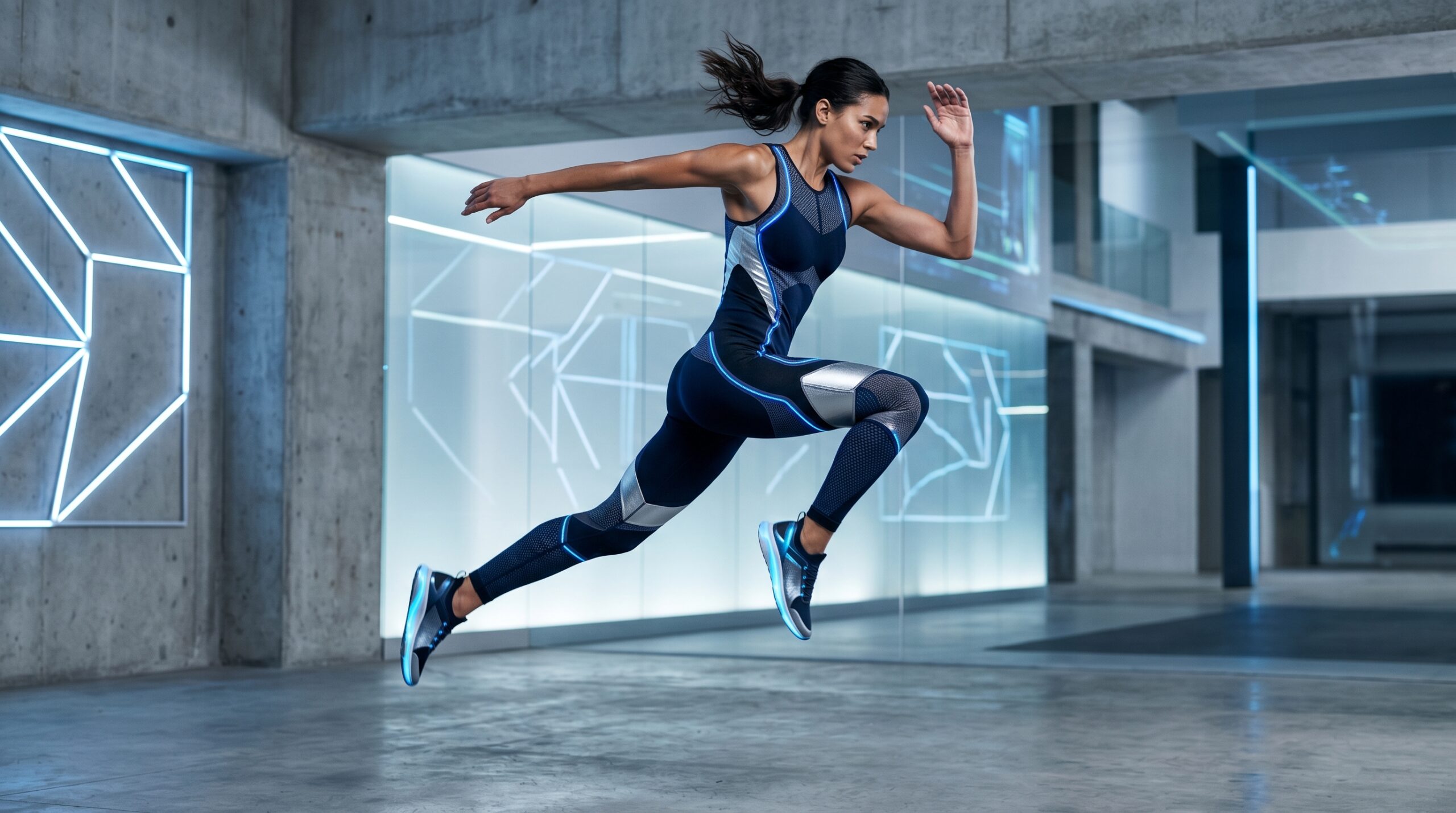
Prompt: A dynamic full-body shot of a model in futuristic athleisure wear (e.g., seamless technical fabrics, ergonomic designs, metallic accents, integrated LED elements). The model is captured mid-movement, perhaps a powerful leap or a fluid pose, against a stark, minimalist high-tech backdrop (e.g., illuminated panels, clean concrete structures, subtle holographic projections). The lighting is sharp, clean, and directional, using LED strip lights and hard studio strobes to create distinct shadows and highlight the garment’s texture and structure. Emulate an editorial from GQ Style or V Magazine. Camera: Nikon Z 9. Lens: NIKKOR Z 70-200mm f/2.8 S. Aperture: f/5.6. Shutter Speed: 1/1000s. ISO: 400. Sensor Emulation: High-resolution full-frame mirrorless sensor optimized for speed. Color Palette: Cool greys, stark whites, deep blacks, electric blues, neon greens, silver metallics. Dynamic, sleek, energetic, high-tech, athletic, modern, clean, powerful, sharp focus, high-resolution.
The Nikon Z 9, known for its incredible speed and autofocus capabilities, paired with the NIKKOR Z 70-200mm f/2.8 S lens, is ideal for capturing models in “mid-movement” with pinpoint sharpness. The fast shutter speed of 1/1000s is crucial for freezing action, ensuring clarity even in dynamic poses. The specific lighting setup, “LED strip lights and hard studio strobes”, is designed to create sharp contrasts and highlights, emphasizing the “seamless technical fabrics” and “ergonomic designs” of the athleisure wear. The “stark, minimalist high-tech backdrop” provides the perfect environment for this futuristic aesthetic. This prompt is tailored to produce images that embody the innovative and energetic spirit found in publications like V Magazine. The emphasis on “dynamic, sleek, energetic, high-tech” guides the AI to generate visuals that are both aesthetically pleasing and convey a sense of performance and modernity. This level of detail in crafting AI training data lawsuits related to generative AI’s output highlights the importance of precise prompt engineering. The color palette, with its reliance on “cool greys, stark whites, deep blacks, electric blues, neon greens,” reinforces the futuristic and high-tech feel, steering clear of warmth to maintain a cutting-edge vibe. This prompt demonstrates how AI can be directed to create highly specialized, genre-specific fashion content, capturing the essence of futuristic athleisure with precision and flair. It’s about more than just clothes; it’s about a lifestyle and a vision of the future.
8. Candy-Color Pop Editorial: Vibrant Energy with Specific ai prompts
A candy-color pop editorial is all about exuberance, playfulness, and saturated hues. It’s a celebration of vibrant colors, often with a surreal or whimsical touch, designed to grab attention and evoke joy. This prompt aims to create an image that is bursting with color, featuring bold fashion choices and a fantastical, dreamlike setting. The lighting should be bright and even, enhancing the saturation of the colors without creating harsh shadows. The goal is an image that feels energetic, optimistic, and visually arresting, reminiscent of a pop art masterpiece.
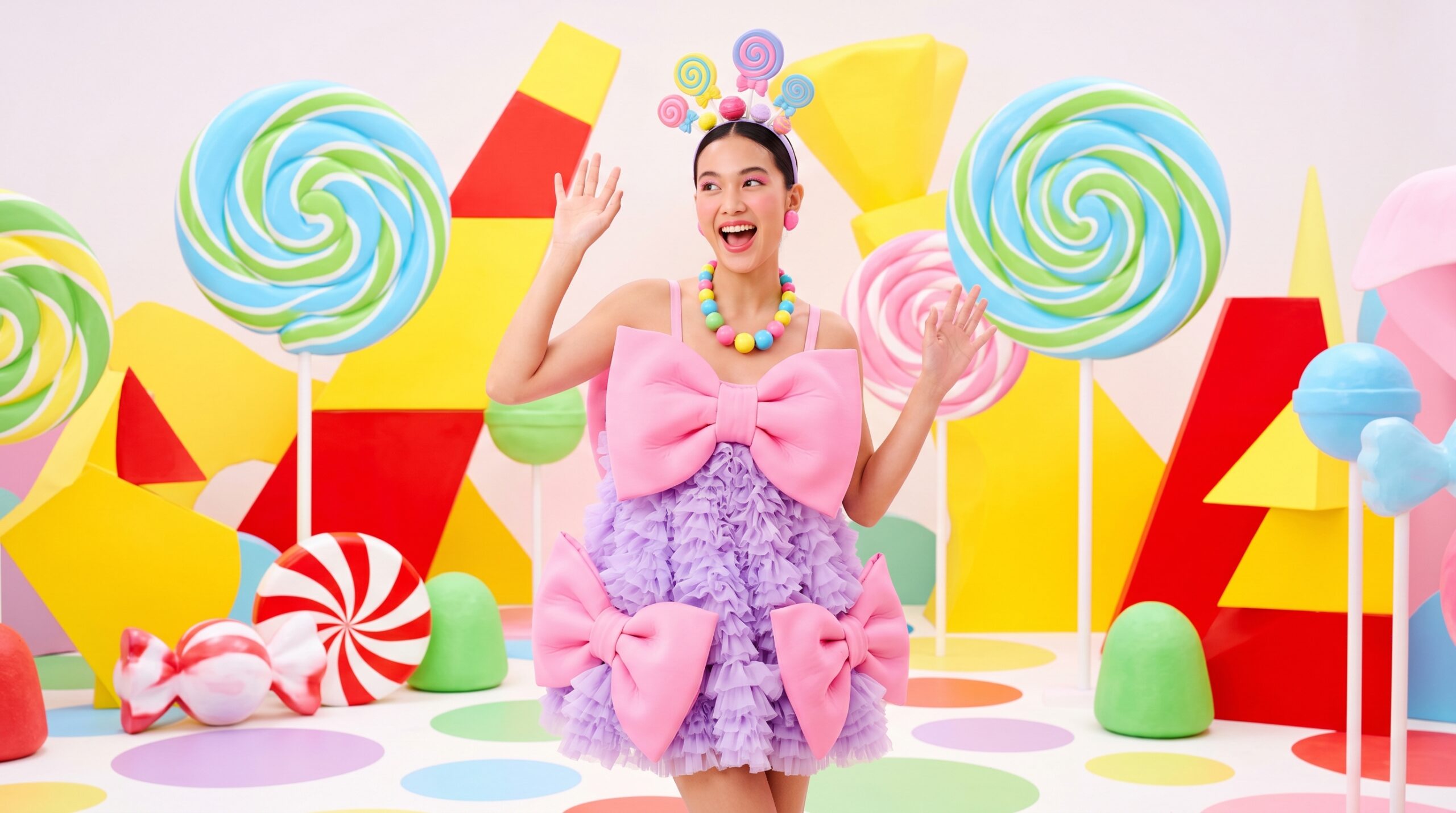
Prompt: A vibrant, high-energy candy-color pop editorial featuring a model in exaggerated, playful fashion (e.g., oversized bows, ruffled textures, cartoonish accessories) against a whimsical, surreal backdrop composed of giant sweets, swirling lollipops, and brightly colored geometric shapes. The model has a joyful, expressive pose. The lighting is soft, bright, and diffused, resembling a large softbox setup, ensuring even illumination that maximizes color saturation and minimizes harsh shadows. Emulate a playful editorial from Paper Magazine or Vogue Japan. Camera: Fujifilm GFX 50S II. Lens: GF 63mm f/2.8 R WR. Aperture: f/4. Shutter Speed: 1/160s. ISO: 200. Sensor Emulation: Medium format digital sensor with exceptional color fidelity. Color Palette: Hyper-saturated pastels (bubblegum pink, sky blue, lemon yellow, lime green, candy apple red), brilliant whites, minimal black. Playful, whimsical, surreal, joyful, vibrant, high-saturation, pop art aesthetic, fantastical, high-resolution.
The Fujifilm GFX 50S II, with its impressive medium format sensor, combined with the GF 63mm f/2.8 R WR lens, ensures exceptional color fidelity and detail, which is paramount for a “hyper-saturated” aesthetic. The f/4 aperture provides a good balance between subject isolation and environmental context, allowing the whimsical backdrop to be clearly visible. The “soft, bright, and diffused” lighting, explicitly compared to a “large softbox setup,” is crucial for achieving even illumination that makes colors pop without harshness. This prompt is designed to generate an image that is a feast for the eyes, aligning with the bold and expressive visuals often found in publications like Paper Magazine. The description of “giant sweets, swirling lollipops, and brightly colored geometric shapes” for the backdrop is key to establishing the surreal, playful atmosphere. This kind of creative direction in ai prompts pushes the boundaries of generative AI, allowing for the creation of truly imaginative scenes. The emphasis on “hyper-saturated pastels” ensures the color palette is both vibrant and cohesive, embodying the “candy-color pop” theme. The keywords “playful, whimsical, surreal, joyful” reinforce the desired mood, ensuring the AI captures the lighthearted and energetic spirit of the editorial. This prompt illustrates how AI can be guided to create highly stylized and imaginative fashion narratives, transforming abstract concepts into vivid, high-resolution imagery. It’s a testament to the power of detailed Nvidia AI investments in advancing generative capabilities for creative industries.
The Real Cost of AI Filmmaking Is Not the Prompts
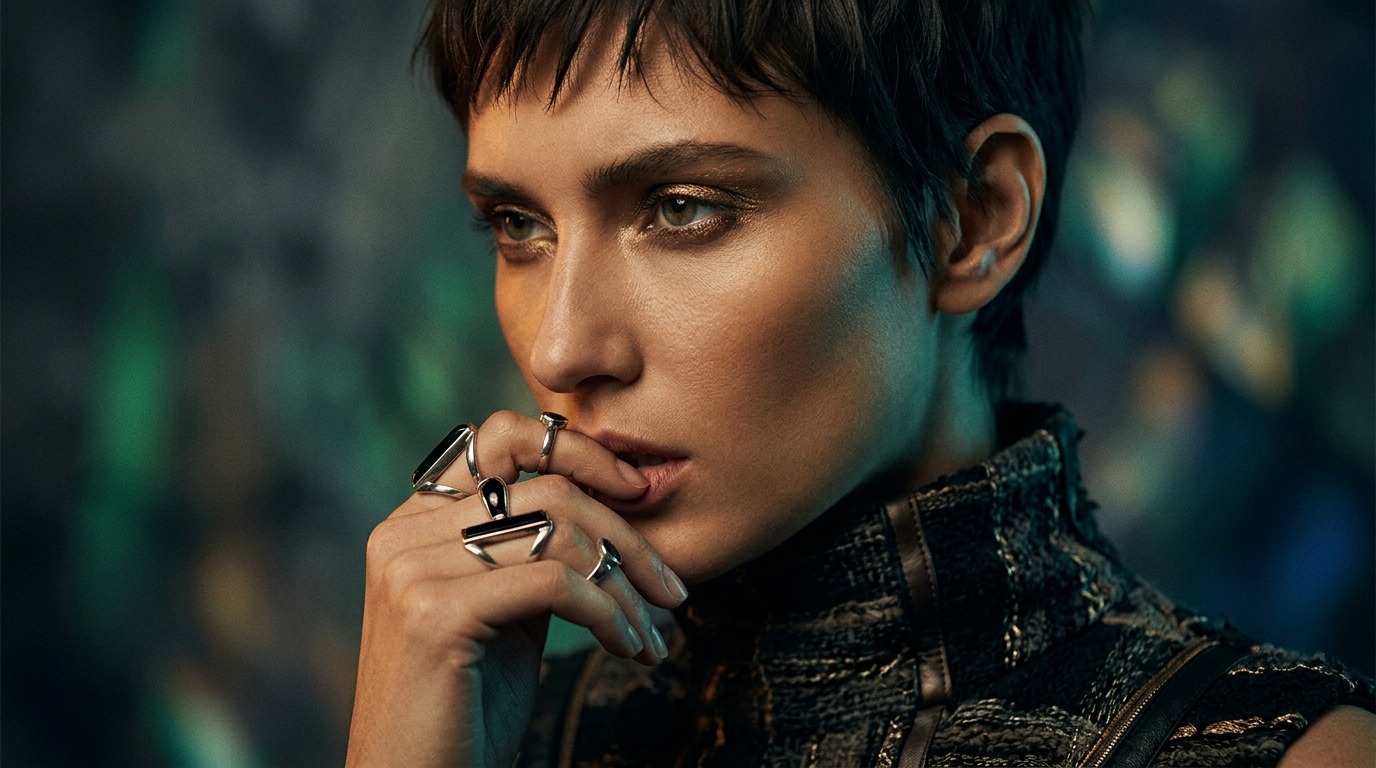
Every frame in this article came from a written prompt, and the difference between a workable result and a usable one is specificity. This is what a production-ready prompt looks like in practice, with the frame it produced:
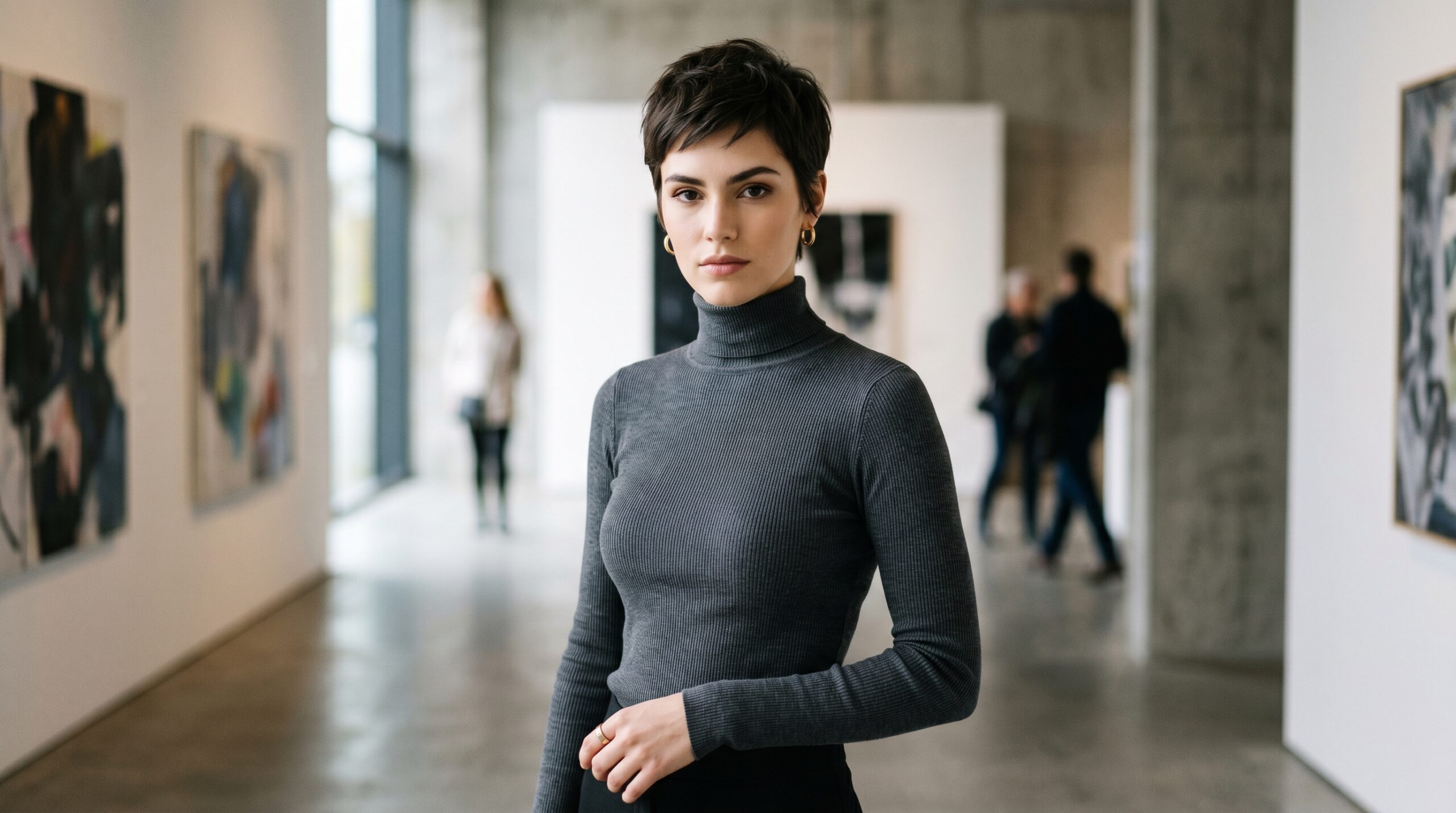
A striking female model, short styled hair, wearing a high-neck minimalist top. Full upper bodyThe part that actually drains a budget is not the prompt writing though. It is the credit system. Most AI platforms charge a subscription, then sell credits on top of it, with a markup on every render and a counter that resets each month whether you shipped anything or not. Generate, upscale, regenerate a few takes, and a single short film chews through pricing tiers fast.
AI Render Pro Studio is the pipeline I built to cut that out. One browser workspace for the whole run: script breakdown, storyboards, image generation, more than 30 video models including Seedance 2.5 with 30-second native-audio takes, Seedance 2.0 in native 4K and Kling O3, plus retouch, upscaling past 7K and an audio studio. It costs $19 a month flat, and you plug in your own API keys, so every render is billed by the provider at cost. No markup, no credit packs, no expiring tokens. On a real project that difference is not a rounding error, it is the budget.
Try AI Render Pro Studio, $19/month →
Frequently Asked Questions
How do ai prompts enhance editorial fashion photography workflows?
AI prompts significantly streamline the ideation and pre-visualization phases of editorial fashion photography. They allow art directors and photographers to rapidly generate diverse concepts, experiment with lighting, styling, and settings, and refine their vision before committing to expensive photoshoots, saving time and resources.
What specific elements should be included in an effective ai prompt for fashion?
An effective AI prompt for fashion should include detailed descriptions of the subject (model, garment), setting, lighting conditions, camera and lens specifications, desired aperture and shutter speed, ISO, film stock or sensor emulation, and a precise color palette. Keywords describing the mood and aesthetic are also crucial.
Can these ai prompts replicate the style of specific fashion magazines?
Yes, by including references to specific fashion magazines like Vogue, Dazed, or Numero within the prompt, along with detailed stylistic and technical parameters, the AI can learn to emulate their characteristic aesthetic and visual language, producing highly tailored results.
Are there limitations to using ai prompts for high-end fashion editorials?
While powerful, AI still has limitations. It may struggle with nuanced human emotions, subtle fabric textures, or highly complex, non-standard poses without very specific guidance. The generated images serve as strong concepts and pre-visualizations, often requiring human artistic refinement or actual photography for final production.
How do I ensure the ai-generated images are high-resolution and suitable for print?
To ensure high-resolution output, specify camera systems known for high megapixel counts (e.g., Hasselblad, Phase One, Fujifilm GFX) and use keywords like “high-resolution,” “sharp focus,” and “print quality” in your prompts. AI upscaling tools can also further enhance resolution for final production.
Discover more from Olivier Hero Dressen Blog: Filmmaking & Creative Tech
Subscribe to get the latest posts sent to your email.

Work with Olivier
Director | CD | DP & Photographer
Specializing in commercials, music videos, AI-driven filmmaking, and cinematic storytelling for brands and production companies.
🌍 Shanghai · Paris · Los Angeles · Dubai
🎬 View Portfolio & Get in Touch