
Key Takeaways
- First insight, The Y2K aesthetic, characterized by its blend of retro-futurism, vibrant colors, and chunky tech, is experiencing a significant resurgence, driving demand for innovative character sheets in digital media.
- Craft highlight, Nano Banana prompts offer a precise and efficient method for generating detailed 2YK character sheets, allowing creators to rapidly prototype and iterate on designs that capture this distinct visual style.
- Industry context, AI tools like Nano Banana are transforming character design workflows, democratizing access to high-quality visual development and enabling artists to focus on conceptualization and refinement rather livelihood.
- Bottom line, Mastering the art of prompt engineering with Nano Banana for 2YK character sheets provides a powerful competitive edge, accelerating creative output and fostering unique aesthetic explorations within the digital art landscape.
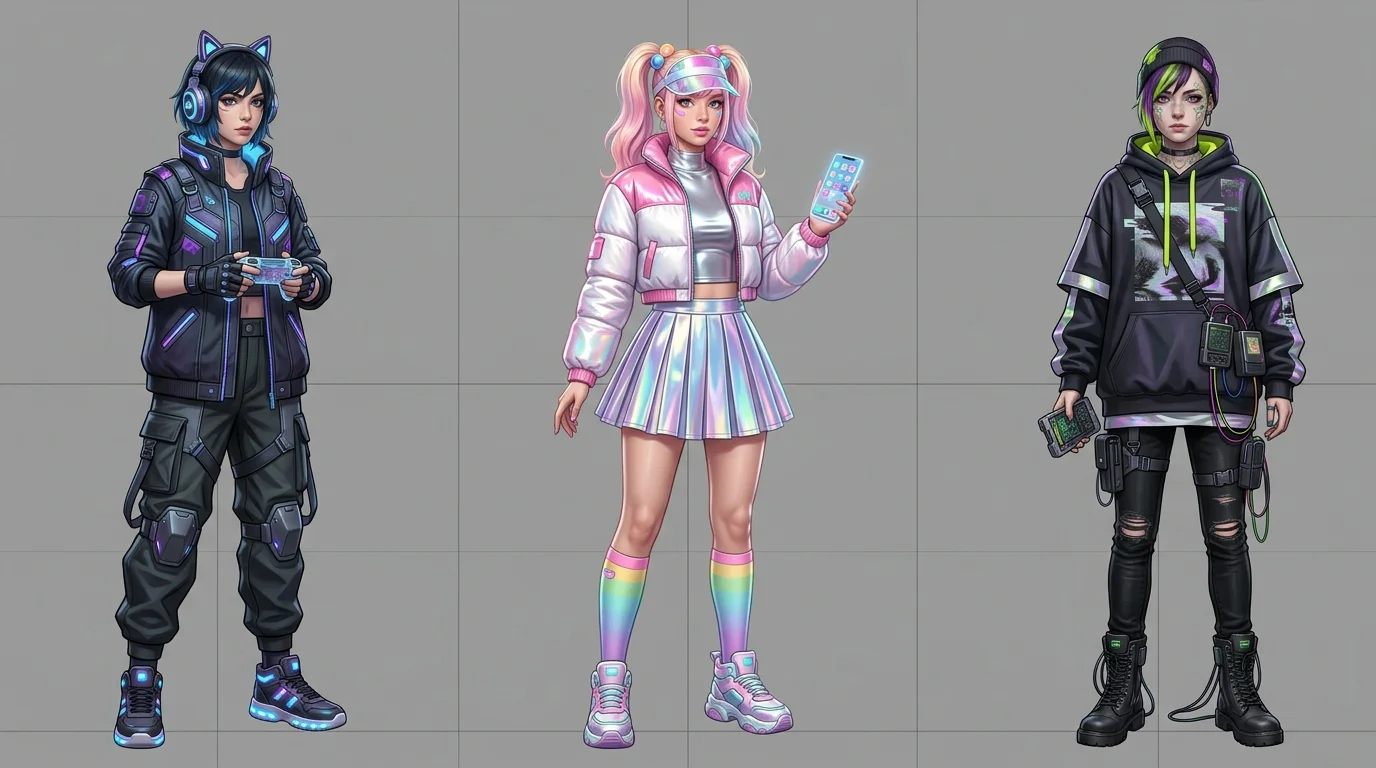
The creation of compelling character sheets is fundamental to any visual project, from video games to animation, offering a foundational blueprint for a character’s identity. In an era where digital aesthetics cycle with increasing rapidity, the distinctive Y2K style, a blend of late-90s futurism, glossy plastics, vibrant hues, and chunky technology, has made a significant comeback. This article dissects how Nano Banana prompts can be leveraged to master the art of generating detailed 2YK character sheets, providing a direct, precise approach for artists and designers.
Need a Director for Your Next Project?
From commercials to branded campaigns—Olivier brings creative vision and technical expertise.
→ View Projects1. The Resurgence of 2YK Character Sheets in Digital Artistry
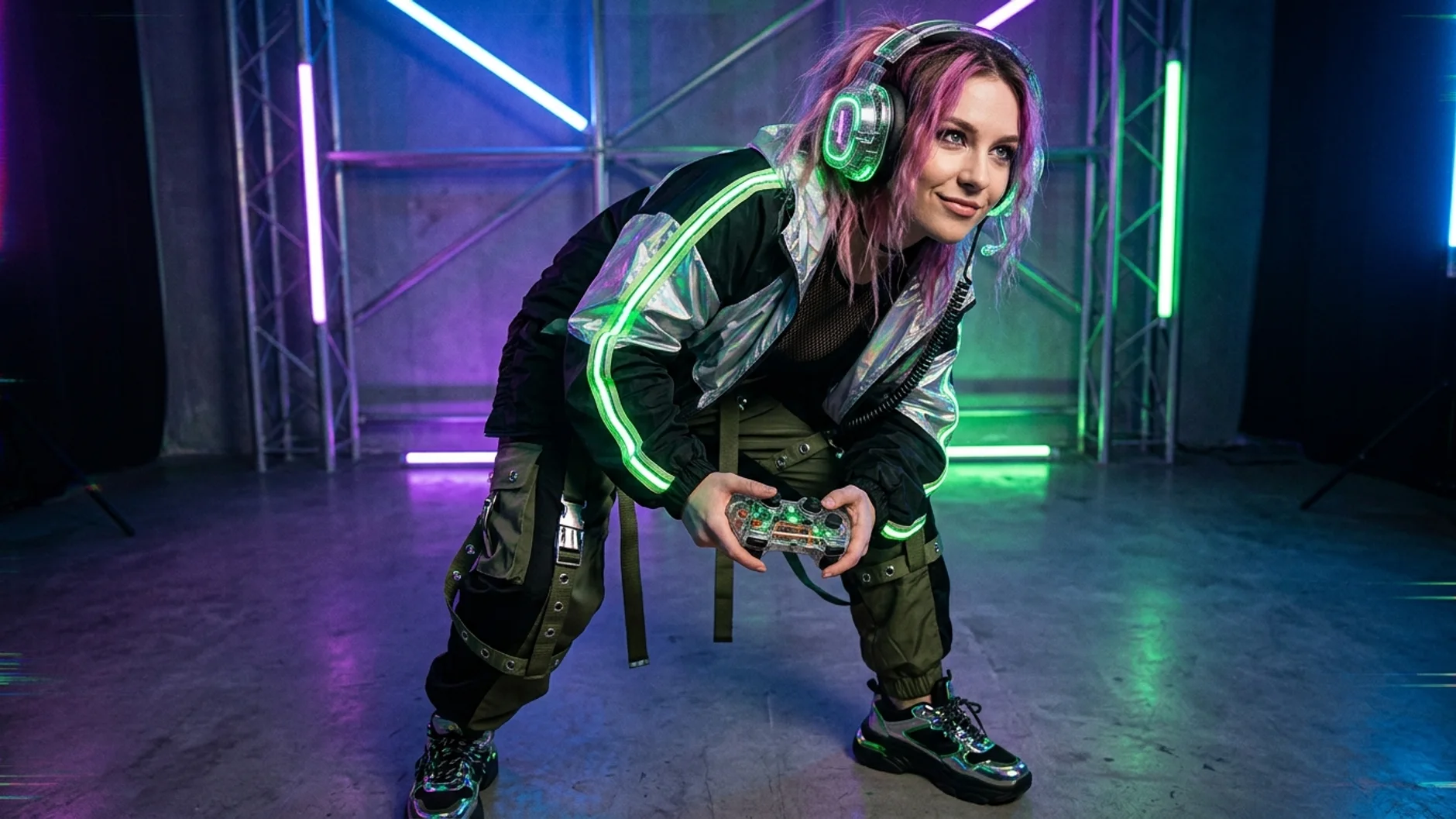
Prompt: “Full body character sheet, female cyber-punk gamer, Y2K aesthetic, vibrant neon green and chrome accents, chunky retro-futuristic headset with glowing earcups, oversized baggy techwear jacket with integrated LED strips, low-slung cargo pants with metallic buckles. She’s holding a translucent game controller with visible internal circuitry. Dynamic pose, mid-action, looking slightly off-camera with a confident smirk. Studio lighting with hard shadows and glowing neon rim lights. Detailed texture work on plastic and metallic elements, with subtle digital distortion effects. Shot with a wide-angle lens, slight fisheye distortion, sharp focus, 8K resolution, cinematic quality.”
This prompt aims to capture the edgy, tech-infused energy of a Y2K cyber-punk gamer. The detailed descriptions of clothing, accessories, and lighting are crucial for achieving the desired aesthetic. Experiment with different neon colors and material finishes to customize the character’s unique style. For more on the strategic use of AI in creative workflows, consider exploring prompt engineering for video, which shares similar principles.
2. Bubblegum Tech Influencer Character Sheet
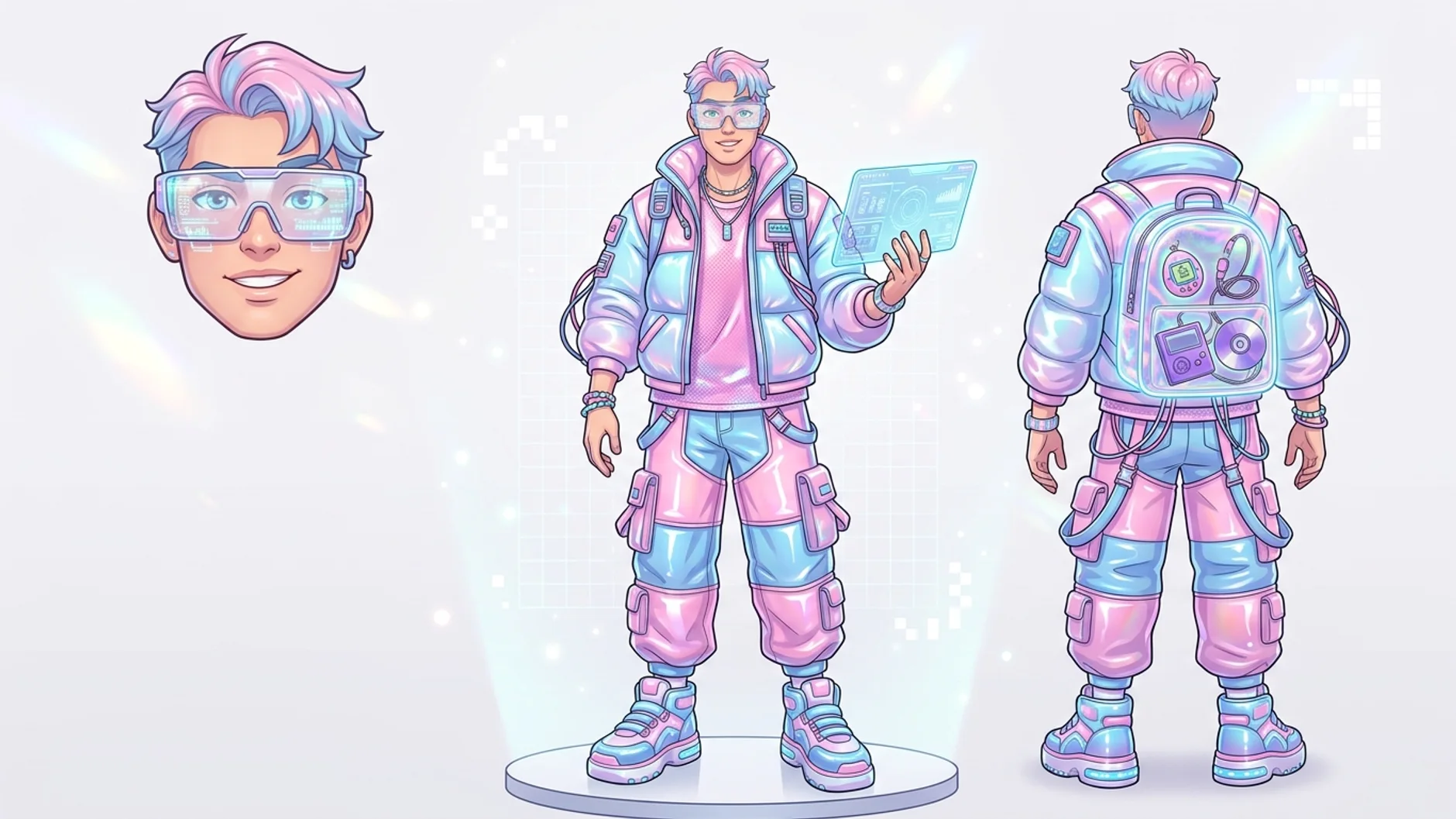
Prompt: “Character design sheet, full body, a male ‘bubblegum tech’ influencer, Y2K aesthetic, pastel pink and sky blue color palette, glossy plastic textures with iridescent sheen, oversized ‘smart’ glasses reflecting digital interfaces, a transparent backpack revealing retro gadgets like a Tamagotchi and a mini-disc player. Posing confidently against a minimalist white studio background with holographic light leaks and subtle pixel art elements. Soft, diffused key lighting with sharp specular highlights on glossy surfaces. Orthographic view, clean lines, symmetrical composition, 16:9 aspect ratio, 4K render, polished CGI style.”
This prompt focuses on the softer, more playful side of the Y2K aesthetic, often associated with early internet culture and consumer tech. The pastel colors and glossy textures are key, as are the specific retro gadgets. Adjust the background elements to create different moods, perhaps adding abstract shapes or digital patterns for variety. The rapid visualization from such prompts can inform early stages of content creation, similar to how an AI concept trailer can quickly bring story ideas to life.
3. Retro-Futuristic Explorer Character Sheet
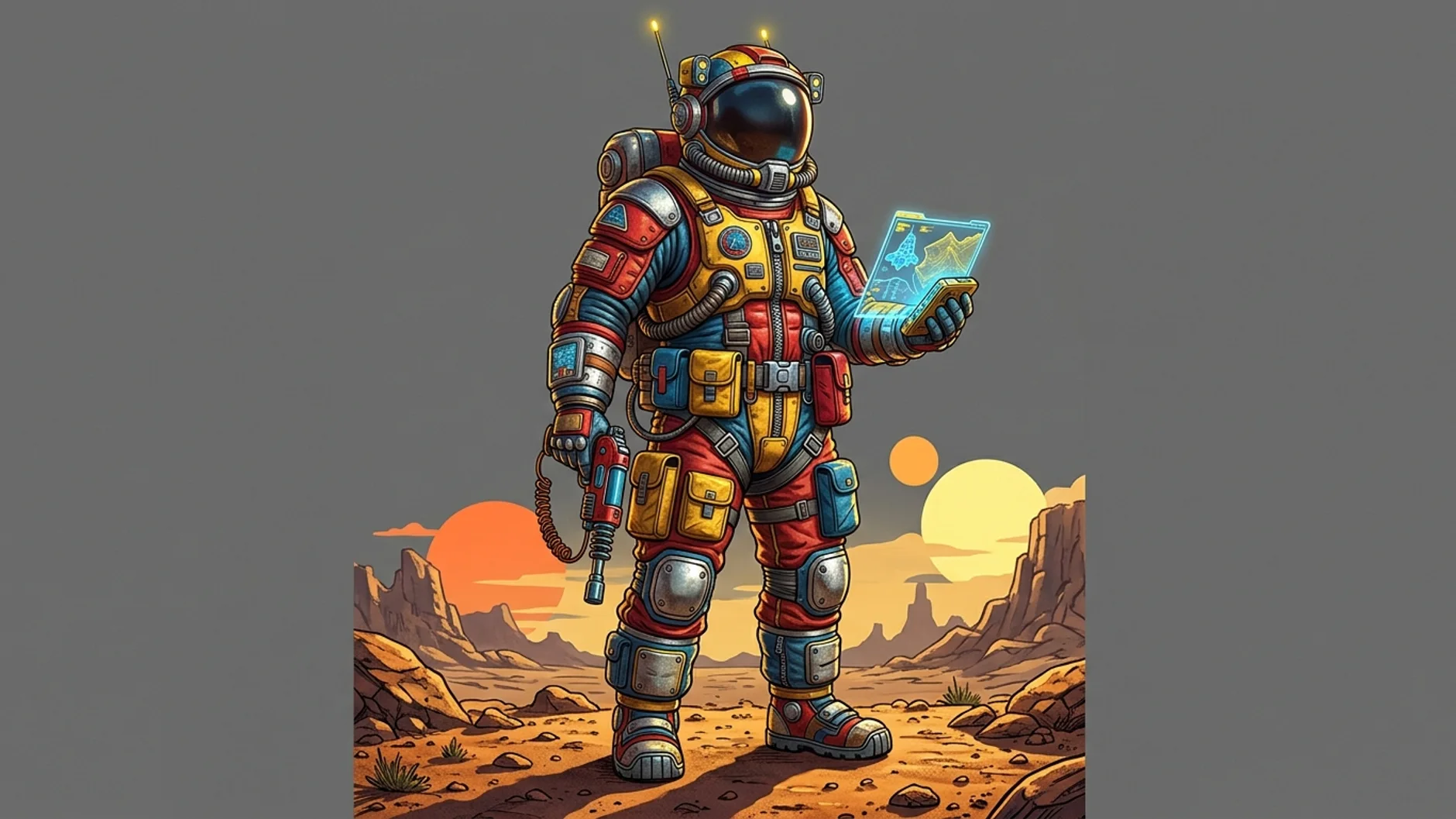
Prompt: “Full body character sheet on NEUTRAL MID-GREY BACKGROUND, gender-neutral retro-futuristic explorer, Y2K aesthetic, primary colors (red, yellow, blue) with metallic silver accents. Wearing a chunky, multi-layered space suit with visible zippers and oversized utility pockets. Helmet features a large, tinted visor and a prominent antenna. Equipped with a vintage-style laser pistol and a holographic map device. Standing on a barren alien landscape under a stylized, two-sun sky. Dramatic side lighting casting long shadows, emphasizing the suit’s bulk. Low-angle shot, cinematic wide lens, high detail on fabric creases and metallic reflections, 8K, concept art rendering.”
This prompt leans into the space-age optimism prevalent in Y2K design. The use of primary colors and chunky gear is essential for this look. Experiment with different alien landscapes or futuristic vehicles in the background to expand the character’s narrative. For projects requiring detailed visual effects, understanding how AI can accelerate such concept art is invaluable, much like the insights offered in VFX breakdown secrets articles. Character sheets like these provide a solid foundation for further visual development.
4. Digital Graffiti Artist Character Sheet
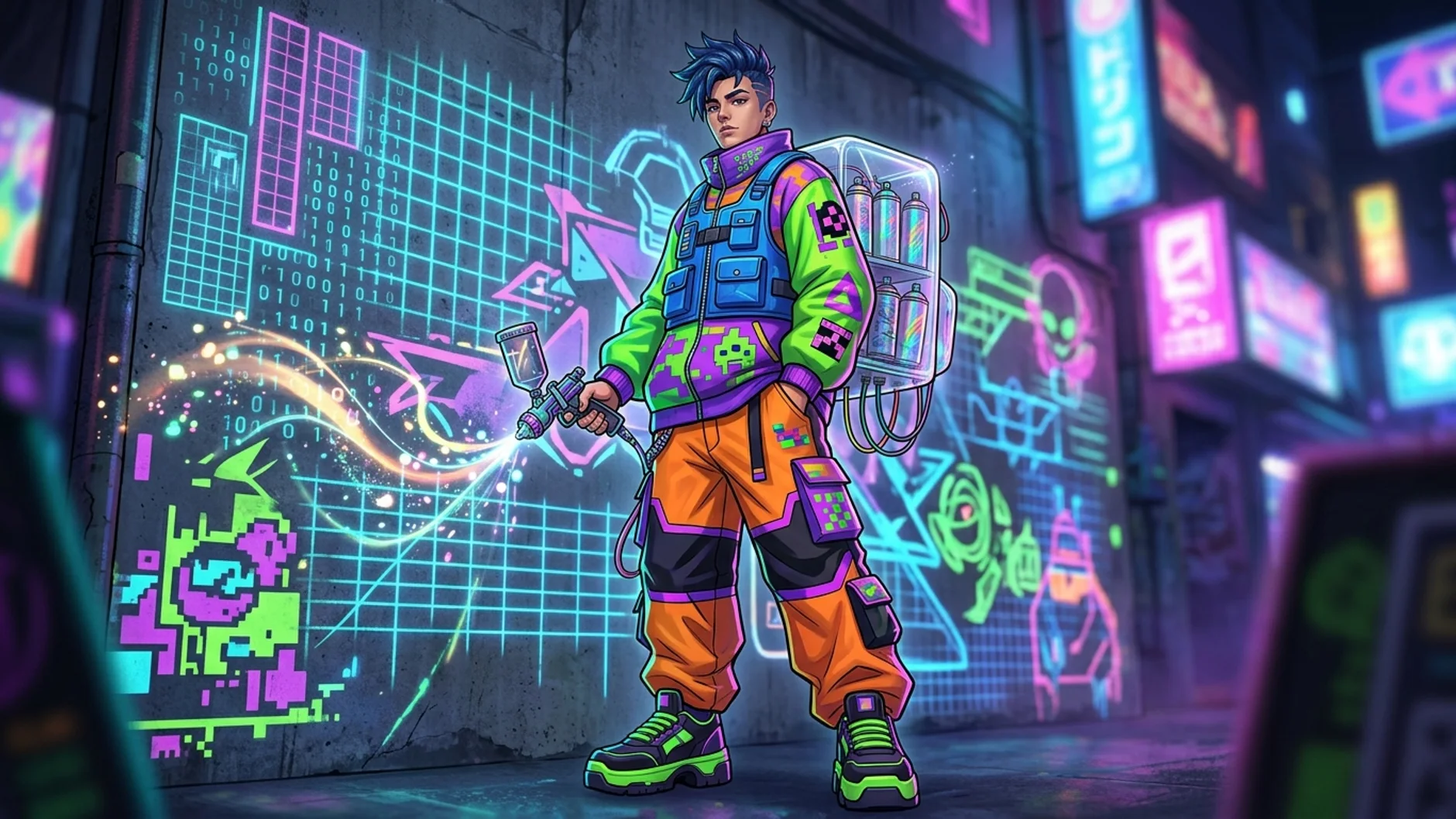
Prompt: “Character design sheet, full body, male digital graffiti artist, Y2K aesthetic, wearing oversized, brightly colored streetwear with geometric patterns and pixelated motifs. Backpack is a transparent plastic shell revealing spray cans with holographic labels. He’s holding a stylized digital spray gun emitting light trails. Standing in front of a wall covered in glowing, animated Y2K-style graffiti (grids, binary, abstract shapes). Urban night setting with strong contrasting neon lights from street signs and the graffiti itself. Dynamic, low-angle shot, wide aperture for depth, sharp focus on character, 4K, vibrant graphic novel style.”
This prompt merges the street art culture with the digital edge of Y2K. The emphasis on glowing graffiti and pixelated patterns is crucial. Consider varying the type of digital art the character creates, perhaps glitch art or vector-based designs. This blending of styles showcases the versatility of AI in generating complex visual narratives, often bridging gaps between practical vs digital effects in concept work. News sources like Reuters on AI in art further illustrate the growing impact of these tools.
5. Holographic Pop Star Character Sheet
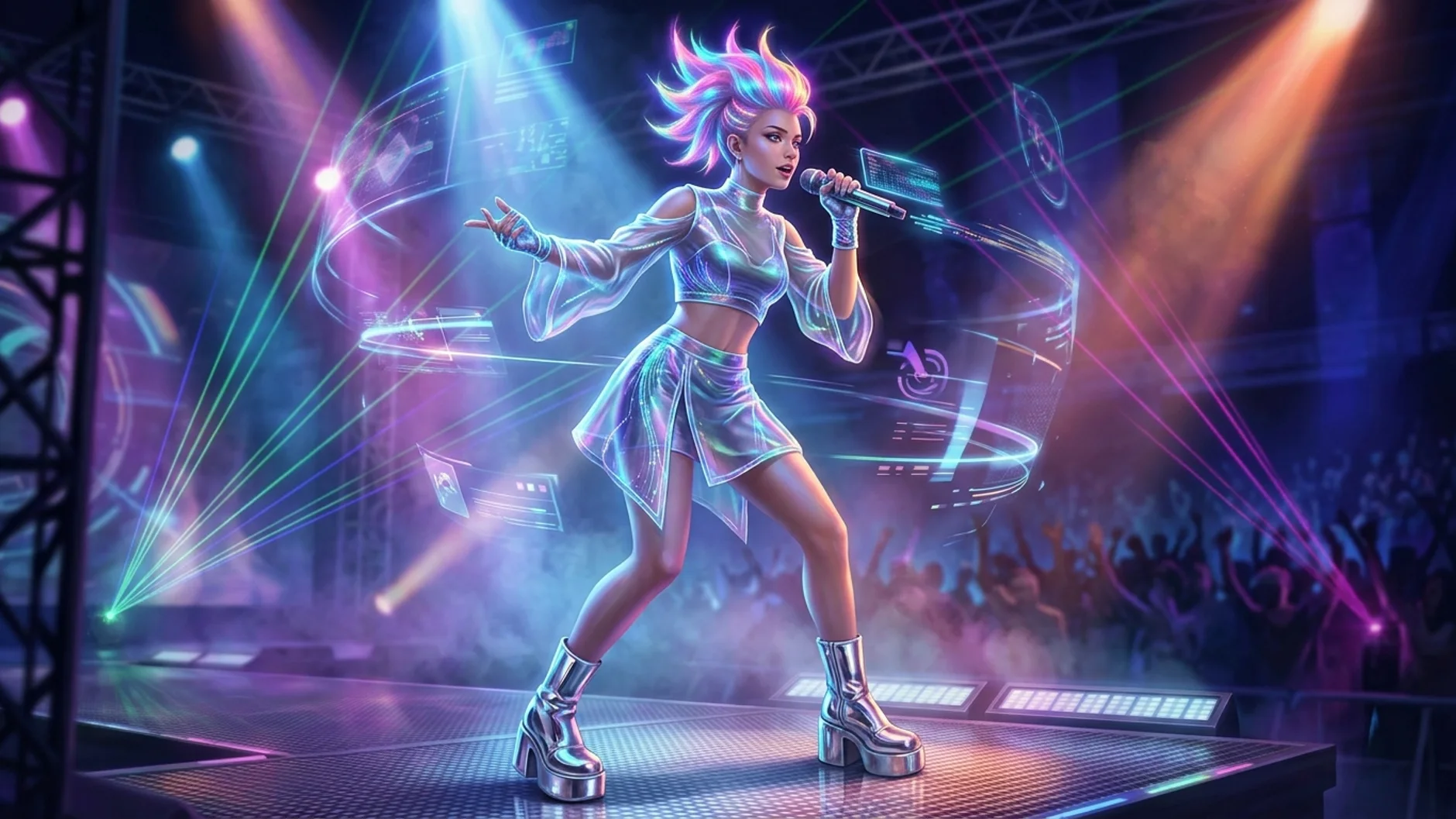
Prompt: “Full body character sheet, female holographic pop star, Y2K aesthetic, wearing a shimmering, translucent outfit made of iridescent fabric with embedded fiber optics. Her hair is styled in gravity-defying spikes with glowing tips. Accessories include chunky, chrome platform boots and a microphone with a visible digital display. She’s performing on a stage surrounded by swirling holographic projections and laser lights. Dramatic stage lighting, strong spotlights, and vibrant color gels. Close-up medium shot, slightly elevated camera angle, ethereal atmosphere, 8K, hyper-realistic digital painting.”
This prompt captures the glamorous, futuristic side of Y2K pop culture. The holographic and iridescent elements are paramount. Experiment with different stage designs and lighting effects to create varied performance environments. Virtual characters and pop stars have been a part of digital culture for decades, with pioneers like Gorillaz celebrating their 25th anniversary, demonstrating the enduring appeal of such concepts. The rise of virtual influencers further underscores this trend.
6. Virtual Reality Architect Character Sheet
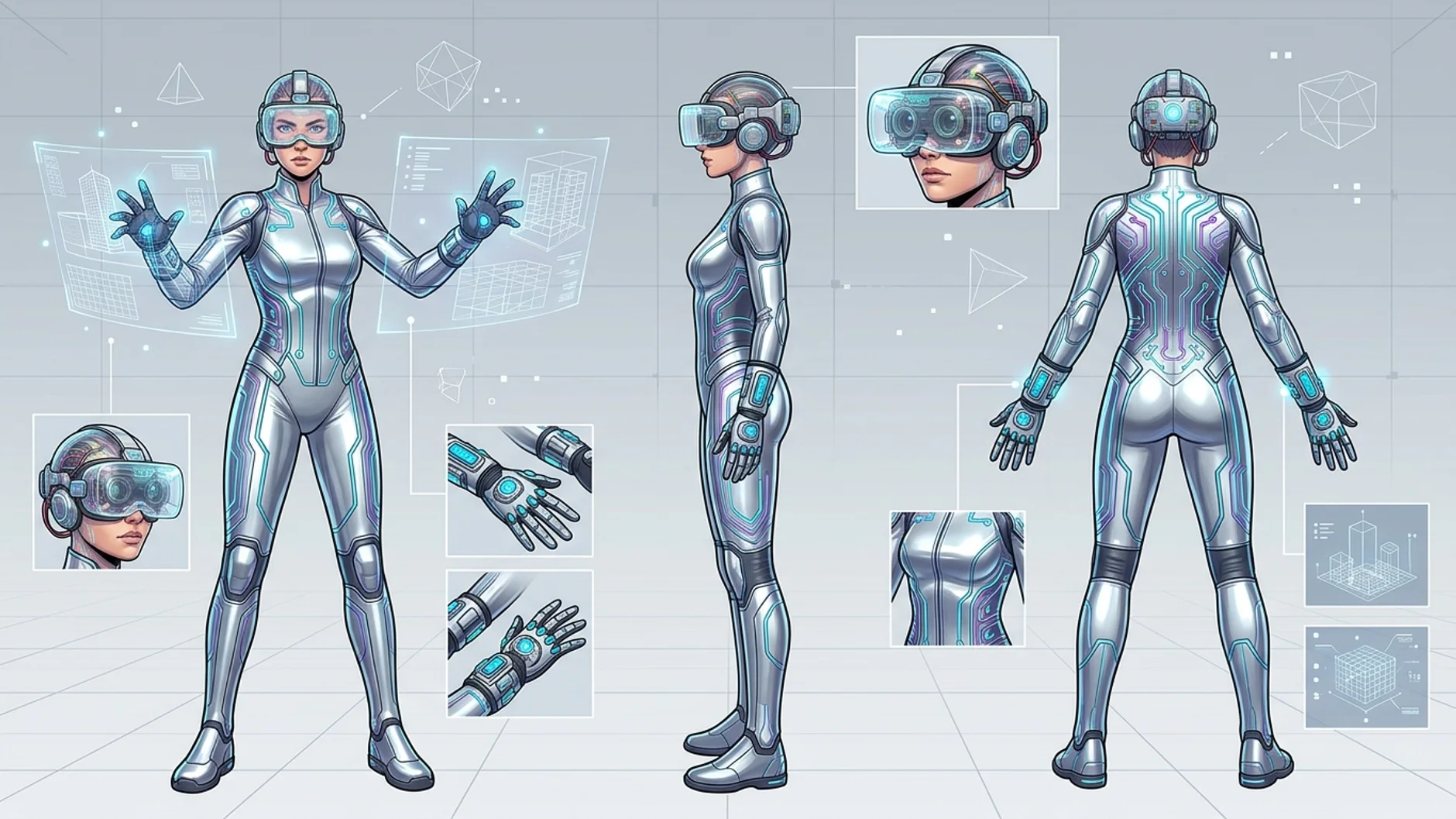
Prompt: “Character design sheet, full body, gender-neutral virtual reality architect, Y2K aesthetic, wearing a sleek, form-fitting jumpsuit made of reflective silver material with glowing circuit patterns. Oversized, transparent VR headset with visible internal components. Their hands are adorned with data gloves, gesturing as if manipulating holographic projections. Standing in a minimalist, grid-patterned virtual environment with floating abstract geometric shapes. Bright, clean ambient lighting with subtle internal glows from the tech. Orthographic view, precise lines, high-fidelity render, 4K, technical illustration style.”
This prompt focuses on the intersection of early VR concepts and Y2K design. The emphasis on transparent tech and glowing circuits is key. Consider adding floating UI elements or architectural blueprints within the virtual space to enhance the narrative. The precision required for such designs highlights the benefits of AI over AI rendering vs traditional methods. Platforms like Meta Quest continue to push the boundaries of VR, making such character concepts increasingly relevant.
7. Glitch-Core Hacker Character Sheet
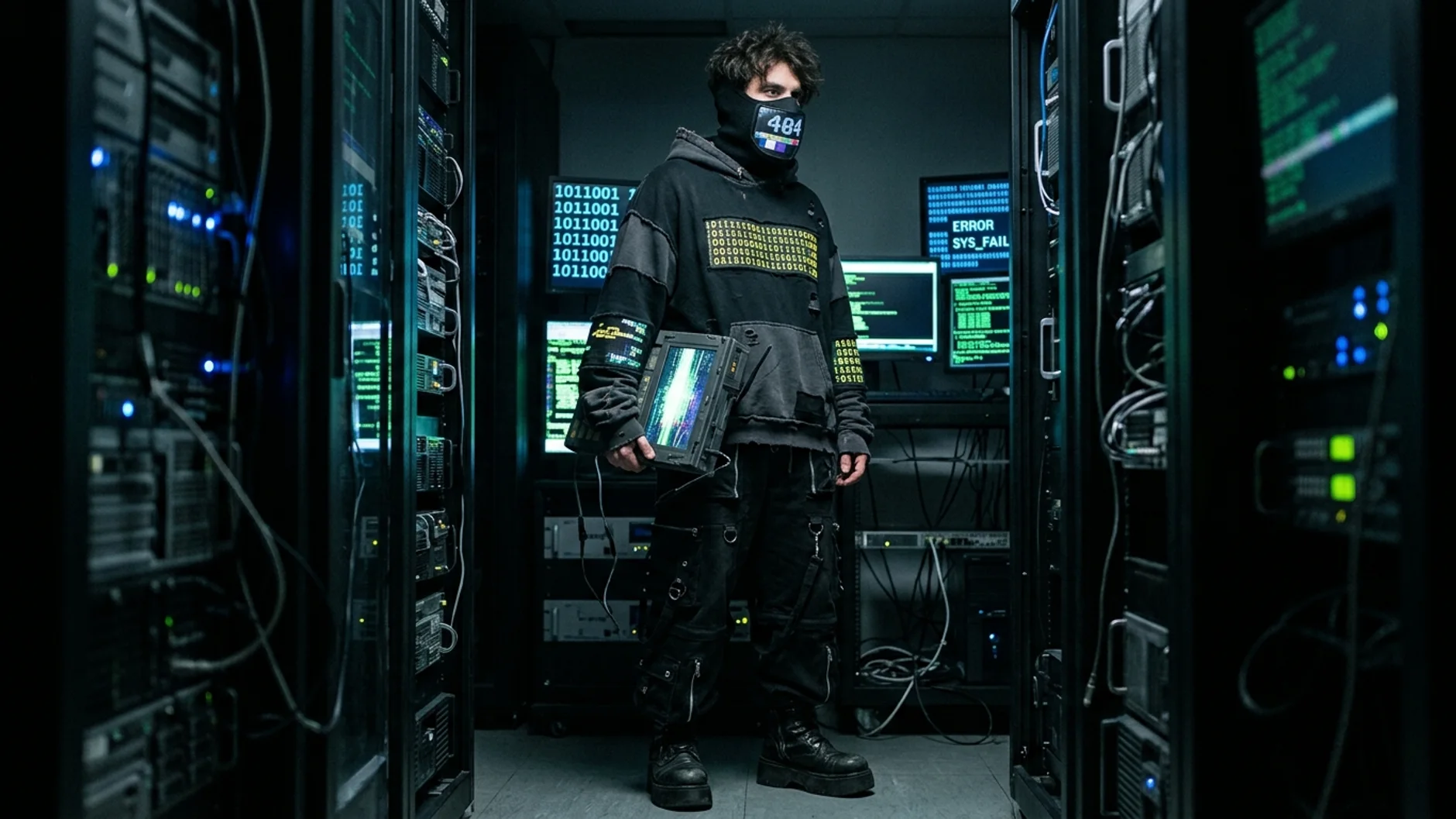
Prompt: “Full HYPER-REALISTIC body character sheet on CLEAN WHITE BACKGROUND, male glitch-core hacker, Y2K aesthetic, wearing distressed, oversized hoodie with integrated LED text displays showing binary code, baggy cargo pants with numerous zippers and buckles. Face partially obscured by a mask with pixelated error screen motif. Carrying a chunky, retro-laptop with glowing screen artifacts. Standing in a dark, data-server room illuminated by flickering fluorescent lights and screens displaying corrupted data. Low-key lighting, strong backlighting from screens, creating a mysterious silhouette. Medium shot, slightly Dutch angle, sharp focus on details, 8K, dark cyberpunk illustration style with heavy digital noise and scanline effects.”
This prompt delves into the darker, more rebellious side of Y2K, incorporating glitch art and early internet subcultures. The pixelated errors and corrupted data visuals are crucial for this aesthetic. Experiment with different types of digital noise and distortion to achieve varied “glitch” effects. Understanding how these prompts interact with AI is vital for any creative working with AI browsers and other generative tools. The increasing sophistication of AI tools for creative work is explored in articles such as The Verge on AI and creative work.
Optimizing Your Workflow with Nano Banana for Character Sheets
Generating exceptional 2YK character sheets with Nano Banana is not a one-shot process. It’s an iterative workflow that benefits from strategic optimization. First, begin with broad, foundational prompts to establish the core aesthetic and character concept. Once the general direction is set, refine subsequent prompts by adding specific details about clothing, accessories, materials, and lighting. Think of it as a sculptor gradually shaping clay: start with large forms, then add intricate details.
Leverage Nano Banana’s parameters for aspect ratio, style weights, and negative prompts to steer the AI away from undesirable elements. For instance, if the Y2K aesthetic is too often interpreted as purely “vaporwave,” a negative prompt like “no vaporwave, no neon pink gradients” might be necessary. Integrating these AI-generated concepts into a broader creative pipeline is also crucial. The outputs from Nano Banana can serve as powerful starting points for traditional digital painting, 3D modeling, or even animation storyboards. Tools like Adobe Photoshop or Blender can be used to further refine the AI-generated imagery, adding human artistic touches or correcting minor AI artifacts. This hybrid approach, AI for rapid ideation and traditional tools for precise refinement, represents the cutting edge of digital art production. Mastering this workflow not only accelerates production but also elevates the quality and originality of the final character sheets. For filmmakers, this rapid prototyping can inform decisions early in pre-production, much like using a Googleflow filmmaker guide for project management. The seamless integration of AI-generated assets into professional creative suites, such as those offered by Adobe Creative Suite, signifies a powerful evolution in design methodology.
Frequently Asked Questions
What exactly is a 2YK character sheet?
A 2YK character sheet is a visual reference document detailing a character designed specifically in the Y2K aesthetic. This style typically incorporates elements from the late 1990s and early 2000s, such as glossy plastics, metallic textures, vibrant colors, and chunky, retro-futuristic technology.
How does Nano Banana enhance the creation of 2YK character sheets?
Nano Banana, an AI image generation tool, allows artists to rapidly create detailed visual concepts for 2YK character sheets by translating textual prompts into imagery. This significantly speeds up the ideation and iteration process, enabling quicker exploration of various design possibilities.
What are the key elements to include in a Nano Banana prompt for the Y2K aesthetic?
Effective prompts should specify color palettes (vibrant, neon, metallic), materials (glossy plastic, chrome), forms (chunky, ergonomic), and thematic elements (early digital interfaces, retro-futurism). Detailed descriptions of lighting, composition, and camera angles also significantly improve output quality.
Can these AI-generated character sheets be used in professional projects?
Yes, AI-generated character sheets can serve as excellent starting points or high-fidelity concept art for professional projects. They often require further refinement by human artists using traditional software to ensure artistic consistency, brand alignment, and to correct any minor AI-generated artifacts.
What are the benefits of using AI for character design compared to traditional methods?
The primary benefits include unparalleled speed in generating diverse concepts, reduced time spent on initial sketching and rendering, and the ability to explore a wider range of stylistic variations. This allows human designers to focus more on creative direction, storytelling, and final polish rather than repetitive manual tasks.
Discover more from Olivier Hero Dressen Blog: Filmmaking & Creative Tech
Subscribe to get the latest posts sent to your email.
Work with Olivier
Director | CD | DP & Photographer
Specializing in commercials, music videos, AI-driven filmmaking, and cinematic storytelling for brands and production companies.
🌍 Shanghai · Paris · Los Angeles · Dubai
🎬 View Portfolio & Get in Touch