
Key Takeaways
- First insight, AI Vision is not a futuristic concept; it is an immediate, actionable tool for filmmakers, offering precise control over elements like rotoscoping, style, and spatial data.
- Craft highlight, Mastering techniques like semantic segmentation and depth estimation allows for unprecedented granular control in post-production, enabling complex VFX and virtual camera movements that were once cost-prohibitive.
- Industry context, The rapid evolution of AI Vision tools is democratizing advanced filmmaking techniques, shifting the focus from manual labor to intelligent oversight and creative direction, demanding new skill sets from crew members.
- Bottom line, Filmmakers who integrate these 5 proven AI Vision techniques into their workflow will gain significant advantages in efficiency, creative scope, and the ability to produce high-quality, complex visuals on tighter schedules and budgets.
The landscape of filmmaking is undergoing a profound transformation, with ai vision technologies emerging as a pivotal force. For two decades, I’ve navigated the complexities of production, from indie shorts to major features, always seeking the edge that technology provides. Today, that edge is undeniably AI. Forget the hype; we’re talking about practical, proven techniques that are already reshaping how we capture, process, and present moving images. This isn’t about replacing human creativity, but augmenting it, providing tools that allow us to achieve previously impossible feats with efficiency and precision. Let’s cut through the noise and delve into the five AI vision techniques that every serious filmmaker needs to understand and implement now.
Need a Director for Your Next Project?
From commercials to branded campaigns—Olivier brings creative vision and technical expertise.
→ View ProjectsThe Unseen Eye: How AI Vision is Reshaping Filmmaking
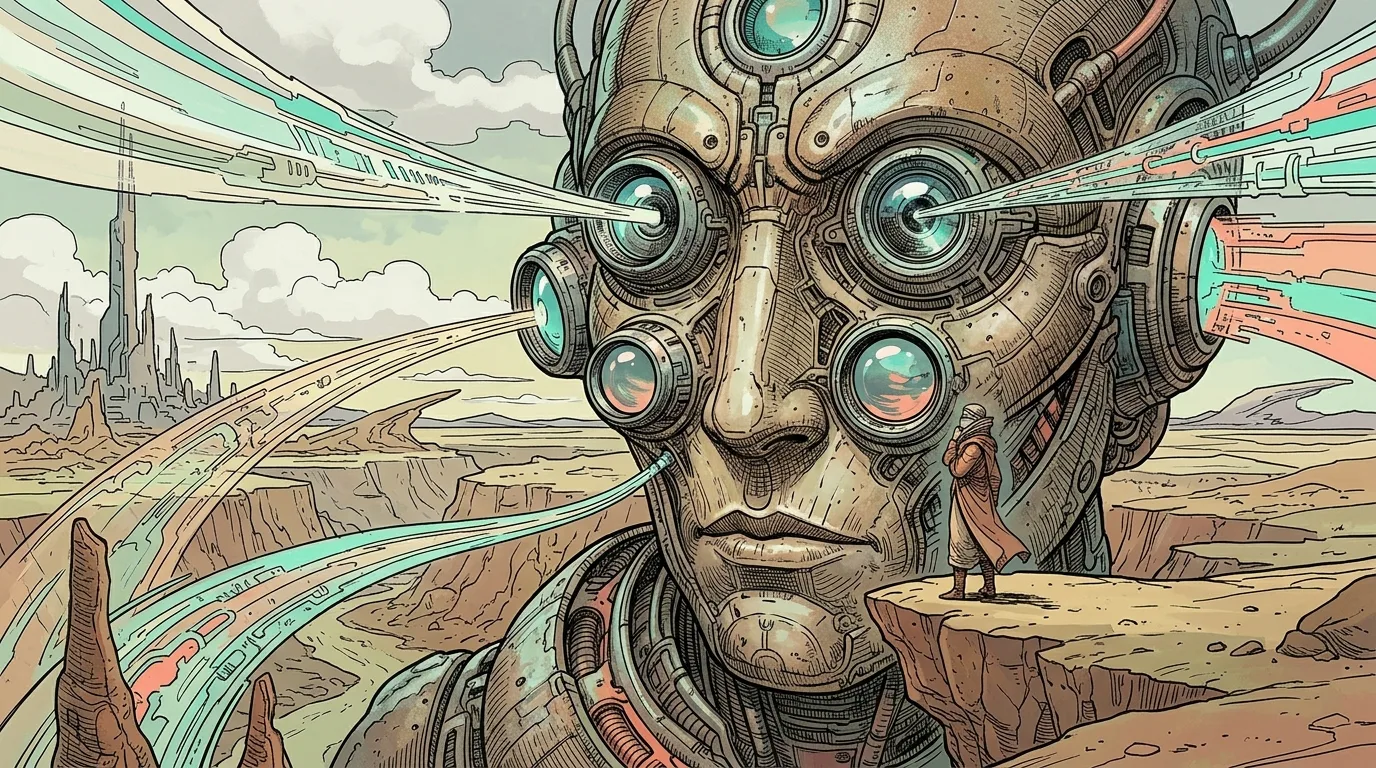
For years, many filmmakers viewed artificial intelligence as either a distant sci-fi concept or a niche tool for specialized post-production houses. That perception is outdated. Today, ai vision is an active, evolving component in mainstream filmmaking, offering solutions to age-old production challenges and opening doors to entirely new creative possibilities. From pre-visualization to final color grade, AI vision algorithms are learning to “see” and interpret visual data in ways that were once the exclusive domain of highly skilled human artists – but at a fraction of the time and cost. This isn’t about replacing the artist, it’s about empowering them with a new set of brushes and an infinitely faster canvas.
Think about the sheer volume of visual data we capture on set. Every frame, every pixel holds information. Traditionally, extracting that information – whether for tracking, masking, or analysis – has been a labor-intensive, often tedious process. AI vision changes this paradigm by automating the recognition of objects, people, scenes, and even abstract concepts like mood or style. This capability translates directly into tangible benefits for filmmakers: faster rotoscoping, more accurate VFX integration, intelligent color correction, and even dynamic content generation. My experience has shown that the initial investment in understanding these technologies pays dividends not just in efficiency, but in unlocking creative avenues that were previously constrained by budget or technical limitations. It’s about moving from “can we do this?” to “how can we push this further?”
The integration of AI vision isn’t a suggestion; it’s becoming an imperative for anyone serious about staying competitive. Major studios are already leveraging these tools, and independent filmmakers are finding accessible solutions that level the playing field. Understanding the underlying principles of how AI “sees” – through neural networks trained on vast datasets – is the first step. The second is identifying the specific techniques that offer the most immediate and profound impact on your workflow. This article will break down five such techniques, providing the practical knowledge you need to start integrating them into your next project. It’s time to equip ourselves with the future’s tools. For those looking to dive deeper into the practical application of AI in creative workflows, exploring resources like AI Render Pro, the prompting tool for filmmakers and creatives can provide a significant advantage.
Demystifying AI Vision: Core Concepts for Filmmakers
Before we dive into specific techniques, let’s establish a foundational understanding of what ai vision entails. At its core, AI vision, also known as computer vision, is a field of artificial intelligence that enables computers to “see,” identify, and process images and videos in the same way humans do, and then interpret them. It’s not just about recognizing a face; it’s about understanding the context, the depth, the motion, and even the emotional content within a visual frame. For filmmakers, this means moving beyond pixel manipulation to intelligent image understanding.
The backbone of most modern AI vision systems is deep learning, a subset of machine learning that uses neural networks with many layers (hence “deep”). These networks are trained on massive datasets of images and videos. Through this training, they learn to identify patterns, features, and relationships within visual data. For example, a network trained on millions of images of cats learns to distinguish a cat from a dog, regardless of breed, lighting, or angle. This learning process is what allows AI to perform complex tasks like object detection, facial recognition, and scene segmentation with remarkable accuracy. Computer vision on Wikipedia provides a comprehensive overview of its history and development.
In filmmaking, this translates to powerful applications. Imagine an AI that can automatically identify every actor in a scene, track their movements, separate them from the background, and even suggest optimal lighting changes based on the detected mood. This is the promise of AI vision. It’s about automating the mundane and empowering the creative. While the algorithms themselves are complex, our focus as filmmakers is on understanding their capabilities and how to leverage them through accessible software and workflows. We don’t need to be data scientists, but we do need to be informed users. This fundamental grasp will allow you to critically evaluate tools and apply them effectively, ensuring you’re not just using a black box, but a powerful, understood assistant in your creative process. The key is to see AI vision as an extension of your creative toolkit, not a replacement for your artistic eye.
Technique 1: Precision Tracking with AI Vision for VFX and Rotoscoping
One of the most immediate and impactful applications of ai vision in filmmaking is in object detection and tracking. For decades, visual effects artists have spent countless hours manually rotoscoping elements – frame by painstaking frame – or meticulously placing tracking markers for motion capture and CGI integration. AI vision fundamentally changes this. Algorithms can now automatically identify and track specific objects, people, or even parts of objects across a sequence of frames with unparalleled speed and accuracy.
Consider a complex shot where an actor walks through a busy marketplace, and you need to replace the background or add a digital prop that interacts with their hand. Traditionally, this would involve hours, if not days, of rotoscoping the actor and then separate 3D tracking for the hand interaction. With AI vision-powered tools, you can often select the actor, and the AI will automatically generate a precise mask that follows them through the shot. Similarly, for VFX integration, AI can analyze camera movement and object motion to generate highly accurate 3D tracking data, significantly reducing the need for on-set markers in many scenarios. This isn’t just about speed; it’s about consistency and precision that manual methods struggle to achieve, especially over long takes or with subtle movements.
Real-world examples are abundant. Software like Adobe After Effects, Nuke, and DaVinci Resolve are integrating more sophisticated AI-driven tracking capabilities. For instance, advanced planar trackers now leverage AI to better understand surfaces and perspectives, yielding more stable results even with challenging footage. For rotoscoping, tools are emerging that allow you to paint a rough mask on a single frame, and the AI extrapolates that mask across the entire clip, adapting to changes in shape, lighting, and occlusion. This frees up VFX artists to focus on the creative aspects of compositing and integration, rather than the tedious labor of masking. It’s a game-changer for independent filmmakers and small studios who often face tight deadlines and limited resources. When it comes to essential gear that complements these digital advancements, exploring Hero’s Essentials: filmmaker gear and tools can help you build a robust physical toolkit. The combination of cutting-edge software and reliable hardware is crucial for maximizing efficiency. For a deeper dive into how AI is making waves in post-production, a recent article by The Verge discusses AI’s impact on VFX.
Technique 2: Aesthetic Transformation through AI Vision Style Transfer and GANs

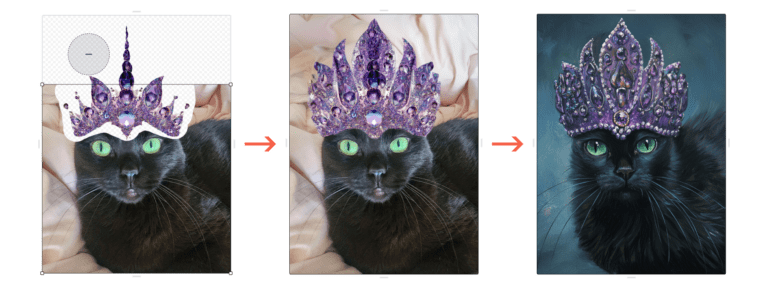
Beyond mere object recognition, ai vision also offers powerful creative tools for aesthetic transformation, primarily through style transfer and Generative Adversarial Networks (GANs). These techniques allow filmmakers to manipulate the visual style of their footage in ways that were once confined to complex, multi-layered manual compositing or highly specialized practical effects. Now, an AI can learn the artistic characteristics of one image or video and apply them to another, opening up a new realm of visual storytelling.
Style transfer, in its simplest form, takes the artistic style from a source image – say, a painting by Van Gogh – and applies it to your video footage, while preserving the content of your original shot. Imagine a scene shot in live-action suddenly rendered with the brushstrokes and color palette of an impressionist painting, or a gritty film noir aesthetic. This isn’t just a filter; it’s an intelligent reinterpretation of your pixels based on learned stylistic patterns. For filmmakers, this means the ability to create highly stylized sequences, blend different visual languages, or even develop unique, branded aesthetics without requiring extensive manual artwork for every frame. It’s particularly potent for music videos, experimental films, or sequences within a larger narrative that demand a distinct visual break.
GANs take this a step further. A GAN consists of two neural networks, a generator and a discriminator, that compete against each other. The generator creates new images (or video frames), and the discriminator tries to determine if they are real or fake. Through this adversarial process, GANs can generate incredibly realistic imagery, modify existing footage, or even create “deepfakes.” While deepfakes raise ethical concerns (which we’ll touch on later), the underlying technology has legitimate creative applications. For instance, GANs can be used for sophisticated de-aging or re-aging of actors, generating synthetic environments, or even transforming facial expressions and performances. This level of control over visual assets, enabled by sophisticated ai vision models, offers unprecedented creative freedom, allowing filmmakers to push visual boundaries and create truly unique cinematic experiences. For filmmakers interested in exploring stylized visuals, the blog also offers insights into 20 Essential Y2K Prompts: Master Retro Aesthetics! which can be adapted for AI style transfer experiments.
Technique 3: Granular Control with Semantic Segmentation for Compositing
🎬 AI Render Pro Studio, the AI film production suite I built and use on my own productions. Script breakdown, storyboards, 30+ video models including Seedance 2.5 and Kling O3, image generation, retouch, 7K upscaling and audio, all in one browser workspace. $19/month flat, bring your own API keys and pay providers at cost, no credit packs, no markup. Try AI Render Pro Studio →
When it comes to fine-tuned control in post-production, particularly for visual effects and compositing, ai vision’s semantic segmentation stands out as a revolutionary technique. Unlike simple object detection which merely draws a bounding box around an object, semantic segmentation goes deeper: it classifies every single pixel in an image according to the object or region it belongs to. This means the AI understands not just “there’s a car,” but “these specific pixels constitute the car, these pixels are the road, and these are the sky.”
For filmmakers, this translates into an unprecedented level of precision in masking and isolation. Imagine a complex scene with multiple actors, intricate foreground elements, and a challenging background. With traditional rotoscoping, isolating each element for color correction, depth adjustments, or background replacement is a monumental task. Semantic segmentation tools, often integrated into professional compositing software, can automatically generate highly accurate, pixel-level masks for different elements in your scene. You can then select “sky,” “ground,” “person A,” “tree,” or “building” and apply effects, color grades, or even replace those elements with surgical precision, without laborious manual masking. This is particularly powerful for complex shots involving smoke, hair, or transparent objects where traditional keying methods might struggle.
The practical implications are immense. Colorists can isolate specific elements for targeted grading without affecting others. VFX artists can pull clean mattes for compositing digital elements into live-action footage, streamlining workflows for set extensions or character integration. Directors can experiment with different backgrounds or visual styles for specific elements much faster in post-production. This capability significantly reduces the time and cost associated with high-end visual effects, making sophisticated compositing accessible to a wider range of productions. For instance, tools like those used by NVIDIA’s AI-powered video editing solutions leverage semantic understanding to accelerate tasks for creators. The ability to precisely identify and manipulate individual components of a shot is a cornerstone of modern, efficient post-production, and AI vision is making it more robust and automated than ever before.
Technique 4: Unlocking 3D Space with AI Vision Depth Estimation
One of the most exciting advancements in ai vision for filmmakers is depth estimation and 3D reconstruction from 2D footage. For years, capturing 3D information required specialized stereo rigs, LiDAR scanners, or meticulous photogrammetry setups. These methods are often expensive, time-consuming, and impractical for many production scenarios. AI vision now allows us to infer depth and even reconstruct limited 3D geometry from standard 2D video, opening up incredible creative and technical possibilities.
Depth estimation algorithms analyze monocular (single-camera) video to predict the distance of each pixel from the camera. While not as perfectly accurate as true LiDAR data, these AI-generated depth maps are remarkably good and constantly improving. For filmmakers, this means you can take a standard 2D shot and suddenly gain information about the spatial relationships within that scene. This depth data can then be used for a variety of effects: creating realistic depth of field in post-production (simulating a wider aperture or different lens), generating volumetric fog or atmospheric effects that interact correctly with scene elements, or even facilitating intelligent color grading that applies adjustments based on perceived distance.
Furthermore, combining depth estimation with techniques like Structure from Motion (SfM) allows AI to reconstruct simplified 3D models of environments or objects from multiple 2D frames. This means you can effectively create virtual camera movements within a previously static shot, allowing you to reframe, dolly, or orbit within a scene after it’s been shot, provided there’s enough parallax. This is a game-changer for VFX artists needing to integrate CGI elements into a scene with correct perspective and lighting, or for filmmakers looking to salvage a shot that lacked the desired camera movement. Imagine taking a simple tracking shot and being able to subtly adjust the camera’s height or angle in post – this is now within reach. The implications for virtual production and pre-visualization are also profound, allowing for more dynamic scene planning without the need for complex 3D assets from the start. For those working with advanced lens technologies, understanding how AI can enhance their output is critical. Our article on 7 Ultimate Cinema Lenses in Nuke with ZEISS CinCraft! delves into high-end optics, and AI depth estimation can further augment the data captured by such lenses.
Technique 5: Enhancing Movement with AI Vision Motion Prediction and Synthesis
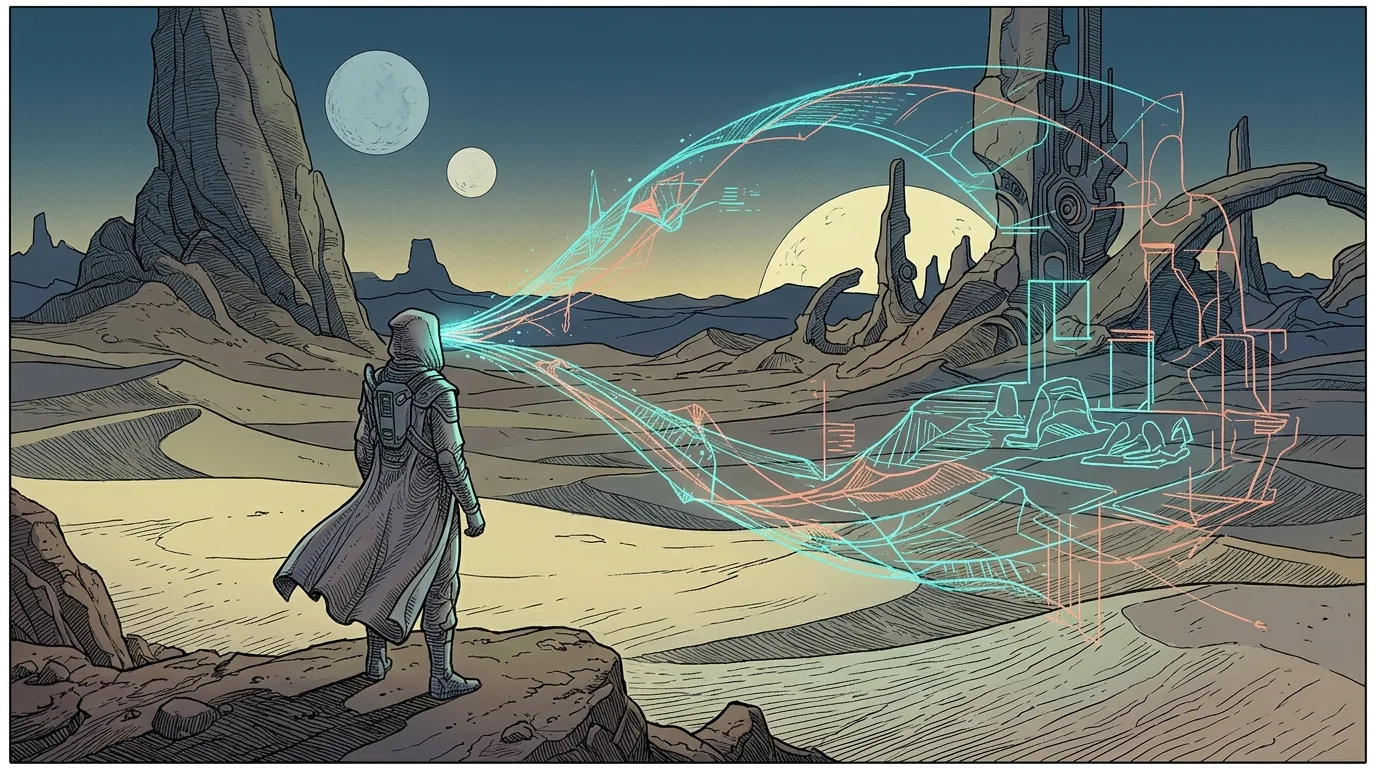
The final proven ai vision technique we’ll explore significantly impacts how we perceive and manipulate movement: motion prediction and synthesis. This area of AI allows computers to not only analyze existing motion but also to intelligently generate new frames or modify existing ones to enhance, slow down, or even create entirely new movements. For filmmakers, this capability offers unprecedented control over the temporal dimension of their visuals.
One of the most common applications is advanced frame interpolation. When you shoot high-speed footage for slow-motion, you typically need a very high frame rate (e.g., 120fps, 240fps). If you only shot at 60fps but need a super slow-motion effect, traditional methods would result in choppy playback. AI motion prediction can analyze the movement between existing frames and intelligently generate intermediate frames, creating buttery-smooth slow-motion even from lower frame rate footage. This isn’t simple blending; the AI understands the trajectory and deformation of objects to synthesize realistic new frames, effectively “creating” data that wasn’t originally captured. This can salvage shots, extend creative options, and even reduce the need for specialized high-speed cameras in certain scenarios.
Beyond interpolation, motion synthesis extends to character animation and performance enhancement. AI can learn realistic human movement patterns and apply them to digital characters, generating more natural and believable animations with less manual keyframing. It can also analyze an actor’s performance and subtly adjust movements or facial expressions to fine-tune an emotional beat, or even correct minor continuity errors in motion. While still an evolving field, the potential for AI to assist in creating highly realistic and nuanced character performances, or to seamlessly blend live-action with CG elements, is immense. It’s about bringing a level of fluidity and control to movement that was previously impossible. This technology is rapidly evolving and is even being discussed in the context of ethical AI use, as highlighted in 5 Proven AI Ethics Secrets for Filmmakers: Avoid Disaster!, reminding us of the responsibilities that come with such powerful tools.
Integrating AI Vision into Your Production Workflow
Understanding the five proven ai vision techniques is one thing; effectively integrating them into your existing production workflow is another. It requires a strategic approach, a willingness to experiment, and an understanding that AI tools are meant to augment, not replace, human expertise. From pre-production to post, there are practical steps you can take to harness these powerful capabilities.
Firstly, consider pre-production. While AI vision primarily shines in post-production, its influence can start early. Tools leveraging object detection and semantic segmentation can assist in creating more accurate storyboards or previs by quickly isolating characters and environments. For example, if you’re planning a complex VFX shot, an AI-powered previs tool could help visualize rotoscoping challenges or depth requirements before you even step on set, helping you make informed decisions about camera placement, lighting, and greenscreen usage. This proactive approach saves time and money down the line.
In post-production, the integration becomes more direct. Start with accessible tools. Many popular NLEs and compositing software packages (DaVinci Resolve, Adobe Premiere/After Effects, Nuke) are rapidly integrating AI features. Experiment with their built-in object tracking, magic mask tools (which use semantic segmentation), and AI-enhanced upscaling or slow-motion interpolation. Don’t try to implement everything at once. Pick one area where you face recurring challenges – perhaps rotoscoping, or achieving a specific stylistic look – and explore how an AI vision tool can address it. For instance, if you’re struggling with color consistency across different shots, understanding tools like Godox PaletteLab’s color engine, as discussed in Godox PaletteLab Color Engine Debuts With Five New Fixtures From 150W to 1200W, can be complemented by AI’s ability to analyze and suggest color grades based on semantic understanding of the scene.
Training your team is also crucial. While the algorithms are complex, using AI-powered software often requires a different kind of skill set – less manual labor, more intelligent prompting and oversight. Encourage your editors, VFX artists, and colorists to experiment and share their findings. As an example, the use of prompting in tools like AI Render Pro, the prompting tool for filmmakers and creatives demonstrates how a clear understanding of input commands can yield exceptional results. The goal is to create a symbiotic relationship where human creativity guides the AI, and the AI executes the labor-intensive tasks with speed and precision. For a broader perspective on how AI is being adopted in creative industries, TechCrunch offers insights into AI’s impact on creative sectors.
Navigating the Challenges and Ethics of AI Vision in Film
While the creative and efficiency benefits of ai vision in filmmaking are undeniable, it’s crucial to address the challenges and ethical considerations that accompany its rapid adoption. As filmmakers, we are not just technicians; we are storytellers and custodians of visual truth. The power of AI vision comes with significant responsibilities.
One immediate challenge is the learning curve. While AI tools aim to simplify complex tasks, effectively leveraging them still requires understanding their capabilities and limitations. Over-reliance on AI without human oversight can lead to generic or visually “uncanny” results. The human eye and artistic sensibility remain paramount for quality control and creative direction. Another practical hurdle is computational power; advanced AI vision tasks often demand powerful GPUs and significant processing time, which can be a barrier for independent filmmakers. However, cloud-based solutions and increasingly optimized local software are mitigating this.
Ethically, the conversation becomes more profound. The ability of AI to generate realistic imagery, including deepfakes, raises serious questions about authenticity, consent, and misinformation. For instance, using an actor’s likeness generated by AI without explicit consent is a clear ethical breach. Filmmakers must be transparent about their use of AI-generated content, especially when it involves human likenesses. The industry is grappling with new legal frameworks and best practices, as evidenced by ongoing discussions in Hollywood regarding actor protection and AI use, highlighted by organizations like the SAG-AFTRA AI Discussion. Beyond individual consent, there’s the broader issue of bias. AI models are trained on existing data, and if that data reflects societal biases, the AI can perpetuate or even amplify them in its output. Filmmakers must be vigilant in scrutinizing AI-generated content for unintended biases in representation or portrayal.
Finally, the impact on jobs is a valid concern. While AI vision automates repetitive tasks, it also creates new roles for “AI supervisors,” “prompt engineers,” and artists who can integrate AI seamlessly. The shift is not necessarily about fewer jobs, but different jobs. As filmmakers, our role is to embrace these tools responsibly, pushing creative boundaries while upholding ethical standards and fostering a collaborative environment where human ingenuity and AI efficiency work in tandem. This ethical framework is not just good practice; it’s essential for the long-term health and integrity of our craft. For more specific insights on ethical applications, refer to our article on 5 Proven AI Ethics Secrets for Filmmakers: Avoid Disaster!.
The Future Landscape: What’s Next for AI Vision in Cinema
The current state of ai vision in filmmaking is impressive, but it’s merely the beginning. The pace of innovation in this field is staggering, and what seems cutting-edge today will be commonplace tomorrow. For filmmakers, understanding these emerging trends is crucial for future-proofing our skills and continuing to push the boundaries of visual storytelling.
One significant trend is the increasing integration of AI vision directly into camera systems and on-set workflows. Imagine cameras that can perform real-time semantic segmentation, generating clean greenscreen keys or depth maps on the fly, directly informing the DP or director about compositing possibilities. Companies like Canon are already exploring AI-powered lens technologies, as seen with developments like the 1st Ever: Canon Lens Power Zoom is Here!, which hints at deeper AI integration into hardware. This real-time feedback loop will streamline productions, reduce post-production bottlenecks, and enable more informed creative decisions on set.
Another area of rapid development is generative AI, particularly in video synthesis. While current GANs can generate short, stylized clips, future iterations will likely produce longer, coherent sequences with greater control over narrative and character. This could lead to hyper-realistic digital doubles, entirely synthetic environments that are indistinguishable from real ones, or even AI-assisted script-to-screen pipelines where initial visual concepts are generated with minimal human input. This doesn’t mean AI will write and direct your film, but it will become an incredibly powerful tool for rapid prototyping, iteration, and visualizing complex ideas. The ability to quickly generate multiple visual options based on a prompt, for instance, could revolutionize pre-visualization and concept art workflows, allowing filmmakers to experiment with a vast array of aesthetics and compositions before committing to a single direction.
Finally, expect AI vision to become more deeply embedded in personalized and interactive viewing experiences. From dynamic aspect ratios that adapt to different screens to AI-driven recommendation engines that understand subtle visual preferences, the way audiences consume content will also be influenced. For filmmakers, this means an expanded toolkit for creating adaptable content. The future of AI vision in cinema is not about replacing the human element, but about creating an intelligent, responsive ecosystem that empowers filmmakers to tell stories with unprecedented visual fidelity, efficiency, and creative freedom. It’s about being prepared to learn, adapt, and lead the charge into this exciting new era of cinematic possibility. The DesignHero Shop, filmmaker merch and creative tools is continuously exploring new ways to support creators navigating this evolving landscape.
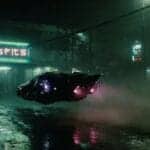
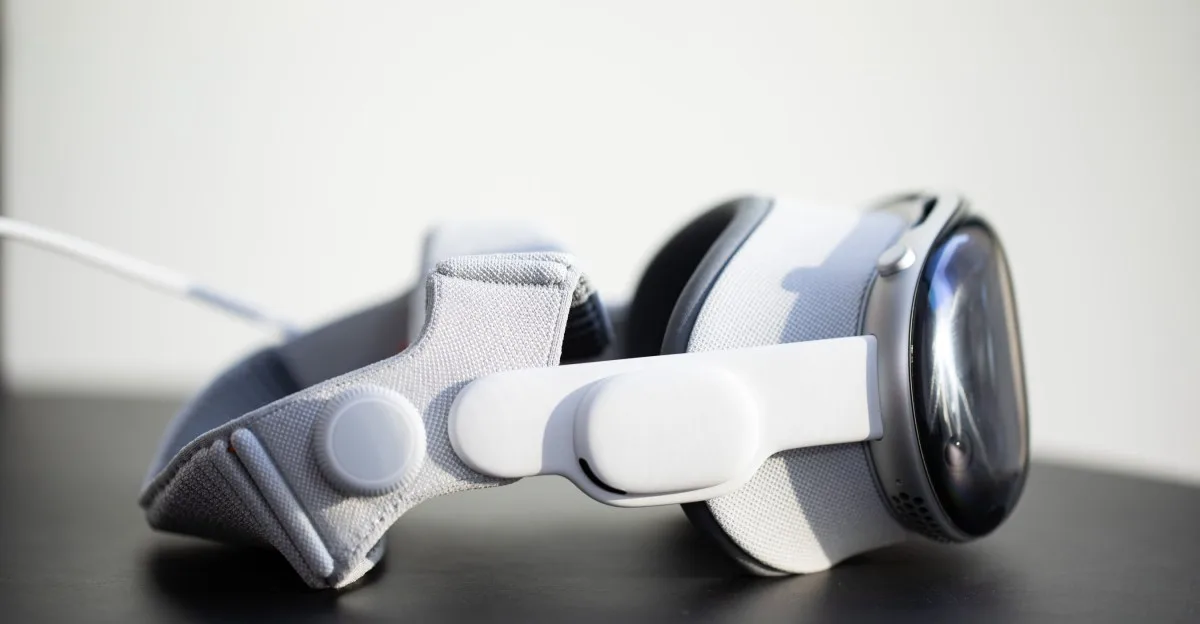
Every AI illustration in this article was crafted using AI Render Pro, the same prompting engine used across this blog. Read the full breakdown here.
Frequently Asked Questions
What is AI Vision in filmmaking?
AI Vision, or computer vision, in filmmaking refers to artificial intelligence techniques that enable computers to “see,” understand, and process visual information (images and videos) to automate tasks, enhance visuals, and unlock new creative possibilities in production and post-production.
How can AI Vision help with rotoscoping?
AI Vision significantly streamlines rotoscoping by using object detection and semantic segmentation algorithms to automatically identify and create precise masks around objects, people, or specific regions in footage, dramatically reducing the manual, frame-by-frame labor traditionally required.
Is AI Vision only for large studios with big budgets?
No, while large studios leverage advanced AI Vision, many accessible AI-powered tools are now integrated into popular editing and compositing software (e.g., DaVinci Resolve, Adobe After Effects), making these techniques available and affordable for independent filmmakers and smaller productions.
What are the ethical concerns with using AI Vision in film?
Key ethical concerns include issues of consent (especially with deepfakes and AI-generated likenesses), potential job displacement, algorithmic bias in visual output, and the need for transparency when AI-generated content is used. Filmmakers must use these tools responsibly and with human oversight.
Will AI Vision replace human filmmakers?
AI Vision is not designed to replace human creativity or the role of filmmakers. Instead, it serves as a powerful tool to automate tedious tasks, enhance visual quality, and expand creative options, allowing filmmakers to focus more on storytelling, artistic direction, and complex problem-solving.
Discover more from Olivier Hero Dressen Blog: Filmmaking & Creative Tech
Subscribe to get the latest posts sent to your email.
Work with Olivier
Director | CD | DP & Photographer
Specializing in commercials, music videos, AI-driven filmmaking, and cinematic storytelling for brands and production companies.
🌍 Shanghai · Paris · Los Angeles · Dubai
🎬 View Portfolio & Get in Touch