
Key Takeaways
- First insight, Master the art of character design for AI generation by leveraging precise, detailed character prompts that specify visual elements, composition, and style.
- Craft highlight, Utilize the AI Render Pro tool to generate comprehensive character reference sheets, ensuring consistent artistic direction across diverse archetypes like heroes, villains, and creatures.
- Industry context, High-quality character prompts are essential for artists and filmmakers to streamline pre-production, visualize concepts, and maintain creative control in an AI-driven landscape.
- Bottom line, By adhering to structured prompt formats, artists can efficiently produce detailed character designs, drastically improving workflow and artistic output for any creative project.
For artists aiming to elevate their digital creations, mastering character prompts is paramount. These meticulously crafted textual instructions are the bedrock for generating compelling and consistent character designs using AI tools, providing a direct pathway from concept to visual reality.
Need a Director for Your Next Project?
From commercials to branded campaigns—Olivier brings creative vision and technical expertise.
→ View ProjectsThis guide offers five essential character design prompts, tailored for artists seeking to produce detailed, high-quality reference sheets for various archetypes, ensuring precision and artistic integrity in every output through platforms like AI Render Pro, the prompting tool for filmmakers and creatives.
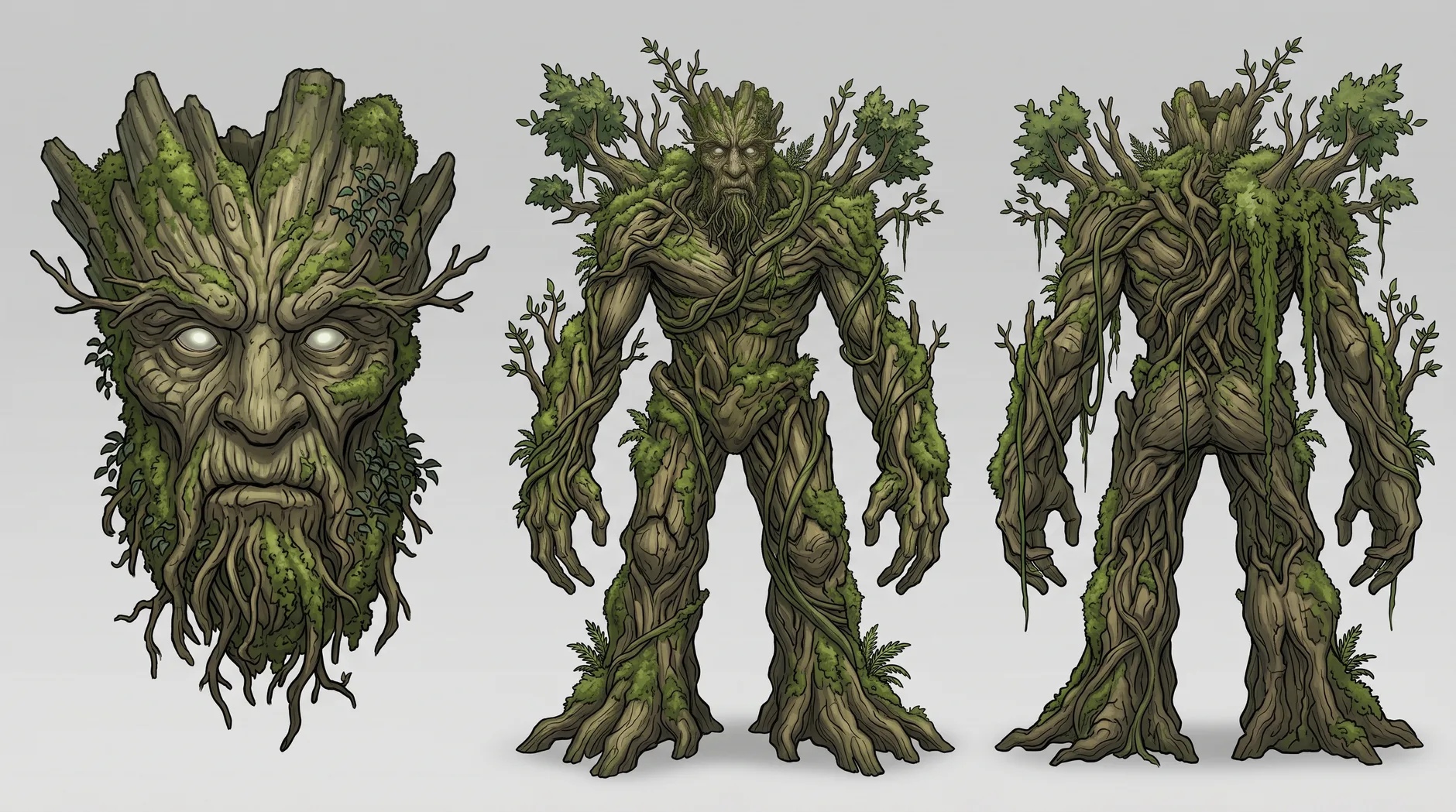
The Power of Precision in Character Prompts
In the evolving landscape of digital art and filmmaking, the ability to rapidly prototype and visualize characters is invaluable. As an award-winning filmmaker and creative director with two decades in the industry, I’ve seen firsthand how crucial detailed pre-visualization is. This is where well-constructed character prompts truly shine.
They act as a bridge between your creative vision and the AI’s generative capabilities, ensuring that the output aligns perfectly with your artistic intent. Without precision, the results can be generic, inconsistent, or simply miss the mark. Understanding the nuances of crafting effective prompts, especially for character reference sheets, is no longer a luxury but a necessity for any serious artist or production house.
The goal is not just to generate an image, but to generate a consistent, usable asset that contributes directly to your project’s visual language. This directly impacts efficiency, reducing the iterative cycles typically associated with concept art and character development.
The strategic use of descriptive language within your character prompts allows you to dictate everything from costume details to anatomical proportions and emotional expressions. This level of control is transformative. Imagine needing a character for a scene in a short film; instead of commissioning multiple concept artists or spending hours sketching, you can articulate your vision through a prompt and receive multiple variations in minutes.
This agility is a game-changer, particularly for independent creators or those working under tight deadlines. Furthermore, by standardizing the output format, like the character design grid with front, back, and close-up views, you create a consistent library of assets that can be easily integrated into larger projects. This systematic approach to character generation is a hallmark of efficient creative workflows, something I constantly emphasize in my own productions.
For more insights on leveraging AI in creative fields, explore 5 Proven AI Vision Techniques: Filmmakers REVEALS All!.
Crafting effective character prompts also involves understanding the capabilities and limitations of the AI models you’re working with. While tools like AI Render Pro are incredibly sophisticated, they still require clear, unambiguous instructions. Vague terms lead to vague results. Therefore, breaking down a character into its fundamental visual components and articulating each element precisely is key.
Think about the silhouette, the material textures, the lighting mood, and even the camera angle as distinct parameters you can control. This detailed approach ensures that your AI-generated character is not just aesthetically pleasing but also functionally ready for integration into animation, game development, or visual effects pipelines.
The consistency achieved through these methods saves significant time and resources, making the initial investment in learning prompt engineering highly rewarding. The future of character design is increasingly intertwined with these AI-driven methodologies, pushing artists to adapt and refine their descriptive powers. For those interested in advanced prompt techniques, exploring 8 Ultimate Cyberpunk Prompts for AI Art: Bold New Worlds can offer valuable perspectives.
This systematic approach to creating detailed character prompts ensures that every aspect of your artistic vision is translated effectively.
Prompt 1: The Stoic Hero Character Reference
Designing a compelling hero requires more than just good looks; it demands a visual narrative that speaks to their inner strength, resilience, and perhaps a touch of weary wisdom. For our first set of character prompts, we focus on a classic archetype: the stoic hero. This character often carries the weight of their world, reflected in their posture, facial expression, and even the subtle wear on their attire.
When generating a character reference sheet for such a figure, it’s crucial to capture these nuances across different views. A front-facing close-up should convey their resolve, while the full body views, front and back, articulate their physical presence and the practical details of their gear.
This comprehensive approach ensures that artists have all the necessary visual information to develop the character further, whether for a graphic novel, a video game, or a cinematic production.
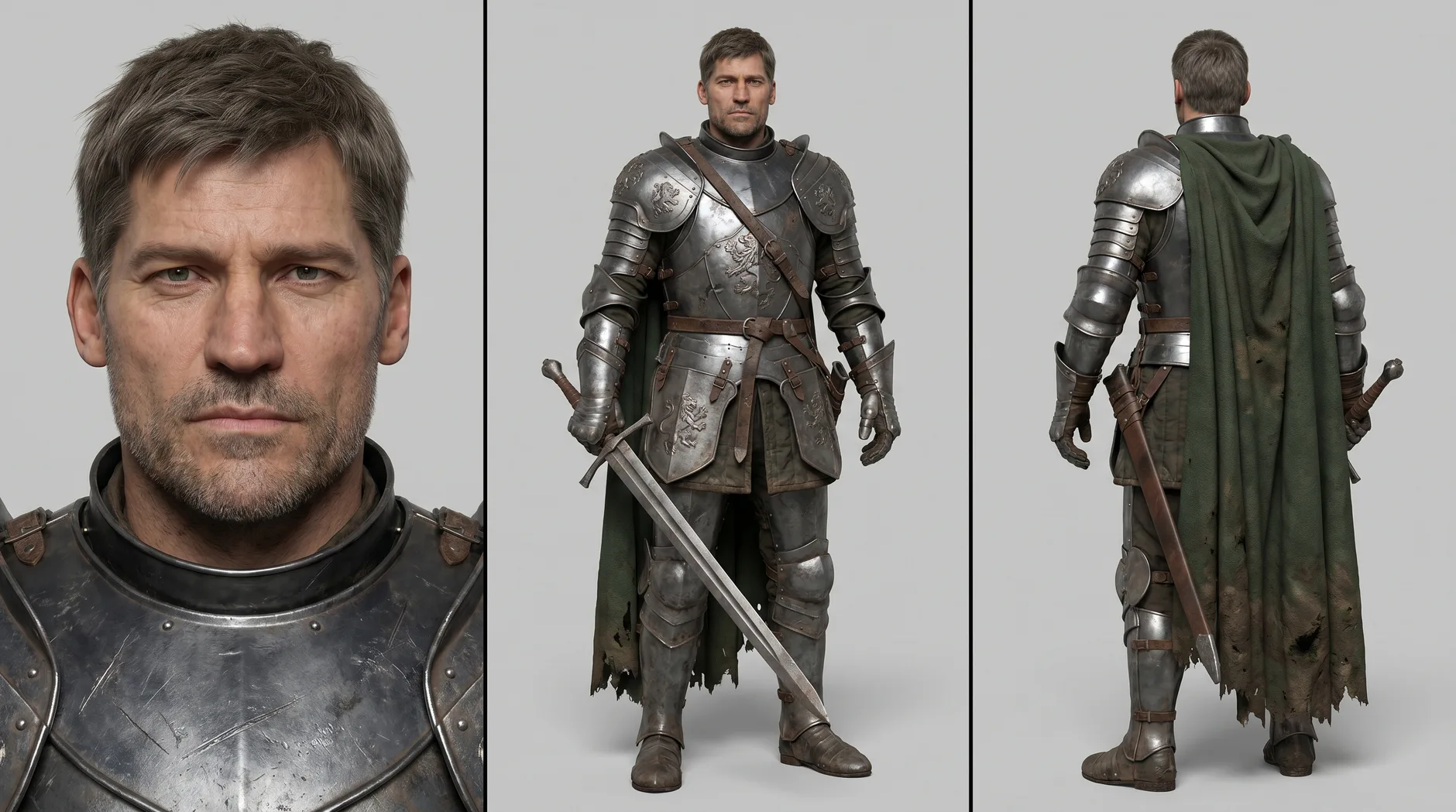
A stoic, rugged male hero, mid-30s, with a weathered face, determined expression, short dark hair, and a neatly trimmed beard. He wears practical, worn leather armor with subtle metal plating, a flowing cloak, and sturdy boots. His design emphasizes functionality and resilience. Plain neutral light grey seamless studio background. Character reference sheet: front-facing face close-up, full front body view, and full back body view arranged together in one frame as a single clean character design grid, like a model reference sheet. Flat even studio lighting. 16:9 aspect ratio. No text, logos, or watermarks. Cinematic realism, professional concept art.This prompt aims for a mature, battle-hardened hero. The key is the “weathered face” and “worn leather armor” to convey experience. Focus on subtle details in the armor and cloak to suggest a life of adventure, ensuring the AI captures the essence of a stoic leader.
This hero character prompt is designed to produce a character that immediately communicates a history and a depth of experience. The specified “cinematic realism” and “professional concept art” styles are intended to elevate the output beyond a simple sketch, making it production-ready.
The inclusion of a “plain neutral light grey seamless studio background” is vital for isolating the character and making the reference sheet clean and easy to use for other artists or animators. Such structured character prompts are essential for maintaining consistency across a large creative team, ensuring everyone is working from the same visual blueprint. For more on creating stunning visuals, check out 7Artisans: Affordable 135mm Lens with Stunning Image Quality.
The detailed descriptions for this hero are critical for generating a character that feels authentic and lived-in, rather than generic. This level of specificity in character prompts is what allows AI tools to produce truly remarkable results, moving beyond simple interpretations to nuanced characterizations. For artists looking to deepen their understanding of character development, resources like character design on Wikipedia provide a solid theoretical foundation.
Prompt 2: The Shadowy Villain Character Sheet
Every hero needs a formidable adversary, and a truly memorable villain is often defined by their visual presence. For our second character prompt, we delve into the realm of the shadowy villain, a character whose design should evoke menace, power, and perhaps a hint of tragic backstory. When constructing character prompts for villains, it’s effective to incorporate elements that suggest their dark nature without being overtly cliché.
This might include sharp lines, heavy shadows, or unsettling material textures. The goal for the reference sheet remains the same: provide a comprehensive visual guide that captures their essence from all angles, ensuring that every detail contributes to their intimidating aura. The facial close-up should hint at their malevolence or cunning, while the full body views reveal the scale of their power and the intricacies of their attire or form.
2. The Sinister Necromancer Villain
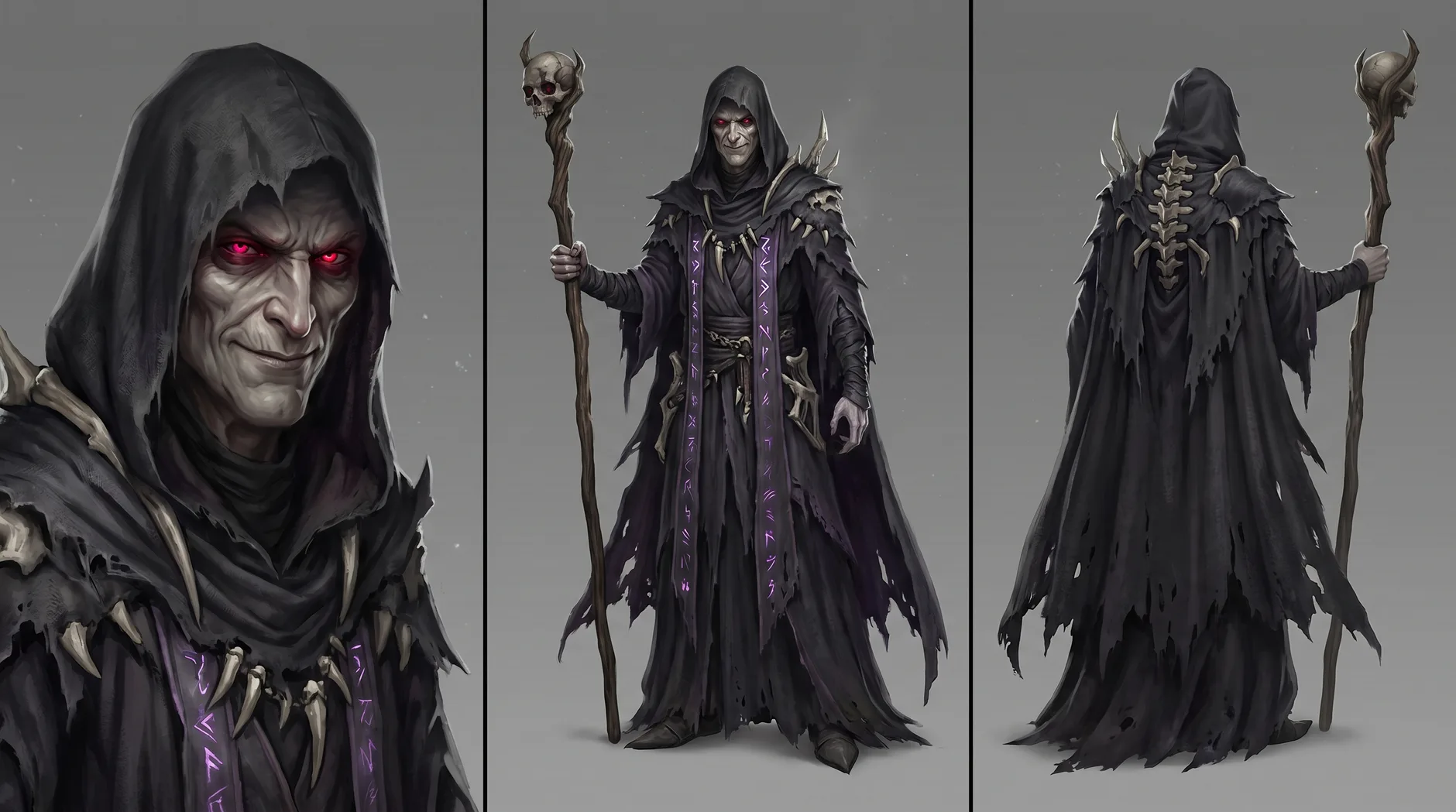
A gaunt, sinister male necromancer villain, ancient and powerful, with glowing red eyes, sharp facial features, and a cruel smirk. He wears flowing, tattered dark robes adorned with cryptic symbols and bone fragments, wielding a gnarled staff. His silhouette is imposing and angular. Plain neutral light grey seamless studio background. Character reference sheet: front-facing face close-up, full front body view, and full back body view arranged together in one frame as a single clean character design grid, like a model reference sheet. Flat even studio lighting. 16:9 aspect ratio. No text, logos, or watermarks. Dark fantasy art style, high detail, volumetric lighting.This prompt focuses on a villain defined by dark magic and ancient power. Emphasize “glowing red eyes” and “cryptic symbols” to highlight his magical nature. Ensure the “tattered dark robes” have texture and depth, suggesting age and malevolence, perfect for a dark fantasy setting.
The “sinister necromancer” concept for this character prompt leans into classic dark fantasy tropes while demanding a high level of detail. The mention of “volumetric lighting” is a subtle but powerful modifier, suggesting a dramatic and atmospheric rendering that enhances the villain’s presence even on a neutral background.
This careful selection of stylistic elements within character prompts helps to guide the AI towards a specific artistic outcome, preventing generic interpretations. The consistent demand for a “plain neutral light grey seamless studio background” across all prompts ensures that the focus remains solely on the character’s design, making the resulting images ideal for professional concept development.
For artists looking to equip themselves with essential tools, a visit to DesignHero Shop, filmmaker merch and creative tools might be beneficial. The effectiveness of these character prompts lies in their ability to translate abstract concepts like ‘sinister’ into tangible visual cues, which is a critical skill for any creative professional working with AI.
For more on the narrative power of villains, explore analyses of iconic antagonists in films like those discussed in 7 Essential World War Films: A Definitive Ranking.
Prompt 3: The Mythic Creature Design
🎬 AI Render Pro Studio, the AI film production suite I built and use on my own productions. Script breakdown, storyboards, 30+ video models including Seedance 2.5 and Kling O3, image generation, retouch, 7K upscaling and audio, all in one browser workspace. $19/month flat, bring your own API keys and pay providers at cost, no credit packs, no markup. Try AI Render Pro Studio →
Beyond humanoid characters, AI excels at generating fantastical creatures, pushing the boundaries of imagination. For our third character prompt, we venture into the realm of mythic beasts, creatures that embody ancient power, primal fear, or ethereal beauty. Designing these characters requires a different approach to character prompts, focusing more on anatomy, texture, and unique biological features. Whether it’s a dragon, a griffin, or a wholly original cryptid, the reference sheet must clearly articulate its form from all angles, capturing its defining characteristics. The facial close-up, if applicable, should convey its intelligence or ferocity, while the full body shots are crucial for understanding its posture, movement capabilities, and overall scale. This ensures that the creature is not only visually striking but also believable within its fictional world.
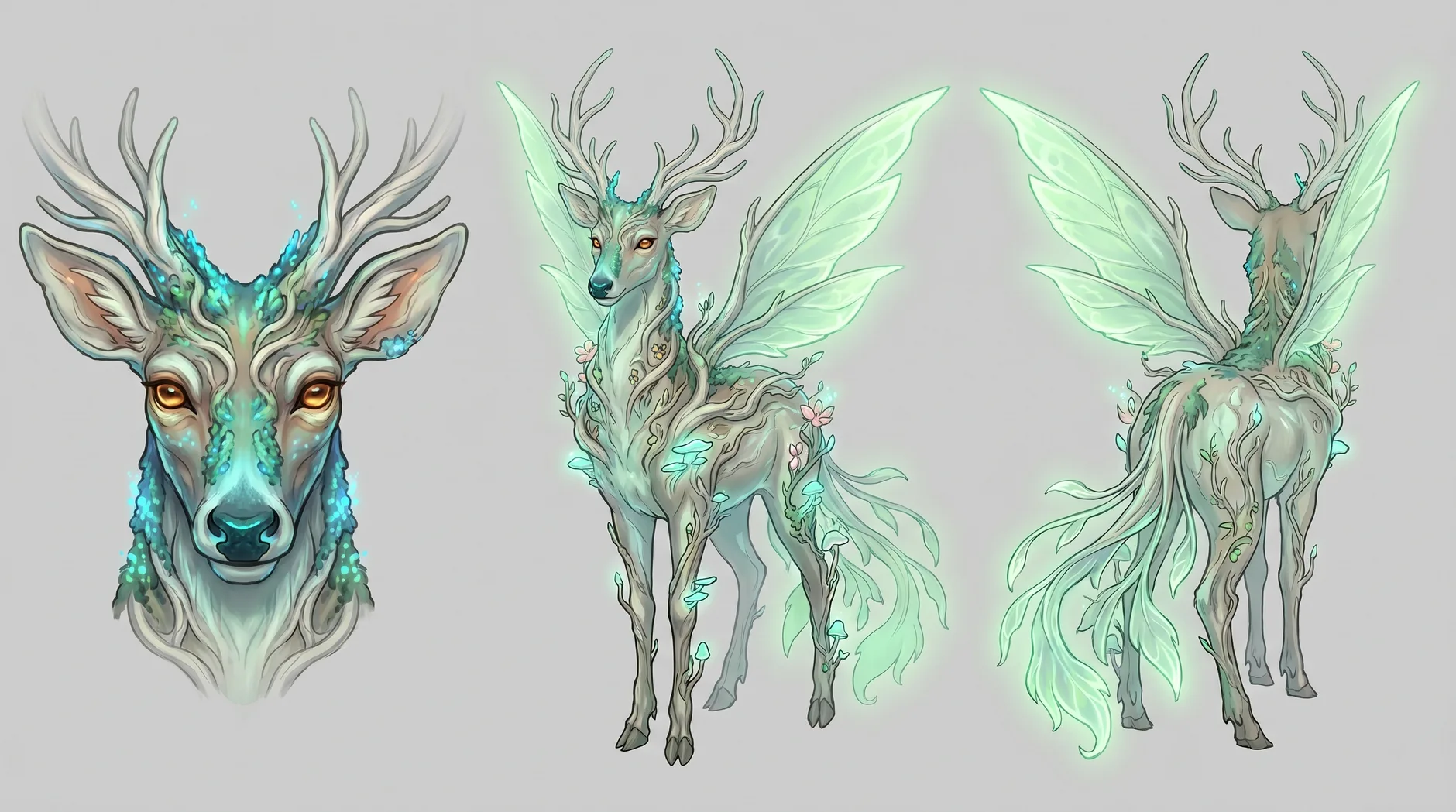
A majestic, ethereal spectral forest guardian creature, resembling a deer-like entity with glowing moss and translucent, leaf-like wings. Its body is composed of intertwining branches and luminescent flora, with ancient, wise eyes. Its form is graceful and slightly transparent. Plain neutral light grey seamless studio background. Character reference sheet: front-facing face close-up, full front body view, and full back body view arranged together in one frame as a single clean character design grid, like a model reference sheet. Flat even studio lighting. 16:9 aspect ratio. No text, logos, or watermarks. Fantasy illustration style, intricate details, glowing effects.This prompt aims for a creature that is both beautiful and mysterious. Focus on “glowing moss” and “translucent, leaf-like wings” to emphasize its ethereal nature. The “intertwining branches” should suggest a natural, organic form, making it a truly unique forest spirit.
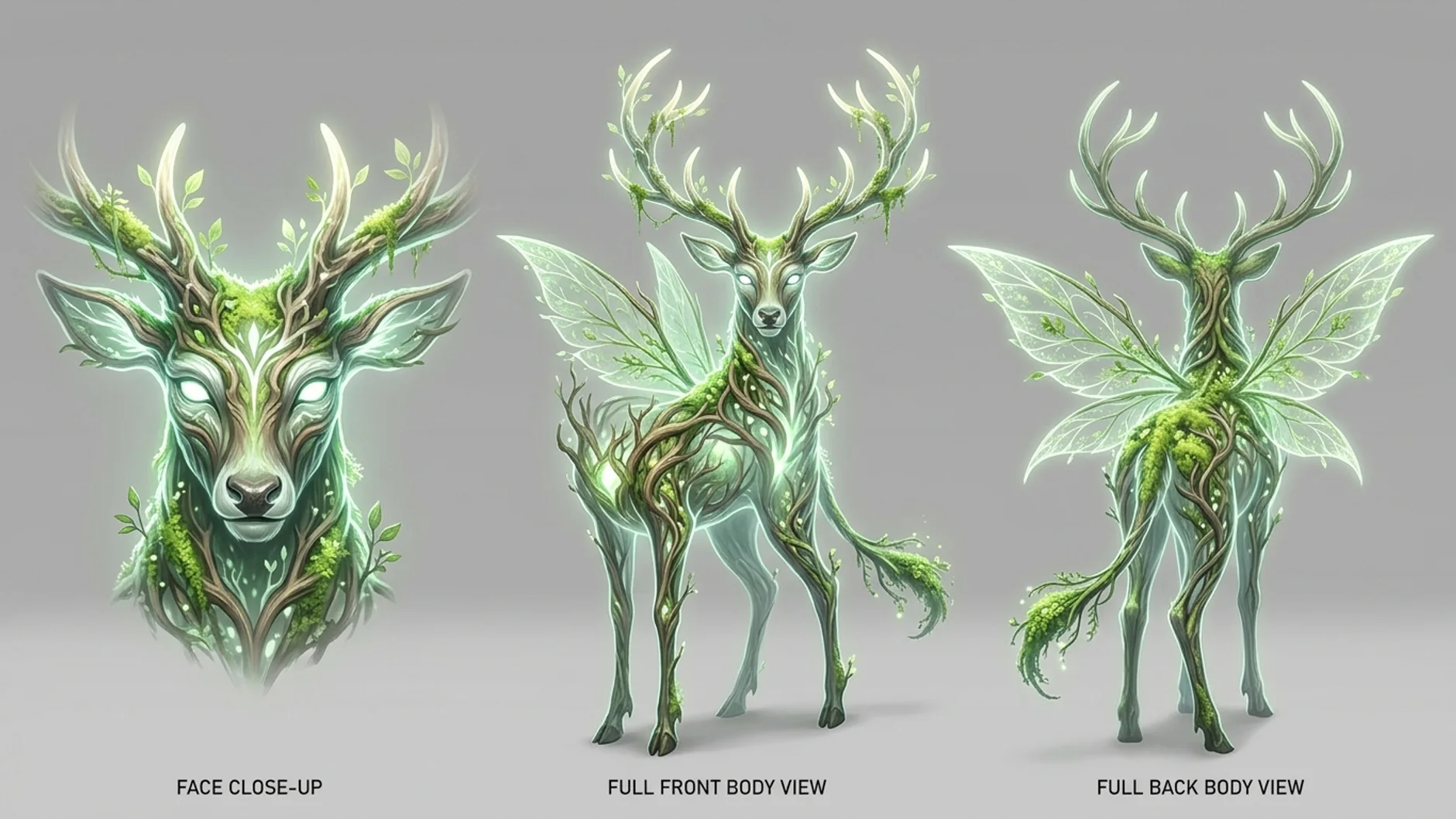
This creature character prompt pushes the AI to visualize complex organic forms and special effects, like luminescence and transparency. The “fantasy illustration style” is chosen to allow for a more artistic and less strictly realistic interpretation, which is often suitable for mythic creatures. The precision in describing the creature’s composition, “intertwining branches and luminescent flora”, is what allows the AI to generate a truly unique and detailed design.
These kinds of detailed character prompts are instrumental in bringing fantastical elements to life with a high degree of artistic control. The “plain neutral light grey seamless studio background” again serves to highlight the intricate details of the creature without any distractions. For artists seeking inspiration for their own mythic creations, exploring historical and mythological sources can be incredibly beneficial.
For instance, the Metropolitan Museum of Art’s collection on mythical creatures offers a rich visual history. Such resources, combined with powerful AI tools, can unlock new dimensions of creative expression.
Prompt 4: The Cybernetic Soldier Blueprint
In the realm of science fiction, characters often blend human and technological elements, creating compelling visual narratives. Our fourth character prompt focuses on the cybernetic soldier, a fusion of advanced engineering and human resilience. Designing such a character requires careful attention to mechanical details, material textures (like brushed metal, composite plating, and synthetic fabrics), and the integration of visible tech.
The reference sheet for a cybernetic soldier needs to meticulously display these components, ensuring clarity on how the human and machine parts interact. The facial close-up might reveal cybernetic implants or a stern, augmented expression, while the full body views showcase the intricate armor, weaponry, and bionic enhancements. This blueprint approach is crucial for consistency in game assets or film props, where every detail matters.
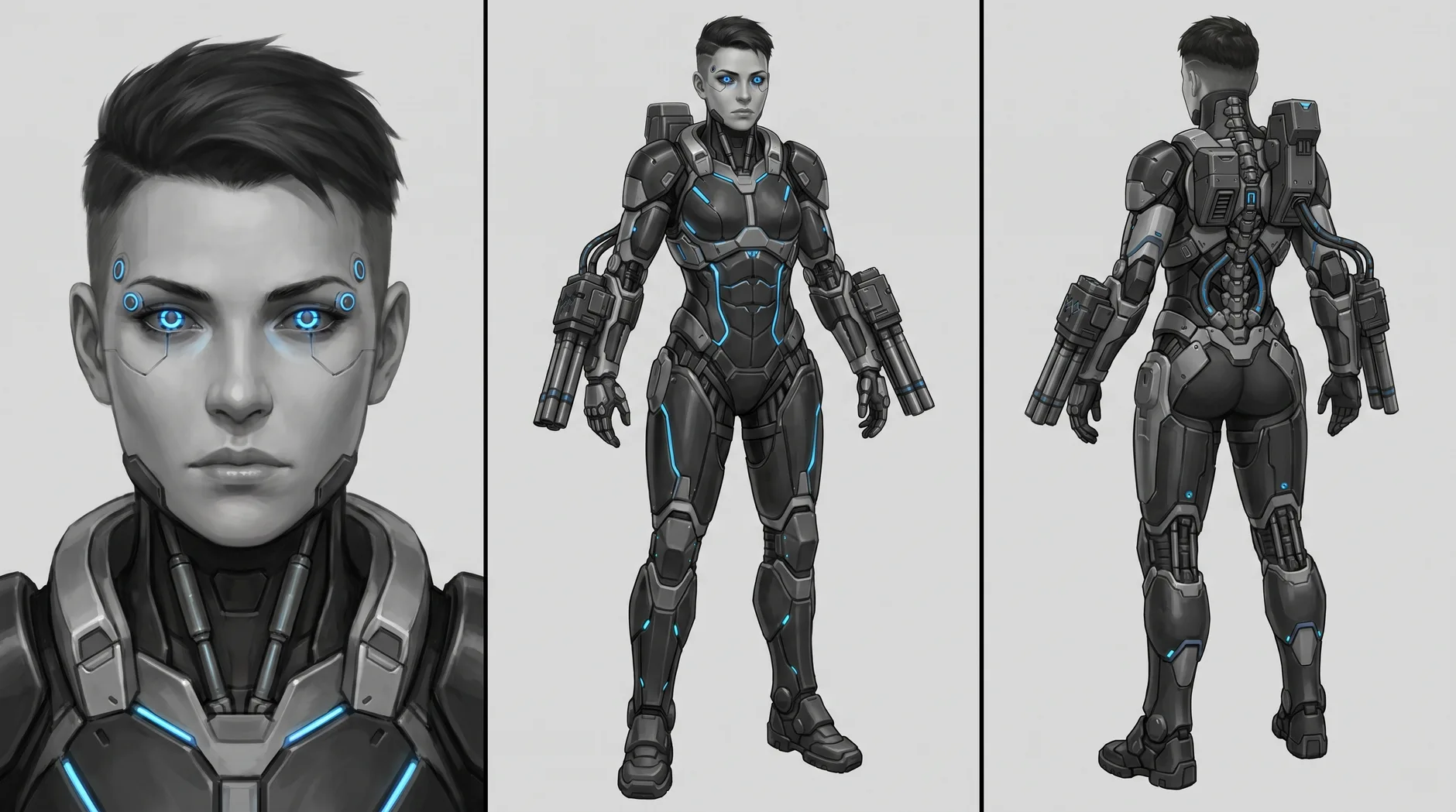
A formidable, heavily augmented female cybernetic soldier, mid-20s, with a stoic expression, short undercut hairstyle, and glowing blue optical implants. She wears sleek, modular black and grey armor with visible hydraulic pistons, energy conduits, and integrated projectile weapons. Her design is highly functional and futuristic. Plain neutral light grey seamless studio background. Character reference sheet: front-facing face close-up, full front body view, and full back body view arranged together in one frame as a single clean character design grid, like a model reference sheet. Flat even studio lighting. 16:9 aspect ratio. No text, logos, or watermarks. Sci-fi concept art, hard surface modeling aesthetic, sharp focus.This prompt emphasizes a powerful, technologically advanced soldier. Focus on “glowing blue optical implants” and “visible hydraulic pistons” to highlight her cybernetic nature. Ensure the “sleek, modular black and grey armor” has a distinct, hard-surface aesthetic, conveying durability and advanced engineering.
This cybernetic character prompt specifically calls for a “hard surface modeling aesthetic,” which is key for achieving the sharp, industrial look characteristic of sci-fi technology. The detailed description of the armor, “modular black and grey armor with visible hydraulic pistons, energy conduits, and integrated projectile weapons”, provides the AI with ample information to create a complex and believable design.
The consistency of the “plain neutral light grey seamless studio background” is particularly important here, as it allows the intricate details of the cybernetics to stand out without visual clutter. For filmmakers and designers working in sci-fi, precise character prompts like these are indispensable for maintaining a cohesive visual style across an entire project.
For more on the integration of technology and art, exploring 7 Eye-Opening Ways AI Education Impacts Filmmakers can provide valuable context. The specificity in defining the technological elements in these character prompts is what makes the output truly useful for production.
TechCrunch often covers advancements in AI and robotics that inspire such designs; for example, articles on robotics and AI ethics can offer a glimpse into real-world innovations that inform fictional creations.
Prompt 5: The Arcane Mage Visual Guide
Magic users are a staple of fantasy, and their visual design often communicates their power, wisdom, or even their eccentricity. Our final character prompt focuses on the arcane mage, a master of mystical energies. When crafting character prompts for mages, the emphasis shifts to flowing fabrics, intricate magical symbols, and elements that suggest their connection to otherworldly forces.
The challenge is to make the magic visible through their attire and demeanor without resorting to overly flashy effects on a reference sheet. The facial close-up should convey their intelligence or the burden of their knowledge, while the full body views reveal the layers of their robes, the details of their staff or grimoire, and any magical artifacts they might possess. This visual guide is essential for capturing the mystique and power of a true arcane practitioner.
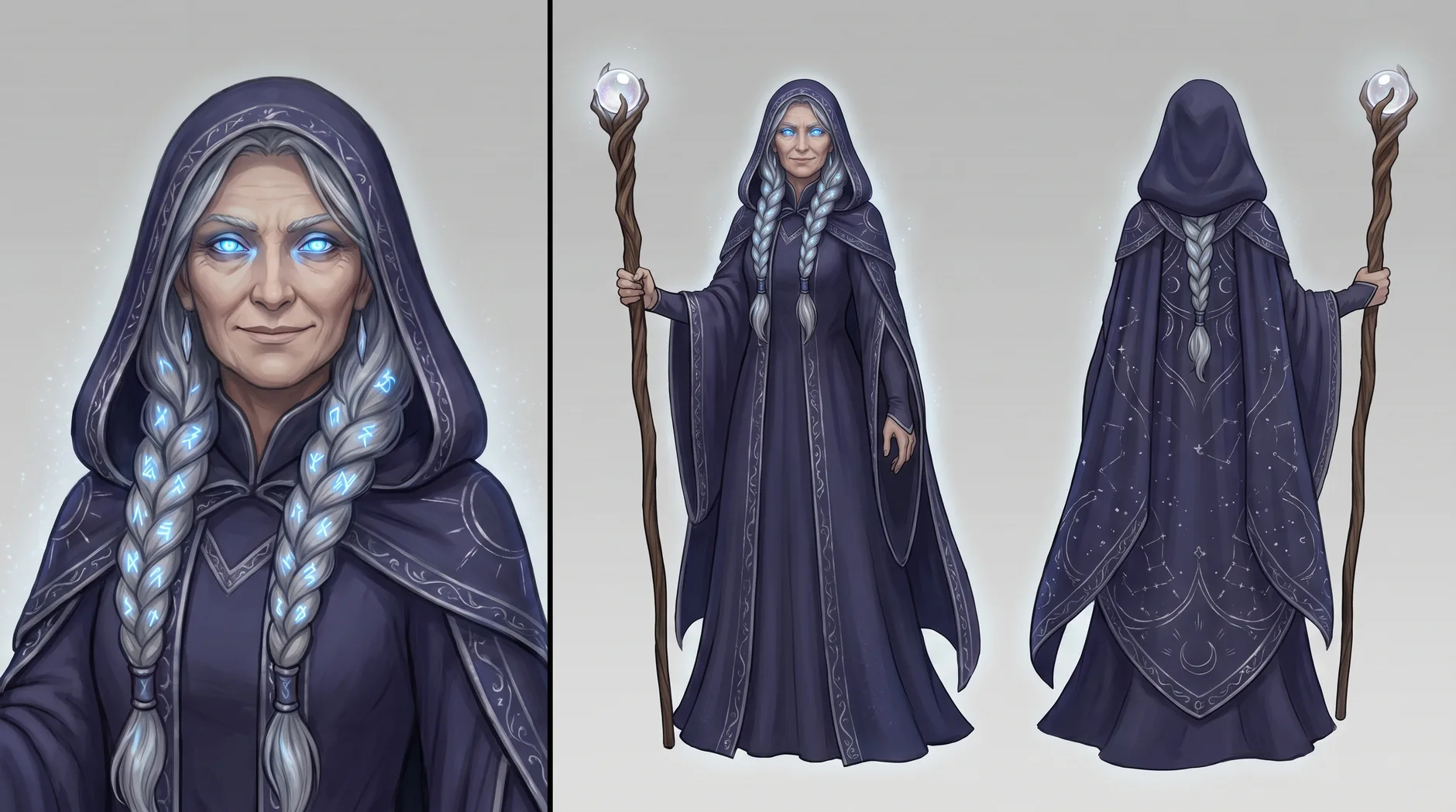
An ancient, wise female archmage, appearing ageless, with piercing blue eyes, long silver hair braided with glowing runes, and a serene, knowing expression. She wears layered, dark indigo robes embroidered with subtle celestial patterns and holds a crystal-topped staff. Her presence is ethereal and powerful. Plain neutral light grey seamless studio background. Character reference sheet: front-facing face close-up, full front body view, and full back body view arranged together in one frame as a single clean character design grid, like a model reference sheet. Flat even studio lighting. 16:9 aspect ratio. No text, logos, or watermarks. Epic fantasy concept art, intricate fabric textures, mystical glow.This prompt focuses on an ancient, powerful mage. Emphasize “long silver hair braided with glowing runes” and “subtle celestial patterns” on her robes to convey her connection to magic. Ensure the “crystal-topped staff” feels like an integral part of her power, not just an accessory.
This arcane mage character prompt utilizes descriptive terms like “ageless,” “ethereal,” and “mystical glow” to guide the AI towards a character that exudes ancient power and wisdom. The “intricate fabric textures” are crucial for making the layered robes feel rich and authentic, rather than flat. By specifying “subtle celestial patterns,” we avoid overly aggressive magical effects, keeping the reference sheet clean and focused on the character’s design.
The consistent “plain neutral light grey seamless studio background” ensures that the focus remains on the mage’s intricate attire and features. These precise character prompts are invaluable for creating compelling fantasy characters that resonate with audiences. For artists looking to explore the deeper lore of fantasy, resources like Britannica’s entry on fantasy art can provide a rich historical and thematic context.
The blend of descriptive language and technical specifications in these character prompts allows for a nuanced artistic output, bridging the gap between imagination and tangible design.
Optimizing Your Workflow with AI Character Prompts
Integrating AI-generated character prompts into your creative workflow is not just about producing images; it’s about optimizing your entire pre-production process. For filmmakers, game developers, and illustrators, the ability to quickly generate multiple design iterations for character prompts can dramatically accelerate concept development.
Instead of waiting days or weeks for a concept artist to deliver initial sketches, AI can provide a range of detailed options within minutes. This rapid prototyping allows for quicker feedback loops, enabling directors and clients to visualize and approve designs much faster. This efficiency is critical in today’s fast-paced production environments, where time is often the most valuable commodity.
My own experience in film production has taught me the importance of agility and the ability to adapt quickly, and AI tools offer an unprecedented level of this flexibility.
Beyond speed, the consistency offered by well-structured character prompts is a huge advantage. When you define specific parameters for your character reference sheets, like the grey background, multiple views, and flat lighting, you establish a visual standard that can be replicated across all your AI-generated assets. This consistency is invaluable for maintaining a cohesive aesthetic throughout a project, especially when working with a large team.
Imagine a scenario where you need dozens of unique background characters; with precise character prompts, you can generate a diverse cast that still adheres to a unified style guide. This level of control, combined with the sheer volume of output, makes AI an indispensable tool for modern creative professionals. To further enhance your creative toolkit, consider exploring Hero’s Essentials: filmmaker gear and tools, which complements the power of AI with practical equipment.
Furthermore, the iterative nature of AI generation, driven by refined character prompts, allows artists to explore creative avenues that might otherwise be too time-consuming or costly. You can experiment with different costume details, racial features, body types, or even subtle stylistic shifts by simply tweaking your prompt text.
This freedom to experiment empowers artists to push their creative boundaries, discovering new design possibilities that might not have emerged through traditional methods. The continuous refinement of character prompts becomes an art form in itself, a dialogue between the artist’s intent and the AI’s interpretive capacity. This dynamic interaction fosters innovation and allows for a deeper exploration of character identity and visual storytelling.
The goal is not to replace human creativity but to augment it, providing a powerful co-pilot in the design process. For more on leveraging AI in creative endeavors, articles like 7 Surprising Ways AI Art Isn’t Like Photography offer insightful perspectives on its unique capabilities.
The Future of Character Design with AI
The integration of artificial intelligence into character design is not a passing trend; it represents a fundamental shift in how creative work is conceived and executed. For artists, understanding and mastering character prompts is becoming as essential as proficiency in traditional drawing or sculpting. The future of character design will undoubtedly see AI tools becoming even more sophisticated, offering greater control, nuance, and realism.
This means that artists who are adept at communicating their vision through precise textual descriptions will have a significant advantage in the industry. The ability to articulate complex visual ideas in language is a skill that translates directly into effective prompt engineering, making every character prompt a blueprint for innovation. This evolution demands a new kind of literacy, a prompt literacy, that bridges the gap between human imagination and machine execution.
As AI models continue to learn and evolve, the potential for hyper-realistic and stylistically diverse character generation will only grow. Imagine generating an entire cast of characters for a feature film, complete with consistent facial expressions, body language, and costume details, all from a series of well-crafted character prompts.
This level of automation and precision will free up artists to focus on higher-level creative tasks, such as storytelling, world-building, and emotional depth, rather than getting bogged down in repetitive design work. The creative industry is already seeing the early impacts of this transformation, with AI tools being adopted in various stages of production.
Wired magazine often covers these advancements, such as this article on the future of creativity with AI, which highlights the ongoing evolution.
However, this future also necessitates a critical understanding of the ethical implications and creative responsibilities that come with such powerful tools. Artists must remain at the helm, guiding the AI with their unique vision and ensuring that the generated content aligns with their artistic values and project goals. The human element, the spark of original thought, the emotional intelligence, and the nuanced understanding of narrative, will always be irreplaceable.
AI serves as an incredibly powerful assistant, a force multiplier for creativity, but it is the artist’s mastery of tools like detailed character prompts that ultimately shapes the final output. The synergy between human creativity and AI efficiency is where the true power lies, pushing the boundaries of what’s possible in character design.
For those interested in cutting-edge AI developments, articles such as 7 Game-Changing Google Gemini Omni Video Editing Features demonstrate the rapid pace of innovation.
Refining Your Artistic Vision Through AI
The process of creating effective character prompts is, in itself, an exercise in refining your artistic vision. It forces you to deconstruct your ideas into their most fundamental visual components, articulating every detail with clarity and precision. This analytical approach strengthens your understanding of character design principles, from anatomy and costume to lighting and mood.
When you write a prompt, you’re not just instructing an AI; you’re also solidifying your own creative intent. This feedback loop, where the AI’s output helps you to further clarify and enhance your initial vision, is one of the most powerful aspects of using these tools. It transforms the often-abstract process of ideation into a concrete, iterative dialogue.
For instance, if your initial character prompt for a hero yields a result that feels too generic, you’re prompted to think about what specific elements are missing. Is it a unique scar, a particular fabric texture, or a more dynamic posture? By adding these details to your subsequent character prompts, you not only improve the AI’s output but also deepen your own understanding of what makes that character truly distinctive.
This continuous process of refinement through prompt engineering becomes a masterclass in visual communication. It hones your ability to observe, analyze, and articulate, skills that are invaluable in any creative field. This iterative process of refining character prompts is a core tenet of effective AI art generation.
Moreover, the sheer volume of variations that AI can generate from a single, well-crafted character prompt allows for an unparalleled exploration of possibilities. You can quickly test different aesthetic styles, color palettes, or even minor character modifications without significant time investment. This expansive exploration capability enables artists to discover unexpected and exciting design directions that might not have been considered otherwise.
It democratizes the creative process, allowing individual artists or small studios to achieve production values that were once only accessible to large organizations. The ability to rapidly iterate and refine character prompts is a testament to the transformative power of AI in the hands of a skilled artist.
To further enhance your creative output, consider integrating the design principles discussed in 7 Ultimate Flat Design Prompts for Cute Art into your character designs for varied stylistic approaches. This continuous refinement, driven by precise character prompts, is how artists can truly leverage AI to elevate their craft.
Every AI illustration in this article was crafted using AI Render Pro, the same prompting engine used across this blog. Read the full breakdown here.
Frequently Asked Questions
What are character sheet prompt nano banana?
The query “character sheet prompt nano banana” appears to be a highly specific, possibly idiosyncratic or user-generated, prompt fragment. In the context of AI art generation, “nano banana” likely refers to a small, detailed, or perhaps whimsical element a user wishes to include in their character sheet prompt, perhaps as a unique identifier or a specific prop. It’s not a standard or widely recognized AI prompting term.
How do I use a nano banana character sheet prompt effectively?
To use a “nano banana character sheet prompt” effectively, you would integrate “nano banana” as a descriptive detail within a larger, comprehensive prompt. For example, specify “a tiny, glowing nano banana accessory attached to the character’s belt” or “the character holds a miniature, futuristic banana-shaped device.” The key is to provide context and integrate it logically within the character’s design and reference sheet structure, ensuring the AI understands its placement and significance.
Can AI Render Pro generate characters with unusual elements like “nano banana”?
Yes, AI Render Pro is designed to interpret a wide range of textual descriptions, including unusual or specific elements like “nano banana,” provided they are clearly articulated within the prompt. The more precise and contextual your description of “nano banana” (e.g., its material, color, placement, and style), the better the AI will be able to integrate it into the character design grid. Experimentation with descriptive adjectives is encouraged.
Why is a plain neutral light grey seamless studio background important for character reference sheets?
A plain neutral light grey seamless studio background is crucial for character reference sheets because it eliminates distractions and ensures that the character’s design, colors, and silhouette are clearly visible. This clean backdrop allows artists to focus solely on the character’s details, making it easier for animators, modelers, or other concept artists to interpret the design without interference from a complex environment. It provides a consistent, professional presentation ideal for production assets.
What is the ideal word count for an effective character prompt?
For an effective character prompt, especially for detailed reference sheets, an ideal word count typically ranges from 60 to 120 words. This allows for sufficient detail regarding the character’s appearance, attire, personality cues, specific views (face close-up, front, back), lighting, background, and aspect ratio, without becoming overly verbose or repetitive.
Precision and conciseness are more important than sheer length, ensuring every word contributes to the desired visual outcome.
Discover more from Olivier Hero Dressen Blog: Filmmaking & Creative Tech
Subscribe to get the latest posts sent to your email.
Work with Olivier
Director | CD | DP & Photographer
Specializing in commercials, music videos, AI-driven filmmaking, and cinematic storytelling for brands and production companies.
🌍 Shanghai · Paris · Los Angeles · Dubai
🎬 View Portfolio & Get in Touch