



Key Takeaways
- First insight, Canada’s national AI strategy, particularly its approach to K-12 education, is not merely an academic concern but a foundational blueprint for the future workforce of the creative industries, including filmmaking.
- Craft highlight, The early integration of AI concepts and tools into Canadian K-12 education will profoundly shape the technical proficiencies, ethical considerations, and creative methodologies of aspiring filmmakers, influencing everything from pre-visualization to post-production.
- Industry context, A comprehensive and ethically robust K-12 AI education framework is critical for Canada to cultivate a globally competitive pool of visual artists and filmmakers, ensuring they are equipped to innovate while upholding creative integrity and intellectual property rights.
- Bottom line, Filmmakers and creative directors must actively engage with policy discussions surrounding Canada’s AI strategy in K-12 education to ensure curricula foster both AI fluency and the indispensable human elements of originality, critical thinking, and ethical responsibility.
The rapid evolution of artificial intelligence demands that national strategies, particularly concerning AI education, address its integration at the earliest stages of learning. For Canada, this means a focused and deliberate approach to how AI technology is introduced and taught in K-12 education. From my perspective as a director, producer, and cinematographer with two decades in the industry, this isn’t just a pedagogical debate; it’s about shaping the very fabric of our future creative workforce. Canada’s AI strategy must address the technology’s use in K-12 education with a keen eye on how it impacts visual creators, AI artists, and filmmakers. The practical implications are profound, touching every facet of film production, from ideation to final delivery.
Need a Director for Your Next Project?
From commercials to branded campaigns—Olivier brings creative vision and technical expertise.
→ View ProjectsThe Critical Juncture: Canada’s AI Strategy and K-12 Education
Canada has positioned itself as a global leader in AI research and development, largely through initiatives spearheaded by organizations like the Canadian Institute for Advanced Research (CIFAR) and its National AI Strategy. However, the success of this strategy hinges significantly on its long-term vision, particularly concerning the foundational education of its future workforce. The conversation around Canada’s AI strategy must address the technology’s use in K-12 education, not as an afterthought, but as a core pillar. For those of us in the film and creative industries, this is where the rubber meets the road. The skills, ethical frameworks, and critical thinking abilities instilled in students today will directly determine the quality and adaptability of the talent pool we draw from tomorrow.
Consider the trajectory of technological integration in filmmaking. Twenty years ago, digital cameras were still viewed with skepticism by many traditionalists. Today, they are ubiquitous. The shift to AI will be even more disruptive, and faster. If Canadian K-12 education fails to adequately prepare students for an AI-driven world, we risk creating a generation of creatives who are either ill-equipped to leverage powerful new tools or, worse, unaware of their ethical implications. My concern is not just about technical proficiency but about fostering a deep understanding of AI’s capabilities and limitations. How will future cinematographers understand the nuances of AI-driven virtual production environments if their exposure to AI concepts is superficial or delayed? How will directors guide AI artists if they don’t grasp the underlying algorithms that generate imagery?
The stakes are high. Global competition for AI talent is fierce, and other nations are already investing heavily in early AI literacy. If Canada wants to maintain its competitive edge in creative industries, attracting and retaining top-tier talent, its AI strategy must ensure that K-12 students are receiving a robust, forward-thinking AI education. This isn’t about teaching every child to code complex neural networks, but about cultivating a fundamental understanding of what AI is, how it works, and its potential impact across various fields, including the visual arts. The industry is seeing significant Nvidia AI investments, signaling a clear direction. Our education system needs to align with this reality, preparing students not just for existing roles, but for roles that haven’t even been conceived yet. This proactive approach is essential for Canada to continue producing innovative and impactful cinematic works.
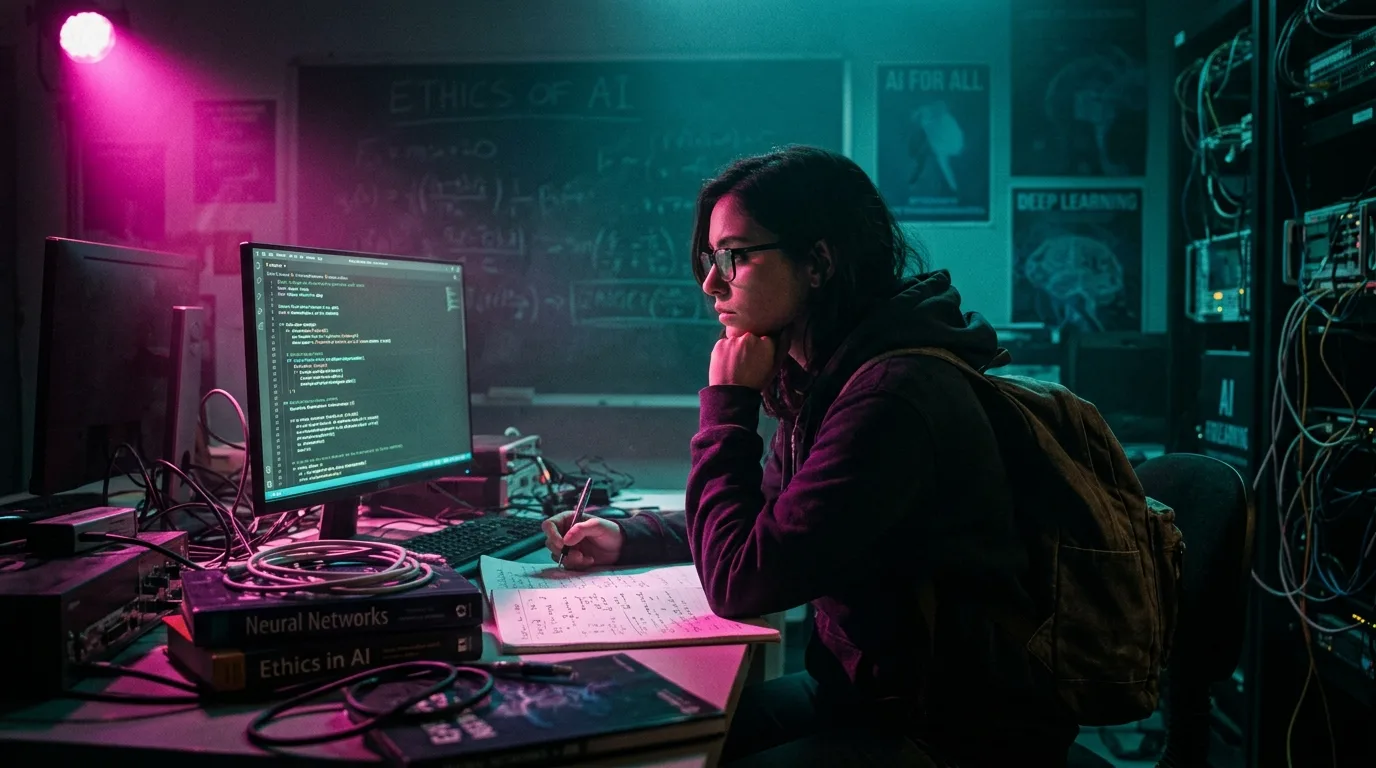
Shaping the Next Generation of Visual Creators Through AI Education
The way Canada implements its AI strategy in K-12 education will fundamentally reshape how the next generation of visual creators approaches their craft. Early exposure to AI tools and concepts will not merely add another skill to their repertoire; it will alter their foundational understanding of visual storytelling, design, and production. Imagine students in elementary or high school experimenting with generative AI to create concept art, animate simple characters, or even compose basic scores for short films. This kind of hands-on AI education moves beyond theoretical understanding to practical application, embedding AI as an intrinsic part of the creative process from a young age.
From a filmmaker’s standpoint, this has several profound implications. Firstly, it democratizes access to sophisticated creative tools. A student who might not have the traditional drawing skills to visualize a complex scene could use AI to generate multiple iterations, focusing instead on prompt engineering and refining their artistic vision. This shifts the emphasis from manual dexterity to conceptual thinking and iterative design. Secondly, it could accelerate creative workflows significantly. Learning to leverage AI for rapid prototyping, visual development, and even early-stage animation could become a standard skill, much like learning editing software is today. The ability to quickly generate AI art direction prompts will become as critical as understanding color theory.
However, this also presents challenges. If AI tools are introduced without a strong emphasis on traditional artistic fundamentals, we risk producing creators who are proficient in prompt generation but lack a deep understanding of composition, anatomy, light, or narrative structure. Canada’s AI strategy must address the technology’s use in K-12 education by striking a delicate balance: empowering students with AI tools while simultaneously reinforcing core artistic principles. This means curricula that encourage students to use AI as an assistant, a brainstorming partner, or a production accelerator, rather than a replacement for human creativity and critical judgment. The goal should be to cultivate “AI-augmented” artists, not simply “AI-dependent” ones. The success of this balance will define the creative output of Canadian filmmakers for decades to come.
Ethical Foundations: The Filmmaker’s Role in AI Education Curriculum
The ethical implications of AI are perhaps the most critical aspect that Canada’s AI strategy must address when considering the technology’s use in K-12 education. For filmmakers and creative directors, navigating the ethical landscape of AI is not merely an academic exercise; it’s a practical necessity that impacts every decision, from sourcing training data to deploying deepfake technology. Teaching these ethical frameworks early is paramount. Students who are exposed to AI in K-12 must learn about bias in datasets, intellectual property rights, the responsible creation and consumption of AI-generated content, and the potential for misuse, such as synthetic media manipulation.
Take, for instance, the issue of bias. AI models are trained on vast datasets, and if these datasets reflect societal biases, the AI-generated output will perpetuate them. For a filmmaker, this could manifest as AI tools generating stereotypical character designs, culturally insensitive narratives, or racially biased casting suggestions. An early AI education that includes critical discussions about dataset provenance and algorithmic fairness is essential to equip future filmmakers with the discernment to identify and mitigate such biases in their own AI-assisted work. Without this, we risk creating films that, despite their technological sophistication, lack integrity and perpetuate harmful stereotypes. The ongoing AI training data lawsuits highlight the real-world consequences of these ethical oversights.
Furthermore, the legal and moral complexities surrounding intellectual property in the age of generative AI are immense. When an AI generates an image or a piece of music, who owns it? If it’s trained on copyrighted material, what are the implications? K-12 AI education must introduce students to these questions, fostering an understanding of fair use, attribution, and the evolving legal landscape. As highlighted by reports from organizations like Tech Policy Press, these are not abstract problems but immediate challenges for creators. Filmmakers must instill in the next generation a strong sense of creative responsibility, ensuring they understand that powerful tools come with significant ethical obligations. Our industry cannot afford to churn out technically proficient artists who are ethically illiterate. The curriculum must explicitly address these issues, preparing students not just to use AI, but to use it wisely and justly.

Balancing Technical Mastery with Creative Discernment in AI Education
One of the central challenges for Canada’s AI strategy, particularly as it addresses the technology’s use in K-12 education, is striking the right balance between teaching technical proficiency and fostering creative discernment. As a filmmaker, I see the immediate value in students learning to operate AI tools, how to craft effective prompts, navigate AI interfaces, and integrate AI-generated assets into projects. However, this technical mastery becomes hollow without a parallel emphasis on critical thinking, originality, and the unique human touch that defines true artistry.
The danger lies in creating a generation of “prompt engineers” who can generate endless iterations of visuals but lack the critical eye, narrative instinct, or artistic vision to select, refine, and truly innovate. If AI education is purely tool-focused, students might become adept at replicating existing styles or generating aesthetically pleasing but ultimately derivative content. For a creative director, the goal is not just to produce something, but to produce something meaningful, original, and impactful. This requires a deep understanding of storytelling, emotional resonance, and visual language, qualities that AI can assist with, but not originate. The ability to write effective prompt engineering for video is a skill, but understanding why certain visuals work for a story is art.
Therefore, Canada’s K-12 AI strategy must integrate curricula that challenge students to question AI output, understand its limitations, and develop their own unique creative voice independent of algorithmic suggestions. This means encouraging experimentation, fostering critical analysis of AI-generated results, and emphasizing that AI is a co-pilot, not the sole author. It demands teaching students how to blend AI capabilities with traditional artistic methods, recognizing when AI enhances and when it detracts from originality. For instance, students could learn to use AI for rapid concept generation, but then be tasked with manually refining, augmenting, or even completely reinterpreting those concepts to imbue them with personal style and narrative depth. This dual focus ensures that future filmmakers are not just technically capable, but also creatively formidable, possessing both the tools and the judgment to shape compelling visual narratives.
The Impact on Post-Production and VFX Talent Pipelines
The specialized fields of post-production and visual effects (VFX) stand to be profoundly transformed by AI, making it imperative that Canada’s AI strategy addresses the technology’s use in K-12 education with these industries in mind. The talent pipeline for VFX artists, compositors, animators, and editors will be directly influenced by how early students are introduced to AI-driven tools and workflows. AI is already automating mundane tasks, enhancing image quality, and accelerating complex processes, and this trend will only intensify.
Consider the practical implications: AI image enhancement tools can dramatically improve footage quality, removing noise, sharpening details, or even upscaling resolutions. AI-driven rotoscoping and masking can reduce hours of tedious work to minutes. AI rendering vs traditional methods are becoming a significant point of comparison for studios. These advancements mean that future VFX artists will spend less time on repetitive, manual tasks and more time on creative problem-solving, artistic refinement, and innovating new visual solutions. If K-12 AI education doesn’t expose students to these tools and concepts, they will enter post-secondary education or the workforce at a distinct disadvantage, lacking familiarity with the industry’s evolving standards. The ability to use AI image enhancement will become a baseline skill.
Canada’s AI strategy must ensure that K-12 curricula include practical modules on AI applications in visual media. This doesn’t mean teaching complex software suites to elementary students, but rather introducing foundational concepts through accessible tools. For example, students could experiment with simple AI-driven image manipulation, learn about machine learning principles behind object recognition (crucial for tracking and rotoscoping), or even explore basic AI-assisted animation. This early exposure will foster a generation of VFX professionals who are not only comfortable with AI but are also innovative in leveraging it to push creative boundaries. Without this strategic integration, Canada risks falling behind other countries in developing the specialized AI-savvy talent needed to power the next wave of blockbuster films and immersive digital experiences, such as those that produce Superman VFX secrets. The future of Canadian VFX depends on an education system that proactively embraces AI.

AI Education and the Future of Pre-Production and Storytelling
The impact of AI education on the creative industries extends far beyond post-production; it profoundly influences the very genesis of a film: pre-production and storytelling. Canada’s AI strategy must address the technology’s use in K-12 education with a clear understanding of how it will reshape how future filmmakers conceive, visualize, and develop their narratives. From concept art and storyboarding to script analysis and virtual production, AI is already becoming an integral part of the early creative process.
Imagine a high school student learning to use AI not just for generating images, but for exploring narrative possibilities. Tools capable of analyzing scripts, suggesting character arcs, or even generating dialogue variations are emerging. While the human element of storytelling, empathy, unique perspective, emotional depth, remains irreplaceable, AI can serve as a powerful brainstorming partner. Early exposure to these capabilities in K-12 AI education means students will grow up thinking of AI as a legitimate creative collaborator, rather than a foreign or intimidating technology. They might use AI to generate multiple versions of a character’s appearance, visualize diverse settings, or even create a rough AI concept trailer to pitch an idea.
The practical implications for filmmakers are significant. Future directors and producers will expect their teams to be conversant in AI-assisted pre-production. Concept artists might use AI to rapidly iterate designs, freeing them to focus on unique stylistic elements rather than manual rendering. Storyboard artists could leverage AI to quickly generate visual sequences from script excerpts, allowing them to experiment with camera angles and pacing more efficiently. The challenge for Canada’s AI strategy is to ensure that K-12 curricula teach students how to harness these tools without losing sight of the fundamental principles of compelling storytelling. The emphasis must be on using AI to augment human creativity, to expand the scope of imagination, and to streamline the arduous process of bringing a vision to life. This means teaching critical evaluation of AI output, understanding its biases, and ultimately, knowing when to trust the algorithm and when to rely on human intuition. The foundational skills learned in K-12 will dictate the depth and originality of Canadian storytelling for generations.
Safeguarding Originality and IP Through Early AI Education
A vital component that Canada’s AI strategy must address regarding the technology’s use in K-12 education is the critical issue of safeguarding originality and intellectual property (IP). In the rapidly evolving landscape of generative AI, the lines between inspiration, derivation, and outright infringement are becoming increasingly blurred. For filmmakers and visual creators, whose livelihoods depend on the uniqueness and protectability of their work, this is not just a legal concern but a fundamental threat to creative integrity. It is imperative that K-12 students are educated early on about these complex issues.
When students learn to use AI tools, they must simultaneously learn about the provenance of the data these AIs are trained on. They need to understand that many generative AI models are trained on vast datasets of existing art, photography, and film, often without explicit consent or compensation for the original creators. This raises profound questions about copyright and attribution. If a student uses an AI to generate an image that strongly resembles the style of a living artist, what are their ethical and legal responsibilities? An effective K-12 AI education must equip students with the knowledge to navigate these waters, teaching them to respect existing IP and to strive for genuine originality in their AI-assisted creations. This includes understanding the nuances of Canadian Intellectual Property Office (CIPO) guidelines as they evolve to encompass AI.
Practical implications for filmmakers are clear: we need future creatives who are not only capable of using AI but are also deeply aware of the legal and ethical minefields. This means teaching students how to properly cite sources (even AI models), how to identify potential copyright conflicts in AI-generated assets, and how to develop their own unique creative voice that transcends mere algorithmic imitation. Canada’s AI strategy must foster a culture of responsible AI use, where students are encouraged to innovate while respecting the rights of others. This could involve curriculum modules dedicated to case studies of AI copyright disputes, discussions on ethical AI development, and exercises that challenge students to create work that is clearly their own, even with AI assistance. The ability to use AI search changing creative work means understanding the source material. By instilling these values early, we can ensure that future Canadian filmmakers contribute to a creative landscape that is both technologically advanced and ethically sound.
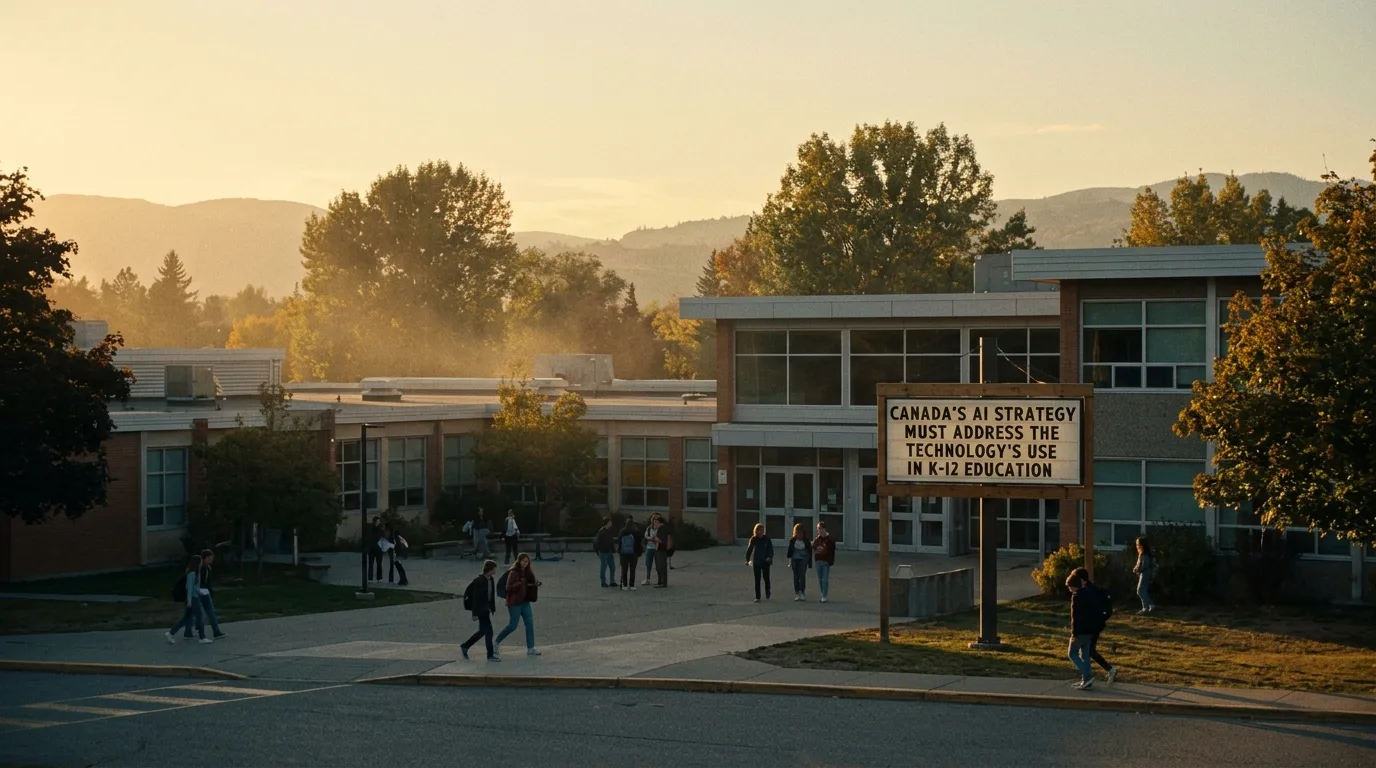
Equitable Access to AI Education: A National Imperative for Canadian Creatives
A critical dimension that Canada’s AI strategy must address is ensuring equitable access to the technology’s use in K-12 education across all regions and socioeconomic strata. From a filmmaker’s perspective, a robust and diverse talent pool is paramount. If access to quality AI education is unevenly distributed, it will inevitably lead to a digital divide, creating disparities in skill sets and opportunities for aspiring Canadian creatives. This would severely limit the breadth and diversity of voices entering the film industry, ultimately weakening Canada’s creative output.
Consider the reality of rural or remote communities versus urban centers. Students in well-funded metropolitan schools might have access to state-of-the-art AI labs, specialized software, and teachers trained in AI literacy. Meanwhile, students in underserved areas might lack basic internet access, up-to-date hardware, or educators equipped to teach AI concepts. This creates a significant disadvantage. If future filmmakers from these underserved regions don’t receive foundational AI education, they will be less prepared to compete for roles in an AI-driven industry, regardless of their raw creative talent. The promise of tools like Googleflow filmmaker guide or access to sophisticated AI platforms becomes moot if the foundational education isn’t there.
Canada’s AI strategy must therefore prioritize initiatives that bridge this digital divide. This includes funding for technology infrastructure in all schools, comprehensive professional development for K-12 educators across the country, and the development of accessible, open-source AI educational resources. It’s not enough to simply create a curriculum; it must be deliverable and consumable by every student, irrespective of their background or location. For the film industry, equitable access means a broader, more diverse talent pool, bringing fresh perspectives and unique stories to the screen. It ensures that innovative ideas can emerge from anywhere in the country, not just from privileged urban hubs. By proactively addressing educational equity in AI, Canada can cultivate a truly national creative workforce capable of leading in the global AI-powered filmmaking landscape.
The Architects of Tomorrow: Filmmakers as Advocates for AI Education Policy
It is not enough for filmmakers and creative directors to simply observe the evolution of AI in education; we must become active architects of its future. Canada’s AI strategy must address the technology’s use in K-12 education, and our industry has a critical role to play in shaping that strategy. The curriculum developed today will determine the capabilities, ethical understanding, and creative approaches of the talent entering our industry in the next decade. Without direct input from those on the front lines of visual storytelling, there’s a significant risk that AI education will become too abstract, too technical, or simply irrelevant to the practical demands of filmmaking.
We, as industry professionals, understand the nuanced interplay between art and technology. We know that a compelling narrative requires more than just high-fidelity visuals; it demands emotional depth, cultural sensitivity, and a unique human perspective. We can articulate precisely how AI tools, such as those found in AI browsers or advanced editing suites, are being integrated into workflows and what challenges they present. Our insights are invaluable for developing an AI education curriculum that is both cutting-edge and creatively sound. This means engaging with policymakers, participating in curriculum review boards, and advocating for specific inclusions that prepare students for the realities of an AI-augmented creative industry.
Practical advocacy could involve proposing modules on AI ethics tailored to visual media, emphasizing critical thinking alongside technical skills, or even contributing real-world case studies for students to analyze. We can highlight the importance of traditional artistic fundamentals, like drawing, photography, and basic animation, as complements to AI proficiency, ensuring that students develop a well-rounded skill set. Furthermore, we can advocate for resources and teacher training that specifically address AI in creative contexts. The Canadian government, through departments like Innovation, Science and Economic Development Canada, is investing in AI, and it’s our responsibility to ensure that this investment trickles down to K-12 education in a way that benefits our sector. By actively participating in these discussions, filmmakers can help ensure that Canada’s AI strategy cultivates a generation of creatives who are not just users of AI, but thoughtful, ethical, and visionary masters of their craft.

Canada as a Global Leader: Leveraging AI Education for Creative Dominance
The final, overarching imperative is for Canada to leverage its AI strategy, particularly its approach to K-12 education, to cement its position as a global leader in AI-driven creative industries. The global race for AI supremacy is not just about scientific breakthroughs or economic output; it’s also about cultural influence and creative innovation. By proactively and thoughtfully addressing the technology’s use in K-12 education, Canada can cultivate a unique competitive advantage in the international filmmaking and visual arts landscape.
A well-designed K-12 AI education system will produce a workforce that is not only proficient in AI tools but also deeply ingrained with ethical considerations, critical thinking, and a profound respect for human creativity. This combination is precisely what will differentiate Canadian talent on the global stage. Studios and production houses worldwide will seek out Canadian artists and filmmakers who can harness AI’s power while maintaining artistic integrity and navigating complex ethical dilemmas. This is crucial for high-stakes productions, where, for instance, the intricate Superman VFX secrets demand both technical prowess and creative judgment.
The economic implications are immense. A highly skilled, ethically aware, and creatively innovative talent pool will attract further investment in Canada’s creative sector, leading to job creation, technological advancements, and a stronger global presence for Canadian films, television, and digital media. It positions Canada as a hub for AI-powered creativity, drawing international collaborations and fostering domestic innovation. As outlined by various governmental reports and discussions around Artificial intelligence in Canada, the strategic importance of this domain cannot be overstated. By ensuring that Canada’s AI strategy truly addresses the technology’s use in K-12 education with a comprehensive, forward-looking vision, we are not just educating students; we are building the foundation for a future where Canadian creativity, augmented by AI, continues to captivate and inspire audiences worldwide. This requires sustained commitment, collaboration between industry and education, and a clear understanding that the seeds planted in our classrooms today will blossom into the creative masterpieces of tomorrow.
Frequently Asked Questions
What is Canada’s current stance on AI in K-12 education?
Canada’s national AI strategy, spearheaded by CIFAR, acknowledges the importance of AI literacy but specific, standardized K-12 curriculum integration varies by province. The strategy emphasizes ethical AI development and research, but a unified, comprehensive approach to K-12 AI education for creatives is still evolving.
Why should filmmakers care about K-12 AI education?
Filmmakers should care because K-12 AI education directly shapes the future talent pool for the industry. It determines whether aspiring creatives will possess the necessary AI literacy, technical skills, ethical understanding, and critical discernment to thrive in an AI-augmented filmmaking landscape.
What ethical considerations should be taught in AI education for creatives?
Key ethical considerations include bias in AI datasets, intellectual property rights, the responsible use of generative AI, the implications of deepfake technology, and the importance of transparency and attribution for AI-generated content. These topics are crucial for fostering responsible creators.
How might AI education impact the job market for future filmmakers?
AI education will likely shift the job market, reducing demand for purely manual, repetitive tasks while increasing demand for professionals skilled in AI tool integration, prompt engineering, critical evaluation of AI output, and ethical AI deployment. It will necessitate upskilling and adaptability.
What role can creative professionals play in shaping AI education policy?
Creative professionals can advocate for industry-relevant curriculum, participate in policy discussions, offer real-world case studies, and emphasize the balance between technical AI skills and core artistic principles. Their input ensures that education aligns with practical industry needs and ethical standards.
Discover more from Olivier Hero Dressen Blog: Filmmaking & Creative Tech
Subscribe to get the latest posts sent to your email.

Work with Olivier
Director | CD | DP & Photographer
Specializing in commercials, music videos, AI-driven filmmaking, and cinematic storytelling for brands and production companies.
🌍 Shanghai · Paris · Los Angeles · Dubai
🎬 View Portfolio & Get in Touch