

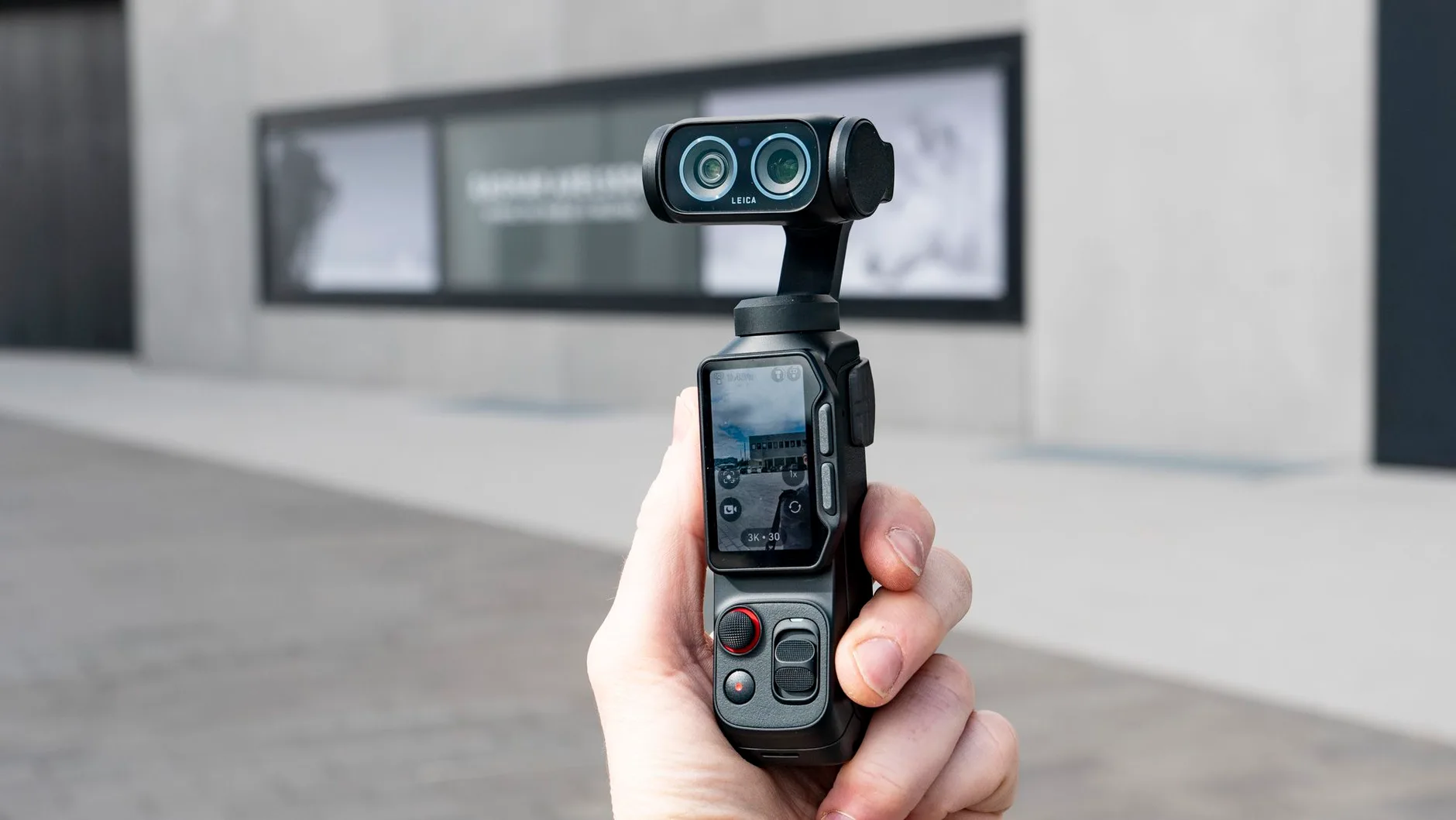

8K Leica Optics: Insta360 Luna Ultra’s Breakthrough
Need a Director for Your Next Project?
From commercials to branded campaigns—Olivier brings creative vision and technical expertise.
→ View ProjectsKey Takeaways
- First insight, The Insta360 Luna Ultra redefines professional 360-degree capture with its integrated Leica Summicron optics, delivering unparalleled 8K dual-lens image quality.
- Craft highlight, The collaboration with Leica ensures optical precision, minimizing aberrations and maximizing detail, crucial for high-fidelity immersive content creation.
- Industry context, This launch positions the Luna Ultra as a formidable tool for filmmakers and VR developers, bridging the gap between consumer-grade accessibility and professional cinematic demands.
- Bottom line, With its detachable OLED screen and robust 8K capabilities, the Luna Ultra offers a versatile, high-performance solution for demanding virtual reality and cinematic projects.
The advent of the Insta360 Luna Ultra marks a significant inflection point in the landscape of professional 360-degree cinematography, pushing the boundaries of what portable, dual-lens cameras can achieve. This device is not merely an incremental upgrade; it represents a calculated leap, integrating sophisticated Leica Summicron optics with a dual-lens 8K capture system, all while introducing a highly practical detachable OLED screen. For filmmakers and immersive content creators, the Luna Ultra is designed to address longstanding challenges in image fidelity, workflow efficiency, and on-set adaptability, promising a new era of high-resolution, spherical storytelling.
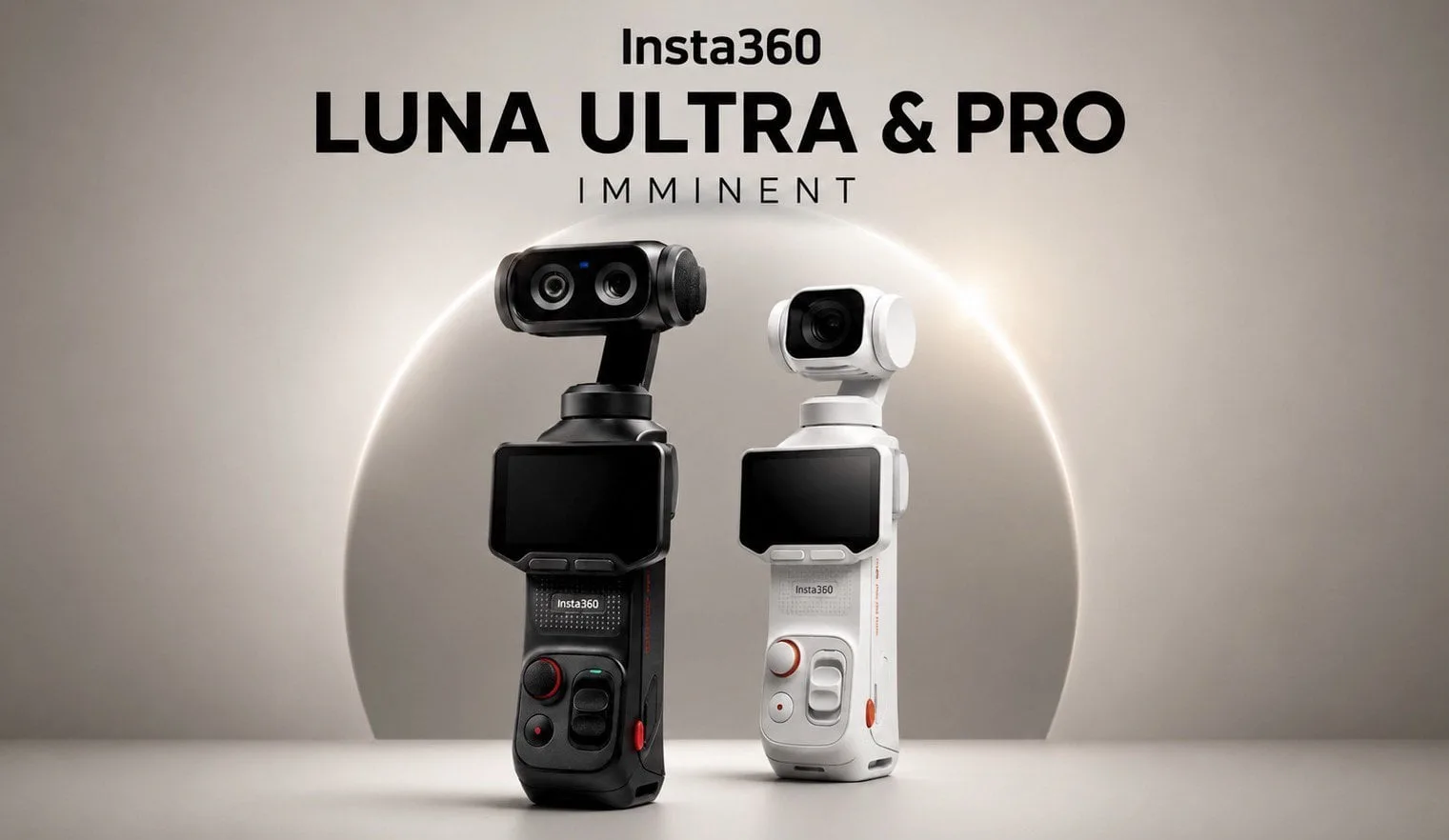
The Luna Ultra: A Paradigm Shift in 360 Capture
The launch of the Insta360 Luna Ultra is more than just another camera release; it signifies a strategic pivot in the evolution of immersive media tools. For years, the professional 360-degree camera market has faced a dichotomy: either highly specialized, cumbersome, multi-camera rigs offering uncompromising quality, or compact, user-friendly devices with inherent limitations in resolution and optical performance. The Luna Ultra aims to collapse this gap, presenting a compact, dual-lens solution that promises cinematic-grade 8K capture, directly addressing the demands of high-end productions. This is not merely about increasing pixel count; it is about elevating the entire capture pipeline, from photon ingress to final stitched output.
At its core, the Insta360 Luna Ultra integrates advanced imaging sensors with optics co-engineered by Leica, a name synonymous with precision and optical excellence. This collaboration is critical. It suggests a commitment to resolving common issues in 360-degree photography, such as chromatic aberration, edge distortion, and low-light performance, which have historically plagued even high-end consumer models. The dual-lens configuration, meticulously calibrated, is fundamental to achieving seamless stitching and accurate depth perception, vital for comfortable and convincing virtual reality experiences. The ambition behind the Luna Ultra is clear: to democratize access to professional-grade immersive content creation without compromising on quality or ease of use. This approach resonates with the broader industry trend of making sophisticated tools more accessible, enabling a wider range of creatives to explore new narrative forms. For those looking to push the boundaries of visual storytelling, tools like AI Render Pro, the prompting tool for filmmakers and creatives can further enhance the post-production workflow, leveraging AI to refine and augment captured footage.

Furthermore, the introduction of a detachable OLED screen on the Luna Ultra is a testament to its user-centric design philosophy. This seemingly minor addition offers immense practical benefits for filmmakers on location. It allows for flexible monitoring, review, and control, adapting to various shooting scenarios where a fixed screen might be impractical. Whether mounted on a drone, a helmet, or a tripod in a confined space, the ability to detach and reposition the monitor streamlines operations, reducing setup time and enhancing creative control. This level of adaptability is crucial in fast-paced production environments where efficiency directly impacts output quality and budget. The entire package of the Luna Ultra speaks to a comprehensive understanding of the professional user’s needs, from the initial capture to the final review, emphasizing both technical prowess and practical utility. The implications for documentary filmmaking, virtual tours, and even cinematic sequences requiring immersive perspectives are profound, setting a new benchmark for what can be achieved with a portable 360 camera.
Leica Summicron Optics: Engineering for Purity
The partnership between Insta360 and Leica Camera AG for the Luna Ultra is not a mere branding exercise; it represents a deep engineering collaboration aimed at elevating the optical integrity of 360-degree capture. Leica, a company with over a century of heritage in precision optical manufacturing, brings an unparalleled expertise to the table. Their Summicron line of lenses is renowned for its exceptional sharpness, contrast, and minimal distortion, characteristics that are particularly challenging to achieve in wide-angle and fisheye designs necessary for 360 cameras. The integration of Leica Summicron optics into the Luna Ultra signifies a commitment to resolving the optical compromises often inherent in compact, multi-lens systems. This means meticulously designed lens elements, advanced coatings, and precise manufacturing tolerances to ensure that light is captured with the utmost fidelity, from the center of the frame to its extreme edges.
For cinematographers, the impact of these optics on the Luna Ultra is immediately apparent in the resulting image quality. Expect reduced chromatic aberration, where color fringes appear around high-contrast edges, and a significant improvement in overall sharpness and detail. These factors are critical when working with 8K resolution, as any optical imperfections are magnified by the sheer number of pixels. The clarity provided by Leica’s engineering ensures that the captured footage is clean, vibrant, and rich in texture, making it more amenable to post-production adjustments and less prone to artifacts when stitched. This optical purity is the bedrock upon which high-quality immersive experiences are built, providing a solid foundation for visual effects, color grading, and projection onto large screens or VR headsets. Without pristine optics, even the highest resolution sensor data can be compromised, leading to a less engaging and ultimately less professional final product. The Leica Summicron optics are a game-changer for the Luna Ultra.
Furthermore, the collaboration extends beyond just lens design to the overall imaging pipeline. Leica’s influence likely extends to sensor calibration, image processing algorithms, and color science, ensuring that the entire system works harmoniously to produce accurate and aesthetically pleasing visuals. This holistic approach is what differentiates a truly professional imaging tool from a consumer gadget. The goal is to capture reality with a level of accuracy and artistic rendering that meets the stringent demands of professional filmmakers. When combined with the Hero’s Essentials: filmmaker gear and tools, the Luna Ultra becomes an even more formidable instrument for capturing breathtaking visuals. The implications for virtual reality content creators, documentary filmmakers, and even architectural visualization are profound. The ability to capture such high-quality spherical video with a relatively compact and robust device opens up new creative avenues, allowing for more dynamic camera placements and more immersive storytelling possibilities that were previously prohibitively expensive or technically challenging. The Luna Ultra, therefore, is not just a camera; it is a meticulously engineered optical instrument designed to redefine the benchmarks of portable 360-degree capture.
Dual-Lens 8K Capture: Unpacking the Resolution
The Insta360 Luna Ultra’s headline feature, its dual-lens 8K capture capability, represents a significant leap in the resolution and detail available for professional 360-degree video. Achieving true 8K resolution in a spherical format requires more than simply packing pixels onto sensors; it demands a sophisticated integration of optics, sensor technology, and image processing algorithms. The dual-lens system is fundamental to this, allowing for a wider field of view per sensor and facilitating more accurate stereoscopic capture, which is crucial for immersive VR experiences. Each lens is paired with a high-resolution sensor, capturing a segment of the 360-degree sphere, which is then meticulously stitched together in post-production or via on-board processing to create a seamless, high-definition spherical image. This process, when executed with precision, results in an expansive canvas of visual information, offering unprecedented detail for viewers.
The practical implications of 8K resolution from the Luna Ultra are vast for filmmakers and content creators. In virtual reality, higher resolution translates directly to a more immersive and less pixelated experience, reducing the “screen door effect” and enhancing the sense of presence. For traditional flat video extraction from 360 footage, 8K provides significant headroom for reframing, zooming, and stabilizing shots without compromising final output quality. A director can capture a scene once in 360 degrees and then extract multiple 4K or even 6K “flat” shots from different angles, offering unparalleled flexibility in the edit suite. This workflow efficiency can save considerable time and resources on set, as a single capture can yield diverse perspectives. The launch of the Luna Ultra has garnered attention for its potential to streamline these advanced workflows.
However, capturing 8K 360-degree video also presents challenges. The sheer volume of data generated requires robust storage solutions and powerful computing resources for editing and stitching. Insta360 has likely addressed this with optimized codecs and efficient workflow integrations, but users should be prepared for larger file sizes and longer processing times compared to lower-resolution formats. Nevertheless, the benefits often outweigh these technical hurdles for professional applications. The ability to capture such rich detail opens doors for hyper-realistic virtual tours, high-fidelity documentary filmmaking, and innovative cinematic storytelling where the audience is placed directly within the scene. The dual-lens 8K capture of the Luna Ultra is not just a specification; it is a gateway to a new level of visual fidelity in immersive media, setting a new standard for what is achievable with a portable 360 camera. For creators delving into complex visual narratives, understanding how to manage and manipulate such high-resolution assets effectively is key, and tools that assist in creative visualization are becoming increasingly important, much like the insights offered by articles on 5 Proven AI Vision Techniques: Filmmakers REVEALS All!.
The Detachable OLED Screen: Versatility Redefined
🎥 Hero’s Essentials, The cameras, lenses, software, and tools I actually use on productions. Curated by a working filmmaker. See the full list →
One of the most practical and user-centric innovations of the Insta360 Luna Ultra is its detachable OLED screen. While seemingly a minor ergonomic detail, its implications for professional workflow and on-set flexibility are profound. In the demanding world of film production, adaptability is paramount. A fixed screen, while convenient in some scenarios, often becomes an impediment when the camera is mounted in unconventional positions, on a boom, a drone, a vehicle, or in tight spaces where direct viewing is impossible. The Luna Ultra’s detachable screen liberates the operator from these constraints, allowing for remote monitoring and control without the need for additional, cumbersome external monitors or complex wireless video transmission setups. This streamlined approach enhances efficiency and reduces the overall footprint of the camera rig.
The choice of an OLED panel for the screen is also significant. OLED technology offers superior contrast, deeper blacks, and more vibrant colors compared to traditional LCDs, providing a more accurate representation of the captured image on set. This is crucial for critical focusing, exposure adjustments, and shot composition, especially in dynamic lighting conditions. A reliable on-camera monitor allows filmmakers to make informed decisions in real-time, minimizing the need for costly reshoots and ensuring that the creative vision is accurately translated into captured footage. The detachable nature means the director or cinematographer can view the live feed from a comfortable vantage point, even if the camera itself is in an inaccessible location, maintaining creative control throughout the shoot. This flexibility makes the Luna Ultra an incredibly versatile tool, capable of adapting to a wide array of production challenges. The evolution of 360 camera design often highlights such practical innovations.
Beyond mere monitoring, the detachable screen likely offers intuitive control over camera settings, playback, and possibly even preliminary stitching previews. This immediate feedback loop is invaluable for optimizing shots and identifying potential issues on the spot, rather than discovering them in post-production. For example, checking the stitch line quality or confirming proper exposure across the entire 360-degree sphere can be done instantly. This level of on-set control, combined with the Luna Ultra’s 8K resolution and Leica optics, positions it as a powerful tool for filmmakers who demand both high quality and operational efficiency. It’s a testament to Insta360’s understanding of real-world production challenges, providing a solution that not only enhances image capture but also profoundly improves the user experience. For creators exploring new visual styles, understanding the nuances of how such tools integrate into a broader creative toolkit is vital, much like the considerations involved in using 7 Stunning Vintage Prom AI Image Prompts: Nostalgic Elegance for FLUX, Midjourney and Nano Banana for stylistic projects.
Workflow and Ecosystem: Beyond the Hardware
The true value of a professional camera system, such as the Insta360 Luna Ultra, extends far beyond its hardware specifications. A robust and efficient workflow, supported by a comprehensive software ecosystem, is paramount for integrating the camera seamlessly into existing production pipelines. Insta360 has a history of developing user-friendly yet powerful desktop and mobile applications for stitching, editing, and exporting 360-degree footage. For the Luna Ultra, this ecosystem is expected to be even more refined, optimized to handle the immense data generated by 8K dual-lens capture. This includes advanced stitching algorithms that minimize parallax errors and produce seamless spherical video, as well as tools for color correction, stabilization, and spatial audio integration. The ability to efficiently manage and process high-resolution 360 data is as crucial as the capture itself.
A professional workflow for the Luna Ultra would likely involve dedicated desktop software for precise stitching and fine-tuning, offering granular control over every aspect of the 360 sphere. This includes options for optical flow stitching, template-based stitching, and manual adjustments to achieve perfect alignment. Furthermore, integration with industry-standard non-linear editing (NLE) software like Adobe Premiere Pro, DaVinci Resolve, or Final Cut Pro is essential. This allows filmmakers to incorporate 360 footage into their existing editorial projects, applying traditional editing techniques, visual effects, and sound design. The easier it is to move footage from the camera to the edit suite, the more appealing the Luna Ultra becomes for high-stakes productions. The entire ecosystem must support a smooth transition from capture to delivery, whether for VR headsets, flat video exports, or interactive web experiences. For filmmakers looking to streamline their post-production, exploring resources like 7 Game-Changing Google Gemini Omni Video Editing Features can offer insights into future efficiencies.
Moreover, the Luna Ultra’s ecosystem likely extends to firmware updates that continually enhance performance, add new features, and address user feedback. This commitment to ongoing development ensures that the camera remains relevant and capable in a rapidly evolving technological landscape. Support for external accessories, such as microphones, GPS modules, and various mounting solutions, further integrates the Luna Ultra into a versatile production toolkit. The goal is to provide a complete solution, from capturing pristine 8K footage with Leica optics to delivering a polished final product, all while maintaining an intuitive and efficient user experience. This comprehensive approach, encompassing both cutting-edge hardware and a supportive software ecosystem, solidifies the Luna Ultra’s position as a serious contender for professional 360-degree content creation, allowing creators to focus on narrative and craft rather than technical hurdles.
Crafting Immersive Narratives with the Luna Ultra
The arrival of the Insta360 Luna Ultra, with its dual-lens 8K capture and Leica Summicron optics, fundamentally alters the potential for crafting immersive narratives. Traditional filmmaking guides the viewer’s eye; 360-degree video, especially at high resolutions, invites the viewer into the scene, granting them agency to look wherever they choose. This shift demands a rethinking of storytelling techniques, moving beyond linear perspectives to embrace spatial narratives. The Luna Ultra provides the canvas for this, delivering the visual fidelity required to make these immersive worlds believable and engaging. The clarity and detail of 8K footage are crucial for maintaining suspension of disbelief in VR, where pixelation can quickly break immersion. With the Luna Ultra, filmmakers can create environments rich in detail, allowing for deeper exploration and connection with the story.
For documentary filmmakers, the Luna Ultra offers an unparalleled opportunity to place audiences directly within historical events, cultural celebrations, or natural wonders. Imagine standing on the front lines of a protest, experiencing a remote village ritual, or soaring over a pristine landscape – all with the visual fidelity that makes these experiences genuinely impactful. The precise optics ensure that the captured reality is rendered with accuracy, lending authenticity to the narrative. In cinematic storytelling, the Luna Ultra enables innovative shot compositions and scene construction. A single shot can capture an entire environment, revealing character interactions and plot points from multiple angles simultaneously, or allowing viewers to discover hidden narrative elements by simply looking around. This requires careful consideration of blocking, sound design, and interactive elements, but the visual foundation provided by the Luna Ultra is robust enough to support these ambitious creative endeavors. Understanding the intricacies of visual composition and narrative structure is paramount, and resources such as those on 4 Common Mistakes That Break Short Films can provide valuable insights for any filmmaker, regardless of the medium.
The detachable OLED screen further enhances this narrative potential by allowing for dynamic monitoring and immediate feedback during complex immersive shoots. A director can verify the effectiveness of a scene’s staging for a 360 viewer in real-time, adjusting elements to ensure the intended narrative beats are communicated effectively across the entire sphere. This iterative creative process, facilitated by the Luna Ultra’s design, empowers filmmakers to experiment and refine their immersive narratives on set, rather than in post-production. The ability to capture such high-quality, immersive content with a relatively compact and versatile camera means that ambitious projects are no longer confined to massive, expensive rigs. The Luna Ultra democratizes high-end immersive storytelling, opening doors for a new generation of creators to explore the vast potential of spatial media. The impact of 360-degree video on user experience is well-documented, and the Luna Ultra aims to elevate that experience significantly.
Technical Innovation: Under the Hood of the Luna Ultra
Beyond the obvious headline features, the Insta360 Luna Ultra is packed with a suite of technical innovations that contribute to its professional-grade performance. The dual-lens 8K system, while impressive, relies on sophisticated internal processing to handle the immense data stream. This likely involves a powerful custom-designed chip capable of real-time image processing, noise reduction, and potentially even preliminary in-camera stitching. High bitrate recording options are essential for preserving detail and color depth, ensuring that the 8K footage remains pristine throughout the production pipeline. Such technological advancements are crucial for managing the demands of high-resolution, high-frame-rate capture, which is often a bottleneck for compact 360 cameras.
The integration of Leica Summicron optics suggests not only superior glass but also advanced sensor technology optimized to work in harmony with those lenses. This could include larger sensor sizes for improved low-light performance and dynamic range, critical for capturing nuanced details in challenging lighting conditions. Effective heat management is another often-overlooked innovation in high-performance cameras. Recording 8K video generates considerable heat, and without proper dissipation, it can lead to overheating, throttling, or even damage. The Luna Ultra likely incorporates advanced thermal designs to ensure stable and continuous recording, a non-negotiable requirement for professional shoots. These underlying engineering feats, though not always visible, are what enable the camera to consistently deliver high-quality results under demanding circumstances. This meticulous attention to detail echoes the principles of 7Artisans: Affordable 135mm Lens with Stunning Image Quality, where engineering meets practical application.
Furthermore, the Luna Ultra’s connectivity options are crucial for professional integration. High-speed data transfer ports (e.g., USB-C 3.2), robust Wi-Fi capabilities for remote control and live preview, and potentially even an Ethernet port for studio setups or live streaming applications would all contribute to its versatility. The detachable OLED screen itself is a piece of technical ingenuity, requiring reliable, low-latency wireless or wired communication with the main camera body. Power management is another key area; professional shoots demand extended battery life or the ability to power the camera externally for continuous operation. The Luna Ultra’s success will ultimately lie in this synergy of advanced optics, powerful processing, robust thermal management, and comprehensive connectivity, all working together to deliver a seamless and reliable capture experience for the most demanding projects. The blend of hardware and software innovation is what truly defines the Luna Ultra as a breakthrough product.
Market Positioning: Where the Luna Ultra Stands
The Insta360 Luna Ultra is strategically positioned at the high end of the prosumer and professional 360-degree camera market, aiming to capture users who demand superior image quality and advanced features without the prohibitive cost and complexity of multi-camera VR rigs. It directly competes with other high-resolution 360 cameras, distinguishing itself primarily through its Leica co-engineered optics and the practical advantages of its detachable OLED screen. This positioning is designed to appeal to independent filmmakers, documentary crews, virtual tour operators, and VR content creators who require cinematic fidelity and robust performance in a relatively portable package. The “Leica” branding itself serves as a strong signal of quality and optical excellence, immediately elevating the Luna Ultra above many competitors in the perception of discerning professionals.
Insta360’s strategy with the Luna Ultra appears to be about offering a “best of both worlds” solution: the ease of use and portability typically associated with consumer 360 cameras, combined with the image quality and professional features expected from high-end equipment. This balance is critical for expanding the adoption of 360-degree video in professional contexts. Many potential users have been deterred by either the technical challenges of complex rigs or the perceived limitations of lower-end devices. The Luna Ultra aims to remove these barriers, providing a straightforward path to producing high-quality immersive content. Its 8K resolution ensures future-proofing to some extent, as display technologies continue to advance, making the content relevant for upcoming generations of VR headsets and high-resolution screens. This forward-thinking approach is often discussed in broader terms of technological impact, such as in articles on 7 Eye-Opening Ways AI Education Impacts Filmmakers, highlighting the importance of staying ahead of the curve.
Furthermore, the Luna Ultra’s market presence will be bolstered by Insta360’s established reputation for innovation and customer support in the 360 space. The company has a track record of developing intuitive software and consistently updating its products. This ecosystem support is a significant factor for professionals who rely on reliable tools and responsive assistance. By focusing on critical pain points, image quality, workflow efficiency, and on-set versatility, the Luna Ultra is poised to carve out a significant niche. It offers a compelling value proposition for those who are ready to invest in serious 360 production but are not yet prepared for the logistical and financial overhead of ultra-high-end cinematic VR cameras. The Luna Ultra, therefore, is not just a product; it’s a statement about the future accessibility of professional immersive content creation.
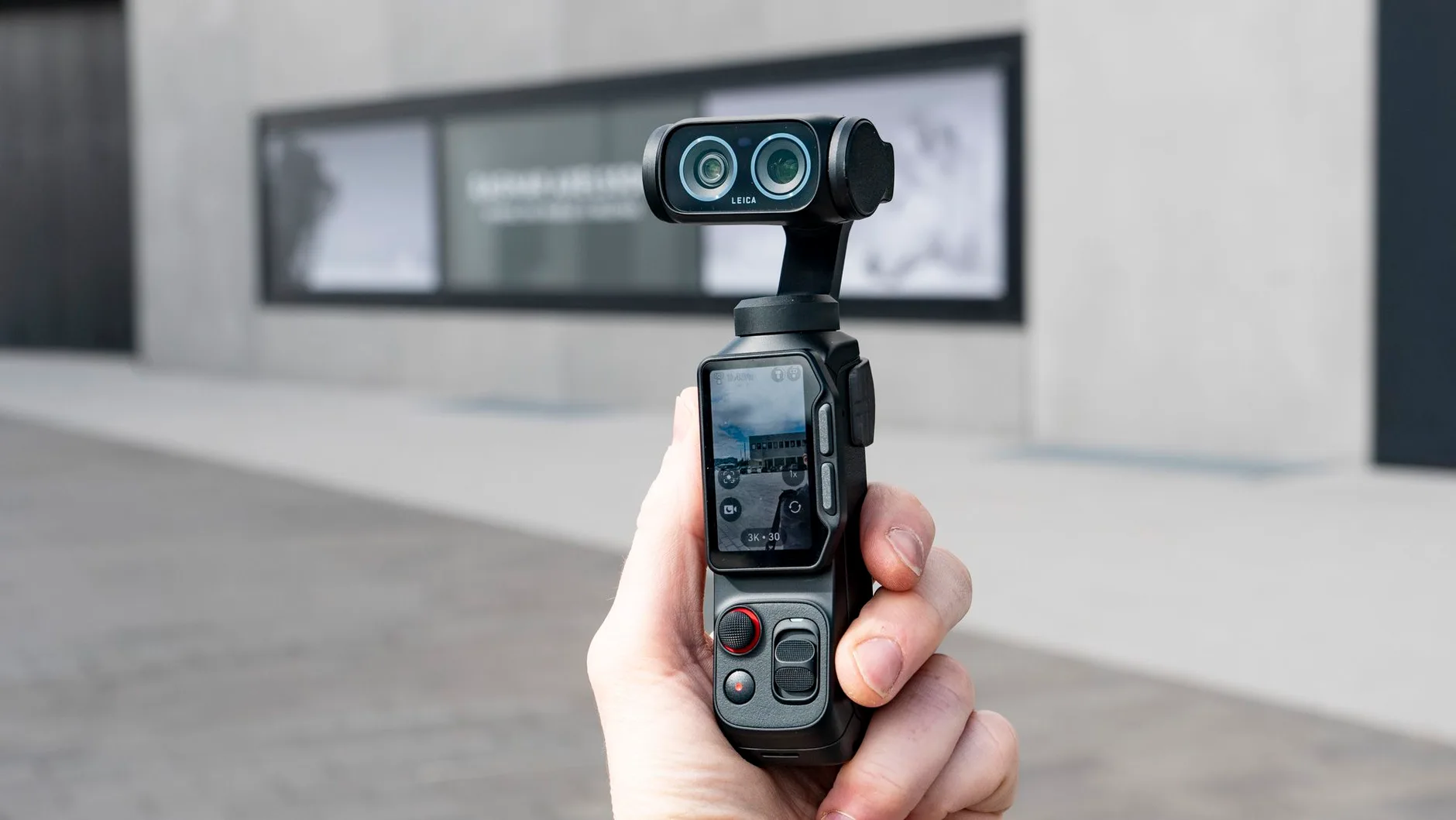
The Future of 360 Content: A Vision with Luna Ultra
The Insta360 Luna Ultra is not just a tool for today’s immersive content creators; it is a harbinger of the future of 360-degree media. As virtual reality headsets become more commonplace and accessible, and as bandwidth for streaming high-resolution content improves, the demand for high-quality 360 experiences will only grow. The Luna Ultra’s 8K dual-lens capture, coupled with Leica’s optical precision, lays a robust foundation for this future. It enables the creation of experiences that are not only visually stunning but also deeply immersive, reducing the cognitive load on the viewer and enhancing their sense of presence within a virtual environment. This level of fidelity is crucial for moving 360 content beyond novelty into mainstream entertainment, education, and professional applications. The advancements in 360 camera technology are continuously pushing the boundaries of what’s possible.
The ability to capture such high-resolution, optically pure spherical video with a relatively portable device will accelerate innovation in various sectors. In education, immersive field trips or historical reenactments can become incredibly lifelike. In real estate, virtual property tours will offer an unprecedented level of detail, allowing potential buyers to truly explore a space. For artists and storytellers, the Luna Ultra unlocks new narrative forms, empowering them to craft interactive experiences that blur the lines between film and gaming. The detachable OLED screen further supports this future, allowing for more dynamic and experimental camera placements, freeing creators to push the boundaries of spatial storytelling without being tethered to traditional monitoring setups. The Luna Ultra is thus more than just a camera; it is an enabler of future visions, providing the technical backbone for the next generation of immersive experiences. For those looking to visualize these futures, tools like those found at the DesignHero Shop, filmmaker merch and creative tools can inspire and equip.
Moreover, as AI and machine learning continue to advance, the high-quality data captured by the Luna Ultra will become invaluable. Advanced stitching algorithms, AI-powered object recognition, and even automated content generation could leverage the pristine 8K footage to create even more dynamic and personalized immersive experiences. The future of 360 content is not just about passive viewing; it’s about interactive, intelligent environments. The Luna Ultra provides the raw material, the high-fidelity visual data, that will fuel these future innovations. Its launch signifies a belief in the enduring power of immersive media and a commitment to providing creators with the tools necessary to realize its full potential, ensuring that the future of 360 content is as vibrant and detailed as the images it captures.
Conclusion: The Luna Ultra’s Enduring Impact
The Insta360 Luna Ultra represents a significant milestone in the evolution of professional 360-degree capture. By meticulously integrating Leica Summicron optics with a dual-lens 8K system and complementing this with a highly practical detachable OLED screen, Insta360 has engineered a camera that addresses many of the long-standing challenges faced by immersive content creators. This is not merely an incremental improvement but a thoughtful convergence of high-end optical engineering, advanced sensor technology, and user-centric design, all aimed at delivering uncompromising image quality and workflow efficiency. The Luna Ultra is poised to become an indispensable tool for filmmakers, VR developers, and anyone serious about producing high-fidelity spherical content.
Its impact will resonate across various industries, from cinematic productions and documentaries to virtual tourism and educational content. The ability to capture such detailed and optically pure 8K 360-degree footage in a relatively compact form factor lowers the barrier to entry for professional-grade immersive storytelling, empowering a wider array of creators to experiment and innovate. The collaboration with Leica underscores a commitment to optical excellence, ensuring that the raw visual data is pristine, which is fundamental for any high-quality output, especially in the demanding world of virtual reality. The detachable screen, while seemingly a small detail, enhances operational flexibility significantly, adapting to diverse production environments and streamlining on-set workflows.
Ultimately, the Luna Ultra is more than just a camera; it is a statement about the maturing landscape of immersive media. It signals a future where high-resolution 360-degree content is not only accessible but also of a quality that can genuinely compete with traditional cinematic productions. For those ready to embrace the next generation of visual storytelling, the Insta360 Luna Ultra offers a compelling, powerful, and versatile platform, setting a new benchmark for what is possible in portable 360 capture. It is a tool designed to inspire and enable, pushing the boundaries of creative expression in the immersive space for years to come.
Curious what gear I use? Check out Hero’s Essentials, my curated list of filmmaker tools and equipment.
Frequently Asked Questions
What is the Insta360 Luna Ultra’s standout feature?
The Luna Ultra’s standout feature is its combination of dual-lens 8K capture with Leica Summicron optics, providing unparalleled image quality and detail for professional 360-degree video. This optical precision is crucial for high-fidelity immersive content.
How does Leica’s involvement benefit the Luna Ultra?
Leica’s involvement ensures superior optical engineering, resulting in lenses that offer exceptional sharpness, contrast, and minimal distortion. This collaboration elevates the overall image purity, which is critical for high-resolution 360-degree footage.
What is the advantage of the detachable OLED screen?
The detachable OLED screen provides immense practical flexibility for filmmakers, allowing for remote monitoring and control of the camera in various challenging mounting scenarios. It streamlines on-set workflow and enhances creative control by offering a clear, accurate view of the captured footage.
What kind of resolution does the Luna Ultra support?
The Insta360 Luna Ultra supports dual-lens 8K resolution, capturing an expansive amount of detail across the entire 360-degree sphere. This high resolution is ideal for immersive VR experiences and provides significant flexibility for reframing and zooming in post-production.
Who is the target audience for the Luna Ultra?
The Luna Ultra is primarily targeted at professional filmmakers, documentary creators, virtual tour operators, and VR content developers who require cinematic-grade image quality, robust performance, and advanced features in a portable and versatile 360-degree camera system.
Discover more from Olivier Hero Dressen Blog: Filmmaking & Creative Tech
Subscribe to get the latest posts sent to your email.

Work with Olivier
Director | CD | DP & Photographer
Specializing in commercials, music videos, AI-driven filmmaking, and cinematic storytelling for brands and production companies.
🌍 Shanghai · Paris · Los Angeles · Dubai
🎬 View Portfolio & Get in Touch